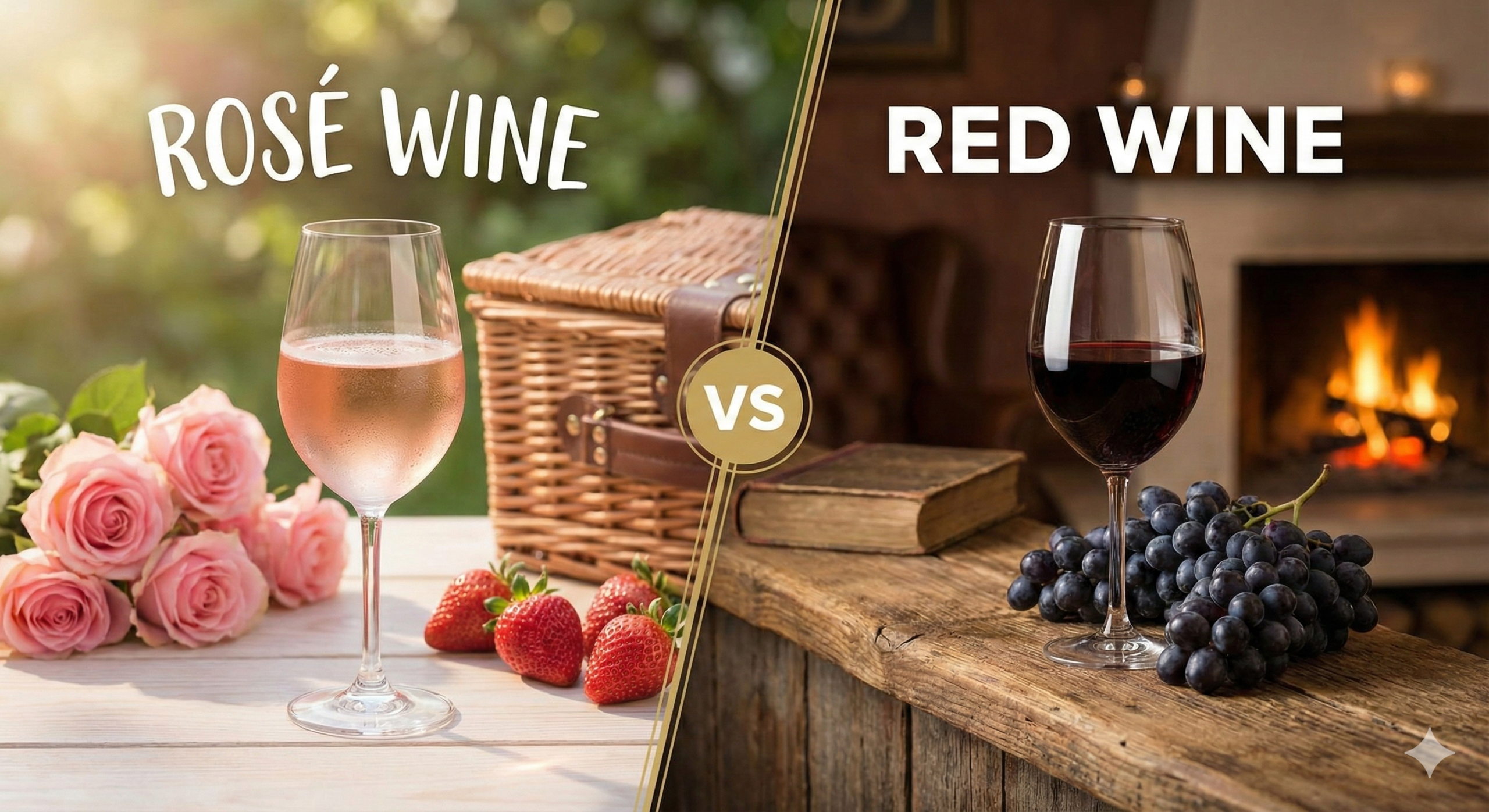
It is the most common misconception in the wine world: “Rosé is just a mixture of red and white wine.” Let’s debunk that immediately. Quality rosé is rarely a blend. It is, in fact, a red wine that wasn’t allowed to finish the job.
Choosing between Rosé Wine vs. Red Wine is about more than just color. It is a choice between structure and acidity, between tannins and fruitiness, and often, between sipping by the pool or sitting by the fire. The exact same grape — say, a Pinot Noir — can produce a dark, brooding red wine and a delicate, pale salmon rosé. The difference lies entirely in the winemaker’s clock.
The 30-Second Snapshot
Rosé Wine
Nickname: “Summer Water”
- Skin Contact: 2 to 24 hours.
- Tannins: Very low to non-existent.
- Serve: Chilled (45°F – 55°F).
- Best For: Hot weather, spicy food, brunch, seafood.
- Key Note: Refreshing acidity with red fruit notes.
- Aging: Drink within 1–3 years.
Red Wine
Nickname: “The King of Wines”
- Skin Contact: 1 week to 1 month.
- Tannins: Medium to High (creates dryness).
- Serve: Room Temp (60°F – 68°F).
- Best For: Steak dinners, cold nights, aging.
- Key Note: Structure, dark fruit, earth, and spice.
- Aging: Months to 30+ years (premium).
History: The Oldest Wine and the King of Grapes
The histories of rosé and red wine are intertwined in ways that most drinkers never consider. Understanding where each came from reveals surprising truths — including the remarkable fact that rosé, far from being a modern trend, may actually be the world’s oldest style of wine.
Rosé: Probably the World’s First Wine
Ancient winemakers had none of the modern techniques — extended maceration, temperature control, press timing — that allow today’s winemakers to deliberately make either pale rosé or deeply pigmented red wine. When the earliest vintners in ancient Georgia (around 6000 BC), Mesopotamia, and the Mediterranean crushed their grapes and fermented the resulting juice, they were making a product that would have been far closer to a modern rosé than to a modern red. Grape skins were mixed with the juice during pressing but not left for extended maceration periods, and the resulting wine would have been lightly colored, relatively low in tannin, and immediately drinkable. True deeply tannic, long-macerated red wine — the style we associate with Bordeaux or Barolo — is a relatively modern invention made possible by advances in winemaking technology, temperature control, and our understanding of phenolic chemistry.
In medieval England, the most fashionable wine was Claret — a pale, lightly colored Bordeaux wine that bore far more resemblance to a modern rosé than to the deep, tannic Bordeaux we know today. The “claret” of medieval England was harvested early, lightly macerated, and consumed young — a wine that would have appalled a modern Bordeaux collector but which satisfied the English aristocracy for several centuries.
The Rise of Provence and the Modern Rosé
Provence in southern France has been producing wine for over 2,600 years — Greek settlers from Phocaea established the colony of Massalia (modern Marseille) around 600 BC and began planting vines on the surrounding hillsides. The pale, dry rosé style that defines modern Provence production has its roots in this ancient Mediterranean tradition of making wines designed for immediate consumption in a warm climate. Provence rosé became the dominant style of the region and, over centuries, defined what quality rosé wine means: pale salmon-copper color, bone dry, high acidity, and delicate fresh-fruit character.
The White Zinfandel Detour and the Revival
The modern rosé category went through a significant reputation crisis in the late 20th century, largely as a result of the White Zinfandel phenomenon — a topic covered in detail in its own section below. The category’s recovery and transformation into one of the most commercially dynamic wine styles in the world is one of wine’s most remarkable commercial stories of recent decades.
The word “claret” — still used in Britain as a general term for red Bordeaux — derives from the French clairet, meaning “clear” or “light.” This is a linguistic artifact of the era when Bordeaux wine was pale pink-red rather than the deep ruby we expect today. The modern Bordeaux red wine style, with its deep color and high tannin, only became dominant in the 18th and 19th centuries.
Production: The Maceration Factor
To understand the difference, you must first understand where wine gets its color. The juice inside almost every grape — even black grapes — is clear. If you peeled a Cabernet Sauvignon grape and squeezed it, the juice would be pale yellow. The color, flavor, and tannins live in the skins.
The process of soaking the clear juice with the dark skins is called Maceration.
Red Wine Production
For red wine, the winemaker wants maximum extraction. The skins are left soaking in the juice for days or weeks during fermentation. This long bath extracts deep ruby pigments (anthocyanins) and tannins, which give red wine its characteristic drying sensation on your gums and its ability to age for decades. The alcohol produced during fermentation acts as a solvent, pulling color, flavor, and structure from the skins at an accelerating rate as fermentation progresses.
Rosé Wine Production
For rosé, the winemaker hits the stop button early. The skins might soak for as little as 2 hours or up to 24 hours — just enough to stain the juice a pretty pink color and capture the delicate red fruit flavors (strawberry, raspberry, watermelon) without extracting the harsh, bitter tannins that define red wine’s structure.

Geek Out on Wine Science
Want to go deeper into anthocyanins and maceration? The Oxford Companion to Wine is the encyclopedia every serious drinker needs — comprehensive, authoritative, and genuinely readable.
See the BookAll Three Rosé Production Methods Explained
Not all rosé is made the same way, and the method used determines everything about the wine’s color, structure, and flavor. There are three distinct production techniques, each producing characteristically different wines.
The most deliberate approach to rosé. The winemaker grows grapes specifically with rosé in mind — often harvesting slightly earlier to preserve acidity — and presses them immediately with minimal skin contact. The result is the palest possible pink wine: crisp, citrus-driven, delicate, and bone dry. This is the dominant method in Provence and produces the iconic pale salmon wines that define the benchmark for quality dry rosé. Because the grapes are grown and harvested specifically for this purpose, direct press rosé is considered by most wine experts to be the highest-quality approach — it is a wine in its own right, not a by-product of anything else.
“Saignée” means “to bleed” in French. Here, the winemaker is primarily making a bold red wine. Early in fermentation, they drain (bleed) a portion of the lightly colored juice from the tank — this juice has had limited skin contact and is pink. The remaining must in the tank, now with a higher ratio of skins to juice, produces a more concentrated red wine. The pink “bled” juice is fermented separately into rosé. These wines are typically darker, richer, higher in alcohol, and more structured than direct press rosés — they have more tannin and more weight, with richer cherry and berry character. Critics of the saignée method argue it produces rosé as a “secondary product” rather than as a wine made with deliberate intention. Defenders argue that the concentration of the bled juice produces rosé of real complexity and depth.
Vin Gris (“grey wine”) is produced by pressing grapes with very pink-grey skins — particularly Pinot Gris and Pinot Noir — with essentially zero intentional maceration time. The juice picks up barely any color from the brief contact during pressing, producing wines of pale onion-skin or peach color. California’s “Vin Gris de Cigare” from Bonny Doon and certain Alsatian producers use this technique. The resulting wines are some of the palest of all rosé styles and tend toward delicate, almost white-wine-like structure with the barest hint of red fruit.
In virtually all quality wine regions, mixing red and white wine to create rosé is illegal and considered a shortcut that produces inferior results. The one significant exception is Rosé Champagne — where a small amount of still Pinot Noir red wine may be added to the Champagne base before secondary fermentation. Even in Champagne, many prestigious houses opt for the saignée method rather than blending, considering it a more authentic approach. Outside Champagne, if you see cheap rosé that appears unnaturally bright or vivid in color, blending may be the cause — though this is increasingly rare as production standards improve globally.
If you are curious about how these methods apply to sparkling rosé wines, check our guide on wine varietals explained to see how grapes like Pinot Noir are used across different styles.
The Color Spectrum: What the Pink Tells You
The color of a rosé is one of the most immediately informative signals on the table — it tells you the production method, the grape variety, the maceration duration, and often the approximate flavor profile before you have taken a single sip. Understanding the color spectrum transforms a glance at the glass into genuine information.
Vin Gris, very pale Provence
Classic Provence direct press
Moderate maceration, many grapes
Saignée, Tavel, Spanish Rosado
Extended maceration, near red
As a general rule: the paler the rosé, the more delicate, crisp, and bone-dry the wine. The deeper the color, the more body, tannin, and fruit concentration it will have. Pale Provence rosé and deep Tavel rosé are genuinely at opposite ends of the flavor and structure spectrum despite both being classified as “rosé.” Buying by color is a reliable starting heuristic — if you want a light aperitif style, choose the palest bottle; if you want something robust enough to accompany a steak, the deeper colors deliver more structure.
Do not assume a very pale rosé is better than a darker one — or vice versa. Provence’s pale style is considered premium precisely because the delicacy is intentional and technically demanding. But a well-made Tavel rosé (deep ruby-pink, tannic, structured) is a genuinely different and equally valid wine. Judge by whether the color matches the style you are looking for, not by any assumption that one shade is inherently superior.
Best Grape Varieties for Rosé and Red Wine
The grape variety used determines the aromatic character of the wine — though, crucially, the same grape can produce either rosé or red wine depending on the winemaker’s choices. Here is how the key varieties behave in each style.
Key Rosé Grapes and Their Styles
- Grenache (Garnacha): The dominant grape in Provence rosé and many Spanish Rosados. Produces pale to medium-pink wines with delicate strawberry, cherry, and herbal notes. Grenache’s naturally high sugar and low color extraction make it ideally suited to the direct press method — it provides generous aromatic character without heavy pigmentation or tannin.
- Cinsault: A secondary blending grape in Provence that contributes floral lift, delicate red fruit, and lowered alcohol (Cinsault naturally produces lower ABV than Grenache). Essential to the “lightness” of classic Provence rosé.
- Syrah: Used in Provence rosés and increasingly in New World examples, Syrah contributes structure, spice, and deeper color. Rosé made with significant Syrah is typically darker, spicier, and more substantial than Grenache-based examples.
- Mourvèdre: Adds body, dark fruit, and a distinctive savory/meaty character to rosé blends. Used in small percentages in Provence and increasingly in Bandol rosé — the most structured and age-worthy rosé style in France.
- Pinot Noir: Produces some of the world’s most elegant rosés in cooler climates — Oregon, Burgundy, and Champagne. Thin skins yield pale wines with precise red cherry, raspberry, and floral notes. The basis of most Rosé Champagne and outstanding dry rosés from Burgundy and Oregon’s Willamette Valley.
- Sangiovese (Rosato): Italy’s signature red grape produces rosato wines in Tuscany and other regions — typically higher in acidity than Provence rosés, with strawberry, cherry, and earthy notes. Particularly food-friendly due to the grape’s natural acidity.
- Tempranillo (Rosado): Spain’s great red grape produces dry, structured rosados with strawberry, herbs, and subtle tannin. Particularly impressive from Navarra, where the tradition of serious rosado production predates the Provence rosé boom.
Rosé from Red Wine Grapes: The Same Fruit, Different Conversation
The fascinating aspect of rosé winemaking is that the grape varieties listed above are identical to those used for red wine production in their respective regions. Grenache is the dominant grape in Châteauneuf-du-Pape reds; Sangiovese is the backbone of Chianti; Tempranillo defines Rioja. The same variety, the same vineyard, sometimes even the same harvest — the winemaker’s decision about maceration duration is all that separates a pale rosé from a structured red.
Full Tasting Notes: Primary, Secondary & Tertiary
Because rosé lacks the heavy tannins and oak aging typical of red wine, it reveals the “naked” primary flavor of the grape. Red wine, aged in oak and mellowed by tannin polymerization over months or years, builds secondary and tertiary complexity that rosé almost never achieves.
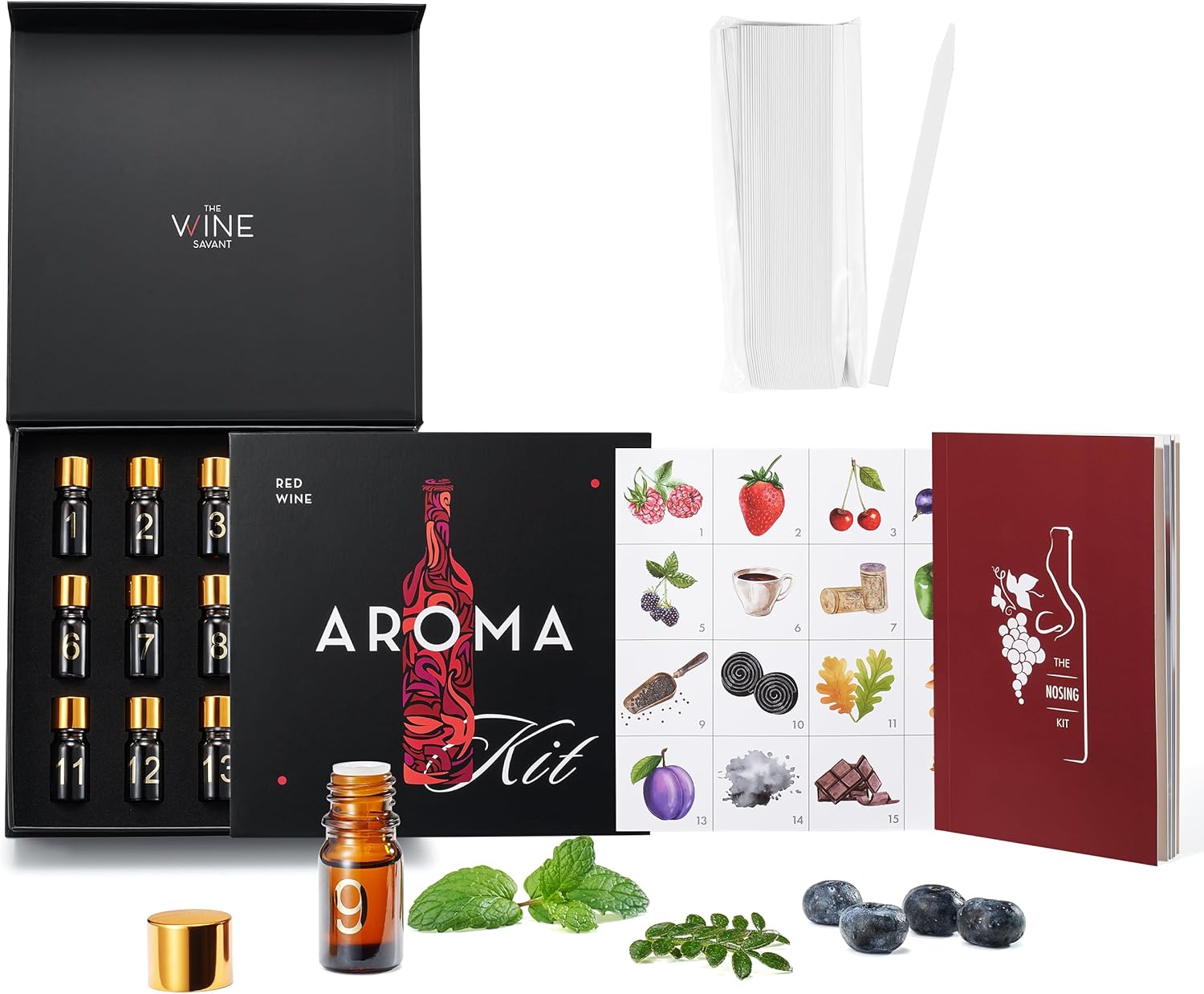
Rosé Wine: Complete Aroma Profile
- Primary fruit: Wild strawberry, fresh raspberry, watermelon, red cherry, pink grapefruit, peach, nectarine — vivid and immediate
- Floral: Rose petal, hibiscus, violet, white blossom — particularly in Pinot Noir and Cinsault based rosés
- Fresh herb: Lavender (Provence), garrigue (dried Provençal herbs), light mint
- Mineral: Saline, chalk, crushed stone — particularly in Provence and Sancerre rosé
- Secondary (rare, in structured rosés like Tavel or Bandol): Spice, cream, dried herbs, light toast
Red Wine: Complete Aroma Profile
- Primary (light-bodied reds — Pinot Noir, Beaujolais): Red cherry, raspberry, cranberry, violet, fresh earth
- Primary (full-bodied reds — Cabernet, Syrah, Malbec): Blackcurrant, blackberry, dark plum, black cherry, blueberry
- Secondary (oak aging): Vanilla, cedar, smoke, toast, tobacco, dark chocolate, mocha
- Tertiary (bottle aging): Leather, tobacco, truffle, dried fruit, coffee, forest floor, dried herbs, game
The “White Zinfandel” Mistake: Many American drinkers associate rosé with sweet White Zinfandel. However, most quality rosé — especially from France, Spain, and Italy — is bone dry. It has the acidity of white wine with the subtle berry notes of red. If you have been avoiding rosé because you dislike sweetness, try a dry Provence or Tavel rosé and reassess.
The Science of Tannins: Why They Matter
Tannins are the single most consequential chemical difference between red wine and rosé — the molecule that makes red wine feel as it does in the mouth, that allows it to age, and that determines its food-pairing potential. Understanding what tannins are and what they physically do transforms how you think about both wine styles.
What Tannins Are
Tannins are polyphenolic compounds — large, complex molecules found predominantly in grape skins, seeds, and stems. They are a natural defense mechanism for the vine, protecting the seeds from being eaten before they are ripe by creating an unpleasant astringent sensation in the mouths of animals. In wine, tannins are extracted from the grape skins during maceration — the longer the skin contact, the more tannin in the wine. This is why red wines (weeks of maceration) are high in tannins while rosé wines (hours of maceration) have negligible tannin, and white wines (no maceration) have essentially none.
What Tannins Do in the Mouth
Tannins are described as “astringent” because they bind to proteins — specifically the lubricating salivary proteins in your mouth — and cause them to precipitate. The result is that characteristic drying, coating, “chalky gums” sensation that is the defining textural experience of drinking red wine. This reaction is not a flavor — tannins themselves are essentially tasteless — but a tactile sensation caused by the temporary loss of salivary lubrication.
The practical consequence is profound: tannins make red wine feel firm, structured, and sometimes harsh when young. They also make it extraordinarily food-friendly with protein-rich foods — the tannins bind to the proteins in meat, “scrubbing” the fat from the palate and refreshing it for the next bite. This is the biochemical explanation for why Cabernet Sauvignon and steak is such a successful pairing.
How Tannins Enable Aging
Over time, tannin molecules polymerize — they link together into longer and longer chains that eventually become too large to bind to salivary proteins. As this happens, the wine’s astringency decreases and the tannins feel silkier and more integrated. Simultaneously, these polymerized tannin chains can combine with anthocyanin pigments to form stable color complexes that drop out of solution as sediment. This is why old red wines have softer tannins, lighter color, and sediment in the bottle. Rosé, with negligible tannin, has no such aging mechanism — it is essentially preserved in its primary fruit state until the fruit fades and the wine becomes flat and oxidized.
Red wine’s polyphenols (tannins + anthocyanins + other phenolics): very high — enables aging, provides structure, delivers health benefits. Rosé’s polyphenols: low to moderate — some extracted during brief maceration, but a fraction of red wine’s total. White wine’s polyphenols: very low — no skin contact, minimal phenolic content. This difference is the primary reason health research consistently shows red wine’s polyphenol benefits as more significant than rosé or white.
Rosé Regions Deep-Dive: The World’s Pink Wine Map
Provence, France
RoséThe world benchmark for dry rosé. Pale salmon color, bone dry, high acidity, notes of strawberry, citrus, and Provençal herb. Over 90% of production is rosé. Grapes: Grenache, Cinsault, Syrah, Mourvèdre. Key sub-appellations: Coteaux d’Aix, Côtes de Provence, Bandol (structured, age-worthy).
Tavel, France
RoséFrance’s only AOC dedicated exclusively to rosé — and its most structured style. Deep ruby-pink, medium tannin, rich strawberry and spice character. Grenache, Cinsault, Clairette dominant. Designed for food pairing, not pool-side sipping. Tavel is the rosé skeptic’s rosé.
Navarra & Rioja, Spain
RosadoSpain’s dry rosado tradition predates the Provence boom. Tempranillo, Garnacha dominant. Often deeper in color than Provence equivalents, with more body and structure. Navarra is particularly renowned — dry, food-oriented rosados at excellent value.
Tuscany & Abruzzo, Italy
RosatoItalian Rosato from Sangiovese is distinctively high-acid, food-loving, and cherry-forward. Cerasuolo d’Abruzzo is Italy’s most celebrated dry rosato — Montepulciano grape, deep cherry color, structured and age-worthy for a rosé style.
Oregon, USA
RoséOregon’s cool Willamette Valley produces exceptional Pinot Noir rosé — pale, precise, floral, and delicate. One of the most Provence-like expressions of rosé outside France. Also notable Rosé of Pinot Gris in the Vin Gris style.
South of France (Languedoc, Rhône)
RoséEnormous production of everyday-quality to excellent-quality rosé. Grenache, Syrah, Mourvèdre dominant. Consistent QPR at the $12–$20 tier. Côtes du Rhône rosé represents some of the best value in the category.
Red Wine Regions Deep-Dive: The World’s Great Reds
Bordeaux, France
RedCabernet Sauvignon (Left Bank) and Merlot (Right Bank) dominant blends. The benchmark for structured, age-worthy red wine. Left Bank (Médoc): firm tannin, dark fruit, cedar, graphite. Right Bank (Saint-Émilion, Pomerol): plush, fruit-forward, mocha. Ages 15–50+ years.
Burgundy, France
Red100% Pinot Noir. The world’s most nuanced red wine. Light ruby color, ethereal red cherry and forest floor aromatics, extraordinary minerality. Among the most age-worthy wines in existence when from premier and grand cru vineyards. The benchmark for elegance over power.
Barolo & Barbaresco, Italy
Red100% Nebbiolo. “The King and Queen of Italian Wine.” Famously tannic, high acid, rose petal and tar aromatics. Require 10–20+ years to fully integrate. Some of the most compelling and complex red wines in the world when mature.
Napa Valley, USA
RedCabernet Sauvignon dominant. Rich, opulent, generous dark fruit with heavy new oak influence. Less austerity than Bordeaux, more immediate pleasure. Some of the most commercially valuable wines in the world (Screaming Eagle, Harlan Estate). Ages 15–30 years premium.
Rioja, Spain
RedTempranillo dominant, traditionally aged in American oak (giving dill, coconut, dried fruit notes). Crianza, Reserva, and Gran Reserva aging tiers provide a reliable quality ladder. Exceptional value at Reserva level ($20–$40). Ages well for 10–20+ years.
Barossa Valley, Australia
RedOld-vine Shiraz (Syrah) — some vines over 100 years old — produces extraordinary concentration, density, and dark chocolate/plum/pepper character. Penfolds Grange, arguably Australia’s greatest wine, is Barossa Shiraz. Rich, powerful, long-lived.
The White Zinfandel Problem: How Sweet Pink Wine Damaged Rosé’s Reputation
To understand why quality dry rosé spent several decades being dismissed as an unsophisticated wine — particularly in the American market — you need to understand the White Zinfandel story. It is one of wine’s most instructive commercial cautionary tales.
The Accident That Became a Phenomenon
In the early 1970s, California winemaker Bob Trinchero of Sutter Home Winery was making a saignée Zinfandel red wine — a rich, dark red — when one batch unexpectedly stopped fermenting, leaving significant residual sugar. Rather than discard it, he bottled the sweet, pale pink wine and sold it. The resulting “White Zinfandel” — technically a rosé, but sweet rather than dry — proved commercially successful beyond all expectation. Other California producers quickly followed, and by the 1980s and early 1990s, White Zinfandel was the best-selling wine in America.
The Damage
The problem was that White Zinfandel’s dominance created a cultural equation in the American market between “pink wine” and “sweet, simple, low-quality.” An entire generation of American wine drinkers grew up associating rosé with the cloying sweetness of White Zinfandel and concluded that rosé was not a serious wine for serious drinkers. This stigma persisted long after the White Zinfandel trend faded — sophisticated American wine drinkers avoided rosé throughout the late 1990s and much of the 2000s because of the lingering cultural association.
The Recovery
The recovery of rosé’s reputation was driven primarily by the growing visibility of Provence rosé in American wine culture and by the “Rosé all day” social media phenomenon that recast rosé as a sophisticated, aspirational lifestyle choice rather than a sweet party drink. Provence producers — led by Château Minuty, Miraval, Domaines Ott, and others — made significant investments in American marketing and distribution. The result was one of the most remarkable reputation turnarounds in wine’s commercial history: rosé went from dismissed to aspirational within roughly a decade.
Not all rosé in the modern market is dry. Cheap commercial rosés — particularly from large American producers targeting mass-market appeal — still frequently add residual sugar to create the approachable sweetness that drives volume sales. Always check: if a rosé does not state “Dry” or come from a recognized dry-rosé region (Provence, Tavel, Navarra, Tuscany), check the wine’s technical data for residual sugar or read reviews to confirm its dryness level.
Health: Polyphenols, Resveratrol & Calories
The “French Paradox” — the observation that the French consume a diet high in saturated fat yet have relatively low rates of cardiovascular disease — is frequently attributed to red wine consumption. Does rosé share the same benefits?
The Polyphenol Advantage of Red Wine
Red wine’s health reputation rests primarily on its extraordinary polyphenol content — a broad class of plant compounds that includes anthocyanins, tannins, quercetin, catechins, and resveratrol. These compounds are antioxidants: they neutralize reactive oxygen species (free radicals) that contribute to cellular damage, inflammation, and the development of cardiovascular disease. The key point is that polyphenols are found almost entirely in the grape skins — and red wine’s extended skin maceration (weeks) extracts far more polyphenols than rosé’s brief contact (hours).
Resveratrol: The Headline Compound
Resveratrol — a stilbenoid polyphenol found in grape skins — has attracted the most research attention due to laboratory studies showing anti-inflammatory, antioxidant, and potentially anti-cancer properties. Red wine contains significantly more resveratrol than rosé, which in turn contains more than white wine. A standard glass of red wine contains approximately 100–200 micrograms of resveratrol; rosé contains roughly 50–100 micrograms; white wine approximately 10–30 micrograms. Winner: Red Wine — and it is not close.
A significant caveat: the resveratrol content of wine, while real, is much lower than the doses used in the laboratory studies that produced exciting results. The doses used in many studies were far higher than could be consumed through wine alone. Researchers now believe that the cardiovascular benefits associated with moderate wine consumption likely reflect the combined effect of multiple polyphenol compounds rather than resveratrol specifically.
Calories and Sugar: Rosé’s Edge
If calorie content is your primary concern, rosé often has a slight edge over full-bodied red wine. Rosé is typically harvested earlier (preserving acidity and limiting sugar accumulation), fermented to a lower ABV (often 12–13% versus red wine’s 13–15%), and produced without oak aging that adds complexity but no calories. A standard 5oz glass of dry Provence rosé runs approximately 90–110 calories; a heavy-bodied 14.5% Napa Cabernet runs approximately 125–145 calories per glass. Over the course of a bottle, this difference compounds meaningfully.
| Health Metric | Rosé Wine | Red Wine |
|---|---|---|
| Resveratrol per glass | ~50–100 mcg | ~100–200 mcg ✓ |
| Total polyphenols | Low–moderate | High ✓ |
| Anthocyanins | Very low | High ✓ |
| Calories per 5oz glass | ~90–110 ✓ | ~110–145 |
| Typical ABV | 11.5–13% ✓ | 12.5–15% |
| Histamine content | Low–moderate | High (more in aged reds) |
| Sulfite content | Moderate | Moderate–high |
However, be careful with cheap commercial rosés which may add sugar. Learn more about sugar levels in our guide to reading wine labels.
Aging Potential: When to Cellar and When to Drink Now
The aging potential of each wine style is perhaps the most dramatic practical difference between rosé and red wine, with genuinely different implications for how and when you buy and drink each.
Rosé: A Drink-Now Wine (With Exceptions)
The overwhelming majority of rosé is designed for immediate consumption. The fresh strawberry, raspberry, and floral aromatics that make rosé so appealing in its youth are extremely fragile — they oxidize quickly and fade as the wine ages. A Provence rosé from a recent vintage is an excellent wine; the same wine three to four years later will be flat, oxidized, and disappointing. Buy rosé as recently as possible — ideally the most recent vintage available — and drink it within one to three years of the vintage date on the label.
The exceptions to this rule are small but worth knowing. Bandol rosé (from the Bandol appellation on the Provence coast, dominated by Mourvèdre) is specifically designed for three to eight years of cellaring — it is tannic, structured, and powerful enough to reward patience. A well-made Bandol rosé at four to five years of age develops extraordinary complexity of dried herbs, sun-dried tomato, spice, and garrigue that the same wine at one year completely lacks. Tavel rosé from the Rhône Valley can also develop over two to five years. These are the serious collector’s rosé styles — genuine age-worthy wines.
Red Wine: Built for Time
Quality red wine is among the most age-worthy of all beverages. Tannins — the same molecules that make young red wine feel harsh and astringent — are the primary preservation mechanism. As they polymerize over years and decades, tannins soften, fruit evolves from primary to complex tertiary character, and the wine develops the extraordinary complexity of leather, tobacco, truffle, and dried fruit that defines aged red wine.
| Wine Type | Rosé | Red Wine |
|---|---|---|
| Entry-level everyday | Drink within 1–2 years | Drink within 3–5 years |
| Quality mid-range | Drink within 2–3 years | Ages 5–12 years |
| Premium (Tavel, Bandol) | 2–8 years (exceptional) | 8–20+ years |
| Fine wine (classified Bordeaux, Barolo) | Not applicable | 15–40+ years in great vintages |
The Full Pairing Guide
The structural difference — tannin versus acid — dictates what food each wine should accompany. This is the most practical application of everything discussed above.
Red Wine Pairing Principles
Tannin loves Fat. The astringent quality of red wine acts as a palate cleanser, binding to the proteins and fat in rich foods and clearing the mouth for the next bite. This is the biochemical explanation for why Cabernet and steak is such an enduring classic.
- Red meat: Ribeye, T-bone, rack of lamb — red wine’s tannins perform their fat-cleansing function most impressively here.
- Aged hard cheeses: Parmesan, aged cheddar, Manchego — the fat and protein in aged cheese binds tannins and reveals the wine’s fruit character.
- Rich tomato pasta: Sangiovese-based Chianti with bolognese is the Italian textbook pairing — the grape’s naturally high acidity mirrors the tomato’s acidity.
- Game and venison: The earthiness and gamey character of venison, wild boar, and duck confit resonates with Syrah, Grenache, and aged Pinot Noir.
- Dark chocolate: Full-bodied reds with 70%+ cocoa complement rather than clash.
Rosé Wine Pairing Principles
Acid loves Salt and Spice. Rosé is wine’s most versatile food partner — the Swiss Army Knife of the table. It has the acidity to cut through fried food, enough fruit to handle spicy heat, and enough delicacy not to overwhelm lighter dishes.
- Spicy food: Thai curry, Mexican tacos, Indian dishes with heat — rosé’s fruit cools the burn while its acidity refreshes the palate.
- Greek and Mediterranean food: Feta cheese, grilled fish, mezze platters, stuffed vegetables — the Mediterranean origin of Provence rosé makes these natural partners.
- Charcuterie boards: Rosé handles cured meats, pâtés, cornichons, and soft cheeses simultaneously — the versatility the split structure provides.
- Grilled seafood: Prawns, grilled salmon, grilled octopus — Provence rosé with grilled seafood is the definitive French Riviera pairing.
- Sushi and Asian cuisine: The fruit and acidity of rosé complement soy, ginger, and wasabi without the tannin clash that red wine can create with delicate fish proteins.
- Summer salads: A Niçoise salad with a glass of chilled Provence rosé is one of the great warm-weather pairings.
For a specific look at meat pairings, see our deep dive on best wines to pair with steak.

The Perfect Rosé Glass
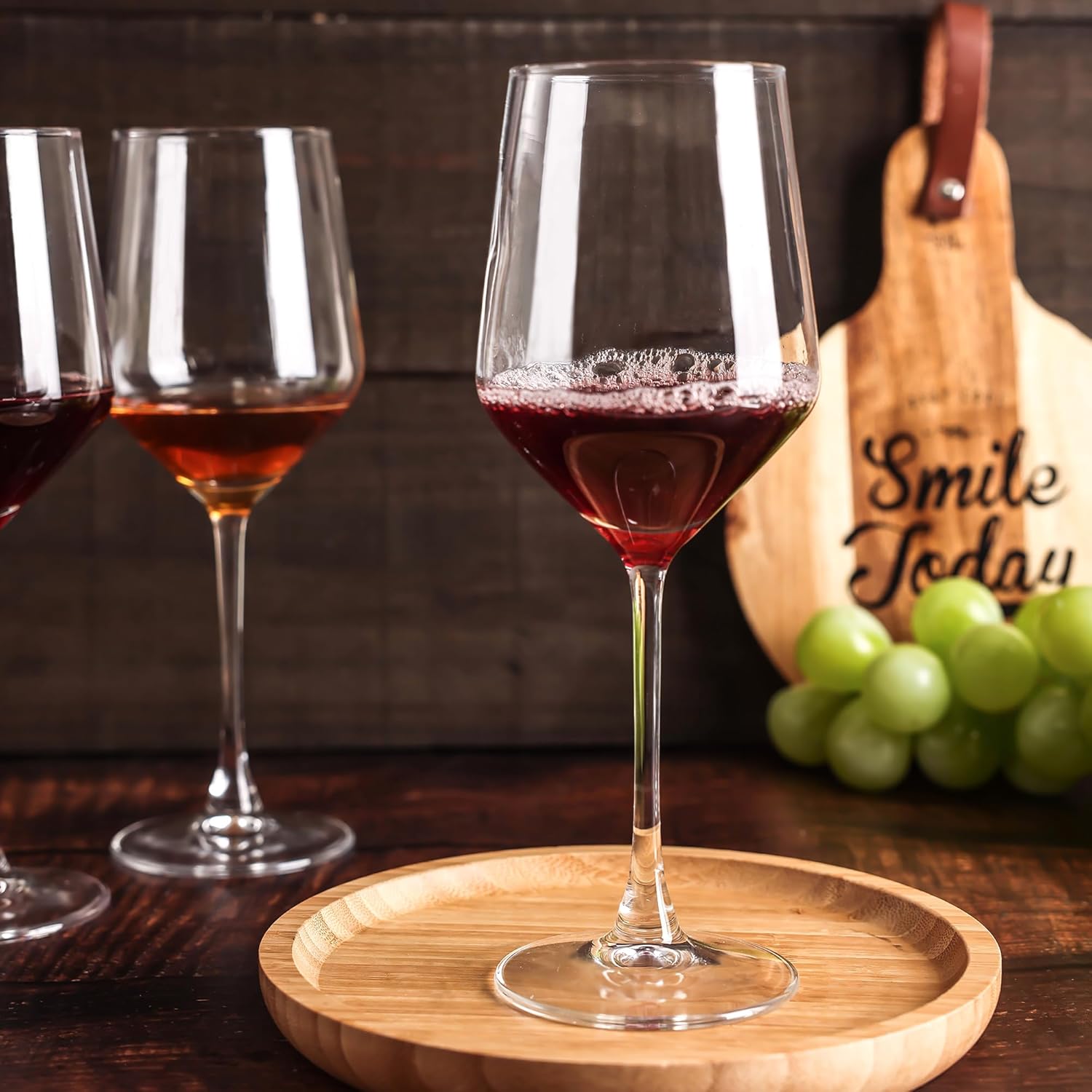
Don’t drink rosé out of a random glass. The Riedel Rosé glass has a flared lip that directs the wine to the tip of your tongue, highlighting the sweetness, acidity, and delicate fruit character of quality dry rosé.
Check PriceServing Temperature & Glassware
Temperature changes flavor. Serving wine at the wrong temperature is the easiest way to ruin a good bottle — and both wines suffer dramatically from incorrect serving conditions.
Temperature Guide
- Red Wine: Serve between 60–68°F (15–20°C). If too warm (above 70°F / 21°C), alcohol comes forward and masks fruit. If too cold, tannins taste harsh and fruit disappears. A 15-minute refrigerator chill before service is often ideal in warm homes.
- Rosé Wine: Serve between 45–55°F (7–13°C). Entry-level rosé at the colder end; complex structured rosé (Bandol, Tavel) at the warmer end to allow its complexity to express. Never serve from a standard refrigerator without resting 10–15 minutes first — fridge temperature at 38°F mutes rosé’s aromatics.
Glassware Differences
For rosé: A medium-sized white wine glass or a dedicated rosé glass with a slightly wider bowl than a standard white wine glass — wide enough to collect the delicate aromatics but narrow enough to concentrate them under the nose. Avoid wide, heavy red wine glasses which will cause the aromas to dissipate too rapidly. The Riedel Rosé glass was specifically designed to deliver the wine to the tip of the tongue, amplifying sweetness and fruit character.
For red wine: A Bordeaux glass (tall, broad) for full-bodied tannic reds; a Burgundy glass (wide bowl, shorter) for light to medium reds like Pinot Noir where aromatic concentration is more important than tannin softening. The glass shape for red wine matters significantly — a Pinot Noir poured into a Bordeaux glass loses much of its delicate aromatic complexity in the tall chimney.
Keeping these temperatures stable requires the right equipment. Check our comparison of best wine coolers to find the perfect storage solution.
Price & Value Guide: What to Buy at Every Budget
| Budget | Rosé Recommendation | Red Wine Recommendation |
|---|---|---|
| Under $12 | Southern French Rosé (Languedoc, Côtes du Rhône). Reliable, simple, and genuinely enjoyable for everyday drinking. Check for “Brut” or “Dry” designation. | Chilean Cabernet Sauvignon, Spanish Garnacha, Argentine Malbec. Extraordinary value in this tier — structured, genuine, and food-friendly. |
| $12–$20 | Entry Provence AOC. Crisp, pale, mineral dry rosé. Step-change in elegance from sub-$12. Navarra Rosado from Spain also excellent at this tier. | Rioja Crianza, quality Côtes du Rhône, Beaujolais Cru, Chianti Classico. Significant complexity and food-pairing versatility. |
| $20–$40 | Quality Côtes de Provence (Château Minuty, Domaines Ott). Genuine terroir character, excellent with food. Tavel AOC for structured style. | Village Burgundy (Pinot Noir), Rioja Reserva, premium Côte du Rhône, quality Italian Barbera or Nero d’Avola. Genuine aging potential. |
| $40–$100 | Bandol Rosé (Château Pibarnon, Domaine Tempier) — age-worthy, structured, among the world’s finest rosés. Single-vineyard Provence expressions. | Premier Cru Burgundy, classified Bordeaux, Barolo, top Napa Cabernet at this entry point. 10–20+ year aging potential in the best examples. |
| $100+ | Rare aged Bandol. Domaine Tempier Bandol Rosé from exceptional vintages. Extraordinary for long-term development. | Grand Cru Burgundy, First Growth Bordeaux, top Barolo (Giacomo Conterno, Bruno Giacosa), cult Napa Cabernet. Investment-grade wine. |
Blind Tasting: How to Tell Them Apart
In a properly blinded glass, can you tell a rosé from a light red? Surprisingly, many tasters struggle with this at the lighter end of each spectrum — a pale Tavel rosé and a young, light Beaujolais Village can have similar colors and superficially similar fruit profiles. Here are the key sensory signals that distinguish them.
- Color opacity: Even a dark rosé is translucent — you can clearly see through it. A light red wine from Pinot Noir or Gamay, by contrast, has more opacity and depth of pigment. The color difference is about depth as much as hue.
- Tannin on the palate: The single most reliable indicator. Swirl the wine and take a sip, holding it for 5 seconds. Any drying sensation on the gums or the inside of the cheeks after swallowing = tannin = red wine. Complete absence of dryness with pure acidity = rosé. This test works reliably even for non-experts.
- Primary aroma character: Fresh, vivid, immediate strawberry/raspberry/watermelon with no earthy, spicy, or secondary notes = rosé. Even slight notes of dark fruit, pepper, earth, or complexity alongside the fruit = likely red wine.
- Temperature sensitivity: Serve the mystery wine at 55°F. A rosé at this temperature will seem slightly warm and will have opened aromatically. A light red at this temperature will seem slightly cool but pleasant. Above 65°F, a red wine opens dramatically while a rosé may begin to seem flabby — the two wines behave differently as they warm.
Swirl and taste, then wait 5 seconds after swallowing. Run your tongue across your upper gum line. Any roughness, dryness, or coating sensation means tannin — which means red wine. A clean, fresh, saliva-preserving finish is rosé (or white wine). This simple test correctly identifies the category in virtually every case regardless of color depth.
Frequently Asked Questions
Generally, no. In most quality wine regions — especially France — this is illegal and considered a shortcut that produces inferior results. The only notable exception is Rosé Champagne, where a small amount of still Pinot Noir red wine may be blended into the Champagne base. Even in Champagne, many prestigious houses opt for the saignée method as a more authentic approach. Outside Champagne, if you encounter cheap rosé with unnaturally vivid or perfectly uniform color, blending may be the cause — though this is increasingly uncommon as production standards improve globally.
For most rosé, no. Unlike fine red wines that improve for decades, standard rosé is designed to be drunk fresh — ideally within one to three years of the vintage date. The fresh fruit aromatics fade quickly, and old rosé becomes flat and oxidized. The exceptions are Bandol rosé (Mourvèdre-dominant, ages 3–8 years) and Tavel rosé (ages 2–5 years), both of which develop genuine complexity with time. For almost all other rosé — buy the most recent vintage you can find.
It is primarily about maceration time and grape variety. A pale Provence rosé from direct press with Grenache and Cinsault might have 2–4 hours of skin contact. A deep Tavel or Spanish Rosado from Mourvèdre or Garnacha via saignée might have up to 24 hours. The grape variety also matters — Mourvèdre produces deeper pigmentation than Grenache even at identical maceration times. Deeper color generally means more structure, tannin, and fruit concentration, not necessarily better quality.
Red wine contains more congeners (fermentation byproducts including histamines and tannin-derived compounds) that trigger headaches in sensitive individuals. However, cheap commercial rosés often have higher residual sugar and added sulfites that can cause sugar-crash hangovers. Quality dry wines of either type are safer bets. If you are sensitive to red wine headaches specifically, the likely culprit is histamines (found in higher concentrations in aged reds) rather than tannins or sulfites — which is often misattributed. Hydration and moderation remain the most effective hangover prevention strategies for either wine.
This is a marketing-driven myth rather than a sensory reality. Quality dry rosé is genuinely versatile and pairs beautifully with many autumn and winter foods — particularly the Mediterranean-influenced foods (grilled chicken, Moroccan tagine, spiced lamb) that appear year-round on restaurant menus. Bandol rosé, with its structured, spiced character, is as comfortable accompanying a winter roast as a summer salad. The “rosé season” concept was largely a marketing invention by Provence producers looking to extend seasonal sales — and the wine is good enough to justify ignoring the seasonal limitation entirely.
They are the same category — pink wine made by short maceration of red grapes — but from different countries with different style traditions. Rosé is the French and English term; Rosato is the Italian equivalent; Rosado is Spanish. Style differences are significant: Italian Rosato, typically from Sangiovese, Montepulciano, or Primitivo, tends to be higher in acidity and more tannic than French rosé, reflecting the Italian tendency toward food-centric, structured wine styles. Spanish Rosado, often from Garnacha or Tempranillo, sits stylistically between the two — drier than most New World examples, more robust than typical Provence.
Yes — and this is one of wine’s most instructive facts. Grenache, Pinot Noir, Sangiovese, Tempranillo, Syrah, Cabernet Sauvignon, and virtually every other red wine grape can produce rosé or red wine depending entirely on the winemaker’s choices about maceration duration. The same vineyard, the same vintage, the same harvest day — different macerations produce fundamentally different wines. This is why comparing rosé and red wine is ultimately a comparison of winemaking choices rather than grape varieties.
Vin Gris (“grey wine”) is a style of very pale rosé produced by pressing grapes with pinkish-grey skins — particularly Pinot Gris and Pinot Noir — with essentially no intended maceration. The brief skin contact during pressing imparts barely any color, producing wines of pale onion-skin or peach hue. California’s Vin Gris de Cigare from Bonny Doon is the best-known American example. The style produces some of the palest and most delicate of all rosé wines, almost white-wine-like in structure with the faintest suggestion of red fruit.
Many red wines benefit significantly from decanting — particularly young, tannic reds (Cabernet Sauvignon, Barolo, Nebbiolo) where 1–2 hours of air exposure softens tannins and opens fruit. Aged reds with sediment should also be decanted to remove the harmless but texturally unpleasant deposit. Rosé should almost never be decanted — the aromatic compounds that make rosé appealing are volatile and can dissipate within 30–60 minutes of air exposure. If anything, keep rosé in its bottle and pour fresh into the glass rather than pre-decanting. The exceptions are structured Bandol and Tavel rosés, which can benefit from 15–20 minutes of air exposure in a glass or decanter.