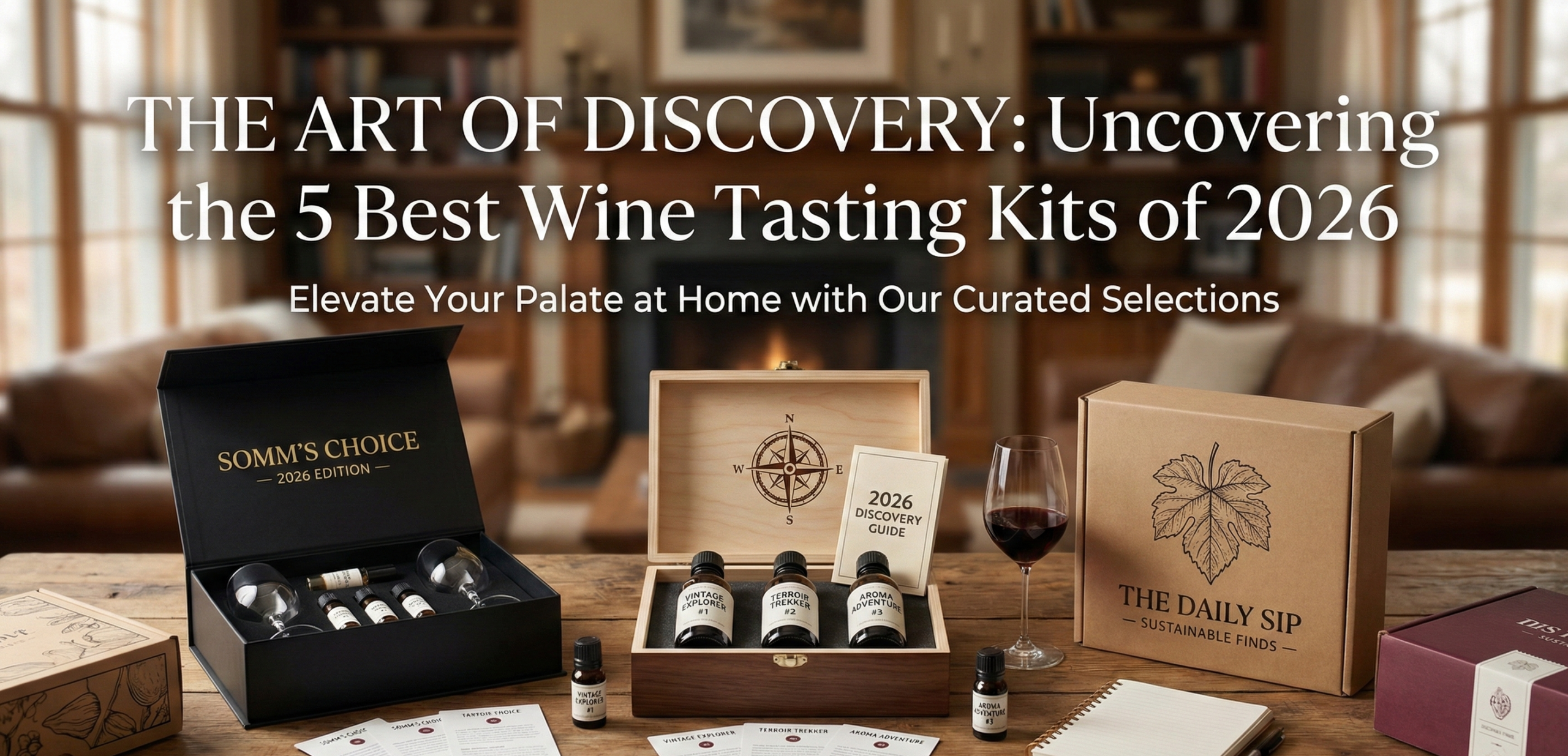
The Art of Discovery: Uncovering the 5 Best Wine Tasting Kits of 2026
From curious beginners to aspiring connoisseurs, the right tasting kit doesn’t just teach you about wine—it rewires how you experience it. We’ve sampled, compared, and analyzed the market’s finest to guide your journey.
More Than Just Drinking: Why a Structured Tasting Kit is Revolutionary
Anyone can drink wine. But to truly taste wine—to isolate its whispers of blackberry and violet, to understand why acidity makes your mouth water, to detect how oak aging adds whispers of vanilla—requires guidance. This is where a quality wine tasting kit becomes indispensable. It’s the difference between listening to music and understanding music theory; between looking at a painting and comprehending the artist’s technique.
A well-designed kit provides the vocabulary, the framework, and the tools to decode what’s in your glass. It transforms a casual sip into an investigative journey. Suddenly, you’re not just noting that a wine is “good” or “fruity.” You’re identifying specific fruits, judging the body, assessing the tannin structure, and appreciating the finish. This knowledge is empowering, making every future glass more interesting and every wine purchase more confident. It’s the foundational step for anyone wanting to move beyond guesswork and into genuine appreciation. For a comprehensive primer on the language of wine, our wine terminology guide is the perfect companion.
The Science of Sensation
Our sense of taste is surprisingly limited—we only detect sweet, sour, salty, bitter, and umami. Over 80% of what we perceive as “flavor” actually comes from smell. A great tasting kit trains your olfactory system with aroma isolation tools and scent references, unlocking the hundreds of compounds that create a wine’s unique profile.
The Neuroscience Behind Tasting Better
When you smell a wine repeatedly and pair it with a word or reference, you’re forming new neural connections. The olfactory bulb—the brain’s smell processor—has a uniquely direct connection to the hippocampus and amygdala, the regions governing memory and emotion. This is why a single smell can instantly transport you to a specific moment. Wine tasting kits exploit this connection: by isolating aromas and giving them names, you train your brain to recognize them automatically in future encounters.
Neuroscientists who study sensory perception call this “learned olfactory discrimination.” It explains why professional sommeliers and Master of Wine candidates spend hundreds of hours with aroma kits: it’s not memorization—it’s rewiring. The good news is that this neural plasticity exists in all of us. Even a few focused sessions with a quality aroma training kit can produce measurable improvements in your ability to detect and name scents within a wine. Your palate is not fixed; it is trainable, expandable, and endlessly improvable.
Why 2026 Is the Best Time to Start Your Tasting Journey
The wine education landscape in 2026 is richer than at any point in history. Craft wine producers from emerging regions—Georgia’s Rkatsiteli, Greece’s Assyrtiko, Uruguay’s Tannat—are reaching global markets. The natural wine movement has expanded the definition of what wine can smell and taste like. Virtual tasting technology now connects enthusiasts with sommeliers and winemakers across six continents. Meanwhile, the scientific understanding of wine chemistry has never been more accessible, with research on terpenes, esters, and phenolic compounds available in layperson-friendly formats.
A structured tasting kit gives you the framework to engage meaningfully with all of this complexity. Rather than being overwhelmed, you gain a systematic approach that makes every new wine an exciting discovery rather than a confusing puzzle.

Start Your Journey Like a Pro
Our top-rated kit includes everything a serious enthusiast needs. Check current pricing and reviews on Amazon.
View Master Kit on AmazonFinding Your Flavor: The Complete Guide to Choosing a Tasting Kit
With options ranging from simple card decks to elaborate sommelier training sets, selecting the right kit depends on your goals, experience level, and learning style.
Key Components of a High-Quality Kit
Look for kits that address multiple senses and learning modalities:
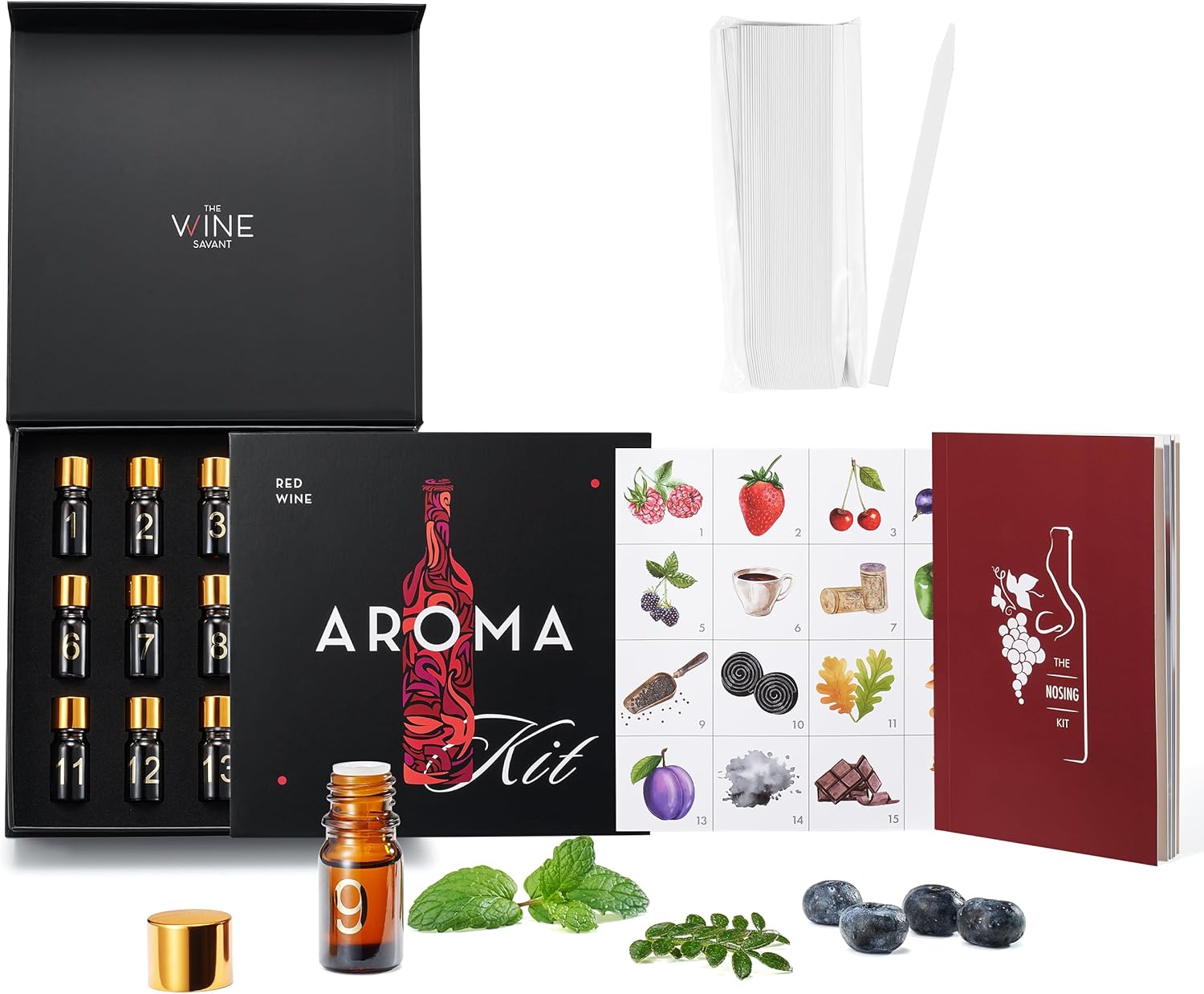
- Aroma Training Tools: The cornerstone. Look for vials of isolated scents (like “green bell pepper,” “leather,” “citrus zest”) to train your nose.
- Structured Tasting Mats/Sheets: Guided worksheets that walk you through sight, smell, taste, and conclusion (the “SAT” method).
- Educational Materials: Booklets, flashcards, or access to videos explaining varietals, regions, and tasting techniques.
- Practical Tools: Included wine glasses (ISO standard tasting glasses are ideal), a quality wine aerator for comparison, or a spit cup.
- Interactive Elements: Blind tasting bags, comparison wine sets, or access to virtual sommelier sessions.
Matching Kit Type to Your Goals
For the Social Host & Entertainer
Choose kits designed for groups (4-8 people) with duplicate materials, fun scoring cards, and themes (e.g., “Old World vs. New World,” “Blind Red Challenge”). These prioritize engagement and conversation.
For the Solo Studious Learner
Opt for comprehensive, detail-oriented kits with deep-dive booklets, extensive aroma kits, and solo exercises. Virtual course access or app integration is a major plus for this learner.
Budget Breakdown: What to Expect at Each Price Point
Wine tasting kits span an enormous price range, and knowing what each tier offers helps you spend wisely:
| Budget Range | What You Get | Best For |
|---|---|---|
| Under $30 | Aroma wheel, tasting sheets, guide booklet, scratch-and-sniff cards | First-time explorers, gift add-ons |
| $30–$75 | 12 aroma vials or quality scent cards, 2 glasses, structured workbook | Committed beginners and intermediates |
| $75–$150 | 24+ aroma vials, quality ISO glasses, video access, comprehensive guide, wine included | Enthusiasts pursuing real skill development |
| $150–$300+ | Professional aroma sets, crystal glassware, live sommelier sessions, curated wines | Serious students, pre-sommelier training |
💡 Pro Tip: Invest in Aromas First
If your budget is limited, prioritize kits with the most aroma training vials over those with premium glassware. You can always upgrade your glasses later, but a strong aroma foundation is the single most impactful investment in your wine education. Quality liquid aroma vials will outlast scratch-and-sniff alternatives by years.
1. The Master Sommelier Home Tasting Kit: Our Top Overall Pick
Developed in collaboration with active sommeliers, this kit is the closest thing to a professional wine course in a box. It’s designed for the dedicated enthusiast who wants to build a robust, accurate tasting vocabulary and methodology.
Deep Dive: What Makes It Exceptional
The kit’s 24 Le Nez du Vin-style aroma vials are its masterpiece. Each scent is pure, distinct, and covers the spectrum from fruit and floral to earthy and oak-derived notes. The included workbook doesn’t just list descriptors—it teaches you how to build a tasting note logically, from appearance to finish. You also get two ISO tasting glasses, a detailed wine map, and access to a private video library with sommelier-led tastings. It’s an investment that pays dividends in tasting confidence.
Pros
- Professional-grade aroma training set (24 scents).
- Comprehensive, expertly written educational workbook.
- Includes high-quality ISO tasting glasses.
- Access to exclusive tutorial videos.
- Builds a foundation for lifelong tasting skills.
Cons
- Premium price point.
- Intensive—best for those committed to study.
- Does not include actual wine (by design).
2. VinoVerse Interactive Virtual Tasting Kit: The Digital Pioneer
Bridging geography and creating community, the VinoVerse kit is the standout virtual experience of 2026. It combines physical tools with a seamless digital platform for live, guided tastings.
You receive a beautifully packaged box with two crystal-cut tasting glasses, a curated selection of two 375ml “tasting format” wines from contrasting regions, an aroma wheel, and detailed producer notes. The magic happens when you log into the scheduled session. A charismatic sommelier guides your group (up to 12 households) through the wines in real-time, encouraging questions and sharing insights. The platform includes interactive polls and chat. It’s ideal for remote family gatherings, corporate team-building, or connecting with fellow wine lovers worldwide. It makes expert guidance accessible no matter your location.
3. Sip & Savor Introductory Discovery Kit: The Perfect On-Ramp
For those just dipping their toes into the wine world, the Sip & Savor kit is a masterclass in approachable education. It removes intimidation and replaces it with curiosity and fun.
The kit focuses on the four foundational elements: Sweetness, Acidity, Tannin, and Body (the “SATB” framework). Instead of 24 aromas, it provides 8 essential scent references. Its genius is in the “comparison flight” approach—it includes four 187ml bottles of wine specifically chosen to highlight one element against another (e.g., a high-acid vs. low-acid white). The guide uses clear, relatable language and colorful infographics. For a beginner, understanding these building blocks is more valuable than memorizing hundreds of obscure terms. Once you grasp SATB, you can approach any wine with a critical framework. This knowledge will also elevate your food and wine pairing skills immediately.
4. The Blind Tasting Challenge Kit: Sharpen Your Instincts
Blind tasting is the ultimate test of skill and the fastest way to improve your palate. This kit gamifies the process, making it an exciting challenge for you and your friends.
The box contains everything for a structured blind tasting: six black opaque tasting bags that perfectly conceal bottles, numbered bottle collars, detailed scorecards for deduction (assessing color, aroma, taste to guess grape, region, age), and a “reveal” guide. It encourages you to focus purely on what’s in the glass, free from label bias or price expectations. The included booklet teaches the deduction logic used in sommelier exams. It’s thrilling, humbling, and immensely educational. Pair this with our guide on how to read wine labels for a complete picture of how marketing and juice interact.

Exceptional Value for Curious Beginners
Start your tasting adventure without a major investment. This highly-rated kit delivers on education and engagement.
Shop Value Kits on Amazon5. Tasting Notes Essential Toolkit: Unbeatable Value
Proving that quality education doesn’t require a hefty price tag, this compact kit delivers the core tools you need to start tasting with intention, all under $40.
The centerpiece is a beautifully designed, laminated aroma wheel that organizes 88 common wine descriptors into intuitive categories. Instead of vials, it uses high-quality “scratch & sniff” aroma cards for 12 key scents—a surprisingly effective and space-saving alternative. The kit includes a pad of 50 structured tasting sheets, a guide to major grape varieties, and a wine tasting 101 booklet. It’s portable, durable, and offers incredible utility per dollar. It’s the ideal gift for a new wine lover, a great supplement to a wine club subscription, or a handy reference to keep in your wine tote for tastings on the go.
The Tasting Kit Landscape: A Side-by-Side Comparison
| Kit Name | Focus | Best For | Aroma Training | Includes Wine? | Experience Level |
|---|---|---|---|---|---|
| Master Sommelier Kit | Comprehensive Skill Building | The Dedicated Student | 24 Vial Professional Set | No | Intermediate to Advanced |
| VinoVerse Virtual Kit | Interactive Guided Experience | Remote Learning & Social Tasting | Aroma Wheel & Digital Notes | Yes (Small Formats) | All Levels |
| Sip & Savor Intro Kit | Foundational Basics (SATB) | Absolute Beginners | 8 Essential Scents | Yes (187ml Bottles) | Beginner |
| Blind Tasting Challenge | Deduction & Palate Calibration | Groups & Skill Sharpening | Not Included | No (You Supply) | Intermediate |
| Tasting Notes Essential | Practical Reference & Value | Budget-Conscious Explorers | Scratch & Sniff Cards | No | Beginner to Intermediate |
The Complete Wine Glassware Guide: Why Shape Matters Immensely
No tool in your tasting kit will be used more frequently than your glass, yet it remains the most misunderstood component. The shape of a wine glass is not an aesthetic choice—it is a functional decision that profoundly affects how aromas reach your nose, how wine flows across your palate, and even how you perceive its color and viscosity. Investing in the right glassware is, arguably, the single highest-impact upgrade any wine enthusiast can make.
The ISO Tasting Glass: The Universal Standard
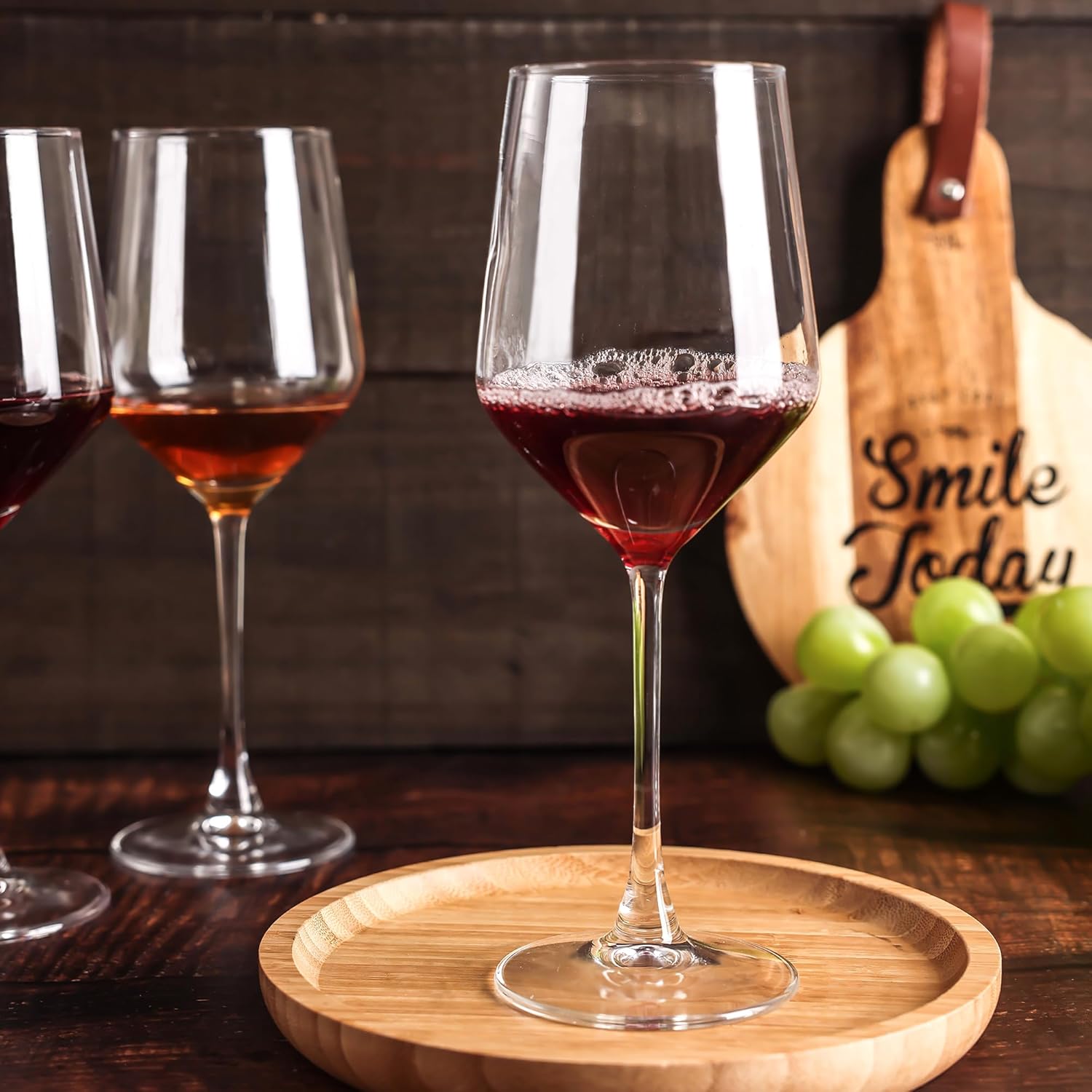
The ISO 3591 standard tasting glass is used by professionals worldwide for one reason: it eliminates all variables. Its tulip shape—narrowing at the rim after a generous bowl—concentrates aromas toward the nose. Its clear, thin crystal allows accurate color assessment. Its foot and stem prevent hand warmth from affecting the wine’s temperature. At approximately 215ml capacity, it’s designed to be filled only a third full, leaving ample space for swirling without spillage. If you can only own one type of glass, make it an ISO standard.
Beyond the ISO: Shape-Specific Glassware
Once you’ve mastered the basics, experimenting with varietal-specific glassware reveals remarkable differences. Wine glass manufacturers like Riedel, Zalto, and Schott Zwiesel have invested decades of research into how glass geometry influences the tasting experience.
🍷 Bordeaux / Cabernet Glass
Tall, wide bowl delivers wine to the back of the mouth, softening tannins. Ideal for Cabernet Sauvignon, Merlot, Syrah, and Malbec.
🍷 Burgundy / Pinot Noir Glass
Wider, rounder bowl maximizes aroma concentration for delicate, complex wines. Perfect for Pinot Noir, Nebbiolo, and aged Grenache.
🥂 Chardonnay Glass
Slightly wider opening than aromatic whites, directs wine to the mid-palate. Best for oaked Chardonnay, White Burgundy, and Viognier.
🥂 Aromatic White Glass
Narrower, taller profile preserves delicate floral aromas. Ideal for Riesling, Gewürztraminer, Sauvignon Blanc, and Pinot Grigio.
🥂 Champagne Flute
Elongated shape preserves bubbles and channels aromas upward. Best for Champagne, Cava, and Prosecco poured for celebration.
🍷 Port / Dessert Glass
Smaller bowl and narrow opening concentrate sweet, intense aromas without overwhelming the senses. For Port, Sauternes, and Madeira.
Crystal vs. Glass: Does It Really Matter?
The debate between lead-free crystal and standard glass is genuine. Crystal’s mineral content (traditionally lead, now replaced by barium or titanium) allows it to be drawn much thinner without sacrificing strength. A thinner rim creates a more neutral delivery surface—your brain processes less “glass” and more “wine.” Additionally, crystal has a micro-rough surface that promotes nucleation in sparkling wines, creating finer, more persistent bubbles. For daily tasting, quality machine-made crystal offers excellent value. Hand-blown crystal from producers like Zalto is extraordinary but reserved for very special occasions.
Glassware Care: Protecting Your Investment
Even the finest glass is meaningless if it carries residual soap, mineral deposits, or dish towel lint. The cardinal rules: always rinse with hot water and a drop of unscented detergent, then rinse thoroughly. Store glasses upright (not inverted on a wooden shelf, which imparts odor). Never machine-wash fine crystal. Before a tasting, “season” each glass by swirling a splash of the wine to be tasted, discarding it, and then filling. This removes any residual water or glass odors that could mute delicate aromas.
Serving Temperature Mastery: The Most Overlooked Wine Variable
Serving wine at the wrong temperature is arguably the most common and consequential mistake made by home enthusiasts. The same bottle of Burgundy can be profound or disappointing based entirely on temperature. Serve it too cold and the aromas shut down, the texture turns harsh. Serve it too warm and the alcohol becomes volatile, the fruit seems jammy, and freshness vanishes. Temperature is a silent conductor of the entire orchestra in your glass.
The 20-Minute Rule
Red wines from the cellar? Let them breathe at room temperature for 20–30 minutes. Whites and sparkling wines from room temperature? Give them 20–25 minutes in the fridge before serving. A dedicated wine thermometer—often included in premium tasting kits—removes all guesswork and will genuinely elevate every glass you pour.
How Temperature Changes What You Taste
Temperature affects the volatility of aromatic compounds. At colder temperatures, fewer aromatic molecules escape the surface of the wine, making it seem closed and simple. As temperature rises, aromas bloom and open. However, once beyond the optimal range, alcohol becomes disproportionately volatile, creating a burning sensation that overwhelms other sensations. Tannins also respond to temperature: colder temperatures make tannins feel more grippy and astringent, which is why lightly chilling a Beaujolais softens rather than hardens its structure. Sweetness, on the other hand, is less perceptible at cold temperatures—important to remember when tasting dessert wines, which benefit from a slightly warmer serving temperature than dry whites.
Building Your Aroma Vocabulary: The Complete Descriptor Toolkit
The language of wine aromas can seem arcane at first—why would a wine smell of pencil shavings, or cat’s pee, or petrol? These are not random associations. Each descriptor corresponds to a specific chemical compound that genuinely exists in wine and can be smelled in isolation. Building this vocabulary is the central goal of any serious tasting kit, and it opens a rich, precise way to communicate about the most ephemeral of sensory experiences.
The Six Primary Aroma Families
Professional tasters organize wine aromas into families, making them easier to recall and communicate. Here are the six major categories your tasting kit should help you master:
🍓 Fruity
- Red fruits (cherry, raspberry, strawberry)
- Black fruits (blackcurrant, blackberry, plum)
- Citrus (lemon, grapefruit, lime)
- Stone fruits (peach, apricot, nectarine)
- Tropical (mango, pineapple, lychee)
🌸 Floral
- Rose petals (Gewürztraminer)
- Violet (Nebbiolo, Syrah)
- Lavender (Southern Rhône)
- Orange blossom (Muscat)
- Jasmine (Viognier)
🌿 Earthy / Mineral
- Wet stone / flint (Chablis)
- Forest floor / mushroom
- Truffle (aged Pinot Noir)
- Leather / game
- Petrol / kerosene (aged Riesling)
🌶️ Spicy / Herbal
- Black pepper (Syrah, Grüner Veltliner)
- Clove / cinnamon
- Green bell pepper (Cab Sauvignon)
- Mint / eucalyptus (McLaren Vale)
- Thyme / herbs de Provence
🪵 Oak-Derived
- Vanilla (American oak)
- Toast / smoke
- Coconut (new American oak)
- Cedar / pencil shavings
- Chocolate / mocha
✨ Yeast / Other
- Brioche / bread dough
- Cream / butter (malolactic)
- Honey (botrytis)
- Dried fruit (oxidative aging)
- Salinity (coastal vineyards)
The Chemistry Behind the Descriptors
Understanding why a wine smells the way it does transforms random memorization into logical understanding. Isoamyl acetate creates banana and pear drop notes in young, carbonic maceration wines like Beaujolais Nouveau. Beta-damascenone, a rose-like ketone, contributes to the floral character of Gewürztraminer. The infamous “cat’s pee” in Sauvignon Blanc comes from 4-mercapto-4-methylpentan-2-one—a sulfur compound at extraordinarily low concentrations. Petrol in aged Riesling? That’s TDN (trimethyl-dihydronaphthalene), formed as carotenoids break down over years in bottle. When you know the “why,” the “what” becomes intuitive.
Essential Wine Regions Decoded: A Taster’s World Atlas
Geography is destiny in wine. The same Chardonnay grape, planted in Chablis and Napa Valley, produces wines so different that novice tasters frequently guess them as different varieties altogether. Climate, soil, elevation, rainfall, aspect, and winemaking philosophy all converge to create what the French call terroir—the complete natural environment of a vineyard that gives wine its distinctive character. Your tasting kit’s regional map is a crucial tool for understanding these influences.
Old World vs. New World: The Grand Division
The most useful first distinction in wine geography is Old World (Europe and the Middle East, where wine has been made for millennia) versus New World (the Americas, Australasia, and South Africa, where commercial viticulture developed later). Old World wines tend to emphasize earth, mineral character, and restraint, with alcohol levels generally lower. New World wines often prioritize ripe fruit, roundness, and approachability. Neither is superior—they represent different philosophies and offer different pleasures. Your tasting kit will help you identify these stylistic signatures in the glass, connecting what you smell and taste to where the wine was born.
Key Regions to Explore Through Your Tasting Kit
🇫🇷 Burgundy, France
Pinot Noir and Chardonnay in their highest expression. Terroir-driven, village and vineyard classification system, earthy elegance over power.
🇫🇷 Bordeaux, France
Cabernet Sauvignon-led blends (Left Bank) and Merlot-led blends (Right Bank). Structured, age-worthy, the benchmark for red wine blending worldwide.
🇮🇹 Barolo & Barbaresco, Italy
Nebbiolo-based reds from Piedmont. Firm tannins, high acidity, aromas of tar, roses, and dried cherries. Must age; rewards patience enormously.
🇪🇸 Rioja, Spain
Tempranillo-dominant, aged in American oak (traditional) or French oak (modern). Vanilla, leather, strawberry. Excellent value across all quality tiers.
🇩🇪 Mosel, Germany
Riesling on steep slate slopes. Electric acidity, low alcohol, peach and apricot fruit, profound minerality. Among the world’s most age-worthy whites.
🇳🇿 Marlborough, New Zealand
The defining reference for Sauvignon Blanc: intense passion fruit, grapefruit, freshly cut grass. Clean, vibrant, and unmistakable.
🇦🇺 Barossa Valley, Australia
Old vine Shiraz and Grenache. Dense, rich, full-bodied with blue fruit, chocolate, and spice. Some of the world’s oldest producing vines.
🇺🇸 Napa Valley, California
The New World’s most prestigious address. Cabernet Sauvignon of extraordinary concentration, ripe fruit, and plush texture. Premium pricing reflects demand.
🇦🇷 Mendoza, Argentina
High-altitude Malbec delivering velvety tannins and vivid plum fruit at excellent price-to-quality ratios. A gateway region for red wine explorers.
🇿🇦 Stellenbosch, South Africa
Cape Blend style and Chenin Blanc excellence. A fascinating meeting point of Old World restraint and New World fruit richness.
🇬🇷 Santorini, Greece
Assyrtiko on volcanic pumice soil, yielding searingly mineral, high-acid whites with saline intensity. One of the world’s most distinctive terroirs.
🇵🇹 Douro Valley, Portugal
Home of Port and increasingly impressive dry reds from Touriga Nacional. Extreme heat moderated by altitude; powerful, complex wines.
Identifying Wine Faults: When Something’s Wrong in the Glass
One of the most practical skills developed through serious tasting practice is recognizing wine faults. A wine fault is a flaw that arises in the vineyard, winery, or bottle, resulting in off-aromas or flavors that detract from the wine’s quality and intended character. Being able to identify these faults confidently allows you to return a flawed bottle at a restaurant, select better at retail, and understand when a wine is genuinely poor versus merely challenging or unconventional.
| Fault Name | What It Smells/Tastes Like | Cause | Returnability |
|---|---|---|---|
| Cork Taint (TCA) | Wet cardboard, musty cellar, damp newspaper | 2,4,6-Trichloroanisole contamination in cork | Always return—undisputedly faulty |
| Oxidation | Sherry-like, nutty, bruised apple, flat | Excessive oxygen exposure before intended | Return if premature; intended in some styles |
| Reduction | Struck match, garlic, rubber, rotten egg | Sulfur compounds in oxygen-deprived environment | Sometimes resolves with aeration—try swirling first |
| Volatile Acidity | Vinegar, nail polish remover, sharp acidic spike | Acetic acid bacteria; too high = fault | Low levels are tolerated; high levels: return |
| Brettanomyces | Barnyard, leather, horse sweat, medicinal | Wild yeast contamination in winery | Subjective—some find low levels appealing |
| Refermentation | Unexpected fizz in a still wine; yeasty | Residual sugar reactivating in bottle | Always return—not intended in dry still wines |
The Cork Taint Reality Check
Studies suggest that between 3–5% of bottles sealed with natural cork are affected by TCA (cork taint) to some degree. Screw caps and technical corks have dramatically reduced this problem. When evaluating whether a wine is “corked,” remember that TCA doesn’t just add bad smells—it actively suppresses your ability to perceive the wine’s aromas at all. A corked wine often seems strangely muted before you notice the wet cardboard note.
Decanting: The Art of Patience and Transformation
Decanting is the practice of pouring wine from its bottle into a separate vessel (a decanter) before serving. It serves two distinct purposes that are often confused: separating sediment from aged wines, and aerating young wines to soften tannins and open aromas. Understanding which purpose applies to which wine is a fundamental tasting skill that your kit should equip you to navigate.
When to Decant and Why
Young, tannic reds (Cabernet Sauvignon, Barolo, Syrah under 10 years): Decant for 1–2 hours. Oxygen exposure polymerizes tannins, making them less astringent and the wine more approachable. The wide surface area of a decanter accelerates this process compared to a bottle.
Aged reds with sediment (Vintage Port, aged Burgundy, older Rhône): Decant slowly over a light source (a candle or flashlight works perfectly) to catch the sediment in the bottle’s shoulder before it enters the decanter. A fine mesh strainer or gauze can assist. These wines often need only 20–30 minutes in the decanter to bloom.
Aromatic whites and aged whites: A short decant of 15–20 minutes can benefit complex whites like aged White Burgundy or skin-contact “orange” wines. Standard crisp whites generally don’t benefit from decanting.
When NOT to decant: Old, very delicate wines (over 20–25 years) may be fragile and collapse rapidly on contact with air. Very aromatic young whites—Sauvignon Blanc, Riesling—can lose their freshness. When in doubt with old bottles, decant and taste immediately, watching how the wine evolves over 30 minutes.
💡 The Double Decant Trick
To aerate a wine rapidly, pour it into a decanter, then pour it back into the rinsed bottle, then back into the decanter again. This “double decanting” dramatically increases oxygen exposure and can achieve in minutes what an hour of resting in a decanter would accomplish. Professional sommeliers use this technique when a guest orders a young, tannic wine and doesn’t want to wait.
Writing Perfect Tasting Notes: The Four-Phase Framework
A tasting note is not a piece of purple prose—it is a structured, systematic description of a wine’s observable qualities that communicates useful, repeatable information. Good tasting notes are your memory, your learning record, and your decision-making tool. The best tasting kits include note sheets that guide you through a recognized framework. Here is the professional approach, broken into four phases:
- Appearance Hold the glass against a white surface (a napkin works perfectly). Note the color: is a red wine ruby, garnet, or tawny? Is a white wine pale lemon, gold, or amber? Assess clarity (brilliant vs. hazy) and viscosity (do the legs run fast or slow down the glass, suggesting lower or higher alcohol/sugar?). Appearance reveals age, grape variety, and winemaking approach.
- Nose (Aroma) First, smell without swirling—this captures the most volatile, delicate primary aromas. Then swirl vigorously to oxygenate and release secondary aromas. Smell again. Organize what you detect: primary aromas (from the grape itself), secondary aromas (from fermentation—yeast, butter), and tertiary aromas (from aging—vanilla, leather, earthiness). Note intensity (faint, medium, pronounced) and complexity (single note vs. multi-layered).
- Palate (Taste) Take a generous sip and hold the wine in your mouth for 5–10 seconds. Assess sweetness first (your tongue detects it immediately at the tip), then acidity (makes your mouth water), then tannin (drying, gripping sensation on gums for reds), then body (weight and texture—water vs. milk vs. cream), then the flavor profile (confirm or revise your aroma impressions). Finally, note the finish: how long do flavors persist after swallowing? Short (under 10 seconds), medium, or long (30+ seconds) tells you a great deal about quality.
- Conclusion & Assessment Bring everything together. Is the wine balanced—do all components (acid, tannin, fruit, alcohol) coexist harmoniously? Is it complex? Is it distinctive or generic? Would you buy it again? At what price point does it represent value? Give it a score if that’s useful to you, but always write the descriptors first—a score without context is meaningless memory.
Tasting Sparkling Wines: A World Beyond Champagne
Sparkling wine is frequently treated as celebratory punctuation—the wine you open when something happens, then set aside for “serious” tastings. This is a profound mistake. The sparkling wine category is among the most intellectually rich and diverse in the world of wine, encompassing styles ranging from bone-dry and complex to off-dry and playful, from fine-boned and delicate to creamy and autolytic. Learning to taste sparkling wines properly is an entire education in itself, and one that most tasting kits can support with specific guidance.
Key Sparkling Wine Styles to Explore
Champagne (France): Made exclusively in the Champagne region of France using Chardonnay, Pinot Noir, and Pinot Meunier grapes. The traditional method (méthode champenoise) creates bubbles through a second fermentation inside the bottle, producing characteristic brioche, almond, and cream notes alongside the fruit. Non-vintage Champagne represents the house style; vintage Champagnes are produced only in exceptional years and age magnificently.
Cava (Spain): Spain’s traditional method sparkling wine, typically using Macabeu, Parellada, and Xarel-lo grapes. Earthier and more rustic than Champagne, with excellent value. Cava Reserva (18+ months aging) and Cava Gran Reserva (30+ months) represent the quality tier worth exploring in your tasting sessions.
Prosecco (Italy): Made using the Charmat or tank method, where the second fermentation happens in a pressurized tank rather than the bottle. The result is lighter, fruitier, and less complex than traditional method wines, with aromas of peach, apple blossom, and cream. Designed to be enjoyed young and fresh—not aged.
Crémant (France, various regions): Traditional method sparkling wines made outside Champagne—Crémant d’Alsace, Crémant de Loire, Crémant de Bourgogne. Often outstanding value, using local grape varieties to create wines with genuine regional character. An excellent tasting exercise is comparing a Crémant de Bourgogne (Chardonnay-based) with a non-vintage Champagne—the style similarities are revealing.
Pét-Nat (Pétillant Naturel): The ancient “ancestral method,” where wine is bottled before fermentation completes, trapping bubbles naturally. A hallmark of the natural wine movement—often hazy, low in added sulfur, and bursting with raw, yeasty, funky fruit energy. Wildly variable; exciting to explore.
How to Taste Bubbles Properly
Use a white or universal wine glass rather than a flute for serious sparkling wine tasting—you’ll smell far more. Pour slowly at an angle to preserve effervescence. Assess the bubble quality first: fine, persistent streams of tiny bubbles indicate quality (traditional method); larger, coarser bubbles suggest tank or carbonated methods. Smell before tasting—the aromas of a great Champagne are incredibly complex and deserve undivided attention. On the palate, note how the effervescence interacts with acidity, and how the finish feels: creamy, tingly, or flat?
Natural & Organic Wine Tasting: Navigating the New Landscape
The natural wine movement has transformed the global wine conversation over the past decade, introducing millions of enthusiasts to wines that taste radically unlike conventionally produced bottles. Whether you find natural wines revelatory or baffling, understanding what they are and how to taste them is essential for any contemporary wine enthusiast. Your tasting kit’s vocabulary and framework applies—with some important modifications.
Defining the Terms: Natural, Organic, Biodynamic
These three terms are frequently conflated but represent distinct philosophies:
Organic wine uses grapes grown without synthetic pesticides, herbicides, or fertilizers. In the winery, organic regulations vary by country but generally limit sulfur additions and prohibited conventional additives. Certified organic wines carry official certification marks. This is the most clearly regulated category.
Biodynamic wine goes further than organic, treating the vineyard as a self-sustaining ecosystem guided by a lunar planting calendar (the Biodynamic calendar developed by Rudolf Steiner). Preparations made from plant, animal, and mineral materials are applied to the soil. Many of the world’s greatest wine producers—Romanée-Conti, Domaine Zind-Humbrecht, Gravner—practice biodynamics. The results are often wines of extraordinary vitality and terroir expression, whatever the philosophical debates about the method itself.
Natural wine has no legal definition, which creates both freedom and controversy. The generally accepted principles: organically or biodynamically farmed grapes, wild (ambient) yeast fermentation only, minimal intervention in the winery, little or no added sulfur dioxide. The result can be wines of breathtaking purity and vitality—or wines that are cloudy, volatile, oxidized, and genuinely faulty. Learning to distinguish between “natural character” and “winemaking fault” is the great challenge of natural wine tasting.
Tasting Natural Wines: Adjusting Your Framework
When applying your tasting kit’s framework to natural wines, recalibrate your expectations. Haziness is often intentional—many natural wines are unfined and unfiltered, leaving grape particles, yeast lees, and tartrate crystals in suspension. This is not a fault. Slight effervescence in a “still” natural wine may come from residual CO2, used by some producers as a preservative in place of sulfur. A slight cider-like character or cidery lift can be a stylistic hallmark rather than contamination.
What you’re looking for is the same fundamental balance: fruit, acid, and body in harmony. The fruit expression in natural wines is often more raw and wild—less polished, more primal. Funky, earthy notes (the so-called “barnyard” character) at low levels can add complexity; at high levels, they indicate Brettanomyces contamination. Volatile acidity below 0.8g/L is generally tolerated; above 1.2g/L becomes genuinely distracting.
Dessert & Fortified Wine Tasting: The Sweet Arts
Sweet and fortified wines represent some of the most complex, historically significant, and intellectually fascinating categories in all of wine. They are also frequently misunderstood and underappreciated by enthusiasts who associate “sweet” with “simple.” Nothing could be further from the truth. A great Sauternes, aged Tawny Port, or Tokaji Aszú contains more layers of aroma and flavor than many of the world’s most celebrated dry reds—and ages far longer.
The Styles and How to Taste Them
Botrytized wines (Sauternes, Tokaji, Beerenauslese): Made from grapes affected by noble rot (Botrytis cinerea), which concentrates sugars and creates extraordinary complexity: apricot jam, orange marmalade, honey, saffron, and a characteristic “botrytis” note—like sweet mushrooms or ginger. Key tasting element: balance between sweetness (substantial) and acidity (equally substantial). In great vintages of Sauternes, the acidity is so vivid it cuts through the richness completely, leaving a clean, fresh finish.
Late Harvest wines (Spätlese, Auslese, Ice Wine): From grapes harvested after normal picking time, accumulating higher sugar concentrations. Ice wine (Eiswein in Germany, Icewine in Canada) is made from grapes that freeze on the vine, allowing only the concentrated, unfrozen juice to be pressed. The result is extraordinary intensity—apricot, peach, honey—with piercing, electric acidity.
Port (Ruby, Tawny, Vintage, LBV): Fortified wine from Portugal’s Douro Valley, where fermentation is stopped by adding grape spirit, retaining natural sweetness. Ruby Port is young, fruit-forward, and vibrant. Tawny Port is aged in small barrels, oxidizing gradually to develop nutty, dried-fruit, caramel complexity. Vintage Port is the pinnacle—declared only in exceptional years, aged in bottle for decades, developing layers of extraordinary complexity.
Sherry (Fino, Amontillado, Oloroso, PX): Spain’s answer to Port, but far more diverse. Fino and Manzanilla are bone-dry, bracingly saline, and refreshing. Amontillado offers a bridge between dry and rich. Oloroso is full, nutty, and raisiny without sweetness. Pedro Ximénez (PX) is the most extreme: thick as molasses, pitch black, and an almost overwhelmingly intense avalanche of dried fig, date, coffee, and chocolate. A few drops of PX over vanilla ice cream is one of the world’s great simple pleasures.
Dessert Wine Tasting Tip: Use Smaller Pours
When tasting sweet and fortified wines, pour just 30–50ml maximum in your glass. The concentration of flavor and sugar means a small amount delivers enormous sensory input. Tasting these wines alongside rich cheeses, foie gras, or dried fruits creates pairing experiences that illuminate both the wine and the food in extraordinary ways.
Wine Certification Pathways: Taking Your Education Further
For those who discover through their tasting kit that wine education is genuinely passion-worthy, the world offers a structured system of professional qualifications that can transform a hobby into deep expertise—or even a career. Understanding these pathways helps you use your tasting kit strategically: as preparation for formal study rather than merely as a standalone experience.
The Major Wine Qualification Systems
WSET Level 1
Introduction to wine and spirits. No prerequisites. 1 day.
WSET Level 2
Key wine styles and regions. Structured tasting. 2–3 days or online.
WSET Level 3
Serious study of wine production and regions. 12+ weeks. Industry standard.
WSET Diploma
Near-professional level. 18–36 months. Prerequisite for Master of Wine.
Master of Wine
The pinnacle. Only ~400 holders worldwide. Multi-year examination process.
WSET vs. Court of Master Sommeliers
The two most recognized wine education systems globally are the Wine & Spirit Education Trust (WSET) and the Court of Master Sommeliers (CMS). WSET is examination-based and globally recognized, emphasizing written analysis alongside tasting. CMS is more practical and service-oriented, designed for sommeliers working in hospitality. Both are respected internationally; your career goals should guide your choice. For enthusiasts with no professional aspirations, WSET Level 2 provides an extraordinarily comprehensive wine education that contextualizes everything you practice with your tasting kit.
The good news: everything your tasting kit teaches you—systematic tasting methodology, aroma identification, structural analysis—directly aligns with what WSET and CMS examiners assess. Your kit sessions are, in effect, exam preparation. Students who use structured tasting tools before enrolling in formal courses consistently outperform those who don’t, because they arrive with an established sensory vocabulary and disciplined tasting habit.
Your Wine Tasting Journal: Building a Personal Archive of Discovery
Every wine you taste carefully is a data point in your developing expertise. Without a record, those data points evaporate. A wine tasting journal—physical or digital—is your most powerful long-term learning tool, and most quality tasting kits provide at least basic tasting sheets to get you started. Building a comprehensive personal wine journal transforms isolated tasting experiences into a connected, evolving narrative of your palate development.
What to Record in Every Entry
A great journal entry doesn’t require lengthy prose. A disciplined shorthand system covering these elements is all you need: date and occasion; full wine name, producer, vintage, and region; price paid and where purchased; appearance (color, depth, clarity); nose (primary, secondary, tertiary aromas; intensity); palate (sweetness, acidity, tannin, body, flavors, finish length); overall assessment (quality level, value rating, would purchase again?); food pairing notes if applicable; and how the wine evolved in the glass over time.
Digital vs. Physical: Finding Your Format
The choice between a physical journal and a digital one is personal and has no wrong answer. Physical journals have a tactile pleasure and permanence that many enthusiasts value—you can tape a label onto the page, make margin sketches, fold in a producer’s card. Digital journals (apps like Vivino, Delectable, or a simple spreadsheet) offer searchability, cross-referencing, and easy comparison across vintages. Many serious enthusiasts maintain both: a quick digital note in the moment, followed by a more detailed physical entry later.
Using Your Journal to Track Progress
After six months of regular tasting journal keeping, review your first twenty entries and compare them to your most recent twenty. The growth is almost always dramatic and motivating. You’ll notice that your early notes used generic terms (“nice fruit,” “quite tannic”) while recent entries demonstrate specific, confident descriptor use (“lifted black cherry with graphite, medium tannin with a silky texture”). This progression is the proof of your investment in quality tasting kits and structured practice.
Seasonal Wine Recommendations: Matching Your Glass to the Calendar
Wine is not a static experience—it exists in dialogue with season, occasion, and temperature. A wine that seems perfect in February can feel entirely wrong in July, and vice versa. Learning to match wine styles to seasons is both a practical skill and a philosophical one: it reflects wine’s fundamental connection to agriculture, climate, and the natural rhythms of the year. Your tasting kit gives you the analytical framework; these seasonal suggestions give you direction for what to apply it to.
Spring: Freshness, Floral, and the First Green
Spring calls for wines that echo the season’s fresh, aromatic energy. This is the natural home of crisp Sauvignon Blanc from the Loire Valley—Sancerre, Pouilly-Fumé, Menetou-Salon—with their grassy, citrus-forward profiles and palate-cleansing acidity. Albariño from Galicia (northwest Spain) is another spring essential: salty, peachy, and vibrant. For reds, think Beaujolais Cru (Morgon, Fleurie, Brouilly) or light Pinot Noir—wines with high acid and red fruit character that pair beautifully with spring vegetables, goat cheese, and the lighter dishes that emerge as the weather warms. Sparkling wines enjoy a renaissance in spring; explore Crémant d’Alsace for excellent value.
Summer: Refreshment, Rosé, and Easy Elegance
Summer wine selections prioritize refreshment above all. Dry Provençal rosé—the category’s benchmark—is at home on a warm patio. Grillo and Vermentino from Sicily offer saline, lemony profiles that feel born for sunshine. White wine from high-altitude vineyards (Etna, Priorat, parts of the Douro) maintain freshness despite warm climates. For red wine lovers who resist the seasonal switch to white: chill down a light-to-medium Grenache or Pinot Noir to 13–15°C and discover how a touch of cold transforms the experience. Pét-Nat is summer’s ideal wine adventure—poured cold, slightly fizzy, and totally delicious.
Autumn: Depth, Harvest Celebration, and Transition
As temperatures cool and harvests conclude, the wine calendar shifts toward greater richness and weight. Autumn is the ideal season to open Côtes du Rhône blends, Chianti Classico, and wines with earthy, mushroomy complexity that mirror the season’s flavors. Skin-contact “orange” wines—made from white grapes fermented with their skins—come into their own in autumn, bridging white and red in their amber color and textural richness. This is also the season to open those wines you’ve been cellaring: check your tasting notes and assess whether bottles have reached their predicted drinking window.
Winter: Weight, Warmth, and Celebration
Winter drinking invites the boldest, most structured wines: aged Barolo, Châteauneuf-du-Pape, Hermitage, and vintage Port alongside the season’s rich foods—braised meats, aged cheeses, root vegetables, and festive roasts. Sparkling wine makes its annual grand return for celebrations. This is also the season to explore Sherry’s spectrum with abandon—Amontillado by a fire is one of wine’s great cold-weather pleasures. Rich, botrytized dessert wines reach their natural habitat alongside Christmas pudding and blue cheese.
Wine Storage Fundamentals: Protecting Your Investment Between Tastings
The greatest tasting kit in the world cannot compensate for wine that has been stored improperly. Wine is a living liquid, continuing to evolve chemically in the bottle—and that evolution can lead to either magnificent complexity or premature decay, depending almost entirely on storage conditions. Understanding basic wine storage principles ensures that every bottle you open is the best version of itself.
The Five Enemies of Wine
1. Heat: The single biggest threat. Temperatures above 24°C (75°F) accelerate chemical reactions, “cooking” wine and destroying delicate aromatics. The ideal storage temperature for most wines is 12–15°C (54–59°F), maintained consistently without fluctuation.
2. Temperature fluctuation: Even more damaging than steady warmth, wild swings in temperature cause wine to expand and contract, eventually pushing liquid past the cork. A consistent 18°C is better than fluctuating between 10°C and 25°C.
3. Light: UV rays degrade wine, causing photo-oxidation and loss of fruit character—a phenomenon winemakers call “light strike.” This is why quality wine is stored in dark bottles and why you should keep bottles away from windows and direct light sources.
4. Vibration: Constant vibration disturbs sediment and may accelerate chemical reactions. Store wine away from washing machines, sound systems, and heavy foot traffic. This is why professional cellars feel almost eerily calm.
5. Poor humidity: Cork closures need ambient humidity of 60–80% to remain supple and maintain their seal. Too dry and corks shrink, allowing air ingress. Too humid and mold develops on labels—not damaging to the wine but unsightly. Horizontal bottle storage helps corks stay moist from the wine side.
Practical Storage Solutions for Every Budget
You don’t need a stone cellar to store wine well. A dedicated wine refrigerator (wine fridge) is the best single investment for the home enthusiast, maintaining consistent temperature, humidity, and darkness. Entry-level models storing 12–18 bottles cost under $150 and will repay that investment in the quality of every bottle you open. For serious collections, dual-zone units allow simultaneous red and white storage at their ideal serving temperatures.
If a wine fridge isn’t feasible, choose the coolest, darkest, most vibration-free space available: a north-facing interior closet is often superior to a kitchen counter or even a wine rack in a bright dining room. Avoid above-refrigerator storage, above-range spaces, or any area prone to temperature swings.
How Long Should You Keep Wine?
The majority of wine—over 90% of bottles produced globally—is designed for drinking within 1–5 years of release. Only a minority of wines genuinely improve with extended cellaring. The wines that age well are those with naturally high acidity, significant tannin, substantial structure, or residual sugar: Vintage Port, Barolo, Riesling Spätlese, aged red Burgundy, and quality Bordeaux. When in doubt, consult vintage charts and producer drinking window recommendations. Your tasting kit practice in identifying structural components—tannin, acidity, body—directly informs your ability to predict ageing potential.
Hosting a Memorable Wine Tasting: Pro Tips & Themes
A tasting kit provides the structure, but the ambiance and theme create the experience. Start with a clean palate—avoid strong flavors like coffee or garlic beforehand. Provide neutral palate cleansers: plain crackers, bread, and room-temperature water. Use proper glassware if possible; even a simple, stemless universal glass is better than a thick-rimmed tumbler.
Thematic Ideas to Explore:
- Horizontal Tasting: Same grape, same vintage, different regions (e.g., 2021 Cabernet Sauvignon from Napa, Bordeaux, Chile).
- Vertical Tasting: Same wine, different vintages (requires planning but is fascinating).
- “Old World vs. New World”: Compare the earthy restraint of Europe with the bold fruit of Americas/Australasia.
- Single Varietal Deep Dive: Explore the range of expressions within one grape like Pinot Noir or Chardonnay.
- Price Blind Tasting: Taste wines at different price points blind and try to rank them by quality and value. Results are often humbling and illuminating.
- Regional Journey Night: Explore an entire region through multiple wines—all Burgundy, or all of Spain’s wine regions, or a tour of South America.
- Vintage Comparison: Two different years of the same wine from the same producer, revealing how climate shapes a wine’s character.
Practical Logistics for a Smooth Tasting Event
For a group of six people tasting six wines, plan approximately one standard bottle per wine (yielding roughly 8–10 small pours). Serve wines in a logical order: always light to full, dry to sweet, white to red. Number the bottles and glasses if conducting a blind tasting—confusion destroys the experience. Designate a “spittoon station” if guests want to taste seriously without becoming intoxicated—professional spit cups are both practical and, in this context, completely honorable. Have printed tasting sheets (included in most kits) and pencils ready at each place setting. Good lighting is important—you need to assess color properly.
Don’t forget the practical side! Have a good wine stopper on hand for leftover bottles, and consider a serving tray to keep things elegant and organized.
From Tasting to Table: Applying Your Skills to Pairing
The ultimate application of your tasting skills is creating harmonious food pairings. Once you can identify a wine’s key components—its acidity, sweetness, body, and tannin—you can predict how it will interact with food.
The Basic Principles
Match Weight: Pair light-bodied wines with delicate foods, full-bodied wines with hearty dishes.
Counterbalance: Cut through fat with high acidity (Champagne with fried food).
Complement Flavors: Echo flavor notes (an oaky Chardonnay with buttery lobster).
Contrast: Create excitement (sweet Riesling with spicy Thai).
Advanced Pairing Principles to Explore
Tannin and protein: Tannic red wines feel softer when consumed with high-protein, high-fat foods like steak or aged cheese. The protein binds to tannin molecules, reducing astringency on the palate. This is the structural reason why Cabernet Sauvignon and ribeye is a classic pairing—they don’t just taste similar, they chemically interact in a way that makes both better.
Acidity and fat: High-acid wines cut through fatty, rich foods and cleanse the palate, making the next bite taste as fresh as the first. Champagne with fried chicken, Chablis with oysters, Vermentino with grilled oily fish—these work on this fundamental principle of contrast and cleanse.
Sweetness and spice: Sweet wines tame the heat of spicy foods by cooling the palate, while their aromatic richness echoes the spices used in cooking. Off-dry Gewürztraminer with Alsatian tarte flambée, or Riesling Spätlese with Vietnamese cuisine, are textbook examples that never disappoint.
Regional harmony: Perhaps the most reliable rule of all: “what grows together, goes together.” Dishes from a wine region will almost always pair harmoniously with that region’s wines, because both evolved together over centuries. Chianti with Florentine bistecca, Muscadet with Brittany oysters, Malbec with Argentine asado.
Use your tasting kit’s framework to analyze a dish in the same way you analyze wine. Is the dish fatty, salty, sweet, or acidic? What are the dominant flavors? This analytical approach, practiced with resources like our cheese and wine pairing guide, turns meal planning into a creative and delicious science.
Your Wine Tasting Kit Questions, Answered
Do I need to buy special wine for these kits?
It depends on the kit. Some (like the VinoVerse or Sip & Savor) include wine. Most educational/knowledge-based kits (like the Master Sommelier or Tasting Notes) do not, by design. This allows you to apply the tools to any wine you choose, which is more practical and cost-effective in the long run.
How long do the aroma vials or scent cards last?
Properly stored (in a cool, dark place with caps tightly closed), high-quality liquid aroma vials can last 3-5 years before the scent degrades. Scratch-and-sniff cards have a shorter lifespan, typically 1-2 years, as the micro-encapsulated oils slowly evaporate.
Can I use a tasting kit by myself, or is it only for groups?
Absolutely! All the kits we’ve reviewed are excellent for solo study. In fact, focused individual practice is often the best way to internalize the skills. Group kits simply add social and comparative elements, but the core education works perfectly for one.
What’s the difference between an aroma kit and a regular wine tasting?
An aroma kit provides isolated reference points. When you smell “blackcurrant” in a vial, you learn exactly what that note smells like on its own. Then, when you encounter it subtly blended with other scents in a complex wine, your brain can isolate and identify it. It’s like learning individual musical notes before trying to identify them in a symphony.
Are these kits suitable as gifts for a wine lover?
They make exceptional gifts! Consider the recipient’s experience level. For a novice, the Sip & Savor or Tasting Notes kit is perfect. For an enthusiast wanting to level up, the Master Sommelier or Blind Tasting kit is ideal. A Virtual Tasting kit is a fantastic experience gift for anyone, especially long-distance friends or families.
How do virtual tasting kits work?
You purchase the kit, which is shipped to you. It contains the wines (often in smaller formats), any physical tools, and login details for a scheduled live video session. At the appointed time, you join a video call with a sommelier and other participants. The sommelier leads everyone through tasting the same wines simultaneously, offering guidance and answering questions in real-time.
Will using a kit change how I enjoy wine casually?
Yes, but in the best way possible. Initially, you might analyze every glass intently. Soon, however, the process becomes second nature. You’ll automatically notice more, appreciate nuances you previously missed, and find greater depth and enjoyment in even a simple weeknight bottle. It enhances casual enjoyment, it doesn’t replace it.
Is there a “right” or “wrong” answer in wine tasting?
While there are classic descriptors associated with certain grapes and regions (e.g., Sauvignon Blanc often has grapefruit notes), your perception is personal. The goal isn’t to guess a “correct” answer but to develop a consistent, descriptive vocabulary for what you smell and taste. It’s about accuracy in your own perception, not matching a preset list.
How often should I practice with the kit to see improvement?
Consistency is key. Even 15-20 minutes, 2-3 times a week, focusing on one or two aromas or one structured tasting, will yield noticeable improvement within a month. Like any skill, frequent, shorter sessions are more effective than occasional marathons.
Can these kits help me choose better wine at a restaurant or store?
100%. By understanding what you like (e.g., “I prefer wines with high acidity and red fruit notes, medium body, and soft tannins”), you can communicate that to a sommelier or read a back label more effectively. You move from relying on brand names or vague recommendations to making informed choices based on your proven preferences.
What is the difference between primary, secondary, and tertiary aromas?
Primary aromas come directly from the grape variety itself—they are the varietal character. Examples include the grapefruit of Sauvignon Blanc, the blackcurrant of Cabernet Sauvignon, or the rose petal of Gewürztraminer. Secondary aromas develop during fermentation, contributed by yeast activity: think of the brioche, cream, or banana notes in some wines. Tertiary aromas (also called “bouquet”) develop during aging in oak or bottle: vanilla, leather, cedar, mushroom, and dried fruit are all tertiary. Learning to distinguish between these three layers deepens your ability to understand not just what a wine smells like, but where those smells come from and what they tell you about how the wine was made.
Do sulfites in wine really cause headaches?
This is one of wine’s most persistent misconceptions. Sulfur dioxide (sulfites) has been used as a preservative in wine for centuries, and while a small number of people with genuine sulfite sensitivity (usually related to asthma) may react, the majority of headaches attributed to sulfites are more likely caused by histamines, tyramine, or simply the alcohol itself. Interestingly, white wines typically contain more added sulfites than red wines, yet red wine is more frequently blamed for headaches—suggesting sulfites are not the primary culprit. Drinking plenty of water alongside wine, choosing lower-alcohol wines, and not drinking on an empty stomach will address most wine-headache experiences.
Can a wine tasting kit help me identify my preferred wine style?
This is perhaps the most practical application of any tasting kit. By systematically tasting wines and recording your responses—what aromas you find appealing, what structural characteristics you prefer, which regions consistently delight you—you build an increasingly accurate map of your palate. Over time, you’ll be able to articulate specific preferences: “I love high-acid wines with restrained oak and savory, earthy notes” or “I consistently prefer bold, fruit-forward wines with plush tannins.” This self-knowledge makes every future wine purchase, restaurant order, and gift decision significantly more satisfying.
The Final Taste: An Investment in Lifelong Enjoyment
A great wine tasting kit is more than a box of tools; it’s an invitation to a deeper, more rewarding relationship with wine. It empowers you to move from passive consumption to active participation, unlocking layers of complexity and joy in every bottle. Whether you choose the structured path of the Master Sommelier Kit or the social fun of a Virtual experience, you’re not just buying a product—you’re acquiring a skill set that will enrich every glass you pour for years to come.
The world of wine is vast and waiting to be explored. Your journey to understanding it begins with the right first step.
Begin Your Tasting Adventure on Amazon