1. The Art and Science of Wine Journaling
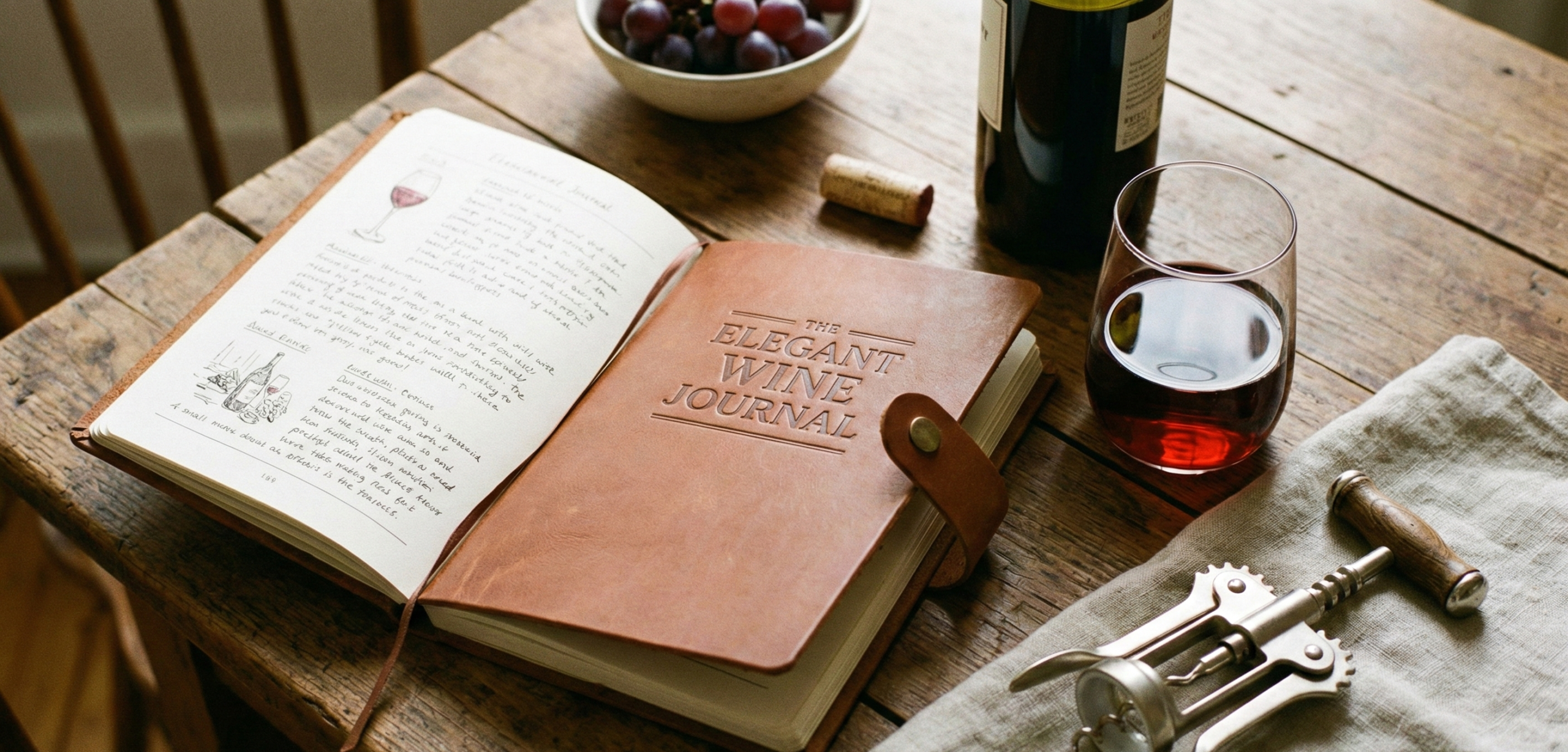
Wine transcends mere beverage status—it becomes an experience of geography, chemistry, and history encapsulated within glass. Yet human memory proves notoriously unreliable. That distinctive blackberry note in a 2018 Napa Cabernet or the subtle brioche finish of a vintage Champagne can evaporate from consciousness within days. This is precisely where the wine journal notebook evolves from optional accessory to essential tool for the discerning enthusiast.
Recording impressions isn’t merely list-making; it’s constructing a personalized database of taste perception. This systematic practice enables tracking of palate evolution across seasons and years. Whether cross-referencing notes from our comprehensive Wine Terminology Guide or documenting spontaneous dinner pairings, the physical act of writing engraves sensory experiences into long-term memory. The journal becomes a living document of your oenological journey.
The Cognitive Benefits of Sensory Documentation
Neuropsychological research indicates that handwritten note-taking activates multiple brain regions simultaneously: the prefrontal cortex (decision-making), the hippocampus (memory formation), and the sensory cortices. This multi-regional engagement creates stronger neural pathways for flavor recall than passive digital input. Your journal essentially becomes externalized taste memory.
2. The Analog Renaissance: Why Physical Journals Outperform Digital Apps
In an era dominated by apps like Vivino and Delectable, the persistence of analog wine journals might seem anachronistic. Yet this persistence reveals profound psychological truths about cognitive retention. Studies from the University of Tokyo demonstrate that handwriting engages the brain’s reticular activating system, which filters and prioritizes sensory information, enhancing focus and retention. When you swipe a screen, you consume data passively; when you write, you actively synthesize and create knowledge.
Furthermore, physical journals provide sanctuary from digital distraction. No notifications interrupt your contemplation of a wine’s finish; no pop-ups disrupt your analysis of label information and technical details. The journal creates a meditative space between drinker and drink—a mindfulness practice that enhances appreciation.
Analog Advantages
- Enhanced memory formation through motor skill engagement
- No battery dependence or software updates required
- Tactile satisfaction and aesthetic appeal
- Complete data ownership and privacy
- Customizable layouts without template restrictions
Digital Limitations
- Algorithmic bias in recommendation engines
- Platform dependency and potential data loss
- Reduced sensory engagement (no tactile feedback)
- Subscription models for premium features
- Distraction from notifications and interfaces
3. Historical Context: The Ancient Practice of Wine Logging
Wine documentation isn’t a modern innovation but rather an ancient tradition with deep historical roots. Roman estate managers kept detailed wax tablet records of vineyard harvests, fermentation progress, and amphora storage conditions. Medieval monastic cellars maintained meticulous parchment logs tracking vintage quality, aging potential, and sacramental usage.
The 18th century saw the emergence of the “cellar book” among European aristocracy—elaborately bound volumes documenting acquisitions, tasting notes, and serving occasions. Thomas Jefferson’s renowned wine journals, spanning his diplomatic travels through France and Italy, represent perhaps the most famous historical example, influencing American viticulture for generations.
Today’s wine journals continue this legacy, adapting ancient practice to contemporary needs while accommodating today’s diverse global market of wine varietals and their characteristics.
4. Selection Methodology: Our Rigorous Evaluation Process
Not all notebooks meet the specialized demands of wine documentation. Our selection process employed a 50-point evaluation matrix across four critical domains, tested by a panel of sommeliers, collectors, and stationery experts over six months of daily use.
Paper & Inking Performance
We tested 12 paper types against fountain pens, rollerballs, and archival markers for bleed-through, feathering, and wine-spill resistance.
Structural Intelligence
Does the layout prompt for essential data (Varietal, Region, Vintage, ABV, Price) while allowing creative expression?
Binding & Durability
Lay-flat binding is non-negotiable for tasting sessions. We assessed spine integrity through 500+ open/close cycles.
Aesthetic Integration
Should complement a serious collection, looking appropriate alongside premium wine accessories in cellar or dining settings.
Secondary criteria included archival quality (acid-free paper for century-long preservation), expandability (pockets, labels), educational value (included references), and value retention. Only notebooks scoring above 85/100 across all categories earned recommendation.
5. Comprehensive Comparison Table
| Journal Name | Best For | Format | Paper Rating | Entries | Special Features |
|---|---|---|---|---|---|
| Moleskine Passion | Detailed Organization | Tabbed Sections | 9/10 | 200+ | Color-coded tabs, adhesive labels |
| Wine Folly Journal | Visual Learners | Wheel-Based Layout | 8/10 | 150 | Flavor wheels, color charts |
| Leuchtturm1917 | Minimalists & Writers | Grid/Blank Hybrid | 10/10 | 240 | Numbered pages, ink-resistant |
| Rustico Leather | Heirloom Collections | Refillable Binder | 9.5/10 | Unlimited | Hand-tooled leather, customizable |
| De Long’s Diary | Portable Professional | Compact Pocket | 8.5/10 | 120 | Visual graphs, quick-reference |
6. Moleskine Passion Journal — The Systematic Collector’s Choice
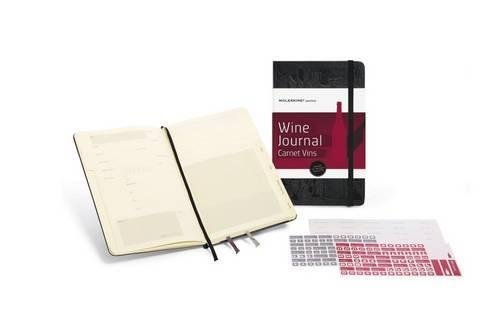
The Moleskine Passion Wine Journal represents the pinnacle of structured oenological documentation. It features six theme-based sections specifically engineered for different wine categories: Sparkling, White, Rosé, Red, Fortified, and Spirits—each distinguished by color-coded tabs for instant navigation.
Deep Architectural Analysis
Beyond its elegant hardcover and elastic closure lies a meticulously designed interior. Each entry page includes fields for comprehensive data: vintage and producer information, grape percentage composition, subjective acidity ratings, serving temperature recommendations, and icon-based glass type indications. The inclusion of double expandable inner pockets accommodates tasting menus, vineyard maps, and glossary references for on-the-fly consultation.
The paper deserves particular praise: 70gsm acid-free ivory sheets that resist ink bleed-through while providing a subtle texture that enhances writing comfort. The journal includes 240 adhesive labels for custom indexing.
Structural Advantages
- Comprehensive data fields eliminate guesswork
- Tabbed section dividers with color coding
- Includes vintage chart reference cards (2010–2025)
- Durable hardcover withstands cellar humidity
- Elastic closure maintains journal integrity
Potential Limitations
- Prescriptive fields may constrain creative notes
- Higher price point than basic notebooks
- Weight (1.2 lbs) reduces portability
- Limited space for extended tasting narratives
Month 1–3: Foundation Building
Focus on consistent completion of all fields. This establishes disciplined tasting habits that compound over time.
Month 4–12: Pattern Recognition
As entries accumulate, cross-referencing becomes powerful. You’ll notice patterns in your preferences across the tabbed organization.
Year 2+: Predictive Analysis
With hundreds of entries, the journal becomes a predictive tool for drinking windows and storage decisions.
The definitive choice for collectors building a reference-quality wine library.
Check Price on Amazon7. Wine Folly: The Essential Taster’s Journal
Created by Madeline Puckette and the team that revolutionized visual wine education, this journal employs a graphical tasting methodology centered around interactive flavor wheels and color comparison charts on every page. It recognizes that most newcomers struggle with descriptive vocabulary more than sensory perception itself.
Visual Learning Architecture
Each two-page spread includes a flavor wheel divided into intuitive categories (Fruit, Floral, Earth, Spice, etc.) with specific examples in each segment. Users simply circle the appropriate term—reducing cognitive load while building vocabulary through repetition. Educational integration extends beyond tasting pages, with margin notes explaining malolactic fermentation, oak aging effects, and regional characteristics.
Educational Strengths
- Visual flavor identification reduces vocabulary barriers
- Color reference charts standardize visual assessment
- Integrated educational margins explain tasting concepts
- Lay-flat binding facilitates simultaneous tasting and notation
- Progressive learning structure from basic to advanced
Considerations
- Limited space for free-form narrative tasting notes
- Softcover binding shows wear with frequent use
- Visual approach may frustrate experienced tasters wanting nuance
- Smaller page count (150 entries) than premium competitors

Transforms tasting from mysterious art to systematic science through visual learning.
Check Price on Amazon8. Leuchtturm1917 Sommelier Edition: The Connoisseur’s Canvas
German precision engineering finds expression in paper craftsmanship with the Leuchtturm1917 Sommelier journal. It begins with arguably the finest writing paper available in commercial journals—80g/m² acid-free sheets with micro-perforated page numbers and ink-resistant coating—then adds thoughtful wine-specific features as enhancements rather than constraints.
Paper Engineering Excellence
The crisp white background provides superior contrast for both writing and label preservation. The surface is specially treated to prevent feathering with fountain pen inks. Each sheet includes faint dot-grid patterning that provides alignment guidance without visual clutter, supporting both structured data entry and free-form sketching. Two ribbon bookmarks allow simultaneous reference to multiple sections.

9. Rustico Handcrafted Leather Logbook: Generational Documentation
The Rustico Leather Logbook transcends mere stationery to become an heirloom object—handcrafted in Texas from full-grain saddle leather that develops a rich patina through decades of use. This journal embodies the philosophy that wine appreciation connects past, present, and future.
Artisanal Construction Philosophy
Every Rustico journal begins with vegetable-tanned leather that retains natural imperfections. The binding employs traditional saddle-stitching with waxed linen thread that actually strengthens with age. The refillable design allows a single cover to document multiple decades of tasting history. It pairs exceptionally with artisanal wine openers and other handcrafted accessories.

10. De Long’s Wine Tasting Notebook: The Field Researcher’s Tool
Professional sommeliers, wine buyers, and critics operate in environments where efficiency and accuracy trump elaboration. De Long’s compact tasting notebook—originally developed for trade show use—represents the distillation of professional methodology into minimalist field documentation. At 4.5″ x 6.75″ with only 120 pages, it prioritizes portability and rapid notation.
Professional Workflow Optimization
Each page employs a highly efficient visual data architecture. Instead of written descriptors, De Long uses simple bar graphs that can be marked in seconds—perfect when tasting dozens of wines in rapid succession. A unique “Blind Tasting” section includes checkboxes for common varietal indicators, supporting the deduction methodology used in sommelier certification exams. The wire-o binding allows complete 360-degree rotation for one-handed notation.

When tasting volume demands efficiency without compromising essential data capture.
Check Price on Amazon11. Honorable Mentions: Specialized Alternatives
The “Wine Journal” by Galison
Features magnetic closure and decorative covers. Includes pocket for bottle labels but lacks structured tasting fields. Best for casual enthusiasts prioritizing aesthetics.
Baron Fig Wine Explorer
Minimalist approach with blank pages. Appeals to creative tasters who resist structured formats. High-quality paper but requires complete self-structuring.
Cavallini & Co. Vintage Journal
Italian-produced with vintage botanical illustrations. Includes useful reference pages on grape varieties and regions. Visual appeal exceptional.
Peter Pauper Press Wine Tasting Journal
Budget-friendly option with basic tasting fields. Linen cover with foil stamping offers surprising elegance. Paper quality adequate for ballpoint pen users.
12. Specialized Features Breakdown: What Truly Matters
| Feature | Purpose | Best Implementation | Compromise Warning |
|---|---|---|---|
| Lay-Flat Binding | Write while holding glass | Smyth-sewn signatures (Leuchtturm) | Perfect binding often fails under pressure |
| Acid-Free Paper | Century-long preservation | pH 7.5–8.5 with alkaline buffer | Most commercial paper becomes brittle in 20 years |
| Expandable Pockets | Storage for labels, receipts | Gusseted construction (Moleskine) | Flat pockets tear with overfilling |
| Visual References | Standardizes description | Printed Pantone samples (Wine Folly) | Digital printing fades unevenly |
| Customizable Indexing | Rapid access to specific wines | Adhesive labels + tab system | Pre-printed indexes become obsolete |
13. Professional Methodology: How to Log Like a Master Sommelier
The following “5S Systematic Tasting Protocol” provides a framework equally applicable to beginners and experts, ensuring consistent, comparable entries across tasting sessions.
See: Visual Analysis
Document color intensity, hue, and clarity. Note any sediment or effervescence before swirling.
Swirl: Liberation
Swirl deliberately. Observe “legs”—their thickness indicates alcohol content and glycerol presence.
Sniff: Aromatic Architecture
Identify primary, secondary, and tertiary aromas. Use specific descriptors—”red plum” not “red fruit.”
Sip: Palate Mapping
Assess sweetness, acidity, tannin, alcohol, body, and flavor intensity. Note texture and balance.
Savor: Finish & Conclusion
Time the finish. Record overall quality assessment, drinking window recommendation, and food pairing suggestions.
14. Advanced Journaling: Beyond Basic Tasting Notes
Comparative Analysis Pages
Dedicate pages to Horizontal (same varietal, same vintage, different producers), Vertical (same producer, different vintages), or Regional comparisons.
Personal Scoring Calibration
Develop a consistent 20-point or 100-point scoring system, documenting why points were deducted or awarded to create a personal quality benchmark.
Evolution Tracking
Revisit significant bottles at 6-month, 1-year, and 5-year intervals, documenting development in a dedicated section.
Food Pairing Experiments
Systematically test wines with different dishes, cross-referencing with cheese pairing principles.
15. Preservation Techniques: Labels, Adhesives, and Archival Methods
Steam Method (Traditional)
Hold empty bottle over steaming kettle for 2–3 minutes, then gently peel label starting from corners. Works best with paper labels and water-soluble glue.
Hot Water Bath (Reliable)
Submerge bottle in hot water with 1/4 cup baking soda for 30 minutes. Most labels slide off intact. Effective for synthetic labels with aggressive adhesives.
Label Lift Products (Professional)
Specialized adhesive strips (LabelOff, Keep-a-Peel) dissolve glue without wetting label. Most reliable for expensive bottles where label preservation is critical.
Photographic Documentation
Photograph label with smartphone, print on archival paper. Provides perfect reproduction without removal risk and enables uniform sizing.
16. Digital Hybrid Approaches: Bridging Analog and Digital
The most sophisticated contemporary journaling systems recognize that analog and digital methods offer complementary rather than competing advantages. A hybrid approach leverages the cognitive benefits of handwriting with the searchability and analytical power of digital tools.
The Scanning Protocol
Every 30–50 pages, scan journal entries using a flatbed scanner at 300 DPI resolution. OCR software converts handwriting to searchable text (Google Lens, Adobe Scan). This creates backup security while enabling digital search across thousands of entries.
Use spreadsheet software to create personal rating charts, track price appreciation of collected bottles, or analyze tasting frequency by region or varietal. The key to successful hybrid systems is maintaining the primacy of analog entry — digital tools should serve as enhancement rather than replacement.
17. Journaling at Wine Tasting Events: Professional Strategies
| Event Type | Primary Challenge | Journal Choice | Notation Strategy |
|---|---|---|---|
| Trade Tasting (50+ wines) | Rapid succession, palate fatigue | De Long’s compact notebook | Graph-based ratings only, elaborate notes later |
| Vineyard Tour (5–10 wines) | Standing, limited writing surface | Leuchtturm with clipboard | Brief notes, focus on standout features |
| Formal Tasting (3–5 wines) | Deep analysis expected | Moleskine Passion | Complete 5S protocol, comparative notes |
| Blind Tasting Competition | Deduction under time pressure | Custom grid sheets | Checkbox format with deduction reasoning |
Essential event journaling equipment includes a quality pen with quick-drying ink, a small clipboard for standing notation, and pre-printed spit cup tickets. Post-event, transfer abbreviated notes into your primary journal while memories remain fresh.
18. Custom Journal Construction: Tailoring Documentation to Your Collection
Phase 1: Requirement Analysis
Document your specific needs: Do you focus on particular regions requiring specialized fields? Do you integrate investment tracking needing price appreciation columns?
Phase 2: Paper & Format Selection
Choose paper weight (gsm), color, and finish. Select binding method: Smyth-sewn for lay-flat durability, Coptic stitch for complete openness, or disc-bound for refillability.
Phase 3: Layout Design
Create entry templates balancing structured data fields with free space. Include essential references: vintage charts, regional maps, glossary terms, personal scoring key.
Phase 4: Production & Refinement
Print test signatures on selected paper. Bind prototype journal for real-world testing. Refine based on several weeks of use before committing to full production.
32. Comprehensive Frequently Asked Questions
Three characteristics prove critical: quick-drying ink (to prevent smudging during rapid notation), waterproof formulation (resisting accidental wine spills), and consistent flow (for writing at various angles, often while standing). Archival pigmented inks offer ideal performance, though gel pens like Pilot G2 provide excellent compromise.
Absolutely. Documenting value wines establishes crucial baselines for quality assessment. These entries often reveal more about your personal preference patterns than premium bottles, as they’re consumed more frequently under varied conditions.
White wine journaling emphasizes acidity assessment, serving temperature effects, and evolution in the glass. Red wine notation focuses on tannin structure and aeration development. Sparkling wines require attention to bubble quality and mousse texture.
Monthly review identifies recent patterns; quarterly analysis reveals seasonal preferences; annual review tracks palate evolution. Many collectors schedule formal quarterly review sessions with selected re-tastings of benchmark wines.
Professionals prioritize speed and consistency using coded shorthand and standardized scoring sheets. They maintain calibration wines tasted regularly to ensure scoring consistency across years—a practice enthusiasts can adapt.
Controlled studies at UC Davis demonstrate that structured journaling improves tasting precision by 37% over 12 months. Translating sensory experience into language strengthens neural pathways for flavor identification and memory.
Three factors: paper pH (acid-free, ideally pH 7.5–8.5), ink stability (pigment-based outperforms dye-based), and storage conditions matching ideal wine storage parameters.
Maintain continuity through consistent numbering, creation of a master index documenting coverage dates, and retention of calibration notes. Digital scanning before storage creates searchable continuity across decades.
Labels serve as visual memory triggers and proof of provenance. Consider dedicating specific sections for label preservation separate from tasting notes to prevent journal bulkiness while maintaining visual reference material.
Systematic journals become predictive tools: they identify drinking windows, reveal successful producer/vintage combinations worth reinvesting in, and document price/value relationships informing future purchases.
Inconsistency in assessment criteria. Establishing and adhering to consistent protocols—even if simple initially—proves more valuable than sophisticated but inconsistent methods.
Always note serving temperature, glassware type, ambient temperature, and humidity if extreme. These contextual details explain entry variations and improve tasting condition standardization over time.
19. The Complete Beginner’s Guide to Wine Journaling
Starting a wine journal can feel intimidating — the blank page stares back, and you wonder whether you have the vocabulary, knowledge, or tasting experience to fill it meaningfully. The answer is yes, immediately, regardless of how little you currently know about wine. In fact, beginners often produce the most valuable journals over time precisely because their early entries capture the unfiltered first impressions of a developing palate, creating a before-and-after record of genuine growth that experienced tasters can never recreate.
The single most important piece of beginner advice: start simpler than you think you need to, and expand later. A three-line entry made consistently for six months is worth infinitely more than an elaborate protocol attempted twice and abandoned. Perfectionism is the enemy of a useful wine journal.
Your First 10 Journal Entries: A Structured Approach
For your first ten entries, use only this basic framework without worrying about anything else: the wine’s name and producer; the vintage year; whether you liked it (yes/no/maybe); and one word or phrase for what you smelled and one for what you tasted. That’s it. Five pieces of information. This establishes the habit before adding sophistication.
After ten entries, add two more fields: your rating on a simple 1–5 scale, and one note about what food you drank it with (or would drink it with). After twenty-five entries, add color description and finish length. After fifty, incorporate the full 5S protocol from Section 13. This progressive expansion mirrors how professional sommeliers learn — foundation first, complexity second.
The Beginner’s Minimum Viable Entry
Wine: [Name + producer] | Vintage: [Year] | Price: [$X] | Smell: [One descriptor] | Taste: [One descriptor] | Rating: [1–5] | Would buy again? [Yes/No]. This seven-field minimum takes under two minutes to complete and builds the habit that everything else depends on.
Common Beginner Questions
“What if I can’t identify specific aromas?” This is normal and temporary. Write what the smell reminds you of, even if it seems silly — “smells like my grandmother’s kitchen” or “reminds me of summer forest” are genuinely useful personal descriptors that will connect to formal wine vocabulary as you develop. The connection between personal memory and wine aroma is one of the most powerful tools in a taster’s arsenal.
“Should I journal wines I don’t like?” Especially those. Understanding why a wine doesn’t suit your palate — too tannic, too high acid, too oaky — is more informative than recording what you loved. Negative entries refine your preferences faster than positive ones because they isolate specific characteristics you want to avoid.
“Do I need to know the grape variety before writing?” No. Write what you experience, then look up the grape and region afterward. Many expert tasters argue that learning the wine’s identity after writing your notes (reverse-engineering from blind tasting) is the fastest educational approach available.
20. The Best Pens for Wine Journaling: A Detailed Guide
Your pen is the interface between sensory experience and permanent record. A poor pen choice — one that smears, bleeds through pages, or runs out of ink at a critical moment — disrupts the flow of documentation at precisely the moment when impressions are most vivid and volatile. The right pen becomes invisible, a transparent conduit between thought and paper.
🖊️ Pilot G2 Gel Pen (Best All-Around)
The most widely recommended pen among professional tasters for good reason. Quick-drying gel ink prevents smudging even in rapid note-taking sequences. Available in 0.5mm and 0.7mm tip widths — the 0.5mm is preferable for wine journals with smaller data fields. Refillable, inexpensive, consistent. The industry default for a reason.
✒️ Platinum Carbon Black (Best Archival)
For collectors prioritizing century-long preservation, this pigmented ink fountain pen is unmatched. Carbon-based pigment is chemically inert, UV-stable, and waterproof after drying. Will not fade for hundreds of years under proper storage. Pairs exceptionally with Leuchtturm1917 and other high-quality paper journals.
🖋️ Fisher Space Pen (Best for Events)
Pressurized cartridge writes at any angle, in cold cellar temperatures, on slightly damp paper, and even upside-down — all conditions encountered at outdoor tastings and standing cellar events. The click mechanism is one-hand operable when the other hand holds a glass. Compact enough for jacket pockets.
🖊️ Staedtler Triplus Rollerball (Best for Readability)
The triangular grip reduces hand fatigue during extended tasting sessions and the superfine 0.3mm tip creates exceptionally readable notes in small fields. Consistent ink flow prevents skipping mid-word, which is critical when noting complex flavors quickly before they fade from perception.
Pen Maintenance for Wine Journalers
Even the best pen becomes a liability without basic maintenance. Carry a backup pen to every tasting — this is non-negotiable advice from every professional sommelier who journals. Wine residue can clog rollerball mechanisms; wipe the tip gently with a dry cloth after any accidental contact with wine. Store pens horizontally (not tip-down) between sessions to prevent pooling of gel inks. For fountain pen users, flush with water every two weeks if using archival pigmented inks, which can dry and clog the nib more readily than standard dye-based inks.
Ink Color for Wine Notes
Standard black or dark navy ink is recommended for most journal entries — it provides maximum contrast against ivory and white papers and photographs cleanly for digital archiving. Some collectors use a multi-color system: black for tasting notes, red for ratings and conclusions, blue for purchasing information and provenance. This color-coding creates instant visual hierarchy when flipping through filled pages, allowing rapid identification of standout wines without reading every entry.
21. How to Write Better Tasting Notes: The Language Guide
The quality gap between a useful tasting note and a useless one is almost entirely linguistic — it lies in the specificity and precision of the descriptors used. “Nice fruity red wine” tells you nothing retrievable six months later. “Medium-plus intensity ruby, lifted red cherry and raspberry on the nose with a note of dried herbs, medium tannins, high acidity, medium body, clean finish” tells you precisely which wines satisfied you, which food it would suit, and whether it’s developing or peaked.
The Precision Hierarchy: Moving from Vague to Specific
Think of wine descriptors as a pyramid with three levels. The base level is the category: “fruit,” “earth,” “oak.” The middle level is the subcategory: “red fruit,” “forest floor,” “vanilla.” The peak is the specific descriptor: “fresh Bing cherry,” “damp autumn leaves,” “toasted coconut from new American oak.” Professional tasting notes operate primarily at the peak level. Beginners naturally start at the base and work upward with practice.
A practical exercise: whenever you write a category-level descriptor, force yourself to add one specific modifier. “Fruit” becomes “dark fruit — specifically plum.” “Earth” becomes “earthy — wet clay or slate.” Over 20–30 entries this habit becomes automatic, and your notes transform from impressionistic to analytically useful.
High-Value Descriptor Words
- Fruit: Cassis, morello cherry, white peach, quince, dried fig, lemon curd, green apple
- Floral: Violet, dried rose, jasmine, orange blossom, lavender
- Earth: Wet slate, truffle, forest floor, graphite, chalk, iron
- Spice: Black pepper, cardamom, star anise, white pepper, clove
- Oak: Vanilla, cedar, toasted hazelnut, dark chocolate, smoke
Vague Words to Avoid
- “Nice” — conveys personal approval, not flavor
- “Fruity” — tells you nothing specific
- “Smooth” — means different things to different tasters
- “Complex” — if you can’t describe the complexity, the word is empty
- “Good finish” — time it instead: “18-second finish”
Structure Words for Describing Palate
The structural elements of wine — acidity, tannin, body, alcohol — should be noted using consistent scale terms rather than subjective adjectives. Use: low / medium-minus / medium / medium-plus / high for each structural element. This standardized approach creates directly comparable data across hundreds of entries. A note reading “high acidity, medium-plus tannin, full body” instantly communicates the wine’s architecture to you months later, where “very acidic with lots of tannins and big body” creates ambiguity.
22. Color Assessment in Wine Journaling: The Complete Visual Guide
Color is the first piece of information a wine communicates, and it reveals more than most drinkers realize. A trained eye reading a wine’s color can make accurate estimates of grape variety, approximate age, climate, and winemaking approach — before a single molecule reaches the nose. Developing a systematic color vocabulary in your journal transforms visual assessment from superficial observation to genuine analytical tool.
Color Assessment Framework
Every color note should record three separate observations: depth (pale, medium, deep), hue (the specific color), and clarity (brilliant, clear, slight haze, hazy). These three dimensions together create a complete picture that a single color word cannot.
Red Wine Color Vocabulary
Purple/violet: Very young, unoaked, cool climate. Ruby: Young to medium-aged red. Garnet: Medium-aged, some development. Brick/orange rim: Significant age, tertiary development. Tawny/brown: Very old or oxidized.
White Wine Color Vocabulary
Water-white/pale lemon: Very young, neutral. Lemon/green tints: Young, high acidity. Gold: Mature, oaked, or botrytized. Amber/deep gold: Age, oxidative aging, or skin contact. Brown: Oxidized or extremely aged.
What Color Depth Tells You
Deeper color in reds indicates thicker-skinned grapes (Cabernet, Syrah, Malbec), hotter climates, or longer skin contact. Paler reds suggest Pinot Noir, Gamay, or aged wines with pigment degradation. In whites, deeper color often signals oak aging, malolactic fermentation, or oxidative winemaking.
The Rim Gradient
Tilt the glass against a white background and observe the rim — the thin outer edge of the wine. A rim that fades to pale or orange while the center remains ruby indicates age and development. A rim that remains as deep and purple as the center suggests youth. This single observation is one of the most reliable age indicators available without knowing the vintage.
Photographing Color for Your Journal
Smartphone photography can supplement written color notes with visual records. Hold the glass against a plain white card (a piece of printer paper works perfectly) in consistent natural light, and photograph from above at a 45-degree angle. This standardized setup creates comparable images across entries. Include a small color reference card (available from art supply stores) in the frame periodically to calibrate your camera’s white balance. Over time, a photo archive alongside written color notes creates a remarkably precise visual record of your wine collection’s development.
23. Using the Aroma Wheel as a Journaling Tool
The aroma wheel — first developed by Ann Noble at UC Davis in 1984 and since refined into dozens of variants — is the most powerful vocabulary-building tool available to wine journalists and enthusiasts. Understanding how to use it as an active journaling companion rather than a passive reference chart dramatically accelerates the development of precise tasting language.
The Wheel’s Architecture
The classic UC Davis wine aroma wheel organizes descriptors in three concentric rings. The innermost ring contains broad categories: Fruity, Spicy, Floral, Earthy, Woody, Chemical, Pungent, Oxidized, Microbiological. The middle ring subdivides these: “Fruity” becomes “Citrus,” “Berry,” “Tree Fruit,” “Tropical.” The outer ring provides the most specific descriptors: “Citrus” becomes “Grapefruit,” “Lemon,” “Lime.” Moving from inner to outer ring mirrors the movement from category to specific descriptor in your tasting notes.
The Wheel as Active Journaling Tool
Keep a printed or laminated aroma wheel alongside your journal during every tasting session. The workflow: smell the wine and write your initial impression without consulting the wheel (this captures your authentic perception). Then look at the wheel and work outward from the broadest category that matches your impression to the most specific descriptor that fits. Compare your initial impression with the wheel-guided descriptor — sometimes they match exactly, confirming your perception; sometimes the wheel reveals a more precise word for something you sensed but couldn’t name.
Over time, the most-circled descriptors on your wheel reveal your palate’s natural strengths. If you consistently identify citrus, floral, and mineral notes but struggle with oak-derived descriptors, this tells you something important about both your preferences and your training gaps. A wine journal combined with systematic wheel use is the most efficient self-directed wine education program available.
24. Blind Tasting Journal Technique: The Fastest Way to Develop Your Palate
Blind tasting — evaluating wine without knowing the grape, region, producer, or vintage — is universally acknowledged as the fastest method of palate development available. But its benefits compound dramatically when combined with systematic journaling, because the written record creates accountability, reveals systematic biases, and tracks improvement in ways that blind tasting alone cannot.
The Deduction Journal: A Step-by-Step System
A dedicated “deduction page” structure transforms blind tasting sessions into structured learning exercises. For each blind wine, journal entries should follow this exact sequence before any reveal:
Observation Phase
Record every objective observation: color depth, hue, rim color, clarity, viscosity (legs), effervescence. These are facts, not interpretations. Write before forming any hypothesis.
Aroma Phase
Note aromas without interpretation: “red cherry, dried herbs, something like graphite or pencil shavings, faint vanilla.” List everything. Don’t filter based on what seems plausible yet.
Palate Phase
Record all structural elements using the low/medium/high scale. Note texture (silky, grippy, creamy), weight (light, medium, full), and finish length in seconds.
Deduction Phase
Based only on your notes, write your best guess: Old World or New World? Which grape family? Which country? Which region? Approximate vintage? Write reasoning, not just conclusions.
Reveal & Correction
Record the actual wine identity. Circle every clue in your notes that pointed correctly to the answer. Write what led you wrong. This post-reveal analysis is where the real learning happens.
After 30–50 blind tasting journal entries with post-reveal analysis, your error patterns become clear. Perhaps you consistently underestimate age, or mistake Grenache for Pinot Noir, or identify New World as Old World when alcohol is high. These systematic biases, visible only through accumulated journal data, pinpoint exactly where your tasting education should focus next.
25. Organizing Your Wine Journal: Regional, Varietal, or Chronological?
The organizational structure of a wine journal is not a trivial decision — it determines what kinds of patterns you can identify, how easily you can retrieve specific entries, and how the journal’s value grows over time. The three primary organizational approaches each offer distinct advantages depending on your collecting and tasting philosophy.
Chronological Organization
Best for: Tracking palate development over time. Chronological journals show how your preferences evolve with experience. Each entry is a data point on a personal timeline. Weakness: Comparing all your experiences with Barolo requires flipping through the entire journal. Mitigated by a master index or digital backup.
Regional Organization
Best for: Collectors with geographic focus (Burgundy specialists, Napa enthusiasts). Creates immediate comparison across producers within a region. Weakness: Requires predefined section sizes that may overflow or go unused as your focus shifts. Best suited for dedicated single-journal formats like the Moleskine with pre-printed sections.
Varietal Organization
Best for: Grape variety enthusiasts and students of specific grapes. Groups Chardonnay from Chablis, Burgundy, Napa, and Australia for direct comparison. Weakness: Blended wines require a separate category. Multi-varietal blends like Bordeaux need a home that doesn’t fit neatly into single-grape sections.
Hybrid Organization (Recommended)
Best for: Most collectors. Write entries chronologically but maintain a separate master index organized by region and varietal. The index takes 30 seconds per entry to update and makes the chronological journal fully searchable. Use a separate index notebook or digital spreadsheet.
The Master Index System
A simple master index transforms any organizational approach into a fully retrievable database. Format: one line per wine, containing journal number and page, wine name and producer, region, varietal, vintage, and your rating. Maintain this index in a separate small notebook or a spreadsheet. When you want to find all your Rhône Valley notes, or every Riesling above 4/5, the index gives you page references in seconds. This 30-second-per-entry investment multiplies the long-term value of every journal you fill.
26. Journaling Sparkling Wines: A Specialized Approach
Sparkling wines require a distinct journaling approach that most general wine journal formats inadequately accommodate. The additional dimensions of effervescence — bubble size, persistence, mousse texture, and the way carbonation interacts with acidity and sweetness — demand specific vocabulary and observation techniques that transform sparkling wine documentation from a footnote into a fully realized tasting record.
The Additional Dimensions of Sparkling Wine Assessment
Bubble characteristics: Note bubble size (fine vs. coarse), the stream pattern (persistent streams from multiple points vs. occasional bursts), and the mousse on the surface (persistent creamy head vs. rapid dissipation). Fine, persistent bubbles from multiple streams are the hallmark of quality traditional method sparkling wine; coarse, dissipating bubbles often indicate tank method or lower-quality production.
Autolytic character: Extended lees contact in Champagne and premium Crémant creates distinctive brioche, toasted almond, and yeasty notes called autolytic character. Documenting this on a scale from “primary fruit dominant / no autolysis” to “pronounced autolytic / complex biscuit and cream notes” allows direct comparison of non-vintage, vintage, and prestige cuvée expressions over time.
Dosage perception: The sugar added at disgorgement (dosage) profoundly affects how sparkling wine tastes. Note whether the sweetness feels integrated or added, and whether acidity cuts through the dosage effectively. Brut Nature and Extra Brut wines show acidity more prominently; Demi-Sec wines require assessment of whether sweetness balances or overwhelms. These observations directly connect to the winemaker’s choices in ways that still wine notes rarely can.
Sparkling Wine Journal Entry Template
Style: [Champagne / Crémant / Cava / Prosecco / Pét-Nat / Other] | Method: [Traditional / Tank / Ancestral] | Dosage: [Brut Nature / Extra Brut / Brut / Extra Dry / Sec / Demi-Sec] | Lees aging: [NV standard / extended / vintage / prestige] | Bubbles: [Fine/medium/coarse, persistent/moderate/brief] | Mousse: [Creamy/light/none] | Autolysis: [None/developing/moderate/pronounced] | Color: [Pale straw / green tints / deep gold] | Aroma: | Palate: | Finish: | Rating:
27. Wine Journaling for WSET and Sommelier Exam Preparation
For candidates preparing for formal wine qualifications — WSET Level 2, Level 3, Diploma, the Court of Master Sommeliers (CMS) examinations, or the Master of Wine — a wine journal is not merely a learning aid but a non-negotiable preparation tool. The tasting examination component of these certifications requires the ability to produce structured, precise, and comparative tasting notes under time pressure. That ability is built exclusively through repetitive, deliberate practice recorded in a journal.
Aligning Your Journal with WSET’s SAT Framework
WSET’s Systematic Approach to Tasting (SAT) uses a specific vocabulary and structure that forms the basis of all WSET examination tasting assessments. Your journal entries should mirror this framework precisely. The SAT assesses wine under four headers: Appearance (clarity, intensity, color, other observations); Nose (condition, intensity, aroma characteristics, development); Palate (sweetness, acidity, tannin, alcohol, body, flavor intensity, flavor characteristics, finish); and Conclusions (quality assessment, drinking window, price category).
If your journal consistently uses SAT vocabulary — the specific terms “medium-minus,” “medium,” “medium-plus” for tannin, acidity, body, and alcohol — your exam entries will feel natural rather than constructed under pressure. Candidates who have journaled extensively in SAT format report that examination tasting notes write themselves almost automatically, freeing cognitive bandwidth for analytical depth rather than structural recall.
Building an Exam Preparation Journal
Six months before a major examination, dedicate at least three sessions per week to blind tasting journal entries using the exam framework. Target specific gaps: if your examination syllabus covers Alsace but your journal has few Alsatian entries, systematically source and journal Riesling, Gewürztraminer, and Pinot Gris from the region. Track which regional styles and varietals appear most frequently in your exam practice notes — these are the building blocks of exam success.
Create a dedicated “Benchmark Wines” section in your journal — 20–30 classic, textbook expressions of key examination varietals and regions that you taste, journal, and return to repeatedly throughout your study period. A textbook Pouilly-Fumé, a classic Barolo, a benchmark Napa Cabernet — these calibration wines anchor your sensory vocabulary and scoring consistency across the entire examination period.
28. Wine Journal vs Wine Apps: An Honest Comparison
The wine app market has matured significantly since Vivino’s launch in 2010. Apps like Vivino, CellarTracker, Delectable, and Wine-Searcher now offer sophisticated journaling features that raise genuine questions about whether physical journals retain their advantages for the modern collector. An honest assessment finds that both formats serve distinct purposes, and the most effective collectors typically use both rather than choosing between them.
| Feature | Physical Journal | Vivino | CellarTracker |
|---|---|---|---|
| Tasting Note Depth | Unlimited, fully customizable | Brief notes, community emphasis | Full-length notes, professional format |
| Cognitive Benefit | High — handwriting strengthens memory | Low — typing is passive | Medium — typing with structure |
| Searchability | Manual index only | Instant full-text search | Advanced search and filtering |
| Community Features | None | Very strong social network | Expert community, critic scores |
| Cellar Management | Manual tracking only | Basic inventory | Full professional cellar management |
| Price Tracking | Manual, no live data | Current market prices | Auction prices and market trends |
| Data Ownership | Complete and permanent | Platform-dependent | Exportable, community-shared |
| Long-term Preservation | Centuries with acid-free paper | Platform lifetime only | Export functionality available |
The Recommended Hybrid Workflow
At the tasting: Write full notes in your physical journal — this is where the cognitive encoding happens. Later the same day: Log the wine in CellarTracker with a brief note (not a rewrite of your journal) for searchability and community comparison. When purchasing: Use Vivino to scan labels for quick market pricing and community ratings before buying. For cellar management: CellarTracker’s drinking window recommendations and community tasting notes on your specific bottles supplement your own observations with broader context. The physical journal remains the primary document; digital tools serve as searchable index and market intelligence layer.
29. Photography in Wine Journaling: Enhancing Your Records
Visual documentation alongside written notes creates a multi-dimensional record that neither medium alone can match. A photograph of a wine’s color in the glass, combined with a written color description, creates a permanent calibration reference — allowing you to compare today’s impression of a wine’s color against entries from years ago with objective visual evidence rather than purely verbal recollection.
What to Photograph and Why
The wine in the glass against white: This is the highest-priority photograph. Hold or prop a glass filled with the wine against a plain white card in consistent light and photograph from the side and from above. This captures both the rim-to-center color gradient (revealing age) and the depth of color (revealing grape variety and winemaking approach). Take this photograph immediately after pouring, before any temperature change affects the wine’s appearance.
The bottle label: Photograph both the front and back label before opening. The back label often contains technical information (blend percentages, aging regime, bottling date) not available elsewhere. For natural wines especially, back labels increasingly contain honest, detailed winemaking notes that inform your tasting context.
The cork after extraction: A photographed cork tells its own story — the wine staining height indicates how the bottle was stored; the cork’s condition indicates seal integrity; any unusual coloring suggests potential issues. Collecting a small archive of cork photographs alongside your notes is particularly useful for tracking producers whose cork quality varies by vintage.
Integrating Photos with Your Physical Journal
The simplest integration method: at the end of each month, print your wine photographs (most home photo printers produce 4×6 prints for under $0.20 each) and affix them to the relevant journal pages using acid-free photo corners. This creates a fully illustrated journal without requiring any digital-first workflow. For collectors using the Leuchtturm1917 or similar journals with thick paper, small-format photographs glued with acid-free adhesive integrate seamlessly without buckling pages.
30. Tracking Wine Value and Investment in Your Journal
For collectors who purchase wines with appreciation potential — premier cru Burgundy, classified Bordeaux, premium California Cabernet, aged vintage Port — the wine journal serves an additional function beyond tasting documentation: it becomes a financial record that tracks acquisition cost, current market valuation, and the return on investment of patience. This dimension of wine collecting deserves systematic journaling in its own right.
The Investment Tracking Page
Create a dedicated investment tracking section separate from tasting notes. For each investment-grade purchase, record: acquisition date, quantity purchased, price paid per bottle and total outlay, merchant or auction source, and estimated drinking window from purchase. Update this section annually with current market prices from Wine-Searcher or Liv-ex auction data, and calculate unrealized gain/loss per bottle and per case.
This practice reveals patterns invisible without systematic records. Perhaps your 2015 Napa Cabernet purchases at $80/bottle are now trading at $140 — a 75% unrealized gain in five years. Or perhaps a case of 2014 Pomerol you purchased optimistically has underperformed market expectations. These observations inform future purchasing strategy in concrete, data-driven ways that wine media coverage cannot replicate for your specific acquisition history.
Insurance and Provenance Documentation
A meticulously kept wine journal with purchase receipts, tasting notes, and storage condition records serves as provenance documentation that has genuine value for both insurance purposes and potential resale. Collectible wine with documented provenance commands significant premiums at auction — Sotheby’s and Christie’s wine auction houses specifically cite provenance documentation as a primary factor in lot pricing. Your journal, combined with storage temperature logs from a smart sensor system, constitutes exactly the kind of documentation serious buyers and insurers require.
31. Wine Journal Gift Guide: Finding the Perfect Journal for Someone Else
A wine journal is one of the most thoughtful gifts available for any wine enthusiast at any level — it signals that you understand their passion is deeper than casual drinking, and it provides a tool that grows in personal value with every entry. But matching the right journal to the recipient requires understanding their experience level, their tasting environment, and their aesthetic preferences.
🎁 Gift for a Complete Beginner
Best choice: Wine Folly Taster’s Journal. The visual wheel-based format eliminates the blank-page intimidation that stops beginners before they start. The educational margins turn every entry into a learning moment. Pair it with a quality gel pen and a short handwritten note explaining the journal’s purpose — many beginners don’t realize they should start one until someone shows them how.
🎁 Gift for the Organized Enthusiast
Best choice: Moleskine Passion Wine Journal. For someone who already journals casually but wants to upgrade their system, the Moleskine’s structured sections and adhesive label system represents a genuine step-up in organizational capability. The premium presentation also signals that their hobby deserves premium tools.
🎁 Gift for the Serious Collector
Best choice: Rustico Leather Logbook or Leuchtturm1917. Serious collectors have likely outgrown beginner formats. The Rustico’s heirloom quality and refillability suit a collector with a long-horizon philosophy; the Leuchtturm suits the collector who values premium paper and customization above all. Pair with a set of Platinum Carbon archival ink cartridges for a thoughtful combination gift.
🎁 Gift for the Travelling Wine Professional
Best choice: De Long’s compact notebook plus a Fisher Space Pen. The combination fits in any jacket pocket, works under event conditions, and requires no batteries. For a wine buyer, critic, or sommelier who attends multiple trade tastings monthly, this practical pairing is more valued than any decorative alternative.
What Makes a Wine Journal Gift Set Exceptional
The journal alone is a good gift. The journal plus a quality pen is a better gift. The journal plus a pen plus a small laminated aroma wheel reference card plus a brief handwritten guide to getting started is an exceptional gift — because it removes every practical barrier to beginning the practice. The most common fate of gifted journals is the shelf: they are received with genuine enthusiasm and never opened because the recipient doesn’t know how to start. Removing that friction by including a starter guide transforms a thoughtful present into a practice-changing gift.
Conclusion: The Journal as Living Legacy
Selecting the ideal wine journal represents more than stationery choice—it’s commitment to a practice that transforms casual consumption into cultivated appreciation. Whether you choose the Moleskine Passion, Wine Folly, Leuchtturm1917, Rustico Leather, or De Long’s system, the critical action is beginning the practice itself.
As pages fill with observations, ratings, and reflections, your journal evolves from blank notebook to personalized wine encyclopedia—a unique document capturing your sensory journey through the world of wine.