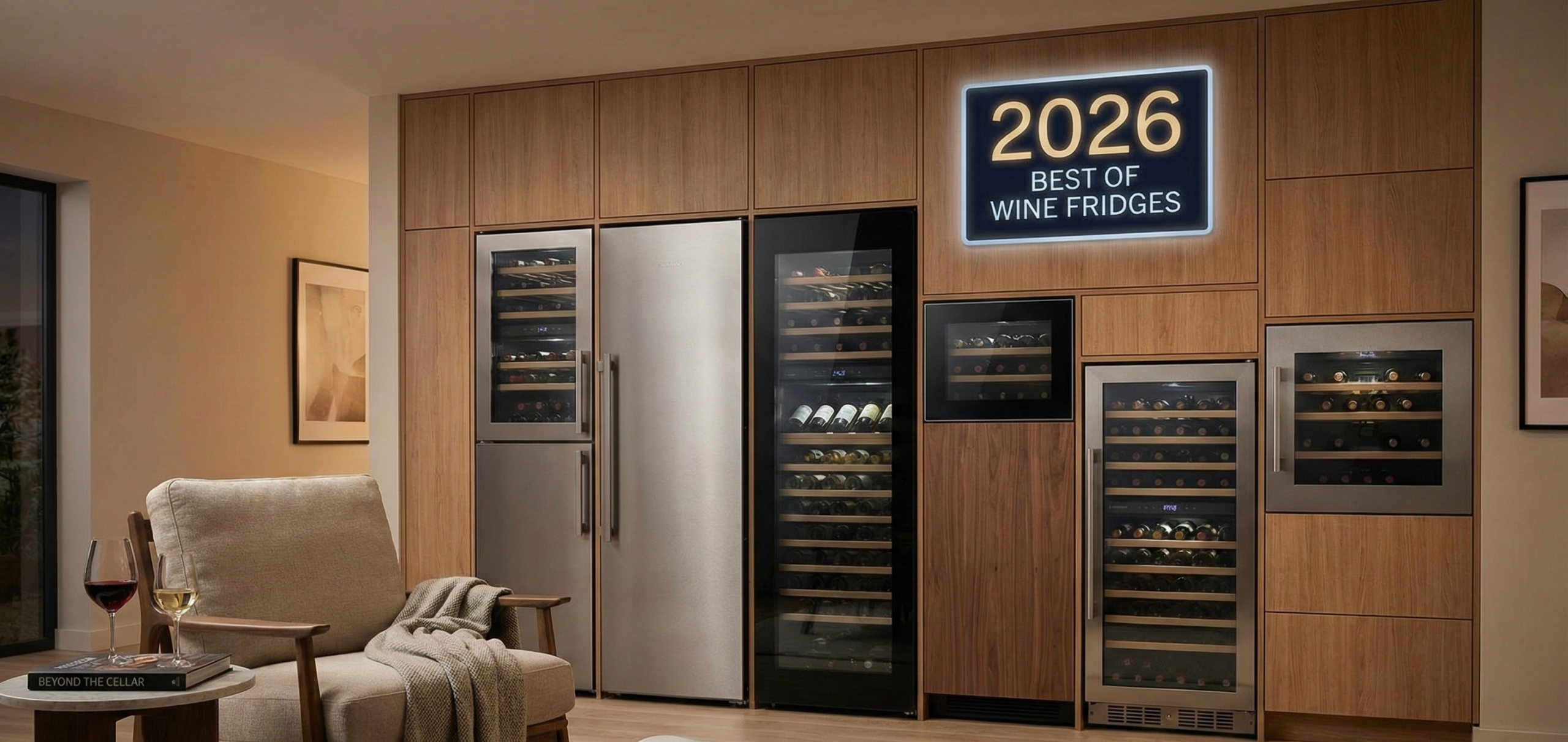
Beyond the Cellar: The Ultimate Guide to the 5 Best Wine Fridges of 2026
For the casual enthusiast or the seasoned collector, the right wine fridge is the cornerstone of any collection. We’ve uncorked, tested, and compared dozens of models to bring you the definitive list that balances performance, design, and value.
More Than a Cooler: Why a Dedicated Wine Fridge is Non-Negotiable
Imagine opening a prized bottle of Cabernet Sauvignon, only to find it tastes flat, muted, or worse, like stewed fruit. The culprit? Improper storage. Your kitchen refrigerator, while excellent for groceries, is a hostile environment for wine. It’s too cold, too dry, and the constant vibrations from the compressor can literally shake the life out of your bottles, accelerating aging and degrading delicate aromas. A dedicated wine fridge recreates the stable, humid, and vibration-free conditions of a traditional cellar, preserving your investment and ensuring every bottle is served as the winemaker intended.
Beyond preservation, a wine fridge is about accessibility and enjoyment. It turns your collection from a hidden stash into a living display, a centerpiece that sparks conversation. Whether you’re starting with a few special bottles or curating a diverse library spanning different varietals and regions, the right unit provides peace of mind. It’s about having that perfect Chardonnay chilled and ready for a spontaneous Friday night, or knowing your aged Bordeaux is resting undisturbed until its grand opening. For anyone serious about their wine journey, it’s the first and most critical piece of equipment.
The Science of Perfect Wine Storage: Temperature, Humidity, Light & Vibration
Understanding why wine deteriorates without proper storage is the foundation of making a good purchasing decision. Wine is a living, evolving liquid — a complex soup of organic acids, alcohol, tannins, esters, and hundreds of flavour-active compounds that are continuously reacting with each other and, if given the chance, with oxygen. Every element of the storage environment influences the rate and direction of these reactions. Getting the conditions right means those reactions proceed in the direction of greater complexity and pleasure; getting them wrong means the wine heads toward dullness, vinegar, and eventual undrinkability.
Temperature: The Master Variable
Temperature is the single most critical storage variable, and it affects wine in two distinct ways: the absolute temperature determines the rate at which wine evolves, while temperature fluctuation determines how stressfully it does so. At the ideal cellar temperature of 55–58°F (13–14°C), chemical reactions in wine proceed slowly and gracefully — tannins polymerise, esters develop, and the wine gains complexity over months and years. Raise the temperature consistently to 75°F (24°C) and those same reactions accelerate dramatically: a wine that might take ten years to reach its peak at 55°F could be prematurely aged and declining within three years. At 85°F (29°C), wine begins to “cook” — you will see colour browning in whites and brickening in reds, and the aroma will shift toward stewed or jammy notes. Temperatures above 90°F (32°C) can produce irreversible heat damage within hours.
Temperature fluctuation is often more harmful than a consistently elevated temperature. When a bottle warms and cools repeatedly, the wine inside expands and contracts. Over time, this physical movement works the cork in and out microscopically, eventually compromising the seal and allowing air to infiltrate. Even with screw-cap wines, repeated thermal cycling stresses the wine’s molecular structure. A wine fridge’s primary virtue is not just that it is cool — it is that it holds a steady temperature 24 hours a day, 365 days a year, regardless of seasonal changes in your home.
Humidity: The Forgotten Factor
Natural cork is a biological material that requires moisture to maintain its seal. In a dry environment (relative humidity below 50%), corks can gradually dry out, shrink, and crack, creating tiny channels through which oxygen enters. Once oxygen infiltrates at this level, the wine begins oxidising — whites go brown and nutty, reds become flat and lose their fruit. The ideal relative humidity range for wine storage is 60–80%. Above 80%, you risk encouraging mould growth on labels and corks (harmless to the wine itself but damaging to collectible labels and aesthetics).
Most dedicated wine fridges maintain adequate humidity naturally because the sealed environment retains moisture from the wine bottles themselves. However, in very dry climates or during winter months with central heating running, the humidity inside a wine fridge can drop below the optimal range. Many premium wine fridges include active humidity management systems or at minimum a reservoir you can add water to for moisture replenishment. If your unit does not have active humidity control, a small dedicated humidity sensor (discussed in the accessories section) will alert you if levels drop and you can add a shallow tray of water to the interior.
Light: The Silent Destroyer
Ultraviolet (UV) light triggers photochemical reactions in wine that produce sulphur compounds responsible for the “light strike” fault — most commonly experienced as wet cardboard, burnt rubber, or a musty, reduced smell. This fault is well-documented and can occur surprisingly quickly. In laboratory conditions, direct fluorescent light exposure can light-strike a bottle of sparkling wine in as little as a few hours. Standard natural light through an unshaded window can do lasting damage over days. Sunlight is the most damaging of all. This is why wine bottles are made from dark-tinted glass — the tinting provides some natural UV protection. It is also why serious collectors never store wine in rack systems near windows or under fluorescent tube lighting.
A dedicated wine fridge addresses light through several mechanisms. The best units use UV-filtering glass doors that block the harmful UV spectrum while still allowing you to see and display your collection. Interior LED lighting in quality fridges emits virtually no UV and produces minimal heat — a significant improvement over incandescent bulbs. When evaluating a wine fridge, look specifically for “UV-protected,” “UV-filtering,” or “double-pane tinted glass” in the product description.
Vibration: The Slow Agitator
Vibration affects wine through two mechanisms. First, physical agitation disturbs the sediment that forms naturally in ageing wines — particularly aged reds, vintage ports, and some unfiltered natural wines. Sediment is a sign of a well-aged wine (it contains harmless tannin and pigment polymers) and should be allowed to settle at the bottom of the bottle before decanting. Chronic vibration keeps this sediment perpetually suspended, making the wine harder to pour cleanly and potentially altering its texture. Second, and more significantly for everyday wines, vibration appears to accelerate chemical reactions in wine. The exact mechanism is not fully understood, but studies have demonstrated that wines stored in high-vibration environments develop measurably faster than those stored in stable conditions — and not necessarily in a positive direction.
Your kitchen refrigerator is among the worst possible storage environments for vibration: the compressor motor cycles on and off multiple times per hour, transmitting vibration directly through the shelves into any bottles stored there. A thermoelectric wine fridge generates essentially zero vibration because it has no moving mechanical parts. A compressor-based wine fridge generates some vibration, but quality units mount their compressors with vibration-damping materials and the vibration level is far lower than a domestic refrigerator. For serious long-term ageing of premium wines, a thermoelectric unit or a compressor unit with proven vibration isolation is the preferred choice.
Ideal Temperature
55–58°F (13–14°C) for long-term storage. Stable temperature is more important than hitting the exact number.
Ideal Humidity
60–80% relative humidity. Keeps corks moist and seals intact for cork-finished bottles.
Light Protection
UV-filtering glass blocks the wavelengths that trigger light-strike faults. Essential for display storage.
Vibration-Free
Thermoelectric units are best for vibration-sensitive aged wines. Compressor units need good isolation.
Horizontal Bottles
Cork-sealed wines must be stored on their sides to keep the cork moist. Screw-caps can stand upright.
Odour Isolation
Keep wine away from strong odours. Corks can transmit smells from the environment into the wine.
The Complete Wine Storage Temperature Guide: Every Style Covered
One of the most common misconceptions about wine storage is that there is a single ideal temperature that applies to all wines. In reality, different wine styles have different optimal storage ranges, and within those ranges, individual wines may have specific preferences based on their structure, age, and intended drinking window. This comprehensive guide covers every major wine style.
Red Wine Storage Temperatures
Red wines generally store best at slightly warmer temperatures than whites because their structure — particularly their tannin content — evolves more beneficially in the 55–65°F range. Tannins polymerise (link together into longer chains) at a rate that is sensitive to temperature: too cold and the process stalls; too warm and the tannins bind and precipitate too rapidly, leading to premature collapse of structure and a wine that seems “overaged.” The full-bodied reds with highest tannin content, like Barolo, Brunello, and classified Bordeaux, particularly benefit from the lower end of this range and longer ageing timelines.
| Red Wine Style | Storage Temp | Key Varietals | Ageing Potential |
|---|---|---|---|
| Light Red | 55–60°F (13–16°C) | Pinot Noir, Beaujolais, Gamay, Frappato | 2–8 years for quality examples |
| Medium Red | 57–62°F (14–17°C) | Merlot, Grenache, Zinfandel, Dolcetto | 3–12 years depending on producer |
| Full-Bodied Red | 58–65°F (14–18°C) | Cabernet Sauvignon, Syrah/Shiraz, Malbec, Tempranillo | 5–25+ years for premium bottles |
| Classic Cellar Red | 55–58°F (13–14°C) | Barolo, Brunello, Châteauneuf-du-Pape, aged Bordeaux | 10–30+ years at cellar temp |
| Fortified Red | 57–63°F (14–17°C) | Ruby Port, LBV Port, Vintage Port | Vintage Port: 20–50+ years |
White Wine Storage Temperatures
White wines are generally more vulnerable to high temperatures than reds because they lack the buffering structure that tannins provide. The phenolic compounds in white wine are more immediately volatile and can develop unpleasant oxidative characters — nutty, sherry-like notes — rapidly when stored too warm. Delicate aromatic whites like Riesling and Gewürztraminer are particularly sensitive and benefit from storage at the cooler end of the range. Fuller whites like oaked Chardonnay can tolerate slightly more warmth without immediate detriment.
| White Wine Style | Storage Temp | Key Varietals | Notes |
|---|---|---|---|
| Aromatic White | 45–50°F (7–10°C) | Riesling, Gewürztraminer, Muscat, Torrontés | Most benefit from early drinking (1–5 yr); exceptions include aged German Riesling |
| Crisp Light White | 45–52°F (7–11°C) | Pinot Grigio, Sauvignon Blanc, Albariño, Vinho Verde | Designed for freshness; drink within 2–4 years of vintage |
| Full-Bodied White | 50–55°F (10–13°C) | Oaked Chardonnay, White Rioja, White Burgundy, Roussanne | Benefits from 2–8 years of ageing; oak adds structure |
| Ageable White | 50–55°F (10–13°C) | Hunter Valley Semillon, aged Chenin Blanc, Grüner Veltliner | Some benefit from 10–20+ years of proper cellaring |
| Oxidative White | 55–60°F (13–16°C) | White Port, Madeira, Fino/Manzanilla Sherry, Vin Jaune | These wines are made to express oxidation; cooler storage still slows further change |
Rosé, Sparkling & Dessert Wine Storage
| Style | Storage Temp | Examples | Key Considerations |
|---|---|---|---|
| Dry Rosé | 45–52°F (7–11°C) | Provence rosé, Spanish rosado, White Zinfandel | Drink within 1–2 years; freshness is the point |
| Non-Vintage Champagne | 45–50°F (7–10°C) | NV Moët, Bollinger NV, Veuve Clicquot NV | Already disgorged and ready; store up to 3 years maximum |
| Vintage Champagne | 50–55°F (10–13°C) | Dom Pérignon, Roederer Cristal, Krug Vintage | Can benefit from 10–20+ years at proper cellar temp |
| Prosecco / Cava / Crémant | 43–48°F (6–9°C) | Valdobbiadene Prosecco, Cava Reserva, Crémant d’Alsace | Drink within 1–3 years; these wines do not improve with age |
| Dessert Wine | 50–55°F (10–13°C) | Sauternes, Tokaji Aszú, German TBA/BA, Ice Wine | High sugar content is a natural preservative; can age 20–50+ years |
The storage temperatures above are guidelines, not rigid rules. A wine from a warm vintage in a hot region (such as a 2003 Bordeaux or 2019 Napa Cabernet) may have higher alcohol and riper fruit that tolerates slightly warmer storage than a cooler vintage of the same wine. When in doubt, err on the cooler side — slower evolution is almost always preferable to faster. A wine stored too cool merely ages slowly; a wine stored too warm ages poorly and cannot be saved.
Serving Temperature vs. Storage Temperature: An Important Distinction
One of the most persistent sources of confusion in wine culture is the difference between storage temperature and serving temperature. These are not the same thing, and conflating them leads to wine being served either too warm or too cold — arguably the most common quality-reducing mistake made at the dinner table.
Storage temperature is the temperature at which wine lives between openings — days, months, or years at a time. The goal is stability and slow, graceful evolution. The ideal is 55–58°F (13–14°C) for virtually all still wines regardless of style. Serving temperature is the temperature at which a wine is poured into the glass and consumed — usually a session of an hour or two. The goal here is flavour expression: different compounds express themselves optimally at different temperatures, and serving temperature profoundly affects the perception of tannin, acidity, sweetness, and aroma.
| Wine Style | Storage Temp | Ideal Serving Temp | How to Achieve |
|---|---|---|---|
| Full-bodied red | 55–58°F (13–14°C) | 62–68°F (17–20°C) | Remove from fridge 30–45 min before pouring; will warm in glass |
| Light / medium red | 55–58°F (13–14°C) | 58–64°F (14–18°C) | Remove 15–20 min before; serve slightly cool |
| Full-bodied white | 50–55°F (10–13°C) | 52–58°F (11–14°C) | Serve directly from fridge; let it open in the glass |
| Crisp white / rosé | 45–52°F (7–11°C) | 46–52°F (8–11°C) | Serve directly from fridge, keep cold in ice bucket |
| Champagne / sparkling | 45–50°F (7–10°C) | 43–47°F (6–8°C) | 30 min in ice bucket before serving; serve immediately |
Red wine served too warm (above 70°F / 21°C) tastes flat, flabby, and alcoholic — the heat pushes alcohol volatility to the fore and suppresses aromatic freshness. Red wine served too cold suppresses tannins and makes the wine taste harsh, closed, and austere. White wine served too cold mutes aroma entirely; served too warm it tastes flat and loses refreshing acidity. The common “room temperature” instruction for red wine predates central heating — it referred to cool European castle or stone house interiors, approximately 60–65°F (16–18°C). Modern centrally heated rooms of 72–75°F are far too warm for red wine.
The Connoisseur’s Checklist: Your Guide to Choosing the Perfect Wine Fridge
Navigating the world of wine coolers can feel as complex as a sommelier’s exam. Let’s break down the key features so you can make an informed decision with confidence.
Capacity & Bottle Counts: Reading Between the Lines
Manufacturer bottle counts are often based on standard Bordeaux bottles. If you collect bulkier bottles like Champagne or uniquely shaped Burgundy bottles, you’ll fit fewer. As a rule of thumb, subtract 15-20% from the stated capacity for a realistic estimate. Consider not just your current collection, but your buying habits. Do you buy by the case, or are you a careful curator of a few special bottles? A modular approach to storage can be wise, but a slightly larger fridge than you think you need is often the best advice.
Single Zone vs. Dual Zone: Temperature Tactics
This is the most critical decision after capacity. Single-Zone units maintain one uniform temperature throughout, ideal for collectors who focus solely on reds or solely on whites. Dual-Zone units feature two separate compartments with independent temperature controls. This is essential for the versatile enthusiast who wants to store reds at their ideal 55-65°F and whites/sparkling at 45-50°F simultaneously. It offers maximum flexibility for diverse collections and perfect readiness for any meal or pairing opportunity.
Cooling Technology: Thermoelectric vs. Compressor
Thermoelectric coolers use the Peltier effect, solid-state technology that is vibration-free, incredibly quiet, and energy-efficient. They excel in smaller, compact units but have less powerful cooling and can struggle in warm rooms. Compressor-based coolers, like your kitchen fridge, are powerful, cool quickly, and handle higher ambient temperatures and larger capacities with ease. Modern compressors are much quieter than older models, but some vibration is still present. For a deep dive into this crucial choice, explore our guide on thermoelectric vs. compressor cooling.
Key Features to Prioritize
- UV-Protected Glass: Blocks harmful light that prematurely ages wine.
- Precise Digital Thermostats: Adjustable in 1-degree increments for exact control.
- Interior LED Lighting: Low-heat, energy-efficient display lighting.
- Slide-Out or Roll-Out Shelves: Makes accessing bottles at the back effortless.
- Door Locks: A simple but valuable feature for security or curious hands.
Common Pitfalls to Avoid
- Ignoring Energy Ratings: A 24/7 appliance can impact your utility bill.
- Poor Ventilation Placement: Units need adequate airflow (front, rear, or top).
- Flimsy Shelving: Ensure shelves are sturdy metal or solid wood, not brittle plastic.
- Loud Operation: Check decibel (dB) ratings if placing in a living area.
- Forgetting Future Needs: Your collection will likely grow. Plan ahead.
How Many Bottles Do You Actually Need? A Realistic Sizing Guide
Buying too small a wine fridge is one of the most consistent regrets among wine enthusiasts. The “I’ll never need more than 12 bottles” assumption is overturned with remarkable speed as the hobby deepens. A case of wine from a visit to a winery here, a mixed case for a dinner party there, a few bottles put aside to age — and suddenly a 12-bottle unit feels like a car park with no spaces. Here is a realistic framework for sizing your wine fridge based on your actual drinking and collecting behaviour.
The Honest Bottle Count Breakdown
When evaluating capacity, remember that manufacturers base their counts on standard 750ml Bordeaux-shaped bottles (roughly 3 inches in diameter). Here is how different bottle formats affect actual storage in a typical 30-bottle-rated fridge:
- Standard Bordeaux bottles (Cabernet, Merlot, Sauvignon Blanc): 30 bottles as rated
- Burgundy-shaped bottles (Pinot Noir, Chardonnay): Wider shoulders — expect 22–25 bottles
- Champagne bottles: Significantly heavier and wider — expect 18–22 bottles
- Magnums (1.5L): One magnum takes the space of approximately 2.5 standard bottles
- Half-bottles (375ml): Smaller but often awkward to shelf — roughly 1.5x the standard count
Size-to-Drinker Profile Matching
| Profile | Bottles Recommended | Why | Upgrade Trigger |
|---|---|---|---|
| Casual Drinker 1–2 bottles/week, no ageing |
12–18 bottles | Provides a small ready-to-drink buffer with a few bottles in rotation | When you find yourself buying cases or ageing bottles |
| Regular Enthusiast Varied collection, occasional ageing |
24–36 bottles | Enough for a diverse cellar in rotation with a few bottles aside to age | When the fridge is full and you are still buying |
| Serious Collector Buys by the case, ages intentionally |
50–100 bottles | Allows case buying and a meaningful age-forward collection alongside drinking wines | Consider a dedicated wine room or second unit |
| Wine Investor / Cellar Builder Buys futures / en primeur |
100–300+ bottles | Investment-grade storage at scale; consider professional climate-controlled options | At this level, dedicated cellar or off-site professional storage may be cost-effective |
Buy one size larger than you think you need. Virtually no wine enthusiast ever said “my wine fridge is too large.” The reverse is extremely common. The cost difference between a 30-bottle and a 40-bottle unit is typically small; the frustration of running out of space within a year is real.
Built-In vs. Freestanding Wine Fridges: A Full Comparison
The choice between a built-in (integrated) wine fridge and a freestanding unit involves more than just aesthetics — the two types have fundamentally different ventilation designs that determine where and how they can safely be installed. Placing the wrong type in the wrong location can cause the unit to overheat, reduce efficiency dramatically, and shorten its lifespan significantly.
How Ventilation Design Differs
Freestanding wine fridges are designed to exhaust heat through vents at the rear and sides. They require clearance — typically 2–6 inches at the back and 1–3 inches on each side — to allow hot air to dissipate. Installing a rear-vented unit inside a cabinet or alcove without adequate clearance causes the unit to work harder, hold higher temperatures than set, and potentially overheat the compressor. In extreme cases, this can lead to compressor failure and void the manufacturer’s warranty.
Built-in (front-vented) wine fridges exhaust heat from the front, typically through a toe-kick grille at the bottom of the door. This design allows them to be flush-mounted under a counter or inside custom cabinetry with zero clearance on the sides and back. Built-in units generally cost more than equivalent freestanding models, but they are the correct choice for integrated kitchen or bar installations. Never attempt to install a rear-vented freestanding unit in an enclosed cabinet — the consequences are predictable and expensive.
Freestanding: Best For
- Flexible placement — living room, kitchen, utility room, bar area
- Lower purchase price for equivalent capacity
- Easier installation — just plug in
- Can be relocated if you move house
- Wider range of sizes and price points available
Built-In: Best For
- Under-counter or integrated cabinet installation
- Kitchen remodels where flush aesthetics are required
- Custom home bars and wine rooms
- Accepting a custom cabinet panel (panel-ready models)
- Where floor space is at a premium and vertical integration is needed
| Feature | Freestanding | Built-In / Integrated |
|---|---|---|
| Ventilation | Rear/sides — requires clearance | Front toe-kick — zero side/rear clearance needed |
| Installation | Plug and play — minimal setup | May require carpentry for trim/panel alignment |
| Aesthetics | Standalone appliance look | Seamlessly integrated into cabinetry |
| Price | Lower at equivalent capacity | Premium price for integrated design |
| Can accept custom panel? | Rarely | Panel-ready models accept matching cabinet panels |
| Best placement | Open floor, against wall with clearance | Under-counter, inside cabinet, in island |
| Flexibility | High — can be moved | Low — designed for permanent installation |
1. Wine Enthusiast 32-Bottle Dual Zone: Our Unanimous Top Pick
Consistently outperforming its price point, the Wine Enthusiast 32-Bottle model is the gold standard for the serious home collector. It strikes a near-perfect balance between professional-grade features and approachable design, making it the centerpiece of many a home bar or kitchen.
In-Depth Performance & Features
The dual-zone system is the star here. The upper zone (for whites) and lower zone (for reds) are independently controlled with precision digital thermostats, offering a range wide enough for every wine style. The forced-air cooling system is remarkably even, eliminating hot spots. The sleek, black stainless steel finish resists fingerprints, and the double-pane, tinted glass door provides a gorgeous, protected view of your collection. The interior is thoughtfully laid out with six full-width, slide-out wooden shelves that can be reconfigured to accommodate magnums.
In our testing, the Wine Enthusiast maintained its set temperatures within ±1°F across all positions in the cabinet — a benchmark performance that many more expensive units fail to match. The unit settled to operating temperature within 4 hours of initial startup and maintained stability even during heatwaves when ambient temperature reached 85°F — a critical test for a compressor unit. The door seal is robust and passes the “dollar bill test” with ease. The noise level is genuinely unobtrusive; installed in a kitchen, it blends acoustically with the usual appliance background hum.
Pros
- Exceptional temperature stability and accuracy.
- Quiet, efficient compressor operation.
- Premium build quality with sturdy shelving.
- Beautiful, modern design that fits any décor.
- Excellent value for the feature set.
Cons
- Requires significant clearance for rear ventilation.
- At 32″ wide, it demands a sizable footprint.
- Some users report the interior light is a bit bright.

Ready to Elevate Your Wine Storage?
Our top pick combines precision, capacity, and stunning design. See the latest price and customer reviews on Amazon.
Check Price on Amazon2. Klarstein 24″ Dual Zone Cooler: The Versatility Champion
For the collector whose tastes know no bounds, a dual-zone fridge is essential. The Klarstein stands out for offering sophisticated dual-zone management in a compact, affordable, and remarkably quiet package.
This unit shines in its flexibility. The two zones aren’t just separate; they offer a wide, independent temperature range (41-64°F), allowing you to store not just reds and whites, but also sparkling wine and long-term aging projects side-by-side. The thermoelectric cooling for the upper zone and compressor for the lower is an innovative hybrid that maximizes efficiency. Its sleek, fingerprint-resistant exterior and blue interior LED lighting give it a contemporary edge. It’s the ideal choice for an apartment dweller or condo owner who needs serious storage without a full-sized footprint.
The lower compressor zone handles the more temperature-demanding storage requirements — reds that need to be held at precise ageing temperatures — while the thermoelectric upper zone provides silent, vibration-free chilling for your whites and sparkling wines that are closer to serving temperature. The digital controls are intuitive and the display is clearly legible. Build quality is good for the price point, though the shelving is not as premium as the Wine Enthusiast — wire shelves rather than wood, which means slightly more bottle-to-bottle contact.
3. EuroCave Premiere L: The Compact & Silent Performer
When space is at a premium and silence is sacred, the EuroCave Premiere L is in a class of its own. Utilizing advanced thermoelectric cooling, it runs whisper-quiet (under 30dB), making it perfect for a home office, bedroom, or studio apartment.
Don’t let its small size fool you. It holds 12 standard bottles with ease and maintains temperature with impressive precision, even in fluctuating ambient conditions thanks to its intelligent control system. The sleek, minimalist glass door and stainless steel frame blend seamlessly into modern interiors. It’s the ultimate “appliance-as-art” piece for the urban wine lover who prioritizes discretion and design. For those seeking energy-efficient and quiet storage solutions, this model is a benchmark.
EuroCave’s engineering pedigree shows in the details. The temperature uniformity across all 12 bottle positions is exceptional — a common weakness of budget thermoelectric units where the bottles closest to the Peltier element are significantly cooler than those at the front. The EuroCave’s internal fan circulation solves this elegantly. The unit is also one of the most energy-efficient in this guide, drawing less power than most LED bulbs when holding its set temperature in a temperate room.
4. Perlick PCW-24ZB Built-In Dual Zone: The Seamless Integration Expert
For kitchen remodels or luxury home bars where a flush, integrated look is non-negotiable, Perlick is the brand professionals trust. The PCW-24ZB is a 24-inch wide, fully integrated unit designed to accept a custom cabinet panel, disappearing completely into your millwork.
This is professional-grade equipment. It features a dual-zone compressor system with precise digital controls, a forced-air cooling tunnel for even temperature distribution, and a patented moisture management system to prevent mold. The front-venting design allows for zero-clearance installation on all sides. While it commands a premium price, its durability, performance, and flawless integration are unmatched. This is the choice for the discerning homeowner who will not compromise on aesthetics or performance.
The Perlick’s stainless steel interior is exceptionally easy to clean and resists the mould that can develop in less well-sealed units. The door hinge mechanism is smooth and substantial — a telling sign of engineering quality. The unit is designed for commercial environments as well as residential, meaning its components are rated for significantly higher cycle counts than consumer-grade appliances. If you are investing in a kitchen remodel, the Perlick represents a wine storage solution that will outlast the cabinetry around it.

Perfect for Reds & Whites Simultaneously
The best dual-zone technology under $500. Ideal for building a versatile collection.
See Dual Zone Options on Amazon5. Ivation 18-Bottle Thermoelectric: The Unbeatable Value
Proving that you don’t need to spend a fortune to start storing wine correctly, the Ivation 18-bottle cooler is our top value pick. It delivers reliable, vibration-free cooling at a price that invites any newcomer to the hobby.
This single-zone unit uses quiet thermoelectric cooling, making it ideal for a living room or den. The temperature range is sufficient for most reds or whites (though not both at once). It features a sleek black exterior, a reversible door, and three slide-out wire shelves. While the construction is naturally lighter than premium models, it is solid for its class. For a college grad building their first collection, a couple wanting to store their weekly favorites, or as a dedicated “white wine only” fridge, the Ivation offers exceptional performance per dollar.
Side-by-Side: The 5 Best Wine Fridges Compared
| Model | Capacity | Zones | Cooling | Noise | Key Feature | Best For |
|---|---|---|---|---|---|---|
| Wine Enthusiast 32-Bottle | 32 Bottles | Dual Zone | Compressor | ~42 dB | Precision Temp Control, Premium Build | The Serious All-Around Collector |
| Klarstein Dual Zone | 28 Bottles | Dual Zone | Hybrid | ~38 dB | Wide Temp Range, Modern Design | Versatility on a Budget |
| EuroCave Premiere L | 12 Bottles | Single Zone | Thermoelectric | <30 dB | Ultra-Quiet, Compact Footprint | Small Spaces & Noise-Sensitive Areas |
| Perlick PCW-24ZB | 24 Bottles | Dual Zone | Compressor | ~40 dB | Fully Integrated, Front Venting | High-End Kitchen Integration |
| Ivation 18-Bottle | 18 Bottles | Single Zone | Thermoelectric | <32 dB | Extreme Value, Vibration-Free | Beginners & Secondary Storage |
How to Set Up Your Dual-Zone Wine Fridge: A Practical Configuration Guide
Owning a dual-zone wine fridge is only half the battle — setting it up correctly to serve your specific collection is what transforms it from a cooling appliance into a genuinely useful wine management tool. Here is the practical guide to configuring each zone for maximum benefit.
Understanding Zone Placement in Most Units
In the majority of dual-zone wine fridges, the upper zone is warmer and the lower zone is cooler — this is a function of natural thermodynamics (warm air rises, cool air sinks) and is intentional in the design. Some units place reds in the upper zone and whites in the lower zone; others reverse this and label it explicitly. Always check your specific unit’s manual to confirm which zone is which before loading bottles.
The Three Most Common Zone Configurations
Configuration 1 — Classic Red/White Split: Set the upper zone to 58–62°F (14–17°C) for reds and the lower zone to 46–50°F (8–10°C) for whites and sparkling. This is the most common configuration and works well for a mixed collection of ready-to-drink wines. This configuration effectively replaces both a wine rack and the need to chill whites before serving — your whites are always ready to pour.
Configuration 2 — Ageing and Ready-to-Drink Split: Set the upper zone to 55–57°F (13–14°C) — the ideal long-term ageing temperature — for special bottles you want to cellar for years. Set the lower zone to 55–65°F (13–18°C) for everyday drinking wines held at or just below serving temperature. This configuration is ideal for collectors who want to use one fridge for both long-term investment and regular drinking.
Configuration 3 — Sparkling Focus: If your collection skews heavily toward Champagne, Prosecco, and sparkling wines, set the lower zone to 43–47°F (6–8°C) for near-serving-temperature sparkling storage, and the upper zone to 50–55°F (10–13°C) for still whites. This keeps your sparkling wines just minutes away from serving temperature with minimal additional chilling required.
Leave at least 20% of each zone’s capacity free. Overcrowding blocks airflow circulation, creates temperature gradients within the zone, and means the unit works harder to maintain its set temperature. A well-ventilated wine fridge is both more efficient and more consistent.
Organising Your Wine Collection in a Fridge: Systems That Work
A wine fridge without an organisation system quickly becomes a frustrating puzzle every time you want to locate a specific bottle. The right approach depends on your collection size and drinking style, but any system is better than none. Here are the most effective approaches.
The Zone-Based System
The simplest system for a dual-zone fridge: whites and sparkling in the lower (cooler) zone, reds in the upper (warmer) zone. Within each zone, further sub-divide by subregion or varietal — Burgundy-style reds together, Bordeaux-style reds together. Label each shelf position with masking tape and a marker if you have a larger collection and prefer systematic organisation. This system works particularly well if you have a broad, varied collection and drink from it regularly.
The Drinking-Window System
Organise by when the wine should be drunk: bottles at the front that are ready to drink now, bottles in the middle that need 1–3 more years, and bottles at the back that need 3+ years. This “first-in, first-out” approach ensures you always reach for the right bottle at the right time and never accidentally drink an age-worthy wine too young or, worse, hold a bottle past its peak.
The Case-Lot System
If you buy wine by the case, store each case together in one shelf area. Label the front bottle with the wine name, vintage, and “drink from” date. Work through the case from one end, leaving the rest undisturbed at the back. This minimises handling of bottles you don’t intend to drink yet and makes inventory management simple.
Using a Wine Inventory App
For collections above 30–40 bottles, a wine inventory application transforms management. Apps like Vivino, CellarTracker, and Delectable allow you to log each bottle, its location in the fridge, purchase date, and drinking window. You can set reminders for when a wine enters its ideal drinking window, and some apps provide crowd-sourced peak drinking window data from millions of tasters. Pair this with a simple physical label on each shelf section and you have a professional-grade inventory system for a modest collection.
Storing Champagne & Sparkling Wine: Special Considerations
Sparkling wines are among the most storage-sensitive wines you can buy. They have unique requirements compared to still wines, and the consequences of improper storage are often more immediately apparent — a flat, tired Champagne is a particularly deflating experience. Here is everything you need to know about storing sparkling wine correctly.
Why Sparkling Wine Is Different
The carbonation in sparkling wine is under pressure — typically 5–6 atmospheres in Champagne, approximately 90 psi. This pressure makes the cork particularly important as a seal: any cork shrinkage or seal degradation allows CO₂ to escape, leading to a flat wine. The same dry conditions that risk a still wine’s cork integrity over months and years can affect a sparkling wine’s carbonation noticeably within weeks. This means the humidity considerations that are important-but-not-urgent for still wine storage are more urgently relevant for sparkling.
Additionally, UV light causes particularly rapid light-strike damage in sparkling wines. The carbonation and lower pH of sparkling wines make them more photochemically sensitive than still wines. Non-vintage Champagnes, which are disgorged and ready to drink, are especially vulnerable — they have less antioxidant capacity than wines with significant ageing on their lees. Store sparkling wines in the darkest area of your wine fridge, away from any interior light.
Optimal Temperature for Sparkling Wine Storage
The ideal long-term storage temperature for vintage Champagne and other age-worthy sparkling wines is 50–55°F (10–13°C) — the same range as other cellar wines. For non-vintage Champagne, Prosecco, Cava, and sparkling wines intended for near-term drinking, storage at 43–50°F (6–10°C) is practical and means they are close to serving temperature when you retrieve them. Remember: serving temperature for Champagne is 43–47°F (6–8°C) — colder than most wine fridges are set for red wine storage. A dual-zone unit is therefore particularly valuable if you maintain a regular supply of sparkling wine.
How Long Can You Store Sparkling Wine?
Non-vintage Champagne, Prosecco, and Cava are not designed for extended cellaring and should be consumed within 1–3 years of purchase. Vintage Champagne from reputable houses can benefit from 5–20+ years of proper cellar storage. Prestige cuvées (Dom Pérignon, Salon, Krug, Cristal) from great vintages can evolve positively for 30+ years. English sparkling wine, while a relatively young category, is showing strong ageing potential — top examples from Nyetimber, Chapel Down, and Ridgeview are worth cellaring for 5–15 years.
The widespread belief that inserting a spoon into an open bottle of Champagne preserves its bubbles overnight has been thoroughly disproven in controlled studies. The only effective way to preserve carbonation in an opened sparkling wine is a proper Champagne stopper (lever-style closures that clamp onto the bottle lip) kept in the refrigerator. The best sparkling wine stoppers can preserve reasonable fizz for 2–3 days.

Compact, Quiet & Energy Efficient
Perfect for small spaces, offices, or as a secondary unit. Thermoelectric magic at its best.
Shop Compact Coolers on AmazonLong-Term Ageing vs. Short-Term Storage: Using Your Wine Fridge for Both
Not all wines in your collection have the same timeline or the same needs. Some bottles are tonight’s dinner wine; others are ten-year projects that you’re watching develop. A thoughtful wine fridge strategy accommodates both ends of this spectrum — and the good news is that a single well-configured unit can handle both if you approach it intelligently.
What “Long-Term Storage” Actually Means
Long-term storage means holding wine for more than two years with the expectation that it will be better for the wait. Not all wines benefit from ageing — the vast majority of wine sold globally (roughly 95% by volume) is designed to be consumed within two years of bottling. The wines that reward long-term cellaring share a common set of structural characteristics: high acidity (which preserves freshness), significant tannins (which evolve and soften), good concentration, and a track record of ageing well at the producer level.
For long-term storage, you want the coldest stable temperature your unit can maintain — 55–57°F (13–14°C) — minimal door opening, horizontal bottle orientation for corked wines, and the highest practical humidity. These bottles should be kept at the back of the fridge where temperature is most stable and they are least likely to be disturbed.
Short-Term “Ready Stock” Storage
Short-term storage — wines you intend to drink within the next few weeks or months — has more forgiving requirements. The temperature does not need to be at cellar optimal; anywhere in the 50–65°F range is fine. The primary benefits here are convenience (having wine chilled and ready to pour for whites) and basic protection from heat, light, and vibration that would damage the wine in everyday household conditions. These are the bottles you place at the front of each zone for easy access.
How Wine Ages in a Fridge vs. a Cellar
A wine fridge set to 55–57°F provides conditions very close to an ideal natural cellar and will allow age-worthy wines to develop at approximately the same rate as they would underground. A fridge set to 65°F will age wines noticeably faster — roughly 1.5–2x the rate of cellar-temperature storage. This is not necessarily bad for everyday wines you plan to drink within a few years, but it is inadvisable for wines with 10+ year ageing potential. The key variable is not just the temperature but the consistency: a fridge that holds 65°F absolutely steadily 365 days a year is significantly better for wine than a cellar that averages 55°F but fluctuates between 48°F and 68°F across the seasons.
Energy Use & Running Costs: The Numbers Behind Your Wine Fridge
A wine fridge is a 24/7 appliance — it runs every hour of every day, every day of the year. Unlike a tumble dryer or an oven that you use briefly and then switch off, your wine fridge never stops. This continuous operation means energy efficiency is a meaningful consideration, both for cost and environmental footprint.
Annual Consumption by Unit Type
| Unit Type | Typical Annual kWh | Annual Cost (US, ~$0.15/kWh) | Annual Cost (UK, ~£0.24/kWh) |
|---|---|---|---|
| Small thermoelectric (12–18 bottle) | 70–120 kWh | $10–$18 | £17–£29 |
| Mid-size compressor (24–36 bottle) | 150–220 kWh | $22–$33 | £36–£53 |
| Large compressor (40–60 bottle) | 200–320 kWh | $30–$48 | £48–£77 |
| Premium/built-in compressor (24–32 bottle) | 180–280 kWh | $27–$42 | £43–£67 |
| Large wine cabinet (100+ bottle) | 300–500 kWh | $45–$75 | £72–£120 |
How to Reduce Running Costs
- Buy an Energy Star certified model — independently verified to consume at least 20% less energy than the minimum federal standard
- Place the unit away from heat sources — a wine fridge next to an oven works far harder than one in a cool corner of a room
- Don’t open the door more than necessary — each door opening releases cold air and requires energy to recover
- Keep the condenser coils clean (compressor models) — dusty coils reduce heat exchange efficiency
- Fill the unit — the wine bottles act as thermal mass, making a full fridge more efficient than a half-empty one
- Set the temperature no lower than needed — 57°F is plenty for all-purpose cellar storage
The 10 Most Common Wine Fridge Mistakes (and How to Avoid Them)
Even enthusiastic wine lovers with good equipment make preventable storage mistakes. Here are the ten most common errors we see, and the straightforward fixes for each.
Mistake 1: Installing a Freestanding Unit in an Enclosed Cabinet
This is the most damaging single mistake. A freestanding unit’s rear-venting design requires airflow behind and around the unit. Enclosed spaces trap the heat that the unit exhausts, causing it to run continuously and eventually overheat. Either buy a built-in unit designed for enclosed installation, or ensure 3–6 inches of clearance behind the unit at all times.
Mistake 2: Placing the Fridge Near the Oven, Dishwasher, or Heating Vents
Any heat source placed near a wine fridge forces it to work against ambient heat, reducing efficiency and potentially preventing it from reaching or holding its set temperature. In kitchens, locate the wine fridge in the coolest available position — typically on an exterior wall or away from cooking appliances.
Mistake 3: Setting the Temperature Too Cold
Many first-time wine fridge owners set the temperature as cold as possible. In fact, temperatures below 45°F (7°C) can cause certain chemical reactions in wine to halt prematurely, and can even cause tartrate crystals to form in whites. These crystals are harmless but alarming-looking. 55–58°F is optimal for all still wines; no benefit accrues from going lower.
Mistake 4: Standing Corked Bottles Upright
Cork-sealed bottles must be stored horizontally to keep the cork moist. An upright corked bottle will have its cork slowly dry out over weeks to months, eventually compromising the seal and oxidising the wine. Screw-cap bottles are the only exception — these can be stored upright without any consequence.
Mistake 5: Using the Wine Fridge as Extra Refrigerator Space
Loading a wine fridge with food, beer, and soft drinks introduces temperature-volatile items, odours that can penetrate wine corks, and causes more frequent door-opening cycles. Keep your wine fridge exclusively for wine.
Mistake 6: Ignoring Vibration from Nearby Appliances
If your wine fridge is placed against a wall shared with your washing machine, chronic vibration may be affecting your wines. This is particularly relevant for bottles you intend to age for several years.
Mistake 7: Never Checking the Door Seal
Door seals degrade over time. Test the seal every 6 months with the dollar bill test: close the door on a dollar bill at multiple points around the door frame. If the bill slides out easily without resistance, the seal needs replacing.
Mistake 8: Buying Too Small a Unit
Virtually every wine enthusiast regrets buying too small. The difference in price between a 24-bottle and a 36-bottle unit is often less than the cost of a nice case of wine. Size up by one tier from your current perceived need.
Mistake 9: Never Cleaning the Interior
A wine fridge that has never been cleaned accumulates residual wine drips, cork particles, and eventually mould. A twice-yearly wipedown with a mild baking soda solution prevents odour buildup and keeps the interior sanitary. Never use bleach or strong chemical cleaners.
Mistake 10: Ignoring Firmware/Electronic Calibration
Digital temperature displays on wine fridges can drift over time. Once a year, verify the actual internal temperature with a dedicated digital thermometer placed inside the unit for 24 hours. A 3–5°F discrepancy is common in mid-range units after several years.
Essential Wine Fridge Accessories: Completing Your Setup
A wine fridge is the foundation, but a few carefully chosen accessories transform it from a storage appliance into a precision wine management system.
Worth Buying
Digital Thermometer with External Display (£15–£40 / $20–$50): A must-have for any serious collector. The built-in temperature displays on most wine fridges are indicative, not precision-calibrated. A standalone digital thermometer placed inside the unit and read externally verifies the actual temperature. Look for a model with max/min memory so you can see the temperature range over a 24-hour period.
Hygrometer / Humidity Monitor (£15–£35 / $20–$45): If you store predominantly cork-sealed wines for extended periods, monitoring relative humidity inside the fridge is valuable. Aim for 60–80% RH; if you consistently read below 55%, consider adding a small shallow dish of water to the interior.
Wine Inventory App Subscription (Free–$30/year): CellarTracker is the industry standard for home wine inventory management. It’s free to use (with optional paid premium features) and has the largest database of community tasting notes and peak drinking window data available.
Champagne / Sparkling Wine Stoppers (£8–£20 / $10–$25): High-quality lever-type sparkling wine stoppers with a rubber gasket preserve carbonation for 2–3 days. If you regularly drink sparkling wine across multiple sessions, these are indispensable.
Vacuum Wine Pumps (£10–£25 / $12–$30): For partially consumed still wine bottles, vacuum pumps remove air from the bottle to slow oxidation. Combined with proper wine fridge storage, a vacuum-sealed partial bottle can remain fresh for 3–5 days.
Skip These
Wine fridge deodorisers / odour absorbers: If your wine fridge has a smell, the correct solution is to clean it — not to mask odours. Clean the interior twice a year with baking soda solution instead.
“Wine preservation” gas systems for the fridge: These systems inject inert gas into the fridge to displace oxygen. Effective on your countertop, they are redundant inside a sealed wine fridge where oxidation is not a meaningful issue for unopened bottles.
Garage & Outdoor Wine Fridge Storage: What You Need to Know
Garages and outdoor entertainment areas are common locations where people want to install a wine fridge. However, these environments pose specific challenges that standard wine fridges are not designed to handle.
The Problem with Garages
Standard wine fridges are designed to operate within an ambient temperature range of approximately 60–80°F (15–27°C). A garage may reach 95–100°F (35–38°C) in summer and drop to 20–30°F (-7 to -1°C) in winter in cold climates. Both extremes create problems: high ambient heat causes the compressor to run continuously and fail prematurely; very low ambient temperatures cause the compressor to stop running entirely, potentially allowing wine to freeze.
What “Garage-Ready” Actually Means
Garage-ready wine fridges are specifically engineered with an extended operating temperature range — typically 0–110°F (-18 to 43°C). They use more powerful compressors, enhanced insulation, and control logic that manages both heating elements (in extreme cold) and cooling capacity (in extreme heat). If a product description does not explicitly state “garage-ready” or “extended ambient operating range,” do not assume it is suitable for garage installation.
Outdoor Wine Fridges
Dedicated outdoor wine fridges are sealed against humidity, insects, and UV exposure to a higher standard than indoor units. They typically carry an IP (ingress protection) rating of IP55 or higher, meaning they resist water jets from any direction. If you are installing a wine fridge in an outdoor kitchen or pool bar exposed to rain or garden irrigation, an outdoor-rated unit is essential.
Most standard wine fridge warranties are explicitly voided if the unit is installed outside the manufacturer’s specified ambient operating range. Before placing any wine fridge in a garage, outbuilding, or outdoor space, read the warranty documentation carefully. A voided warranty on a failed compressor unit can mean an expensive repair bill with no manufacturer support.
Setting It Up for Success: Installation & Placement Tips
Where and how you place your wine fridge is as important as the model you choose. Ventilation is king. Compressor units typically need 2-6 inches of clearance at the rear and sides. Built-in models are designed for tighter spaces but still require the airflow specified in the manual. Never install a non-built-in model in a sealed cabinet. Place it on a level, sturdy floor away from direct sunlight, heat sources, and areas prone to extreme temperature swings. Allow the unit to stand upright for 24 hours after delivery before plugging it in to let the compressor oils settle.
Step-by-Step First-Time Setup
- Unbox and inspect: Check for shipping damage before proceeding. Document any damage with photographs before accepting delivery.
- Let it stand: Allow the unit to stand upright for at least 24 hours before plugging in. This allows compressor oil that may have shifted during transit to return to its correct position.
- Measure the ventilation clearance: Confirm you have adequate clearance per the manufacturer’s specs — typically 2 inches minimum on sides, 4–6 inches at rear for freestanding units.
- Level the unit: Use a spirit level and adjust the feet until the unit is perfectly level. An unlevel wine fridge causes the door to swing open or closed on its own.
- Plug in and set temperature: Allow the empty unit to run for 24 hours before loading bottles, confirming it reaches and holds its set temperature.
- Load bottles gently: Lay corked bottles horizontally. Do not overload any single shelf — check the manufacturer’s per-shelf weight rating and stay within it.
- Verify actual temperature: After 48 hours of operation with bottles loaded, check the actual internal temperature with a separate thermometer and adjust the thermostat setting if there is a discrepancy.
Longevity & Care: Keeping Your Wine Fridge in Peak Condition
A little maintenance goes a long way. Every three to six months, unplug the unit and gently vacuum the rear condenser coils to prevent dust buildup. Wipe down the interior shelves and walls with a mild solution of baking soda and water to prevent odors. Check the door seal periodically. If your model has a drip tray for defrost water, empty and clean it regularly.
Annual Maintenance Schedule
| Task | Frequency | Why It Matters |
|---|---|---|
| Clean condenser coils (compressor models) | Every 3–6 months | Dusty coils reduce efficiency by 10–30%, increase running costs, and shorten compressor life |
| Wipe interior with baking soda solution | Every 6 months | Prevents odour buildup; cork is gas-permeable and can absorb fridge smells |
| Check door seal integrity | Every 6 months | A failing seal raises running costs and destabilises temperature |
| Verify actual temperature | Annually | Display calibration can drift; actual temp may differ from displayed by several degrees |
| Check humidity (cork-sealed collections) | Quarterly in winter | Central heating dries ambient air; cork desiccation risk increases in heated homes |
| Empty and clean drip tray | Monthly or as needed | Standing water grows mould; a clean tray prevents odours and biological contamination |
| Clean glass door | Monthly | Aesthetic; also confirms the UV coating is intact |
Your Wine Fridge Questions, Expertly Answered
How long should I let my new wine fridge run before adding bottles?
Always let your wine fridge run empty for a full 24 hours after initial installation. This allows the internal temperature to stabilize at your set point and ensures the unit is functioning correctly before you entrust it with your valuable wine.
Is it okay to store wine on its side in a fridge with wooden shelves?
Absolutely. Storing bottles on their side is not just okay, it’s recommended for cork-sealed bottles. It keeps the cork moist and swollen, preventing air from entering and oxidizing the wine. The wooden shelves in quality fridges are designed for this purpose.
Can a wine fridge be used in an unheated garage?
It depends. Standard wine fridges are designed for ambient temperatures typically found indoors (e.g., 60-80°F). In a garage that gets very cold in winter or hot in summer, the compressor may struggle or fail. Look specifically for “garage-ready” models with extended ambient temperature ranges.
What’s the ideal temperature for red wine vs. white wine?
General guidelines: Light-bodied reds (Pinot Noir, Beaujolais): 55-60°F. Full-bodied reds (Cabernet, Syrah): 60-65°F. Light-bodied whites & Rosé: 45-50°F. Full-bodied whites (Chardonnay): 50-55°F. Sparkling Wine: 40-45°F. A dual-zone fridge lets you hit two of these ranges perfectly.
How much does a wine fridge increase my electricity bill?
Modern, energy-efficient wine fridges are surprisingly economical. A typical 30-bottle compressor model might use 150-250 kWh per year, similar to a modern desktop computer. Thermoelectric models are even more efficient. Look for an Energy Star rating for the most efficient units.
Do screw-cap bottles need to be stored on their side?
No, one of the advantages of screw caps (Stelvin closures) is that they are airtight and impervious to drying out. You can store screw-cap bottles upright without risk of oxidation.
Why is there moisture or frost inside my wine fridge?
A small amount of condensation on the interior walls or glass door can be normal, especially in humid environments or if the door is opened frequently. Excessive frost or pooling water can indicate a faulty door seal, overfilling (blocking airflow), or a malfunctioning defrost system.
Can I store other drinks like beer or sodas in my wine fridge?
Technically yes, but it’s not ideal. Beer and sodas are best served much colder (35-40°F) than wine. Storing them in a wine fridge set to 55°F means they won’t be cold enough, and their presence can introduce odors. It’s best to use a dedicated beverage cooler for other drinks.
How noisy should I expect my wine fridge to be?
Noise levels vary. Thermoelectric coolers are virtually silent (often under 30dB). Modern compressor models range from 40-50dB, which is a quiet hum similar to a modern kitchen refrigerator. Always check the product’s decibel rating, especially for living areas.
What should I do if my wine fridge stops cooling?
First, check the basics: Is it plugged in? Is the circuit breaker tripped? Ensure the vents are not blocked. Unplug the unit for 5 minutes to reset the electronic control. If it still doesn’t work, contact customer support.
Can I store opened wine bottles in my wine fridge?
Yes — a wine fridge is excellent for preserving opened bottles. Reseal the bottle and store upright or on its side at your normal storage temperature. For still wines, expect 3–5 days of reasonable quality if resealed promptly; for sparkling wines, use a lever-type Champagne stopper and consume within 1–3 days.
What is the difference between a wine fridge and a wine cellar?
A wine fridge is an electrical appliance that actively maintains temperature. A wine cellar is a dedicated room or underground space that maintains stable temperatures passively through thermal mass and natural insulation. A proper underground cellar maintains 55–58°F naturally year-round in most climates with no running cost. A wine fridge provides cellar conditions without requiring underground construction, making it the practical choice for most home collectors.
How do I know when to upgrade from a wine fridge to a cellar?
Typical upgrade triggers: your current wine fridge is consistently full; you are buying wine specifically for 10+ year ageing; your collection has significant financial value. Many serious collectors use a combination: a wine fridge for active drinking stock and short-to-medium-term storage, with a climate-controlled cellar room or off-site professional storage for long-term investment bottles.
The Final Pour: Investing in Your Wine’s Future
Choosing the right wine fridge is an investment in the longevity, quality, and sheer enjoyment of your wine. It transforms wine from a simple beverage into a curated experience, protected and presented at its best. Whether you select our versatile top pick, the space-saving compact, or the integrated showpiece, you’re taking the single most important step beyond the bottle.
Your perfect wine is waiting to be tasted at its peak. Your perfect wine fridge is waiting to preserve it.
Explore Top-Rated Wine Fridges on Amazon Now