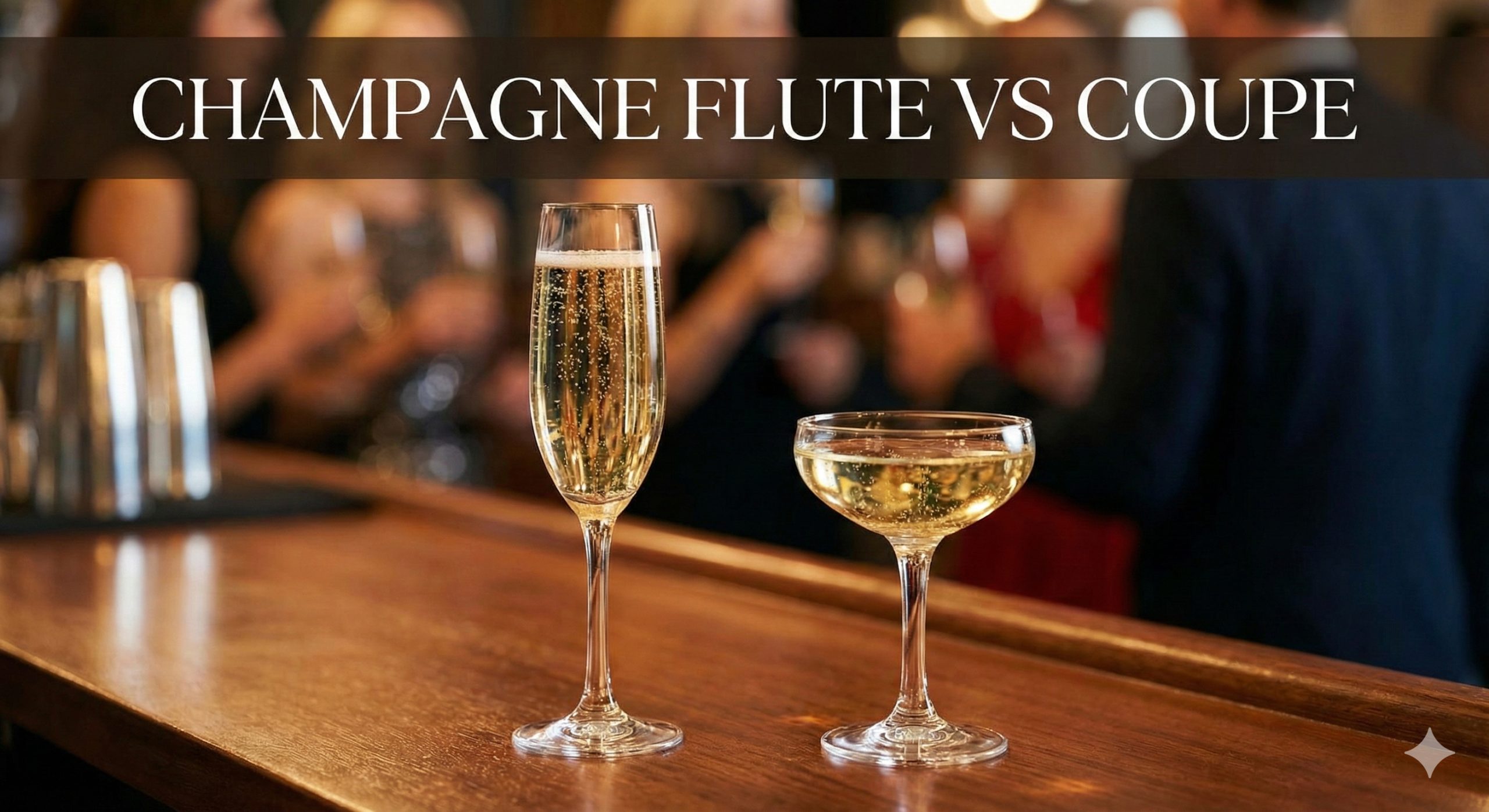
Champagne Flute vs. Coupe: The Battle of Bubbles and Style
Is the Great Gatsby aesthetic ruining your expensive Champagne? We break down the physics of fizz.
Choosing the right vessel for your sparkling wine is about more than just aesthetics; it is a battle between physics and fashion. On one side, we have the Champagne Flute, the tall, slender icon of modern celebration. On the other, the Coupe, the shallow, saucer-like glass that evokes the roaring 1920s.
But which one actually makes your wine taste better? If you are spending $60+ on a bottle of Veuve Clicquot, pouring it into the wrong glass can kill the carbonation and mute the aromas instantly.
A Tale of Two Eras
The **Coupe** (or saucer) dates back to 17th-century England but was popularized in France. Legend has it the shape was modeled on the breast of Marie Antoinette, though historians debunk this. It became the symbol of 1920s excess—perfect for building towers and sipping quickly at parties.
The **Flute** rose to prominence in the 1950s but dominated the 1980s. As wine appreciation became more scientific, drinkers realized the coupe was letting all the bubbles escape. The flute was designed to preserve the “bead” (the train of bubbles) and showcase the wine’s vertical travel.
Understanding glass shapes is crucial not just for sparkling wine. For still wines, the bowl shape dictates oxygen exposure. Read our comparison of Red Wine Glasses vs. White Wine Glasses to see how bowl width affects tannin perception.
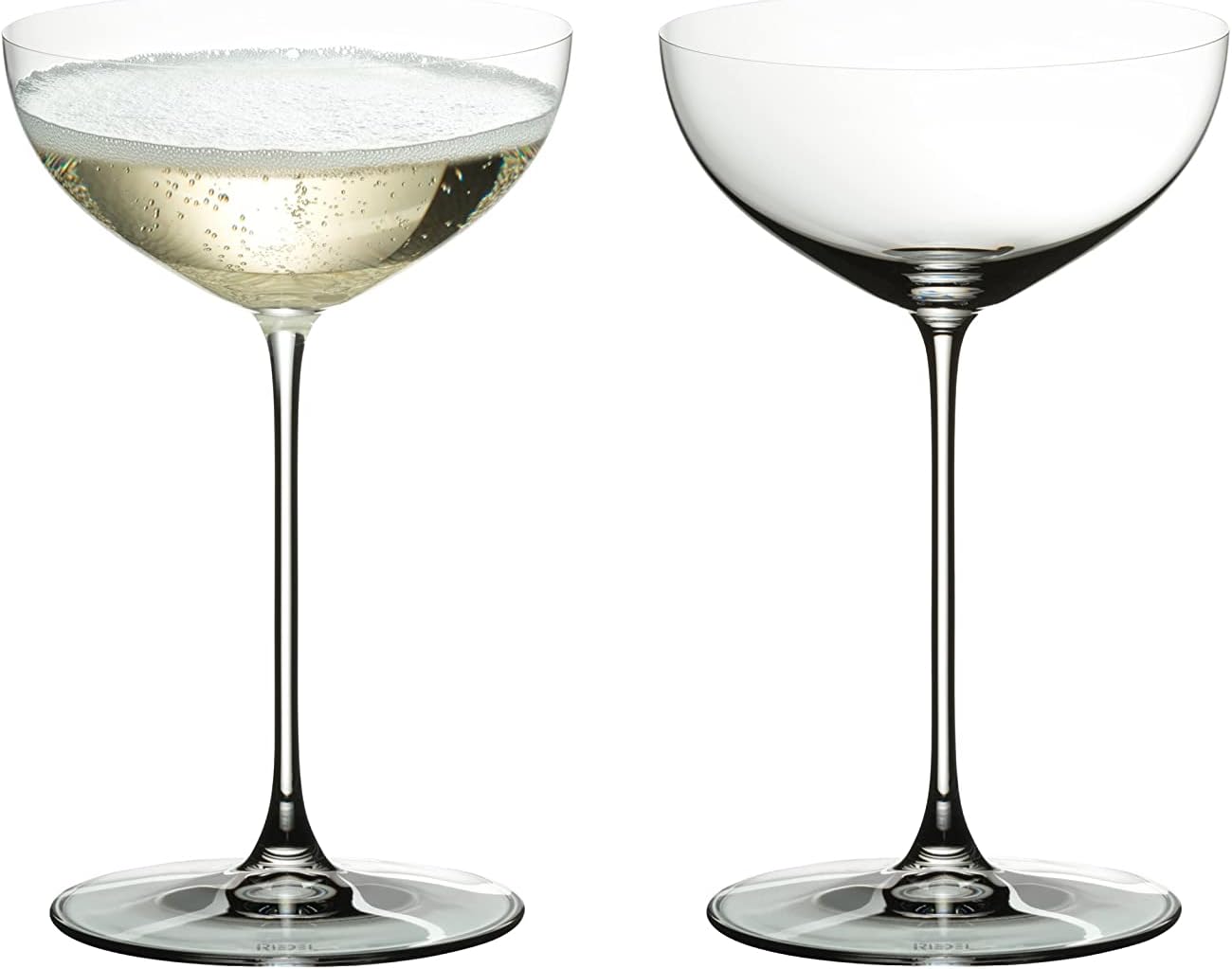
Riedel Veritas Coupe/Cocktail (Set of 2)
If you want the Gatsby look with modern crystal quality, these Riedel coupes are stunning. Perfect for Champagne towers or craft cocktails.
Check Price on AmazonThe Flute: Precision & Fizz
The flute is engineered for one primary purpose: carbonation retention. The small surface area at the top minimizes the loss of CO2, keeping your drink fizzy for longer. Most high-end flutes also have a nucleation point—a tiny laser-etched scratch at the bottom of the bowl—that generates a steady stream of bubbles.
Pros
- Maintains carbonation (fizz) the longest.
- Visually stunning to watch bubbles rise.
- Harder to spill than a coupe.
Cons
- The “Nose” Problem: Because the opening is so narrow, you cannot get your nose inside to smell the aromas.
- Muted Flavor: Without oxygen interaction, complex vintage Champagnes can taste one-dimensional.
The Coupe: Vintage Glamour
The coupe is all about style. It feels substantial in the hand and looks incredible in photos. However, from a technical wine tasting perspective, it is a disaster.
The extremely wide surface area allows carbonation to escape almost instantly. Within minutes, your crisp Champagne becomes flat. Furthermore, the wide bowl allows aromas to disperse into the room rather than being funneled to your nose.
However, glass quality matters as much as shape. Thin-rimmed crystal will always outperform thick, rolled-rim glass. Check out our guide to the best wine glasses for recommendations on crystal manufacturers like Zalto and Riedel.

Schott Zwiesel Tritan Crystal Flute
The industry standard for durability and performance. These flutes use a laser-etched nucleation point for the perfect bubble stream.
Shop Best SellerThe Science of Taste: Head-to-Head
The Surface Area Rule
Flavor is 80% aroma. To taste wine, you must smell it. The Coupe lets smells escape; the Flute traps them too tightly. This is why sommeliers often reject both for a third option.
| Feature | Flute | Coupe | Tulip (Hybrid) |
|---|---|---|---|
| Carbonation | High Retention | Low Retention | Medium-High |
| Aroma | Trapped/Muted | Lost to Air | Focused/Concentrated |
| Stability | High | Low (Spill Prone) | High |
| Best For | Prosecco / Cava | Theme Parties | Vintage Champagne |
The Tulip: The Modern Winner?
If you visit a high-end winery in Epernay today, they won’t serve you in a flute or a coupe. They will use a Tulip Glass or a standard White Wine glass.
The Tulip features the height of a flute (to keep bubbles) but curves outwards at the bowl and narrows again at the rim. This allows the wine to breathe and aromas to concentrate, offering the best of both worlds.
Keeping these specialized glasses pristine is a challenge. Delicate rims chip easily. We recommend reading our tips on how to clean delicate glassware to ensure your crystal lasts a lifetime.
Cleaning Crystal
Whether you choose the flute for the fizz or the coupe for the vibe, maintenance is key. Soap residue is the enemy of bubbles—it kills the surface tension needed for effervescence. Always wash with hot water and minimal detergent.
To get that streak-free shine that makes the bubbles sparkle, never air dry. Use a specialized microfiber cloth. See our review of the best wine glass polishing cloths to finish the job like a pro.

Riedel Large Microfiber Polishing Cloth
Don’t use paper towels on expensive glass. This cloth removes grease and dries without leaving lint or scratches.
Get the ClothFrequently Asked Questions
The coupe has a very wide surface area, which allows Carbon Dioxide (CO2) to escape rapidly. It is physically the worst shape for retaining carbonation.
Yes! In fact, many experts prefer a white wine glass for vintage Champagne. It allows the complex aromas to open up much better than a narrow flute.
It is a tiny etched mark (usually laser-cut) at the very bottom of a flute. It provides a rough surface for CO2 to gather and form bubbles, creating a steady, beautiful stream of fizz.
Water spots are caused by minerals in tap water drying on the glass. To prevent them, dry the glass immediately after washing using a lint-free polishing cloth.
Typically, a coupe holds slightly more (around 6-8 oz filled to the brim) compared to a flute (6 oz), but flutes are rarely filled to the top, whereas coupes are often filled higher, increasing spillage risk.