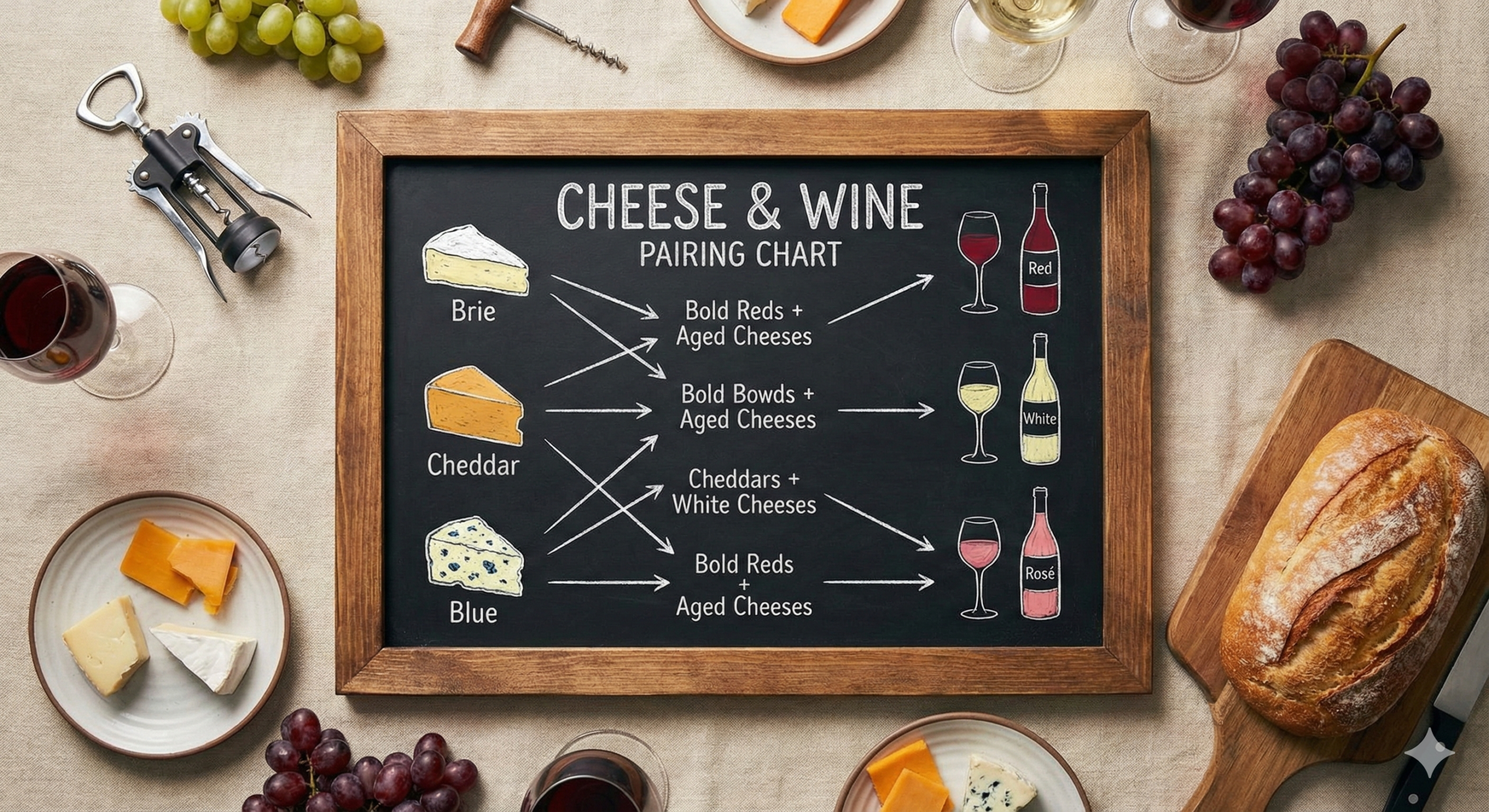
Cheese and Wine Pairing Chart: The Ultimate Guide for Hosts
There is perhaps no culinary marriage more iconic than cheese and wine. It evokes images of rustic French picnics, sophisticated Italian dinners, and cozy evenings by the fire. Yet, despite its reputation as a simple pleasure, getting the pairing right can be deceptively difficult. A bold Cabernet can crush a delicate Goat cheese, while a subtle Pinot Grigio might vanish alongside an aged Cheddar.
The secret lies not in buying the most expensive bottle, but in understanding the interaction between fat, acidity, tannin, and texture. In this comprehensive guide, we move beyond the guesswork. We have compiled the ultimate cheese and wine pairing chart, broken down by cheese category, to ensure your next charcuterie board is a masterpiece of flavor balance.
Whether you are hosting a grand tasting or simply enjoying a quiet night in, understanding these fundamentals will elevate your experience. Before we dive into the specific pairings, it helps to understand the grapes themselves—check out our guide on wine varietals explained for a primer.

The 4 Golden Rules of Pairing
Before memorizing charts, internalize these four principles. They are the compass that will guide you through any cheese shop.
1. Match Intensity
This is the most critical rule. A delicate cheese needs a delicate wine; a bold cheese needs a bold wine. Think of it like a conversation—you don’t want one person shouting while the other whispers. A fresh Ricotta pairs well with a light Pinot Grigio, while an intense Roquefort needs a powerful Port or Sauternes.
2. Acidity Cuts Fat
Cheese is essentially concentrated fat and protein. To cleanse your palate so the next bite tastes as good as the first, you need acidity. Crisp white wines (like Sauvignon Blanc or Champagne) act like a squeeze of lemon, cutting through the richness of creamy cheeses. For more on the mechanics of pairing, read how to pair wine with food.
3. Tannins Love Protein (But Hate Salt)
Red wines with high tannins (like Cabernet Sauvignon) are excellent with aged, hard cheeses. The tannins bind to the protein and fat, softening the wine. However, be careful with very salty cheeses; salt can make tannins taste bitter and metallic.
4. What Grows Together, Goes Together
When in doubt, geography is your friend. French Goat cheese (Chèvre) from the Loire Valley is perfection with Sauvignon Blanc (Sancerre) from the same region. Spanish Manchego sings with Spanish Rioja. Local traditions have evolved over centuries to create natural harmonies.
The Master Cheese & Wine Chart
Use this quick-reference table to find your perfect match instantly.
| Cheese Category | Examples | Best White Wine | Best Red Wine |
|---|---|---|---|
| Fresh / Soft | Mozzarella, Ricotta, Goat Cheese, Feta | Sauvignon Blanc, Pinot Grigio, Chenin Blanc | Gamay (Beaujolais), Dry Rosé |
| Bloomy Rind | Brie, Camembert, Robiola | Champagne, Oaked Chardonnay | Pinot Noir |
| Semi-Hard | Gouda, Havarti, Gruyère, Swiss | Riesling (Off-Dry), Pinot Gris | Merlot, Chianti, Zinfandel |
| Hard / Aged | Aged Cheddar, Parmigiano-Reggiano, Manchego | Vintage Champagne, Sherry | Cabernet Sauvignon, Nebbiolo, Rioja |
| Blue | Gorgonzola, Stilton, Roquefort | Sauternes, Riesling (Late Harvest) | Port, Malbec |
| Washed Rind | Taleggio, Epoisses, Limburger | Gewürztraminer, Pinot Gris | Pinot Noir (Old World) |

Fresh & Soft Cheeses
Examples: Mozzarella, Burrata, Chèvre (Goat), Feta, Ricotta.
These cheeses are young, not aged, and have a milky, mild, and sometimes tangy flavor profile. They require crisp, acidic wines to match their freshness.
- Sauvignon Blanc: The herbaceous, citrus notes of Sauvignon Blanc are the classic pairing for Goat Cheese. The acid mirrors the tang of the cheese.
- Dry Rosé: A versatile choice that brings red berry fruitiness without the heavy tannins, perfect for Feta or Mozzarella salads.
Bloomy Rind Cheeses
Examples: Brie, Camembert, Humboldt Fog.
These cheeses have a soft, edible white rind and a creamy, buttery interior. They are rich and coat the mouth, requiring a wine that can cut through the fat or match the creaminess.
- Champagne / Sparkling Wine: The bubbles scrub the palate clean of the heavy cream, preparing you for the next bite. This is a textural contrast pairing.
- Chardonnay: A creamy, oaked Chardonnay mirrors the buttery texture of the cheese (a congruent pairing). Ideally from Burgundy.
Hard & Semi-Hard Cheeses
Examples: Aged Cheddar, Manchego, Comté, Gouda, Parmigiano-Reggiano.
As cheese ages, it loses moisture and gains intensity, saltiness, and sometimes a crystalline texture. These robust flavors can stand up to bold red wines.
- Cabernet Sauvignon: The bold tannins and dark fruit of a Cab work wonders with the protein crystals in Aged Cheddar or Gouda.
- Rioja (Tempranillo): The classic match for Manchego. The savory, leathery notes of the wine complement the sheep’s milk cheese perfectly.
For serving these harder cheeses, proper tools are essential. Consider looking for high-quality cheese knives to make serving easier.

Blue Cheeses
Examples: Stilton, Roquefort, Gorgonzola.
Blue cheese is pungent, salty, and sharp. It is the most difficult category to pair with dry wines. The salt in blue cheese often makes dry reds taste bitter. The secret here is sweetness.
- Port: A classic pairing. The sweetness of the Port balances the saltiness of the Stilton, creating a “salted caramel” effect in your mouth.
- Sauternes: This sweet French dessert wine is magical with Roquefort. The honeyed apricot flavors tame the sharp bite of the mold.
Washed Rind (Stinky) Cheeses
Examples: Taleggio, Epoisses, Muenster.
These cheeses have an orange rind and a pungent aroma (“stinky feet” smell) but a surprisingly mild, meaty flavor. They pair well with aromatic whites that can hold their own against the smell.
- Gewürztraminer: This aromatic wine has notes of lychee and rose, with enough body to stand up to the funk of the cheese.
- Pinot Noir: An earthy, old-world Pinot Noir shares the funky, mushroomy qualities of the cheese rind.
Serving Tips & Presentation
Creating the perfect board isn’t just about the wine. Here are a few pro tips:
- Temperature Matters: Serve cheese at room temperature. Take it out of the fridge 1 hour before serving. Cold cheese mutes flavors.
- Order of Operations: Arrange your board from mildest (Fresh/Soft) to strongest (Blue/Washed Rind). Drink your wines in the same order (White/Sparkling -> Red -> Dessert).
- Accompaniments: Include nuts, honey, and dried fruit. These bridge the gap between the wine and the cheese. Honey works wonders with Blue cheese; almonds are great with Manchego.