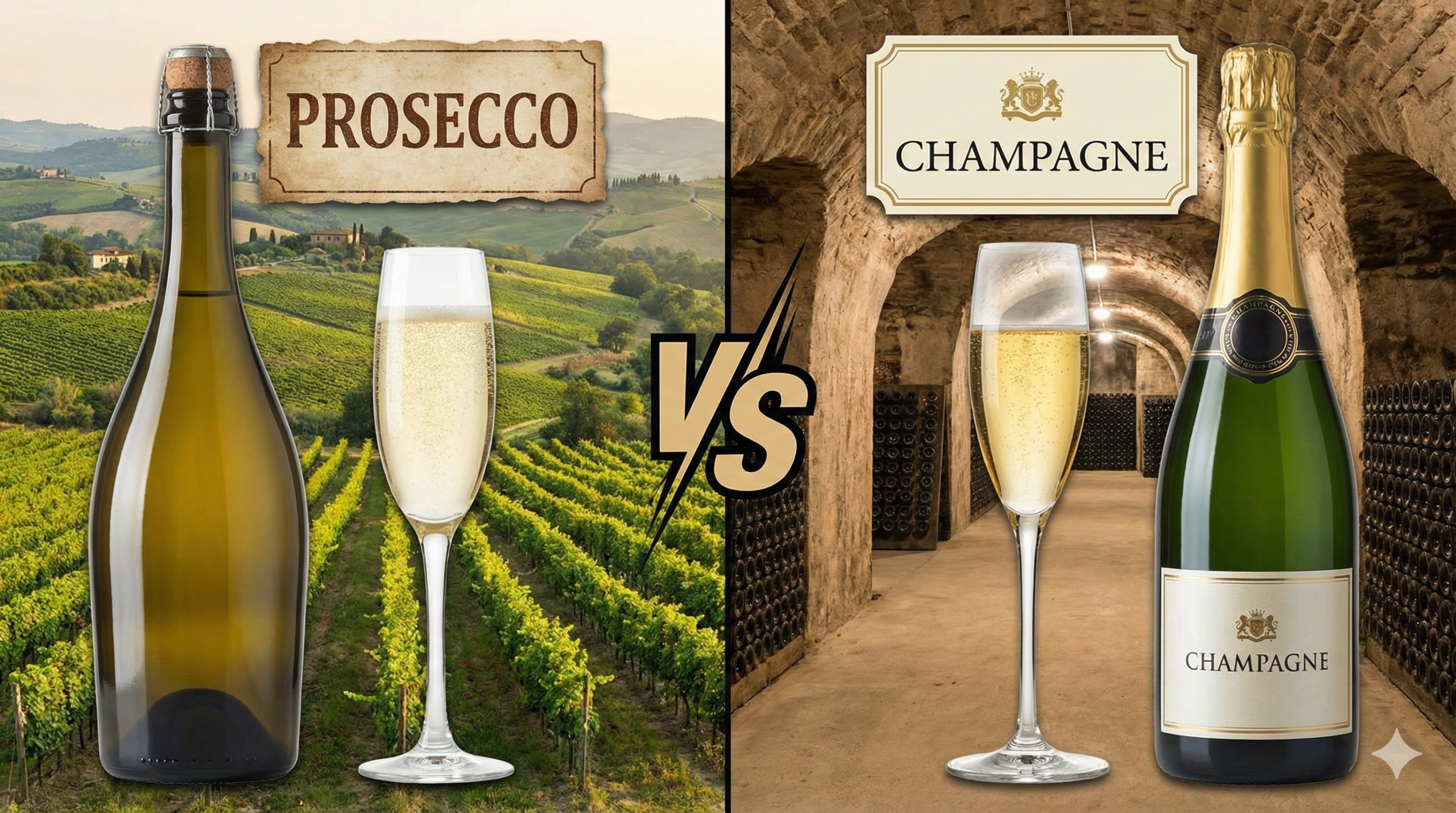
It happens at every celebration. The cork pops, the foam rises, and someone asks, “Is this Champagne or Prosecco?” To the untrained eye, they look identical: pale, fizzy, and festive. But in reality, they are as different as a crispy green apple and a buttery croissant.
The difference isn’t just about the price tag or the fancy French label. It comes down to a fundamental difference in winemaking philosophy, chemistry, and geography. Whether you are planning a wedding toast or just mixing Sunday mimosas, understanding Prosecco vs. Champagne will save you money and elevate your drinking experience.
The Cheat Sheet: At A Glance
If you are in a rush to buy a bottle, here is the immediate breakdown of what you are getting with each style.
| Feature | Champagne | Prosecco |
|---|---|---|
| Country | France (Champagne Region) | Italy (Veneto Region) |
| Grapes | Chardonnay, Pinot Noir, Pinot Meunier | Glera |
| Production | Traditional Method (Bottle) | Charmat Method (Tank) |
| Flavor Profile | Toast, Almond, Citrus, Brioche | Green Apple, Honeydew, Cream, Pear |
| Bubbles | Fine, sharp, persistent | Light, frothy, dissipates faster |
| Price | $40 – $300+ | $12 – $25 |
The Core Difference: Tank vs. Bottle
The most important distinction between these two wines—and the reason for the massive price gap—is how the bubbles get there. Both start as a still (flat) wine, but the secondary fermentation (where yeast eats sugar and creates CO2) happens in different places.
Champagne: The Traditional Method
In Champagne, the secondary fermentation happens inside the individual bottle. Winemakers add a mixture of yeast and sugar (liqueur de tirage) to the bottle and seal it. As the yeast works, it dies and settles at the bottom, becoming “lees.”
The wine must sit on these dead yeast cells for a minimum of 15 months (and often years). This contact with the lees is what gives Champagne its signature “bready” or “toasty” flavor, similar to a bakery. It is a labor-intensive process that requires rotating bottles by hand (riddling) and expensive storage.
Prosecco skips the bottle aging. The secondary fermentation happens in giant, pressurized stainless steel tanks. Once the bubbles form, the wine is filtered to remove the yeast immediately and then bottled under pressure.
Why this matters: Because the wine doesn’t sit on yeast, it retains the pure, fresh flavor of the grape. This is why Prosecco tastes like fresh fruit and flowers, not toast. It is cheaper, faster, and cleaner.

Keep The Bubbles Alive
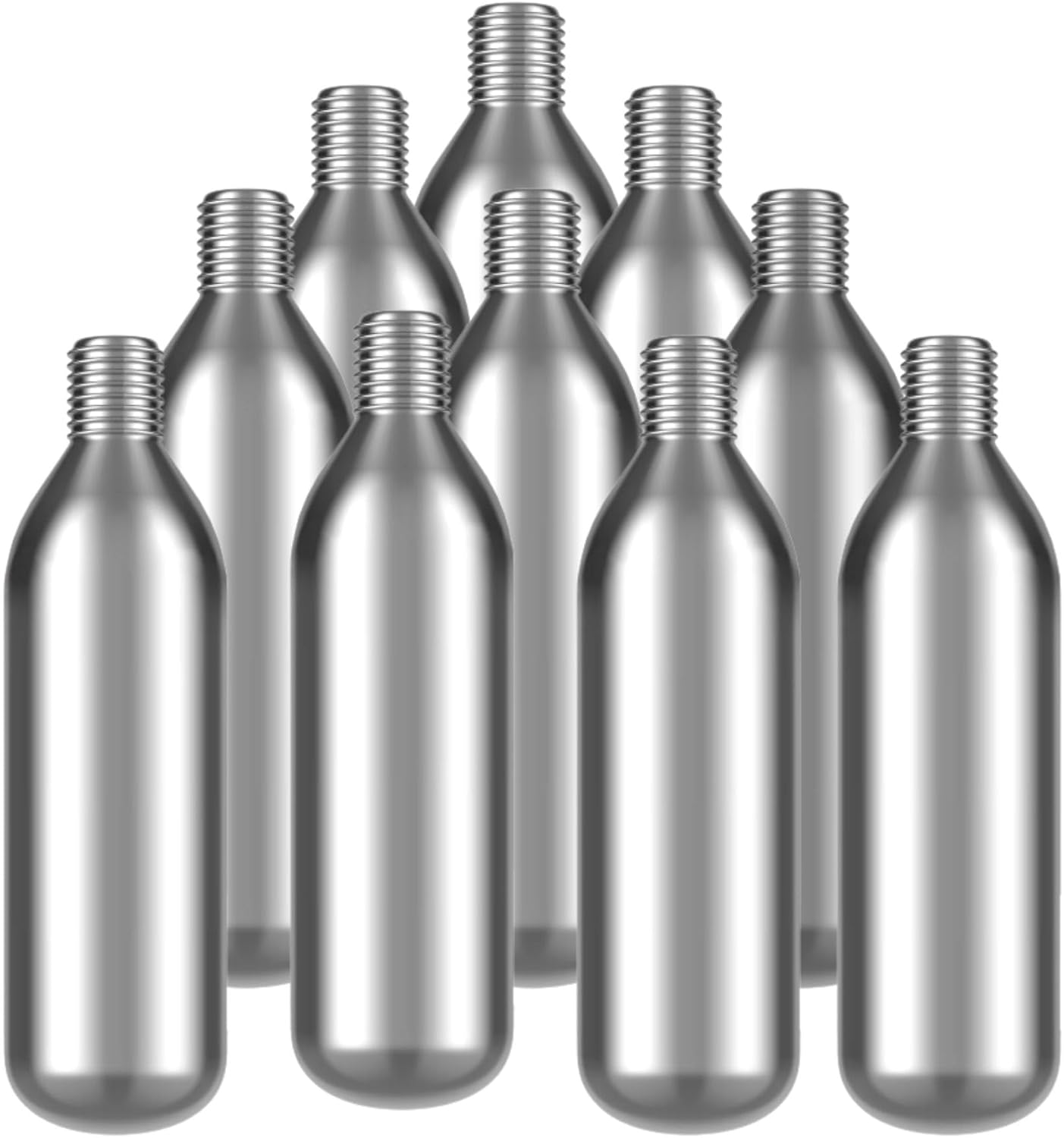
Whether it’s tank or bottle fermented, bubbles die fast once opened. A standard cork won’t fit back in. You need a specialized pressure-seal stopper.
Top Rated StopperTaste Profile: Fruit vs. Toast
Because of the production methods described above, the sensory experience is vastly different.
Champagne Tasting Notes
Champagne is complex and intense. The high acidity (from the cool climate) is balanced by savory notes. You will often taste:
- Citrus: Lemon zest, grapefruit.
- Bakery Notes: Brioche, toast, biscuit, almond (from the yeast).
- Minerality: Chalk, flint, limestone.
The bubbles in Champagne are also “finer”—they feel like a sharp, creamy mousse in your mouth and last for a long time in the glass.
Prosecco Tasting Notes
Prosecco is aromatic and fruity. It is generally simpler and friendlier to the palate. You will taste:
- Orchard Fruit: Green apple, pear.
- Stone Fruit: Peach, apricot.
- Floral: Honeysuckle, white flowers.
- Sweetness: Even “Dry” Prosecco often feels sweeter than Champagne due to the fruity aromatics.
Want to explore other grapes that offer similar profiles? Check out our guide to wine varietals explained to understand how the Glera grape compares to Chardonnay.
Region & Grapes: Fog vs. Sun
Champagne comes exclusively from the Champagne region of northern France. It is a cold, harsh climate with chalky soil. The primary grapes are Chardonnay (for elegance), Pinot Noir (for body), and Pinot Meunier (for fruitiness). The struggle of the vines in this cold weather creates high acidity, which is crucial for aging.
Prosecco comes from the Veneto region of northeast Italy. The climate here is warmer and sunnier. The grape used is Glera, a highly productive varietal that grows vigorously. The focus here isn’t on the soil’s minerality, but on the grape’s natural perfume.
If you’re opening a bottle from either region and the cork breaks, don’t panic. Read our guide on how to open a wine bottle without a corkscrew (though be very careful with pressurized bottles!).
Why is Champagne So Expensive?
It often frustrates buyers that an entry-level Champagne starts at $40 while a great Prosecco is $15. This is not just marketing; it is economics.
- Land Cost: Land in Champagne is among the most expensive agricultural real estate in the world.
- Risk: Frost often destroys harvests in France, making grapes scarce.
- Time: Champagne must age for years before it can be sold. That is “dead money” sitting in a cellar. Prosecco can be harvested, fermented, and sold within a few months.
- Labor: The traditional method requires significantly more manual handling than the automated tank method.
If you invest in expensive Champagne, you need to protect it. See our review of the top rated wine preservers to keep your investment fresh.
Food Pairing: Brunch vs. Dinner
Drink Prosecco when: You are having brunch, a picnic, or spicy food. The sweetness and fruitiness of Prosecco make it the perfect partner for salty cured meats (Prosciutto and melon is a classic), spicy Thai curries, or simply as an aperitif. It is also the only choice for a Mimosa or Aperol Spritz—don’t waste expensive Champagne on orange juice!
Drink Champagne when: You are eating fried food, oysters, or steak. The high acidity and bubbles of Champagne cut through grease and fat like a laser. Fried chicken and Champagne is a legendary “high-low” pairing. It also works beautifully with Thanksgiving dinner, where its acidity balances rich gravy and stuffing.

The Right Glass Matters
Don’t drink good bubbles out of a mug. The Riedel Veritas Champagne glass is designed to keep the bead active while directing aromas to your nose.
Check PriceFrequently Asked Questions
They are very similar, usually around 80-100 calories per glass. However, Brut Nature Champagne (zero sugar added) will be the lowest calorie option, while Extra Dry Prosecco will be higher due to residual sugar.
This is a confusing wine term. From driest to sweetest, the scale goes: Brut Nature -> Extra Brut -> Brut -> Extra Dry -> Dry -> Demi-Sec. So, “Extra Dry” is actually sweeter than “Brut.”
Technically, no. Only sparkling wine from the Champagne region of France can legally use the name. American versions are labeled “Sparkling Wine,” though some older brands use a legal loophole to keep “California Champagne” on the label.
Yes. Unlike fine Champagne which can age for 10+ years, Prosecco is meant to be drunk young (within 1-2 years of the vintage). It does not improve with age; it just loses its bubbles and freshness.