Beyond Sake: The Ultimate Guide to Sushi and Wine Pairing
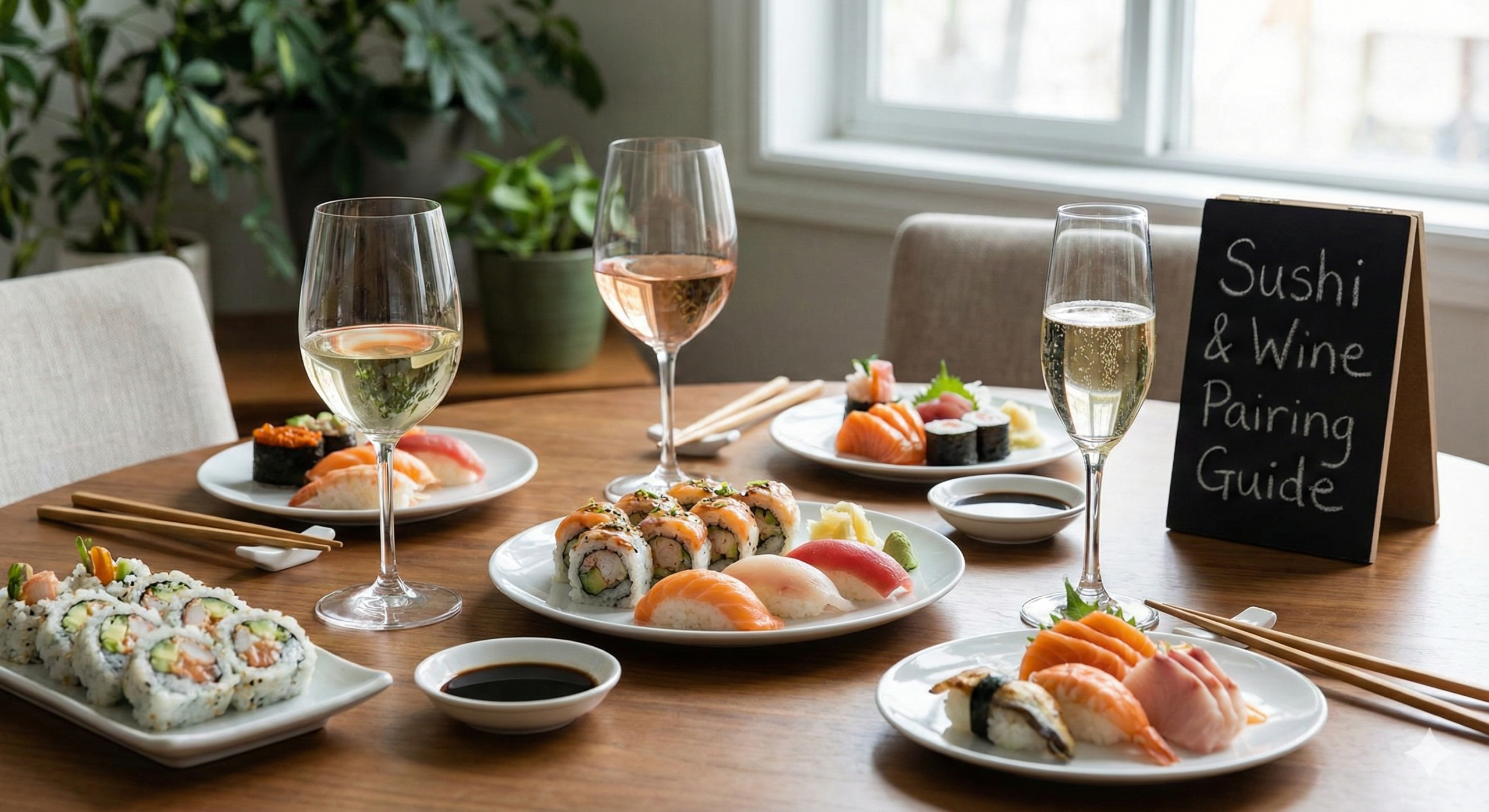
For decades, the standard beverage companion for sushi has been sake or beer. While these are traditional and delicious choices, the world of wine offers a complexity and acidity that can elevate a sushi dinner from a simple meal to a transcendent culinary experience. The interplay between the delicate sweetness of fresh fish, the umami punch of soy sauce, and the crisp acidity of a well-chosen wine is a match made in heaven.
However, pairing wine with sushi can be intimidating. The wrong choice—like a high-tannin Cabernet—can make your expensive sashimi taste metallic and fishy. Conversely, a wine that is too subtle might vanish completely against the strong flavors of wasabi and pickled ginger.
In this guide, we will move beyond the basics. We will explore how texture, fat content, and sauces dictate your wine choice, ensuring that your next sushi night is perfectly paired. If you are new to the world of wine, you might want to start by reviewing wine varietals explained to understand the grapes we will be discussing.

The 3 Golden Rules of Pairing
Before diving into specific fish types, it is crucial to understand the fundamental mechanics of pairing wine with Japanese cuisine. These three rules will serve as your compass.
1. Acid is King
Sushi rice is seasoned with vinegar and sugar. To match this, you need a wine with high acidity. Low-acid wines will taste flat and flabby against the vinegared rice. Think of the wine as a squeeze of lemon over the fish; it should brighten the flavors, not mask them. For a deeper dive into general pairing mechanics, check out our guide on how to pair wine with food.
2. Match the Weight
Delicate sashimi requires a delicate wine. A heavy, oaky Chardonnay will obliterate the subtle taste of Fluke or Sea Bream. Conversely, a rich, fatty slice of Toro (tuna belly) or a Unagi (eel) roll needs a wine with more body and texture to stand up to the richness.
3. Beware of Umami and Tannins
Soy sauce is pure umami (savory deliciousness). Umami makes tannins in red wine taste bitter and metallic. This is why big red wines rarely work with sushi. If you must drink red, you need low tannins and high fruit (more on this later).
Pairing with Lean White Fish & Scallops
The Menu: Sashimi or Nigiri featuring Fluke (Hirame), Sea Bream (Tai), Squid (Ika), or Scallops (Hotate).
These items have very subtle, sweet flavors and delicate textures. They are easily overpowered. The goal here is to mirror that delicacy while providing a crisp finish.
Top Wine Picks:
- Albariño (Spain): Known for its salinity and citrus notes, it mimics the sea spray essence of the fish.
- Grüner Veltliner (Austria): Offers white pepper and green apple notes that complement the clean taste of white fish without dominating it.
- Koshu (Japan): If you can find it, this Japanese white wine is literally bred to pair with sushi. It is incredibly light, low alcohol, and delicate.
- Champagne (Blanc de Blancs): 100% Chardonnay bubbles cut through the texture of squid and scallop while adding a touch of luxury.
Pairing with Fatty Tuna & Salmon
The Menu: Salmon (Sake), Yellowtail (Hamachi), Tuna Belly (Otoro/Chutoro), and Mackerel (Saba).
These fish have a higher oil content and a much stronger flavor profile. They coat the palate, so you need a wine with slightly more body or aromatic intensity to cut through that oil.
Top Wine Picks:
- Dry Riesling (Germany or Alsace): The high acidity cuts the fat of the salmon, while the mineral notes play beautifully with the fish oils.
- Pinot Noir (Rosé): A dry Rosé made from Pinot Noir has enough red fruit character to match the richness of tuna but stays light enough not to clash.
- Chablis (Unoaked Chardonnay): The chalky, mineral soil of Chablis produces a Chardonnay that is crisp and steely, perfect for Hamachi. Avoid buttery California Chardonnays here.
Taming the Heat: Spicy Rolls
The Menu: Spicy Tuna Rolls, Dynamite Rolls, or anything topped with Sriracha mayo.
Spice (capsaicin) and alcohol don’t mix well; high alcohol amplifies the burn. When dealing with spicy mayo or wasabi heat, you need a wine with lower alcohol and perhaps a touch of residual sugar (sweetness) to cool the palate.
Top Wine Picks:
- Off-Dry Riesling: A Kabinett or Spätlese Riesling has just enough sweetness to neutralize the spice, allowing the fruit flavors to shine.
- Gewürztraminer: This aromatic wine smells of lychees and roses. It pairs famously well with Asian spices and heat.
- Prosecco: The bubbles act as a palate cleanser, scrubbing the spicy oils off your tongue.
For a more in-depth look at managing heat, read our dedicated article on wine pairing with spicy food.

Fried Rolls & Tempura
The Menu: Shrimp Tempura Rolls, Spider Rolls (Soft Shell Crab), and Vegetable Tempura.
Fried food is rich, salty, and crunchy. The best pairing for anything deep-fried is sparkling wine. The carbonation cuts through the grease and refreshes the mouth instantly.
Top Wine Picks:
- Cava (Spain): Often made in the traditional method, Cava offers incredible value and high acidity.
- Crémant: French sparkling wine from outside Champagne. Crémant de Loire (Chenin Blanc based) is particularly good here.
- Fino Sherry: An unconventional but brilliant choice. Bone dry, salty, and nutty, it pairs amazingly with tempura batter.
The Red Wine Taboo: Can You Do It?
Conventional wisdom says “no red wine with fish.” This is mostly because iron-rich red wines react with fish oils to create a nasty, metallic aftertaste. However, there are exceptions.
If you are eating meaty fish like grilled Unagi (eel) with BBQ sauce, or seared Tuna Tataki, you can get away with a light red. The key is Low Tannins and Low Alcohol.
Top Wine Picks:
- Gamay (Beaujolais): Serve this slightly chilled. It is fruity, low tannin, and very refreshing. Ideally suited for meaty tuna.
- Pinot Noir (New Zealand or Oregon): Look for lighter styles with earthy notes. These work well with salmon and mushroom-based rolls.