Top Rated Wine Refrigerators Freestanding: The Ultimate Guide
Move over, kitchen fridge. It’s time to give your collection the home it deserves with the best standalone cooling technology on the market.
Introduction: Why Go Freestanding?
If you have graduated from buying a bottle for tonight’s dinner to buying a case for next year’s anniversary, you have likely realized one hard truth: your kitchen refrigerator is a wine graveyard. It is too cold, too dry, and vibrates every time the ice maker kicks on. To preserve the investment you’ve made in the best affordable wines of 2025, specialized storage is non-negotiable.
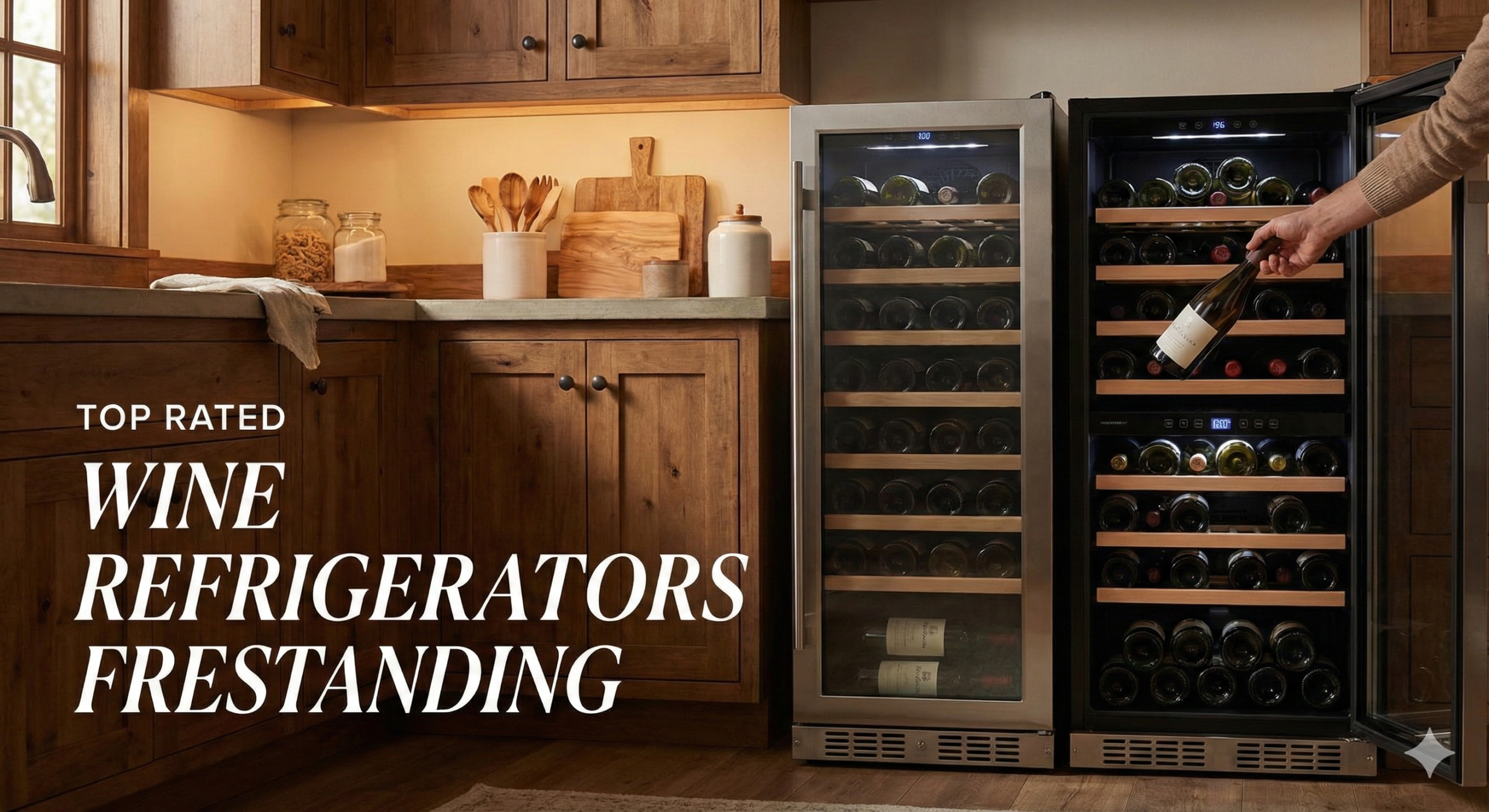
Enter the freestanding wine refrigerator. Unlike built-in units that require expensive carpentry, freestanding models offer flexibility. You can place them in the dining room, the man cave, or next to your desk. They are the easiest entry point into serious wine preservation. However, not all coolers are created equal. The market is flooded with units that struggle to hold temperature or hum loudly enough to disturb a movie night.
In this guide, we have tested and reviewed the top-rated models from industry giants like Whynter, Ivation, and Wine Enthusiast. We will compare cooling technologies, discuss the vital importance of airflow, and help you find the perfect unit to anchor your wine cellar essentials.
The Tech: Compressor vs. Thermoelectric
Before buying, you must understand the engine under the hood. The performance of your fridge depends entirely on how it cools. For a deep dive, check our article on thermoelectric vs compressor wine coolers.
Compressor Coolers
These work like your standard kitchen fridge. They use a refrigerant gas and a motor.
Pros: Powerful, can handle hot ambient temperatures, cool down quickly.
Cons: Slight vibration (bad for sediment), heavier, can be noisier.
Thermoelectric Coolers
These use the Peltier effect (electric current transferring heat).
Pros: Silent, vibration-free, energy-efficient.
Cons: Weak. They struggle if your room is hotter than 75°F. They cannot cool effectively in a warm garage.
At a Glance: Our Top Picks
We’ve selected these models based on reliability, temperature stability, and noise levels.
| Model | Capacity | Cooling Type | Best For |
|---|---|---|---|
| Whynter WC-28S | 28 Bottles | Compressor | Overall Performance & Aging |
| Ivation 18 Bottle | 18 Bottles | Thermoelectric | Small Spaces & Silence |
| Wine Enthusiast 32-Bottle | 32 Bottles | Compressor | Dual Zone Versatility |
| Antarctic Star 24 | 24 Bottles | Compressor | Budget Friendly |
1. The Powerhouse: Whynter WC-28S S-Series
Whynter has built a reputation for robust, no-nonsense cooling. The WC-28S is a standalone champion designed for those who want their wine kept at precise temperatures regardless of the weather outside.
Cooling Performance: Powered by a compressor, this unit laughs at heatwaves. Even if your apartment gets up to 80°F, this fridge holds a steady 55°F. The internal fan circulates air evenly, ensuring the bottle at the bottom is just as cool as the one at the top.
Design: It features a sleek platinum finish and a towel-bar handle. The shelves are scalloped wire, which fits standard Bordeaux bottles perfectly. However, if you collect wider bottles like Pinot Noir or Champagne, you may need to remove a shelf to fit them.
For more details on this brand, read our full Whynter wine cooler review.
Pros
- Powerful compressor cooling.
- Sleek, modern aesthetic.
- Lock and key included (keep the teenagers out).
Cons

2. The Silent Partner: Ivation 18 Bottle Thermoelectric
If you live in a studio apartment or plan to put your wine fridge in a bedroom or quiet office, the Ivation 18 is the gold standard. Because it uses thermoelectric cooling, it has zero moving parts in the cooling mechanism, meaning no vibration and almost no noise.
Storage Quality: The lack of vibration is crucial for long-term aging, as constant shaking can disturb the sediment in fine wines. The smoked glass door protects your collection from UV light, a silent killer of organic wines. See more in our Ivation wine cooler reviews.
Limitations: This unit acts as a heat pump. It can only cool about 20 degrees below the room’s ambient temperature. Do not put this in a hot garage, or your wine will cook.
Pros
- Dead silent operation.
- Vibration-free (protects sediment).
- Slide-out cedar or metal shelves (depending on model).
Cons

3. The Collector’s Choice: Wine Enthusiast 32-Bottle Dual Zone
When you need to store reds and whites at serving temperature simultaneously, you need a dual zone. Wine Enthusiast is a legacy brand in this space, known for reliability and support.
Features: It splits the cabinet into two independent temperature zones. Keep your Chardonnay at a crisp 45°F on top and your Cabernet at a cellar-perfect 55°F on the bottom. The digital touchscreen allows for easy adjustments without opening the door.
If this model is out of stock, consider checking our Vinotemp wine cooler reviews for a similar high-capacity alternative.
Pros
- True dual-zone temperature control.
- Energy efficient compressor.
- Cool blue LED lighting showcases labels.
Cons

Buying Guide: What Matters Most?
Before you click “Add to Cart,” ensure you have measured your space and checked these critical factors.
1. Ventilation (The Golden Rule)
We cannot stress this enough: Freestanding coolers breathe from the back. You cannot shove them under a counter. If you do, the heat they expel will get trapped, the motor will overheat, and your wine will spoil. Leave at least 4 inches of space behind the unit.
2. Bottle Capacity is a Lie
Manufacturers calculate capacity using standard Bordeaux bottles (the skinny ones). If you collect Pinot Noir, Chardonnay, or Champagne, your 28-bottle fridge might only hold 22 bottles. Always buy bigger than you think you need. For overflow, check out modular wine rack systems.
3. UV Protection
Light creates heat and chemical reactions that degrade wine (known as “light strike”). Look for units with double-paned, smoked, or UV-resistant glass. This is vital if your cooler sits in a bright living room.
Accessorize Your Station
Once you have the fridge, complete the setup. Store your best glassware nearby on a shelf. Keep a top rated wine opener on top of the unit. And remember, once you pull a bottle from the fridge, it will start warming up. Use a wine chiller bucket to keep it cool at the table.
Frequently Asked Questions
Yes, smaller units (6-18 bottles) are often designed as “countertop” models. Just ensure the table is sturdy enough to support the weight (a full 18-bottle fridge weighs over 60 lbs).
A quality compressor unit should last 8-12 years. Thermoelectric units often have a slightly shorter lifespan (5-7 years) as the cooling chip or fans can wear out if run constantly at max power.
Condensation is normal. Most units have a drip tray to catch moisture. If water is pooling, the drain hole might be clogged with debris, or the door seal might be dirty, letting warm air in.
For short-term storage (drinking within 6 months), no. For long-term aging (5+ years), yes. Vibration accelerates chemical reactions and disturbs sediment, potentially making the wine taste gritty or flat.
Final Verdict: Which Fridge Fits You?
Choosing among the top rated wine refrigerators freestanding comes down to your environment.
For the Serious Collector: The Whynter WC-28S offers the power and consistency needed to age expensive bottles safely.
For the Apartment Dweller: The Ivation 18-Bottle is quiet, compact, and protects your wine without dominating your living space.
For the Variety Drinker: The Wine Enthusiast Dual Zone lets you keep your whites ready for service and your reds resting comfortably.
Stop risking your wine in the kitchen fridge. Give your bottles a dedicated home, and they will reward you with perfect flavor every time you pull the cork. Cheers!

Pro Tip: Monitor Your Temps with a Digital Hygrometer
Ensure your fridge is performing correctly with an independent sensor.
Check Price on Amazon