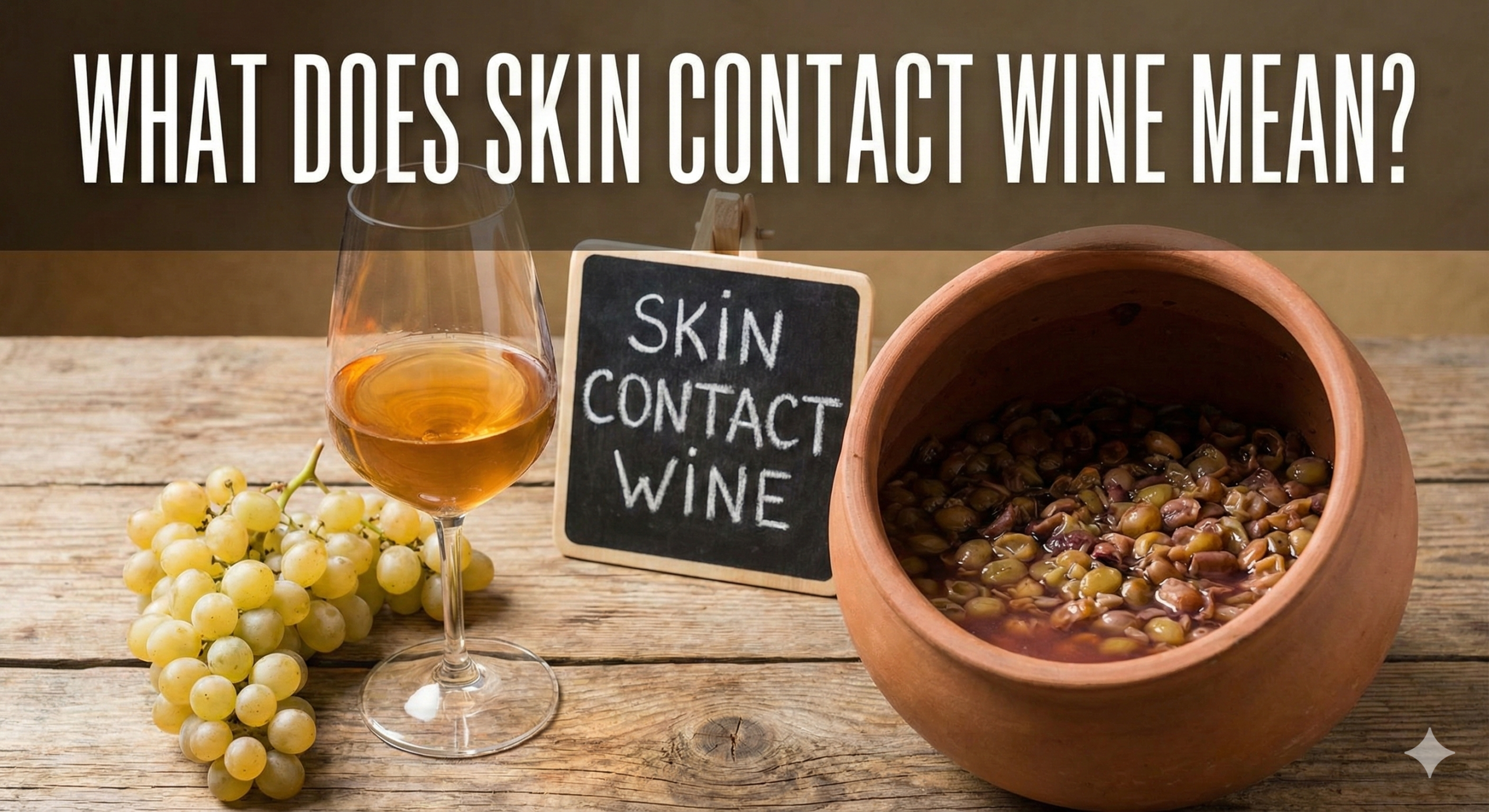
Walk into a trendy wine bar in Brooklyn, London, or Tokyo today, and you will likely see a section of the menu highlighted in a curious amber hue. It’s not Rosé, it’s not Red, and it’s certainly not White. It is Skin Contact Wine, popularly known as Orange Wine.
Despite its modern trendiness, this is actually the oldest way of making white wine in human history. It is a style that challenges everything you think you know about white grapes—transforming them from light and fruity into deep, tannic, and complex beverages that behave more like red wines on the palate.
What Is Skin Contact Wine?
First, let’s clear up the biggest misconception: It is not made from oranges. The name refers strictly to the color, which ranges from a pale gold to a deep, rusty amber. The technical term used by sommeliers is “skin-contact white wine” or “amber wine.”
The confusion often stems from the fact that most white wines (Sauvignon Blanc, Pinot Grigio) are pressed immediately after harvest. The juice is separated from the skins instantly to keep the wine clear and crisp. Orange wine does the opposite—it invites the skins to the party.
This style is heavily associated with the “Natural Wine” movement, as many producers use minimal intervention. Read more about the philosophy behind organic and natural wines to understand why this style is often unfiltered and cloudy.
The Science: How It’s Made
To understand the flavor, you have to understand the chemistry. Grape skins contain phenols (flavor compounds), pigment (color), and tannins (texture/astringency). When you leave the juice in contact with the skins, these elements leach into the wine.
White Wine
Grapes are crushed and pressed immediately. Skins are discarded. Juice ferments alone.
Red Wine
Black grapes are crushed. Juice ferments with skins to extract color and tannin.
Orange Wine
White grapes are crushed. Juice ferments with skins for days or months.
The duration of this contact defines the wine. A wine with 24 hours of skin contact might just look golden. A wine with 6 months of contact in a clay vessel will be dark amber and have a heavy tannic grip. See our wine terminology guide for more on “maceration” and “tannins.”
8,000 Years of History: The Georgian Qvevri
While hipster wine bars claim it as new, the Georgians (the country, not the state) have been doing this since 6000 BC. In the Caucasus Mountains, winemaking was born in egg-shaped clay vessels called Qvevri (pronounced “kwev-ree”).
These massive vessels are lined with beeswax and buried underground to control the temperature naturally. The winemakers would throw everything—grapes, skins, stalks, and seeds—into the Qvevri, seal it, and leave it underground for the winter. The result was a stable, tannic, amber wine that could survive without modern preservatives.
This tradition nearly vanished during the Soviet era but was revived in the late 1990s and early 2000s, largely thanks to Italian winemakers like Josko Gravner in Friuli, who visited Georgia and brought the ancient technique back to Italy.
What Does It Taste Like?
If you take your first sip expecting a crisp Pinot Grigio, you will be shocked. Orange wines are intense, savory, and textured. Because of the oxidation and skin contact, fresh fruit flavors are often replaced by dried or bruised fruit notes.
Common Flavor Notes:
- Dried Fruit: Dried apricot, orange peel, jackfruit.
- Nutty/Savory: Hazelnut, almond, sourdough yeast, bruised apple.
- Floral/Herbal: Dried flowers, tea leaves (especially Earl Grey), juniper.
- Texture: This is the big one. You will feel a drying sensation on your gums (tannins), similar to a red wine or strong black tea.

Read the Bible of Orange Wine
Simon J. Woolf’s “Amber Revolution” is the definitive book on the subject. It covers the history of the resurrection of this style in Italy and Georgia.
Check Price on AmazonThe Swiss Army Knife of Pairing
Sommeliers love orange wine because it bridges the gap between white and red. It has the acidity of a white to cut through fat, but the tannin of a red to stand up to protein.
The “Hard to Pair” Foods:
- Fermented Foods: Kimchi, sauerkraut, and pickled vegetables are notoriously hard to pair with wine. The savory nature of orange wine works perfectly here.
- Curries: Indian and Thai curries often crush delicate white wines. An aromatic, tannic orange wine stands up to the spice (turmeric, cumin) and heat.
- Charcuterie: A platter of cured meats, olives, and hard cheeses is the natural habitat for an Italian skin-contact wine.
- Vegetables: Roasted root vegetables, artichokes, and asparagus match the earthy, autumnal vibe of the wine.
Understanding varietals helps here. Many orange wines are made from Pinot Gris. Read our guide to wine varietals to see how Pinot Gris transforms when made in this style (often called “Ramato” in Italy).
Regions to Know
While produced globally now (from Australia to Long Island), three regions remain the holy trinity of skin contact wine.
1. Georgia (The Origin)
Grapes: Rkatsiteli, Mtsvane.
Style: Intense, deeply amber, high tannin, aged in Qvevri.
2. Friuli-Venezia Giulia (Italy) / Brda (Slovenia)
Grapes: Ribolla Gialla, Friulano, Pinot Grigio.
Style: Precise, mineral-driven, elegant but structured. Producers like Gravner and Radikon are legends here.
3. New World (USA, Australia, South Africa)
Grapes: Anything goes (Chardonnay, Chenin Blanc, Sauvignon Blanc).
Style: Often lighter, “baby orange” wines with less maceration time (1-2 weeks), meant for easier drinking.
Serving Temperature & Decanting
Do not serve orange wine ice cold! Serving it at fridge temperature (38°F) will mute all the complex aromatics and make the tannins feel harsh and metallic.
The Sweet Spot: Aim for “Cellar Temperature” or slightly warmer—around 55°F to 60°F (12°C – 15°C). Treat it like a light red wine.
Should you decant? Yes. Many orange wines, especially those made naturally without filtration, benefit hugely from air. It blows off any initial “funky” reduction smells and opens up the fruit.

The Right Glassware
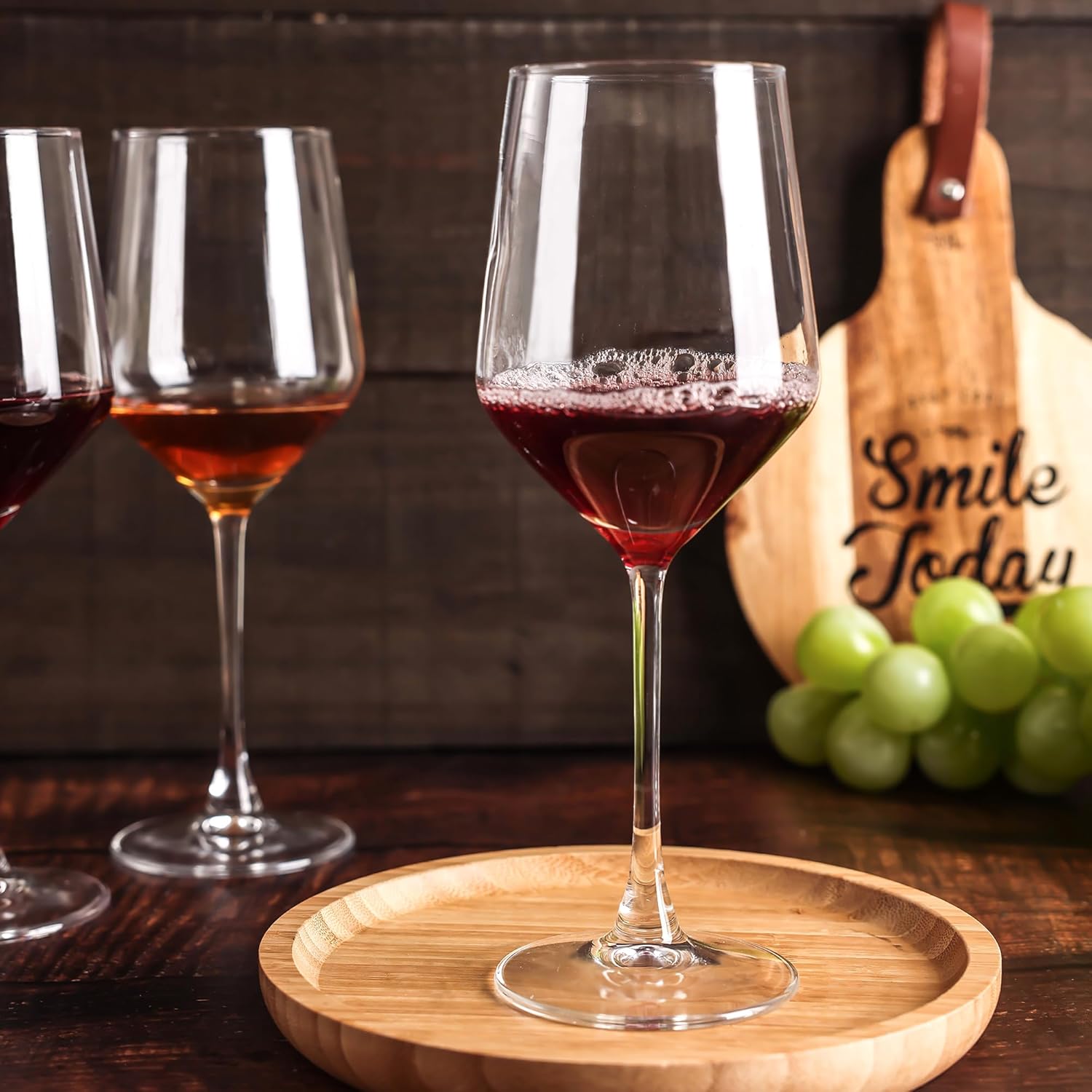
Because orange wine is aromatic and tannic, a standard narrow white wine glass is too small. Use a large bowl glass (like a Burgundy glass) to let it breathe.
See Glass OptionsFor more on the mechanics of letting wine breathe, check out our reviews of the best wine decanters for every budget.
Frequently Asked Questions
Usually, but not always. While the skin-contact technique is a staple of the natural wine movement (minimal intervention), conventional winemakers can also use skin contact techniques with commercial yeasts and sulfites.
It can! Some unfiltered, natural orange wines have a tart, yeasty, and oxidative profile that reminds people of sour beer or dry farmhouse cider. This is part of the “funky” appeal for fans.
Many orange wines are bottled “unfined and unfiltered.” This means the microscopic yeast particles and grape sediments are left in the bottle, adding texture and flavor, but causing a cloudy appearance.
Because orange wine has already been exposed to oxygen during the winemaking process (and contains tannins), it is remarkably stable. An open bottle can often last 3-5 days in the fridge without fading, unlike delicate white wines.
No. Rosé is made from **Red** grapes with very short skin contact. Orange wine is made from **White** grapes with very long skin contact.