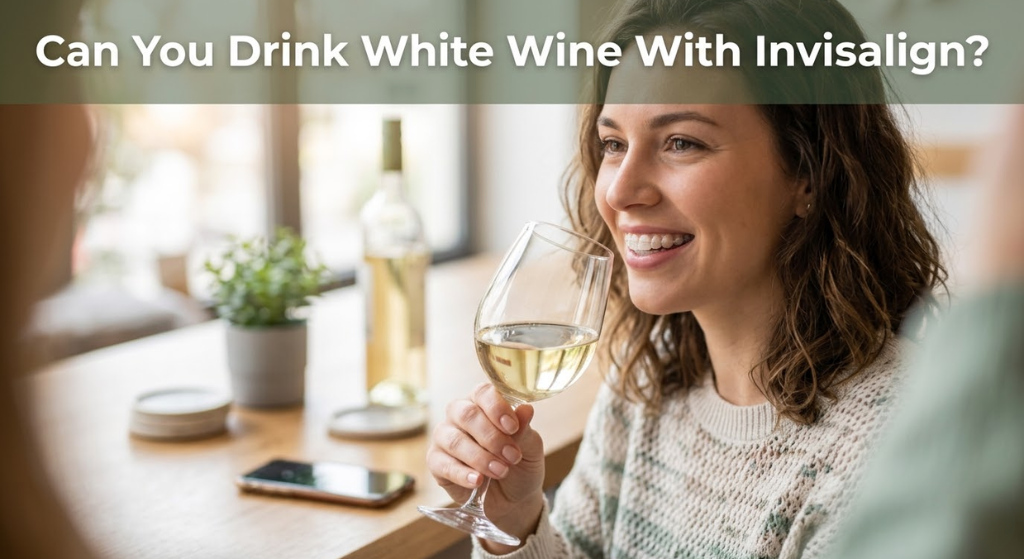
Can You Drink White Wine With Invisalign? The Complete Guide to Aligners, Alcohol & Protecting Your Smile
You’re in Invisalign treatment, you’re at a dinner party, and someone just poured a beautiful glass of white wine. Your aligners are in. What do you do?
This is one of the most searched questions among Invisalign patients — and the official answer from Invisalign is clear: only water should be consumed with aligners in. But the practical reality is more nuanced. Many patients drink wine with their aligners in at social events, and the consequences range from completely fine to genuinely damaging — depending on how they do it and how they handle it afterward.
This guide gives you the full picture: the science of what wine does to aligners and teeth, why white wine is actually more complicated than most patients expect, what orthodontists say when pressed for practical advice, and exactly what to do to minimise damage if you choose to drink wine during treatment.
1. The Official Invisalign Rule on Drinks
Invisalign’s official guidance is straightforward and unambiguous: only water should be consumed while wearing Invisalign aligners. This applies to all beverages other than plain water — including wine (red or white), coffee, tea, juice, sparkling water, alcohol of any type, and even flavoured water with colour or sugar.
The reason for this blanket rule is not arbitrary. It comes from the specific properties of the SmartTrack material that Invisalign aligners are made from, and from the unique problems created when any coloured, sugary, acidic, or hot liquid is trapped between the aligner and the tooth surface.
Why the Rule Exists
When you wear an aligner over your teeth and then drink anything other than plain water, the liquid gets trapped in the tight space between the aligner and your tooth enamel. This creates a sealed environment where the liquid sits in prolonged contact with your teeth and the aligner material — far longer than it would if you were simply drinking without an aligner. This prolonged contact amplifies every negative effect of the drink: its acidity erodes enamel, its sugar feeds bacteria, its colour stains the aligner plastic, and in the case of hot drinks, can warp the aligner’s precise fit.
🦷 The Sealed Environment Problem
Aligners create a near-sealed chamber over your teeth. Any liquid you drink with aligners in gets trapped against the tooth surface for the duration of your drinking — and for some time afterward. The acid in wine (pH 2.9–3.5) sits trapped against enamel rather than being diluted and washed away by saliva. This is what makes drinking wine with aligners in significantly more damaging to enamel than drinking wine without aligners.
What “Only Water” Really Means
Plain still water at room temperature or cool temperature is the only beverage that is genuinely safe with aligners in. It does not stain, does not contain sugar or acid that damages enamel, does not warp the aligner material, and does not require the aligner to be cleaned afterward. Everything else — including sparkling water, flavoured water, herbal tea, and low-alcohol drinks — carries at least one risk factor that plain water does not.
2. Why Wine Is Specifically Problematic With Invisalign
Wine checks nearly every box on the “problematic with aligners” list. Understanding each mechanism helps you make informed decisions about risk.
Problem 1: Acidity and Enamel Erosion
All wine — red, white, rosé, and sparkling — is acidic. Wine pH typically ranges from 2.9 to 3.9. At those pH levels, the acid begins dissolving tooth enamel mineral (hydroxyapatite) on contact. Normally, saliva buffers and dilutes wine acid in the mouth relatively quickly. With aligners in, the acid is trapped against your enamel in the aligner’s sealed chamber — it cannot be neutralised by saliva, it cannot be rinsed away, and it sits in direct contact with your enamel for the full duration of drinking and beyond. This dramatically amplifies enamel erosion risk compared to drinking without aligners. White wines — particularly Sauvignon Blanc, Pinot Grigio, and sparkling wines — tend to be the most acidic wine styles, as we explore in our guide to Pinot Grigio vs. Sauvignon Blanc acidity.
Problem 2: Staining the Aligner
Invisalign aligners are made from a clear thermoplastic polyurethane material. While they are designed to be optically clear and nearly invisible, the material is not impervious to staining. Wine — and particularly the tannins, chromogens, and anthocyanin pigments it contains — can stain aligner plastic over time, turning “invisible” aligners a yellowish or brownish tint that is visible when you smile. Red wine is dramatically worse for staining, but white wine also contains tannins (especially oak-aged whites) and chromogens that can cause subtle yellowing over time.
Problem 3: Sugar Feeding Bacteria Under the Aligner
Wine contains residual sugar — even “dry” wines typically contain 1–9 grams per litre. When sugary wine is trapped under an aligner, the warm, moist, sealed environment becomes an ideal breeding ground for the oral bacteria (particularly Streptococcus mutans) that produce acid from sugar as a metabolic byproduct. This bacterial acid production is the primary mechanism of tooth decay. The sealed aligner environment significantly amplifies this risk by preventing saliva from washing away the sugar and the bacteria.
Problem 4: Warping Risk from Alcohol
This is less frequently discussed but clinically relevant. Alcohol — including the ethanol in wine — can interact with the thermoplastic material of aligners over time, potentially causing micro-structural changes to the plastic that affect its mechanical properties. More immediately, wine served slightly warm or at room temperature (as many whites are after sitting out at a dinner party) approaches temperatures that can marginally soften aligner plastic, potentially affecting fit precision. The effect from a single glass is minimal, but cumulative exposure across months of treatment can be a factor.
3. White Wine vs. Red Wine With Invisalign: Which Is Worse?
The comparison between white and red wine with Invisalign is not as simple as “red stains, white doesn’t.” Both cause problems, and in some respects white wine is actually more damaging.
| Risk Factor | White Wine | Red Wine | Which Is Worse? |
|---|---|---|---|
| Aligner staining (colour pigment) | Low – minimal chromogens | Very high – anthocyanins, tannins | 🔴 Red wine dramatically worse |
| Tooth staining | Low–moderate (via acid erosion over time) | High – direct pigment staining | 🔴 Red wine worse for direct staining |
| Acidity / enamel erosion | High – pH often 3.0–3.3 (more acidic) | Moderate – pH often 3.3–3.9 | 🔴 White wine often more acidic |
| Sugar content (decay risk) | Low–moderate in dry styles | Low in dry styles | 🟡 Similar for dry styles; sweet whites worse |
| Aligner plastic interaction | Moderate (ethanol) | Moderate (ethanol) | 🟡 Similar – both contain ethanol |
| Overall aligner visibility impact | Minor yellowing over time | Rapid, obvious discolouration | 🔴 Red wine clearly worse |
| Overall enamel damage risk | Higher per glass (more acidic) | Lower per glass (less acidic) | 🔴 White wine worse for enamel erosion |
The Counterintuitive Conclusion
Red wine will ruin your aligner’s appearance far faster and more visibly than white wine — so from a cosmetic standpoint, white wine is much less damaging. But from a purely dental health perspective, white wine’s higher acidity means it may be more damaging to your actual tooth enamel per glass. Many Invisalign patients choose white wine as the “safe” choice without realising that the acid erosion happening beneath their aligner is actually greater than it would be with red wine.
The wisest approach is to treat both as problematic — remove aligners for both, clean teeth before reinserting — rather than convincing yourself that white wine is an acceptable exception.
4. What Actually Happens When You Drink Wine With Aligners In
Let’s walk through exactly what happens, step by step, when you take a sip of white wine with your Invisalign aligners in place.
- 1 Liquid enters the aligner gap The moment wine enters your mouth, it flows under the edges of the aligner and into the small space between the plastic and your tooth surfaces. The tight fit of Invisalign means this space is minimal — which sounds protective but actually means the liquid is compressed into very close contact with your enamel.
- 2 Acid contacts enamel directly The acidic wine (pH 3.0–3.5 for typical white wine) begins immediately reacting with the hydroxyapatite crystals that make up your tooth enamel. Without the aligner, saliva would begin diluting and buffering this acid within seconds. With the aligner, saliva cannot reach the trapped wine to neutralise it.
- 3 Chromogens absorb into aligner plastic The colour compounds and tannins in the wine begin absorbing into the polyurethane material of the aligner. For white wine, this is subtle and slow. For red wine, it is rapid and dramatic. This is why orthodontists often see yellowed or stained aligners in patients who have been drinking wine.
- 4 Sugar feeds bacteria in the sealed chamber The warm, moist, wine-coated space under the aligner becomes a rich environment for oral bacteria. Even dry wine’s small residual sugar provides fuel. Over the duration of an evening of wine drinking, this bacterial activity produces acid that adds to the enamel erosion already caused by the wine’s natural acidity.
- 5 Aligner removal reveals the damage When you remove the aligner hours later, the enamel has been exposed to an acidic, sugary environment for an extended period. The aligner may show subtle discolouration. Enamel may feel more sensitive. If you brush immediately without waiting 30 minutes after the acid exposure ends, you risk abrading softened enamel.
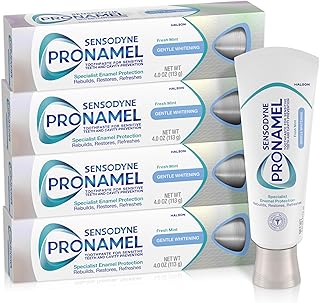
Sensodyne Pronamel — dentist-recommended for enamel protection and remineralisation, especially important during Invisalign treatment with wine
👉 Check Pronamel on Amazon As an Amazon Associate, WineArmy may earn from qualifying purchases5. The Staining Science: How Bad Is White Wine for Aligner Clarity?
One of the primary reasons people choose white wine over red with their aligners in is the belief that it won’t stain. This is largely true for direct pigment staining — but not the full story.
Direct Pigment Staining
White wine contains very few of the dark anthocyanin pigments that give red wine its deep colour and its notorious ability to stain aligners, teeth, and clothing. A single glass of red wine with aligners in can visibly discolour a clear aligner within minutes. White wine does not cause this immediate visible staining effect, which is why patients perceive it as “safe” for aligner wear.
Tannin-Mediated Yellowing
White wine — particularly oak-aged Chardonnay and other barrel-aged styles — does contain tannins. These tannins can interact with the polyurethane surface of aligners over time, contributing to a subtle yellowing that is not immediately obvious but accumulates over multiple exposures. The tannins in white wine are far less concentrated than in red wine, so this effect is minor by comparison — but it is not zero.
Acid-Mediated Surface Etching
Here is a staining mechanism specific to white wine that most patients and even some orthodontists don’t consider: the high acidity of white wine can microscopically etch the surface of the aligner plastic, creating tiny surface irregularities that are more receptive to staining from subsequent exposures to any coloured liquid (including coffee, tea, or future red wine). In other words, white wine exposure can prime the aligner surface to stain more easily from other sources afterward.
Practical Impact
For most Invisalign patients, white wine consumed occasionally will not cause visible aligner discolouration if the aligner is cleaned properly immediately afterward. The concern is cumulative: patients who drink white wine regularly throughout a multi-month Invisalign treatment may notice gradual yellowing of their aligners that is not explained by coffee or tea alone.
6. The 22-Hour Wear Rule — and Why Wine Threatens It
Invisalign requires aligners to be worn for a minimum of 20–22 hours per day to achieve the tooth movement planned in the treatment. This is not a guideline — it is a clinical requirement. Teeth that do not receive sufficient aligner pressure for the correct number of hours do not move as planned, leading to delays in treatment completion and sometimes requiring refinements (additional aligner sets at extra cost).
The Removal Temptation
The correct way to drink wine with Invisalign is to remove the aligners before drinking, keep them out for the duration of drinking, clean your teeth before reinserting, and then put the aligners back in. This is the approach orthodontists universally recommend. The problem is that this “correct” approach, in practice, often leads to extended removal times that threaten the 22-hour requirement.
A typical social scenario: dinner with wine. You remove your aligners at 7pm when wine is poured. You eat, drink, socialise — perhaps forget to reinsert after dinner. You watch a film. It’s 11pm before the aligners go back in. That’s four hours without aligners — pushing your daily wear time down to 20 hours if you sleep eight hours. Do this three times a week and your treatment timeline begins to slip.
Counting the Hours Honestly
Many Invisalign patients underestimate how much time they spend with aligners out due to wine and meals. A useful exercise is to track removal time for one full week. Typical findings for regular wine drinkers include 3–4 hours of removal daily once mealtimes, wine, and cleaning time are counted — leaving them at 20–21 hours of wear, not the 22 the treatment requires.
⏰ The Real Cost of Removing for Wine
Every 30 minutes of aligner removal for a glass of wine, multiplied by frequency across a 12–18 month treatment, can add weeks to your total treatment time. If you drink wine several evenings per week, the cumulative impact on your treatment timeline may be more significant than the staining or acid risk.
7. What Orthodontists Actually Say — Beyond the Official Line
The official Invisalign guidance is “only water with aligners in.” But what do orthodontists say in practice when their patients ask specifically about white wine?
The Conservative Position
Most orthodontists repeat the official guidance: remove aligners to drink anything other than water, clean teeth before reinserting. They cite staining, acid erosion, and bacterial overgrowth under the aligner as the primary concerns. They emphasise that the brief inconvenience of removing aligners is far outweighed by the cumulative damage of regular wine consumption with aligners in.
The Pragmatic Position
Some orthodontists — particularly those who treat a lot of adult patients with active social lives — acknowledge that complete avoidance is unrealistic and give more nuanced guidance. Their typical advice for white wine specifically: if you choose to drink with aligners in, do so minimally, rinse your mouth and the aligner with water immediately after, avoid sweet wine styles, and prioritise cleaning thoroughly before bed. They also recommend not making this a nightly habit.
Where Orthodontists Universally Agree
- Red wine should never be consumed with aligners in — the staining is immediate and sometimes irreversible
- Sparkling wine is particularly bad — the carbonation increases acidity and accelerates both acid erosion and plastic interaction
- Brush and floss before reinserting aligners after any wine consumption, without exception
- Never sleep with wine-contaminated aligners that have not been properly cleaned
- If aligners show any staining or yellowing, bring this to your orthodontist’s attention — significant discolouration may indicate a need for aligner replacement
8. Damage Control: If You Drink White Wine With Aligners In
If you find yourself at a social occasion having consumed white wine with your aligners in, here is the most effective sequence for minimising the consequences.
- 1 Sip water between each glass of wine Alternating sips of plain water while drinking wine dilutes the acid environment under the aligner, provides some saliva stimulation, and reduces the total acid concentration trapped against the enamel. This is the single most impactful thing you can do while drinking.
- 2 Rinse mouth with water immediately after drinking As soon as you finish the wine, rinse your mouth thoroughly with plain water. Swish vigorously for 20–30 seconds to dilute and partially remove the wine residue from between the aligner and your teeth. This does not replace brushing but provides immediate acid dilution.
- 3 Remove and rinse the aligner immediately If you can access a bathroom, remove the aligner and rinse it under cool running water. Gently rub the interior surface with your finger under running water to remove wine residue from the plastic. Do not use hot water — it can warp the aligner.
- 4 Wait 30 minutes before brushing The acid from wine temporarily softens tooth enamel. Brushing within 30 minutes of acid exposure causes abrasive damage to softened enamel. Wait 30 minutes, then brush gently with a soft-bristle brush and a fluoride or remineralising toothpaste.
- 5 Clean aligner properly before reinserting After brushing and flossing your teeth, clean the aligner with a dedicated aligner cleaning solution, Invisalign cleaning crystals, or a gentle clear soap — not toothpaste, which is abrasive on aligner plastic. Rinse thoroughly and reinsert only when both teeth and aligner are fully clean.
- 6 Use remineralising products before bed Applying a fluoride gel or remineralising toothpaste (hydroxyapatite-based) before bed helps restore enamel mineral lost to acid exposure during the evening. This is especially valuable after white wine consumption with aligners in.
9. Should You Remove Aligners to Drink White Wine?
Given the risks of drinking with aligners in, removing them for wine is clearly the orthodontically correct approach. But the practical question is how to manage this in real social situations without it becoming a constant disruption.
The Case for Removing
Removing aligners completely before drinking wine eliminates all four of the risk mechanisms: no acid trapped against teeth, no staining of the aligner plastic, no sealed bacteria-feeding environment, and no alcohol-plastic interaction. This is the approach that best protects both your teeth and your aligner clarity. It is also the only approach that gives saliva full access to your teeth to provide its natural buffering and remineralising function.
The Practical Challenges
The main practical challenge is storage. If you remove aligners at a dinner party, you need somewhere to put them that is clean, safe, and accessible. Wrapping them in a napkin (a common approach) risks losing them to the bin. Keeping them in your pocket risks warping them. The correct approach is to carry your aligner case at all times so that removal for meals and wine is a smooth, hygienically managed process rather than an ad-hoc improvisation.
The 22-Hour Calculation
Before removing your aligners at any social event, run the numbers. If you’ve already had aligners out for meals today, calculate how much time you have remaining in your removal budget. If you’ve already been out of aligners for 1.5 hours at meals, you have 0.5–1 hour of removal budget for the evening. Plan accordingly — two glasses of wine over 45 minutes is manageable; a three-hour dinner is not.
💡 The Aligner Case Solution
The single most practical habit change for managing wine with Invisalign is always carrying your aligner case. A slim, travel-sized case fits in any pocket or bag and makes the remove-store-reinsert process quick and hygienic. Without a case, aligner removal at social events creates hygiene and loss risks that discourage compliance. With a case, it becomes a simple 30-second routine.
10. All Drinks Compared: What’s Safe, Risky, or Off-Limits With Invisalign
White wine is not the only drink Invisalign patients navigate. Here is a comprehensive comparison of common beverages and how they interact with clear aligners.
Plain Still Water
The only beverage that is completely safe with aligners in. No staining, no acid, no sugar. Room temperature or cool preferred — not very hot.
White Wine (Dry)
High acidity erodes enamel under the aligner seal. Minor tannin-based yellowing over time. Better than red for staining, but enamel erosion risk is actually higher. Remove and clean properly.
Red Wine
Rapid, dramatic, often irreversible aligner staining from anthocyanins. Plus all the acid and sugar concerns of white wine. Always remove aligners for red wine — no exceptions.
Sparkling Wine / Champagne
Worst wine category for Invisalign. Carbonation lowers pH further and accelerates acid contact. Combined with staining risk of any pigment in the wine. Always remove.
Coffee
Strong staining compounds that discolour aligners rapidly. Dark tannins absorb into plastic within minutes. Always remove aligners for coffee.
Tea (Black / Green)
High tannin content causes significant aligner staining. Also acidic. Always remove.
Juice (Any)
High sugar feeds bacteria under aligner. Many juices are also acidic. Citrus juices are particularly erosive. Remove aligners.
Sparkling Water
Slightly acidic due to carbonic acid (pH ~5.5). No staining, no sugar. Generally acceptable with aligners in moderation — but still less ideal than still water. Plain sparkling only — no flavoured varieties.
Hot Drinks (Any)
Heat can warp and distort the thermoplastic aligner material, permanently affecting its fit precision and its ability to move teeth as planned. Always remove aligners for hot drinks.

Invisalign Cleaning Crystals — the official cleaning solution for Invisalign aligners, essential after any wine exposure
👉 Shop Invisalign Cleaning Crystals on Amazon As an Amazon Associate, WineArmy may earn from qualifying purchases11. How to Clean Invisalign Aligners After Wine Exposure
Proper cleaning after wine exposure is one of the most important habits for Invisalign patients who drink wine regularly. Here is the complete protocol.
What to Use
- Invisalign Cleaning Crystals — the official product from Align Technology. Dissolve in water, soak aligners for 15 minutes. Excellent for removing wine residue and preventing odour build-up.
- Clear, unscented liquid soap — a small amount rubbed gently over the aligner with a soft-bristle brush, then rinsed thoroughly, is effective and affordable for daily cleaning.
- Retainer cleaning tablets (Retainer Brite, etc.) — effervescent cleaners that work well on aligner plastic. Look for anti-bacterial formulas for wine-exposed aligners.
- Dilute white vinegar rinse — some orthodontists suggest a brief soak in 50/50 white vinegar and water as a natural antibacterial option. Rinse thoroughly after.
What NOT to Use
- Toothpaste — contains abrasive particles that will microscopically scratch aligner plastic, creating surfaces that stain and harbour bacteria more readily. Never use toothpaste on aligners.
- Coloured or scented mouthwash — dye in coloured mouthwash can stain aligners. Scented products can leave residue.
- Boiling water or hot rinses — will warp the thermoplastic material. Always use cool or lukewarm water only.
- Denture tablets with bleach — some orthodontists caution against bleach-containing cleaners on aligner material over time.
The Complete Cleaning Routine After Wine
- Remove aligner and immediately rinse under cool running water
- Gently rub the inner surface with your finger under running water to remove visible wine residue
- Brush your teeth — but wait 30 minutes after wine before brushing if acid exposure was significant
- Floss thoroughly — wine residue trapped between teeth must be removed before aligner reinsertion
- Soak aligner in cleaning crystals or cleaning tablets for 15 minutes if time allows
- Rinse aligner again and inspect for any staining or residue
- Reinsert only when both teeth and aligner are fully clean
- Apply fluoride gel to teeth before bed if significant acid exposure occurred during the evening
12. White Wine Types Ranked by Risk Level for Invisalign Patients
Not all white wines are equal from an Invisalign risk perspective. If you are going to drink white wine during treatment — with or without aligners in — choosing the right style can meaningfully reduce the damage.
| White Wine Style | Typical pH | Tannin Level | Sugar (Dry Style) | Invisalign Risk |
|---|---|---|---|---|
| Champagne / Brut Sparkling | 2.8–3.1 | Very low | Low–moderate | 🔴 Highest — carbonation accelerates acid contact |
| Sauvignon Blanc | 3.0–3.3 | Very low | Low | 🔴 Very high acidity — worst still white for enamel |
| Pinot Grigio | 3.0–3.4 | Very low | Low | 🔴 High acidity; very low staining — enamel risk primary concern |
| Dry Riesling | 2.9–3.2 | Low | Low (if bone dry) | 🔴 Very high — one of the most acidic white wine styles |
| Unoaked Chardonnay | 3.1–3.5 | Low | Low | 🟠 High — still quite acidic but lower than the above |
| Oaked / Buttery Chardonnay | 3.3–3.6 | Low–medium | Low | 🟡 Moderate — malolactic fermentation raises pH; some tannin from oak |
| Viognier / Roussanne | 3.3–3.7 | Low–medium | Low–moderate | 🟡 Moderate — lower acidity; fuller body helps buffer somewhat |
| Moscato / Sweet White | 3.0–3.5 | Very low | Very high | 🔴 High — high sugar feeds bacteria; acid still present |
If you must drink white wine with aligners in at a social event, an oak-aged Chardonnay or Viognier — with their relatively higher pH and body — is the most tooth-friendly choice. A bone-dry Sauvignon Blanc or sparkling wine is the worst. Our guide comparing Pinot Grigio vs Sauvignon Blanc acidity explains why these high-acid whites are so aggressive on enamel.
14. Pros & Cons: Drinking White Wine During Invisalign Treatment
✅ Lower Risk Approach (Removing Aligners)
- Zero staining of aligner plastic
- No acid trapped under aligner against enamel
- Saliva freely buffers wine acid naturally
- No alcohol-plastic interaction
- Normal social drinking remains possible
- Treatment outcomes protected
- Aligner remains clear and “invisible”
❌ Risks of Drinking With Aligners In
- Acid trapped against enamel with no saliva buffering
- Enamel erosion significantly amplified
- Tannin-based yellowing of aligner over time
- Bacterial growth in sealed wine-coated environment
- Alcohol may degrade aligner material over time
- Potential for irreversible aligner discolouration (especially red wine)
- May require early aligner replacement at extra cost
Frequently Asked Questions
Technically you can — the aligners do not physically prevent it. But orthodontists universally advise against it. Drinking white wine with aligners in traps acidic wine against your enamel in a sealed environment where saliva cannot buffer or dilute it, significantly amplifying enamel erosion risk. It can also cause subtle yellowing of aligner plastic over time from tannins and minor chromogens in white wine. The official Invisalign guidance is that only plain still water should be consumed with aligners in. If you choose to drink white wine with aligners in occasionally, rinse with water immediately after and clean both your teeth and the aligner thoroughly before reinserting.
White wine is unlikely to cause the rapid, dramatic staining that red wine causes. However, it can cause subtle yellowing of aligner plastic over time through two mechanisms: tannins in oak-aged whites absorbing into the polyurethane surface, and the acidity of white wine microscopically etching the aligner surface and making it more receptive to subsequent staining from any coloured liquid. For most patients who drink white wine occasionally and clean aligners properly afterward, visible aligner staining from white wine alone is minimal. For regular drinkers, cumulative yellowing is possible.
Yes — removing aligners before drinking wine is the correct approach recommended by all orthodontists. This eliminates acid trapping, staining, bacterial feeding, and alcohol-plastic interaction. Always carry your aligner case so removal is hygienic and storage is safe. Before removing, calculate your remaining daily wear time to ensure you stay within the 20–22 hour requirement. Brush and floss before reinserting, and clean the aligner before putting it back in.
Using a straw reduces direct contact between wine and your front teeth surfaces, which is a partial mitigation strategy. However, it does not eliminate the problem — wine still reaches all tooth surfaces via tongue and mouth movement, and still gets under the aligner edges. Using a straw is better than drinking freely with aligners in, but it is not a substitute for removing the aligner. Think of it as a harm-reduction tool for occasions where removal is genuinely impractical — not a routine workaround.
Remove the aligner and rinse it immediately under cool running water. Gently rub the inner surface with your finger to remove wine residue. Brush and floss your teeth — but wait 30 minutes after wine if acid exposure was significant, as acid temporarily softens enamel and immediate brushing can cause abrasion. Then clean the aligner with Invisalign Cleaning Crystals, clear unscented soap, or retainer cleaning tablets. Rinse thoroughly and reinsert only when both teeth and aligner are fully clean. Never use toothpaste on aligners — it is abrasive and will scratch the plastic.
It depends on what you’re measuring. For aligner staining and cosmetic appearance, red wine is dramatically worse — it causes rapid, obvious discolouration that white wine does not. For enamel erosion risk under the aligner, white wine is actually worse because most white wine styles have a lower pH (higher acidity) than red wines. Both cause problems; they just cause different types of problems. Neither should be consumed with aligners in, but red wine is the more urgent cosmetic emergency while white wine presents the greater long-term enamel health risk.
Sparkling wine is the worst wine category for Invisalign patients. The carbonation lowers the effective pH further and accelerates acid contact with the aligner and enamel surfaces. Champagne and Prosecco have a pH of around 2.8–3.1 — among the most acidic beverages you can consume. Even at a celebratory occasion like a wedding toast, aligners should be removed for sparkling wine. If you want to participate in a toast with aligners in, a non-alcoholic sparkling water or a non-alcoholic sparkling wine is a significantly safer option.
The minimum time out for a single glass of wine, accounting for drinking time plus brushing and flossing afterward, is approximately 30–45 minutes. However, if wine is consumed with dinner, consolidating aligner removal for the entire meal — typically 45–60 minutes — is more efficient than removing separately for food and wine. Remember that brushing immediately after wine is not recommended — wait 30 minutes after finishing wine before brushing to avoid abrading acid-softened enamel. Total realistic removal time for wine with dinner: 60–75 minutes. Factor this into your daily 22-hour wear calculation.
Yes — indirectly. Wine itself does not affect tooth movement or aligner mechanics. But if consuming wine leads you to leave aligners out longer than your daily budget allows, your teeth will not receive the continuous pressure required for the planned movement. Even small consistent shortfalls in wear time — 30–60 minutes below the 22-hour target several days per week — accumulate into delayed treatment completion. Patients who drink wine regularly without careful management of removal time often need additional aligners (refinements) at the end of treatment, extending both the timeline and the cost.
Non-alcoholic wine (0.0% ABV) removes the alcohol-plastic interaction component but retains the same acidity as conventional wine — its pH is nearly identical to alcoholic wine. So non-alcoholic white wine still traps acid against enamel under the aligner seal, still contains some tannins, and still poses an enamel erosion risk. It is not a safe substitute for wearing aligners during wine consumption. However, for the specific concern of alcohol’s effects on aligner material and oral dehydration, non-alcoholic wine is marginally better than alcoholic wine — not enough to recommend drinking it with aligners in, but worth noting as an option for social toasting situations if aligners genuinely cannot be removed.
Conclusion: You Can Have Wine and Invisalign — Just Not at the Same Time
The answer to “can you drink white wine with Invisalign?” is technically yes — but the cleaner answer is: not with aligners in, and not without a plan. White wine is not the benign alternative to red that most patients assume. Its higher acidity makes it actually more damaging to enamel than red wine when trapped under an aligner’s sealed environment, even though it causes far less visible staining.
The approach that protects your teeth, your aligner clarity, and your treatment timeline is the same one your orthodontist will tell you: remove aligners before drinking wine, store them safely in a case, clean your teeth before reinserting, and manage your daily wear time carefully so that wine-related removal doesn’t quietly erode your 22-hour requirement.
This is entirely compatible with a normal, wine-enjoying adult life. It requires good habits — an aligner case always in your bag, a brushing routine before bed, awareness of your daily wear budget — rather than abstinence. Millions of adults have completed Invisalign treatment while continuing to enjoy wine; the key is doing it intelligently rather than hoping the aligners will be fine.
Your smile at the end of treatment is worth the 14 months of mindful wine drinking it takes to get there.
Protect Your Smile During Invisalign Treatment
From aligner cleaning crystals to remineralising toothpaste and travel aligner cases — everything you need to manage wine and Invisalign the right way.
🛒 Shop Invisalign Care Essentials on Amazon As an Amazon Associate, WineArmy may earn from qualifying purchases








13. Managing Social Situations on Invisalign
The psychological and social aspects of Invisalign and wine are real and should not be dismissed. Adult patients often struggle with the visible awkwardness of removing aligners at dinner tables, the anxiety of carrying them safely, and the social pressure to drink freely at events. Here are strategies that work.
Always Carry Your Case
This cannot be overstated. A slim aligner case in your pocket or bag transforms the removal process from an awkward improvisation into a smooth 30-second routine. You remove aligners discreetly in the bathroom before dinner, place them in the case, enjoy your meal and wine, clean your teeth in the bathroom afterward, and reinsert. No table-side drama, no napkin-wrapping risks, no loss or contamination.
Plan Your Removal Budget Before Events
Before attending any event where wine will be served, calculate your remaining daily wear time. If you’ve already had aligners out 1.5 hours today, you have about 0.5–1 hour of removal budget. Know this before you arrive and plan the evening accordingly — perhaps having aligners in during cocktail hour while drinking water, and removing for the dinner portion.
Non-Alcoholic Wine as a Table Option
This is worth considering more seriously than most Invisalign patients do. Premium 0.0% ABV non-alcoholic wines have the same acidity concerns as conventional wine (their pH is essentially identical), but they eliminate the alcohol-plastic interaction component. More importantly, they allow you to keep aligners in during a celebratory toast without worrying about alcohol’s specific effects — though you still need to rinse with water afterward to address the acidity. If you’re attending a wedding or celebration where you want to participate in toasts without removing aligners, a non-alcoholic sparkling alternative may be the most elegant solution.
The Straw Workaround — Partly Helpful
Drinking through a straw with aligners in directs the liquid to the back of the mouth, reducing direct contact between wine and the front tooth surfaces — the most visible surfaces. It does not eliminate the problem entirely, as wine still reaches all tooth surfaces via tongue and throat movement, and still gets under the aligner edges. But using a straw does meaningfully reduce the acid and staining impact on the front aligner surfaces. It is a partial mitigation, not a solution.
The “Dinner Only” Approach
Some orthodontists suggest a pragmatic compromise for regular wine drinkers: remove aligners only during meals (when you would be eating anyway) and have wine strictly with meals rather than separately. This consolidates the removal period, reduces the total number of separate removal events, and ensures you always brush and reinsert immediately after eating. Having a glass of wine with dinner as part of a consolidated meal removal is less disruptive to the 22-hour rule than removing aligners multiple separate times for wine during an evening.