What is Tannin in Wine? A Beginner’s Complete Guide to “The Pucker”
You’ve been there. You take a sip of a big, bold red wine, maybe a Cabernet Sauvignon. You swallow, and an invisible force instantly dries out your entire mouth. It feels like your tongue is wearing a tiny, wool sweater. You pucker, you smack your lips. That sensation? That is tannin.
For the U.S. wine drinker, “tannin” is the most-used and least-understood word in the entire wine glossary. We’re told a wine “has tannins,” but what does that mean? Is it good? Is it bad? Is it the thing that gives you a headache? (Spoiler: it’s probably not).
Here at Wine Army, we’re demystifying this essential concept. Tannin isn’t a flavor. It’s a feeling. It’s a textural component, a structural element that is absolutely critical to the world’s greatest red wines. Understanding tannin is the key that unlocks everything from food pairing to wine storage and aging.
In this 12,000+ word deep-dive, we’re going to give you the ultimate U.S. consumer’s guide to tannin. We’ll cover what it is, where it comes from, which wines have it, how it interacts with food and glass shape, how it changes with cellaring, and—most importantly—how to make it your friend. By the end, you won’t just understand tannin; you’ll be seeking it out.
What’s In This Guide
- The 30-Second Tannin Test (Do This Now!)
- What is Tannin? (The Simple Science)
- Where Do Tannins Come From? (The 4 Sources)
- Why Tannin is Wine’s “Backbone”
- 1. Structure & Mouthfeel
- 2. Aging Potential (The Preservative)
- 3. Food Pairing (The Magic Trick)
- The Tannin Spectrum: A U.S. Drinker’s Guide
- How to “Tame” Tannins: The 3 Great Tools
- The Tannin Toolkit: 5 Amazon Products
- The Glass Factor: How Shape Affects Tannin Perception
- Deep Dive: Tannin & Food Pairing Science
- The Aging Journey: How Tannins Change Over Time
- Storing Tannic Wines the Right Way
- Varietal Deep Dives: The Big Tannic Grapes
- Winemaking Decisions That Affect Tannin
- Terroir, Climate, and Tannin Levels
- Orange Wine, Skin Contact & Tannin in White Wine
- How to Buy Tannic Wines Like a Pro
- Building a Personal Tannin Tasting Journal
- Tannin in Context: The Entire Wine Journey
- Tannin Myths vs. Facts (The FAQ)
- The Final Word: Learning to Love the “Grip”
The 30-Second Tannin Test (Do This Now!)
Before we go any further, let’s get a real, physical feel for tannin. You don’t even need wine. Go to your kitchen and brew a cup of strong black tea (like an English Breakfast or Orange Pekoe). Let it steep for 5-6 minutes, way longer than you should. Now, let it get cold and take a sip. Don’t add sugar or milk.
Swish it around. Feel that? That powerful, bitter, astringent sensation that makes your mouth feel dry and rough? THAT is tannin.
Want a few more examples? You can also feel tannin when you:
- Bite into the skin of a raw almond or walnut.
- Eat a piece of very dark (85%+) chocolate.
- Eat an unripe banana.
That “puckering,” “drying” feeling is a key part of the wine terminology guide. It’s not a “flavor” like “cherry” or “vanilla.” It’s a tactile sensation, a texture. Now, let’s figure out what it’s doing in your wine.
What is Tannin? (The Simple Science)
In the simplest terms, tannins are a group of natural compounds called polyphenols. They are found in many plants, barks, leaves, and fruits. Their job in nature is to make the plant unappetizing to animals (that bitter, “yuck, not ripe” taste is a defense mechanism).
In wine, tannins are the magic ingredient that gives a red wine its structure, its “chewiness,” and its ability to age for 50 years. They are a critical part of the wine’s composition, just like acid, alcohol, and fruit flavor.
Scientifically, the “drying” sensation you feel is real. Tannins are “sticky” molecules. They bind to the proteins in your saliva (the stuff that makes your mouth “wet”) and essentially pull them out of solution. This creates friction, which your brain interprets as “dryness.”
There are two main categories of tannins found in wine: condensed tannins (also called proanthocyanidins), which come from grape skins, seeds, and stems, and hydrolysable tannins, which come primarily from oak barrels. Each type has a different texture and interaction with your palate. Condensed tannins tend to be more powerful and persistent, while hydrolysable (oak) tannins can be softer and add complexity. Understanding this distinction is the first step toward truly reading a wine’s structure—something our full wine tasting vocabulary guide covers in extensive detail.
Where Do Tannins Come From? (The 4 Sources)
Tannin in your glass isn’t just one thing. It’s a blend that comes from four possible places, and the combination of these sources defines the wine’s style.
- Grape Skins (The #1 Source): This is where almost all the tannin in red wine comes from. The process of making red wine involves crushing the grapes and letting the juice soak with the skins, seeds, and stems (this is called “maceration”). The longer the soak, the more color and tannin are extracted. This is also why white wine (where the juice is pressed off the skins immediately) has virtually no tannin.
- Grape Seeds (Pips): Grape seeds are loaded with tannins, but they are often very bitter and “green.” A good winemaker tries not to crush the seeds, as this releases these “harsh” tannins.
- Grape Stems: Sometimes, a winemaker will intentionally throw the entire bunch—stems and all—into the fermenter. This is called “whole cluster fermentation” and is common with varietals like Pinot Noir and Syrah. It adds a “stemmy,” “spicy,” or “tea-like” tannin that can be beautiful.
- Oak Barrels (The “Flavor” Tannin): Oak wood has its own tannins! When a wine (either red or white) is aged in new oak barrels, it pulls “wood tannins” out of the barrel. These are often “sweeter” or “silkier” than grape tannins and add flavors of vanilla, baking spice, and cedar. An oaked Chardonnay (a white wine) can have a small amount of tannin from this source.
Why Tannin is Wine’s “Backbone”
In the U.S. market, especially for new drinkers, “tannin” is often seen as a negative. But in the fine wine world, it’s the #1 indicator of quality and a wine’s “seriousness.” Here’s why you want tannin in your red wine.
1. Structure & Mouthfeel
If fruit and alcohol are the “flesh” of a wine, and acid is its “nerve,” then tannin is its “skeleton” or “backbone.” It gives the wine shape, weight, and presence in your mouth. A wine with no tannin can feel “flabby,” “thin,” or “simple.” A wine with high tannin feels “structured,” “chewy,” “grippy,” and “bold.” It’s the difference between 1% milk and whole milk—one just has more texture and weight.
2. Aging Potential (The Preservative)
This is the most important job of tannin. Tannin is a natural antioxidant. It acts as a preservative, protecting the wine from the slow, damaging effects of oxygen over time. This is the entire secret to how to store wine at home for decades.
A wine with high tannin and high acidity (like a Cabernet Sauvignon from Napa or a Nebbiolo from Italy) is like a caterpillar in a chrysalis. The tannins are “tight” and “harsh” when the wine is young. But over 10, 20, or 50 years, those tannins undergo a process called “polymerization.” They slowly bind together, get heavier, and fall to the bottom of the bottle as fine sediment. As they fall away, they leave behind a wine that is no longer “harsh” but “silky,” “smooth,” and “velvety,” with complex secondary flavors of leather, tobacco, and earth.
A low-tannin wine (like a Pinot Noir) is delicious, but it’s more fragile. It’s built for elegance, not a 50-year lifespan. This is why your wine cellar essentials are built around high-tannin wines.
3. Food Pairing (The Magic Trick)
This is where tannin becomes your best friend at the dinner table. Remember how tannins bind to protein in your saliva? Well, they will also bind to fat and protein in your food. This creates one of the greatest culinary magic tricks in the world, and it’s the core of our guide on how to pair wine with food.
Here’s the classic example: You take a bite of a rich, fatty ribeye steak. It coats your mouth in delicious, savory fat. Then, you take a sip of a high-tannin Cabernet Sauvignon. The tannins instantly bind to those fats and “scrape” them from your palate, leaving your mouth feeling clean and refreshed. In return, the fat smooths out the “harshness” of the tannins, making the wine taste fruitier and more supple. Each one makes the other better. This is a culinary “win-win.” For a full exploration of this topic, see our complete steak and wine pairing guide and our deep-dive into cheese and wine pairing.
The Tannin Spectrum: A U.S. Drinker’s Guide
Not all red wines are created equal. If you know you love (or hate) that “puckering” feeling, this is your shopping list. We’ll break it down from high to low. For a deep dive, check out our guide to wine varietals.
| Tannin Level | Common Red Wines (Varietals & Regions) | Tasting Notes & Feel |
|---|---|---|
| HIGH |
|
Powerful “pucker.” Very drying. Can be “grippy” or “firm.” Needs food or time to soften. |
| MEDIUM |
|
A noticeable “grip,” but not overwhelming. More “velvety” or “dusty.” Very food-friendly. |
| LOW |
|
“Silky,” “smooth,” or “juicy.” Very little to no pucker. Easy to drink without food. |
| ZERO (or trace) |
|
No pucker at all. “Crisp” or “round” from acidity/sugar. “Orange wines” (whites fermented on skins, often found in natural wine shops) are the exception and can be very tannic. |
How to “Tame” Tannins: The 3 Great Tools
You just brought home a “HIGH” tannin wine. You open it, and it’s a “tannin-bomb”—so harsh and dry it’s no fun to drink. Don’t worry! You don’t have to wait 10 years. You can “tame” those tannins right now, in your kitchen.
Tool 1: Aeration (The “Quick-Age” Button)
Young, tannic wine is “closed” or “tight.” It needs to “open up.” The #1 way to do this is to expose it to oxygen. Oxygen begins a rapid, micro-oxidation process that softens the tannins and releases the trapped fruit aromas. This is the entire purpose of the great wine aerator vs. decanter debate.
- Decanting: This is the classic method. You pour the entire bottle into one of the best wine decanters. The “splashy” pour introduces air, and the large surface area in the decanter lets the wine “breathe.” For a big Napa Cab, give it 60-90 minutes in a decanter, and it will be a different, more beautiful wine. Want to understand the nuances of decanter shapes? Our wine decanter comparison guide covers every option.
- Aerating: This is the “instant” method. A pour-through aerator or one of the best electric wine aerators forces air through the wine as it goes from the bottle to the glass. This is like “flash-decanting” for a single glass. See our top-rated aerator picks to find the right one.
Tool 2: Food (The “Magic Eraser”)
We covered this, but it’s the most delicious tool. The rule is simple: High-tannin wine demands high-fat and high-protein food. The fat and protein in the food will bind to the tannins, making the wine taste smooth and fruity.
- Fatty steak (Ribeye, New York Strip)
- Rich, hard cheeses (Aged Cheddar, Parmesan)
- Heavy, rich stews or braised meats
Next time you’re hosting, put out a cheese board on a wine serving tray with your Cabernet. Watch the wine transform with every bite of cheese. It’s the “Why” behind how to pair wine with food.
Tool 3: Time & Cellaring (The “Slow-Cook” Method)
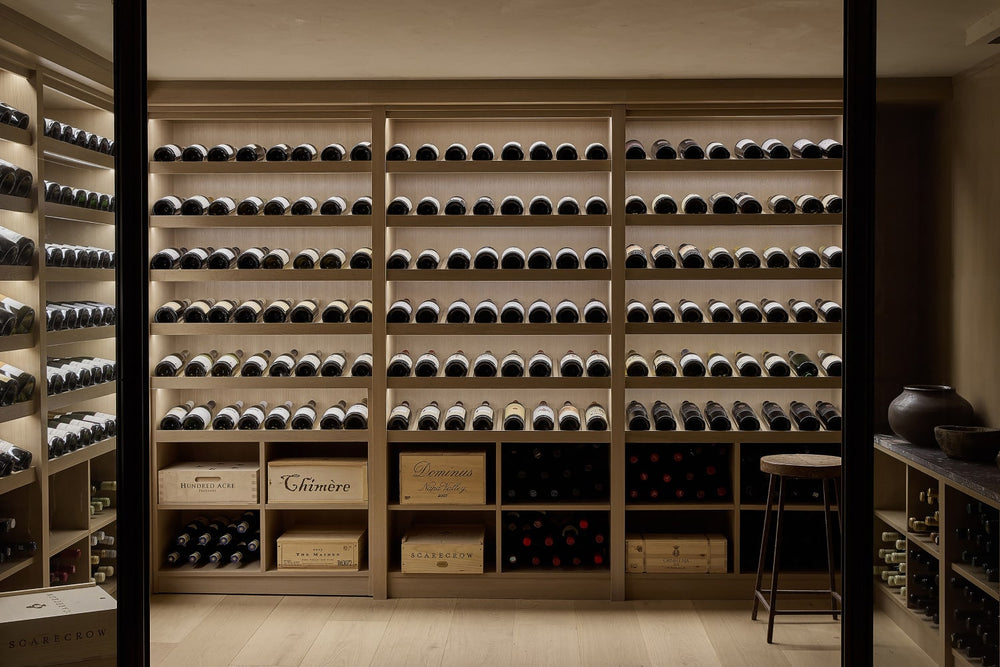
This is the “pro” move. If you taste a young wine and all you get is “grippy” tannin, it’s not ready. This is a wine to cellar. Learning how to store wine at home is the key. You don’t need a million-dollar cellar. A simple modular wine rack in the coolest, darkest part of your house (like a basement closet) is a great start. Check out our guide on how to store wine without a fridge. The tannin, your natural preservative, will do its work, and in 5-10 years, your patience will be rewarded.
The Tannin Toolkit: 5 Amazon Products to Master “The Pucker”
Ready to put your knowledge into practice? Here are 5 essential Amazon products for the U.S. consumer who wants to understand and master wine tannins.
1. The “Must-Have” Tool: Le Chateau Wine Decanter
Le Chateau Hand-Blown Crystal Wine Decanter

This is your #1 weapon against a “tannin-bomb.” If you are going to drink big, U.S. Cabs, you need a decanter. This Le Chateau is an Amazon bestseller for a reason. It’s hand-blown, lead-free crystal, and its wide 8.5-inch base provides a massive surface area for aeration. Pouring a young, $50 Napa Cab into this for an hour before dinner is the difference between a “good” wine and a “great” one. It softens the tannins, releases the fruit, and looks stunning on your table. Want to compare decanter styles before buying? Our decanter shape and capacity guide is essential reading.
(+) Pros
- Dramatically softens harsh tannins
- Releases aromas in young, “closed” wines
- Large surface area for maximum aeration
- Beautiful, hand-blown centerpiece
(-) Cons
- Can be difficult to clean (needs a special brush)
- Fragile (it’s crystal). See our decanter cleaning guide.
2. The “Sommelier’s Bible”: Wine Folly: The Master Guide
Wine Folly: The Master Guide (Magnum Edition)

How do you find out if a wine is high-tannin before you buy it? You get this book. This is the single best, most visual, and most accessible wine book for a U.S. audience. It’s the physical version of our wine terminology guide. It has a full-page profile on every major grape, complete with a visual “meter” for Acidity, Body, and—you guessed it—Tannin. You can instantly see that Cabernet is high, and Pinot is low. It’s an indispensable guide that will teach you how to read a wine label and what to expect from every bottle.
(+) Pros
- Stunning, easy-to-read infographics
- Visual “meters” for tannin, acidity, and body
- Covers all major wine grapes and regions
- Makes learning about wine fast and fun
(-) Cons
- It’s a book, not a magic wand (you have to read it!)
3. The “Big Glass” Theory: A Set of Bordeaux Glasses
Riedel Winewings Cabernet Sauvignon Glass (Set of 4)

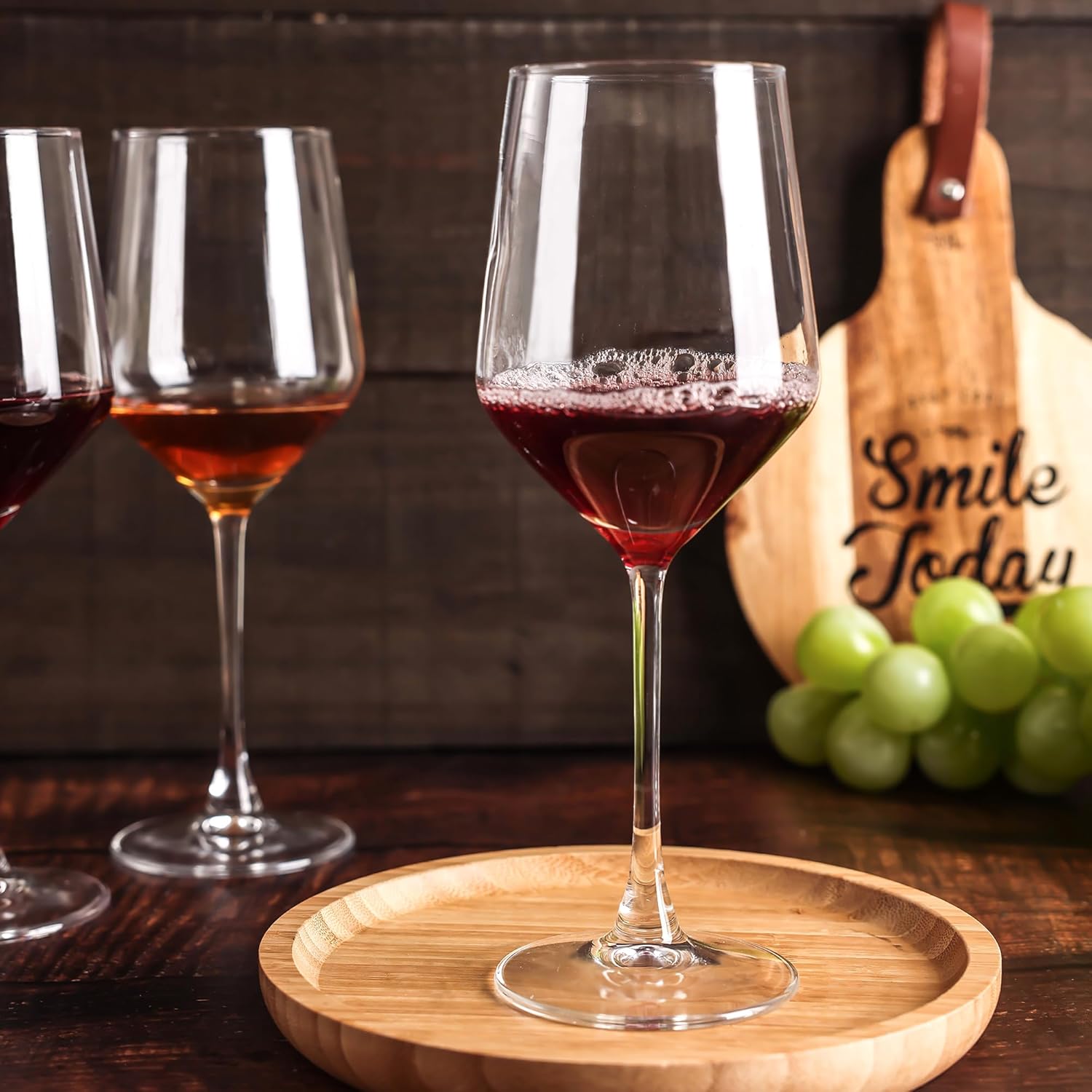
Why are the best wine glasses for red wine so big? Tannin. A large bowl (like this “Bordeaux” or “Cabernet” glass) does two things: 1) It’s a “mini-decanter” that provides a large surface area for air to soften tannins right in the glass. 2) It funnels the aromas to your nose. This Riedel “Winewings” set is specifically designed for big, tannic, new-world reds. The flat bottom is radical, but it provides one of the largest air-to-wine surfaces possible. Drinking a Napa Cab from this versus a small “diner” glass is a night-and-day difference. Curious about how glass shape affects different wine styles? Check out our guide on Bordeaux vs. Burgundy glass shapes and our full kinds of wine glasses guide.
(+) Pros
- Specifically designed to soften tannins and amplify aromas
- Large bowl provides in-glass aeration
- Dramatically improves the experience of bold reds
- Dishwasher-safe crystal
(-) Cons
- A significant investment for glassware
- Large and fragile. See how to polish wine glasses for care tips.
4. The “Fast” Solution: Aervana Electric Wine Aerator
Aervana One-Touch Electric Wine Aerator

What if you don’t want to wait an hour for a decanter? This is your tool. The Aervana is a high-tech solution that sits on top of your bottle. You press a button, and it dispenses the wine directly into your glass, but it also “injects” it with air as it pours. It’s the “instant” button for taming tannins. It’s a fantastic party trick, a great wine gift idea, and a genuinely effective tool for the U.S. consumer who values speed and convenience. It’s the “on-demand” answer to the aerator vs. decanter question. For a broader look at aerator types, check out our wine aerator comparison.
(+) Pros
- Instantly aerates and softens tannins, glass-by-glass
- Easy one-touch operation
- Acts as a “mess-free” pourer
- Great “wow” factor for guests
(-) Cons
- Requires batteries
- Not as “thorough” as a 1-hour decant
5. The “Tasting” Tool: Vacu Vin Wine Saver
Vacu Vin Wine Saver Pump with 2 Vacuum Stoppers

One of the best ways to understand tannin is to see how it changes. This is where the Vacu Vin comes in. Open a big, tannic Cab. Have one glass. Now, use this pump to suck the air out of the bottle and seal it with one of the best wine stoppers. Try it again on Day 2. And Day 3. You will feel the tannins soften day-by-day. This simple, cheap tool lets you run your own wine-aging experiment. It’s the most practical, affordable choice in the Coravin vs. Vacu Vin debate and a must-have for any wine drinker. See also our top-rated wine preservers for alternatives.
(+) Pros
- Lets you taste a wine’s evolution over 3-5 days
- Dramatically extends the life of your wine
- The best-selling, best-value preserver
- Lets you open a bottle “just for one glass”
(-) Cons
- Manual pumping required. Compare with our wine stopper vs. cork guide.
- Do NOT use on sparkling wine
The Glass Factor: How Shape Affects Tannin Perception
One of the most underappreciated facts in the wine world is this: the shape of your glass physically changes how tannic a wine tastes. This isn’t a sommelier myth or wine snobbery. It’s basic physics and physiology, and once you understand it, you’ll never look at a glass of wine the same way again.
When you sip wine from a glass, several things happen simultaneously. The wine flows across different zones of your tongue (tip, sides, back), hits the back of your palate, and releases volatile aromatic compounds toward your nose. The shape of the bowl dictates exactly which part of your mouth the wine lands on first, and it controls how much oxygen interacts with the wine between the pour and the sip. These two factors are the entire reason why red and white wine glasses have such different shapes.
The Bordeaux Glass: The Tannin Tamer
A large, tall “Bordeaux” glass (sometimes called a “Cabernet glass”) is specifically engineered for high-tannin red wines. Here’s what the design does for you:
- Wide bowl + large opening: This maximizes the surface area of the wine exposed to air, acting as a mini-decanter the moment you pour. That ongoing micro-oxidation keeps softening tannins while you drink.
- Tall chimney: The wine is directed toward the tip and center of your tongue, where you perceive sweetness and fruit first. This leads with the wine’s fruit character before the tannins hit the sides and back of your mouth where they’re more prominent.
- Generous capacity: A properly poured glass of wine (about 5 oz) in a large Bordeaux glass creates a large surface area and room for the aromas to collect and concentrate above the liquid.
For a full breakdown of how glass geometry changes your tasting experience, especially if you’re choosing between Bordeaux-style and Burgundy-style glasses for a Pinot Noir, see our dedicated guide on Bordeaux vs. Burgundy glass shape and aroma. And if you’re wondering whether the premium price of Riedel is worth it compared to Schott Zwiesel, we’ve got a detailed comparison of those two top brands to help you decide.
The Burgundy Glass: The Elegance Amplifier
A wide-bellied, shorter-rimmed “Burgundy” glass (sometimes called a “Pinot Noir glass”) is built for low-tannin reds. Its very wide bowl maximizes the evaporation of the delicate, volatile aromatic compounds in Pinot Noir—the strawberry, earth, and forest floor notes. Because low-tannin wines don’t need the “tannin-taming” effect of a large opening, the bowl curves inward slightly at the top, concentrating aromas. Pouring your Pinot into a Bordeaux glass isn’t wrong, but it’s like putting the wrong lens on a camera—you’ll still get a picture, but you’ll miss the detail.
Practical Takeaway: A Two-Glass System
For most U.S. home wine drinkers, you don’t need 12 different glasses. You need two: a large Bordeaux glass for your tannic reds (Cabernet, Syrah, Malbec) and a wide Burgundy glass for your lighter reds (Pinot Noir, Gamay). This two-glass system covers 90% of your drinking. Check out our full guide to top red wine glass picks by style and variety for specific product recommendations. And if you want to understand what all the different glass shapes are actually for, our comprehensive kinds of wine glasses and their uses guide has you covered.
Pro Tip: Polishing Your Glasses Matters for Tannin Perception Too
Residue from dish soap or hard water can leave a film inside your wine glass that dulls aromatics and creates a slight “soapy” taste that some people mistakenly attribute to tannin. Always hand-wash your wine glasses in hot water (no soap, or just a tiny drop), and finish them with a proper lint-free polishing cloth. See our guide on how to polish wine glasses to a professional shine and our picks for the best lint-free wine glass polishing cloths.
Deep Dive: Tannin & Food Pairing Science
We’ve touched on the basics of tannin and food pairing, but this topic deserves its own chapter. The interaction between tannin and food is one of the most exciting areas of gastronomy, and understanding it at a deeper level will make every dinner you host more impressive.
Why Fat and Protein Are Tannin’s Best Friends
At the molecular level, tannin molecules have a specific affinity for proteins. They are essentially “protein-seeking” compounds. When they encounter the proteins and fats in food—especially from animal sources—they bind to them preferentially rather than to the proteins in your saliva. This is why, after a bite of steak, that same big Cabernet Sauvignon tastes smoother and fruitier. The tannins have “used up” their astringency on the fat in the food rather than on your palate.
This is the scientific foundation of some of the world’s most beloved culinary pairings:
- Cabernet Sauvignon + Ribeye Steak: The ultimate classic. The marbling in a ribeye provides both fat and protein in abundance. See our best wines to pair with steak guide for a deeper breakdown of which cuts work best with which tannic reds.
- Barolo + Braised Short Ribs: The tannins in Nebbiolo are among the most powerful in the world. They require the slow-cooked, collagen-rich protein of braised beef to truly shine.
- Cabernet Franc + Aged Cheddar: Hard, aged cheeses are high in protein and fat. Their crystalline, umami-rich texture is a perfect foil for medium-to-high tannin reds.
- Malbec + Lamb Chops: Lamb has a distinctive fatty, gamey character that the “dusty” tannins of Malbec complement beautifully.
For a full, printable chart of these pairings, our cheese and wine pairing chart is an essential resource for any host. And if you’re planning a full dinner, our seafood and wine pairing guide will explain why you should reach for a low-tannin option when fish is on the menu.
The Enemies of Tannin: Foods That Make It Worse
Just as fat and protein soften tannins, certain foods intensify them and make a tannic wine taste harsh, bitter, and unpleasant. Knowing these “tannin enemies” will save you from a lot of bad wine-pairing decisions.
- Spicy Food: Heat from chili peppers activates the same nerve receptors as the astringency of tannin—they amplify each other. A high-tannin Cabernet with a spicy curry is an assault on your senses. For spicy food, always reach for a low-tannin, slightly fruity or sweet wine. See our wine pairing with spicy food guide.
- Acidic Foods without fat: Plain tomato sauce or lemon-dressed salads, without any protein or fat to buffer the tannin, can make a wine taste metallic and harsh.
- Artichokes & Asparagus: These vegetables contain compounds (cynarin and mercaptans, respectively) that famously make any wine taste bitter or metallic.
- Sushi & Raw Fish: Delicate raw fish has barely any fat or protein capable of buffering tannins. A tannic red will make sushi taste “fishy” and “metallic.” Stick to crisp whites, sparkling wine, or sake. See our sushi and wine pairing guide.
- Dark Chocolate (low sugar): This is nuanced. Very dark, unsweetened chocolate can amplify the bitterness of tannin. But a medium-dark chocolate (60-70%) can work beautifully with fruity, tannic reds. See our full guide on chocolate and red wine pairing.
Tannin & Thanksgiving: The Ultimate Pairing Challenge
Thanksgiving is the single hardest food-pairing event of the year because of the sheer diversity on the table. You have fatty turkey, savory stuffing, sweet cranberry sauce, tart mashed potatoes, and sugary sweet potato casserole—all on one plate. For high-tannin red wine drinkers, Thanksgiving is a minefield. The sweet and acidic elements can make your tannic Cab taste aggressive and “mean.” This is exactly why medium-tannin wines—a Pinot Noir, a Zinfandel, a Beaujolais Nouveau—reign supreme at Thanksgiving. Our full guide on the best wines for Thanksgiving turkey and sides explains exactly which bottles to bring to the table.
The Aging Journey: How Tannins Change Over Time
This is one of the most magical things in the entire world of wine. The fact that you can buy a bottle today, put it in a dark corner, and open it 15 years from now to find a completely transformed, transcendently beautiful wine—that is the promise of tannin. Understanding how it works gives you a whole new reason to build a collection.
Phase 1: The “Closed” Phase (Years 0-5 for most wines)
When a high-tannin wine is bottled and released to the market, it is often in what winemakers call a “closed” phase. The fruit aromas that were so vivid during fermentation have “shut down,” and the tannins feel prominent, primary, and often harsh. This is not a flaw. The wine is “contracting” as it adjusts to its new, sealed environment. Drinking a great Barolo or a Napa Cabernet in its first year can be like trying to eat a raw potato—technically edible, but not what it’s capable of.
This is why understanding wine vintages is important. A “great” vintage produces wines with more ripe tannins that are better structured for aging. A “difficult” vintage may produce wines that never fully integrate their tannins.
Phase 2: The “Awkward” Phase (Years 5-12)
Many wine experts will tell you that there’s an “awkward” phase in a wine’s life when the primary fruit has started to fade but the secondary complexity hasn’t fully developed yet. The wine tastes neither young and vibrant nor old and complex. The tannins are still prominent. For a collector, this is the hardest phase—the wine doesn’t taste as good as it did when it was brand new, and it’s not yet at its peak. The answer is simple: patience.
Phase 3: The “Peak” Phase (Variable by wine)
When a wine reaches its peak, it is one of life’s greatest pleasures. The tannins, through the slow process of polymerization and precipitation, have either fully integrated or fallen out as fine sediment. The fruit character has shifted from simple berry flavors to complex notes of dried fruit, leather, tobacco, cedar, earth, and graphite. The texture has moved from “grippy” to “silky” or “velvety.” The wine feels whole, complete, and seamless. This is why wine genuinely gets better with age—when you have the right wine and the right conditions.
The key word is “conditions.” All the tannin in the world can’t save a wine stored in a hot, bright kitchen cabinet. Proper storage is the prerequisite for this entire journey to happen. The next section covers exactly that.
Storing Tannic Wines the Right Way
If you’re going to invest in high-tannin wines and give them the time they need to evolve, you absolutely must store them properly. The three enemies of wine are heat, light, and vibration. Tannin gives the wine the power to age, but only if your storage protects it from these forces.
The Three Rules of Wine Storage
- Temperature (55°F / 13°C is ideal): This is the most critical rule. Heat accelerates all chemical reactions in wine, including the polymerization of tannins—but in an uncontrolled, damaging way. A wine stored at 80°F will “age” 10 years in the time it would normally take 1 year at 55°F. But it won’t be beautiful; it will be “cooked,” flat, and oxidized. Cool, consistent temperature is paramount. Our complete guide to storing wine at home covers every aspect of this.
- Darkness: UV light from the sun (and even fluorescent lighting) can degrade the tannins and fruit compounds in wine, creating a “light-struck” flaw that ruins the wine. Store your collection in a dark place, or use a dedicated wine refrigerator or a wine rack in a dark closet. If you’re wondering whether you need a wine fridge, for any serious collection of age-worthy, tannic reds, the answer is almost always yes.
- Humidity and Position: Wine bottles sealed with natural cork should be stored on their sides so the cork stays moist and doesn’t dry out (which would allow oxygen in and destroy the wine). A relative humidity of 50-70% is ideal. For wines sealed with screw caps, this is less critical, but it’s still good practice to store them on their sides. See our breakdown of cork vs. screw cap for aging and longevity.
Your Storage Options
You don’t need an underground wine cellar to store wine properly. Here are the options, from simple to sophisticated:
- A cool, dark closet or basement: This works for short-to-medium-term storage (1-5 years) if your home maintains a reasonably cool temperature. A modular, expandable wine rack is the perfect, affordable solution here. You can start with a small unit and expand as your collection grows. For those who don’t have a fridge, our guide on how to store wine without a wine fridge has creative solutions.
- A dedicated wine refrigerator: For serious collectors, a wine fridge (also called a wine cooler) is the best investment you can make. It holds a consistent temperature and humidity automatically. Check out our full review roundup of the best wine fridges and our guide on the real difference between a wine fridge vs. a regular refrigerator. If budget is a concern, our picks for the best wine coolers under $500 prove that great temperature control doesn’t require a fortune.
- A professional wine storage facility: For truly irreplaceable bottles worth thousands of dollars, consider renting space in a professional storage facility. They guarantee perfect conditions and often include insurance.
Key Insight: The “Eco-Friendly” Angle on Wine Storage
When choosing wine storage solutions, there’s a growing movement toward energy-efficient options. Thermoelectric wine coolers, for example, use far less electricity than compressor-based models and run silently without vibration. For more on this topic—including how to choose storage that’s both good for your wine and your carbon footprint—check out our guide to eco-friendly wine storage solutions. And if you’re debating which cooling technology is right for you, our breakdown of thermoelectric vs. compressor cooling is essential reading.
Varietal Deep Dives: The Big Tannic Grapes
Every wine lover has a tannic grape they fall in love with first. Let’s explore the “Big Five” high-tannin red grapes in detail so you can understand what makes each one unique—and what to pair it with.
1. Cabernet Sauvignon: The King of Tannin
Cabernet Sauvignon is the world’s most planted red wine grape, and its thick skins are the primary reason. Cab grapes have a very high skin-to-juice ratio, which translates directly into high tannin levels. A classic Napa Valley Cab will have firm, dense tannins that need at minimum 60 minutes of decanting and ideally 5-10 years of aging. The tannins in a great Cab taste “noble”—they’re “granular,” “powerful,” and “chewy,” but not harsh. They’re the scaffolding around which the wine’s black currant, cedar, and graphite flavors are built.
The defining characteristic that separates Cabernet Sauvignon from other tannic grapes is the sensation of tannin on the gums—it’s a gum-drying, “coat” sensation that is distinctively “Cab.” For a detailed comparison of how Cabernet’s tannins compare to its closest rival, see our Merlot vs. Cabernet structure and tannins guide and our dedicated article on Bordeaux vs. Pinot Noir structure differences.
2. Nebbiolo (Barolo & Barbaresco): The Italian Titan
If Cabernet is the King of Tannin, Nebbiolo is the Emperor. This grape from Piedmont, Italy, produces the wines of Barolo and Barbaresco—wines that are legendarily tannic in their youth. A newly released Barolo can feel like chewing on the bark of a tree—earthy, dry, and almost undrinkably austere. But after 10-15 years in a bottle, it becomes one of the most complex, hauntingly beautiful wines on earth, with flavors of rose petal, tar, leather, truffle, and dried cherry.
Nebbiolo’s tannins are distinctive because they have very high acidity accompanying the high tannin—a combination that makes the wine feel sharp and aggressive when young, but gives it the structural framework to age for decades.
3. Syrah/Shiraz: Tannic with a Twist
Syrah (called Shiraz in Australia and South Africa) is an interesting case. It is high in tannin, but its tannins feel different from Cabernet’s. They are often described as “meaty,” “inky,” or “savory”—they have a darker, more brooding quality. Syrah also has high levels of a compound called “rotundone” which creates a black pepper aroma, and this savory quality often distracts from the perception of tannin, making the wine feel less “grippy” than a Cab even when the tannin levels are comparable.
Northern Rhône Syrah (Hermitage, Crozes-Hermitage) is considered one of the most age-worthy wines in the world. Australian Shiraz (especially from Barossa Valley) tends to be bigger and more fruit-forward. For the full picture, see our guide on Shiraz vs. Syrah: regional style and flavor.
4. Malbec: The Accessible High-Tannin Wine
Malbec has become one of America’s favorite red wines for a very good reason: its tannins are high, but they are naturally “soft” and “plush” due to the grape’s thick skin. Argentine Malbec, especially from Mendoza, is often described as having “velvety” or “chocolatey” tannins—they’re present and provide structure, but they don’t “bite.” This makes Malbec one of the best entry points into high-tannin wines for U.S. drinkers who are used to softer styles.
5. Tannat: The Tannin Record-Holder
If you ever want to experience what truly extreme tannin feels like, find a bottle of Tannat from Madiran, France. The grape literally has “tannin” in its name. A young Tannat will make your mouth feel like it has been lined with sandpaper. It’s used in Madiran in blends precisely because its tannin levels are so extreme in isolation. In Uruguay, where the grape has also found a home, the climate produces slightly riper, more approachable versions, but it’s still a tannin powerhouse. It is not for the faint of heart—but it is extraordinarily age-worthy.
Winemaking Decisions That Affect Tannin
Tannin isn’t just a function of the grape variety. The winemaker makes dozens of decisions during the winemaking process that can dramatically increase or decrease the tannin level and quality in the final wine. Understanding these decisions is what separates a curious wine drinker from a truly knowledgeable one.
Maceration Time: The Single Biggest Variable
Maceration is the period when the grape juice is in contact with the grape skins during fermentation. The longer the maceration, the more color, flavor, and tannin are extracted. A light Pinot Noir might macerate for only 7-10 days. A robust Barolo might macerate for 30-60 days or more. Extended maceration (“EM”) is a technique used to extract very ripe, soft tannins from grapes that have been allowed to hang on the vine until the seeds are fully ripe and won’t release harsh tannins even under prolonged contact.
Cap Management: Punch Down vs. Pump Over
During red wine fermentation, the grape skins float to the top of the fermenting juice, forming a “cap.” If left alone, the extraction of color and tannin would be uneven. Winemakers use two primary techniques to manage this: “punching down” (physically pushing the cap back into the juice) or “pumping over” (pumping juice from the bottom of the tank over the top of the cap). Pumching down is gentler and is common for delicate wines like Pinot Noir. Pumping over is more aggressive and common for big, tannic reds. The frequency and intensity of these techniques directly control tannin extraction.
Whole Cluster vs. Destemmed Fermentation
As mentioned earlier, including stems in the fermentation (“whole cluster”) adds a specific type of “green,” “spicy,” or “tea-like” tannin. This is a stylistic choice. In Burgundy, top producers often use a percentage of whole cluster to add structure and aromatic complexity to their Pinot Noirs. In Syrah production, it can add a distinctive “olive” or “black pepper” note. Destemming removes the stems before fermentation, giving the winemaker more control and resulting in a “purer” fruit-driven tannin profile.
Oak Aging: New vs. Used Barrels
A brand-new oak barrel imparts significant amounts of wood tannin, vanilla, and toasted flavors into the wine. An older barrel (used 2-3+ times) imparts much less. High-end Cabernet producers in Napa and Bordeaux often use 100% new French oak, which adds a rich, “toasty,” complex layer of oak tannin on top of the grape tannins. More affordable wines use older, “neutral” oak barrels that add complexity without adding tannin. Some producers use large-format barrels (like the Slovenian oak “botti” traditional in Barolo) or concrete/amphora, which add zero oak tannin and allow the grape tannins to express themselves without modification.
Terroir, Climate, and Tannin Levels
The concept of terroir—the complete natural environment in which a wine is produced—has a profound impact on tannin. The same Cabernet Sauvignon grape grown in two different climates will have dramatically different tannin levels and quality.
Warm Climates vs. Cool Climates
This is one of the core principles of understanding wine at a global level. Warm climates (like Napa Valley, Barossa Valley in Australia, and Priorat in Spain) produce grapes that ripen fully, developing thick skins with ripe, “polished” tannins. These wines tend to be big, fruit-forward, and have a “plush” or “velvety” tannin texture. Cool climates (like Bordeaux in France, Tuscany in Italy, and the Columbia Valley in Washington State) produce grapes that ripen more slowly, developing higher acidity alongside their tannins. The tannins are often “firmer,” “more angular,” and the wines can seem “austere” or “structured” in youth. This is the heart of the Old World vs. New World wine debate—and our guide explores it in full.
Soil Type and Tannin
Soil type influences tannin in more indirect ways. Well-drained soils (like the gravel beds of Bordeaux’s Médoc or the poor, limestone soils of Burgundy) force the vine’s roots to dig deep for water and nutrients. This “stress” produces fewer, smaller, more concentrated grape berries with a higher skin-to-juice ratio—and therefore more tannin. Rich, fertile soils produce bigger, more watery berries with less tannin concentration. It sounds counterintuitive, but stressed vines often make better wine.
Orange Wine, Skin Contact & Tannin in White Wine
One of the most confusing things for a new wine drinker is when a white wine makes their mouth pucker. “I thought tannin was only in red wine!” Actually, tannin can be in any wine—if the juice is kept in contact with the skins.
What is Orange Wine?
Orange wine (also called “skin-contact wine” or “amber wine”) is made by taking white wine grapes and fermenting them like a red wine—with extended skin contact. The result is a wine that ranges in color from pale amber to deep orange, and that has significant tannin, texture, and grip that you never find in conventional white wine. The tannins in orange wine are typically described as “grippy,” “tea-like,” “nutty,” or “leathery.”
Orange wine has become a darling of the natural wine movement. If you’re curious about trying tannic white wine, it’s your best entry point. Our full orange wine guide explains the full production process, the key producers, and the best food pairings. For a quick comparison of how orange wine differs from conventional white, see our side-by-side on orange wine vs. white wine: skin contact and flavor.
Oaked Chardonnay: A Gentle Introduction to White Wine Tannin
Even without skin contact, an intensely oaked Chardonnay (aged for 18+ months in 100% new French oak barrels) will have a noticeable tannic texture. You’ll feel it as a slight “woody,” “grippy” quality on the back of your palate. This is the hydrolysable tannin extracted from the wood. It’s a far cry from the tannins in a Barolo, but it’s real and it’s one of the reasons why heavily oaked Chardonnay can pair so well with rich, creamy foods like lobster bisque or roast chicken.
How to Buy Tannic Wines Like a Pro
Now that you understand tannin inside and out, how do you use this knowledge at the wine shop or on a restaurant menu? Here are the key strategies U.S. consumers can use to navigate the wine aisle with confidence.
1. Read the Label for Clues
The wine label is your first and most accessible source of information about tannin. Here’s what to look for:
- Grape Variety: If you see “Cabernet Sauvignon,” “Nebbiolo,” “Syrah,” or “Tannat,” you know you’re getting high tannin. If you see “Pinot Noir” or “Gamay,” you know you’re getting low tannin.
- Region: Old World European wines (Bordeaux, Barolo, Rioja) tend to be drier and higher in tannin than New World wines from the same grape. But a Napa Valley Cabernet can be just as tannic as a Bordeaux.
- Alcohol Percentage: A high ABV (14%+) on a red wine usually indicates a warm-climate, fully-ripe wine with softer, more “polished” tannins. A lower ABV (12-13%) usually means a cooler-climate wine with firmer tannins. Our full guide on understanding ABV on wine labels explains what these numbers mean in practice.
For a comprehensive walkthrough of every element on a wine label and how to decode it, our guide on how to read wine labels quickly is the single best resource we have.
2. Use Comparison Guides
If you’re choosing between two bottles of similar tannic reds, understanding the structural differences between the key varieties is incredibly helpful. Our library of comparison guides is built for exactly this moment:
- Merlot vs. Cabernet: Structure & Tannins
- Bordeaux vs. Pinot Noir: Structure Differences
- Shiraz vs. Syrah: Regional Style & Flavor
- Blend vs. Varietal Wine: What’s the Difference?
3. Explore Wine Subscription Boxes
One of the absolute best ways to rapidly build your understanding of tannin across different grapes and regions is to subscribe to a curated wine subscription box. A great subscription will send you a mix of wines, often with tasting notes that specifically mention tannin level and structure. You get to taste the spectrum—from grippy Cabernet to silky Pinot—in a systematic, curated way. See our updated guide to evaluating 2026 wine subscription features and value to find the service that’s right for you.
4. Look for Affordable, Educational Bottles
You don’t have to spend $50 a bottle to learn about tannin. There are excellent, food-grade tannic reds available for under $20. Our guide to affordable wine picks for 2026 budget enthusiasts includes a great selection of high-tannin reds at every price point.
Building a Personal Tannin Tasting Journal
The single fastest way to improve your understanding of tannin—and wine in general—is to keep a tasting journal. Writing down your observations trains your palate and creates a personal reference library that is far more useful than any app or generic tasting note. Here’s how to build one focused specifically on tannin.
The Core Questions to Answer for Every Wine
After tasting each wine, write down your answers to these five questions about tannin:
- Where do I feel it? Gums? Back of the palate? Entire mouth? The location tells you about the type of tannin (grain tannin vs. skin tannin).
- How would I describe the texture? Choose from: Silky / Velvety / Powdery / Grippy / Firm / Chewy / Harsh / Green / Drying / Astringent. Write down your honest impression.
- How long does it last? Do the tannins disappear after a few seconds (low tannin) or do they persist for 30+ seconds (high tannin)?
- How does it change with food? Take a bite of bread, cheese, or meat and re-taste the wine. Write down how the tannin perception changed.
- How does it change with aeration? Pour a glass, taste it, then let it sit for 20 minutes. Taste again. Did the tannins soften?
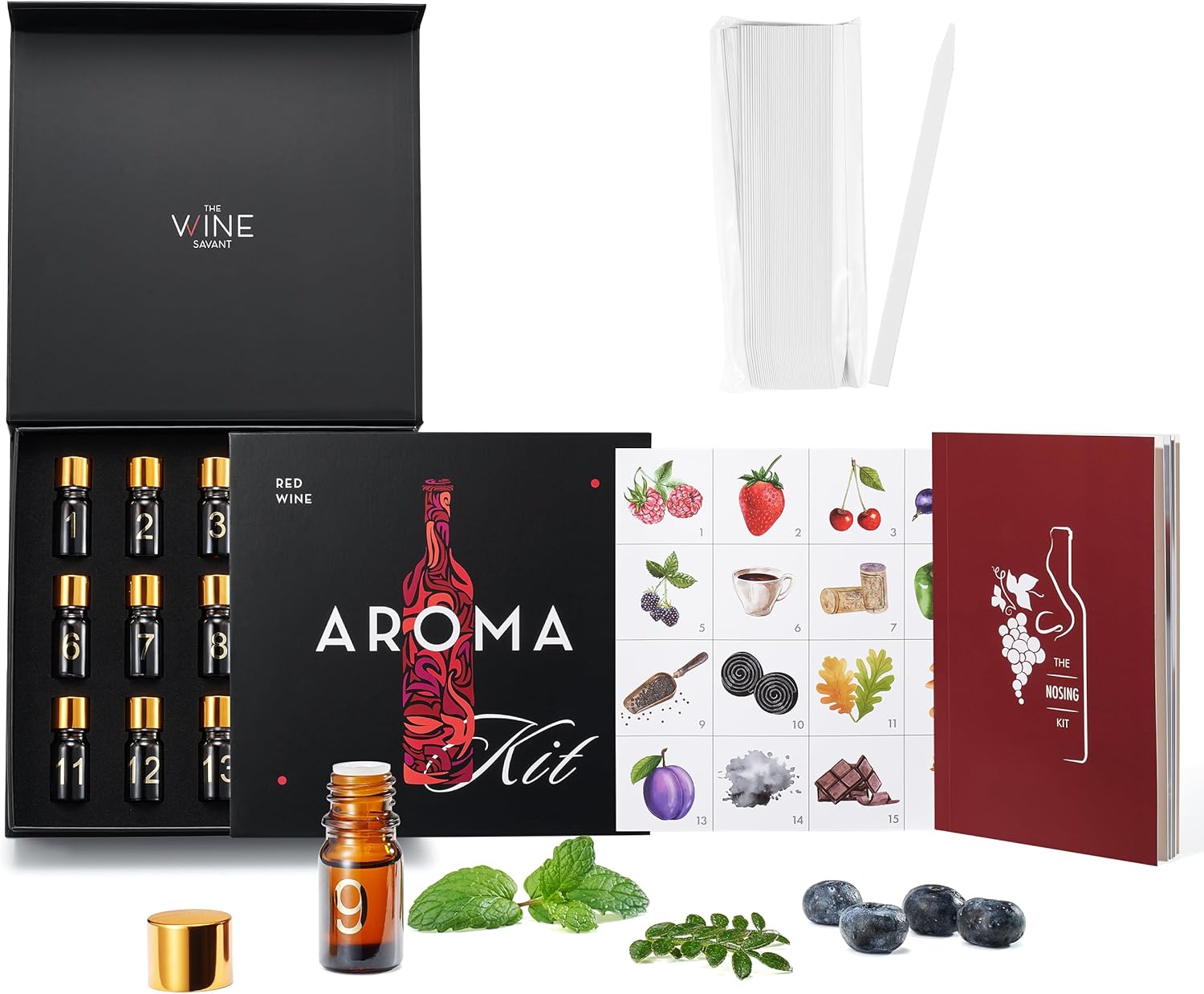
The best physical tools for this exercise are a dedicated wine journal and a good set of tasting glasses. Our picks for the 5 best wine journal notebooks will help you find the right format. And if you want a structured curriculum for building your tasting skills, our round-up of the best wine tasting kits of 2026 includes curated sets designed to take you through the full tannin spectrum in a single evening.
Serving Temperature & Tannin: The Hidden Variable
Here’s a fact that shocks most people: temperature dramatically changes how you perceive tannin. Tannins are amplified by cold temperatures and softened by warmth. A Cabernet Sauvignon served at 45°F (straight from the fridge) will taste unpleasantly harsh and bitter. The same wine served at 65°F (the ideal red wine temperature) will taste smooth and fruit-forward. This is why red wine is always served at “room temperature”—specifically, the temperature of a cool European cellar, not a modern heated house. Always let your big reds warm up before drinking them. A simple wine thermometer is one of the most underrated tools in any collector’s arsenal.
Tannin in Context: The Entire Wine Journey
Understanding tannin is a massive step, but it’s just one part of the fun. Once you can identify tannin, you start to see how it connects to everything else in the wine world. It’s a thread that ties the whole hobby together.
Your journey starts in the wine aisle, where you use your new skills to read the wine label. You see “Napa Cabernet” and “14.5% ABV” and you already know it’s a high-tannin wine. You know you’re not just buying a simple sipper; you’re buying a bottle that needs food.
You get it home. Now what? You need the right tools. You need a good, reliable opener. A top electric corkscrew makes it effortless, especially after you’ve cleanly removed the top with a wine foil cutter. If you’re ever caught without a corkscrew, our guide on how to open a wine bottle without a corkscrew has creative solutions. For more options, see our comprehensive wine openers compared guide and our picks for a top-rated wine bottle opener.
Because you know it’s tannic, you decant it. You pour it into a stunning decanter and let it breathe. You serve it in your big Bordeaux glasses. You pair it with a steak. Your friends are amazed. This is what being a “wine person” is all about. It’s not about being snooty; it’s about making the wine taste as good as possible. It’s about being a good host, which is the entire focus of our guide to wine accessories every host needs.
What about the rest of your new collection? You’re starting to buy from wine subscription boxes, and you’re exploring affordable wines and special wine gifts. You need to store them. Your new high-tannin wines are your “agers.” They go into your modular wine rack in the basement, an eco-friendly storage solution, to be opened in 5 years. Your “low-tannin” Pinots are for drinking now.
And when you travel? You’re not just bringing a “bottle of red” to a party. You’re bringing a high-tannin Syrah that you know will be perfect with the BBQ. You carry it in a padded insulated wine bag, or for a longer trip, one of our top wine travel bags by materials and capacity. If it’s a summer picnic, a portable wine cooler keeps your whites perfectly chilled. And if it’s a white wine? You’ll have your wine chiller sleeve or electric wine chiller ready to go.
See? Tannin is the key. It informs all these other decisions.
Tannin Myths vs. Facts (The FAQ)
Myth 1: Tannins in wine give me a headache.
Fact: This is almost certainly false. For 99% of the U.S. population, this is a case of “mistaken identity.” Tannins are in many things we consume, like tea, coffee, dark chocolate, and nuts. If you can drink a cup of strong black tea without a headache, you are not having a “tannin headache.”
The far more likely culprits are:
- Histamines: Naturally occurring compounds in red wine (especially) that can trigger allergic-like responses (headache, flushed skin) in sensitive people.
- Sugar: A high-sugar, high-alcohol combination (common in cheap, mass-market U.S. reds) is a classic recipe for a hangover.
- Dehydration: Alcohol is a diuretic. For every glass of wine, you should be drinking a glass of water.
- Sulfites: Some people are sensitive to the sulfites used as preservatives in wine. Our sulfite-free wine guide explores this topic and what options are available.
Curious whether aerating your wine might actually reduce some of the compounds that cause discomfort? Check out our research-backed article on whether aerating wine reduces hangovers.
Myth 2: Tannin is a flaw or a “bad” taste.
Fact: False. Tannin is a crucial structural component, not a flaw. A red wine without tannin would be a “flawed” red wine—flabby, simple, and unable to age. What you’re tasting is likely “harsh” or “unripe” tannins, which can be fixed with aeration or food.
Myth 3: All red wines are high in tannin.
Fact: Absolutely false. This is why people get “into” Pinot Noir. It’s a world-famous red wine prized for its low tannin levels, making it silky, smooth, and easy to drink on its own.
Myth 4: Dry wine has more tannin than sweet wine.
Fact: This is a common confusion. “Dry” and “tannic” are two completely different things. “Dry” refers to the absence of residual sugar. “Tannic” refers to the level of tannin. A wine can be completely dry (zero sugar) and have very low tannin (like a dry Pinot Noir or a dry Rosé). A wine can also be slightly off-dry (a touch of sweetness) and have very high tannin (like a slightly sweet Zinfandel from a hot vintage). Our dry wine guide and our article on residual sugar in wine are the two best resources for untangling this distinction.
Myth 5: What’s the difference between “good” and “bad” tannins?
Fact: This is a great, advanced question! This is the difference between “ripe” (good) and “unripe” (bad) tannins.
- Ripe Tannins: Come from perfectly ripe grapes. They feel “grippy,” “velvety,” “powdery,” or “chewy.” They are prominent but not “mean.”
- Unripe (“Green”) Tannins: Come from underripe grapes or from crushing seeds. They feel “harsh,” “bitter,” “astringent,” and “angular.” They are aggressive and unpleasant.
Myth 6: Natural wines don’t have tannin.
Fact: False—and in some cases, the opposite is true. “Natural wine” is a loosely defined category that refers to wines made with minimal intervention in the winery and vineyard. Many natural red wines are made with extended maceration and minimal filtration, which can result in extremely high tannin levels. Orange wines, which are popular in the natural wine category, can have more tannin than many red wines. Our natural wine guide and our guide to organic and natural wine farming practices explain the full picture.
Myth 7: Biodynamic and organic wines are always low in tannin.
Fact: “Biodynamic” and “organic” refer to farming practices in the vineyard—not to the style or tannin level of the wine. A biodynamically farmed Barolo is still going to be one of the most tannic wines on earth. In fact, some biodynamic proponents argue that healthy, stressed vines produce thicker-skinned, more concentrated grapes with higher tannin. Our biodynamic wine guide explores what these terms actually mean for what’s in your glass.
The Final Word: Learning to Love the “Grip”
Tannin is not the enemy. It’s the soul of red wine. It’s the “pucker,” the “grip,” the “chew” that makes a wine interesting. It’s the “backbone” that allows a wine to stand up to a rich meal and the “preservative” that allows it to evolve into something magical after 20 years in a cellar.
Your mission, as a U.S. wine lover, is to stop fearing the tannin and start managing it. Understand it. Know when to aerate it, when to pair it with food, when to serve it in the right glass, when to cellar it properly, and when to just let it sleep. Every bottle of high-tannin wine is a puzzle—and the more you understand tannin, the better you become at solving it.
The best homework we can give you? Go out and buy two bottles: a $20 Pinot Noir from California and a $20 Cabernet Sauvignon from Napa. Pour them side-by-side. Feel the “silky” texture of the Pinot? Now feel the “firm grip” of the Cab? That’s it. You’re no longer just a wine drinker. You’re a wine taster. Welcome to the club.
Keep exploring. Keep tasting. Check out our complete wine glossary for beginners when you encounter a term you don’t know, and bookmark our wine varietals guide for when you want to explore a new grape. And if you ever have a question about a bottle—from what it is to how to open it to how long it will last after you’ve opened it—Wine Army has you covered.