Aerator vs. Decanter: The Great Debate on Letting Wine Breathe
📋 What’s in This Guide
- The Impatient Wine Lover’s Epiphany
- The Science of Breathing: Why Aeration Matters
- Every Type of Wine Aerator Explained
- Every Type of Decanter Explained
- Deep Dive: Decanters & Aerators Head-to-Head
- How to Use a Wine Aerator Properly
- How to Use and Clean a Decanter Properly
- Aeration Guide by Wine Varietal
- White Wine, Rosé & Sparkling Wine: Do They Need Aeration?
- When You Should NOT Aerate Wine
- Sulfites, Sediment & the Role of Aeration
- Temperature, Serving & Aeration: The Complete Picture
- The 9 Most Common Aeration & Decanting Mistakes
- Aerating Natural Wine: Special Rules Apply
- Budget vs. Premium: What Are You Actually Paying For?
- Wine Preservation After Aeration
- Expert Sommelier Tips You Won’t Find Elsewhere
- Head-to-Head: The Great Aeration Experiment
- Aerator & Decanter Gift Guide
- The Final Verdict
- Frequently Asked Questions
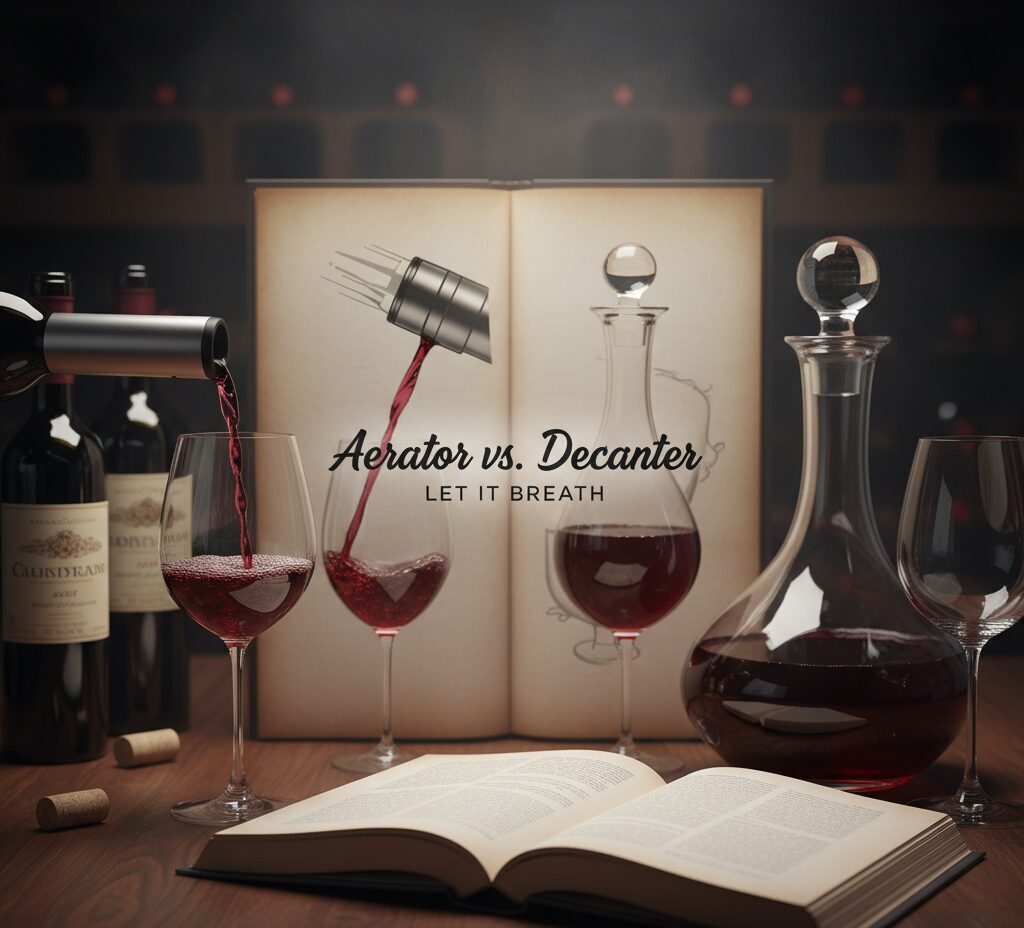
Every wine lover has had the experience: you open a promising bottle of red wine, pour a glass, and take a sip—only to be met with a muted, tight, and disappointingly harsh wall of flavor. The wine feels “closed off,” its beautiful aromas and flavors locked away. The secret to unlocking them is simple: oxygen. For centuries, the elegant decanter has been the tool of choice for this ritual. But in our fast-paced world, the instant gratification of the wine aerator has emerged as a powerful contender. So, which is better? The timeless ceremony or the modern shortcut? It’s a battle between patience and speed, and the winner depends entirely on the wine in your bottle and the moment you’re in.
The Impatient Wine Lover’s Epiphany
I used to be a skeptic. I’d hear sommeliers talk about “letting a wine breathe” and I’d roll my eyes. My philosophy was simple: open bottle, pour wine, drink wine. This changed dramatically one night when I opened a bottle of young, powerful Barolo—a gift I’d been saving. I poured a glass right away, and it was an aggressive, tannic monster. The fruit was hidden, and the tannins felt like they were coating my tongue in sandpaper. It was practically undrinkable. Disappointed, I left the glass on the counter and forgot about it.
An hour later, I came back and took another sip out of sheer curiosity. The transformation was miraculous. The tannins had softened into a velvety texture, and a beautiful bouquet of rose, cherry, and tar had emerged. It was a completely different—and infinitely more delicious—wine. That was my lightbulb moment. I realized that oxygen wasn’t just a marketing gimmick; it was an essential ingredient. I immediately bought one of the best wine decanters I could find. My journey into aeration had begun, and it led me to explore every tool, from the classic to the cutting-edge, in pursuit of the perfect glass.
The Science of Breathing: Why Aeration Matters
To understand the difference between an aerator and a decanter, you must first understand what’s happening inside your glass. When wine is exposed to air, it triggers two key chemical processes. To get a better grasp of these, our wine terminology guide is a fantastic resource.
- Oxidation: This is a slow, controlled “aging” process. A small amount of oxygen interacts with the wine’s phenolic compounds, most notably the tannins. In young, bold red wines, tannins can be harsh and astringent. Oxidation softens them, smoothing out the wine’s texture and making it feel much more supple and pleasant on the palate.
- Volatilization: Wine is full of volatile compounds, which are the tiny molecules responsible for its aroma. When you first open a bottle, many of these are “trapped.” Exposing the wine to air allows these compounds to evaporate and release into the air, creating the wine’s “bouquet.” This is why a wine becomes more aromatic after it has been open for a while. Aeration dramatically speeds up this process.
A decanter and an aerator are both tools designed to accelerate these two processes. The fundamental difference lies in Time vs. Intensity. A decanter uses a large surface area for a slow, gentle aeration over time. An aerator uses physics to create a rapid, intense burst of aeration in seconds.
Tannins: The Heart of the Aeration Debate
Tannins deserve their own explanation because they are the primary reason we aerate red wine at all. Tannins are polyphenolic compounds found in grape skins, seeds, and stems—and also absorbed from oak barrels during aging. They create the dry, slightly bitter, mouth-coating sensation you feel after sipping a young Cabernet Sauvignon. Think of the feeling of drinking strong black tea; that dryness is tannic astringency in its purest form.
In a young wine, tannin molecules are long, chain-like structures that bind aggressively to proteins in your saliva, causing that puckering sensation. When oxygen is introduced, these long chains begin to polymerize—they link together into larger, heavier molecules that don’t bind to saliva proteins as aggressively. The result? A smoother, softer, more velvety texture. Aeration essentially accelerates a process that would otherwise take months or years in the bottle.
This is also why not all wines benefit equally from aeration. A wine with very low tannins, like a light Pinot Grigio, has little to gain. But a wine bursting with grippy tannins, like a young Nebbiolo or Tannat, can be completely transformed. Understanding your wine’s tannin profile is the single most important factor in deciding how long to aerate and which tool to use.
Reduction: The Unpleasant Surprise in a Bottle
There’s a third, often overlooked reason to aerate wine: to dispel reduction. Reduction occurs when a wine has been exposed to too little oxygen during its production—a fault that can sometimes develop in the bottle, particularly in wines sealed with screw caps. A reduced wine may smell of struck match, rubber, garlic, or rotten eggs. These sulfur-based compounds are volatile and will rapidly blow off with exposure to oxygen.
If you open a bottle and it smells unpleasantly sulphurous, don’t immediately discard it. Pour it aggressively through an aerator or into a decanter and give it fifteen to thirty minutes. In many cases, the wine will fully recover into something beautiful. This is one of the most practical and underappreciated benefits of owning both tools.
Every Type of Wine Aerator Explained
The wine aerator category has exploded in recent years. What was once a single product type—a plastic funnel you held over a glass—has evolved into a diverse family of tools, each with its own mechanism, strengths, and ideal use cases. Before you buy, it helps to understand the landscape.
1. Handheld / Pour-Through Aerator
The classic. You hold it over your glass and pour wine through it. The Venturi or Bernoulli effect draws air through small channels, infusing the wine with oxygen as it flows into the glass. Fast, inexpensive, easy to clean, and incredibly effective for everyday use. The Vinturi is the category-defining product. Best for: those who drink one or two glasses at a time.
2. Bottle-Top / Stopper Aerator
This device sits directly in the neck of the bottle like a pourer. Every time you tip the bottle, wine flows through the aerating mechanism. Hugely convenient for parties or when you’re pouring multiple glasses in quick succession. The aeration is typically less intense than a dedicated handheld aerator but perfectly adequate for most everyday wines.
3. Countertop / Stand Aerator
A more sophisticated version of the pour-through aerator that stands on its own base. You place your glass beneath it, set the bottle above, and let gravity do the work—hands-free. Great for dinner parties. Some models are quite beautiful in their own right, functioning as a display piece on your bar cart or counter.
4. Electric / Pump Aerator
These battery-powered devices pump wine through an aeration chamber at controlled speed. Some attach to the bottle; others sit on a base. The primary advantage is perfectly consistent aeration every single time, regardless of how fast or slow you pour. They are more expensive and less portable, but deliver outstanding results for the serious wine enthusiast.
5. Decanter Aerator Funnel
A long-stemmed funnel with an aerating chamber, designed to be used in conjunction with a decanter. You pour wine through the funnel into the decanter, getting the benefit of instant aeration and then the ongoing gentle aeration from the decanter’s surface area. The best of both worlds for a truly transformative result on bold young wines.
6. Travel / Clip-On Aerator
Ultra-compact aerators designed to clip onto a glass or fold flat for transport. They produce less dramatic aeration than a full-size model but are perfect for carrying to a restaurant, a friend’s house, or a picnic. A wonderful addition to any wine travel kit. A surprising number of wine professionals carry one for dining out.
💡 Pro Tip: For maximum impact, combine a pour-through aerator with a decanter. Pour the wine through the aerator directly into the decanter. This provides an immediate burst of intense aeration followed by a sustained, gentle exposure as the wine rests. It’s the fastest way to get the result that would otherwise take two or more hours of conventional decanting.
Every Type of Wine Decanter Explained
Not all decanters are created equal. The shape and size of a decanter are not purely aesthetic decisions—they have a meaningful impact on how much surface area the wine is exposed to, and therefore how quickly and gently it aerates. Choosing the right shape for the wine you’re serving is a mark of true wine knowledge.
1. Standard / Bordeaux Decanter
The quintessential decanter shape: a wide, U-shaped base that narrows toward a long neck. The broad base provides excellent surface area for aeration, making it ideal for young, full-bodied reds like Cabernet Sauvignon and Merlot. It’s also the easiest shape to clean. If you only own one decanter, this is the one to get.
2. Swan / Angled Decanter
Characterized by an extremely wide, flat base and a dramatically curved or angled neck, the swan decanter maximizes the wine’s surface area exposure. It’s the go-to choice for the most powerful, tannic red wines that need aggressive aeration—young Syrah, Barolo, and Amarone all thrive here. Also visually stunning as a table centerpiece.
3. Duck / Ship’s Decanter
A squat, wide-mouthed vessel with a very short neck, designed specifically for old, fragile wines. The goal is not aeration but sediment separation. Because the neck is wide and short, you can pour quickly and the wine doesn’t need to travel far. Used carefully with a candle or light source to watch for sediment. Perfect for treasured vintage bottles.
4. Bell / Burgundy Decanter
A teardrop or bell-shaped decanter that is slightly narrower than a Bordeaux-style, making it ideal for Pinot Noir and other Burgundy varietals that need only gentle aeration. The narrower base creates a more controlled surface area, preventing over-aeration. A thoughtful, versatile choice for the wine lover who drinks across many styles.
5. Snail / Spiral Decanter
An artistic, sculptural decanter with a coiled or spiral body. The wine travels through the spiral as it’s poured, creating additional turbulence and aeration during the pouring process itself—similar to a handheld aerator. While undeniably beautiful, they can be very difficult to clean thoroughly, which is a significant practical drawback.
6. Electric Decanter
A relatively new innovation: a device that acts like a decanter but uses a motorized or gravity system to continuously circulate the wine over a wide surface, actively accelerating the aeration process. They dramatically reduce wait times—some claim to achieve in fifteen minutes what would take an hour in a traditional decanter. Expensive but genuinely impressive.
What Size Decanter Do You Need?
Decanter size matters more than most people realize. A standard 750ml bottle of wine needs a decanter with at least a 1,000–1,200ml capacity to allow the wine to spread out and breathe properly without being too deep in the vessel. Too deep, and you lose the surface area benefits. A 1,500ml decanter is ideal for a standard bottle, giving you plenty of room. If you regularly pour large-format bottles (Magnums), look for decanters in the 2,500–3,000ml range.
The Contenders: A Deep Dive into Decanters and Aerators
1. The Decanter (The Time-Honored Ritual)

The decanter is the classic, elegant solution to aeration. By pouring wine from the bottle into a wide-bottomed vessel, you dramatically increase the wine’s surface area that is exposed to oxygen. This allows for a slow, gentle, and controlled aeration process. A decanter serves a crucial dual purpose:
1. Aeration for Young Wines: For a young, tannic red (like a Cabernet Sauvignon, Syrah, or Nebbiolo), an hour or two in a decanter can work wonders, softening the tannins and allowing the primary fruit aromas to blossom. 2. Sediment Separation for Old Wines: For an old, fragile wine (10+ years), the primary goal of decanting is to carefully separate the clear wine from the bitter, grainy sediment that has formed at the bottom of the bottle. This process should be done gently and immediately before serving. Properly storing your bottles is key to managing sediment, as explained in our guide on how to store wine at home.
Who is this best for?
The patient wine lover, the host of dinner parties, and the collector of fine or aged wines. It’s an essential tool for anyone serious about wine.
- Provides gentle, controlled aeration for delicate wines
- The only proper way to separate sediment from aged wines
- Creates a beautiful centerpiece and enhances the serving ritual
- Can handle a full 750ml bottle at once
- A classic piece of wine cellar essentials
Pros
- Requires time and patience (30 minutes to 2+ hours)
- Can be bulky to store and delicate to clean
- Not practical for a spontaneous single glass
Cons
2. The Wine Aerator (The Modern Shortcut)
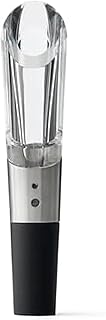
The wine aerator is a marvel of fluid dynamics, designed for maximum aeration in minimum time. Most handheld aerators like the popular Vinturi work on the Bernoulli principle. As you pour wine through the aerator’s chamber, its speed increases, which causes a decrease in pressure. This pressure drop draws in air through small side channels, instantly infusing the wine with a huge amount of oxygen as it flows into your glass.
The effect is dramatic and immediate. You can pour a glass of a young, tight red through an aerator and it will taste as if it has been decanting for 30–60 minutes. It’s the ultimate tool for instant gratification, perfect for a weeknight glass or when you spontaneously open one of the best affordable wines and want to enjoy it at its peak right away. It’s one of the best wine accessories every host needs for impromptu gatherings.
Who is this best for?
The busy wine lover, the person who often enjoys just a glass or two, or anyone who wants to improve their everyday wines without the wait.
- Provides instant aeration in the time it takes to pour a glass
- Small, portable, and easy to clean and store
- Perfect for aerating wine by the glass
- Significantly improves the taste of young, inexpensive red wines
Pros
- Too aggressive for delicate or aged wines
- Cannot separate sediment
- Lacks the ceremony and elegance of a decanter
Cons
How to Use a Wine Aerator Properly: Step-by-Step
It may seem foolproof—pour wine through it—but there are several technique-related details that can make a significant difference in the quality of your results. Following these steps will ensure you get the maximum benefit from your aerator every single time.
Start With the Right Glass
Always use a large-bowled wine glass. The wide bowl gives the aerated wine room to continue opening up after it lands in the glass. A tulip-shaped bowl also helps trap the aromas you’ve just released. If you pour into a small, narrow glass, you’ll lose much of the aromatic benefit you just created. Refer to our guide on the best wine glasses for red wine for recommendations.
Hold the Aerator at the Right Height
For handheld aerators, hold it directly over the glass—not three inches above or six inches to the side. The wine should flow directly from the aerator into the center of the bowl. This maximizes the fall distance and allows for additional splash aeration when the wine hits the glass. A few extra inches of height can noticeably increase aeration intensity.
Pour at a Steady, Medium Pace
Pour too fast and the wine rushes through without adequate contact time with the aerating chamber. Pour too slowly and you’ll underutilize the pressure differential that draws in air. A steady, medium pour—roughly the pace of a normal pouring stream—is ideal. You’ll hear a faint gurgling or bubbling sound from a good handheld aerator; that’s the air being drawn in. That sound is a good sign you’re doing it correctly.
Give the Glass a Gentle Swirl
After pouring, give the wine a gentle swirl in the glass. This further increases the surface area exposed to oxygen and continues the volatilization process that releases aromas. Even with an aerator, a thirty-second wait before your first sip and a good swirl can noticeably improve the experience.
Rinse Your Aerator Immediately After Use
Wine residue dries quickly inside the small channels and chambers of an aerator, and dried residue is very difficult to remove. Simply run warm water through the aerator immediately after you’re done pouring. Do not use soap unless absolutely necessary, as soap residue can affect the taste of your next pour. A rinse through with clean water is sufficient for regular maintenance.
⚠️ Never Aerate These Through a Standard Aerator: Aged wines (10+ years old), delicate light-bodied Pinot Noir, fine Champagne and sparkling wines, or any wine you suspect is at its peak or declining. The aggressive aeration will rapidly strip away their most fragile and complex aromas.
How to Use and Clean a Decanter Properly
Using a decanter seems straightforward, but the technique—particularly when dealing with an older wine that has thrown sediment—requires a careful approach. Done right, decanting is an incredibly rewarding ritual. Done carelessly, you can disturb sediment or over-expose a fragile old wine.
Decanting a Young Wine (for Aeration)
Open the Bottle and Remove the Cork Fully
Unlike with old wines, there’s no need to be excessively gentle. Open the bottle as you normally would. Wipe the lip of the bottle with a clean cloth to remove any cork residue or wax.
Pour Boldly at an Angle
For a young wine, you want maximum aeration during the pour itself. Tilt the decanter at an angle and pour the wine down the inside wall. This “cascade pour” spreads the wine out over the largest possible surface area and introduces the most oxygen during the transfer. Don’t be afraid of a little splashing—it’s beneficial for young, tannic reds.
Leave the Decanter Uncovered
The whole point is exposure to air. Leave the decanter open on your counter or table, away from direct sunlight or heat sources, and let time do its work. For a full-bodied red, aim for at least sixty minutes. If you’re hosting dinner, decant before you start cooking so the wine is ready when the meal is.
Decanting an Old Wine (for Sediment Removal)
Stand the Bottle Upright for 24 Hours
Before decanting, stand the bottle upright in your refrigerator or a cool space for at least 24 hours. This allows all the sediment—which has been resting on the bottle’s side—to settle to the bottom. If you skip this step, the sediment will be dispersed throughout the wine and much harder to separate cleanly.
Use a Light Source
Set a candle or a small flashlight behind the neck of the bottle. As you pour slowly and gently, you’ll be able to see the wine flowing through the neck. The moment you see the first whisper of dark, cloudy sediment approaching the neck, stop pouring. This visual cue is everything.
Pour Gently and Serve Immediately
The pour should be slow and very gentle. Tilt the decanter only slightly—you are not trying to splash or aerate; you are simply transferring the wine carefully. Serve the old wine within thirty to sixty minutes of decanting. Beyond that, the exposure to oxygen will begin to strip away the very delicate aromas that make aged wine so special.
How to Clean a Decanter Without Damaging It
Cleaning a decanter is one of the most frequently asked-about challenges in wine service. The long neck and wide base make it impossible to reach with a standard sponge or cloth, and wine residue left to dry becomes a stubborn, purplish stain that’s seemingly impossible to remove.
- The Decanter Cleaning Beads Method: Small stainless-steel or lead-free metal beads are the most popular and effective solution. Pour a little warm water into the decanter, add a tablespoon of beads, and gently swirl. The beads act as a mild abrasive, scrubbing the interior walls without scratching. This is the method professional sommeliers use and it works brilliantly.
- The White Vinegar & Baking Soda Method: For stubborn stains, fill the decanter with warm water, add a splash of white wine vinegar, and leave it to soak for thirty minutes. For very stubborn deposits, add a teaspoon of baking soda—the mild fizzing reaction helps loosen residue. Rinse thoroughly afterward.
- The Denture Tablet Method: Drop one or two effervescent denture-cleaning tablets into the decanter with warm water. The effervescence does an excellent job of loosening dried wine residue with minimal effort. Leave for twenty minutes, then rinse well.
- Drying the Decanter: Never leave a wet decanter standing upright, as moisture trapped inside can lead to a musty smell. Instead, use a decanter drying stand—a bent wire rack that holds the decanter upside down at an angle, allowing air to circulate inside while the water drips out.
Aeration Guide by Wine Varietal
One of the most valuable pieces of knowledge a wine enthusiast can have is understanding how much aeration different grape varieties need. There is no one-size-fits-all answer—a wine that benefits from two hours in a decanter might be ruined by the same treatment. Use this table as your go-to reference every time you open a bottle. For deeper context on individual grapes, our guide to wine varietals explained is an excellent companion resource.
| Wine Varietal | Tannin Level | Aerator? | Decant Time | Notes |
|---|---|---|---|---|
| Cabernet Sauvignon | Very High | ✓ Yes | 1–2 hours | One of the biggest beneficiaries of aeration. Don’t rush it. |
| Barolo / Nebbiolo | Very High | ✓ Yes | 2–4 hours | The most tannic major variety. Longer is almost always better for young bottles. |
| Syrah / Shiraz | High | ✓ Yes | 1–2 hours | Also benefits from uncorking 30 min early. Aerator works brilliantly here. |
| Amarone della Valpolicella | Very High | ✓ Yes | 2–3 hours | A powerful, complex wine. Give it the time it deserves. |
| Malbec | Medium-High | ✓ Yes | 30–60 min | Aerator is often sufficient. One of the best everyday aeration candidates. |
| Merlot | Medium | ✓ Yes | 30–45 min | Benefits nicely but doesn’t need a long decant. Aerator works well. |
| Sangiovese / Chianti | Medium-High | ✓ Yes | 45–90 min | High in acidity as well as tannins; aeration reveals lovely fruit and earthiness. |
| Tempranillo / Rioja | Medium | ✓ Yes | 30–60 min | Reserva and Gran Reserva styles especially benefit from decanting. |
| Zinfandel | Medium | ✓ Yes | 30–45 min | Opens up the jammy fruit character beautifully. Aerator is ideal. |
| Pinot Noir (young) | Low-Medium | ⚠️ With caution | 15–30 min | Gentle decant only. Aerator can be too aggressive—use with care. |
| Pinot Noir (aged) | Low | ✗ Avoid | 0–15 min | Serve almost immediately. Oxygen rapidly destroys delicate aged bouquet. |
| Gamay / Beaujolais | Very Low | ✗ Rarely | 0–15 min | Light and fruity; usually best served fresh. A short chill is more beneficial. |
| Chardonnay (oaked, full-body) | None | ⚠️ Optional | 10–20 min | Complex oaked Chardonnay can benefit from a short, gentle decant. |
| Sauvignon Blanc | None | ✗ No | Not needed | Crisp, fresh whites lose their brightness with aeration. Serve cold and fresh. |
| Champagne / Sparkling | None | ✗ Never | Never | Aeration destroys carbonation. Serve straight from the bottle. |
| Orange Wine | Low-Medium | ⚠️ Gentle | 20–40 min | The skin-contact tannins can benefit from gentle decanting. Avoid aerator. |
| Port (Vintage) | Very High | ✓ Decant only | 2–4+ hours | Always decant to separate sediment and soften tannins. An essential step. |
White Wine, Rosé & Sparkling Wine: Do They Need Aeration?
The vast majority of aeration advice focuses on red wine, which can leave white wine lovers wondering: should I be doing anything to improve my whites? The answer is nuanced, and it varies significantly based on the style and complexity of the wine.
White Wine and Aeration
Most fresh, light white wines—your crisp Pinot Grigios, Sauvignon Blancs, Rieslings, and Vinho Verdes—should be served as cold and as fresh as possible. These wines are valued for their bright, high-toned aromatics and refreshing acidity. Exposing them to oxygen will dull their vitality, flatten their aromas, and make them taste oxidized. The last thing you want is a warm, flat glass of white wine.
However, there is a category of white wines that can benefit significantly from aeration: full-bodied, complex, barrel-aged whites. Think of a high-end white Burgundy (Chardonnay), a rich white Rhône (Roussanne or Viognier), or a complex white Rioja (Viura). These wines are often made to age and develop complexity in the bottle. Just like a young red, they can sometimes show closed or reductive aromas when first opened. A gentle swirl, or even ten to fifteen minutes in a Burgundy-style decanter, can coax out their depth. The key word is gentle—if you aerate, do so briefly and serve immediately.
Rosé Wine and Aeration
Like lighter whites, most dry rosé wines do not benefit from aeration. Rosés are crafted to be fresh, vibrant, and immediately enjoyable. Their delicate strawberry, watermelon, and floral notes are best enjoyed the moment they hit your chilled glass. Over-exposure to oxygen will quickly oxidize these delicate compounds, turning a bright, fresh rosé into something flat and tired. Pour your rosé cold, directly into the glass, and enjoy it right away.
The one exception: some structured, fuller-bodied rosés from regions like Bandol or Navarra, which can have more depth and body. These can occasionally benefit from a few minutes in the glass before sipping. But even then, a gentle swirl is all you need.
Sparkling Wine and Champagne: Never Aerate
This is the one absolute rule in the world of aeration: never, under any circumstances, aerate Champagne or any sparkling wine. The carbonation—those precious, effervescent bubbles—is the defining characteristic of these wines, and it is the first casualty of aeration. Running Champagne through an aerator would be an act of genuine sacrilege, destroying the wine’s most essential quality in an instant.
Serve Champagne and sparkling wines directly from the bottle, pre-chilled to around 8–10°C (46–50°F), poured gently down a tilted flute or coupe. If your sparkling wine smells slightly reduced or “bready” when first opened—which is common in aged Champagne—simply let it rest in the glass for a minute or two; this gentle, natural breathing is all it needs.
💡 The Orange Wine Exception: Orange wines (whites made with extended skin contact) occupy a fascinating middle ground. The skin contact gives them tannins similar to a light red wine. For this reason, a gentle decant of twenty to thirty minutes can be very beneficial for complex orange wines, helping them open up and reveal their unique character. Use a decanter rather than an aerator for this purpose.
When You Should NOT Aerate Wine
Knowing when to reach for your aerator or decanter is important. But knowing when to put them down is just as critical. There are several specific situations where aeration will actively harm rather than help the wine in your glass.
1. Very Old, Fragile Wines
As a wine ages in the bottle, its primary fruit aromas slowly transform into more complex, secondary and tertiary notes—leather, tobacco, earth, dried fruit, spice, forest floor. These aged aromas are incredibly volatile. They have been patiently developing for years inside a sealed bottle, and they can disappear in minutes when exposed to a large dose of oxygen. If you’re opening a wine that is more than ten to fifteen years old, treat it with extreme gentleness. Pour it directly into the glass. If there is sediment, decant it very gently with a candle, pour your glasses, and drink. Don’t leave it sitting in a decanter for an hour. An aged grand cru Burgundy that you’ve been saving for years deserves reverence, not a rush job.
2. Wines That Are Already at Their Peak or Declining
Wine exists on a curve: it’s made, it improves, it reaches a peak, and then it slowly declines. If you’re opening a wine that has already reached or passed its peak of development, aeration will accelerate its decline. The fruit will be fading, the aromas delicate—oxygen will flatten it further. If you’re ever uncertain about whether a wine is past its prime, pour a small taste first. If it’s showing beautiful complexity and integration, serve it gently and quickly.
3. Light, Immediately Enjoyable Styles
Beaujolais Nouveau, easy-drinking Grenache blends, fruity young Dolcettos, and similar immediately enjoyable styles are not made for aeration. They are made for the pleasure of spontaneous, uncomplicated drinking. Their simple, fresh, fruit-forward character is not going to develop into something more complex with aeration—it will simply fade. Pop the cork, pour, and enjoy.
4. Wines Served at a Party When Guests Are Waiting
This is a practical consideration rather than a quality one, but it’s important: if you’re hosting guests and they are ready to drink, don’t make them wait while you experiment with aeration times. Have your decanted wines ready before guests arrive, or use an aerator to pour glasses quickly and keep the social energy moving. Wine is, above all, meant to be shared and enjoyed in good company.
Sulfites, Sediment & the Role of Aeration
What Are Sulfites and Can Aeration Help?
Sulfites (sulfur dioxide, or SO₂) are a naturally occurring byproduct of fermentation and are also added by winemakers as a preservative. They prevent oxidation and protect wine from microbial spoilage, playing an essential role in keeping wine stable. Nearly every wine in the world contains some level of sulfites—even “sulfite-free” wines contain trace amounts produced naturally during fermentation.
Many people claim to be sensitive to sulfites and believe they cause headaches and adverse reactions from wine. While true sulfite sensitivity is a genuine (though relatively rare) medical condition, research suggests that most “wine headaches” are more likely caused by other compounds such as histamines, tyramine, or simply dehydration and alcohol consumption.
That said, aeration does help to dissipate some of the free sulfur dioxide in wine. If you find that wines with a noticeably strong sulfur smell (often described as struck match or burnt rubber) cause you discomfort, aerating or decanting the wine can help reduce this. The free SO₂ is volatile and will evaporate with oxygen exposure. For wine labeled as “high in sulfites,” giving the bottle a vigorous pour through an aerator or a thirty-minute decant can make a real difference in how it smells and potentially how it’s perceived.
Understanding Wine Sediment
Sediment is one of the most misunderstood aspects of wine. Many consumers open an older bottle, see dark flakes or grainy deposits at the bottom, and worry that something has gone wrong with the wine. In fact, sediment is a completely natural and healthy sign of an unfiltered, traditionally made wine that has been properly aged.
There are two primary types of wine sediment. The first is tartrate crystals—also called “wine diamonds”—which form when tartaric acid in the wine precipitates out of solution in cold temperatures. They look like tiny, clear or reddish crystals and are completely flavorless and harmless. The second type is phenolic sediment: as a red wine ages, its tannins and pigment compounds (anthocyanins) polymerize into larger and larger molecules that eventually become insoluble and fall out of the wine as a dark, gritty, or powdery deposit. This type of sediment, while harmless, is bitter-tasting and gritty in texture—exactly why a careful decant is so important for older bottles.
Temperature, Serving & Aeration: The Complete Picture
Aeration doesn’t happen in isolation. The temperature at which you serve wine has a profound effect on how it responds to oxygen and how its aromas are perceived. Getting temperature right is the complement to getting aeration right—and it’s a step that many wine lovers overlook entirely.
How Temperature Affects Aeration
Warmer temperatures speed up chemical reactions, including both oxidation and volatilization. A wine served at 22°C (72°F) will aerate faster than the same wine served at 15°C (59°F). For wines that need aggressive aeration—young tannic reds—this means a slightly warmer serving temperature can actually work in your favor if you’re short on time.
However, serving red wine too warm (above 20°C / 68°F) causes alcohol to become more volatile than the wine’s desirable aromatic compounds, resulting in a wine that smells and feels “hot” or “boozy.” This is why the common instruction to “serve red wine at room temperature” has become outdated in warmer climates where room temperature can exceed 25°C (77°F). A brief fifteen-minute stint in the refrigerator for a room-temperature red is almost always beneficial.
Ideal Serving Temperatures by Wine Style
- Full-bodied red wines (Cab, Syrah, Barolo): 17–19°C (63–66°F)
- Medium-bodied red wines (Merlot, Sangiovese): 15–17°C (59–63°F)
- Light-bodied red wines (Pinot Noir, Gamay): 13–15°C (55–59°F) — a light chill is recommended
- Full-bodied whites (oaked Chardonnay): 12–14°C (54–57°F)
- Light whites & Rosé: 8–11°C (46–52°F)
- Champagne & Sparkling: 6–9°C (43–48°F)
- Dessert wines: 9–11°C (48–52°F)
The Practical Rule: A wine will warm up in the glass by two to three degrees over the first fifteen minutes of drinking. Pour your red wine slightly cooler than you think it should be served; it will reach its ideal temperature by the time you’re a few sips in. This is especially true in warm kitchens or dining rooms.
The 9 Most Common Aeration & Decanting Mistakes
Even experienced wine lovers make some of these errors. Avoiding them will instantly elevate the quality of every glass you pour.
Mistake 1: Decanting All Wines the Same Way. Young, tannic reds need aggressive decanting with a splash pour. Old, fragile reds need an ultra-gentle pour just to remove sediment. Treating every wine identically will either under-aerate your young wines or destroy your aged ones.
Mistake 2: “Letting the Bottle Breathe” by Opening It. Simply removing the cork and letting the bottle sit open does almost nothing. The wine surface exposed in the neck of a bottle is roughly the size of a coin—insufficient for meaningful aeration. You must pour the wine into a wider vessel.
Mistake 3: Using an Aerator on Old or Aged Wines. An aerator’s job is to be aggressive. For a fragile 20-year-old wine, this aggressiveness is devastating. Reserve your aerator for young, robust, everyday wines only.
Mistake 4: Not Accounting for the Wine’s Starting Temperature. If you pull a red wine from a warm storage area, it may already be too warm. Aeration in a decanter will not cool it—it may actually warm it further. Always check temperature before decanting and chill if needed.
Mistake 5: Over-Decanting a Wine. Yes, you can leave a wine in the decanter for too long. A bold Cabernet that’s benefited fully from two hours of decanting will start to lose its freshness and vibrancy if left for four or five hours. Taste the wine periodically and serve it when it hits its peak.
Mistake 6: Not Rinsing the Decanter with Wine Before Use. Before filling a freshly cleaned decanter with your wine, “rinse” the interior with a small pour of the same wine (or any inexpensive wine), swirl it around to coat all surfaces, and discard it. This is called “seasoning” the decanter and ensures any residual cleaning product or musty smell doesn’t taint your wine.
Mistake 7: Decanting Too Early Before a Dinner Party. Decanting two or three hours before guests arrive for a wine that only needs one hour of aeration means it will be over-aerated and past its peak by the time you serve it. Time your decant to match your meal schedule.
Mistake 8: Forgetting to Aerate Affordable, Everyday Wines. Aeration isn’t just for expensive bottles. In fact, the wines that show the most dramatic improvement from aeration are typically inexpensive, young, mass-produced reds with firm tannins. Running your weeknight $12 Malbec through an aerator can make it taste like a $25 bottle. This is where an aerator truly earns its keep.
Mistake 9: Storing Wine in a Decanter After Serving. A decanter is a serving vessel, not a storage vessel. Never re-cork wine into a decanter to store it. The large surface area that makes it great for aeration will rapidly oxidize any leftover wine overnight. Transfer leftover wine back to the bottle with a vacuum stopper, or use a dedicated wine preservation system.
Aerating Natural Wine: Special Rules Apply
Natural wine has become one of the most discussed and debated categories in the modern wine world. Made with minimal intervention—organic or biodynamic grapes, native yeasts, no added sulfites, and unfined and unfiltered—natural wines operate by their own rules. This applies just as strongly to aeration.
Why Natural Wines Are Different
Because natural wines are made without the protective buffer of added sulfites and without the stabilization of fining and filtration, they are often in a more delicate, “alive” state than conventional wines. Many natural wines contain active microorganisms and dissolved carbon dioxide (which gives them a slight effervescence that’s entirely intentional). They are more sensitive to oxygen, both in positive and negative ways.
Some natural wines are intentionally reductive, showing funky, wild, or complex aromas that need a little air to fully resolve. Others are so delicate that even a few minutes of aggressive aeration will blow away their most interesting nuances. The best approach with an unfamiliar natural wine is cautious experimentation: pour a glass, let it sit for five to ten minutes, taste it, and decide from there whether more air is beneficial.
Specific Guidance for Natural Wine
- Avoid the aerator entirely. The aggressive aeration is almost always too much for the delicate, alive character of natural wines. Use a decanter if aeration is needed, and monitor carefully.
- For funky or reductive naturals: A gentle fifteen to twenty-minute rest in a decanter can resolve unwanted sulfurous or reductive aromas while preserving the wine’s character.
- For pét-nat and naturally sparkling wines: Treat like conventional sparkling wine—never aerate. These are meant to be lively and effervescent.
- For cloudy, unfiltered naturals: The cloudiness is not sediment to be removed; it is the wine. Do not try to decant it to clarity. Simply pour with confidence and embrace the wine’s natural state.
- Temperature is critical: Natural wines are particularly sensitive to serving temperature. Serve slightly cooler than you might expect to preserve their delicate aromas and liveliness.
Wine Preservation After Aeration: Don’t Waste a Drop
One of the common anxieties around aeration is this: what happens to the wine you don’t drink? If you’ve poured half a bottle through an aerator or decanted a full bottle, the remaining wine is now more exposed to oxygen than it was in the sealed bottle. Will it last? And how do you preserve it?
Aerator Leftovers
If you’ve poured a few glasses through an aerator, the remaining wine is still in the bottle—simply re-stopper it with a quality wine stopper or vacuum pump stopper. The wine in the bottle hasn’t been significantly aerated; only the wine that passed through the aerator has. This means leftovers from an aerated glass are just as stable as ordinary leftover wine. A good stopper will keep the bottle drinkable for two to three days for most reds.
Decanter Leftovers
This is the more complex scenario. Wine that has been sitting in a decanter for an hour or two has been significantly exposed to oxygen. Its “aeration clock” has been running. Leftover decanted wine will continue to oxidize and will deteriorate faster than wine still in the bottle. Here are your best options:
- Transfer back to the bottle: Pour the decanted leftover back into the bottle and seal it with a wine stopper or vacuum pump. This reduces its oxygen exposure immediately. It’s not ideal, but it’s far better than leaving it in the decanter.
- Use a preservation spray: Products like Private Preserve spray inert gas (a blend of nitrogen, CO₂, and argon) into the bottle before resealing it, displacing oxygen and dramatically slowing oxidation. These are inexpensive and highly effective.
- Invest in a Coravin or similar system: For frequently enjoyed premium wines, a wine preservation system that allows you to pour through the cork without removing it is the gold standard. No aeration needed—and the bottle can last weeks or months.
- Refrigerate it: Cold temperatures significantly slow oxidation. Even red wine leftovers benefit from refrigeration; simply take the bottle out thirty minutes before your next pour to allow it to come back to temperature.
Expert Sommelier Tips You Won’t Find Elsewhere
After years of professional service and tasting, certified sommeliers accumulate a wealth of practical, experience-based knowledge that rarely makes it into introductory guides. Here are some of the most valuable insider insights on getting the most from aeration.
Taste Before You Decide. Never aerate a wine without tasting it first. Pour a small splash directly into a glass and assess it. Is it tight, tannic, and closed? Reach for the aerator or decanter. Is it already open, aromatic, and well-integrated? Serve it as is. The wine tells you what it needs if you listen.
The Candle Test for Sediment. When decanting an old wine, use a genuine candle rather than a flashlight if possible. The warm, steady, slightly diffuse light of a candle makes it easier to see the exact moment sediment begins to migrate toward the neck. Flashlights can be too harsh and directional, sometimes creating confusing reflections.
Chill the Decanter in Summer. In warm weather, a glass or crystal decanter sitting on a counter in a warm room can actually warm your wine as it aerates. In summer, briefly rinse the inside of your decanter with cold water (then discard it) before pouring in your wine. This pre-chills the glass and keeps your wine at a more stable temperature throughout the aeration period.
The 30-Minute Rule of Thumb. When in doubt about how long to decant, thirty minutes is a safe default for most young-to-medium-aged red wines. It’s long enough to make a meaningful difference without risking over-aeration. From that baseline, taste and extend as needed. This rule has served wine professionals well across thousands of service situations.
Pair Aeration Intensity to Occasion. A quick, aggressive aerator pour is perfect for a casual Tuesday glass. A long, thoughtful decant with a beautifully designed decanter on the table is part of the theatrical experience of a special dinner. Both are correct in their context. Don’t under-ritualize a special occasion or over-complicate a casual one.
Double Decant for Maximum Impact. For the most tannic, tightest wines—young Barolo, structured Brunello, or a recently released Napa Cab—try double decanting. Pour the wine from the bottle into a decanter (decant one), let it aerate for thirty minutes, then pour it back into the rinsed bottle (decant two). The extra exposure to oxygen during both pours, combined with the aeration time in between, dramatically accelerates the softening of even the most stubborn tannins. It’s the professional’s secret weapon for opening a wine that otherwise needs years.
Keep an Aeration Journal. Seriously. The next time you decant a wine, note the producer, vintage, how long you decanted it, and whether you wish you had given it more or less time. Over time, you’ll build an invaluable personal reference specific to the wines you love and the way you like to drink them. No guide can replace the tailored knowledge that comes from your own tasting experience.
Head-to-Head: The Great Aeration Experiment
To see the difference in real-time, I conducted a simple but revealing experiment. I chose a bottle of a young, notoriously tannic California Cabernet Sauvignon. I divided the bottle into three test groups, serving each in one of the best wine glasses for red wine to ensure consistency.
- Glass A (Control): Poured directly from the bottle and tasted immediately.
- Glass B (Aerator): Poured through a Vinturi-style aerator and tasted immediately.
- Glass C (Decanter): The rest of the bottle was poured into a decanter. After one hour, a glass was poured and tasted.
The Sensory Results
- Glass A (Control): The aroma was muted, mostly just alcohol and a hint of dark fruit. On the palate, it was aggressive. The tannins were grippy and overpowering, drying out the finish and masking the fruit. A classic case of a wine needing time.
- Glass B (Aerator): A huge difference. The aroma immediately exploded from the glass—ripe blackberry, cassis, and a hint of vanilla. On the palate, the wine was noticeably smoother. The tannins were still present, but much softer and better integrated. It tasted like a much more expensive and well-structured wine.
- Glass C (Decanter): The pinnacle of the experience. The aroma was even more complex and nuanced than the aerated glass, with subtle notes of cedar and spice emerging. The palate was the smoothest of all three, with the tannins resolved into a plush, velvety texture. The wine felt completely in balance, with a long, elegant finish. Clearly the “best” version of the wine—but it required an hour of patience.
| Feature | Wine Aerator | Wine Decanter |
|---|---|---|
| Primary Function | Intense, rapid aeration | Gentle aeration & sediment separation |
| Time Required | Seconds | 30 minutes to 2+ hours |
| Best For… | Young, bold red wines; everyday drinking | Young bold reds, AND old fragile reds |
| Ideal Use Case | A spontaneous glass, weeknight wines, parties | Dinner parties, tasting fine wines, cellared bottles |
| Sediment Removal? | ✗ | ✓ |
| Portability/Storage | Excellent (small, easy to store) | Poor (bulky, often fragile) |
| Cleaning | Very easy (rinse under tap) | Can be difficult, requires special brushes/beads |
| Suitable for White Wine? | Rarely | Yes, for complex full-bodied whites |
| Suitable for Old Wine? | ✗ Never | ✓ Yes (gently) |
| Natural Wine? | Avoid | With caution / briefly |
| Entry Price Point | $10–$20 | $25–$50 |
| Visual Presentation | Functional | Elegant table centerpiece |
Aerator & Decanter Gift Guide: For Every Wine Lover in Your Life
Whether you’re shopping for the casual wine drinker who enjoys a glass after work or the serious collector with a temperature-controlled cellar, there is a perfect aeration gift for every level of enthusiasm and every budget. Understanding the recipient’s drinking habits is the key to making the right choice.
For the Casual Wine Drinker (Beginner)
The casual wine drinker—the person who opens a bottle a few times a week, enjoys affordable everyday reds, and hasn’t yet fallen deeply down the wine rabbit hole—will be most delighted by an aerator. It’s immediately useful, easy to use, requires no explanation or instruction, and produces a result they will notice right away. A quality handheld pour-through aerator in an attractive presentation box is the ideal entry-level gift. It’s practical, impressive, and it will make every bottle they open taste better. It’s also a wonderful gift because it subtly opens the door to a deeper appreciation of wine without being intimidating. Check our roundup of essential wine accessories for well-reviewed options in every price range.
For the Wine Enthusiast (Intermediate)
The wine enthusiast—the person who shops carefully for wine, already has a corkscrew collection, and regularly reads about wine—likely already owns a basic aerator. For them, step up the gift with a quality decanter. Choose a beautiful lead-free crystal decanter from a reputable maker, in a classic standard or Burgundy shape that will work across many styles. Pair it with a decanter cleaning kit (a set of cleaning beads and a drying stand) to show you’ve thought practically as well as aesthetically. This combination makes an outstanding gift for any occasion. Our guide on wine gift ideas has curated options for every style preference.
For the Serious Collector (Advanced)
The serious collector—someone with a proper wine cellar or temperature-controlled wine refrigerator, who regularly opens bottles with ten or more years of age—needs the most thoughtful gift. For this person, a beautifully crafted artisan decanter from a premium crystal house is a meaningful choice. Look for hand-blown, lead-free crystal in an elegant form. Alternatively, a high-quality electric aerator or a wine preservation system (such as a vacuum system or an inert gas preservation kit) makes a gift they will use and appreciate for years. These are not impulse purchases for most collectors; a thoughtfully chosen one makes an exceptional gift. Learn more about thoughtful cellar tools in our wine cellar essentials guide.
For the Host Who Loves to Entertain
For the person who is always hosting dinner parties and wine nights, the ideal gift is a pairing of both tools: a beautiful countertop stand aerator and a striking decanter. This allows them to use the aerator to pour quickly for a crowd while also having a dramatic decanter centerpiece on the table for the bottle of the evening. A set of high-quality matching wine glasses to complete the ensemble makes this an unforgettable and genuinely useful gift for anyone who loves to share wine with friends.
The Final Verdict: Which Should You Own?
After extensive testing and countless glasses of wine, the answer is clear. The debate between aerator and decanter is not about which one is “better,” but which one is “better for the moment.” They are not mutually exclusive; they are complementary tools in a wine lover’s arsenal.
You Should Buy a Decanter If…
- You enjoy the ritual and ceremony of serving wine.
- You host dinner parties where a full bottle will be consumed.
- You collect or drink aged wines that may have sediment.
- You have the patience to let a great wine evolve to its peak.
- You’re looking for an elegant wine gift idea.
You Should Buy an Aerator If…
- You want to improve a glass of wine on a weeknight, instantly.
- You often only drink one or two glasses from a bottle.
- You primarily drink young, bold, affordable red wines.
- You value convenience, speed, and easy storage.
- You need a portable tool to take to parties or restaurants.
My expert recommendation? Own both. I consider them both to be essential. I use my aerator several times a week for those spontaneous glasses of Malbec or Cabernet. It lives in my utensil drawer, always ready. My beautiful decanter comes out on weekends, when I’m opening a special bottle to share with friends, or when I’m delving into my small collection of aged wines that I store carefully. The aerator is my everyday workhorse; the decanter is my special occasion artist.
By understanding what each tool does best—and armed now with the knowledge of every varietal’s aeration needs, every common mistake to avoid, and the right technique for every style of wine—you can stop drinking wine that’s merely “open” and start enjoying wine that is truly alive and expressive, no matter the day of the week.
Frequently Asked Questions
What does aerating wine actually do?
Aerating wine introduces oxygen, which accomplishes two main things. First, it softens tannins—the compounds in red wine that can feel harsh or drying—through a process of limited oxidation, making the wine feel smoother. Second, it encourages evaporation of volatile aromatic compounds, allowing the wine’s bouquet to “open up” and become much more expressive and fragrant. To learn about more wine terms, check out our beginner’s wine glossary.
Can you over-aerate a wine?
Yes, and it’s a critical point. While young, robust red wines are resilient, older and more delicate wines (like an aged Burgundy or a light-bodied Pinot Noir) have very fragile aromas. Too much oxygen exposure, especially from an aggressive aerator, can cause these delicate notes to blow off and disappear, leaving the wine tasting flat. For old wines, the rule is to decant gently and only for sediment, serving immediately.
How long should I decant a red wine?
It varies greatly by the wine varietal and its age. As a general rule of thumb for young, tannic red wines: Full-bodied reds (Cabernet, Syrah, Barolo) benefit from 1–2 hours. Medium-bodied reds (Merlot, Malbec) need 30–60 minutes. Light-bodied reds (Pinot Noir, Gamay) need 20–30 minutes at most, if at all. For aged wines, decant only to remove sediment and serve right away.
Does just opening the bottle and letting it sit work?
No, this is a common myth. The tiny surface area of wine exposed to air in the neck of a bottle is insufficient to provide any meaningful aeration. You could leave a bottle open for hours and see very little change. To properly aerate wine, you must increase the surface area, which is exactly what a decanter or an aerator is designed to do.
Should I aerate white wine or rosé?
Most light white wines and rosés do not benefit from aeration and can actually be harmed by it, losing their fresh, vibrant character. However, complex full-bodied whites like an oaked Chardonnay or a white Burgundy can benefit from a brief, gentle decant of 10–20 minutes. Rosés should generally be served fresh and cold, straight from the bottle. Sparkling wines should never be aerated.
What is the best wine aerator for the money?
For most home wine drinkers, a quality handheld pour-through aerator in the $20–$40 range offers excellent performance. The Vinturi-style aerators pioneered this category and remain highly effective. The key features to look for are food-grade materials, a well-designed aeration chamber, and ease of cleaning. Spending significantly more does not necessarily yield better aeration results—it primarily buys you aesthetics and build quality. See our full roundup of recommended aerators and accessories in our accessories guide.
How do I clean a wine decanter without a brush?
The easiest and most effective method without a dedicated brush is to use stainless steel decanter cleaning beads. Add warm water and a tablespoon of beads to the decanter, swirl vigorously, and the beads will scrub away wine residue. Alternatively, fill the decanter with warm water and a splash of white vinegar or drop in effervescent denture-cleaning tablets—let it soak for twenty minutes, then rinse thoroughly. Always dry a decanter by inverting it on a drying stand rather than leaving moisture inside.
Can I use a wine aerator on Port or dessert wine?
Vintage Port absolutely benefits from decanting—it almost always has significant sediment and can be extremely tannic. Use a decanter rather than an aerator for Port. The gentler, sustained aeration of a decanter is much more appropriate. For other dessert wines like Sauternes or late-harvest whites, aeration is generally not needed or recommended, as these wines are valued for their fresh, concentrated sweetness which oxygen can diminish.