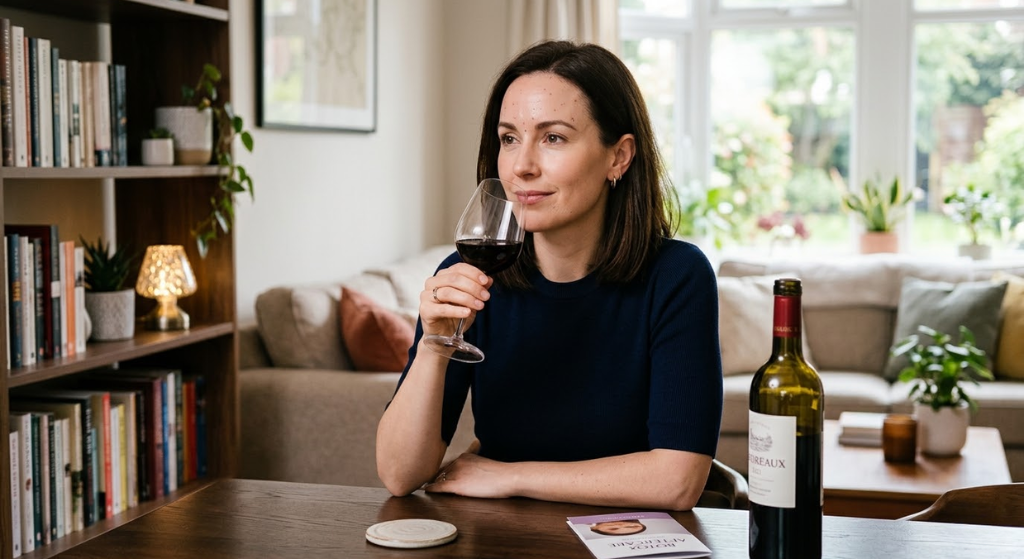
Can I Have Wine After Botox? The Complete Guide to Alcohol, Timing & What Your Injector Really Wants You to Know
You’ve just had your Botox appointment — or you’re planning one for next week — and the question sneaks up on you: can I have wine after Botox? Maybe there’s a dinner party tonight, a celebration this weekend, or you simply want a glass to unwind after the needles.
The short answer most injectors give is: wait at least 24 hours, ideally 48. But the reasoning behind that advice is more nuanced and more interesting than most patients realize — and understanding it will help you make smarter decisions both before and after your treatment.
This guide covers the full picture: what alcohol actually does to Botox results at the physiological level, which types of wine carry the most risk, what the research and clinical evidence say, how to minimize harm if you’ve already had a glass, and what genuinely great non-alcoholic wine options look like if you want something in your glass that night.
1. How Botox Works — and Why the First 24–48 Hours Are Critical
Botox (botulinum toxin type A) works by temporarily blocking the nerve signals that cause specific muscles to contract. When injected into facial muscles, it prevents the release of acetylcholine — the neurotransmitter that triggers muscle contraction — creating a temporary relaxation of the targeted muscle that smooths overlying skin wrinkles.
The Settling Period
After injection, Botox needs time to fully bind to the nerve terminals at the neuromuscular junction. This binding process takes approximately 24–72 hours to complete. During this settling window, the toxin is still migrating to its target receptors and has not yet fully anchored in place. This is the period during which external factors — including alcohol consumption — can meaningfully interfere with treatment outcomes.
Why the Injection Sites Are Vulnerable
Botox injections cause micro-trauma to the treated tissue. The needle creates tiny puncture wounds, and the surrounding blood vessels experience minor disruption. The body responds with a localized inflammatory process that includes increased blood flow to the area. During this brief inflammatory window, substances that further dilate blood vessels or increase blood flow — including alcohol — can exacerbate unwanted effects like bruising, swelling, and potentially uneven toxin distribution.
💉 Key Fact
Botox takes 24–72 hours to fully bind to nerve terminals after injection. During this window, the toxin is still migrating and can be displaced by increased blood flow, muscle activity, or pressure at the injection site. Alcohol is one of several factors that can disrupt this critical settling process.
What Can Go Wrong During Settling
If the Botox migrates beyond its intended target during the settling period, you can experience results you didn’t want — the most feared being ptosis (drooping of the eyelid or brow) when toxin intended for forehead muscles drifts toward the levator palpebrae muscle. Anything that increases blood flow or causes significant fluid movement in the treated area during the first 24 hours raises this migration risk.
2. Why Alcohol Is Risky After Botox — The Mechanisms
Alcohol and Botox interact through several distinct physiological pathways, each of which can compromise your results or worsen side effects in different ways.
Mechanism 1: Vasodilation and Increased Bruising
Alcohol is a potent vasodilator — it causes blood vessels to expand and blood flow to increase throughout the body, including at the Botox injection sites. The micro-trauma from needles has already created small areas of capillary damage at the injection points. When alcohol dilates the surrounding vessels, more blood flows into these already-compromised areas, significantly increasing the likelihood and severity of bruising. Even a glass of wine can noticeably worsen bruising that would otherwise be minor or invisible.
Mechanism 2: Impaired Blood Clotting
Alcohol inhibits platelet aggregation — the clumping of blood cells that forms clots and stops bleeding. At injection sites, normal platelet function is what limits bruising to a small area and resolves it quickly. When alcohol is present in the bloodstream, platelet function is impaired, meaning small bleeds at injection points may continue longer than usual, creating larger, more visible bruises that take longer to resolve.
Mechanism 3: Increased Swelling and Inflammation
Alcohol triggers systemic inflammation and fluid retention. It also disrupts the body’s normal inflammatory resolution process. After Botox, the treated areas go through a natural, brief inflammatory phase as part of normal tissue healing. Alcohol can both amplify this initial inflammation and slow the resolution of swelling — meaning your post-Botox face may look puffier, stay puffier longer, and show more redness than it would in the absence of alcohol.
Mechanism 4: Toxin Migration Risk
This is the most clinically significant concern. Increased blood flow from vasodilation can theoretically carry the Botox toxin — which has not yet fully bound to its target receptors in the first 24 hours — beyond the intended treatment area. While the research on this specific mechanism is not conclusive, the theoretical risk is substantial enough that every major aesthetic medical organization and virtually every board-certified injector includes alcohol avoidance in post-treatment aftercare instructions.
Mechanism 5: Dehydration
Alcohol is a diuretic. Dehydration after Botox is counterproductive on two levels: it makes skin look drier and less plump (working against the refreshed appearance Botox aims to create), and it can slow the tissue healing process around injection sites. Staying well-hydrated in the days after Botox actually helps optimize results — alcohol works directly against this.
⚠️ The Real Risk Summary
Alcohol after Botox creates five simultaneous problems: increased bruising, impaired clotting, worsened swelling, potential toxin migration, and dehydration. None of these is catastrophic in isolation — but together, they can meaningfully compromise your results and extend your recovery time. The first 24 hours are when all five risks are at their peak.
3. How Long Should You Wait Before Having Wine After Botox?
This is the question patients most want answered, and the consensus from the aesthetic medicine community is fairly clear — though the exact timing depends on your individual circumstances.
- 0–24 hrs Avoid all alcohol — no exceptions This is the highest-risk window. Botox is still migrating to target receptors, injection sites are at peak vulnerability for bruising, and platelet function needs to be fully operational. No wine, beer, spirits, or cocktails of any kind. This is the period where alcohol can most meaningfully affect your results.
- 24–48 hrs Still not recommended — risk remains elevated Botox binding is progressing but not complete. Bruising risk from vasodilation is still present. If you had significant bruising or swelling after your treatment, extending your avoidance to 48 hours is strongly recommended. If you experienced minimal bruising and swelling, some injectors give a cautious clearance at 24 hours — but 48 hours is the safer standard.
- 48–72 hrs Low risk — most people can proceed cautiously Botox has substantially completed its binding process. Injection sites have largely healed. The risk from a moderate amount of wine drops significantly. Enjoy a glass with dinner — just avoid heavy alcohol consumption, which remains inadvisable for general health reasons and because dehydration still works against optimal results.
- 72 hrs+ No specific restrictions — enjoy normally After 72 hours, Botox is fully settled and injection sites are healed. You can enjoy wine and other alcoholic beverages as you normally would. Note that ongoing heavy alcohol consumption affects skin quality and Botox longevity over time — which is covered in Section 11.
⏱️ Treatment-Specific Note
These timelines apply to standard cosmetic Botox. If you received Botox for medical indications (hyperhidrosis, migraines, jaw clenching), or if you bruise exceptionally easily, or if you are on blood-thinning medications, your injector may recommend extending the alcohol-free window to 72 hours or beyond.

Arnica Montana Gel — widely recommended by injectors to reduce post-Botox bruising and swelling
👉 Check Arnica Gel on Amazon As an Amazon Associate, WineArmy may earn from qualifying purchases4. What Injectors and Medical Professionals Actually Say
The guidance from aesthetic medicine professionals on alcohol after Botox is more consistent than the advice you’ll find for many other post-procedure topics. Here’s where the expert consensus stands.
Board-Certified Dermatologists and Plastic Surgeons
The majority of board-certified dermatologists and plastic surgeons who perform cosmetic Botox recommend a minimum 24-hour alcohol-free period, with 48 hours being the more commonly cited standard in written aftercare instructions. Their primary concerns are bruising amplification and the theoretical toxin migration risk during the binding window.
Aesthetic Nurses and Nurse Practitioners
Nurse injectors — who perform the majority of cosmetic Botox in many markets — generally align with the 24–48 hour guidance. Many are more emphatic about the 24-hour rule before the appointment as well as after (discussed in Section 6), since pre-treatment drinking has its own set of risks.
What the Botox Manufacturer Says
Allergan (the manufacturer of Botox Cosmetic) does not list alcohol as a specific contraindication in the official prescribing information. However, Allergan’s patient education materials and the aftercare guidelines issued by nearly all trained injectors consistently include alcohol avoidance as a standard post-treatment instruction — typically for 24 hours minimum.
Where Experts Are Divided
The main area of disagreement is whether the 24-hour rule is strictly necessary for light wine consumption, or whether it’s overly conservative. Some experienced injectors privately acknowledge that one glass of wine on the evening after a morning Botox appointment is unlikely to cause clinically significant problems for most patients. Others hold firmly to the 48-hour guideline without exceptions.
5. Wine After Botox: Does the Type of Wine Matter?
Most Botox aftercare instructions say “avoid alcohol” — without distinguishing between a glass of Champagne and a neat whiskey. But for wine lovers, the question is more specific: does it matter whether you choose red, white, or sparkling wine?
Does Wine Type Affect Bruising Risk?
From a vasodilation and platelet-inhibition standpoint, all wine affects these mechanisms similarly. The active compound responsible — ethanol — is the same regardless of grape variety or wine style. A glass of red Bordeaux and a glass of Sauvignon Blanc contain roughly equivalent amounts of ethanol per serving and will cause similar degrees of vasodilation and platelet inhibition at equivalent alcohol concentrations.
Red Wine: Additional Considerations
Red wine contains higher levels of certain compounds that have additional blood-thinning properties beyond ethanol itself. Resveratrol and quercetin — polyphenols found in higher concentrations in red wine than white — have mild antiplatelet effects that can add to alcohol’s existing platelet inhibition. The tannins we discuss in our guide to tannins in wine also interact with proteins in ways that can subtly affect inflammatory processes. For post-Botox bruising specifically, red wine may carry marginally higher risk than white wine — though the difference is relatively small compared to the shared ethanol effect.
Sparkling Wine: The Worst Choice
Champagne, Prosecco, Cava, and other sparkling wines are the least advisable choice after Botox, for a reason that goes beyond ethanol. The carbonation in sparkling wine accelerates alcohol absorption through the gastrointestinal tract, meaning blood alcohol levels rise faster and peak higher compared to the same amount of ethanol consumed as still wine. Higher peak blood alcohol concentrations mean more pronounced vasodilation, more pronounced platelet inhibition, and a greater dehydration effect — all of which compound post-Botox risks. If you’re going to a celebration on the evening of your Botox appointment, sparkling wine is specifically what you should decline.
White Wine: The Relatively Safer Choice
Among alcoholic wines, still white wine is the most moderate post-Botox choice — lower in the antiplatelet polyphenols found in red, and without the accelerated absorption of sparkling. The varietal characteristics of white wines vary widely, but from a post-Botox safety standpoint, a lower-alcohol, still white wine (around 11–12% ABV) carries the least additional risk among wine options — while still being inadvisable in the first 24 hours.
| Wine Type | Ethanol Effect | Additional Blood-Thinning Compounds | Absorption Speed | Post-Botox Risk Level |
|---|---|---|---|---|
| Sparkling (Champagne, Prosecco) | High | Low–moderate | Fastest (carbonation accelerates) | 🔴 Highest |
| Full-bodied Red (Cabernet, Malbec) | High | High (resveratrol, quercetin, tannins) | Normal | 🔴 Very high |
| Light Red (Pinot Noir, Gamay) | Moderate | Moderate | Normal | 🟠 High |
| Rosé | Moderate | Low–moderate | Normal | 🟠 Moderate–high |
| Full-bodied White (oaked Chardonnay) | Moderate | Low | Normal | 🟡 Moderate |
| Light White (Pinot Grigio, Sauvignon Blanc) | Moderate | Very low | Normal | 🟡 Moderate (lowest among alcoholic options) |
| Non-Alcoholic Wine (0.0% ABV) | None | Minimal | N/A | ✅ Very low (still contains trace polyphenols) |
6. Drinking Before Botox vs. After Botox — Which Is More Risky?
Most patients focus only on post-treatment alcohol restrictions, but drinking before a Botox appointment carries its own set of risks that are equally important to understand.
Alcohol Before Botox: The Risks
If you have wine the evening before or morning of your Botox appointment, the ethanol’s vasodilating and platelet-inhibiting effects will still be active during your treatment. This means:
- Injection sites will bleed more freely, creating larger bruises from the procedure itself
- Skin will be more flushed and reactive, making it harder to assess normal treatment responses
- If you’re slightly dehydrated from alcohol the night before, your skin and facial tissue will have altered turgor, potentially affecting placement accuracy
- Some injectors will decline to treat patients who have consumed alcohol in the previous 24 hours — check with your provider before your appointment
The 24-Hour Rule Before AND After
The most comprehensive approach — the one that minimizes risk on all fronts — is to avoid alcohol for 24 hours before your appointment as well as 24–48 hours after. This means scheduling your Botox at least one day after any significant wine occasion (a dinner party, a tasting, a celebration), and planning your next wine occasion for at least two days after your appointment.
📅 Smart Scheduling Tip
If you have a major social event where wine will feature prominently — a wedding, a significant birthday dinner, a wine tasting — schedule your Botox appointment for at least 3–4 days before the event, or wait until after the event entirely. Trying to fit Botox around a busy social calendar is one of the most common reasons for avoidable bruising and suboptimal results.
What About Occasional vs. Regular Drinkers?
People who drink regularly tend to have some degree of baseline vasodilation tolerance — their blood vessels are somewhat more accustomed to dilation from alcohol. Paradoxically, this does not reduce the bruising risk from Botox. What it may mean is that they experience slightly less dramatic individual bruising events — but their healing is also slightly slower and their skin quality slightly lower due to chronic alcohol’s effects on collagen production.

Hirudoid Forte — a specialist cream used to accelerate the resolution of post-injection bruising
👉 Find Hirudoid on Amazon As an Amazon Associate, WineArmy may earn from qualifying purchases7. How Alcohol Worsens Specific Botox Side Effects
Understanding exactly which side effects alcohol amplifies helps you appreciate why the restriction exists — and make better decisions about risk management.
Bruising
Bruising is the most common Botox side effect, occurring in roughly 10–25% of patients to some degree. Alcohol makes it worse through two pathways: vasodilation brings more blood to the injury site, and platelet inhibition allows that blood to spread further before clotting. The result is bruises that are larger, deeper in color, and take longer to resolve — sometimes lasting 1–2 weeks instead of the typical 3–5 days. For patients with important events coming up, this difference matters enormously.
Swelling and Puffiness
Alcohol causes systemic fluid retention and promotes facial puffiness. After Botox, the treated areas are already experiencing mild swelling as part of the normal healing response. Adding alcohol’s inflammatory and fluid-retention effects on top of this can produce a noticeably puffy, swollen appearance — especially around the eyes and forehead — that persists longer than it otherwise would. If you wake up the morning after Botox looking significantly more swollen than expected, alcohol the night before is a likely contributor.
Headache
Headaches are a common side effect of Botox, particularly after forehead and glabellar (frown line) injections, occurring in approximately 15% of patients. Alcohol is a well-known headache trigger through its vasodilatory and dehydrating effects. Combining the Botox headache mechanism with alcohol’s headache-inducing properties can produce significantly worse and longer-lasting head pain than either factor alone.
Nausea
Some patients experience mild nausea after Botox, particularly after their first treatment. Alcohol adds its own nausea-inducing properties and can make this side effect substantially worse — especially if you’ve had nothing to eat, which is also a common situation in the hours after a treatment appointment.
Flushing and Skin Redness
The injection process creates temporary redness at treatment sites. Alcohol’s vasodilatory effect on skin capillaries amplifies this flushing effect, potentially extending the duration and intensity of post-treatment redness and making it harder to conceal with makeup if needed for social engagements.
8. Does the Type of Botox Treatment Change the Alcohol Rules?
Botox is used for a wide variety of cosmetic and medical applications, and the post-treatment alcohol guidelines are not entirely uniform across all of them.
| Treatment Type | Common Uses | Alcohol Wait Time | Notes |
|---|---|---|---|
| Cosmetic Botox (face) | Forehead lines, crow’s feet, frown lines, lip flip, brow lift | 24–48 hours | Standard guidelines apply |
| Preventative Botox | Younger patients using Botox before wrinkles fully form | 24–48 hours | Same as cosmetic; lower dose, shorter recovery window |
| Jawline / masseter Botox | Jaw slimming, teeth grinding (bruxism) | 24–48 hours | Larger muscle; slightly higher bruising risk |
| Neck (Nefertiti lift) | Neck bands, jawline definition | 48 hours | More injection points; extended caution recommended |
| Hyperhidrosis (excessive sweating) | Underarms, palms, feet | 24–48 hours | Higher injection volume; alcohol dehydration compounds discomfort |
| Botox for migraines | Chronic migraine prevention | 48–72 hours | Alcohol is a migraine trigger — extended avoidance strongly advised |
| Baby Botox (micro-dosing) | Subtle softening with lower doses | 24 hours minimum | Lower doses generally mean faster settling, but same bruising risk |
Botox for migraine prevention specifically warrants a longer alcohol-free period. Since alcohol is an established migraine trigger, consuming wine in the days after a migraine Botox treatment is particularly counterproductive — not only does it carry the standard bruising and swelling risks, it actively works against the very condition you’re trying to treat.
9. If You Already Drank Wine After Botox — What to Do
Maybe you forgot the restriction. Maybe the celebration was unavoidable. If you’ve already had wine within the first 24–48 hours after Botox, here’s a practical damage-control approach.
Stop Drinking Now
If you’ve had one glass and remembered, stopping immediately limits total exposure. The vasodilatory effect of alcohol peaks roughly 30–60 minutes after consumption and dissipates over the following hours. The sooner you stop, the less total platelet inhibition and vessel dilation your injection sites will experience.
Hydrate Aggressively
Drink water — at least 500ml immediately, and continue hydrating throughout the evening. This counteracts alcohol’s diuretic effect, supports tissue healing, and helps the body process and eliminate the ethanol faster. Good hydration is one of the most effective damage-control actions you can take.
Apply a Cold Compress (Gently)
A cold compress applied very gently to bruised or swollen areas causes vasoconstriction — the opposite of alcohol’s vasodilation — and can limit the spread of any bruising that is developing. Use a clean cloth wrapped around ice, never apply ice directly to skin, and keep pressure extremely light. Do not massage or press on the treated areas.
Use Arnica
Arnica montana — available as a gel, cream, or oral tablets — is widely recommended by injectors for reducing bruising after Botox. Applying arnica topically to any bruised areas as soon as you notice them can help accelerate resolution. Some practitioners recommend starting arnica gel prophylactically on the day of treatment regardless of alcohol consumption.
Sleep Elevated
Sleeping with your head elevated at about 30–45 degrees (on an extra pillow or two) reduces fluid pooling in the face overnight, which helps minimize puffiness and bruising after both Botox and alcohol consumption. This is particularly valuable if you’ve had both on the same evening.
Contact Your Injector If Concerned
If you notice unusual swelling, asymmetry, or eye drooping in the days following your treatment — particularly if you consumed alcohol — contact your injector or the practice where you were treated. Some side effects from toxin migration are manageable if caught early.
10. What to Drink After Botox Instead of Wine
The social reality of modern life means that having Botox on a Tuesday doesn’t mean Thursday’s dinner party is off-limits — it means being thoughtful about what’s in your glass. Here are genuinely excellent options for the wine lover navigating the post-Botox window.
Non-Alcoholic Wine (0.0% ABV)
This is the most obvious substitute for wine lovers — and modern 0.0% ABV dealcoholized wines have become genuinely impressive. Products from producers like Torres Natureo, Leitz Eins Zwei Zero (a Riesling from one of Germany’s top estates), Oddbird, and Surely deliver the complexity and structure of real wine without ethanol. Since the vasodilation and platelet effects come from ethanol, 0.0% products eliminate these mechanisms entirely.
The one caveat: non-alcoholic red wines still contain resveratrol and polyphenols with mild antiplatelet properties — so if you bruise very easily, you might prefer a 0.0% white or sparkling over a 0.0% red in the first 24 hours. Understanding the range of available wine varietals and their characteristics helps you select the right non-alcoholic style for any occasion.
Sparkling Water with a Twist
Sparkling water with a squeeze of lemon or a splash of pomegranate juice in a wine glass is a legitimately satisfying social drink. The key is the glass and the ritual — most of the pleasure of wine at a dinner table is contextual. Good mineral water in a crystal glass, poured deliberately, signals sophistication rather than abstinence. If you’re hosting, you can also serve these alongside wine for guests without drawing attention to what you’re drinking.
Premium Grape Juice
High-quality unfiltered, unsweetened grape juice — served chilled in a wine glass — delivers more complexity than most people expect. For red wine lovers, Concord or Vitis vinifera grape juice has genuine depth. For white wine lovers, Muscat or Gewürztraminer grape juice can be surprisingly nuanced. This is a zero-ethanol option with no risk considerations at all from a Botox perspective.
Herbal Mocktails
The craft mocktail movement has matured to the point where a well-constructed zero-proof drink — using fresh herbs, citrus, botanical syrups, and quality sparkling water — is genuinely complex and satisfying. If you’re at a bar or restaurant, asking for a “house mocktail” or a zero-proof cocktail crafted with care is no longer unusual or awkward in most settings.
🍷 Wine Lover’s Tip
If you enjoy wine primarily for the ritual and flavor complexity rather than the alcohol effect, premium 0.0% ABV dealcoholized wine is the closest substitute during the Botox recovery window. It allows you to pair with food, pour from a bottle, and participate in dinner conversation about wine — without any of the post-Botox risk mechanisms. For more on how to think about these products, our overview of organic and natural wines touches on production philosophy that also applies to quality non-alcoholic producers.
11. Long-Term Alcohol Consumption and Botox Results
The question of wine after Botox isn’t just about the 48 hours after your appointment. For regular wine drinkers who also use Botox consistently, there are longer-term interactions worth understanding.
Alcohol and Collagen Production
Chronic alcohol consumption inhibits collagen synthesis and accelerates collagen breakdown. Collagen is the structural protein that gives skin its firmness and elasticity — the same quality that Botox indirectly improves by relaxing muscles and reducing the repetitive creasing of overlying skin. If your collagen is chronically depleted by regular heavy drinking, your skin will not hold Botox results as well, and your baseline skin quality will work against the aesthetic improvements you’re investing in.
Alcohol and Botox Longevity
Some practitioners observe that heavy drinkers seem to metabolize Botox faster than moderate or non-drinkers, though the research on this specific interaction is limited. The proposed mechanism involves alcohol’s effect on liver enzyme activity — which may accelerate the breakdown of the toxin — as well as the increased metabolism and faster physiological turnover associated with chronic alcohol use. Anecdotally, patients who drink heavily often return for touch-ups sooner than those who drink moderately.
Skin Quality and Photodamage
Alcohol dilates surface capillaries over time, contributing to permanent facial redness and the appearance of broken capillaries (telangiectasia). It also accelerates oxidative damage to skin cells, contributing to uneven skin tone, dullness, and accelerated wrinkle formation. These effects work directly against what Botox is trying to achieve aesthetically.
The Wine Lover’s Balanced Approach
None of this means that wine lovers who enjoy Botox need to choose between the two. What it suggests is a sensible integrated approach: follow the 24–48 hour post-treatment restriction carefully, stay well-hydrated consistently, prioritize skin quality through good nutrition and skincare, and moderate overall wine consumption as you would for general health. Botox and moderate wine enjoyment are entirely compatible — the key is the timing around treatments and not treating the 48-hour restriction as optional.
12. Pros and Cons: Having Wine After Botox
✅ After 48+ Hours
- Botox fully settled and bound to receptors
- Injection sites healed, bruising risk normalized
- No meaningful risk of toxin migration
- Social participation fully restored
- Wine enjoyment unaffected by treatment
- 0.0% options available for extra caution
❌ Within 24–48 Hours
- Vasodilation significantly worsens bruising
- Platelet inhibition prolongs bleeding at injection sites
- Toxin migration risk during active binding window
- Swelling amplified and prolonged
- Dehydration slows tissue healing
- Headache and nausea side effects worsened
- Sparkling wine especially harmful (accelerated absorption)
- Potentially compromises results you paid for
Quick Reference Timing Table
| Time After Botox | Still White / Light Wine | Full-Bodied Red Wine | Sparkling Wine | Non-Alcoholic Wine (0.0%) |
|---|---|---|---|---|
| 0–24 hours | ❌ Avoid | ❌ Avoid | ❌ Absolutely avoid | ✅ Fine |
| 24–48 hours | ⚠️ Not recommended | ❌ Avoid | ❌ Avoid | ✅ Fine |
| 48–72 hours | ✅ Low risk; proceed with care | ⚠️ Moderate risk; limit quantity | ⚠️ Proceed cautiously | ✅ Fine |
| 72 hours+ | ✅ No restrictions | ✅ No restrictions | ✅ No restrictions | ✅ Fine |
Frequently Asked Questions
Most injectors advise against it for at least 24 hours — ideally 48. One glass of wine in the evening after a morning Botox appointment falls within the 24-hour risk window when bruising risk, platelet inhibition, and toxin migration risk are all elevated. While one glass is unlikely to cause catastrophic results for most people, it can meaningfully worsen bruising and swelling. The conservative and medically sound choice is to wait until the following evening at the earliest, and two evenings later if you want to follow the 48-hour guideline most injectors prefer.
Theoretically, yes — though the evidence is not conclusive. Alcohol causes vasodilation that increases blood flow to the treated area during the first 24–72 hours while Botox is still binding to nerve terminals. Increased blood flow could theoretically carry the still-mobile toxin beyond its intended target, a process called toxin migration. The most feared consequence is eyelid or brow ptosis (drooping) when forehead toxin drifts to the levator muscle. This is why injectors universally recommend alcohol avoidance during the binding window, even though documented cases directly attributable to post-treatment alcohol are relatively rare.
Both carry risk primarily through their shared ethanol content. However, red wine also contains higher levels of resveratrol, quercetin, and tannins — polyphenols with mild antiplatelet properties that add to ethanol’s blood-thinning effect. For post-Botox bruising specifically, full-bodied red wine is marginally worse than white wine. The most problematic choice is sparkling wine of any type, because carbonation accelerates alcohol absorption, causing faster and higher blood alcohol peaks — which means more pronounced vasodilation and platelet inhibition. If choosing between wine types after the 48-hour window, still white or light rosé is the most conservative option.
No — drinking before Botox carries the same risks as drinking after. If alcohol is still active in your bloodstream during your appointment, you will bruise more from the injection itself because your platelets are already inhibited and your blood vessels are already dilated. Some injectors will decline to treat patients who have had alcohol in the previous 24 hours. The recommendation is to avoid alcohol for 24 hours before AND 24–48 hours after Botox, making the ideal alcohol-free window 48–72 hours total, centered on your appointment.
The most common consequences are increased bruising (larger and more colorful bruises at injection sites), worse swelling and puffiness — particularly around the eyes, worsened headache if that is a side effect you experience, and generally slower healing. In more serious cases, increased blood flow from alcohol vasodilation during the Botox binding window can theoretically cause toxin migration, leading to asymmetric results or unintended muscle relaxation in adjacent areas. These outcomes vary in likelihood and severity depending on how much alcohol was consumed, how soon after treatment, and individual patient factors.
Yes — verified 0.0% ABV non-alcoholic wine is the ideal substitute for wine lovers during the post-Botox window. Since ethanol is responsible for the vasodilation and platelet inhibition effects, removing ethanol removes the primary mechanisms of harm. Non-alcoholic wine does still contain trace polyphenols (resveratrol, tannins) with very mild antiplatelet properties, but in the quantities found in a glass of wine, these are clinically insignificant. Brands like Torres Natureo, Leitz Eins Zwei Zero, Oddbird, and Surely offer 0.0% options that deliver genuine wine flavor and complexity.
The standard guideline from most cosmetic injectors is to wait a minimum of 24 hours, with 48 hours being the preferred and more cautious recommendation. After 48 hours, the Botox has substantially completed binding to its target nerve terminals and injection sites have largely healed, making moderate wine consumption low-risk. After 72 hours, there are no treatment-specific restrictions on wine consumption. For patients who bruise easily, who had significant bruising from this treatment, or who received Botox for migraines, extending to 72 hours is advisable.
There is limited direct clinical research on this specific question. What is known is that chronic heavy alcohol consumption affects metabolism in ways that may accelerate the breakdown of many substances in the body, and some practitioners observe that heavy drinkers seem to require more frequent Botox touch-ups. Additionally, alcohol’s chronic effects on collagen and skin quality mean that heavy drinkers may achieve less visible improvement from Botox because their baseline skin quality is lower. Moderate wine consumption does not appear to significantly shorten Botox duration, particularly once the initial 48-hour settling period has passed.
This is one of the most common scheduling mistakes with Botox. Getting Botox the day before a major event where you plan to drink is inadvisable — the 24-hour window is the highest-risk period for bruising, swelling, and toxin migration. For a wedding, you have two better options: get your Botox at least 3–4 days before the event (allowing full settling time before alcohol exposure), or wait until after the wedding entirely. If the Botox appointment is already done and the wedding is tomorrow, choose non-alcoholic wine, sparkling water, or mocktails for the celebration and begin your normal wine drinking after the 48-hour mark.
Yes — and Champagne is actually one of the worst choices specifically after Botox. The carbonation in sparkling wine accelerates alcohol absorption through the gastrointestinal tract, causing blood alcohol to rise faster and peak higher than equivalent still wine. This means more pronounced vasodilation and platelet inhibition per sip compared to still wine. A single glass of Champagne has a greater bruising-amplification effect than a single glass of still white wine with equivalent alcohol content. If you must celebrate on the evening of your Botox, a non-alcoholic sparkling wine is the appropriate substitute — it looks festive and carries none of the risks.
Conclusion: 48 Hours of Patience Protects Your Investment
The question of wine after Botox comes down to a simple trade-off: 48 hours of patience versus the risk of worsened bruising, prolonged swelling, suboptimal results, and a potentially compromised outcome from a treatment you planned, paid for, and scheduled specifically to look your best.
The physiology is clear. Alcohol vasodilates blood vessels, inhibits platelet function, promotes inflammation, and dehydrates tissue — all during the exact window when your freshly injected Botox is settling into its target receptors and your injection sites need calm, optimal conditions to heal cleanly. Wine is not worth those trade-offs in the first 24–48 hours.
After 48 hours, enjoy wine as you normally would. The Botox is fully settled, the injection sites are healed, and there are no treatment-specific restrictions on your favorite bottle.
In the meantime, premium 0.0% ABV wines have become genuinely impressive substitutes. Torres Natureo, Leitz Eins Zwei Zero, Oddbird, and Surely all deliver real wine complexity without any ethanol — making the post-Botox window far more navigable for serious wine lovers than it used to be. Pour something beautiful in a proper glass, pair it with good food, and let the Botox do its work undisturbed. You’ll be back to your regular wine routine in two days — with better results to show for it.
Ready to Find the Best Non-Alcoholic Wine for Your Recovery Window?
Browse verified 0.0% ABV wines from world-class producers — enjoy the ritual and the flavor without the post-Botox risk.
🛒 Shop Non-Alcoholic Wines on Amazon As an Amazon Associate, WineArmy may earn from qualifying purchases