Why Is Wine Better With Age? The Science and the Practical Guide to Ageing Wine
Wine is one of the only beverages in the world that genuinely improves with age — under the right conditions, in the right bottles, for the right amount of time. It is a transformation that has no real equivalent in food or drink: the same liquid, years later, tasting profoundly different and — in the best cases — more beautiful, more complex, and more alive than it was when it was young.
But the phrase “wine gets better with age” is one of the most misunderstood ideas in the wine world. The vast majority of wine produced globally is made to be drunk within one to three years of bottling. Ageing a cheap supermarket Sauvignon Blanc for five years will not make it better — it will make it worse. Understanding which wines age, why they age, how ageing changes them, and what conditions make the difference is the foundation of intelligent wine collecting.
This guide covers all of it: the chemistry of what actually happens inside the bottle over time, the characteristics that make a wine age-worthy, a practical guide to which specific wines and regions repay cellaring, and the actionable steps to start building a collection worth waiting for.
1. The Honest Answer First
Before the science, the most important thing to understand about wine ageing is its basic premise — which is more conditional than the popular belief suggests.
✅ When Ageing Genuinely Improves Wine
Wines with high tannin, high acidity, high alcohol, significant residual sugar, or concentrated extract — and made from quality fruit with careful winemaking — develop complexity, integration, and tertiary character with age that cannot be achieved any other way. Great Bordeaux, Burgundy, Barolo, Riesling, and vintage Champagne reach heights when aged that make the young wine seem like a rough sketch of the finished painting.
❌ When Ageing Ruins Wine
Wines made for immediate drinking — most commercial reds and whites under £15–$20, light aromatic whites, rosés, basic Prosecco, most New World fruit-forward wines — lose their primary fruit character with time without gaining anything in return. Aged versions of these wines taste flat, oxidised, and hollow. More than 90% of wine produced worldwide is best drunk within three years of harvest.
2. Most Wine Is Not Made to Age — The Crucial Starting Point
The romanticised image of wine ageing — dusty bottles in candlelit cellars, decades of patient waiting rewarded with liquid transcendence — applies to a small and specific category of wine. Understanding why most wine is not made for ageing is actually the key to understanding why some wine is.
The Modern Winemaking Shift
Through much of wine history, ageing was not a choice but a necessity. Young wine — tannic, harsh, astringent, acidic — was often unpleasant to drink and required cellaring to become palatable. Ageing softened the wine into something drinkable. Modern winemaking has largely reversed this relationship. Techniques including micro-oxygenation, cold maceration, careful yeast selection, and temperature-controlled fermentation allow winemakers to produce wines that are soft, approachable, and enjoyable from the moment of release. These wines are made to be delicious young — and they are. But the same characteristics that make them immediately appealing (soft tannins, forward fruit, lower acidity) also mean they have little to gain from ageing and much to lose.
What “Ageing Potential” Actually Means
A wine with ageing potential has specific structural components — primarily tannin, acidity, alcohol, and in some cases residual sugar — that act as preservatives and as raw material for the chemical reactions of ageing. These components in a young wine may make it taste austere, grippy, or tightly wound. But they are also the scaffolding on which years of slow transformation will build complexity. A wine without these components has no scaffolding — there is nothing to transform, and oxidation simply degrades what is there.
3. The Chemistry of Wine Ageing — What Is Actually Happening Inside the Bottle
Wine ageing is a slow, complex cascade of chemical reactions occurring in a sealed container over months and years. Understanding the main reactions transforms the abstract notion of “improvement with age” into something concrete and predictable.
Micro-Oxygenation Through the Cork
Natural cork is slightly permeable — it allows a tiny, controlled amount of oxygen to enter the bottle over time. This micro-oxygenation, measured in fractions of a millilitre per year, drives many of the most important ageing reactions. The oxygen reacts with tannins (causing polymerisation), with phenolic compounds (causing colour change), and with volatile compounds (modifying the aroma profile). This is why natural cork has historically been considered superior to screw caps for long-term ageing — though the picture is more nuanced than that, as Section 12 explores.
The rate of oxygen ingress through a cork varies by cork quality, cork length, bottle orientation, and storage conditions — which is one reason why bottles from the same case can taste quite different after decades. Some corks transmit more oxygen than others, producing faster-aged bottles; some transmit less, producing more slowly aged versions. This variation is known among collectors as “bottle variation” and is a fundamental feature of naturally sealed aged wine.
Esterification: The Birth of New Aromas
Esters are aromatic compounds formed when acids react with alcohols. In a young wine, the dominant aromas are primary (from the grape itself — fresh fruit, floral notes) and secondary (from fermentation — yeasty, buttery, or creamy notes in some styles). As a wine ages, esterification produces an entirely new class of aromas: tertiary aromas, also called “bouquet.” These include dried fruits (fig, prune, dried cherry), earthy notes (leather, forest floor, mushroom, truffle), savoury characters (tobacco, cedar, cigar box, game), and oxidative notes (nuts, honey, dried flowers). The appearance of tertiary character is the clearest signal that a wine has genuinely aged.
Acid–Ester Equilibrium
Acidity in wine is not static — over time, organic acids participate in esterification reactions that slightly reduce the overall perceived acidity while creating aromatic complexity. This is one reason why high-acid wines, which may seem almost uncomfortably sharp when young, develop a rounder, more integrated character with age. The acid is still there in chemical terms, but its character shifts from sharp and angular to deeper and more harmonious.
Reduction and Oxidation in Balance
Wine ageing is a carefully balanced interplay between reduction (chemical reactions occurring in the absence of oxygen, inside the sealed bottle) and very slow oxidation (from micro-oxygenation through the closure). The reductive environment inside a sealed bottle allows certain slow chemical reactions to proceed that would not happen in the presence of oxygen — particularly the development of earthy, savoury, and game-like characters that define the mature profiles of great Pinot Noir, Nebbiolo, and aged Riesling. Too much oxygen (a leaky cork) produces premature oxidation; too little (an impermeable seal over decades) can produce reductive character that needs time to blow off when the wine is finally opened.
4. What Tannins Do Over Time — The Central Story of Red Wine Ageing
For red wines, tannin transformation is the central narrative of ageing. Understanding tannins — what they are, what they do, and how they change — is the most important piece of knowledge for anyone interested in cellaring red wine.
What Tannins Are
Tannins are polyphenolic compounds extracted from grape skins, seeds, and stems during winemaking, and from oak barrels during maturation. They are responsible for the drying, gripping, sometimes astringent sensation in the mouth — the sensation of tannin binding to proteins in saliva and on the tongue. Young tannic wines can feel almost abrasive: rough-edged, tight, sometimes harsh. This is the raw material of ageing.
For a deeper understanding of how tannins work and why they vary so dramatically between wine styles, our guide on what tannins are in wine covers the full picture.
Tannin Polymerisation: From Rough to Silky
The most important tannin transformation in ageing is polymerisation — the process by which short-chain tannin molecules link together into longer polymer chains. Short-chain tannins (catechins and gallocatechins) are highly reactive with salivary proteins and produce aggressive astringency. Long-chain polymeric tannins are less reactive, producing a softer, silkier, more velvety texture. This is the single most important reason why aged tannic red wines feel fundamentally different in the mouth to young ones — the tannin is still there, but it has transformed from rough gravel into smooth silk.
Tannin polymerisation is driven by the slow micro-oxygenation through the cork, combined with the wine’s own chemistry. It takes years for significant polymerisation to occur in truly tannic wines — this is why great Barolo and Brunello need a decade or more before their tannins truly resolve.
Tannin Precipitation
As tannins polymerise into very long chains, they eventually become too large to remain in solution and precipitate out as sediment — the fine, gritty or powdery deposit visible at the bottom of aged red wine bottles. This precipitation removes tannin from the wine’s structure entirely, further softening the texture. Sediment in an aged bottle is not a fault — it is evidence of genuine transformation. Decanting aged wines before serving is important partly to separate the wine from this sediment. Our guide on comparing wine decanters covers how to decant aged wines properly.
🍇 Tannin Content by Grape Variety
The starting tannin level of a wine is one of the primary determinants of its ageing potential. Very high tannin varieties include Nebbiolo (Barolo, Barbaresco), Cabernet Sauvignon, Tannat, Sagrantino, and Monastrell. High tannin varieties include Syrah/Shiraz, Malbec, Aglianico, and Touriga Nacional. Medium tannin includes Merlot, Tempranillo, Sangiovese, and Zinfandel. Lower tannin includes Pinot Noir, Gamay, and Grenache. As a general rule, the higher the tannin in a quality wine from a good vintage, the longer the ageing potential — though acidity and concentration matter enormously too.
5. The Role of Acidity in Wine Ageing
Acidity is the great preserver of wine — and the second most important structural element after tannin (for reds) in determining how long a wine will age and how well. For white wines, where tannin is largely absent, acidity is the primary ageing determinant.
Acidity as Preservative
High acidity inhibits the growth of spoilage microorganisms and slows oxidative reactions. A wine with good acidity — pH of around 3.2–3.4 for a long-lived white, 3.3–3.5 for a long-lived red — is in a chemically protected state that allows it to age slowly and gracefully. Low-acid wines are more vulnerable to oxidation and microbial spoilage, which is why they age less reliably.
This explains why wines from cooler climates — where grapes retain more natural acidity — generally have superior ageing potential compared to equivalent wines from hot climates, where high temperatures degrade acidity in the grape. German Riesling from the Mosel, Burgundy Pinot Noir, Champagne, and Bordeaux all benefit from their cool-climate acidity when it comes to long-term cellaring.
Acidity and Freshness in Aged Wines
The freshness and vibrancy in a well-aged wine — the sense that it is still alive despite its years — comes from preserved acidity. A 20-year-old Riesling that still has a bright, incisive backbone of tartaric and malic acid feels electric and vital in a way that a flabby, low-acid wine never will regardless of age. When tasters describe an aged wine as having “great tension” or “remarkable freshness for its age,” they are usually talking about preserved acidity interacting with the tertiary complexity that time has built.
Residual Sugar as a Preservative
For sweet wines — Sauternes, Trockenbeerenauslese, Tokaji Aszú, vintage Port — residual sugar acts as an additional preservative alongside high acidity. The combination of high sugar, high acidity, and in many cases elevated alcohol creates an environment so hostile to microbial activity and oxidative degradation that these wines can age for a century or more. The greatest Sauternes and German TBAs are among the most age-worthy wines on earth, routinely surviving 50–100 years in good cellars. Their acidity prevents the sweetness from feeling cloying and their sugar protects the fruit across decades.
6. How Aromas Transform With Age — Primary, Secondary, Tertiary
The transformation of a wine’s aromatic profile from young to aged is perhaps the most dramatic and beautiful aspect of the ageing process. Understanding the three stages of aroma development helps you recognise where a wine is in its ageing journey when you open it.
Primary Aromas: The Voice of the Grape
Primary aromas come directly from the grape variety and the vineyard. In a young wine, these dominate: blackcurrant, cherry, raspberry, plum (in reds); lemon, grapefruit, peach, apple, tropical fruit (in whites); floral notes (violet, rose, jasmine) in aromatic varieties. Primary aromas are fresh, direct, and immediately recognisable. In a wine with good ageing potential, these primary characters are concentrated and clearly defined — they provide the flavour foundation on which ageing will build.
Secondary Aromas: The Voice of Fermentation
Secondary aromas arise from fermentation and winemaking choices — lactic notes from malolactic fermentation (butter, cream, yoghurt in whites), yeasty biscuit or brioche from lees ageing (common in Champagne and barrel-fermented whites), vanilla and coconut from new oak, toast and spice from barrel ageing. These are particularly prominent in wines that have seen significant oak treatment or extended lees contact. In young wines, oak-derived secondary aromas can sometimes dominate; with age, they integrate into the overall bouquet and become indistinguishable from the wine’s own character.
Tertiary Aromas: The Voice of Time
Tertiary aromas — the “bouquet” — only appear with age and are the defining signature of a well-cellared wine. They develop through the slow esterification, oxidative transformation, and reductive reactions described in Section 3. What you encounter in a mature bottle bears little literal resemblance to what was there young:
| Wine Type | Young Primary Aromas | Mature Tertiary Aromas |
|---|---|---|
| Cabernet Sauvignon | Blackcurrant, cassis, green pepper, cedar | Cigar box, tobacco, leather, dried fruit, graphite, forest floor |
| Pinot Noir | Red cherry, raspberry, strawberry, floral | Forest floor, mushroom, truffle, game, dried rose, earth |
| Nebbiolo (Barolo) | Cherry, tar, rose, anise | Tar, leather, dried rose, truffle, tobacco, dried cherry, orange peel |
| Syrah / Shiraz | Blackberry, pepper, olive, smoked meat | Game, cured meat, earth, black olive, dried herbs, leather |
| Chardonnay (Burgundy) | Green apple, lemon, white flowers, hazelnut | Honey, beeswax, toasted nuts, mushroom, petrol-like complexity |
| Riesling | Lime, green apple, white peach, slate | Petrol (TDN), honey, dried apricot, beeswax, ginger, lanolin |
| Sauternes | Apricot, peach, honey, vanilla, botrytis spice | Crème brûlée, marmalade, truffle, dried mango, coffee, saffron |
The emergence of petrol or kerosene notes in aged Riesling is one of the most distinctive tertiary aromas in wine. It comes from the compound TDN (1,1,6-trimethyl-1,2-dihydronaphthalene), formed over time from carotenoids in the grape skin. Far from being a fault, it is one of the most sought-after signatures of aged Riesling and indicates a wine with significant bottle age and proper development.
7. Colour Changes as a Window Into a Wine’s Age
A wine’s colour is one of the clearest visual indicators of its age and stage of development — something you can assess before you ever bring the glass to your nose.
Red Wine Colour Evolution
Young red wines are typically vivid, saturated, and purple-tinged at the rim — the purple colour comes from anthocyanin pigments, which are the primary red pigments in young wine. As wine ages, anthocyanins polymerise with tannins to form pigmented tannin polymers, which have a more brick-red or garnet colour. The purple hue fades toward red, then toward brick, tawny, and eventually amber at the rim of very old wines. A young Cabernet Sauvignon with a deep purple-black core and vivid purple rim indicates a wine with many years ahead of it; the same wine with a brick-red core and tawny-orange rim is approaching or past maturity.
White Wine Colour Evolution
White wines deepen in colour with age, moving from pale straw or green-gold in youth toward gold, amber, and eventually deep amber or brown in very old or oxidised wines. This is the reverse of red wine ageing and has a different cause — oxidative browning reactions (Maillard reactions and the oxidation of phenolic compounds). A pale straw Burgundy Chardonnay will develop golden depth over a decade; a great Sauternes will shift from golden to deep amber over twenty or thirty years. Very deep amber or brown colour in a white wine generally indicates either significant age, oxidative winemaking intent (as in some natural or orange wines), or oxidative damage.
🔎 Reading Colour in the Glass
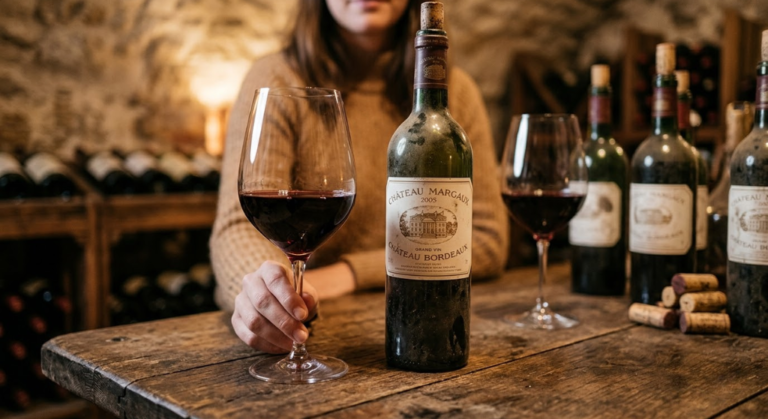
To assess a red wine’s age from colour, tilt the glass over a white surface and examine the rim — the thin outer edge of the wine where it thins out. This rim zone shows the most advanced colour development and gives the clearest age signal. A purple rim indicates youth; red indicates approaching maturity; brick or orange indicates maturity or past peak. The core (centre of the glass) shows the wine’s depth and concentration — a wine can have a brick rim but still have depth and life in the core, suggesting it is mature but not yet declining.

A dedicated wine fridge is the most accessible way to provide proper ageing conditions at home — consistent temperature, darkness, and correct humidity for long-term cellaring
👉 Shop Wine Fridges on Amazon As an Amazon Associate, WineArmy may earn from qualifying purchases8. The Ageing Curve: Peak, Plateau, and Decline
Every ageworthy wine follows a broadly similar trajectory over time — though the shape of the curve, its height, and its duration vary enormously by wine, vintage, and storage conditions. Understanding this curve is essential for knowing when to open a bottle.
The Closed Phase (Youth)
Many wines with genuine ageing potential go through a “closed” or “dumb” phase shortly after bottling — typically beginning one to three years after the vintage and lasting anywhere from a few months to several years. During this phase, the wine seems to withdraw: the primary fruit that was present immediately after bottling becomes muted, the tannin or acidity is pronounced, and the wine feels disconnected and unappealing. This is caused by the disruption of ageing reactions following the bottling process, combined with the early stages of polymerisation beginning to transform the primary fruit character. Experienced collectors know to lay these wines down and wait.
Development Phase
As the closed phase passes, the wine enters its development phase — typically the period during which most collectors choose to begin drinking from a case, keeping the majority for further ageing. Primary fruit is still present but beginning to integrate with developing tertiary notes. Tannins are softening. The wine is showing promise of what it will become without yet achieving its full potential. Drinking a bottle from a case during this phase gives you a reference point and builds anticipation for the wines still to come.
Peak and Plateau
The peak represents the period during which the wine is at maximum complexity — tertiary aromas fully developed, tannins fully integrated, acidity in perfect balance, the whole wine seamlessly woven together. Some wines have a narrow peak window (a year or two before beginning to decline); others plateau for a decade or more at or near their best. Great Sauternes and fortified wines can maintain their peak for decades. Most fine Bordeaux and Burgundy have a plateau of five to fifteen years.
Decline
All wines eventually decline. Fruit fades, acidity weakens, tannins become desiccated and harsh, and the wine begins to taste flat, dried-out, and tired. The rate of decline varies — some wines age so gracefully that even a faded version is interesting — but no wine is immortal. The decline is gradual at first and then accelerates. Catching a wine at the beginning of decline is still rewarding; catching it deep in decline is disappointing.
Year 0–2: Bottling and Early Life
Vivid primary fruit, pronounced structure, sometimes tight and closed. Some wines drink beautifully at this stage; many ageworthy wines are already withdrawing.
Year 2–5: The Closed Phase (for many age-worthy wines)
Muted aromas, pronounced tannin or acidity, fruit seems buried. Classic sign to lay down and wait. Opening a bottle here is often a disappointing experience.
Year 5–10: Development Begins
First tertiary notes appearing. Tannins softening. Fruit integrating with secondary and early tertiary character. Good time to begin sampling from a larger case.
Year 10–20: Approaching and Reaching Peak
For many fine wines, this is the window of maximum reward. Full tertiary character, integrated tannins, remarkable complexity. The wine has become something its young self could only hint at.
Year 20+: Peak Plateau or Early Decline
The greatest wines maintain their peak here. Most wines are beginning to fade — still interesting but past their best. Exceptional vintages and wines can continue for decades more.
9. Which Wines Age Well — The Comprehensive Guide by Region and Style
The following is a practical guide to the wine styles and regions that genuinely reward cellaring, with realistic ageing timelines and what to expect when you open them.
🍷 Bordeaux (Médoc, Graves, St-Émilion)
- Grapes: Cabernet Sauvignon, Merlot, Cabernet Franc
- Ageing window: 8–30+ years for classified growths
- Why it ages: Very high tannin, high acidity, concentrated fruit
- What develops: Cigar box, cedar, cassis, tobacco, graphite, leather
- Entry point: Good classified growth around $30–60 on release
🍷 Burgundy (Côte d’Or Pinot Noir)
- Grapes: Pinot Noir
- Ageing window: 8–25+ years for premier and grand cru
- Why it ages: High acidity, concentrated but delicate fruit, terroir expression
- What develops: Forest floor, truffle, mushroom, game, dried rose, earth
- Entry point: Village-level Burgundy; premier cru is where ageing truly shines
🍷 Barolo & Barbaresco (Piedmont)
- Grapes: Nebbiolo
- Ageing window: 10–40+ years for Barolo
- Why it ages: Highest tannin of any major variety, very high acidity
- What develops: Tar, leather, dried rose, truffle, dried cherry, orange peel
- Entry point: Langhe Nebbiolo for learning the variety affordably
🍷 Brunello di Montalcino
- Grapes: Sangiovese Grosso
- Ageing window: 10–30+ years
- Why it ages: High acidity, high tannin, mandatory long oak ageing
- What develops: Dried cherry, tobacco, leather, iron, earth, spice
- Entry point: Rosso di Montalcino from the same producers
🍷 Northern Rhône (Hermitage, Côte-Rôtie)
- Grapes: Syrah
- Ageing window: 10–30+ years for top sites
- Why it ages: High tannin, high acidity, concentrated granite-derived fruit
- What develops: Game, cured meat, olive, earth, black pepper, leather
- Entry point: Crozes-Hermitage and St-Joseph for affordable Syrah learning
🍷 Napa Valley Cabernet Sauvignon
- Grapes: Cabernet Sauvignon
- Ageing window: 8–25+ years for top producers
- Why it ages: Very high tannin, concentrated fruit, high alcohol as preservative
- What develops: Dried cassis, chocolate, tobacco, cedar, earth, dark fruit compote
- Entry point: Mid-tier Napa Cab around $40–$70 on release
🥂 Burgundy White (Côte de Beaune Chardonnay)
- Grapes: Chardonnay
- Ageing window: 5–20+ years for premier and grand cru
- Why it ages: High acidity, mineral extract, structured oak integration
- What develops: Honey, beeswax, toasted nuts, mushroom, oxidative complexity
- Entry point: Village Meursault, village Puligny for approachable aged white Burgundy
🥂 German & Alsace Riesling
- Grapes: Riesling
- Ageing window: 10–50+ years for top Mosel and Alsace
- Why it ages: Very high acidity, concentrated fruit, residual sugar in sweeter styles
- What develops: Petrol/TDN, honey, dried apricot, beeswax, ginger, spice
- Entry point: Kabinett or Spätlese from quality Mosel producers
🥂 Vintage Champagne
- Grapes: Chardonnay, Pinot Noir, Pinot Meunier
- Ageing window: 10–30+ years for prestige cuvées
- Why it ages: High acidity, autolytic complexity from lees, tight bubble structure
- What develops: Brioche, toasted almond, honey, dried citrus, mushroom, savoury depth
- Entry point: Vintage Champagne from grower producers; blanc de blancs age magnificently
🍯 Sauternes & Barsac
- Grapes: Sémillon, Sauvignon Blanc, Muscadelle
- Ageing window: 15–50+ years for top châteaux
- Why it ages: Very high acidity + high residual sugar + botrytis-concentrated extract
- What develops: Crème brûlée, marmalade, truffle, saffron, dried tropical fruit, coffee
- Entry point: Second wines of top châteaux or lesser-known communes
🍯 Vintage Port
- Grapes: Touriga Nacional, Touriga Franca, Tinta Roriz
- Ageing window: 20–60+ years for declared vintages
- Why it ages: High alcohol (fortification), high tannin, concentrated fruit
- What develops: Dried fruit, nuts, chocolate, leather, cedar, dried fig, coffee
- Entry point: LBV (Late Bottled Vintage) Port for learning the style accessibly
🥂 White Rioja (Gran Reserva)
- Grapes: Viura (Macabeo)
- Ageing window: 10–25+ years for traditional-style producers
- Why it ages: Oxidative winemaking tradition, high acidity, extended oak ageing
- What develops: Walnut, dried herbs, oxidative complexity, lanolin, beeswax
- Entry point: López de Heredia is the benchmark for this underrated aged white style
For a comprehensive exploration of the structural differences between key ageing varieties, our guide to Bordeaux vs. Pinot Noir structure and ageing differences is a useful companion, and our broader wine varietals explained guide covers the full range of major grape varieties and their characteristics.
10. Which Wines Should Not Be Aged
Understanding what not to cellar is as important as understanding what to cellar — and can save you from the disappointment of opening a bottle you’ve waited years for only to find it has declined rather than improved.
Most Commercial Whites and Rosés
Wines made for immediate drinking — supermarket Sauvignon Blanc, Pinot Grigio, Rosé, basic Prosecco, most New Zealand whites, most everyday Spanish whites — rely on fresh primary fruit and vibrant acidity for their appeal. These characteristics fade with age. A two-year-old Marlborough Sauvignon Blanc that should have been drunk at nine months will taste flat, lose its tropical fruit, and offer nothing in its place. There are exceptions (serious Pouilly-Fumé, aged-worthy Alsace whites, certain aged Grenache blancs) but they are the exception, not the rule.
Light, Fresh Red Wines
Beaujolais (except Cru Beaujolais from good vintages), basic Côtes du Rhône, everyday Valpolicella, simple Spanish garnacha, most under-£12 reds — these wines are made for the enjoyment of their primary fruit character and light, cheerful structure. Age strips this away without replacement. Beaujolais Nouveau is the extreme example: made specifically for drinking within months of the harvest, it is essentially undrinkable after two years.
Tank-Fermented Sparkling Wines
Prosecco (Charmat method), most Cava, basic non-vintage Champagne, and other tank-fermented sparkling wines are made for early drinking. The freshness and simple primary fruit that make them appealing fades quickly. Non-vintage Champagne should typically be drunk within one to three years of disgorgement — the date on the back label — not from the vintage. Extended ageing of non-vintage Champagne risks losing its freshness without the autolytic complexity that comes from proper lees ageing in vintage wines.
⚠️ The Expensive Wine Fallacy
Price alone does not confer ageing potential. An expensive bottle of white Burgundy from a bad vintage, stored poorly, or bought from a merchant who has not kept it correctly, can be as disappointing as a cheap wine aged too long. Conversely, a well-kept Cru Beaujolais from a great vintage can age beautifully for a decade. The structural components — acidity, tannin, concentration — determine ageing potential, not the price tag. Before laying down any wine for years, understand what gives it its ageing potential, not just what it cost.
11. Why Storage Conditions Determine Everything
A wine with magnificent ageing potential stored in poor conditions will not age well — it will age badly, quickly, and irreversibly. The conditions of storage are not secondary to the quality of the wine when it comes to realising its potential; they are equal in importance.
Temperature: The Most Critical Variable
The rate of chemical reactions approximately doubles with every 10°C increase in temperature. A wine stored at 25°C is ageing at roughly twice the rate it would at 15°C. This is not just about speed — accelerated ageing at high temperatures produces a different, lower-quality result than slow, cool ageing. The fruit cooks and caramelises; the tannins polymerise too rapidly; the acidity degrades disproportionately. The result is a wine that tastes “baked,” flat, and oxidised long before it has developed genuine complexity. The ideal storage temperature is 12–14°C (54–57°F) — the traditional cool cellar temperature that allows the slow, graceful transformation that produces great aged wine.
For the full guide to temperature and humidity requirements, our article on how to store wine at home covers all the conditions in detail. And if you are setting up a dedicated wine storage space, our wine cellar essentials guide walks through everything you need to create proper ageing conditions.
Temperature Stability: Equally Important
Consistent temperature is as important as the temperature itself. A cellar that maintains 16°C year-round is better for ageing wine than one that cycles between 12°C in winter and 22°C in summer. Thermal cycling causes the wine to expand and contract repeatedly, stressing the cork seal and accelerating the rate of oxygen ingress in ways that are unpredictable and damaging. This is why underground cellars, which benefit from the earth’s thermal mass maintaining near-constant temperatures, have been the traditional wine storage solution for centuries.
Darkness
UV light triggers photo-chemical reactions in wine that produce sulphur compounds responsible for light-strike — particularly damaging to white and sparkling wines. Long-term exposure to light degrades wine even through coloured glass. Wine stored for years should be in complete or near-complete darkness. This is one reason purpose-built wine storage racks and wine fridges use UV-filtering glass or opaque doors.
Humidity
For wines sealed with natural cork, relative humidity of 60–80% prevents the cork from drying out and shrinking — which would allow air infiltration and premature oxidation. In very dry environments, even well-sealed corks can lose their effectiveness over years. If you live in a dry climate and are storing wine for a decade or more, humidity management is important. Wine fridges with humidity control, or a small bowl of water in a wine rack cupboard, can address this simply.
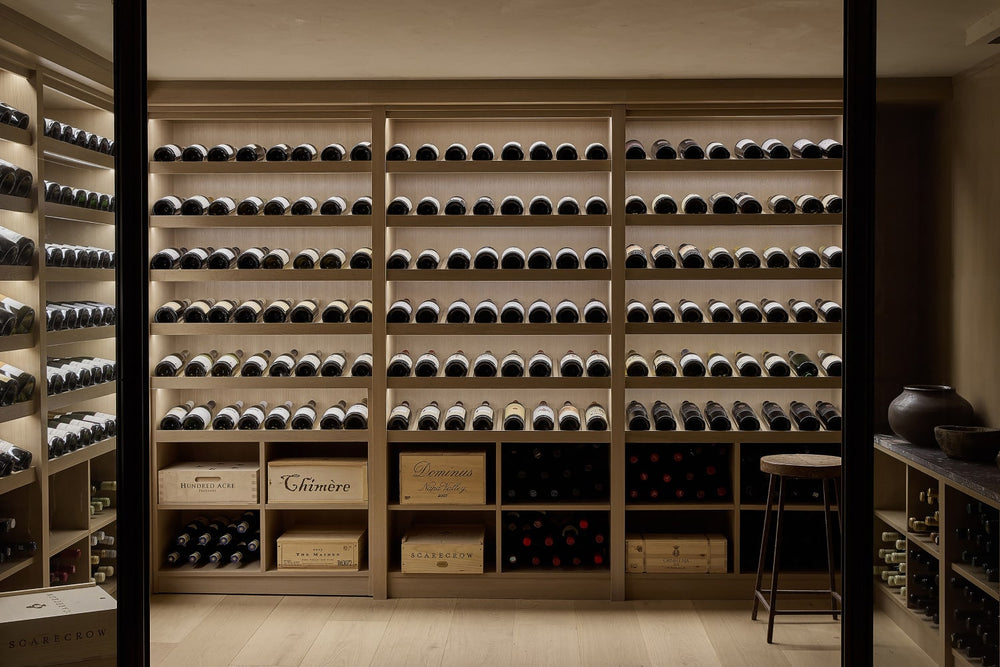
The Practical Solution: Wine Fridges
For most people without a naturally cool basement or cellar, a dedicated wine fridge is the most accessible solution for proper ageing conditions. Our guide to the best wine fridges covers all capacity ranges and budgets, and our roundup of top-rated freestanding wine refrigerators focuses on units suited for serious long-term storage. For expandable rack solutions that work alongside or instead of a wine fridge, see our guide to modular wine rack and expandable storage.
12. Cork vs. Screw Cap for Long-Term Ageing
The debate between natural cork and screw cap closures is one of the most contested in wine — and it is directly relevant to ageing potential. The received wisdom is that natural cork is essential for long-term ageing; the reality is more nuanced.
The Case for Natural Cork
Natural cork’s slight oxygen permeability — allowing micro-oxygenation at rates of roughly 0.5–3 milligrams of oxygen per year — drives many of the tannin polymerisation and esterification reactions that constitute ageing in red wines. The gradual, controlled oxygen exposure over years or decades produces the slow transformation that cannot be replicated by any other means. Great aged Bordeaux, Barolo, and Burgundy have always been sealed with natural cork, and the very best examples of aged wine in existence have all come to us through natural cork closures.
Our in-depth article on cork vs. screw cap for ageing and longevity covers the full comparison with detailed evidence on both sides.
The Case for Screw Caps
Screw caps eliminate cork taint (TCA contamination — the wet cardboard, mouldy smell that ruins corked bottles), provide a perfectly consistent seal, and produce no bottle variation. Research from New Zealand and Australia — where screw caps have been standard for quality wine since the early 2000s — shows that many wine styles age excellently under screw cap, particularly white wines and lighter reds where the micro-oxygenation from cork is less important and where the reductive ageing environment of a screw-cap-sealed bottle can actually produce more vivid, preserved fruit character over time.
The Practical Verdict
For very long-term ageing of tannic red wines (10+ years), natural cork remains the conventional choice and has the weight of evidence and tradition behind it. For white wines and wines intended to be drunk within five to ten years, screw cap is arguably as good or better — eliminating the approximately 5–8% of bottles that are corked in any given year. For wines sealed under screw cap that you want to age beyond a decade, the evidence is still accumulating — the oldest screw-cap wines are only about 25 years old — but early results are promising for white wines and uncertain for reds requiring significant tannin polymerisation.

A modular wine rack lets you start small and expand your collection gradually — the most flexible and cost-effective way to begin serious home cellaring
👉 Shop Wine Racks on Amazon As an Amazon Associate, WineArmy may earn from qualifying purchases13. How to Start Cellaring Wine: A Practical Step-by-Step Guide
Building a wine collection worth ageing does not require a château cellar or a six-figure budget. It requires knowledge, patience, and a few key practical decisions made well at the start.
Step 1: Solve the Storage Problem First
Before buying a single bottle to age, secure appropriate storage. The best wine in the world stored at 25°C in a sunny kitchen will be ruined long before its drinking window. Your storage options, in rough order of preference: a naturally cool, dark basement (best — if you have one, use it); a dedicated wine fridge or wine cabinet set to 12–14°C; a cool, dark interior room that stays below 18°C year-round; professional off-site wine storage (ideal for valuable collections). Do not buy wine to age until you have storage that can maintain conditions for the full intended ageing period.
Step 2: Buy in Cases
The most important practical advice for anyone starting to cellar wine is to buy in cases (12 bottles) rather than individual bottles. A case allows you to open bottles at intervals over the years — tracking the wine’s development, learning its curve, and drinking it across its full life rather than opening it once at an arbitrary point. Opening bottle one from a case at year three, bottle two at year five, bottle three at year seven teaches you more about how that wine ages than any book or score can tell you.
Step 3: Start With Accessible Entry Points
You do not need to begin with First Growth Bordeaux or grand cru Burgundy. Excellent ageing experiences are available at accessible price points. A case of good Saint-Estèphe or Pauillac from a quality Bordeaux vintage at $25–40 per bottle, a case of Langhe Nebbiolo from a serious Piedmont producer, or a case of Spätlese Riesling from a reputable Mosel estate — all of these will provide genuine ageing experiences over ten to fifteen years at a fraction of the cost of top-end wines.
Step 4: Keep Records
A simple cellar record — a spreadsheet or dedicated wine journal — tracking what you have, when you bought it, where it is stored, when you opened each bottle, and your notes on what it tasted like at each stage, is invaluable for building knowledge and managing your collection. Many collectors find the record-keeping as rewarding as the drinking — it creates a narrative of each wine’s journey through time.
Step 5: Be Patient — and Strategic About Patience
The hardest discipline in collecting is not opening bottles too early. A young tannic Barolo opened at three years is genuinely less pleasurable than the same wine at ten or fifteen — this is not snobbery, it is chemistry. The closed phase of a great wine’s ageing can seem like an argument for opening it, but it is actually the signal to wait. Trust the structure you can taste in a young wine — high tannin, firm acidity, concentrated fruit — as your indicator that patience will be rewarded.
🏁 A Starter Cellar for Under $500
A practical starting collection of twelve bottles to cellar for 8–12 years: three bottles of a quality Saint-Estèphe or Pauillac from the most recent good Bordeaux vintage (~$90); three bottles of a Mosel Spätlese Riesling from a reputable estate (~$60); three bottles of a Langhe Nebbiolo from a quality Piedmont producer (~$75); three bottles of a village Burgundy or good Côte Chalonnaise Pinot Noir (~$90). Total: approximately $315. Store correctly, resist opening until year 6–8, and you will have a meaningful and educational cellaring experience across four very different ageing styles.
14. How to Know When to Open an Aged Wine
Knowing when a wine is ready is one of the most difficult skills in wine appreciation — and one where professional critics, experienced collectors, and winemakers themselves regularly disagree. Here are the practical tools for making the decision yourself.
Consult Drinking Windows
Reputable wine critics and publications (Wine Advocate, Wine Spectator, Jancis Robinson, Decanter) regularly publish drinking window recommendations alongside their scores. These are expert opinions, not guarantees, but they provide a useful starting framework, particularly for wines from well-documented regions. A wine listed as “drink 2026–2035” was assessed as being in or near its drinking window at the time of publication. Take these as guidance, not gospel — bottle variation and storage conditions affect every individual bottle.
Look at the Colour
As described in Section 7, colour tells you a great deal about where a wine is in its ageing trajectory. A red wine with a fully bricked-out rim and no purple or red hues is at or past maturity. A wine with a deep ruby core and a red-brick rim is likely at or approaching peak. A wine still showing purple at the rim has more ageing ahead.
Open One Bottle and Assess
The most direct method for a case you own: open one bottle and taste it with the ageing curve in mind. Is the fruit primary and fresh (still developing)? Are tertiary notes present but the wine still has tannin to resolve (approaching peak)? Are tertiary notes dominant and the tannins fully integrated (at peak)? Is the fruit fading, the acidity weakening, the finish drying out (beginning to decline)? Your assessment guides how quickly to drink the remaining bottles.
Use a Coravin for Assessment Without Loss
A Coravin wine preservation system allows you to extract a small amount from a corked bottle through the cork using a hollow needle, without exposing the remaining wine to air — the bottle can then continue ageing as if it had never been opened. This is the most sophisticated tool for tracking an aged wine’s development without sacrificing a full bottle for the assessment. It is particularly useful for checking wines still in their development phase where you want to monitor progress without committing to a full opening.
15. Vertical Tastings: The Best Way to Learn About Wine Ageing
A vertical tasting — tasting several vintages of the same wine side by side — is one of the most educational experiences available to any wine lover, and the most direct way to understand how a specific wine ages in practice.
Tasting a Barolo from the same producer across, say, 2019, 2016, 2013, and 2010 reveals the ageing curve in real time: the 2019 raw and tannic, the 2016 beginning to open, the 2013 at or near peak, the 2010 showing what full maturity looks and tastes like. Each glass is a different chapter of the same story. The contrast teaches more in a single evening than months of reading about ageing theory.
Many wine merchants, wine clubs, and independent groups organise vertical tastings, particularly for Bordeaux and Burgundy. Alternatively, assembling your own vertical — buying one bottle each of three to four vintages of a wine you are interested in cellaring — provides the same educational experience at home. The cost is an investment in knowledge as much as in pleasure.
16. The Most Common Wine Ageing Mistakes
| Mistake | Why It Matters | How to Avoid It |
|---|---|---|
| Ageing wine that was not made to age | Fruit fades without replacement; wine becomes flat, oxidised, hollow | Only cellar wines with genuine structural components — high tannin, high acidity, or high sugar plus acidity |
| Poor storage temperature | Accelerated ageing produces cooked, baked character rather than complexity | Maintain 12–14°C consistently; use a wine fridge if no natural cellar is available |
| Temperature fluctuation | Thermal cycling stresses cork seal and accelerates irregular oxygen ingress | Choose storage locations with stable temperature year-round; avoid garages, kitchen cupboards near heat sources |
| Opening too early | Missing the wine at its best; drinking during the closed phase is often disappointing | Buy in cases; consult drinking windows; taste one bottle to assess before opening others |
| Opening too late | Fruit fades; wine dries out; past-peak wines lack the fruit to balance tannin and acid | Monitor regularly; use drinking window guidance; once colour turns fully brick, drink soon |
| Storing bottles upright | Cork dries out, shrinks, allows air ingress and premature oxidation | Store all corked wines horizontally — cork in contact with wine keeps it moist and sealed |
| Buying only to cellar, never tasting young | You lose the reference point for understanding what the wine is developing from | Always open one bottle young from a new purchase to understand the starting point |
| Ignoring vintage variation | A great producer in a poor vintage may produce a wine with limited ageing potential | Learn the major vintage charts for regions you collect; great vintages have longer curves |
17. Pros & Cons: Ageing Wine at Home
✅ Why Ageing Wine Is Worthwhile
- Access to complexity and tertiary character impossible to buy young
- Financial reward: quality wine bought young and aged properly appreciates significantly in value
- Drinking wines at their peak rather than arbitrarily when purchased
- Deep education in how wines develop — incomparable to any other learning method
- The pleasure of anticipation — a cellar of bottles waiting to become something beautiful
- Access to older vintages without paying the secondary market premium
- Young wine is significantly cheaper than the same wine with age — ageing at home captures that value difference
❌ The Real Costs and Risks
- Requires appropriate storage — wine fridges, cool cellars, or professional storage all have costs
- Capital is tied up in bottles for years — opportunity cost is real
- Genuine risk of poor storage, natural disaster, or power failure destroying your collection
- Bottle variation means even perfectly stored wines can disappoint
- Waiting requires discipline most wine lovers find genuinely challenging
- Over-purchasing leads to more wine than you can store or drink appropriately
- Tasting a truly magnificent aged wine creates expectations that most subsequent bottles cannot match
Frequently Asked Questions
No — in fact, more than 90% of wine produced globally is best drunk within one to three years of the vintage. Only wines with specific structural components — high tannin, high acidity, concentrated extract, and in some cases residual sugar — have genuine ageing potential. Most commercial whites, rosés, light reds, and basic sparkling wines decline with age rather than improving. Ageing these wines results in loss of primary fruit without any compensating development of complexity.
Several chemical processes transform wine over time. Tannins polymerise — short astringent molecules link into longer chains that feel smoother and silkier in the mouth. Esters form through slow reactions between acids and alcohols, creating entirely new aromatic compounds (tertiary aromas) that were not present in the young wine — leather, earth, tobacco, truffle, dried fruit, beeswax. Colour pigments combine with tannins, changing the hue from purple-red toward brick and amber. Volatile compounds evaporate slowly through the cork, and new compounds form through reductive reactions inside the sealed bottle. The result is a wine that has genuinely become something different — often more complex, more integrated, and more interesting — than it was when young.
The primary factors are high tannin (the main structural component in red wines that transforms over time), high acidity (acts as a preservative and provides freshness in aged wines), concentrated fruit extract (provides the raw material on which complexity will build), and in the case of sweet wines, high residual sugar combined with high acidity (Sauternes, German Riesling TBA, vintage Port). A wine needs at least one of these in abundance — ideally two or more — to have genuine ageing potential. Quality of fruit and winemaking also matter enormously: a tannic but dilute wine will not age interestingly regardless of its structure.
It depends entirely on the wine. Basic quality wines with ageing potential (a solid Saint-Estèphe, a good Côtes du Rhône from a structured vintage) may peak at five to eight years. Mid-tier wines from top regions (village Burgundy, classified Bordeaux, Barolo from a good producer) typically peak at eight to fifteen years. Grand cru Burgundy, first growth Bordeaux, Barolo Riserva, and top German Riesling can require fifteen to twenty-five years or more to reach their peak — and then maintain that peak for another decade or two. The best way to track a specific wine’s development is to buy it in cases and open bottles at intervals over the years.
The ideal long-term storage temperature is 12–14°C (54–57°F). At this temperature, the chemical reactions of ageing proceed slowly and gracefully, producing complexity without degradation. Higher temperatures accelerate ageing but produce inferior results — the wine “cooks” rather than evolving. Lower temperatures (below 10°C) slow ageing almost to a stop — not harmful but not productive. Temperature stability is as important as the temperature itself — a consistent 14°C is better than a cellar cycling between 10°C and 20°C. A dedicated wine fridge set to 13°C provides ideal conditions for most collectors without access to a natural cellar.
Absolutely — and some white wines are among the longest-lived and most age-transforming wines in the world. Great white Burgundy (Meursault, Puligny-Montrachet, Bâtard-Montrachet) can age for fifteen to twenty-five years, developing extraordinary honeyed, nutty, mushroom-like complexity. German Riesling from top Mosel, Nahe, and Rheingau estates can age for fifty years or more — the petrol, honey, and dried fruit complexity of a great aged Riesling is one of wine’s most singular experiences. Vintage Champagne, great Sauternes, and traditional white Rioja are also extraordinary in age. The key for white wines is acidity rather than tannin as the primary structural component.
The closed phase (sometimes called “dumb phase”) is a period — typically occurring one to four years after bottling and lasting from months to several years — during which a wine with genuine ageing potential seems to withdraw into itself. The primary fruit that was present immediately after bottling becomes muted; the tannin or acidity is prominent; the wine seems less appealing than it did young. This is caused by the disruption of the wine’s chemistry during the bottling process and the early stages of tannin polymerisation beginning to transform the wine’s primary character. It is a reliable sign that the wine has serious ageing potential. The classic mistake is opening a wine during its closed phase and concluding it has peaked. Waiting through the closed phase is rewarded with the development phase and eventual peak that follows.
Enormously. Vintage variation — the differences in weather conditions between harvest years — directly affects the structural components that determine ageing potential. A cool, wet year that produced dilute, low-tannin, low-acid fruit will produce wines with limited ageing potential regardless of the producer’s reputation. A warm but not hot year with excellent ripeness and retained acidity — the ideal — produces wines with maximum ageing potential. Learning the major vintage charts for the regions you collect is one of the most valuable things a collector can do. Buying the wrong vintage of a wine you intend to age for fifteen years is a very expensive mistake that takes fifteen years to discover.
No — sediment in aged red wine is a sign of genuine ageing and is not a fault. It forms as tannin polymers grow large enough to precipitate out of solution, and as tartrate crystals form from tartaric acid. Both are entirely natural. The wine should be decanted before serving to separate it from the sediment — stand the bottle upright for 24–48 hours before opening to allow sediment to settle to the bottom, then pour carefully or decant through a fine mesh strainer or muslin. Sediment in an old bottle is a positive indicator, not a negative one.
Signs of over-aged wine include: colour fully browned (red wines turning amber-brown with no red hues; white wines turning deep brown); aromas dominated by oxidative notes (sherry-like, vinegar, flat dried fruit) with no fresh or lively fruit character remaining; flavours that taste dried-out, desiccated, or hollow — all structure with no fruit to fill it; a finish that is short, tired, or bitter. A wine slightly past its peak can still be interesting and enjoyable, particularly if it was a great wine — the ghost of its former complexity is sometimes captivating. A wine significantly past its peak is simply a sad experience.
Conclusion: Time Is an Ingredient
Wine’s capacity to improve with age is one of the most remarkable phenomena in the world of food and drink. It is not magic — it is chemistry, slow and irreplaceable, transforming a tannic young wine through years of molecular rearrangement into something that could not have been created any other way. The leather and earth in a mature Barolo, the petrol and honey in an aged Riesling, the cedar and tobacco in a twenty-year-old Bordeaux — these are not additions. They emerge from what was already there, given time and the right conditions.
But the path from young wine to something magnificent requires judgment at every stage: choosing the right wines with genuine ageing potential, providing conditions that let slow chemistry proceed correctly, resisting the impulse to open too early, and understanding the shape of the ageing curve well enough to catch the wine at its peak rather than after it. None of this is beyond any curious and patient wine lover.
Start small. Buy a case of something structured, store it properly, open the first bottle at year three to understand the baseline, and wait. The patience required is real. But there is nothing in wine quite like the experience of opening a bottle that has been quietly becoming itself for a decade, pouring it into a glass, and tasting what time has made of it.
Ready to Start Your Wine Cellar?
From wine fridges and modular racks to the best bottles worth laying down — browse everything you need to begin collecting and cellaring with confidence.
🛒 Shop Wine Storage Solutions on Amazon As an Amazon Associate, WineArmy may earn from qualifying purchases