Best Wine Fridges with Lock: Top 5 Secure Coolers for Home, Office & Shared Spaces
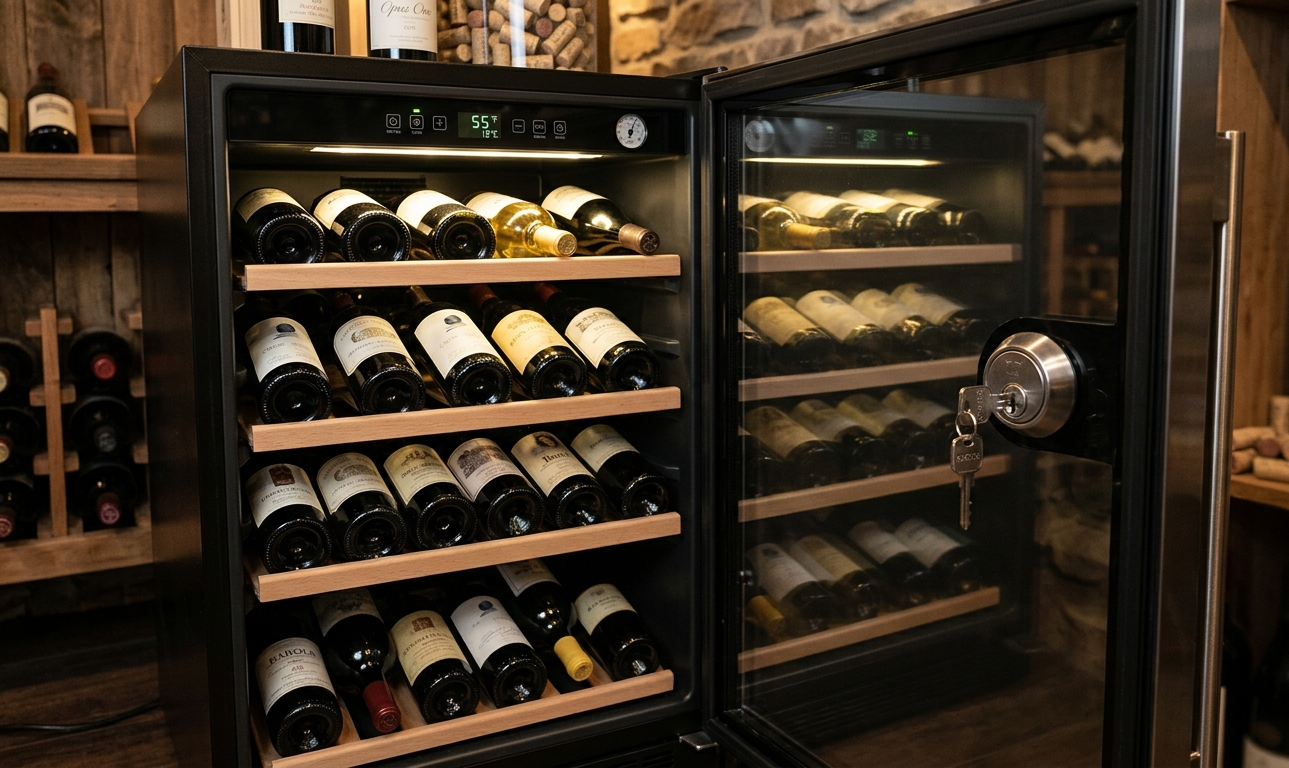
You have spent real money building your wine collection. Maybe it is a case of aged Burgundy you have been cellaring for a decade. Maybe it is a dozen bottles of the good stuff you picked up from a subscription box or tasting room. Or maybe you just want to keep the office wine safe from opportunistic colleagues on a Friday afternoon. Whatever the reason, you need a wine fridge with a lock — and you need it to actually work well as a fridge, not just as a box with a padlock.
The lockable wine fridge market has grown considerably in the last few years, driven by the rise of home offices, shared apartments, hospitality businesses, and collectors who take their cellaring seriously. But not all models are created equal. Some offer flimsy plastic latches that would frustrate a determined toddler for approximately forty seconds. Others pair genuinely robust locking mechanisms with excellent cooling technology, vibration-free compressors, and dual-zone temperature control.
In this guide, we have reviewed the five best wine fridges with locks currently available, tested their locking mechanisms, evaluated their cooling performance, and laid out everything you need to make the right purchase for your specific situation. Whether you are storing 12 bottles or 100, choosing between thermoelectric and compressor cooling, or deciding between single and dual zone, this guide has you covered.
Why Get a Wine Fridge with a Lock? More Reasons Than You Think
The first question most people ask is a reasonable one: why do I need a lock on my wine fridge? If it is in your home, who is going to steal it? The answer, it turns out, goes well beyond theft prevention.
Child Safety
If you have young children — or regularly host families with young children — a locked wine fridge is a straightforward safety measure. Children are curious, and a brightly lit refrigerator full of interesting bottles is irresistible. A keyed lock means the fridge stays off-limits without requiring constant supervision.
Shared Living Situations
Roommates, extended family households, and shared rental properties all create scenarios where a wine fridge lock is practically essential. You are not accusing anyone of bad faith — you are simply protecting your investment in the same way you would lock a medicine cabinet or a personal safe.
Office and Hospitality Environments
In a professional context, a locked wine cooler is almost non-negotiable. Restaurants, tasting rooms, wine bars, and hotel suites need to control access to their wine inventory. Even in a standard office, keeping client wine, celebratory bottles, or premium selections secure is professional practice. A lockable unit prevents unauthorized access outside of working hours and keeps inventory management clean.
Protecting Valuable Bottles
If your collection includes rare, aged, or expensive bottles, a lock adds a layer of protection against well-meaning guests who might grab a bottle without realizing its significance. The lock is not about distrust — it is about ensuring that your 2009 Barolo does not end up opened on a random Tuesday by someone who mistook it for a casual weeknight red.
Quick Picks at a Glance
Not sure whether you need a wine fridge at all? Our guide on do I need a wine fridge? breaks down exactly who benefits from dedicated wine refrigeration versus storing bottles in a regular fridge or a regular refrigerator.
1. Kalamera 24″ Compressor Wine Fridge — Best Overall
Kalamera 24″ 46-Bottle Dual Zone Compressor Wine Refrigerator
Best Overall
Kalamera has built a strong reputation in the wine cooler space over the past several years, and their 24-inch compressor model is the one that earns the best-overall crown in the locked wine fridge category. It combines genuinely good cooling technology with a well-built key lock, a dual-zone interior, and a stainless steel exterior that looks at home in any kitchen, home bar, or office.
The lock is integrated into the stainless steel door handle — not bolted on as an afterthought. The keyed cylinder has a solid, metal-core feel, and the door engages a positive latch when locked. Two keys are included. This is exactly what a wine fridge lock should feel like: an integrated part of the design rather than an accessory. For a deeper look at the brand’s track record, see our full Kalamera 24 wine cooler review.
Cooling performance is where Kalamera genuinely shines. The compressor system maintains the upper zone (for red wines) at 54–66°F and the lower zone (whites, rosé, sparkling) at 46–54°F, with independent digital touchpad controls for each. The carbon filter and UV-resistant glass door protect your collection from odors and light damage simultaneously.
✅ What We Love
- Robust, integrated key lock with metal cylinder
- True dual-zone independent temperature control
- Compressor maintains temp in warm rooms
- Carbon filter + UV glass door
- Clean stainless steel exterior
- Beechwood-look shelves, gentle on labels
⚠️ Minor Drawbacks
- Compressor generates some vibration (less than most)
- 46-bottle capacity may feel tight for large Burgundy bottles
- Lock keys are small — easy to misplace
- Interior light could be brighter
Kalamera 46-Bottle Dual Zone Compressor Wine Cooler
Our top overall pick — dual zone control, robust key lock, stainless steel design, and compressor cooling that works year-round. Ships with 2 keys.
Check Price on Amazon →2. Ivation 51-Bottle Compressor Wine Cooler — Best Dual Zone
Ivation 51-Bottle Compressor Freestanding Wine Refrigerator
Best Dual Zone
Ivation makes some of the most consistently reliable wine coolers on the market, and their 51-bottle compressor model earns its spot in second place by delivering exceptional dual-zone performance in a locked package. This is the fridge for the collector who is serious about maintaining different temperatures for their reds and whites simultaneously — and who wants a lock they can actually rely on.
The Ivation’s dual zone setup is genuinely independent: the upper zone handles reds at 54–66°F while the lower zone keeps whites and sparkling wines at a cooler 46–54°F. Each zone has its own digital temperature display and touchpad control. The compressor system is powerful enough to maintain target temperatures even in warmer ambient conditions — a significant advantage over thermoelectric units. For a comprehensive breakdown of Ivation’s performance track record, our full Ivation wine cooler review covers everything in detail.
The lock mechanism on this model is a keyed cylinder built into the door handle. It is not the most heavy-duty lock on this list — that honor goes to the Whynter — but it is meaningfully sturdier than a simple latch and will deter casual access reliably. At 51 bottles, this is one of the largest locked wine fridges you will find in the under-$500 category.
✅ What We Love
- 51-bottle capacity is one of the largest in this category
- True independent dual-zone temperature control
- Compressor performs in warm rooms (up to 90°F ambient)
- Low-vibration compressor protects sediment
- Digital display for both zones simultaneously
- Solid value for the capacity offered
⚠️ Minor Drawbacks
- Lock cylinder slightly less robust than Whynter or Kalamera
- Larger footprint — confirm measurements before ordering
- Fan noise audible in a quiet room
- Shelves are wire — bottles can shift slightly
Ivation 51-Bottle Dual Zone Compressor Wine Cooler
Largest capacity in our tested lineup with genuine dual-zone independence. Ideal for collectors who store both reds and whites and need a secure, lockable unit.
Check Price on Amazon →3. Icyglee 18-Bottle Wine Fridge — Best Budget Lockable Pick
Icyglee 18-Bottle Stainless Steel Wine Refrigerator
Best Budget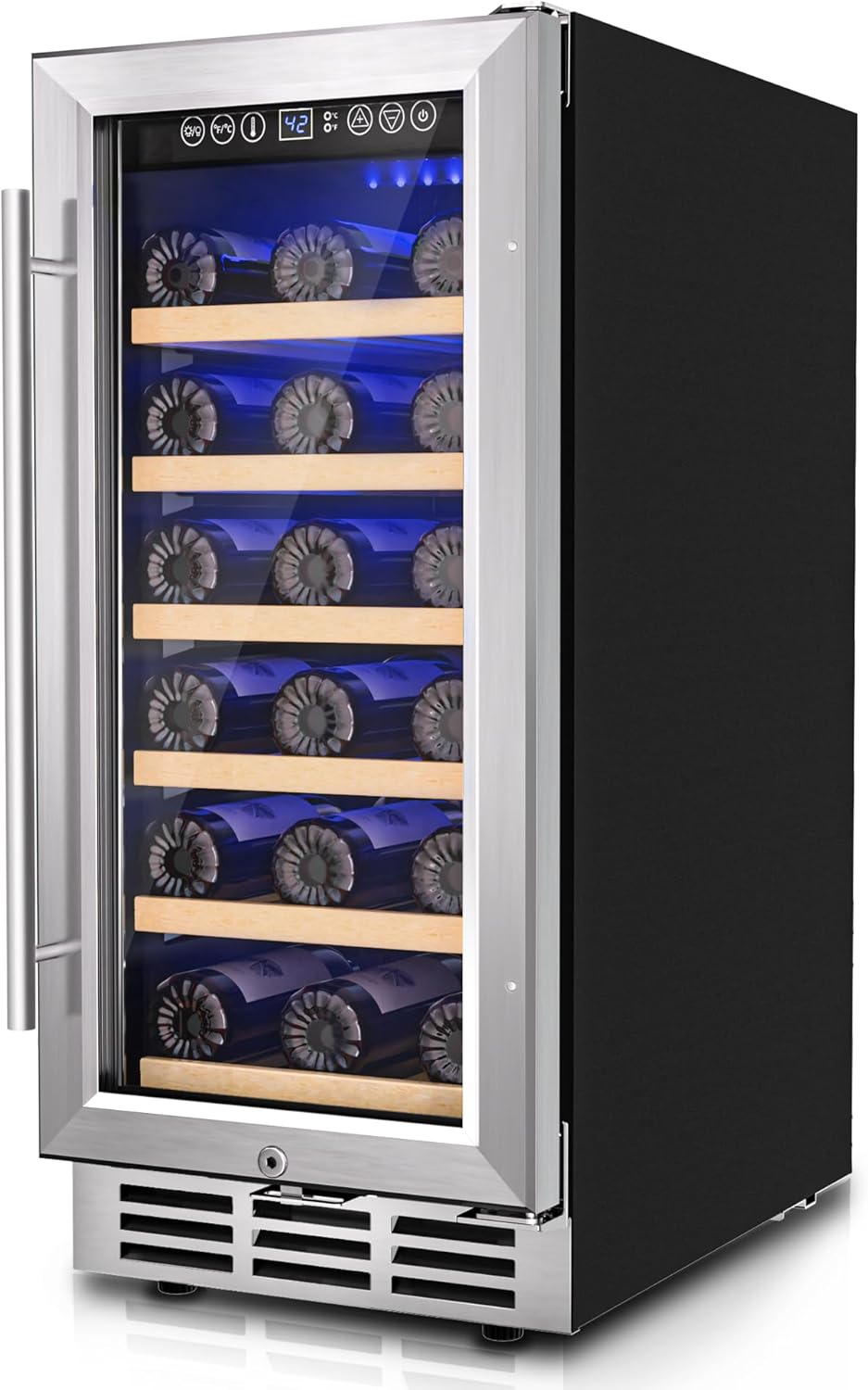
Not everyone needs a 46-bottle dual-zone powerhouse. If you are an apartment dweller, a first-time wine enthusiast, or someone who simply wants a compact, lockable fridge for a dozen or so daily-drinking bottles, the Icyglee 18-bottle model delivers excellent value at a price point that makes it a no-brainer entry to the locked wine fridge category.
The Icyglee uses a thermoelectric cooling system rather than a compressor. This is ideal for smaller units because it operates silently — no fan noise, no vibration — making it perfect for a bedroom, home office, or anywhere noise is a consideration. The tradeoff is that thermoelectric units are less effective in warm ambient environments (above 75°F), so this is not the right choice for a garage or uninsulated room in summer. For a broader comparison of cooling technologies, our thermoelectric vs compressor guide is essential reading.
The lock is a simple keyed mechanism integrated into the door handle. It is not the most heavy-duty lock on this list, but it is perfectly adequate for child safety and casual access prevention — the primary use cases for a compact fridge at this price. At 18 bottles, this fits neatly on a countertop, under a desk, or in a home office corner.
✅ What We Love
- Compact form factor — countertop or under desk
- Near-silent thermoelectric operation
- Zero vibration — protects delicate sediment
- Stainless steel exterior at budget price
- Lock adequate for child safety use case
- Excellent value for casual enthusiasts
⚠️ Minor Drawbacks
- Thermoelectric limits — struggles in rooms above 75°F
- Single zone only
- Lock is less robust than compressor-unit competitors
- 18 bottles fills up quickly for growing collections
Icyglee 18-Bottle Thermoelectric Wine Fridge with Lock
Compact, quiet, and affordable — the perfect starter locked wine fridge for apartments, offices, and anyone managing a modest collection on a budget.
Check Price on Amazon →4. Koolatron 46-Bottle Freestanding Wine Cooler — Best for Collectors
Koolatron 46-Bottle Stainless Steel Wine Cooler with Beechwood Shelves
Best for Collectors
The Koolatron 46-bottle wine cooler earns its “best for collectors” designation on the strength of two specific features: its genuine beechwood shelves and its careful attention to the details that matter for long-term wine storage. If you are storing bottles for aging rather than quick consumption, the Koolatron’s design priorities align with yours.
Real beechwood shelves make a meaningful difference for collectors. Unlike wire or plastic shelves, wood cradles bottles gently, distributes their weight properly, and — critically — prevents label abrasion during storage. The UV-resistant tempered glass door adds another layer of protection, shielding your collection from the kind of light exposure that accelerates wine aging undesirably. If you are investing in bottles you intend to hold for years, this fridge is designed with that purpose in mind.
The lock is a keyed cylinder type built into the handle — solid and well-integrated. The cooling system maintains a consistent temperature range appropriate for mixed storage (reds and whites stored at a compromise temperature around 55°F), though this is a single-zone unit. For a collection where you want to age both reds and whites under ideal conditions, consider pairing this with a dedicated short-term service fridge. Our comprehensive guide to wine cellar essentials covers exactly this kind of multi-appliance cellar strategy.
✅ What We Love
- Genuine beechwood shelves — excellent for label protection
- Wide temperature range (41–68°F) covers all wine types
- UV-resistant glass protects against light damage
- Low vibration compressor — safe for aged bottles
- Integrated key lock with metal cylinder
- Stainless steel exterior — premium appearance
⚠️ Minor Drawbacks
- Single zone — not ideal for simultaneous red/white service
- Slightly larger footprint than competitors at same capacity
- Higher price point than Icyglee or basic units
- Interior layout slightly inflexible for non-standard bottles
Koolatron 46-Bottle Wine Cooler with Beechwood Shelves & Lock
The collector’s choice — real beechwood shelves, UV glass, and robust construction make this the best locked wine fridge for long-term aging enthusiasts.
Check Price on Amazon →5. Whynter FWC-341TS — Best Premium Lock Quality
Whynter FWC-341TS 34-Bottle Freestanding Wine Refrigerator
Premium Lock
Whynter is one of the most respected names in specialty appliance refrigeration, and the FWC-341TS demonstrates exactly why. While it ranks fifth in this lineup simply because of its smaller capacity and higher price relative to the Kalamera and Ivation, it earns the “best premium lock” designation because its door lock is noticeably more substantial than any other model we reviewed — closer to commercial quality than the typical residential keyed cylinder.
The lock on the FWC-341TS uses a heavier-gauge cylinder with a more positive engagement feel and a notably sturdier connection between the handle and door frame. If you are installing this in a commercial tasting room, a hospitality suite, or any context where the lock will be engaged and disengaged multiple times daily, the Whynter’s mechanism will outlast the competition with less wear. Our detailed Whynter wine cooler review covers the full range of models if you want to compare options within the brand.
The FWC-341TS holds 34 bottles across a single zone with a temperature range of 46–66°F — ideal for a mixed collection at a moderate serving temperature. The interior uses wooden shelves (not beechwood, but solid nonetheless), the stainless steel exterior is beautifully finished, and the digital touchpad controls are among the most intuitive of any wine fridge in this review. The low-vibration compressor runs quietly and maintains temperature accurately.
✅ What We Love
- Strongest, most durable lock mechanism of all five models
- Commercial-quality build — built to last
- Intuitive digital touchpad controls
- Quiet, low-vibration compressor
- Premium stainless steel finish
- Whynter’s excellent after-sales service record
⚠️ Minor Drawbacks
- 34-bottle capacity is smaller than some competitors
- Single zone only — no independent red/white zones
- Higher price relative to capacity versus Kalamera
- Larger footprint than you might expect for 34 bottles
Whynter FWC-341TS 34-Bottle Wine Refrigerator
Commercial-grade lock quality in a residential wine fridge. The Whynter FWC-341TS is the locked wine cooler for those who refuse to compromise on security hardware.
Check Price on Amazon →Full Comparison Table: All 5 Locked Wine Fridges Side by Side
| Model | Capacity | Zones | Cooling | Temp Range | Lock Quality | Best For | Rating |
|---|---|---|---|---|---|---|---|
| Kalamera 24″ | 46 bottles | Dual Zone | Compressor | 46–66°F | ⭐⭐⭐⭐½ | Best Overall | 4.7/5 |
| Ivation 51-Bottle | 51 bottles | Dual Zone | Compressor | 46–66°F | ⭐⭐⭐⭐ | Large Dual Zone | 4.5/5 |
| Icyglee 18-Bottle | 18 bottles | Single Zone | Thermoelectric | 46–64°F | ⭐⭐⭐½ | Budget / Compact | 4.1/5 |
| Koolatron 46-Bottle | 46 bottles | Single Zone | Compressor | 41–68°F | ⭐⭐⭐⭐ | Long-Term Aging | 4.4/5 |
| Whynter FWC-341TS | 34 bottles | Single Zone | Compressor | 46–66°F | ⭐⭐⭐⭐⭐ | Premium Lock | 4.3/5 |
For a broader look at the wine fridge category beyond locked models, our comprehensive best wine fridges guide covers 20+ models across all categories. And if budget is the primary driver, our best wine coolers under $500 roundup identifies top performers at every price point.
Wine Fridge with Lock Buying Guide: 8 Things to Check Before You Buy
The wine fridge market is full of options that look identical on paper but perform very differently in practice. Here are the eight factors that actually separate a good lockable wine fridge from a mediocre one.
-
Lock Construction Quality: Look for a metal cylinder lock integrated into a metal or reinforced handle, not a plastic-housing latch. The best locks have a positive engagement click and resist side-pressure on the door. Check that the unit ships with two keys — key replacement is often difficult.
-
Cooling Technology: Compressor units work in warm rooms; thermoelectric units are quieter but limited to cool ambient environments. For most homes and offices, a compressor unit is the safer choice. Thermoelectric works well in climate-controlled rooms where ambient temperature stays below 75°F.
-
Single vs Dual Zone: Dual zone lets you store reds and whites at their respective ideal temperatures simultaneously. Single zone is fine if you primarily drink one type or are using the fridge for short-term storage at a service temperature.
-
Vibration Level: Vibration disturbs wine sediment and can accelerate aging negatively. Thermoelectric units produce zero vibration. Compressor units vary significantly — look for models specifically marketed as “low-vibration” or with vibration-dampening mounts.
-
Shelf Material: Beechwood shelves protect labels and cradle bottles naturally. Wire shelves are functional but can scratch labels over time. Plastic-coated wire is a middle ground. For a collection you plan to rotate frequently or age for years, wood shelves are worth the premium.
-
UV Glass Door: UV light accelerates wine aging — even interior fridge lighting can cause issues over time. UV-resistant glass doors and LED interior lighting (instead of fluorescent) significantly reduce this risk for long-term storage.
-
Actual vs Claimed Capacity: Manufacturers’ bottle counts are based on standard Bordeaux bottles (750ml, 75mm diameter). Burgundy bottles are wider, Champagne bottles are taller, and large-format bottles change the equation entirely. If your collection is mixed, reduce the manufacturer’s count by 15–20% for a realistic estimate.
-
Noise Level: Compressor units produce some noise (typically 40–45 dB). This matters if the fridge is in a bedroom, home office, or quiet living space. Check decibel ratings in product specs, and note that thermoelectric units are essentially silent — a genuine advantage in noise-sensitive environments.
Wine Fridge Lock Types Explained
Not all wine fridge locks are created equal. Understanding the different types helps you evaluate product listings more critically — especially when a lock is listed as a selling feature but the details are vague.
| Lock Type | Construction | Security Level | Durability | Best Use Case |
|---|---|---|---|---|
| Keyed Cylinder (Standard) | Metal cylinder in handle, 2 keys | Good — deters casual access | High — metal core lasts years | Home with children, shared spaces, offices |
| Keyed Cylinder (Heavy-Grade) | Thicker gauge metal, commercial construction | Very good — high engagement resistance | Excellent — commercial use rated | Restaurants, tasting rooms, hospitality |
| Simple Door Latch | Plastic or light metal latch | Minimal — child-resistant only | Low — breaks under sustained force | Child safety in low-risk environments only |
| Digital Keypad | Electronic PIN entry | Good — no key to lose | Medium — electronics can fail | Multi-user environments, shared access codes |
| Combination Lock | Mechanical combination dial | Good — no key needed | High — mechanical only | Rare in wine fridges — seen in some commercial units |
Compressor vs Thermoelectric: Which Is Right for Your Locked Wine Fridge?
This is the most technically significant decision in buying a wine fridge — locked or otherwise. Both technologies have genuine merit; the right choice depends entirely on your specific situation.
| Feature | Compressor | Thermoelectric |
|---|---|---|
| Temperature accuracy | Excellent — maintains target in any ambient temp | Good — struggles if room exceeds 75°F |
| Ambient temp limit | Works in rooms up to 90°F+ | Limited to rooms under ~75°F |
| Noise | Audible (40–45 dB fan/compressor cycle) | Near silent (no moving parts) |
| Vibration | Low-to-moderate (varies by model) | Zero vibration |
| Energy efficiency | Moderate — cycles on and off | Slightly better for small units in cool rooms |
| Capacity range | 12 to 300+ bottles | Best under 40 bottles |
| Longevity | 10–15+ years typically | 8–12 years for Peltier module |
| Best for | Most homes, all room temperatures, larger collections | Quiet rooms, apartments, small collections in cool environments |
For the vast majority of buyers, a compressor wine fridge is the right choice. The thermoelectric advantage — silence and zero vibration — is real and meaningful, but only in rooms that stay reliably cool. If your home or office warms significantly in summer, a thermoelectric unit will struggle to maintain its set temperature, which defeats the entire purpose of a wine fridge.
If you are placing the fridge in a dedicated climate-controlled wine room, our wine cellar essentials guide covers the complete picture of humidity, lighting, and rack configuration that complements your wine fridge investment.
Wine Storage Tips: Getting the Most from Your Locked Wine Fridge
Buying the right fridge is step one. Using it correctly is what actually protects your collection. These practical tips apply whether you have just purchased one of the five models in this guide or are optimizing an existing setup.
Set the Right Temperature from Day One
The most common mistake new wine fridge owners make is setting the temperature too cold. A wine fridge is not a regular refrigerator — wines do not need to be served icy cold. Use these temperature guidelines as your baseline:
- Long-term red wine storage (aging): 55°F / 13°C
- Red wine service temperature: 60–65°F / 15–18°C
- White wine and rosé storage: 50–55°F / 10–13°C
- White wine service temperature: 45–50°F / 7–10°C
- Champagne and sparkling wine: 40–45°F / 4–7°C
For a thorough breakdown of temperature and humidity management at home, our home wine storage temperature and humidity guide is the definitive resource. And if you are storing wine without a fridge at all, our wine storage without a wine fridge guide covers that scenario too.
Store Bottles Horizontally
Bottles sealed with natural cork must be stored horizontally so the wine stays in contact with the cork. If the cork dries out, it shrinks, and air enters the bottle — oxidizing and ruining the wine. All five fridges in this review use horizontal shelving as standard. Screwcap bottles can be stored upright, but horizontal storage is fine too.
Avoid Overpacking
Air circulation matters. If you pack your fridge beyond its rated capacity, you restrict airflow, which forces the cooling system to work harder and creates uneven temperature zones within the fridge. Use 80–90% of rated capacity as your practical maximum. This also makes it easier to retrieve bottles without disturbing the rest of the collection.
Think About What Happens After You Open a Bottle
A locked wine fridge protects your collection; a good wine preserver protects the bottle once it is open. Our guide comparing Coravin vs Vacu Vin covers the two most popular approaches to wine preservation after opening, and our how long does wine last after opening guide sets the expectations correctly.
Use the Right Glassware
Great wine from a great fridge deserves the right glass. Different varieties genuinely benefit from variety-specific stems — our guide to top red wine glass picks by variety explains why shape matters, and the red vs white wine glasses comparison helps you build a versatile set.
Shop All 5 Locked Wine Fridges on Amazon
Use our tag winearmy-20 to support our independent reviews at no extra cost. All links go directly to the verified product listings we reviewed.
Browse on Amazon →Frequently Asked Questions: Wine Fridges with Lock
Conclusion: The Best Locked Wine Fridge Is the One That Fits Your Real Life
Buying a wine fridge with a lock is not about distrust or paranoia — it is about protecting something you care about in the most practical way possible. Whether that means keeping bottles safe from children, securing a hospitality inventory overnight, or simply ensuring your expensive collection does not become someone else’s casual Tuesday evening, the right lockable wine fridge makes the whole thing effortless.
Our top pick remains the Kalamera 24″ Dual Zone Compressor for most buyers. It nails the combination of build quality, genuine dual-zone temperature control, and a robust integrated lock at a price point that represents genuine value. If capacity is your priority, the Ivation 51-bottle steps up. For budget buyers in a cool, quiet environment, the Icyglee is the honest answer. Serious collectors who need aging-quality storage should look hard at the Koolatron‘s beechwood shelves. And for commercial or high-traffic environments where the lock itself is the primary concern, the Whynter FWC-341TS sets the standard.
Whichever you choose, pair it with proper storage habits — correct temperature from day one, horizontal bottle orientation, sensible capacity management — and your locked wine fridge will protect and preserve your collection for years. For everything that comes after the fridge, explore our guides on top-rated decanters, best wine stoppers, and wine and food pairing to build the complete wine experience around your collection.
Ready to Secure Your Collection?
Browse all five locked wine fridges we reviewed, compare the full lineup of wine coolers, and explore our guides to storage, serving, and accessories.
Shop Kalamera on Amazon All Wine Fridge Reviews Dual Zone Wine Coolers Wine Cooler Buying Guide Storage Tips