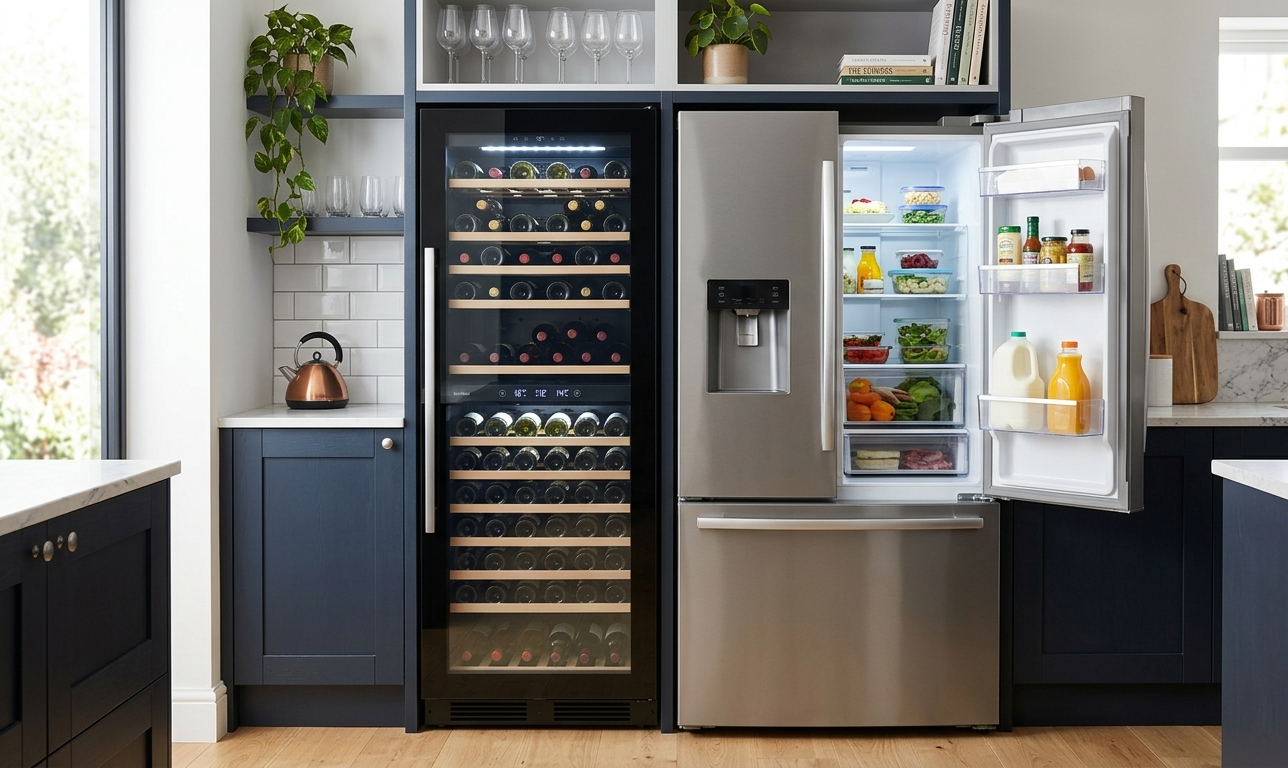
Wine Fridge vs Regular Fridge: Which One Actually Protects Your Wine?
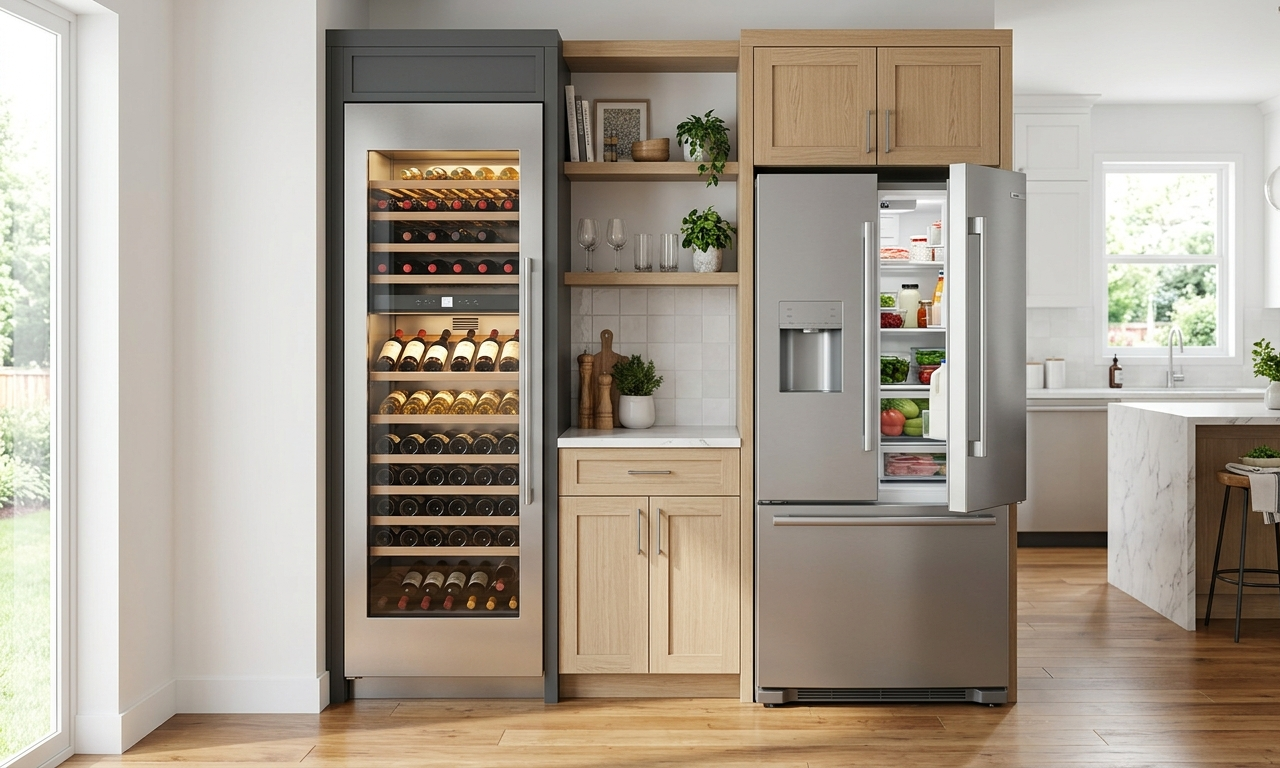
You have probably done it. Bought a bottle of wine — maybe even a good one — shoved it in the regular kitchen fridge between the leftover pasta and the oat milk, and told yourself you would deal with it properly later. Then later arrived, the wine came out flat, slightly off, and vaguely smelling of last Thursday’s curry, and you were left wondering whether you had imagined what a good bottle of wine was supposed to taste like.
You had not imagined it. The regular fridge damaged your wine. Not catastrophically — not overnight — but in the slow, relentless way that poor storage conditions gradually strip away everything that makes wine worth drinking in the first place.
The debate between wine fridge and regular fridge is not really a close one if you care about wine quality. But understanding why matters — because the reasons are more nuanced than most people realize, and because there are situations where the kitchen fridge genuinely suffices. This guide covers all twelve of the critical differences between these two appliances, so you can make an informed decision about what your collection actually needs.
Quick Verdict: Wine Fridge vs Regular Fridge at a Glance
1. Temperature Control: The Most Important Difference
Temperature is the single most consequential factor in wine storage — and it is where the gap between a wine fridge and a regular refrigerator is most dramatic. Understanding this gap requires stepping back and asking a simple question: what temperature is each appliance actually designed to maintain, and why?
What a Regular Fridge Is Designed to Do
A standard kitchen refrigerator is designed to inhibit bacterial growth in food. To accomplish this safely and reliably, it maintains an interior temperature of 35–38°F (1.5–3°C). This is the “food safe zone” — cold enough to slow bacterial reproduction in meat, dairy, and produce, warm enough to prevent freezing your lettuce.
That temperature range is perfectly good for food. For wine, it is a disaster in slow motion. Here is why:
- At 35–38°F, the chemical reactions involved in wine aging essentially halt. A wine that would develop beautifully at 55°F over five years simply goes dormant — and when removed from that cold, may not resume aging correctly.
- Cork-sealed bottles stored too cold can experience tartrate crystal precipitation — harmless but disconcerting wine “crystals” that form when wine drops below a certain temperature threshold.
- Wines served too cold have muted aromas and flavors — you literally cannot taste them properly. A Burgundy Pinot Noir served at 37°F will taste thin, sharp, and joyless.
What a Wine Fridge Is Designed to Do
A wine fridge is calibrated for a completely different purpose: creating the optimal environment for wine aging and serving. The target temperature range depends on what you are storing, but the general windows are:
- Long-term cellar storage: 55°F / 13°C — the classic underground cellar temperature
- Red wine service: 60–65°F / 15–18°C
- White wine and rosé storage/service: 45–55°F / 7–13°C
- Champagne and sparkling wine: 40–50°F / 4–10°C
Temperature Stability: The Hidden Factor
Beyond the target temperature, stability matters enormously. A regular kitchen fridge experiences constant temperature fluctuations: every time the door opens, warm air rushes in. The fridge heats up, the compressor kicks in, it overcools slightly, then the cycle repeats. For food, this is inconsequential. For wine undergoing slow aging, repeated temperature fluctuations cause the liquid inside the bottle to expand and contract, stressing the cork seal and gradually allowing microscopic amounts of air in and wine out — a process called “breathing” that accelerates oxidation.
Wine fridges are designed with significantly better insulation, tighter seals, and more sophisticated temperature management to minimize these fluctuations. A good wine fridge might vary by 1–2°F; a kitchen fridge routinely swings 5–8°F with normal use.
For a complete guide to ideal storage conditions at home, see our detailed article on how to store wine at home: temperature and humidity tips.

NewAir 29-Bottle Wine Fridge
A compact, precise wine fridge that maintains the 45–65°F range your collection needs — a direct upgrade from any regular refrigerator for wine storage.
View on Amazon →2. Humidity: Why Your Regular Fridge Is Destroying Your Corks
This is the wine storage factor that gets the least attention but causes some of the most irreversible damage. Humidity — the amount of moisture in the air — has a direct and significant impact on cork-sealed wine bottles, and the difference between a wine fridge and a regular refrigerator on this dimension could not be more stark.
Regular Fridges Are Deliberately Dry
Modern kitchen refrigerators are engineered to remove moisture from the interior air. This is intentional and correct for food storage — high humidity accelerates mold growth on cheese, bread, and produce, and causes condensation that promotes bacterial activity. The interior of a typical kitchen fridge runs at 30–40% relative humidity, and some run even drier.
For cork-sealed wine bottles, this low-humidity environment is genuinely damaging over time. Natural cork is a living material — a bark product that needs a certain level of moisture to maintain its elasticity and proper seal. When cork dries out in a low-humidity environment, it shrinks. A shrunken cork allows air to migrate into the bottle, oxidizing the wine. The process is slow — it takes months rather than days — but it is irreversible. A wine with a dried-out, air-compromised cork cannot be “fixed.” It can only be drunk sooner than planned, or discarded.
Wine Fridges Maintain the Right Humidity
A dedicated wine fridge maintains 50–70% relative humidity — the range that keeps natural corks moist, supple, and properly sealed without encouraging mold growth on labels or the exterior of bottles. This humidity maintenance is built into the design: better insulation means less condensation cycling, and the sealed environment retains naturally occurring moisture better than a fridge opened frequently throughout the day for food access.
Our guide to cork vs screwcap aging and longevity examines this question in depth if your collection is mixed.
3. Vibration: The Silent Ager of Wine
Of all the differences between a wine fridge and a regular refrigerator, vibration is the one most wine drinkers never think about — until they open an aged bottle that tastes like it was shaken rather than cellared.
Why Regular Fridges Vibrate
A kitchen refrigerator runs a conventional compressor — a mechanical pump that cycles on and off throughout the day to maintain temperature. This compressor vibrates. Not intensely, not noticeably in most cases, but continuously. The shelves transmit that vibration to every bottle resting on them. Add to this the mechanical action of the ice maker (if present), the opening and closing of the door, and you have a storage environment that provides a constant low-level mechanical stimulus to your wine.
What Vibration Does to Wine
Vibration affects wine in two distinct ways:
For aged wines with sediment: Sediment in wine — the harmless deposit of tannin polymers, pigments, and tartrate crystals that forms in aged reds — is exquisitely sensitive to disturbance. Vibration keeps sediment in suspension rather than allowing it to settle, which affects the wine’s clarity and can alter its tannin balance in the glass. Older wines (8+ years) with significant sediment are most at risk. Our guide on wine sediment explains when sediment appears and how to handle it.
For wines undergoing aging chemistry: Aging wine involves thousands of slow chemical reactions — esterification, oxidation-reduction cycles, polyphenol polymerization — that transform the raw, harsh components of young wine into the complex, harmonious character of a mature one. These reactions are sensitive to mechanical disturbance. Research from major wine universities suggests that sustained vibration can disrupt these processes, producing wines that age less consistently and sometimes develop off-flavors associated with premature oxidation.
How Wine Fridges Address Vibration
Dedicated wine fridges address vibration through two strategies:
- Thermoelectric cooling: Thermoelectric wine fridges have no moving parts whatsoever — the Peltier effect cooling module is completely solid-state, producing zero vibration. This makes thermoelectric units ideal for storing delicate aged wines. Our comparison of thermoelectric vs compressor cooling covers everything you need to know about choosing between them.
- Vibration-dampening compressors: Compressor-based wine fridges use isolation mounts and lower-vibration motors than kitchen fridges — significantly reducing, if not eliminating, the vibration transmitted to shelves and bottles.

Ivation Thermoelectric Wine Cooler
Zero vibration, whisper-quiet operation — the perfect storage environment for aged and delicate wines that a regular kitchen fridge simply cannot replicate.
View on Amazon →4. UV Light Exposure: How Your Fridge Interior Light Damages Wine
Every time you open a regular refrigerator, the interior light comes on. This happens dozens of times per day in most households. Over weeks and months of wine storage, that repeated light exposure — even from a standard LED interior bulb — can trigger a photochemical reaction in wine known as “light strike” (in French, goût de lumière).
What Light Strike Does
UV and blue-spectrum visible light triggers photo-oxidation in wine, particularly in wines with sulfur-containing amino acids. The result is the formation of volatile sulfur compounds — dimethyl disulfide and related compounds — that produce aromas ranging from wet cardboard and cooked vegetables to a rubbery, sulfurous stink. Light strike is most dangerous for white wines and Champagne (red wine is somewhat protected by its anthocyanin pigments), and it can develop over surprisingly short exposure times with strong light sources.
Wine bottles are typically colored precisely to reduce light strike risk: green, brown, or amber glass provides some UV filtration. But repeated daily light exposure in a bright refrigerator interior works against this protection over time.
How Wine Fridges Protect Against Light
Wine fridges are designed with UV protection as a standard feature:
- UV-resistant tempered glass doors: Allows you to view your collection while filtering out the UV wavelengths most responsible for light strike
- LED interior lighting: Modern LEDs produce minimal UV output compared to fluorescent or incandescent bulbs
- Doors that stay closed: Since wine fridges are accessed less frequently than kitchen fridges, light exposure per day is dramatically reduced
5. Odor Contamination: Why Your Wine Should Not Live Next to Leftovers
Wine breathes through its cork. This is a fundamental fact of wine aging — the slow, controlled oxygen exchange through the cork is part of what makes aged wine complex and nuanced. The flip side of this breathable seal is that wine can also absorb odors from its environment over time.
A kitchen refrigerator is an odor minefield: cheese, garlic, leftover fish, onions, cleaning products, and the accumulated history of every food item that has ever been stored inside it. Natural corks are more permeable than synthetic closures, and over weeks of storage, particularly potent odors can migrate through the cork and alter the wine’s aromatic profile.
This is not a theoretical risk — it is a documented phenomenon. Wine stored near strongly aromatic foods in refrigerators that are not meticulously cleaned can develop off-aromas that professionals associate with “cork taint” or simple contamination rather than the wine’s natural character.
Wine fridges are dedicated single-purpose appliances. They do not share space with food. Many include activated carbon filters that maintain clean internal air. The result is a neutral, odor-free environment that lets wine develop on its own terms.
6. Bottle Orientation: Horizontal Storage and Why It Matters
The direction a wine bottle rests during storage is more consequential than it might appear, and it is an area where regular fridges and wine fridges take fundamentally different approaches.
Regular kitchen fridges are arranged for vertical food storage — shelves optimized for upright bottles, jars, and containers. This is fine for juice, soda, and screwcap water bottles. For cork-sealed wine, vertical storage means the cork is above the wine, out of contact with the liquid. Over time, the exposed cork dries out from the refrigerator’s dry air, loses its elasticity, and begins to permit air ingress — exactly the humidity problem we covered earlier, compounded by orientation.
Wine fridges, by contrast, are designed with horizontal shelving as standard. Every bottle rests on its side, keeping the wine in constant contact with the cork. The cork stays moist from the inside rather than relying on ambient humidity alone. This is why wine has been stored horizontally in cellars for centuries — and why wine fridges replicate that orientation by design.
7. Temperature Zones: One Size Does Not Fit All Wine
A regular refrigerator has one temperature, calibrated for food safety. A dedicated wine fridge can have one or two independent temperature zones — and this distinction matters enormously for anyone who drinks both red and white wine.
The Problem with One-Temperature Storage
Ideal storage temperatures differ significantly between wine styles:
| Wine Type | Ideal Storage Temp | Ideal Service Temp | Regular Fridge? | Wine Fridge? |
|---|---|---|---|---|
| Full-bodied Red (Cab, Syrah, Barolo) | 55–60°F / 13–15°C | 62–68°F / 17–20°C | ❌ Too cold | ✅ Perfect |
| Light Red (Pinot Noir, Beaujolais) | 53–58°F / 12–14°C | 58–65°F / 14–18°C | ❌ Too cold | ✅ Perfect |
| Full-bodied White (Chardonnay) | 50–55°F / 10–13°C | 50–55°F / 10–13°C | ⚠️ Too cold for long-term | ✅ Ideal |
| Aromatic White (Riesling, Sauvignon Blanc) | 45–50°F / 7–10°C | 45–52°F / 7–11°C | ⚠️ Borderline cold | ✅ Good |
| Rosé | 48–54°F / 9–12°C | 46–55°F / 8–13°C | ⚠️ Slightly too cold | ✅ Perfect |
| Champagne / Sparkling | 40–50°F / 4–10°C | 40–48°F / 4–9°C | ✅ Works for short-term | ✅ Perfect |
A dual-zone wine fridge solves the red-and-white dilemma elegantly: the upper zone maintains 58–62°F for reds while the lower zone holds 45–52°F for whites and sparkling wines. You never have to choose between optimal conditions for different styles. Our comprehensive guide to single vs dual zone wine coolers and the best dual zone wine coolers are essential reading if you drink both styles regularly.
8. Long-Term Aging: Where the Regular Fridge Fails Completely
For short-term storage — a few days to a couple of weeks — the differences between a wine fridge and a regular refrigerator are real but manageable. Wines stored in the wrong conditions for two weeks will not be transformed into vinegar. But for long-term storage — months or years — the regular refrigerator is simply not an option for wines worth aging.
What “Aging” Wine Actually Means
Wine aging is a series of slow chemical transformations that occur over time. Tannins polymerize (becoming smoother and less astringent), acids interact with alcohols to form esters (contributing complex fruity and floral aromas), and anthocyanin pigments in red wine bind with tannins to form stable color complexes. All of these reactions require specific conditions: a temperature of around 55°F, consistent humidity, minimal vibration, and darkness. For a deeper look at why aging matters, our article on why wine is better with age covers the science beautifully.
A regular refrigerator provides none of these conditions consistently. The temperature is wrong (too cold), the humidity is wrong (too dry), the vibration is too high, and the repeated light exposure works against the slow chemistry you are trying to preserve. Storing an age-worthy bottle in a regular fridge for six months is not neutral — it is actively detrimental.
The Economics of Aging Wine Properly
Consider the math. A bottle of 2018 Barolo from a reputable producer might cost $60–80 today. Aged 8–10 years under ideal conditions, it may be worth $150–200 and drink vastly better than it does now. Aged 8–10 years in a regular refrigerator — if it survives that long without the cork failing — it may drink worse than it would have at five years, its complexity muted by improper temperature and its fruit character stripped by the dry, cold environment.
A decent wine fridge costs $150–300. The value it preserves in a collection of even 20–30 serious bottles far exceeds its purchase price. If you want to understand whether a wine fridge makes financial sense for your situation, our guide on do I need a wine fridge? walks through the calculation clearly.

Wine Enthusiast 32-Bottle Dual Zone Wine Cooler
Designed for exactly the kind of mixed aging collection that a regular fridge cannot handle — two independent zones, low vibration, UV glass, and precise temperature control.
View on Amazon →9. Cost Comparison: The Real Numbers
The most common objection to buying a wine fridge is cost — you already own a kitchen refrigerator, so why spend more? This is a fair question that deserves an honest answer with real numbers.
| Category | Regular Fridge (for wine) | Wine Fridge | Notes |
|---|---|---|---|
| Upfront Cost | $0 (already owned) | $100–$1,500+ | Entry-level wine fridges start around $100–$150 |
| Annual Energy Cost (estimated) | $60–$120/year (full kitchen fridge) | $30–$80/year (small wine fridge) | Wine fridges are smaller and often more efficient |
| Cost of Wine Damaged | $20–$500+ per collection failure | Near zero with proper use | Dried corks, oxidation, light strike add up |
| Break-Even Point | Protecting ~$200–300 of wine recovers a $150 wine fridge cost in quality preservation alone | ||
Budget Wine Fridge Options That Work Well
You do not need to spend a fortune to get meaningful wine storage benefits over a regular fridge. Some excellent options:
- Under $150: Small 12–18 bottle thermoelectric units (Ivation, Icyglee, Vremi) — great for apartment dwellers and daily drinkers
- $150–$300: 24–36 bottle compressor units (NewAir, Kalamera, Whynter entry-level) — the sweet spot for most households
- $300–$500: Dual-zone 30–50 bottle models — for serious collectors and mixed red/white collections
Our roundup of best wine coolers under $500 identifies the strongest performers across all these price points, and the affordable wine picks guide helps you stock your new fridge without breaking the bank.
✅ Case for Buying a Wine Fridge
- Protects wine worth significantly more than the appliance
- Lower energy cost than full kitchen fridge for wine portion
- Pays back quickly in preserved quality
- Entry-level options start at $100–$150
- Dual zone covers both reds and whites perfectly
- Dedicated space — kitchen fridge stays for food
⚠️ When Regular Fridge Is Acceptable
- Storing wine for 1–2 weeks maximum
- Budget is genuinely constrained right now
- Only chilling white/sparkling before serving
- Very occasional wine drinker with no collection
- Storing screwcap bottles only (no cork concern)
- All wine will be consumed within days of purchase
10. Energy Efficiency: Which Costs More to Run?
The energy consumption question is more nuanced than it first appears. A kitchen refrigerator runs 24 hours a day at a lower temperature, maintaining food safety across a large volume. A wine fridge also runs continuously but typically maintains a higher (less demanding) temperature across a smaller volume.
How the Numbers Compare
A typical full-size kitchen refrigerator uses 400–600 kWh per year, costing approximately $50–$80 annually at average US electricity rates. However, the wine stored in that fridge represents only a portion of its total volume — and its energy use is shared across all the food inside it.
A small to mid-size wine fridge (12–36 bottles) typically uses 100–200 kWh per year — significantly less than a full kitchen fridge, because it is smaller, often better insulated, and runs at a warmer target temperature that requires less cooling energy. A thermoelectric wine fridge uses even less energy than a compressor model, though it works best in cool environments.
11. Who Should Get a Wine Fridge? A Decision Framework
The answer to “wine fridge or regular fridge” depends heavily on who you are as a wine drinker. Here is a framework that cuts through the abstraction.
Get a Wine Fridge If…
You buy wine by the case, collect bottles worth $30+, age wine for 6+ months, drink both red and white, or store cork-sealed bottles more than 2–4 weeks.
Regular Fridge Works If…
You buy wine to drink within a few days, only chill whites before serving, budget is tight right now, or your collection is fewer than 6–8 bottles at a time.
Office / Shared Spaces
A lockable wine fridge is ideal for offices and shared apartments — temperature control plus security in one unit.
The Casual Enthusiast
If you buy a bottle or two per week, drink them within a week of purchase, and only occasionally buy something you want to keep for more than a month — a regular fridge is probably sufficient for your day-to-day needs. A wine fridge would still improve quality, but the improvement might not justify the purchase for your usage pattern. At minimum, aim to bring red wines out of the fridge an hour before serving so they warm from 37°F to their ideal service temperature.
The Growing Collector
If you find yourself accumulating more than a case at a time, buying wines specifically to age, or regularly spending more than $40 per bottle — the wine fridge decision is no longer optional for responsible stewardship of your collection. The math is clear: a $200 wine fridge protecting $600 in wine that would otherwise degrade in your kitchen refrigerator is economically straightforward.
The Serious Collector
If you collect fine wine, age bottles for a decade or more, and have invested thousands of dollars in your cellar — a wine fridge is not the end of the discussion but the beginning. You will want to consider dedicated wine cellar solutions, proper modular wine rack storage, and a high-capacity freestanding wine refrigerator as the core of a multi-component cellar strategy.
12. Alternatives When Neither Option Is Ideal
Life is not always simple, and sometimes neither a regular fridge nor a wine fridge fits the situation perfectly. There are several alternatives worth knowing about — and understanding them helps you make the best decision for your circumstances.
Wine Storage Without a Fridge
If you do not yet have a wine fridge and need to store wine safely short-term, there are strategies that go beyond the kitchen refrigerator. Our comprehensive guide on how to store wine without a wine fridge covers the best approaches: cool interior closets, basements, under-stair storage, and wine-specific insulated bags. These are not permanent solutions, but they are meaningfully better than a warm kitchen counter or a too-cold regular fridge for wines you plan to store more than a week.
Wine Cooling Sleeves and Chillers
For rapidly chilling individual bottles to service temperature without waiting for a fridge, insulated wine sleeves and electric chillers offer a practical supplement. Our guides to the best wine chiller sleeves and top electric wine chillers identify the best options if rapid cooling is the primary need rather than long-term storage.
Portable Wine Coolers
For those who need flexibility — taking wine to events, storing bottles in a car or vacation rental — portable wine coolers offer a middle ground between a regular fridge and a dedicated wine refrigerator. See our top portable wine cooler picks for the best options in this category.
Wine Preservation Systems
If the issue is specifically about extending the life of opened bottles rather than storing unopened ones, wine preservation systems like Coravin and Vacu Vin offer targeted solutions. Our comparison of Coravin vs Vacu Vin covers which approach suits which situation, and our guide on how long wine lasts after opening sets the realistic expectations.
Complete Side-by-Side Comparison: Wine Fridge vs Regular Fridge
| Factor | Regular Fridge | Wine Fridge | Winner |
|---|---|---|---|
| Temperature Range | 35–38°F (food safe zone) | 40–65°F (wine optimal range) | Wine Fridge |
| Temperature Stability | ±5–8°F with door opening | ±1–2°F typical | Wine Fridge |
| Humidity Level | 30–40% RH (deliberately dry) | 50–70% RH (cork-safe) | Wine Fridge |
| Vibration | High — compressor cycles constantly | Low (compressor) to zero (thermoelectric) | Wine Fridge |
| UV Light Exposure | Multiple daily light exposures | UV glass door, LED, less frequent access | Wine Fridge |
| Odor Contamination Risk | High — shared with food | Near zero — dedicated, filtered | Wine Fridge |
| Bottle Orientation | Vertical (bad for corks) | Horizontal (cork contact maintained) | Wine Fridge |
| Temperature Zones | One (too cold for reds) | One or two independent zones | Wine Fridge |
| Long-term Aging | Actively harmful beyond 1–2 months | Ideal for months to decades | Wine Fridge |
| Upfront Cost | $0 (already owned) | $100–$1,500+ | Regular Fridge |
| Short-term White Chilling | Works well (hours to days) | Works well | Tie |
| Energy Use for Wine | Shared with food (variable) | Dedicated, often more efficient | Slight edge: Wine Fridge |
Frequently Asked Questions: Wine Fridge vs Regular Fridge
Conclusion: Knowing When to Upgrade
The wine fridge versus regular fridge debate resolves clearly when you frame it correctly. A regular refrigerator is an excellent appliance — for food. It does exactly what it is designed to do. The problem is that what it is designed to do is almost the opposite of what wine needs for long-term storage.
Temperature too cold. Humidity too low. Vibration too constant. Light exposure too frequent. Odor contamination risk too real. For casual, same-week drinking of screwcap whites, the regular fridge is a perfectly adequate tool. For everything else — aging bottles, cork-sealed wines, collections worth protecting, simultaneous red and white storage — it fails wine comprehensively.
A dedicated wine fridge is not a luxury for enthusiasts. It is a practical storage solution that protects your investment, preserves what the winemaker intended, and ensures that when you open a bottle — whether it has waited three weeks or three years — it tastes the way it was supposed to taste.
If you are ready to make the upgrade, explore our best wine fridges guide for the complete market overview, our top-rated freestanding wine refrigerators for larger collections, and our wine cooler guide for the definitive buying framework. For those exploring brand-specific options, our reviews of Wine Enthusiast, Kalamera, Whynter, Ivation, and NewAir cover all the leading brands in detail.
And once your collection is properly stored, explore the rest of the wine experience: the right glassware for your wines, the art of food and wine pairing, and the tools — from decanters to aerators — that help every bottle reach its potential in the glass.
Ready to Upgrade Your Wine Storage?
Explore our curated guides to find the perfect wine fridge for your collection, budget, and space.
Best Wine Fridges Dual Zone Models Under $500 Do I Need One? Cooling Tech Guide