The Complete Wine Vintage Guide: Understanding How Year Defines Every Bottle
From grape to glass — what vintage years actually mean, why they matter more than most drinkers realize, and how to use them to drink smarter every time.
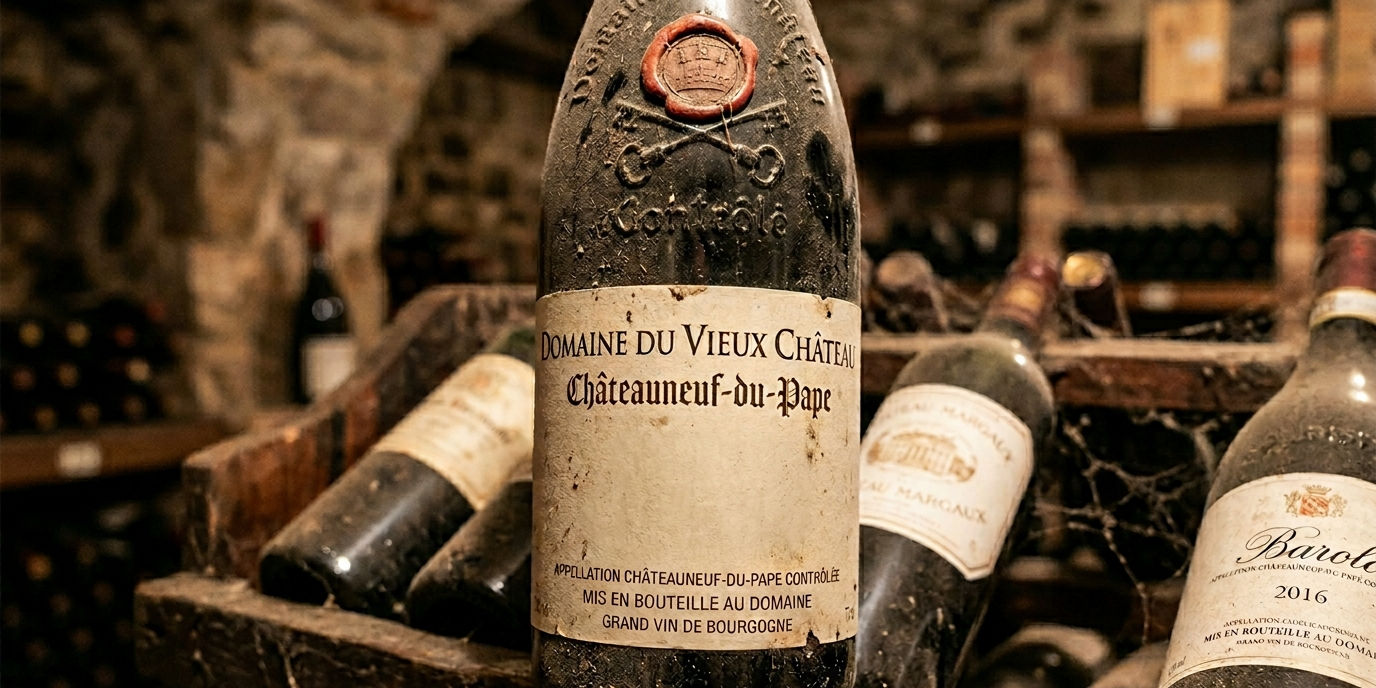
There is a four-digit number printed on almost every bottle of wine in the world. Most people glance past it. Serious wine enthusiasts treat it as one of the single most important pieces of information a label can carry. That number is the vintage year — and once you understand what it represents, the way you shop for, store, and enjoy wine changes permanently.
A wine vintage is not a marketing term. It is a record of weather, of harvest timing, of the specific conditions that shaped every grape that went into the bottle. The same winery, the same winemaker, and the same vineyard can produce a transcendent bottle in one year and a merely acceptable one the next — all because of conditions largely outside human control. Understanding this single concept gives you an immediate edge when reading wine labels, buying at auction, choosing a restaurant bottle, or planning your cellar.
This guide covers everything: the science behind vintage variation, how to read vintage ratings by region, which recent years produced exceptional wines, how to use vintage knowledge when buying affordable bottles or building a collection, and how to store your vintages correctly so they reach their peak. Let’s start from the very beginning.
1. What Is a Wine Vintage?
In the simplest possible terms, a wine’s vintage is the calendar year in which the grapes used to make that wine were harvested. When a label says “2019 Barolo,” it means the Nebbiolo grapes in that bottle were picked during the 2019 harvest in Piedmont, Italy — not blended from multiple years, not aged into the following year’s production.
This sounds almost too simple to be meaningful. But consider what that single year encapsulates: every rainfall event from budbreak through harvest, every heat wave, every cool night, every frost scare, every disease pressure, and the precise timing at which the winemaker decided the grapes were ready. All of that is compressed into that one number.
The Harvest Window
In the Northern Hemisphere — France, Italy, Spain, Germany, the USA — grapes are typically harvested between August and November, depending on the variety and region. In the Southern Hemisphere — Argentina, Chile, Australia, South Africa — harvest runs from February through May. The vintage year on the label refers to the year that harvest took place, regardless of when the wine was bottled or released.
Some wines age for years before release. A Brunello di Montalcino, for example, legally requires at least five years of aging before sale. So a 2018 Brunello may only appear on shelves in 2024 or later. The vintage year still refers to 2018 — the year the grapes were grown and harvested.
Vintage vs. Release Year vs. Bottling Date
| Term | What It Means | Where You’ll See It |
|---|---|---|
| Vintage Year | Year the grapes were harvested | Front label (large print) |
| Bottling Date | When wine was put into the bottle | Back label (sometimes) |
| Release Date | When wine became available to purchase | Winery records, retailers |
| Drink Window | Recommended years to open/consume | Reviews, back label notes |
Understanding these distinctions is foundational. If you want to dive deeper into every element printed on a bottle, our guide on how to read wine labels breaks every component down clearly. For now, the vintage year is the number that tells you about the weather during the growing season — and that’s the starting point for everything that follows.
The word “vintage” comes from the Old French vendange, itself derived from the Latin vindemia (grape harvest). In casual modern English, “vintage” has been stretched to mean “old” or “classic” — but in wine, it has one precise meaning: the harvest year.

Wine Vintage Chart — Reference Card Set
Keep a laminated vintage rating chart in your cellar or wallet. Covers 20+ regions and 25+ years at a glance.
Check Price on Amazon →2. Why Vintage Year Matters More Than Most People Think
Ask a casual wine drinker whether the vintage year matters and you’ll often hear: “I just buy what tastes good.” That’s a perfectly valid approach — but it misses an enormous amount of value and context. Here’s why vintage year is one of the most reliable signals you can use when navigating wine.
The Same Wine, Two Different Years, Two Different Experiences
Imagine buying a bottle of Napa Valley Cabernet Sauvignon from a mid-tier producer. In a warm, dry vintage year, that wine might be rich, deeply fruited, and structured enough to age another decade. In a wet, cool vintage with disease pressure, the wine from the exact same producer at the same price point might be thin, herbaceous, and best drunk immediately. The label looks nearly identical. The experience inside is entirely different.
This reality has enormous practical implications. When a knowledgeable friend says “oh, that producer’s 2016 is exceptional,” they’re not just recalling a pleasant evening. They’re communicating genuine information about a wine’s character, its aging trajectory, and whether the price is justified. Understanding wine vocabulary including vintage-related terms puts you in a position to have those conversations and benefit from them.
Vintage and Price: The Arbitrage Opportunity
Great vintages carry price premiums. Modest vintages are often underpriced relative to the effort that went into them. Smart buyers use this gap. A skilled winemaker working in a “lesser” vintage who produces a clean, honest, expressive wine is often creating better value per dollar than a mediocre winemaker coasting on a legendary growing season.
Additionally, great vintages from highly sought-after regions — Bordeaux, Barolo, Burgundy — attract speculative buying that pushes prices far beyond what the liquid inside can justify for everyday enjoyment. Less hyped regions in great vintage years offer extraordinary quality at prices that still make sense.
Vintage Matters Differently by Wine Type
🍷 High Vintage Sensitivity
- Aged Bordeaux & Burgundy
- Barolo & Barbaresco (Piedmont)
- Vintage Champagne
- Vintage Port
- Top Napa Cabernet Sauvignon
- Grand Cru Alsace
- German Riesling Spätlese+
🍶 Low Vintage Sensitivity
- Non-vintage Champagne
- Entry-level everyday wines
- Bulk blended wines
- Wines from very warm, consistent climates
- Wines with large fruit sourcing from multiple regions
- Most rosé (best young regardless)
For wines in the “high sensitivity” category, vintage knowledge is not optional — it’s essential. For wines in the second column, it matters far less because the producers have already smoothed out variation through their blending and sourcing strategies.
“In great vintages, even modest producers make good wine. In difficult vintages, only the great producers make great wine.” — Classic cellar wisdom, widely attributed among Burgundy négociants
3. How Weather Shapes a Wine Vintage
A wine vintage is, fundamentally, a weather report translated into liquid form. To understand vintage variation, you need to understand the grapevine’s annual growing cycle and what it needs at each stage. The vine is remarkably sensitive — and remarkably communicative. Every stress, every benefit, every climatic event during the growing season gets encoded in the grape and, ultimately, in the wine.
The Five Seasons of Vine Growth
Spring: Budbreak and Frost Risk
The vine’s growing season begins when dormancy breaks and new buds emerge — typically between late February and April depending on latitude and elevation. This is the most vulnerable moment of the season: a late frost can kill newly emerged buds, reducing or eliminating that year’s crop. The frost damage of 2016 in Chablis and parts of Burgundy serves as a dramatic recent example, devastating yields across some of France’s most celebrated appellations.
Flowering follows six to eight weeks after budbreak. This is when the plant’s tiny flowers self-pollinate and set fruit. Warm, dry, still conditions during flowering allow for even fruit set, while cold or wet weather causes coulure (poor berry set) or millerandage (uneven berry size). Both reduce yield and can affect wine quality.
Summer: Canopy and Ripening Conditions
Through summer, the vine develops its canopy and the berries grow. Around July or August — the precise timing varies by region and variety — véraison occurs: the grapes shift from green to red or golden and begin accumulating sugars. The rate and completeness of ripening from véraison through harvest depends critically on heat, sunlight, and water stress.
A moderate level of water stress is actually beneficial — it encourages the vine to concentrate energy in its fruit rather than vegetative growth. This is why well-drained soils (gravel in Médoc, limestone in Burgundy, schist in the Douro) produce great wine: they naturally impose the right level of stress. But extreme drought or extreme rain during this phase throws the balance off.
Harvest: Timing and Conditions
The final critical variable is harvest timing and conditions. A winemaker facing a perfect summer may still contend with rain arriving during harvest week — diluting sugars, promoting rot, and demanding urgent decisions about which blocks to pick first and whether to make difficult compromises on ripeness. Conversely, the ability to wait in dry autumn conditions allows grapes to develop complexity on the vine that simply isn’t achievable in a rushed harvest.
The importance of harvest timing connects directly to concepts like residual sugar and ripeness. Picking earlier preserves acidity; picking later maximizes sugar conversion to alcohol and phenolic ripeness. Great vintages allow enough time and dry weather for winemakers to achieve both.
- Diurnal range (day-night temperature difference) — wide ranges build complexity and preserve acidity
- Rainfall timing — spring rain is welcome; pre-harvest rain is dangerous
- Heat accumulation — measured in degree days; variety-specific thresholds determine ripeness potential
- Wind — drying, disease-reducing, but can stress vines if excessive
- Fog & humidity — can support noble rot (Botrytis) for sweet wines, or cause problematic gray rot
4. What Makes a Vintage “Great” vs. “Poor”?
The language of vintage assessment is remarkably consistent across cultures and languages: “exceptional,” “classic,” “good,” “average,” “challenging,” “difficult.” These terms appear in professional publications from Decanter to Wine Spectator, from local château newsletters to the notebooks of négociants. But what do they actually mean in concrete terms?
The Characteristics of an Exceptional Vintage
An exceptional vintage combines sufficient warmth for full phenolic ripeness with enough acidity retention for structure and longevity. It produces grapes with natural balance — you don’t need to add sugar (chaptalisation) to reach adequate alcohol, and you don’t need to add acid to give the wine enough backbone. The vine did the work.
Can a Winemaker Overcome a Bad Vintage?
Yes — and this is one of the most interesting ongoing debates in wine culture. Advanced cellar techniques can partially compensate for vintage shortcomings. Rigorous sorting tables remove diseased fruit. Concentration techniques like vacuum evaporation or saignée (bleeding off excess juice) can intensify a dilute harvest. Blending across vineyard blocks exploits the variation within a region.
But even with all these tools, a fundamentally compromised growing season creates limitations. The best winemakers in a difficult vintage produce wines that are honest, clean, and often more food-friendly than the blockbuster style of a great year. The worst winemakers in a great vintage still manage to produce something compelling — because the raw material is exceptional. This is partly why understanding vintage context is essential when reading wine terminology and critic scores.
Vintage Uniformity vs. Vintage Variation Within a Region
A headline like “2018 was a great vintage for Burgundy” is a generalization that covers thousands of different plots, dozens of appellations, and wildly varying conditions at the micro level. A south-facing slope in Gevrey-Chambertin may have had a perfect 2018, while a valley-floor plot nearby suffered from hail damage or waterlogging. When critics assess vintages, they are averaging across a region — and skilled buyers know to look behind the headline number to find the real stories.
This is why wines from specific producers and specific vineyard designations always command attention beyond their regional vintage score. A single-vineyard wine from a producer with sustainable farming practices on well-drained soils in a “good” vintage year can easily outperform a generic regional wine from the same “exceptional” year.

The World Atlas of Wine — 8th Edition
The definitive reference for understanding regions, vintages, and producers worldwide. A must-have for serious collectors.
Shop on Amazon →5. Region-by-Region Vintage Guide
Vintage variation is not uniform across the globe. A cold, wet year in Bordeaux might coincide with a spectacular, sun-drenched harvest in Napa Valley. Understanding vintage variation requires a regional lens. Here we survey the world’s most important wine regions through the lens of what makes their vintages exceptional, average, or difficult — and which recent years stand out.
Before diving in, it’s worth noting how deeply climate shapes these conversations. For a thorough understanding of how growing environment defines style, our guide on wine terroir provides essential context.
🇫🇷 Bordeaux (France)
Bordeaux is the world’s most closely watched fine wine region and its vintage ratings carry enormous commercial weight. The Médoc and Graves (Left Bank) are dominated by Cabernet Sauvignon; Pomerol and Saint-Émilion (Right Bank) by Merlot and Cabernet Franc. The two banks often perform differently in the same vintage because of their different soil types and drainage characteristics.
Bordeaux is notoriously difficult to generalize. The 2013 vintage, often dismissed as poor, produced exceptional wines from producers with low yields and rigorous sorting. Meanwhile, large-production châteaux in the same year made wines that critics fairly criticized. The lesson: in Bordeaux, producer reputation matters as much as vintage rating.
🇫🇷 Burgundy (France)
Burgundy presents the world’s most fragmented and vintage-sensitive landscape. The Côte d’Or — the golden slope running through Beaune and Nuits-Saint-Georges — produces Pinot Noir (red) and Chardonnay (white) from tiny parcels that can perform dramatically differently even in the same village. Burgundy vintages are discussed at the lieu-dit (single plot) level by true enthusiasts.
The 2016 Chablis frost is one of the most dramatic vintage events in recent memory — yields were cut by 50–80% in many appellations. The wines that survived were concentrated and exceptional, but production was devastatingly small. Understanding the context behind “production reduced by frost” gives you realistic expectations about availability and price.
🇮🇹 Piedmont — Barolo & Barbaresco (Italy)
Barolo and Barbaresco, made from Nebbiolo grown in the Langhe hills of Piedmont, are among the world’s most age-worthy wines and among the most vintage-sensitive. Nebbiolo is late-ripening and demands warm, long autumns to fully develop. A cold or wet September is catastrophic. A warm, dry September is transformative.
The 2016 Barolo vintage is widely considered one of the greatest of the modern era — extraordinary growing conditions produced wines of exceptional concentration, freshness, and structural elegance that should age for 30–50 years in fine cellars.
🇪🇸 Rioja (Spain)
Rioja’s Tempranillo-based wines occupy a distinct vintage profile influenced by Atlantic weather from the north and Mediterranean warmth from the south. The region’s reserva and gran reserva categories inherently involve extended aging, so vintages matter enormously for collectors — even if entry-level joven wines show relatively less variation.
🇩🇪 Germany — Mosel Riesling
German wine vintage variation is extraordinary given the region’s cool, marginal climate. Riesling in the Mosel exists on the edge of viable ripening in most years — which means that warm, dry growing seasons create wines of breathtaking concentration and complexity, while cooler years can leave wines tart and underripe. Understanding residual sugar in German wines is key to navigating Spätlese, Auslese, and Beerenauslese designations, which directly reflect harvest ripeness levels tied to vintage conditions.
🇺🇸 Napa Valley (California)
Napa Valley’s Mediterranean climate means vintage variation exists on a narrower spectrum than Europe — most years are good enough to produce enjoyable Cabernet Sauvignon. However, the difference between a good Napa vintage and a great one is still significant, and the emergence of smoke taint as a recurring issue after major wildfires has added a new dimension to vintage assessment since 2017.
🇦🇺 Australia — Barossa, Clare, and Yarra Valleys
Australia’s wine regions span such a vast geographic area that national vintage generalizations are almost meaningless. The Barossa Valley (Shiraz) performs very differently from the cool-climate Yarra Valley (Pinot, Chardonnay) or the Clare Valley (Riesling). For the purposes of learning about Old World vs. New World vintage dynamics, Australia demonstrates that large-continent New World regions have their own compelling vintage stories.
6. Master Vintage Chart — Key Years at a Glance
The following chart provides a quick-reference overview of major vintages across key regions. Ratings are general guides — always consult producer-specific reviews and your own taste preferences before purchasing.
| Year | Bordeaux | Burgundy | Barolo | Rioja | Mosel | Napa |
|---|---|---|---|---|---|---|
| 2022 | Exceptional | Exceptional | Exceptional | Exceptional | Excellent | Excellent |
| 2021 | Good | Excellent | Excellent | Excellent | Excellent | Excellent |
| 2020 | Excellent | Exceptional | Excellent | Excellent | Good | Variable* |
| 2019 | Exceptional | Exceptional | Exceptional | Excellent | Excellent | Exceptional |
| 2018 | Exceptional | Excellent | Good | Good | Excellent | Excellent |
| 2017 | Good | Good | Excellent | Excellent | Exceptional | Variable* |
| 2016 | Exceptional | Variable† | Legendary | Exceptional | Good | Exceptional |
| 2015 | Exceptional | Exceptional | Exceptional | Legendary | Exceptional | Excellent |
| 2014 | Excellent | Excellent | Excellent | Good | Good | Excellent |
| 2013 | Challenging | Challenging | Exceptional | Average | Variable | Good |
| 2010 | Legendary | Legendary | Legendary | Exceptional | Good | Good |
| 2005 | Legendary | Legendary | Exceptional | Good | Legendary | Good |
* Variable: smoke taint from wildfires affected some producers. † Variable: frost devastated Chablis and northern appellations while southern Burgundy performed well.
This table is a starting point, not a final word. For wines you’re considering purchasing at significant price points, always consult multiple sources including authoritative wine references, auction records, and — whenever possible — recent professional tasting notes from within the last 12 months.
How to Use a Vintage Chart Intelligently
Cross-Reference Region and Producer
A regional “exceptional” rating doesn’t guarantee every bottle from that year is great. Always combine vintage score with producer reputation and specific appellation context.
Check the Drink Window
An “exceptional” vintage for long-aging wines may still be too young to drink. Confirm whether the wine is in its ideal drinking window using professional tasting notes.
Identify the Price Premium
Legendary vintage years attract speculative buyers. Wines from “excellent” years that didn’t attract massive attention often offer better value per quality point than lauded vintages.
Look for “Ugly Duckling” Vintages
Some vintages dismissed as “challenging” by early assessors later prove excellent as wines from careful producers open up. The 1997 Burgundy red was initially dismissed and later revealed as quite lovely in many cases.

Leather-Bound Wine Tasting Journal
Track your vintage notes, cellar inventory, and tasting impressions in style. Perfect for building your vintage knowledge over time.
Shop Wine Journals on Amazon →7. Reading Vintage Information on Wine Labels
The vintage year appears on almost every still wine label in the world — but it’s not always in the obvious position, and some wines require a bit of label-reading literacy to decode correctly. This section walks through exactly how to find and interpret vintage information across different label styles and countries.
For a comprehensive breakdown of every element on a wine label beyond vintage, our dedicated guide on how to read wine labels covers producer name, appellation, alcohol level, ABV, and quality classification.
Where the Vintage Appears
In most cases the vintage year appears prominently near the top of the front label, often directly below or above the producer name. In French wines it frequently sits just above or below the appellation. In German wines it typically precedes the vineyard site name (e.g., “2021 Wehlener Sonnenuhr Riesling Spätlese”).
When There’s No Vintage Year on the Label
Some wines deliberately omit the vintage year. This is almost always intentional and falls into one of several categories: non-vintage Champagne blends, non-vintage fortified wines (like basic Sherry or Tawny Port), wines from very large production blends where year-to-year consistency is prioritized, and some natural wine producers who prefer not to categorize their wines by year. We cover these in full in the next section.
Country-by-Country Label Conventions
| Country | Vintage Position on Label | Vintage Format | Notes |
|---|---|---|---|
| France | Top or bottom of front label | 4-digit year, standalone | NV Champagne common |
| Italy | Prominently on front label | 4-digit year | Annata = vintage year |
| Spain | Back label common; sometimes front | Cosecha [year] or just 4 digits | Classification (Joven, Crianza…) also indicates age |
| Germany | Integrated into full wine name | Year precedes vineyard name | Very detailed naming convention |
| USA | Front label, prominent | 4-digit year | 85%+ from stated vintage required by law |
| Australia | Front or back label | 4-digit year or vintage band | No minimum vintage percentage specified |
| Argentina/Chile | Front label | Cosecha or 4-digit year | Southern Hemisphere: harvest Feb–May |
One important legal note for American wine buyers: in the USA, wines labeled with a vintage year must contain at least 85% wine from that harvest year if the wine comes from an American Viticultural Area (AVA). If the wine carries only a state or county designation (not a specific AVA), the threshold drops to 75%. This means there’s always a small legal allowance for blending across years even in labeled vintage wines.
8. Non-Vintage Wines Explained
Walk into any wine shop and you’ll find bottles with “NV” on the label, or simply no year at all. These are non-vintage wines — deliberately blended from multiple harvest years to achieve a consistent house style rather than reflecting a single year’s growing conditions. Understanding non-vintage wines is essential because they represent both a significant portion of the market and a very different philosophy of winemaking.
Why Non-Vintage Exists: The Champagne Model
Non-vintage Champagne (NV Champagne) is the most prominent example of this category, and it represents the overwhelming majority of all Champagne produced — including the flagship cuvées of houses like Moët & Chandon, Veuve Clicquot, Laurent-Perrier, and Bollinger. The great Champagne houses have spent generations perfecting their NV blends, maintaining a “house style” that customers recognize and return to year after year regardless of what the vintage weather was like.
The blending process for NV Champagne typically involves a current base vintage supplemented by reserve wines — wines carefully stored from previous years that can be used to balance the blend. If the current harvest produced wines that are too austere, reserve wines from a rounder, riper year can soften the blend. This practice, called assemblage, is a sophisticated and demanding art. The best NV Champagnes from top houses are masterpieces of blending, even if they don’t carry a vintage year.
When exceptional growing conditions occur, most Champagne houses declare a vintage — releasing a small portion of production as “Vintage Champagne” from that specific year. These wines carry a year, cost significantly more, age longer, and represent the best expression of that growing season. Vintage Champagne years to know: 2002, 2004, 2008, 2012, 2013, 2015, 2018.
Other Common Non-Vintage Categories
| Wine Type | Why NV? | Quality Signals |
|---|---|---|
| NV Champagne | Maintain house style consistency | Brand reputation, disgorgement date |
| Tawny Port (10, 20, 30yr) | Reflects average age of blend, not single year | Producer reputation, style descriptor |
| Fino/Manzanilla Sherry | Solera system continuously blends years | Freshness date; drink young |
| Madeira | Many styles are solera-blended | Age designation, producer |
| Large-production table wines | Consistent style year to year | Lot codes sometimes indicate blend composition |
| Some natural wines | Philosophical rejection of annual labeling | Producer notes, vintage codes on back |
The Disgorgement Date: The Secret Clock in NV Champagne
Savvy Champagne buyers know that for NV Champagnes, the disgorgement date — the date the final sediment plug was removed and the wine was sealed — is more useful than any vintage information. Most quality Champagne producers now print the disgorgement date on the back label or capsule (usually as “Dégorgé en [month] [year]”). Since NV Champagne ages significantly on the shelf after disgorgement, a bottle disgorged six months ago is meaningfully younger and livelier than one disgorged 24 months ago sitting in a retailer’s warm storage room.
9. Vintage, Aging Potential & Drinking Windows
One of the most practical applications of vintage knowledge is understanding when to open a bottle. Every wine has a drinking window — a range of years during which it is at or near its peak. Opening a great wine too early wastes its potential; opening it too late means you’ll encounter a wine past its best.
Vintage quality is one of the primary determinants of a wine’s aging trajectory. In great vintages, wines typically have more structure, more phenolic complexity, and better natural balance — all of which support longer aging. In lesser vintages, even well-made wines may plateau earlier and decline more quickly. This has direct implications for your cellar planning.
The Aging Curve: How Wine Evolves Over Time
Vintage-Specific Drinking Windows for Key Wines
| Wine / Vintage | Style | Drinking Window | Status (2025) |
|---|---|---|---|
| Bordeaux 2010 (1er Cru) | Red — structured | 2020–2045+ | Open now; still improving |
| Bordeaux 2015 (Classified) | Red — ripe & powerful | 2022–2040 | Approachable now; patience rewarded |
| Barolo 2016 (Commune level) | Red — austere, tannic | 2025–2050 | Just entering window |
| Burgundy 2019 (Grand Cru) | Red Pinot Noir | 2026–2040 | Too young; needs cellaring |
| Napa Cabernet 2013 | Red — rich, concentrated | 2018–2033 | Peak drinking now |
| Mosel Riesling 2015 Spätlese | White — off-dry, mineral | 2020–2040 | Beautiful now; will evolve |
| Vintage Champagne 2008 | Sparkling — nervy, precise | 2018–2035 | Magnificent right now |
| Vintage Port 2011 | Fortified — deep, rich | 2030–2060+ | Far too young |
Proper storage is non-negotiable for wines you intend to age across vintage years. Temperature stability, humidity control, and light protection are the three pillars of successful long-term storage. Our comprehensive guide on how to store wine at home covers every aspect of this. If you’re considering a dedicated wine refrigerator for your vintage collection, our reviews of wine cooler refrigerators will help you find the right unit for your collection size.
Tannin, Acidity & Vintage Structure
Two structural components determine a red wine’s aging potential more than anything else: tannins and acidity. Great vintages typically deliver both in abundance — natural grape tannins from full phenolic ripeness and natural acidity retained from cool nights and relatively rapid harvest timing. Understanding what tannins are and how they function over time helps you understand why certain vintages age magnificently while others fade quickly.

Dual-Zone Wine Cooler — Cellaring Your Vintage Collection
Store reds and whites at their ideal temperatures simultaneously. Essential for building a multi-vintage cellar at home.
Browse Dual-Zone Coolers →10. Smart Buying Strategies by Vintage
Vintage knowledge becomes most valuable when it informs purchasing decisions. Here we move from theory to practice: specific strategies for using vintage information to drink better and spend more wisely, whether you’re buying a single dinner-party bottle or building a serious cellar.
Strategy 1: Buy Great Vintages of Lesser Regions
The most reliable value play in vintage buying is finding great years from regions that don’t attract speculative attention. When Bordeaux has an exceptional year, prices surge across the board because buyers from around the world compete for the same bottles. But the same year may also be exceptional in southern France, in Rioja, in Tuscany’s less celebrated appellations — and those wines don’t carry the same premium.
Examples worth pursuing: When 2015 was declared a legendary Rioja vintage, many producers released wines at prices that didn’t reflect the year’s true quality. Similarly, 2016 Etna Rosso (Sicily) and 2016 Priorat (Spain) offered exceptional quality relative to price while Bordeaux from the same year sold out at high premiums.
Strategy 2: Identify the Futures Opportunity
Many regions offer en primeur or futures buying — purchasing wine before it’s released, while it’s still aging in barrel, at prices set before the market has fully assessed the vintage. Bordeaux primeur buying is the most famous example. When a vintage is likely to be exceptional but not yet confirmed, futures prices can offer genuine savings over eventual release prices.
The risk: you commit capital for 18–24 months with no guarantee the wines will match early enthusiasm. The reward: entry to some of the world’s most sought-after wines at their lowest prices. For anyone building a wine collection with an eye toward wine investment and subscription value, futures buying is worth understanding even if you practice it cautiously.
Strategy 3: The “Year Behind” Strategy
For wines from exceptional longer-aging regions — Barolo, Grand Cru Burgundy, classified Bordeaux — the best current-vintage wines are often still far too young. Instead of buying the most recent release and cellaring it yourself, consider buying one vintage “behind” the current release — wines that were made two or three years earlier and are now further along in their development. They cost less than futures and are often better value per drinking occasion.
Strategy 4: Buying Affordable Vintages for Everyday Drinking
Not every bottle needs to be from a legendary year. For everyday drinking — wines opened the same week they’re purchased — vintage matters very little for most wines. Our guide to affordable wine picks focuses on consistent-quality producers who make enjoyable wine regardless of year, which is exactly what you want for everyday bottles.
Reserve your vintage research energy for wines you plan to spend $30+ on, wines you’ll cellar for more than two years, or wines from highly vintage-sensitive regions like those discussed throughout this guide.
Strategy 5: Understanding Smoke Taint and Modern Challenges
Since the mid-2010s, California and Australian wine buyers have needed to factor in wildfire smoke as a vintage variable. Smoke taint — a chemical phenomenon where volatile phenols from wildfire smoke are absorbed by grape skins and manifest as medicinal, ashtray, or cold-campfire flavors in finished wine — can affect wines across an entire region even when individual wineries weren’t directly threatened by fire.
The 2017 and 2020 Napa vintages require particular scrutiny, as does the 2020 vintage in many Australian regions. Not all producers experienced significant taint, and rigorous assessment by winemakers who refused to release affected lots means some 2020 Napa wines are excellent. But blanket trust in a vintage chart alone is insufficient here — you need producer-level information.
| Buying Scenario | Vintage Research Level | Key Resources |
|---|---|---|
| Everyday wine, <$20 | 🟢 Minimal — brand/style matters more | Retailer notes, trusted brands |
| Restaurant wine, $30–60 | 🟡 Moderate — check region basics | Vintage chart reference card |
| Special occasion, $60–150 | 🟠 Significant — verify vintage + producer | Multiple reviews, drink windows |
| Investment/cellar, $150+ | 🔴 Deep research required | Auction records, critic scores, provenance |
| Gift purchase | 🟡 Check current vintage is accessible | Retailer staff, recent reviews |
11. Storing Your Wines by Vintage — The Practical Cellar
Understanding vintages is half the equation. The other half is ensuring your bottles survive to their intended drinking window. Wine storage is not complicated in principle, but it requires consistent attention to a few critical variables. Get these right and your vintage collection will reward you for decades.
Temperature: The Single Most Critical Factor
Wine ages well in a stable temperature environment between 50°F and 59°F (10–15°C). Fluctuation — warm summers and cold winters in a typical house — accelerates aging, degrades corks, and can literally push wine out of the bottle over time. The ideal storage temperature is cool and constant, which is why underground cellars have served wine storage for millennia.
For home collectors without access to a cellar or climate-controlled room, a dedicated wine refrigerator is the most practical solution. Unlike standard kitchen refrigerators (which are too cold and too dry), wine fridges maintain the precise temperature and humidity that aging wine requires. If you’re comparing options, our reviews of dual-zone wine coolers cover units capable of storing both reds and whites simultaneously at their respective ideal temperatures.
Humidity and Cork Integrity
Long-term storage requires humidity levels between 60% and 80%. Below this range, corks dry out, shrink, and allow air to enter the bottle — oxidizing the wine prematurely. Above 80%, mold becomes a risk on labels and cartons. Wine fridges maintain appropriate humidity; standard refrigerators do not.
Cork quality is directly relevant to vintage aging. The debate between cork versus screw cap for aged wines is ongoing, but the key point for vintage collectors is that cork-sealed wines require proper humidity storage while screw-cap wines are more forgiving of dry conditions.
Light Protection
UV light accelerates chemical reactions in wine, degrading both flavor and color. Dark storage is essential for any wine intended for long aging. Green and dark brown glass offer some UV protection, but not enough to substitute for dark storage conditions. Wine refrigerators with UV-blocking glass doors serve the purpose; simple positioning away from windows or direct light in any storage space is the minimum standard.
Orientation and Vibration
Cork-sealed bottles should be stored horizontally or at a slight angle to keep the cork moist from the inside. Screw-cap and synthetic-cork wines can be stored upright without consequence. Vibration from appliances, HVAC systems, or traffic can disturb sediment and agitate the wine during critical aging phases — another reason dedicated wine storage areas away from kitchens and mechanical rooms are preferred.
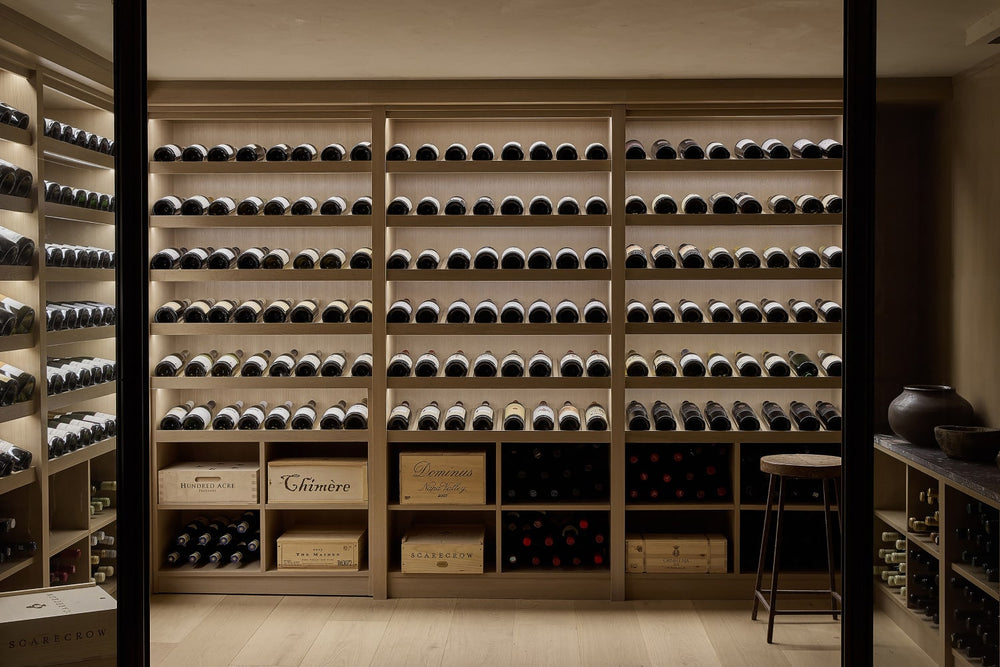
For those without a dedicated cellar, our guides on storing wine without a wine fridge and modular wine rack solutions offer practical alternatives for apartment dwellers and smaller collections.
Organizing Your Cellar by Vintage
When you have bottles from multiple vintages, organization becomes important. A simple vintage-based labeling system — either physical tags on racks or a digital wine journal — prevents you from opening bottles out of sequence. A 2019 Barolo that should rest until 2028 sitting next to a 2015 Rioja that’s at its peak right now requires you to know which is which at a glance.

Stackable Wine Rack — Vintage Cellar Organization
Expandable modular racks let you organize bottles by vintage and region. Holds 12–120+ bottles depending on configuration.
See Wine Racks on Amazon →Vintage Cards and Inventory Systems
For cellars of 50 bottles or more, a simple inventory system pays dividends. Record each bottle’s vintage year, producer, appellation, purchase date, purchase price, drink window, and storage location. Review this inventory semi-annually and pull bottles approaching their peak drinking window before they decline. Nothing is more disappointing than discovering a legendary vintage that you held two years past its peak — especially if it was your last bottle.
12. Climate Change and the Future of Vintages
Any comprehensive wine vintage guide written in the 2020s must address the elephant in the room: climate change is fundamentally altering what vintage variation looks and feels like. The shifts are already measurable, observable, and consequential for wine lovers, collectors, and producers alike.
How Warming Is Changing Vintage Character
Average growing season temperatures in Europe’s major wine regions have risen measurably since 1980. Harvest dates that were typical in October 40 years ago now routinely occur in August or September. Grapes are reaching physiological ripeness faster, often before full development of flavor complexity. Alcohol levels in many regions have risen by 1–2 percentage points on average as higher temperatures push sugar accumulation.
This has created a paradox for traditional wine regions: “great vintages” as defined by historical standards (warm, dry growing seasons with excellent phenolic ripeness) are now occurring almost every year in some regions. The exceptional has become ordinary. Meanwhile, the unique, complex character that used to distinguish great years from average ones — the tension between ripeness and freshness — is harder to achieve because freshness is increasingly sacrificed to the heat.
New Regions and Altitude as Responses
The wine industry’s response has been multifaceted. Producers in traditionally warm regions are moving to higher elevations to find cooler conditions. In Spain, new-generation producers are vinifying grapes at 2,000+ meters of altitude. In Argentina, the best Malbec is increasingly coming from high-altitude Mendoza sites rather than the valley floor. In Oregon, winemakers who once planted Pinot Noir in warmer southern sections are now finding that northern sites produce more interesting wines as temperatures rise.
Entirely new wine regions are emerging. England has become a serious sparkling wine producer as its climate increasingly resembles what Champagne used to be. Belgium, the Netherlands, and Denmark are seeing commercial viticulture for the first time. Meanwhile, some of Champagne’s and Burgundy’s most precious parcels face the prospect of becoming too warm for their traditional grape varieties within decades.
Comparing Vintage Context: Old World vs. New World
The impact of climate change is felt differently across wine-producing contexts. For a comprehensive view of how Old World vs. New World wine regions differ in philosophy and approach — and how climate change intersects with these differences — our dedicated comparison covers the topic thoroughly. Understanding terroir in this evolving context is increasingly relevant for any serious wine buyer.
What This Means for Vintage Collecting
For the wine collector, several practical conclusions follow from climate change’s effects on vintages. First, the definition of a “great vintage” in certain regions is evolving — years that might have been considered too warm 30 years ago are now producing balanced, elegant wines because winemakers have adapted. Second, buying wines designed to age for 30–50 years requires thinking carefully about whether traditional drink-window predictions remain accurate — warmer cellaring temperatures accelerate aging. Third, exploration of new regions and emerging producers in non-traditional areas is increasingly rewarded.
The vintage chart of 2050 will look different from the chart of 2000. Building literacy around how climate shapes vintage character — and staying alert to how that relationship is changing — is the most future-proof investment a wine enthusiast can make.
Notable Recent Vintages at a Glance
Quick-reference cards for recent years across key regions:
Warm, dry across Europe. Bordeaux, Burgundy, and Barolo all outstanding. Early reports suggest a landmark year.
Challenging spring; excellent summer recovery. Burgundy white wines particularly fine. Napa drought = concentration.
Consistently great across Bordeaux, Burgundy, Piedmont, and Napa. One of the decade’s finest across multiple regions.
Barolo’s greatest modern year. Exceptional Bordeaux. Burgundy frost-damaged but surviving wines superb.
Outstanding across France, Germany, and Rioja. Ripe, generous, structured wines built for long aging.
One of the greatest modern vintages for Bordeaux and Burgundy. Now entering peak windows.
Frequently Asked Questions About Wine Vintages
The Year on the Label Is the Story of the Vine
A wine vintage is a four-digit compression of an entire growing season — every rain shower, every heat wave, every cool autumn night that allowed an extra week on the vine. Once you understand what that number represents, you never look at a wine label the same way again.
You don’t need to memorize every score from every region to benefit from vintage knowledge. Start with the regions you love most. Learn which years were exceptional, which were honest and underrated, and which ones require producer-specific scrutiny before committing your money. Build your cellar around verified drinking windows. Store your bottles correctly. Open them with intention.
The difference between a wine drinker and a wine enthusiast is often simply this: one reaches for whatever’s available; the other knows what they’re reaching for and why. Vintage knowledge is one of the simplest, most practical steps into that second world.
📖 Bookmark This Vintage GuideContinue Your Wine Education
Vintage knowledge pairs well with a broader understanding of what makes wine exceptional. Explore these related guides:
- Wine Terroir Guide — How soil, climate, and geography shape every bottle
- How to Store Wine at Home — Temperature, humidity, and positioning explained
- Wine Cellar Essentials — Racks, climate systems, and lighting basics
- Why Is Wine Better With Age? — The science behind aging and evolution
- Decanting Wine Guide — When and how to decant vintage wines
- Old World vs. New World Wine — How tradition and innovation differ by region
- Wine Varietals Explained — Grape varieties and their vintage sensitivity
- How to Pair Wine with Food — Matching vintages and styles to cuisine