The Complete Dry Wine Guide: Understanding, Tasting, and Loving Wine Without the Sugar
From bone-dry Chablis to structured Cabernet Sauvignon — everything you need to confidently navigate, choose, and enjoy dry wine.
What Is Dry Wine? A Clear, Honest Explanation
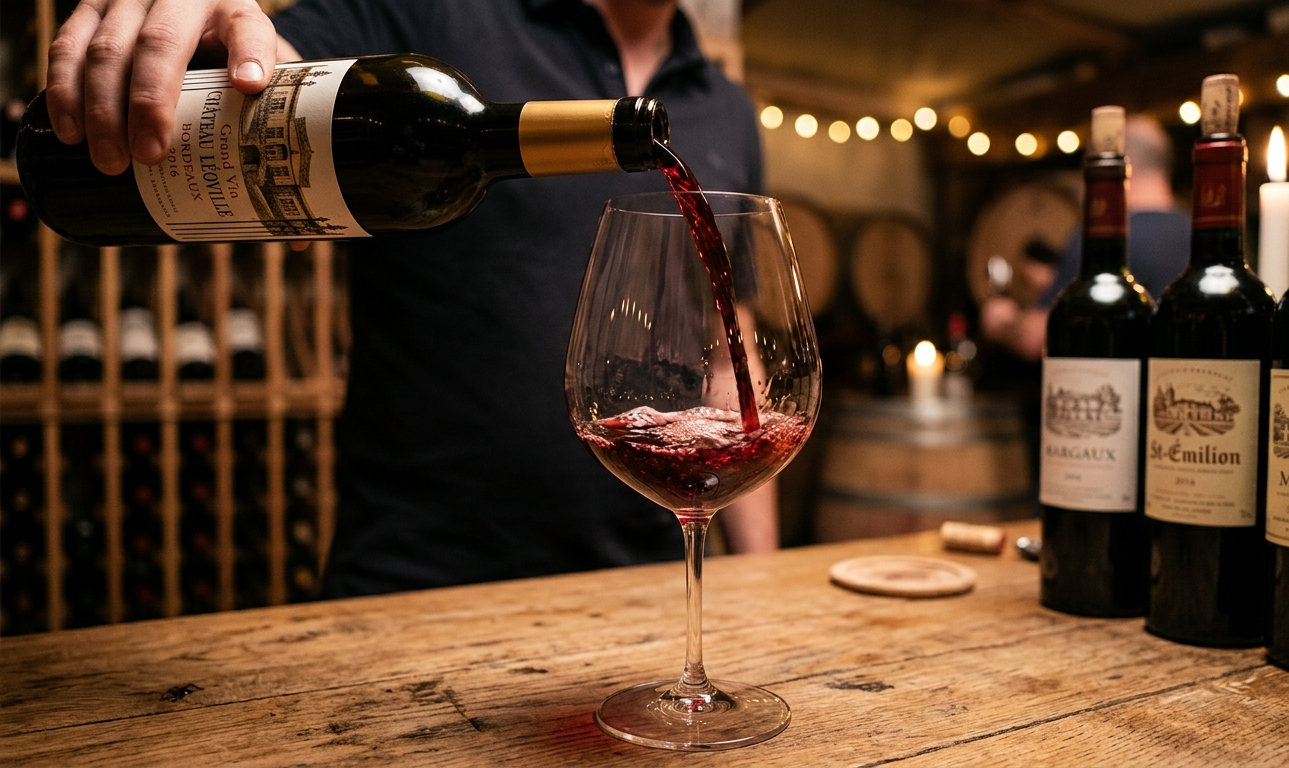
If you’ve ever stood in a wine shop feeling confused by terms like “bone dry,” “off-dry,” or “demi-sec,” you’re in excellent company. The language of wine dryness is one of the most misunderstood corners of wine vocabulary — and clearing it up changes everything about how you shop, order, and drink.
Here’s the simplest possible starting point: dry wine is wine that isn’t sweet. That’s technically accurate, but it barely scratches the surface. Because “dry” doesn’t mean flavorless, thin, or austere. The world’s most complex, celebrated, and age-worthy wines are overwhelmingly dry. A great Barolo, a precise Chablis, a brooding Côte-Rôtie — all profoundly dry, all breathtakingly expressive.
The confusion often arises because “dry” as a wine descriptor refers specifically to one sensation — the absence of perceptible sweetness — and not to the overall flavor profile. A dry wine can taste of ripe tropical fruit, spice, earth, flowers, tobacco, and a hundred other things. It just doesn’t taste sweet. Understanding this distinction is the first key that unlocks the entire world of wine for you.
If you’re new to wine vocabulary in general, our wine glossary for beginners and wine terminology tasting vocabulary guide are excellent companions to this article.
The Fermentation Science Behind Dry Wine
All wine starts as grape juice — a sweet, sugar-rich liquid. Winemaking transforms that juice into wine through fermentation: yeast organisms consume the grape sugars and convert them into alcohol and carbon dioxide. When fermentation runs to completion — when the yeast have consumed virtually all available sugar — you get a dry wine.
The key variable is where fermentation stops. Winemakers can halt fermentation early (by chilling the wine, adding sulfur dioxide, or fortifying with neutral spirits) to preserve residual sugar and create sweeter wines. In dry winemaking, fermentation is allowed to proceed until the yeast have eaten essentially everything, leaving behind only trace amounts of sugar that your palate cannot detect as sweetness.
That trace amount — the technical threshold for “dry” — is typically less than 4 grams of residual sugar per liter (4 g/L). At that concentration, most human palates cannot perceive sweetness, especially when balanced against the wine’s natural acidity. Some extremely dry wines — think Fino Sherry or Muscadet — register below 1 g/L of residual sugar.
Key FactThe legal and scientific threshold for a dry wine is typically less than 4 g/L of residual sugar. However, acidity plays an enormous role in perception: a wine with 6 g/L RS and high acidity can taste drier than a wine with 3 g/L RS and low acidity. This is why residual sugar numbers alone don’t tell the full story.
The Numbers
Residual Sugar: The Scale from Bone-Dry to Lusciously Sweet
Residual sugar (RS) is the sugar that remains in wine after fermentation is complete. It’s measured in grams per liter (g/L) and is the single most important factor in determining where a wine falls on the dry-to-sweet spectrum. But as we touched on above, RS alone doesn’t tell the whole story — acidity is the great equalizer.
For a comprehensive deep-dive into residual sugar and how it’s measured and labeled, our dedicated residual sugar in wine guide covers every nuance. Here’s the overview:
The Wine Sweetness Spectrum — from Bone-Dry to Dessert
The Acidity Factor: Why Perception Differs from Numbers
Here’s a revelation that confuses even experienced drinkers: a wine with higher residual sugar can taste drier than a wine with lower RS, if the first wine has significantly higher acidity.
Acidity acts as a perception counterbalance. When your mouth experiences high acidity alongside residual sugar, the two sensations partially cancel each other out — the acidity suppresses the sweetness perception. German Riesling Spätlese, for example, can have 40–60 g/L RS (technically semi-sweet to sweet) but taste almost dry on the palate because of its electrifying acidity. Meanwhile, a low-acid, low-RS wine at 3 g/L might seem slightly sweet because there’s no acidity to counterbalance even that small amount.
This is why tasting is always more reliable than label-reading when it comes to perceived dryness. And it’s why learning to identify acidity on the palate — that mouth-watering, salivation-triggering sensation on the sides of your tongue — is so valuable for understanding wine.
| Wine Style | Residual Sugar | Acidity Level | Perceived Dryness | Examples |
|---|---|---|---|---|
| Bone-Dry White | 0–1 g/L | High | Extremely Dry | Chablis, Muscadet, Fino Sherry |
| Dry Red | 1–3 g/L | Medium-High | Dry | Barolo, Cabernet Sauvignon |
| Dry White | 1–4 g/L | Medium-High | Dry | Chardonnay, Sauvignon Blanc |
| Off-Dry White | 6–12 g/L | High | Barely Perceptible | Alsatian Riesling, Gewürztraminer |
| Semi-Sweet | 12–45 g/L | Medium | Noticeably Sweet | Vouvray Demi-Sec, Moscato |
| Dessert Wine | 120+ g/L | Variable | Very Sweet | Sauternes, Port, Tokaji |

Wine Enthusiast 32-Bottle Wine Cooler
Store your dry reds and whites at their precise ideal temperatures — separately and simultaneously. A top-rated choice for serious home collectors.
View on Amazon →Dry Red Wine
The World’s Best Dry Red Wines: A Style-by-Style Guide
Red wines are almost universally dry. The rich pigment compounds and tannins in red grape skins are most expressive in a dry format, and the winemaking traditions of the world’s greatest red wine regions — Bordeaux, Burgundy, Tuscany, Rioja, Napa Valley — are built on the assumption of dry fermentation.
But “dry red wine” is not a monolith. From the silky elegance of Pinot Noir to the brooding power of Aglianico, dry reds span an enormous range of weight, tannin, acidity, fruit character, and aging potential. Understanding the spectrum helps you match the wine to the moment.
Dry Red Wine Styles: Light to Full-Bodied
Pinot Noir
Transparent ruby color, silky tannins, red cherry, earth, and floral notes. Burgundy’s crown jewel. Elegance over power.
Gamay (Beaujolais)
Bright, juicy, and refreshingly dry. Ripe red berry fruit, low tannin, vibrant acidity. The ultimate food wine.
Sangiovese / Chianti
Sour cherry, leather, dried herb, high acidity, medium tannin. Naturally bone-dry with excellent food compatibility.
Merlot
Plum, chocolate, soft tannins, approachable structure. Reliably dry even in warmer-climate expressions.
Cabernet Sauvignon
Blackcurrant, cedar, firm tannins, structured acidity. The benchmark dry red for collectors worldwide.
Nebbiolo / Barolo
Tar, roses, dark cherry, exceptional tannin and acidity. Extremely dry, demanding, and magnificent with age.
The Role of Tannin in Dry Red Wine
Tannins are one of the defining sensory characteristics of dry red wine. They’re polyphenol compounds extracted from grape skins, seeds, and stems during maceration — the period when grape juice sits in contact with the solids during fermentation. Tannins create that drying, gripping sensation on your gums and inner cheeks — completely distinct from dryness as in the absence of sugar, but often conflated with it.
A wine can be both dry (no sugar) and high in tannin (grippy, mouth-drying). It can also be dry and low in tannin (like Pinot Noir). And it can theoretically have residual sugar but also high tannin (unusual, but possible in some fortified styles). Understanding that tannin ≠ dryness is crucial. For a deep dive, our article on what tannin in wine means and how to understand it is essential reading.
Notable Dry Red Comparisons
When choosing between dry reds, these are the most common comparison pairs our readers navigate. For structural comparisons, see our dedicated guides on Merlot vs Cabernet Sauvignon and Bordeaux vs Pinot Noir.
| Wine | Body | Tannin | Acidity | Fruit Character | Best Aged? |
|---|---|---|---|---|---|
| Pinot Noir | Light | Low | High | Red cherry, raspberry, earthiness | Yes (5–20 yr) |
| Merlot | Medium | Medium | Medium | Plum, chocolate, herbs | Moderate (3–10 yr) |
| Cabernet Sauvignon | Full | High | Medium-High | Blackcurrant, cedar, tobacco | Yes (10–30+ yr) |
| Syrah/Shiraz | Full | Medium-High | Medium | Dark plum, pepper, smoked meat | Yes (8–25 yr) |
| Nebbiolo | Full | Very High | Very High | Cherry, tar, rose, leather | Yes (15–50 yr) |
| Gamay | Light | Low | High | Strawberry, violet, banana (nouveau) | Minimal (1–3 yr) |
Dry White Wine
Dry White Wines: From Mineral Precision to Rich, Oaked Complexity
The dry white wine category is extraordinarily diverse — arguably more varied in style than dry reds. This is partly because white wines are made without extended skin contact (which would add tannin and color), so winemakers have more latitude to shape texture, body, and flavor through choices like oak aging, lees contact, malolactic fermentation, and blending.
A bone-dry Chablis and a barrel-fermented Napa Chardonnay are both technically dry whites — but they taste almost nothing alike. One is electric with mineral acidity and oyster-shell character; the other is rich, creamy, and layered with vanilla and toasted oak. Understanding which style speaks to you is one of the great pleasures of exploring wine.
Unoaked Dry Whites: Precision and Freshness
Sauvignon Blanc is perhaps the world’s most recognized dry white grape. Wines from the Loire Valley (Sancerre, Pouilly-Fumé) and New Zealand (Marlborough) deliver crisp, grassy, citrus-and-herb-driven profiles with almost no residual sugar and bracing acidity. For a comparison between two of the most popular dry white styles, our Pinot Grigio vs Sauvignon Blanc guide is an invaluable resource.
Pinot Grigio / Pinot Gris ranges from the lean, neutral Italian style to the richer, spicier Alsatian expression. Both versions are fundamentally dry, though the Alsatian style can occasionally trend toward off-dry depending on the harvest. The lighter Italian style — all clean apple, pear, and almond — has become the entry point for millions of new wine drinkers worldwide.
Chablis and Premier/Grand Cru Burgundy whites made from Chardonnay but with no new oak — just stainless steel or old neutral barrels — are among the purest expressions of dry white wine on Earth. Stone fruit, chalk, and an almost electric mineral tension. These wines reward patience: many Chablis Premiers Crus drink beautifully at 10–15 years of age.
Oaked Dry Whites: Richness and Complexity
White Burgundy and Napa Chardonnay represent the oaked end of the dry white spectrum. New oak barrels impart vanilla, toast, clove, and cream characters. Malolactic fermentation (the conversion of crisp malic acid to softer lactic acid) adds a buttery, round texture. These wines are still technically dry but feel generous and enveloping rather than lean and precise.
The great debate in dry white wine — oaked vs unoaked — is partly a matter of personal taste and partly a matter of context. An oaked Chardonnay is magnificent with roast chicken or creamy pasta but can overwhelm delicate seafood that a lean Muscadet would complement perfectly. Context, as always in wine, is everything. For guidance on how to pair wine with food, our complete guide is essential.
Sauvignon Blanc
Grapefruit, grass, nettle, gooseberry. Crisp and bone-dry with refreshing acidity. Loire Valley and Marlborough are benchmarks.
Pinot Grigio
Lemon, apple, almond, subtle floral. Clean and light-bodied. Italy’s most internationally recognized dry white.
Chablis
Oyster shell, chalk, green apple, lemon zest. Famously flinty and austere. The purest dry Chardonnay expression.
Chardonnay (Napa/Burgundy)
Peach, vanilla, toast, butterscotch. Rich and complex. Malolactic fermentation adds creamy roundness.
Dry Riesling
Lime, petrol (in age), green apple, wet stone. Incredibly versatile. Alsace and Austria produce the driest examples.
Vermentino / Grenache Blanc
Mediterranean whites with weight and warmth. Almond, white peach, Mediterranean herbs. Bone-dry with a rich finish.
Store Dry Reds & Whites at Their Ideal Temperatures
A dual zone wine cooler keeps your Cabernet at 62°F and your Sauvignon Blanc at 46°F — simultaneously, automatically, perfectly.
Shop Wine Coolers on Amazon →Dry Rosé
Dry Rosé: The Most Misunderstood Category in Wine
Ask ten people on the street what rosé tastes like, and at least eight will say “sweet.” This is one of wine’s most persistent myths — and one of its most unfortunate, because it steers people away from some of the most food-friendly, versatile, and refreshing wines on the planet.
The truth: the overwhelming majority of European rosé wine — and a growing portion of New World rosé — is bone-dry. Provence rosé, the benchmark of the category, typically registers below 2 g/L of residual sugar. The confusion exists largely because of the American market’s historic infatuation with White Zinfandel — a pink, semi-sweet wine that colonized the rosé category in the popular imagination for decades.
How Dry Rosé Is Made
Rosé wine isn’t a blend of red and white wine (with some exceptions). It’s made by allowing red grape skins to have brief contact with the juice — usually 2–24 hours — just long enough to extract a little color and some light tannin, but not enough to create a full red wine. This “saignée” (bleeding) method or direct pressing of red grapes produces a pink wine with the freshness and acidity of a white and a hint of the red fruit character from the skins — all completely dry if fermentation runs to completion.
Provence Grenache-based rosés are the global benchmark: pale salmon-pink, bone-dry, with notes of wild strawberry, Provençal herbs, citrus zest, and a saline mineral finish. They’re extraordinary with summer food — grilled fish, salade niçoise, ratatouille, charcuterie — and equally compelling on their own. Our rosé vs red wine production and flavor comparison digs into the process in detail.
Why Dry Rosé Wins
- Incredible versatility with food — bridges red and white
- Usually lower alcohol than full reds (12–13%)
- Refreshing and elegant at any occasion
- Accessible price points across quality tiers
- Excellent summer drinking without weight
- Pairs beautifully with cuisines from Mediterranean to Asian
Common Misconceptions
- Many people assume rosé is always sweet — it usually isn’t
- Deeper color doesn’t mean sweeter (it means more skin contact)
- White Zinfandel is semi-sweet — it’s the outlier, not the rule
- Rosé can age — exceptional Provence examples last 5–8 years
- Rosé isn’t just for summer — dry rosé pairs with almost everything
Dry Sparkling Wine
Dry Sparkling Wines: Navigating Brut, Extra Brut, and Beyond
Sparkling wine terminology around sweetness is its own labyrinthine system — one that confuses even seasoned drinkers because the terms used (Brut, Extra Dry, Demi-Sec) are often counterintuitive. “Extra Dry” in sparkling wine language, for example, is actually sweeter than “Brut.” Allow that to sink in for a moment.
Here’s the sparkling wine sweetness scale, from driest to sweetest:
| Sparkling Term | Residual Sugar (g/L) | Perceived Taste | Examples |
|---|---|---|---|
| Extra Brut / Brut Nature / Zero Dosage | 0–3 g/L | Bone dry, austere | Champagne Blanc de Blancs, Cava Brut Nature |
| Brut | 0–12 g/L | Dry — the standard | Most Champagne, Prosecco Brut, Cava Brut |
| Extra Dry / Extra Sec | 12–17 g/L | Slightly sweet | Some Prosecco, vintage Champagnes |
| Sec / Dry | 17–32 g/L | Noticeably sweet | Occasional Prosecco, historic Champagne styles |
| Demi-Sec | 32–50 g/L | Sweet | Champagne dessert pairings, Vouvray Pétillant |
| Doux | 50+ g/L | Very Sweet | Rare, historic styles |
For most people seeking a dry sparkling wine, Brut is the target. It covers the widest range of sparkling styles and is universally understood as the dry standard. For something even more austere, Extra Brut or Brut Nature delivers a lean, stony, uncompromising dryness that showcases the wine’s structure without any dosage softening.
To understand the differences between the world’s most celebrated sparkling wines, our guides on Prosecco vs Champagne production methods and Champagne flute vs coupe glass selection are excellent starting points.
Pro TipWhen ordering sparkling wine at a restaurant and you want something dry, always specify “Brut.” Don’t say “dry” — in sparkling wine terminology, the category called “Dry” or “Sec” is actually medium-sweet. “Brut” is the internationally recognized term for the dry style you’re looking for.
Tasting Technique
How to Taste Dryness in Wine: A Step-by-Step Sensory Guide
Identifying dryness on the palate is one of the most valuable skills in wine tasting, and one of the most teachable. It doesn’t require a professional wine education — just attention to where and how your palate responds to what you’re drinking. Here’s how to train your palate to identify and evaluate dryness with confidence.
Step 1: Evaluate Before You Sip — Aroma First
Your nose gives you important predictive information. Very ripe, jammy fruit aromas (ripe mango, overripe stone fruit, stewed berry) often suggest a wine with more residual sugar. Lean, zesty aromas (green apple, citrus zest, chalk, herbs) often indicate a drier style. This isn’t foolproof — aromatics and residual sugar don’t always align — but it calibrates your expectations and sharpens your awareness.
Step 2: First Impression — The Front Palate
On the initial sip, pay attention to the very tip of your tongue — where sweetness is most sensitively perceived. A wine with perceptible residual sugar will deliver an immediate sensation of sweetness there, similar to what you’d feel if you added a small amount of sugar to water. A dry wine may feel slightly fruity (fruit character ≠ sweetness), but that front-of-tongue sweetness sensation will be absent or negligible.
Step 3: Mid-Palate — Structure and Balance
As the wine moves through your mouth, assess the structural elements: acidity (the watering sensation on the sides of your tongue), tannin in reds (the drying, gripping sensation on gums), and alcohol (a warm sensation at the back of the throat). Dry wines with high acidity can sometimes feel almost “shocking” at first — that tartness is a hallmark of many of the world’s greatest dry wines, from Chablis to Barolo.
Step 4: The Finish — Persistence and Dryness
After swallowing (or spitting, in a professional tasting), does sweetness linger? A dry wine’s finish will be dominated by fruit character, tannin, acidity, mineral sensation, or umami notes — not a prolonged sweet coating on the palate. A finish that leaves your mouth feeling clean, fresh, and slightly salivating is a classic hallmark of a well-made dry wine.
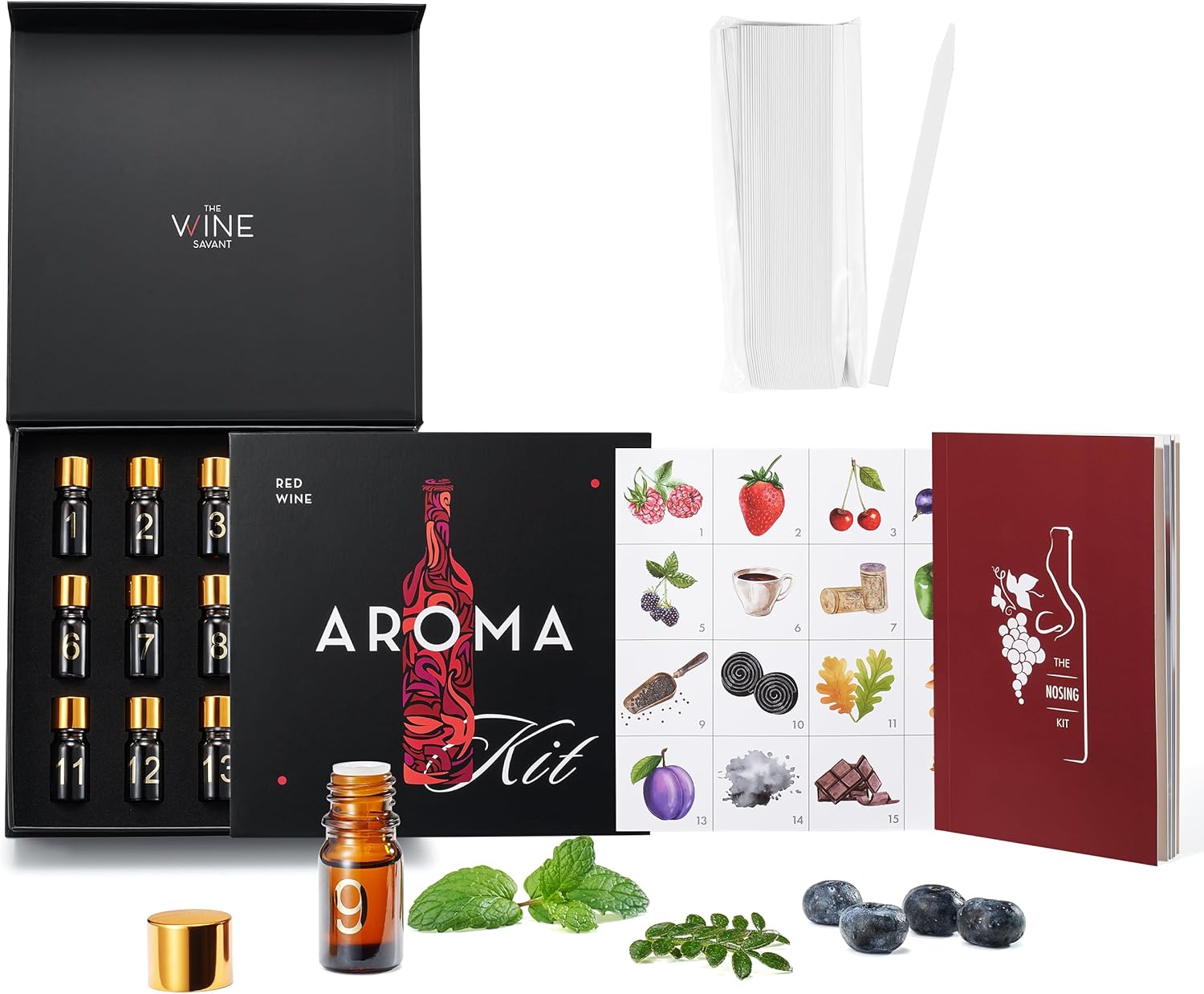
Building this vocabulary and sensory awareness is exactly what wine tasting kits are designed to accelerate. Our guide to the 5 best wine tasting kits of 2026 can help you structure your learning. And for recording your observations and building a personal wine vocabulary, our list of 5 best wine journal notebooks is a wonderful complement.
Elevate Your Dry Wine Experience
The right decanter opens up a Barolo beautifully. The right glass amplifies a Chablis. Proper storage keeps every bottle at its best.
Explore on Amazon →Label Intelligence
How to Read a Wine Label and Identify Dry Wines
Wine labels are an art form — and often a deliberately opaque one. Producers have no universal obligation to list residual sugar on the front label. But there are reliable cues, traditions, and terminology clues that allow an informed reader to predict a wine’s dryness with reasonable confidence before opening the bottle.
Terminology Clues on the Label
Certain words and phrases reliably signal dryness:
- Brut (sparkling) — dry to bone-dry; the gold standard for dry bubbles
- Sec (French still wine) — dry; though note that “Sec” in sparkling wine is medium-sweet
- Trocken (German/Austrian) — dry; legally defined as below 9 g/L RS in Germany
- Secco (Italian) — dry
- Seco (Spanish/Portuguese) — dry
- Bone Dry / Extra Brut / Brut Nature / Zero Dosage — all indicate absolute minimum sugar
Words that suggest sweetness and should prompt scrutiny:
- Demi-Sec — medium-sweet (despite the word “sec” meaning dry in French)
- Extra Dry or Extra Sec (sparkling) — confusingly, this is sweeter than Brut
- Late Harvest / Vendange Tardive / Spätlese — usually indicates some sweetness
- Moelleux / Doux / Halbtrocken — medium-sweet to sweet
For a comprehensive guide to decoding every element of a wine label — from vintage to appellation to alcohol content — see our complete guide to reading wine labels and our article on understanding ABV on wine labels.
Region as a Dryness Predictor
When no explicit sweetness indicator appears, the wine’s region of origin is often the most reliable predictor of dryness. Some generalizations that hold up remarkably well:
| Region / Appellation | Wine Type | Typical Dryness | Notes |
|---|---|---|---|
| Bordeaux, France | Red (and some White) | Always Dry | A benchmark region for dry wine |
| Burgundy, France | Red & White | Always Dry | Pinot Noir and Chardonnay in pure dry form |
| Provence, France | Rosé | Bone Dry | The world standard for dry rosé |
| Champagne, France (Brut) | Sparkling | Dry (0–12 g/L) | Specify “Brut” to ensure dry selection |
| Tuscany, Italy | Red (Sangiovese) | Always Dry | Chianti, Brunello, Vino Nobile all dry |
| Rioja, Spain | Red (Tempranillo) | Always Dry | Reserva and Gran Reserva dry with age |
| Mosel, Germany (Riesling) | White | Variable — check label | Look for “Trocken”; others may be off-dry to sweet |
| Napa Valley, USA | Red & White | Mostly Dry | Some bold reds may have slight RS (2–6 g/L) |
At the Table
Dry Wine and Food: The Perfect Marriage
Dry wine and food pairing is one of the most rewarding areas of wine study — and one of the most intuitive once you understand the basic principles. Dry wines are the world’s greatest food wines, full stop. The absence of residual sugar allows the wine’s acidity, tannin, and flavor structure to interact with food in ways that create harmony rather than sugar-on-sugar collision.
The foundational principle: match the weight of the wine with the weight of the food. A delicate poached sole calls for a lean, mineral white (Chablis, Muscadet). A braised short rib deserves a full-bodied, tannic red (Barolo, Cabernet Sauvignon). The wine shouldn’t overpower the food, and the food shouldn’t overwhelm the wine.
- Oysters & shellfish
- Sushi & sashimi
- Goat cheese
- Light salads with vinaigrette
- Steamed fish & vegetables
- Roast chicken
- Creamy pasta (no tomato)
- Lobster & crab
- Brie & Camembert
- Butter-poached fish
- Grilled fish & seafood
- Charcuterie & cured meats
- Mediterranean mezze
- Spicy dishes (Thai, Indian)
- Niçoise salad
- Salmon & tuna
- Mushroom risotto
- Roast duck
- Charcuterie boards
- Gruyère & aged cheeses
- Grilled ribeye & steak
- Braised lamb & beef
- Hard aged cheeses
- Truffle dishes
- Game meats
- Fried foods (chicken, tempura)
- Potato chips (seriously)
- Caviar & blini
- Cheese soufflé
- Charcuterie
For specialized pairing guidance, our articles on the best wines to pair with steak, seafood and wine pairing, the ultimate cheese and wine pairing guide, and sushi and wine pairing go deep on specific food categories. For challenging pairings, our wine pairing with spicy food guide is particularly useful — dry wines with good acidity and moderate alcohol tend to handle heat far better than sweeter, high-alcohol alternatives.
The Golden Rule of Dry Wine and Food
Dry wine’s acidity is its greatest asset at the table. Acidity acts like a squeeze of lemon — it cuts through fat, brightens flavors, and refreshes the palate between bites. This is why the world’s great food-wine regions (Burgundy, Tuscany, Rioja, Loire Valley) produce wines with high acidity as their structural backbone. The food there evolved alongside the wine; the pairing is in the DNA of the culture. When in doubt, choose the wine with higher acidity for any food pairing situation.
Cellaring and Storage
Storing Dry Wine: From Tonight’s Bottle to Decade-Long Aging
Proper storage transforms dry wine. A Brunello di Montalcino that’s disappointing at 5 years old can be transcendent at 15. A great dry white Burgundy that seems almost austere on release opens into a honeyed, complex masterpiece with a decade of cellaring. And conversely, a bottle stored at inconsistent temperature, exposed to light, or kept upright for too long can lose all its potential before you ever open it.
The principles of proper wine storage apply universally, but dry wines — especially those with high acidity and complex structure — benefit most from ideal conditions because they have the most to gain through development.
The Five Enemies of Wine
- Heat: Accelerates aging unpredictably; above 75°F consistently will “cook” wine. Ideal: 55°F.
- Temperature fluctuation: Expansion and contraction forces wine past the cork. Stability matters more than the absolute temperature.
- Light: UV radiation degrades wine compounds; keep bottles in dark conditions.
- Vibration: Disturbs sediment and may disrupt slow chemical aging reactions.
- Incorrect humidity: Too dry = cork desiccation and air infiltration; too wet = mold growth. Ideal: 60–70%.
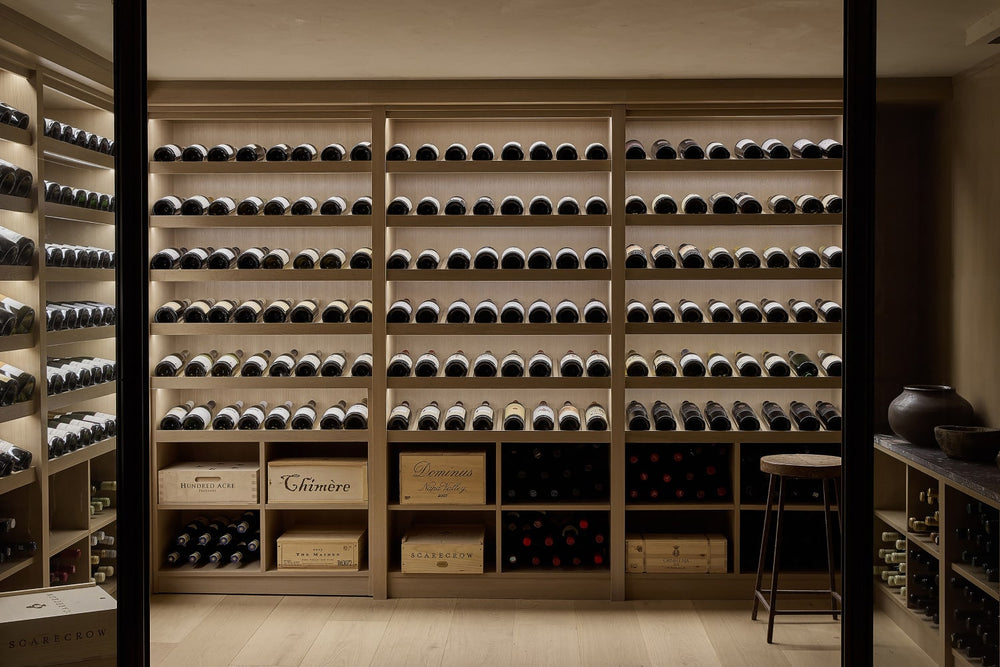
For a comprehensive guide to everything involved in home wine storage, our how to store wine at home guide covers temperature, humidity, positioning, and more. If you’re building a dedicated cellar, our wine cellar essentials guide covers racks, climate systems, and lighting.
Which Dry Wines Age Best?
Not all dry wines are built for the cellar. Most are designed for enjoyment within 1–5 years of release. Here’s a quick reference for which dry wines offer the most aging potential:
| Wine | Ideal Drinking Window | Peak Age | What Develops |
|---|---|---|---|
| Barolo / Barbaresco (Nebbiolo) | 10–30+ years | 15–25 yr | Tannin integration, truffle, dried rose |
| Grand Cru Burgundy (Pinot Noir) | 8–25 years | 12–20 yr | Earthy complexity, forest floor, silk |
| Cabernet Sauvignon (Napa, Bordeaux) | 10–30 years | 15–25 yr | Cedary complexity, cigar box, graphite |
| White Burgundy (Grand Cru Chablis) | 8–20 years | 10–16 yr | Honeyed depth, lanolin, beeswax, truffle |
| Dry Riesling (Alsace, Austria) | 5–20 years | 10–15 yr | Petrol, lime curd, slate, complexity |
| Champagne (Vintage) | 8–25 years | 12–20 yr | Brioche, mushroom, hazelnut, toasty depth |
| Entry-level Sauvignon Blanc, Pinot Grigio | 1–3 years | Fresh release | Best young; aging diminishes fruit |
For the science of why wine improves with time, our article on why wine gets better with age is an excellent read. And if you’re looking for creative storage solutions that don’t require a full cellar, our modular wine rack guide and how to store wine without a wine fridge article offer practical alternatives.
Age Your Best Dry Wines in Ideal Conditions
A quality wine cooler maintains the stable 55°F temperature, darkness, and minimal vibration that aging dry wines demand. This Wine Enthusiast model is a perennial favorite.
View on Amazon →Shopping Smart
How to Buy Dry Wine: A Practical Shopping Guide for Every Budget
Knowing what dry wine is and why you want it is one thing. Navigating a wine shop, a restaurant list, or an online retailer with confidence is another. Here’s how to shop smartly for dry wine across every price tier and scenario.
In a Wine Shop: What to Ask
The single best use of a wine retailer is as an expert resource. Most good wine shops employ knowledgeable staff who want to help. The key is asking specific, useful questions rather than the vague “what’s good?” Try:
- “I want something bone-dry and aromatic in white — what’s your best option under $25?”
- “I’m having grilled lamb — what’s a dry red with good tannin under $40?”
- “I want a dry red that’s approachable now but worth keeping for 5 years.”
- “Is this Riesling dry or off-dry?” (Always worth asking for German, Alsatian, and Austrian Riesling.)
Dry Wine by Price Tier
| Budget | Best Dry White Options | Best Dry Red Options | Notes |
|---|---|---|---|
| Under $15 | Picpoul de Pinet, Vinho Verde, Aligoté | Côtes du Rhône, Montepulciano d’Abruzzo | Focus on regions, not brands at this tier |
| $15–$30 | Sancerre (entry), Chablis Village, Albariño | Bourgogne Rouge, Barbera d’Asti, Rioja Crianza | Excellent quality-to-value range |
| $30–$60 | Meursault, Sancerre, Grüner Veltliner Smaragd | Barolo (entry), Napa Cab (mid), Saint-Émilion | The sweet spot for daily-to-special drinking |
| $60–$150 | Puligny-Montrachet, Condrieu, Grand Cru Chablis | Pomerol, Brunello, Premier Cru Burgundy | Serious cellaring candidates |
| $150+ | Montrachet, Chevalier-Montrachet | Grand Cru Burgundy, First-Growth Bordeaux, top Barolo | Special occasions; significant aging potential |
For hand-curated value picks across the spectrum, our affordable wine picks for 2026 is an excellent starting resource. If you’re exploring wine through subscription services, our 2026 wine subscription evaluation guide helps you find services that focus on dry, serious wines rather than sweet crowd-pleasers.
Dry Wine Online: What to Look For
Online wine retail has expanded dramatically, offering access to wines that most local shops can’t stock. When buying dry wine online:
- Look for RS or “dry” descriptors in product notes
- Use the winery/producer’s website to verify style if uncertain
- Read professional tasting notes — they’ll describe “dry,” “bone-dry,” or “no perceptible sweetness”
- Check for vintage information: older vintages of the same wine may have developed differently
- Verify shipping conditions — wine shipped in summer heat without temperature-controlled packaging can be damaged on arrival
For a broader view of the dry wine world — including the natural and organic sectors, which often produce exceptionally pure, dry styles — see our guides on organic and natural wines, our natural wine guide, and our biodynamic wine guide. These categories are not inherently drier, but they tend to attract winemakers who ferment to dryness as a philosophical commitment.
Dry Wine Gifts: Showing You Know
Choosing dry wine as a gift demonstrates genuine wine knowledge — it says you understand that dry wine is what serious collectors and enthusiasts actually drink. Pair a great bottle with complementary accessories for a memorable gift. Our guides to top wine accessory gifts and best wine gift baskets offer curated options across price points.
Lifestyle Considerations
Dry Wine and Lifestyle: Calories, Health, and Mindful Drinking
One of the most frequently cited reasons people seek out dry wine is its lower sugar content. This is entirely valid — and the calorie math supports the preference.
Dry Wine and Calories
The caloric content of wine comes primarily from two sources: alcohol and residual sugar. Alcohol contains 7 calories per gram; sugar contains 4 calories per gram. A bone-dry wine with 13% ABV and 1 g/L RS has essentially all its calories from alcohol — roughly 120–130 calories per 5 oz glass. A semi-sweet wine at the same alcohol level but 30 g/L RS adds approximately 24 additional calories per glass — not enormous, but meaningful for those tracking intake.
The implication: if you’re watching calorie intake, dry wine is the better choice — primarily because it has no sugar calories, and because dry wines with moderate alcohol (12–12.5% ABV) are among the lowest-calorie wine options available.
Sulfites, Histamines, and Sensitivities
Some people experience headaches or other reactions they attribute to wine, often blaming sulfites. The reality is more nuanced: sulfites are present in virtually all wines (and in much higher concentrations in many common foods like dried fruit). Histamines — present in higher concentrations in red wines and some aged whites — are a more plausible culprit for those who are sensitive. Dry wines don’t have lower sulfite content than sweet wines (it’s actually often the reverse — sweet wines can require more sulfite protection), but organic and biodynamic dry wines often use lower total sulfur additions. Our sulfite-free wine guide examines this topic in detail.
Drinking Mindfully
Dry wine’s complexity rewards slower, more attentive drinking. A great dry red with layers of tannin, earth, and evolving aromatics naturally invites you to sip, pause, reflect, and return — rather than gulping quickly past a sweetness hit. This mindfulness is one of the underrated pleasures of dry wine culture: it makes you a more present, engaged drinker, which paradoxically often leads to drinking less and enjoying each glass more.
Complete Your Dry Wine Experience
From the right glass to the right cooler — the accessories you choose make every bottle of dry wine taste better. Start with proper storage.
Explore Wine Coolers →Frequently Asked Questions
Dry Wine FAQs: Every Question Answered
Dry wine means wine where fermentation has converted virtually all the grape sugar into alcohol, leaving little to no residual sweetness. The technical threshold is typically below 4 grams of residual sugar per liter — a concentration most palates cannot detect as sweetness. Dry doesn’t mean flavorless or austere; it simply means the wine doesn’t taste sweet. Most of the world’s greatest wines — Barolo, Burgundy, Bordeaux, Chablis, Champagne — are dry.
Almost, but not always. The vast majority of red wines produced globally are dry — the winemaking traditions of Bordeaux, Burgundy, Tuscany, Rioja, and virtually every other classic red wine region produce dry wines exclusively. However, some mass-market wines in regions like California have been found to contain 2–10 g/L of residual sugar added for commercial palatability, sitting technically in or near the off-dry range while still tasting “dry” due to their bold fruit character. Port wine and some other fortified reds are definitively sweet. When in doubt, check the producer’s tasting notes or look for “dry” on the label.
Among the driest white wines reliably available are: Chablis (especially Premier and Grand Cru), Muscadet Sèvre et Maine sur Lie, Fino and Manzanilla Sherry (technically fortified but bone-dry at 0–1 g/L), Grüner Veltliner Smaragd from Austria, and Dry Riesling labeled “Trocken” from Germany or Austria. Sancerre and other Loire Sauvignon Blancs are also reliably bone-dry. These wines are all below 4 g/L RS, with several approaching 0–1 g/L.
Most Champagne is dry, but it depends on the dosage category. Brut Champagne — the most common style — is dry, with 0–12 g/L of residual sugar. Extra Brut and Brut Nature are even drier (0–3 g/L). However, confusingly, a category called “Extra Dry” or “Extra Sec” is actually slightly sweeter than Brut (12–17 g/L RS). Demi-Sec Champagne is medium-sweet. When ordering Champagne and wanting something dry, always specify Brut, Extra Brut, or Brut Nature.
Dry wine has fewer calories from sugar than sweet wine, yes. A bone-dry wine at 12.5% ABV contains roughly 110–125 calories per 5 oz glass, almost all from alcohol. A dessert wine at the same serving size could have 200–300 calories because of the sugar content. For those mindful of calorie intake, dry wines with moderate alcohol (12–13% ABV) are the best choice. However, alcohol itself is calorie-dense (7 cal/gram), so high-alcohol dry wines (15%+ ABV) can still be calorie-significant.
Yes — Italian Pinot Grigio is reliably dry, typically with 1–3 g/L of residual sugar and refreshing acidity. It’s one of the most consistently dry white wines available at any price point, which makes it a safe default for dryness. Alsatian Pinot Gris (same grape, different region) can vary from dry to off-dry depending on the vintage and producer, so it’s worth checking the label or tasting notes for Alsatian examples. Look for “Trocken” or “Sec” on Alsatian bottles to confirm dryness.
This is one of the most common confusions in wine. Fruitiness is not the same as sweetness. Fruity flavors in wine come from aroma compounds — esters, terpenes, and other volatile molecules — that smell and taste like fruit, but contain no sugar. A dry Grenache can burst with ripe raspberry and plum character while containing essentially zero residual sugar. The fruitiness is a flavor impression, not a sweetness sensation. You can confirm the difference by paying attention to where you sense it: sweetness registers at the tip of your tongue; fruit character is largely perceived through the nose and retronasal passage.
Dry wine has less than 4 g/L of residual sugar, which most palates cannot detect as sweetness. Off-dry wine sits in the 4–12 g/L range — a hint of perceptible sweetness that balances acidity, common in styles like Alsatian Gewürztraminer, German Spätlese Riesling, and some Vouvray. The distinction matters for food pairing: off-dry wines handle spicy food better than bone-dry ones (the sweetness soothes heat), while dry wines are generally superior with savory and fatty dishes where sugar would clash.
Several reliable cues: (1) Check the label for terms like Brut, Sec, Trocken, Secco, or Seco. (2) Use the wine’s region as a guide — Burgundy, Bordeaux, Tuscany, Rioja, and Champagne (Brut) are reliably dry. (3) Read professional tasting notes on the retailer’s website — look for “bone-dry,” “crisp and dry,” or “no perceptible sweetness.” (4) For German and Alsatian Riesling, always check for “Trocken” designation. (5) Ask the wine shop staff — they’ll know. Our full guide to reading wine labels covers every indicator in detail.
Once opened, dry wine generally oxidizes and declines faster than sweet wine, because residual sugar acts as a natural preservative and buffer against oxidation. An opened dry wine — particularly a delicate white — should be consumed within 1–3 days when resealed and refrigerated. A quality wine stopper or vacuum pump can extend this modestly. A high-RS dessert wine like Sauternes can remain pleasurable for a week or more after opening. See our guide to how long wine lasts after opening for detailed timelines by wine type.
The Final Pour
Conclusion: Embracing the World of Dry Wine
If you’ve read this far, you now understand dry wine at a level that puts you comfortably ahead of most casual drinkers — and squarely within the world that serious wine lovers inhabit. You know that dry wine isn’t a single thing but an enormous, diverse category encompassing everything from the electric precision of a Puligny-Montrachet to the brooding power of an aged Barolo. You understand residual sugar, the role of acidity in perceived dryness, how to read labels, how to taste, and how to pair.
More importantly, you understand why dry wine dominates the world’s great wine traditions: because without residual sweetness as a crutch, the wine must deliver through its intrinsic character — the grape, the soil, the vintage, the winemaker’s skill. Dryness is, in a sense, wine’s most honest form. It hides nothing and reveals everything.
The journey into dry wine is one you can follow for a lifetime and still find new discoveries. Start with a bone-dry Chablis alongside oysters. Graduate to a Barolo at a special dinner. Explore the world’s diverse wine varietals through the lens of dryness. Read about terroir and Old World vs New World styles. And store every bottle properly, because the best dry wine in the wrong conditions is a tragedy.
For everything you need to continue this journey — the right glasses, the right storage, the right accessories — our site’s guides have you covered. Start with our essential wine accessories guide and our top-rated wine refrigerators for proper storage. And when you’re ready to explore the broader wine world with the vocabulary and confidence you’ve built here, our full wine glossary is always waiting.
Ready to Explore the World of Dry Wine?
Store it right, serve it perfectly, and pair it with confidence. Everything starts with the right setup.
Shop Wine Coolers on Amazon Bookmark This Guide