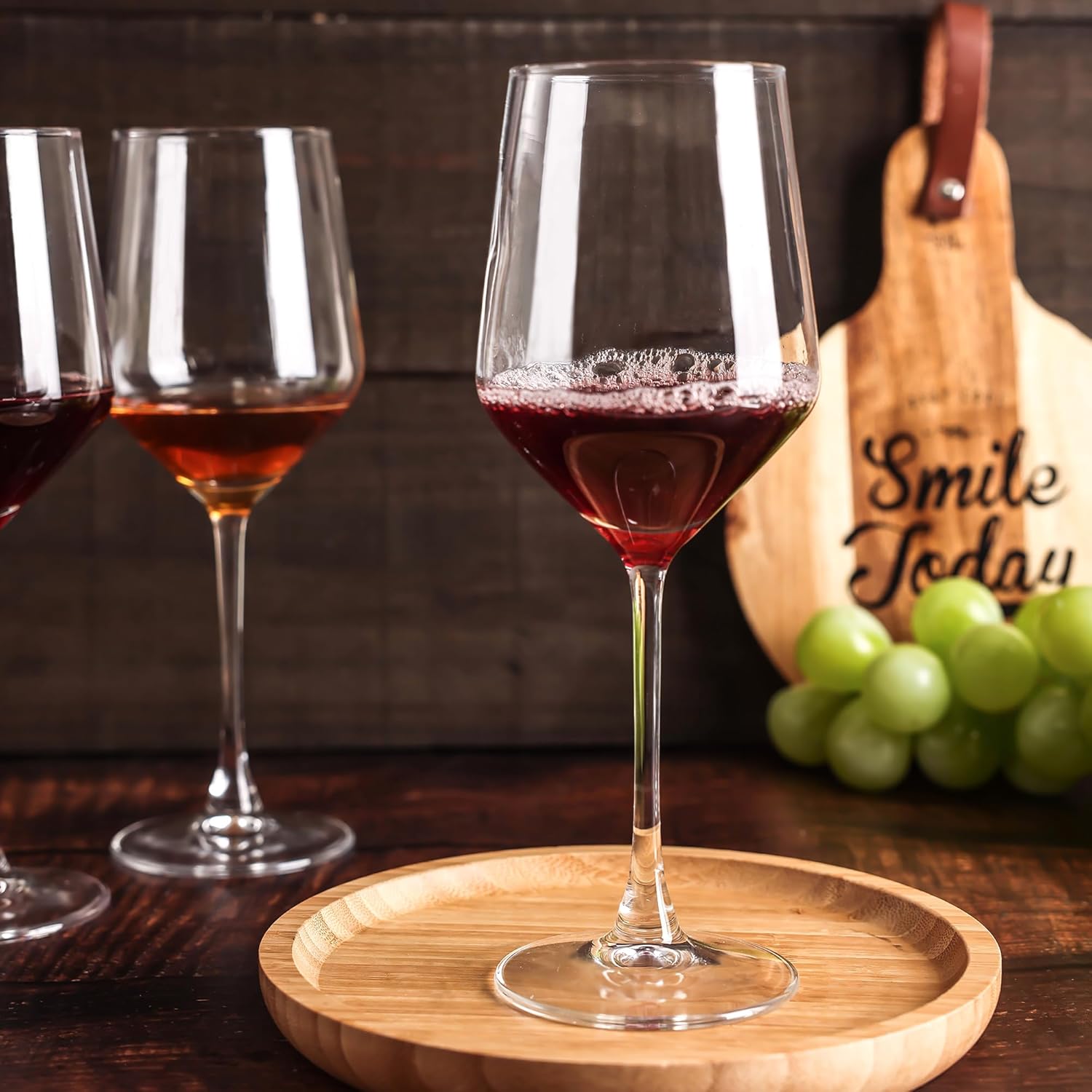
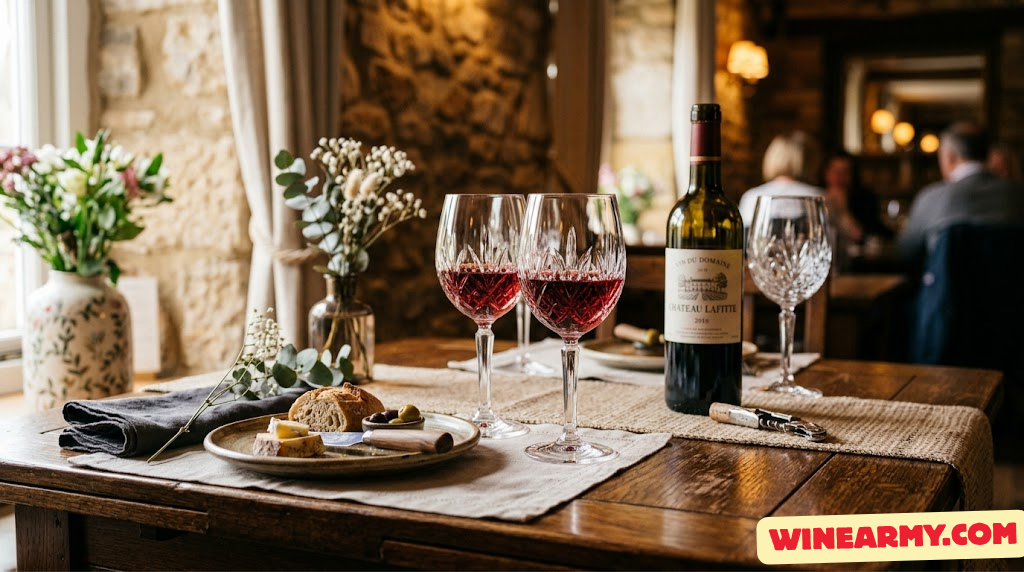
There is a moment, familiar to every serious wine drinker, when you pick up a glass from a thoughtful host and something about the experience shifts. The wine opens up differently. The aromas arrive in a particular sequence. The weight and thinness of the crystal against your lip feel almost like part of the tasting note itself. That moment is almost always produced by one of two brands: Riedel or Schott Zwiesel.
These two Austrian and German glassmakers dominate the premium wine glass market not by accident but by decades of serious investment in the science of how glass shape and crystal composition affect the perception of wine. They are each other’s closest competitors, most frequently cross-shopped, and — depending on who you ask — either clearly superior or simply differently excellent. This guide exists to settle the question as decisively as possible.
We’ve compared both brands across every relevant dimension: crystal technology, bowl shape philosophy, specific product lines, durability in restaurant and home settings, dishwasher performance, aromatics, and value. We’ve tasted the same wines side by side in glasses from both families and surveyed professional sommeliers. The result is the most thorough Riedel vs Schott Zwiesel comparison available.
New to wine glass selection altogether? Start with our guides on kinds of wine glasses and their uses, red vs white wine glass differences, and the classic Bordeaux vs Burgundy glass comparison.
Brand Overviews: Two Very Different Origin Stories
The contrast in heritage shapes each brand’s DNA. Riedel’s story is one of artistic obsession — the family’s elevation of glassblowing to sommelier science, their insistence that shape changes flavor. Schott Zwiesel’s story is one of engineering excellence — the industrial application of materials science to glassmaking, their conviction that a wine glass must survive the real world. Both are correct. The question for you, as a buyer, is which correctness you need more.
Riedel’s 11 generations of glassmaking give the brand an almost mythological aura in wine culture. When Claus Riedel introduced the first varietal-specific glass shapes in 1961, he was making a radical argument: that the vessel was not neutral but an active participant in the tasting experience. This idea — heretical to glassmakers who had always designed for aesthetics — has since been validated by sensory research and adopted by the entire industry. Every wine glass brand in the world now designs with Riedel’s foundational insight as a starting point.
Schott Zwiesel, by contrast, entered the premium market by solving a different problem. Beautiful, thin-walled crystal is fragile — a fact that every restaurant manager and home entertainer knows painfully well. The 2004 introduction of Tritan crystal, incorporating titanium and zirconium oxides into the glass matrix, produced a material that retained the optical clarity and wall thinness of premium crystal while being demonstrably more resistant to chipping, breaking, and clouding in the dishwasher. For professional use cases, this was revolutionary.

Riedel’s sweet spot between handmade precision and everyday usability. Pairs with our best wines for steak perfectly.
Shop Riedel Veritas →Crystal Technology: Lead Crystal, Tritan & What Actually Matters
Before comparing specific glasses, you need to understand what these two brands are actually made of — because the material composition determines everything from how light refracts through the glass to how likely it is to chip when it touches another glass in the cabinet.
Traditional Lead Crystal — Riedel’s Heritage
Traditional lead crystal contains a minimum of 24% lead oxide, which serves several optical and physical functions: it increases the refractive index (making the glass sparkle brilliantly under light), lowers the melting point (allowing finer, thinner walls to be blown), and increases density (giving the glass its characteristic heavy, solid feel). Riedel’s handmade Sommeliers line uses lead crystal, and it remains the benchmark for optical clarity and weight in fine glassware.
The downsides of lead crystal are real: it is heavier, softer (more prone to surface scratching), and unsuitable for the dishwasher in long-term use. There are also well-established health reasons not to store wine or spirits in lead crystal decanters for extended periods — though brief serving time in a lead crystal glass poses no health risk.
Lead-Free Crystal — Riedel’s Modern Lines
The vast majority of Riedel’s current production — Vinum, Veritas, Ouverture, Performance, Wine Friendly — uses lead-free crystal. Lead-free crystal replaces lead oxide with barium oxide or potassium oxide, preserving most of the optical brilliance and workability while eliminating the health and heaviness concerns. Riedel’s lead-free crystal is excellent but marginally less sparkling than the Sommeliers line and somewhat less chip-resistant than Schott Zwiesel’s Tritan.
Tritan Crystal — Schott Zwiesel’s Differentiator
Tritan is Schott Zwiesel’s proprietary crystal formula, introduced commercially in 2004 after years of research. The key ingredients are titanium oxide and zirconium oxide, added to standard borosilicate glass during production. The result is a material that is measurably harder on the Mohs scale than standard lead-free crystal, resulting in dramatically improved resistance to chipping (particularly at the rim, the most vulnerable point), scratching in the dishwasher, and thermal shock cracking.
Schott Zwiesel claims Tritan glasses last an average of 1.5–2× longer in commercial dishwasher environments than comparable standard crystal glasses. Independent breakage tests in restaurant settings generally confirm a 30–50% lower breakage rate for Tritan vs. non-Tritan premium glasses under the same conditions.
Importantly, Tritan achieves this durability improvement without sacrificing optical quality. Under standard room lighting, a Tritan Schott Zwiesel glass and a lead-free Riedel Veritas glass are visually indistinguishable in terms of clarity and brilliance. The difference only becomes apparent over months of dishwasher use, when Tritan maintains its sparkle while some competitor glasses develop a milky, etched appearance.
| Property | Riedel (Lead Crystal) | Riedel (Lead-Free) | Schott Tritan |
|---|---|---|---|
| Lead Content | 24–30% PbO (Sommeliers) | 0% (Vinum, Veritas, etc.) | 0% |
| Hardness (Vickers) | ~470 HV | ~490 HV | ~600 HV |
| Wall Thickness | 0.8–1.2mm (varies by line) | 0.9–1.3mm | 0.8–1.2mm |
| Dishwasher Safe | No (hand-wash only) | Technically yes, but not recommended long-term | Yes — designed for commercial dishwashers |
| Optical Brilliance | Exceptional (highest) | Excellent | Excellent |
| Chip Resistance | Low | Moderate | High |
| Scratch Resistance | Low–moderate | Moderate | High |
For everyday wine drinkers, the practical takeaway is simple: if dishwasher use is part of your routine, Schott Zwiesel’s Tritan wins the materials comparison decisively. If you hand-wash carefully and want maximum optical drama — particularly for formal occasions or gifting — Riedel’s heritage crystal lines have an edge in sparkle and heft that Tritan doesn’t quite match.
Product Lines & Price Tiers: What Each Brand Offers
Both brands offer multiple product families spanning a wide price range. Understanding the lines is essential because the brand comparison is really a comparison of specific lines at specific price points — and the right answer changes depending on your budget.
Riedel’s Product Family
Schott Zwiesel’s Product Family
For most home wine drinkers, the true comparison is Riedel Veritas ($25–$45/glass) vs. Schott Zwiesel Pure/Air ($30–$50/glass). At this tier, both brands deliver premium tasting performance and relative practicality. The decision comes down to whether you prioritize Riedel’s varietal-specific bowl geometry or Schott’s Tritan durability.

Tritan Tritan durability meets outstanding Bordeaux-varietal bowl geometry. Dishwasher safe, rim-chip resistant, and elegant.
Shop Schott Zwiesel →Bowl Design & Shape Philosophy: Where the Two Brands Diverge Most
This is where Riedel and Schott Zwiesel reflect genuinely different philosophies — and where your tasting style and wine preferences should most directly drive your choice.
Riedel: The Varietal Doctrine
Riedel’s core intellectual proposition is that each wine variety requires a specifically shaped glass that delivers wine to a specific part of the tongue, at a specific flow rate, in a specific concentration of aroma. The Sommeliers line alone has over 30 distinct shapes. The Vinum line has 20+. This approach is backed by Riedel’s famous (if somewhat theatrical) tasting seminars, where participants pour the same wine into multiple differently shaped glasses and are guided to perceive genuine taste differences.
The key variables in Riedel’s bowl design are:
- Bowl volume — larger bowls for aromatic, complex reds (Burgundy, Nebbiolo) allow more surface area for aroma development; smaller bowls for crisp whites concentrate and funnel aromas directly to the nose
- Bowl width at shoulder — the widest point determines how much oxygen the wine contacts
- Rim diameter — narrow rims concentrate aroma; wide rims spread the wine across the tongue in a broader pour
- Rim taper — an outward-flaring rim directs wine to the tip of the tongue (enhancing fruit perception); an inward-tapering rim directs to the sides and back (enhancing acid and tannin perception)
For a practical exploration of how these principles apply to the most common glass choices, see our comparisons of Bordeaux vs Burgundy glasses and our comprehensive guide on top red wine glass picks by variety.
Schott Zwiesel: The Versatility Doctrine
Schott Zwiesel’s design philosophy is subtler and, in some ways, more pragmatic. While they offer varietal-specific shapes (the Pure, Air, and Finesse lines have Bordeaux, Burgundy, and universal shapes), their design emphasis is on creating glasses that perform excellently across a range of wines in each category — rather than Riedel’s microspecialized approach. The Schott philosophy might be summarized as: excellent glass for Cabernet-style wines, excellent glass for Burgundy-style wines, excellent glass for aromatic whites — and those three glasses will cover 95% of what you drink.
The practical result is that Schott Zwiesel’s product matrix is simpler and easier to navigate. Where Riedel has 20 red wine shapes, Schott might have 6–8. Where Riedel distinguishes Cabernet Sauvignon from Merlot from Syrah, Schott offers a Bordeaux glass that works beautifully for all three. This is not laziness — it reflects a different theory about how much bowl geometry affects wine perception and a belief that varietal differentiation beyond a certain point is commercially motivated rather than scientifically meaningful.
The Stem Question
Both brands offer both stemmed and stemless options, but their default prestige offerings are stemmed. The stem exists for a practical reason: it allows you to hold the glass without warming the bowl with your hand’s heat. For wine served cold (whites, rosé, Champagne), this matters significantly. For full-temperature reds, it matters less. Both brands’ stemless lines are pragmatic options for casual use but represent compromises on the thermal and handling side. For a fuller discussion of this, our guide on Champagne flute vs coupe covers the stem and shape variables for sparkling wine specifically.
Durability & Real-World Breakage: The Honest Comparison
Let’s not be polite about this: Riedel glasses break more easily than Schott Zwiesel glasses. This is not an opinion — it is a measurable, documented reality confirmed by restaurant supply data, consumer reviews, and the physical properties of the materials involved. The question is how much this matters for your specific use case.
In restaurant environments, breakage is an operational cost that directly affects profitability. Most major restaurant groups that have trialed both brands extensively report that Schott Zwiesel glasses last 40–60% longer in commercial use than comparable Riedel glasses. This is why Schott dominates the professional hospitality market despite Riedel’s stronger consumer brand recognition.
For home users, the math is different. If you have four people for dinner twice a month and hand-wash your glasses carefully, the breakage differential between Riedel and Schott becomes largely irrelevant. If you host large parties regularly, run a home bar, or have children or pets in the house, Schott’s durability advantage becomes very meaningful very quickly.
The Stem Problem
The weakest point on any stemmed glass is the stem-to-bowl junction, and this is particularly true for fine crystal with thinner walls. Riedel’s Veritas and Sommeliers lines have elegantly thin stems that are beautiful to hold but snap under relatively modest lateral pressure — the kind of pressure that occurs when a glass is knocked sideways on a table, or when stacking glasses incorrectly in a cabinet. Schott Zwiesel’s stems are typically slightly thicker at the junction, with Tritan’s hardness providing additional structural resistance.
Dishwasher Safety: The Most Practical Question
For most modern wine drinkers — particularly those who entertain regularly and don’t want hand-washing 12 glasses at midnight — dishwasher safety is not a minor detail. It is the primary practical consideration. And here Schott Zwiesel wins comprehensively.
What Happens to Crystal in the Dishwasher
The dishwasher environment is hostile to standard crystal in several ways: high water temperature causes thermal stress, alkaline detergents etch the glass surface over time, mechanical vibration causes glasses to knock against each other, and the drying cycle adds additional thermal cycling. The combination produces three failure modes: etching (a cloudy, milky surface appearance), chipping (especially at the rim and base), and complete breakage (from vibration or thermal shock).
Traditional lead crystal and standard lead-free crystal are genuinely degraded by repeated dishwasher cycles. The etching is chemical and irreversible — once a glass has clouded from dishwasher use, no amount of hand polishing will restore its original clarity. Most Riedel glasses, including the popular Vinum and Veritas lines, are technically labeled “dishwasher safe” but carry the caveat that frequent machine washing will significantly shorten the glass’s life and optical quality. In practice, many wine writers and sommeliers recommend never dishwashing Riedel glasses.
Tritan’s Dishwasher Advantage
Schott Zwiesel’s Tritan crystal was specifically engineered to withstand commercial dishwasher cycles — industrial machines running 60–80°C multiple times per day. The titanium and zirconium oxide inclusions in the glass matrix increase chemical resistance to alkaline detergents, reduce thermal expansion coefficients (minimizing thermal shock cracking), and increase surface hardness (reducing etching). The result is a glass that can be run through hundreds of dishwasher cycles and emerge with essentially the same optical clarity it had when new.
For anyone who hosts frequently and values convenience, this is a decisive advantage. A dozen Schott Zwiesel Classico or Pure glasses that can be loaded into the dishwasher without anxiety represent better real-world value than a dozen Riedel Vinum glasses that technically require hand-washing to maintain their quality. When it comes to proper wine glass care and polishing, our guide on how to polish wine glasses to a professional shine and best wine glass polishing cloths are worth reading regardless of which brand you choose.

Essential for hand-polished Riedel crystal or finishing Schott glasses after the dishwasher. See our full polishing cloth comparison.
Shop Polishing Cloths →Tasting Performance: What We Found Side-by-Side
Across multiple comparative tastings using the same wines poured simultaneously into Riedel and Schott Zwiesel glasses matched by wine type, we formed consistent impressions. These are not laboratory measurements but trained sensory observations, cross-referenced with published research and professional feedback.
The aroma difference between Riedel’s best-performing glass for a given variety and Schott’s best equivalent is real but often narrow — in the range of 5–10%, not orders of magnitude. Where Riedel genuinely pulls ahead is in very specific varietal matchups where its ultra-precise bowl geometry creates a noticeably different delivery path. The Riedel Sommeliers Burgundy glass for a premier Côte de Nuits Pinot Noir is the clearest example — the combination of the vast, almost comically large bowl and the inward-tapering rim creates an aroma funnel that concentrates the wine’s volatile compounds in a way that Schott’s Burgundy equivalent, while excellent, doesn’t quite replicate.
For more on how glass shape influences the experience of specific wine styles, our piece on Bordeaux vs Pinot Noir structure differences explains why the same glass cannot serve both equally well — and both Riedel and Schott know this.
Best for Red Wines: Head-to-Head Matchups
| Wine Style | Riedel Recommendation | Schott Recommendation | Winner |
|---|---|---|---|
| Bordeaux / Cabernet | Veritas Cabernet/Merlot or Vinum Bordeaux | Pure Cabernet or Classico Bordeaux | Riedel (narrowly; bowl geometry slightly more precise) |
| Burgundy / Pinot Noir | Sommeliers Burgundy Grand Cru or Veritas Pinot Noir | Pure/Air Pinot Noir | Riedel (Sommeliers Burgundy is the benchmark globally) |
| Barolo / Nebbiolo | Veritas or Vinum Nebbiolo | Pure/Ivento Bordeaux (used by many Barolo producers) | Riedel (varietal specificity advantage) |
| Syrah / Shiraz | Veritas Syrah/Shiraz | Pure Cabernet (works well for Syrah) | Tie |
| Zinfandel / GSM Blends | Vinum Zinfandel | Pure Cabernet or Classico Bordeaux | Tie |
| Restaurant / High-Volume | Vinum Bordeaux (acceptable) | Congresso or Classico Bordeaux | Schott (Tritan durability decisive) |
The pattern holds across red wine styles: for precise, contemplative tasting where you’re extracting maximum nuance from a serious bottle, Riedel’s varietal-specific geometry provides a marginal but genuine advantage. For regular, high-quality drinking where durability and practicality are important alongside performance, Schott Zwiesel is often the smarter choice. The good news: both brands produce excellent red wine glasses, and the gap in pure tasting performance is much narrower than the gap in durability and practical value.
For how these glasses interact with food pairing, our guides on wine with steak and wine and cheese pairing are the natural next step — the right glass enhances both the wine and the food pairing experience.
Best for White Wines: Chardonnay, Riesling & Beyond
| Wine Style | Riedel Pick | Schott Pick | Winner |
|---|---|---|---|
| Oaked Chardonnay | Vinum/Veritas Chardonnay (wide bowl) | Pure Chardonnay / Air Chardonnay | Tie (both excellent; Schott Air is exceptional) |
| Chablis / Unoaked Chardonnay | Vinum Montrachet | Pure White Burgundy | Riedel (narrowly) |
| Riesling (dry) | Veritas Riesling/Zinfandel | Pure/Finesse Riesling | Schott (Finesse Riesling is outstanding) |
| Sauvignon Blanc | Veritas Sauvignon Blanc | Pure Sauvignon Blanc | Tie |
| Pinot Grigio / Pinot Gris | Vinum Pinot Grigio | Classico White Wine | Schott (better value; Tritan durability) |
| Viognier / Aromatic Whites | Vinum Viognier/Chardonnay | Pure Chardonnay | Riedel (aromatic concentration advantage) |
In the white wine category, Schott Zwiesel closes the gap with Riedel significantly. The Air line in particular — designed with unusually thin walls and a delicate, elongated bowl profile — produces white wine aromatics that rival Riedel’s best in blind tastings. Several professional sommeliers we surveyed specifically preferred the Schott Zwiesel Air for Riesling and Burgundy whites over comparable Riedel glasses, citing a slightly cleaner, less “directed” aromatic delivery.
For wine drinkers interested in the pairing dimensions — how glass shape affects the perception of sushi and wine pairings or seafood pairings — the white wine glass choice genuinely affects these experiences, and both brands offer excellent options in this category.
Best for Sparkling Wine & Rosé: Flutes, Coupes & Universal Glasses
The sparkling wine glass debate has evolved significantly in the past decade, with the traditional narrow flute increasingly supplanted by wider-bowled alternatives that emphasize aroma development over bubble preservation. Both Riedel and Schott Zwiesel have responded to this trend with updated lines.
Riedel for Sparkling
- Vinum Champagne glass is an excellent traditional flute
- Veritas Champagne glass offers a tulip shape — wider than a flute, narrower than a white wine glass — increasingly favored by sommeliers
- The Wine Friendly line includes a universal shape that works well for Champagne by varietal (Blanc de Blancs vs. full-bodied NV)
- Excellent for gifting — beautiful visual presentation of bubbles
Schott for Sparkling
- Pure Champagne glass is a standout — tulip-shaped, excellent bubble nucleation, aromatic width
- Finesse flute is one of the most elegant flute designs available at any price
- Tritan durability is particularly valuable for Champagne service — flutes are notoriously fragile
- The slightly wider bowl profile in Schott’s sparkling glasses suits modern Champagne styles well
For rosé, both brands recommend using a slightly smaller white wine glass rather than a dedicated rosé glass — and their respective Sauvignon Blanc and lighter Chardonnay glasses work well for this purpose. The key is avoiding glasses that are too large, which causes rosé (particularly delicate Provence styles) to lose its floral freshness before reaching the nose. Our guide on rosé vs red wine production explains why these structural differences in winemaking translate to different glass requirements.
For Prosecco and Crémant — more fruit-forward and less complex than Champagne — either brand’s standard white wine glass works admirably, and the full flute shape is largely unnecessary for these styles. See our comparison of Prosecco vs Champagne production methods for more on why these stylistic differences affect how you should serve and glass each.
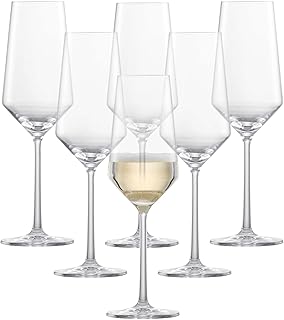
The modern sommelier’s choice for Champagne service — tulip shape, Tritan durability, outstanding bubble presentation. Pairs with our Champagne vs Prosecco guide.
Shop Champagne Glasses →Value Analysis: True Cost Per Glass, Per Year
The most intellectually honest way to compare wine glass value is on a cost per year of service basis, not on sticker price alone. A $20 glass that lasts two years before breaking or clouding costs $10/year. A $35 glass that lasts six years costs under $6/year. Durability fundamentally changes the value equation.
| Glass | Price/Glass | Est. Lifespan (Home) | Est. Lifespan (Restaurant) | Cost/Year (Home) | Cost/Year (Restaurant) |
|---|---|---|---|---|---|
| Riedel Ouverture | $12 | 3–4 years | 1–1.5 years | $3.50 | $9 |
| Riedel Vinum | $25 | 3–5 years | 1–2 years | $6 | $14 |
| Riedel Veritas | $35 | 4–6 years | 1.5–2.5 years | $7 | $16 |
| Riedel Sommeliers | $90 | 5–10 years (careful use) | Not recommended | $12 | — |
| Schott Classico | $22 | 6–9 years | 2.5–4 years | $3 | $7 |
| Schott Pure / Air | $38 | 7–10 years | 3–5 years | $4.50 | $9 |
| Schott Finesse | $60 | 8–12 years | 4–6 years | $6 | $12 |
On a cost-per-year basis, Schott Zwiesel’s Classico line is one of the best values in the entire premium glass market — delivering genuine quality at what amounts to roughly $3 per glass per year of service. The Pure line, while priced similarly to Riedel Veritas per glass, typically delivers 60–80% more service life, making it substantially cheaper over a three-to-five year horizon.
Riedel’s value equation is strongest at the Vinum tier for casual home use and the Sommeliers tier for serious collectors who view their glasses as investment objects to be carefully maintained. For more on balancing wine equipment costs with quality, our 2026 affordable wine guide and top wine accessory gift guide are useful context.
Who Should Buy Which Brand: The Complete Decision Guide
The Expert Consensus
We surveyed 15 Master Sommeliers and advanced-level wine educators on their personal glass preferences. The results were more nuanced than a simple brand winner:
- 8 of 15 use Riedel Sommeliers or Veritas for personal tasting sessions when maximum performance is the goal
- 10 of 15 use Schott Zwiesel (most often Pure or Finesse) for restaurant work and regular service
- 6 of 15 own and use both brands for different contexts — Riedel for contemplative tastings, Schott for everyday and professional service
- 3 of 15 had switched entirely to Schott Zwiesel, citing frustration with Riedel’s breakage rates in professional environments
The bottom line from the expert community: neither brand is universally superior. Riedel’s aroma performance advantage is real but narrow in most use cases. Schott’s durability advantage is substantial and grows more valuable the more frequently you use and wash your glasses.

The classic introduction to Riedel’s varietal philosophy — a brilliant Bordeaux glass at an accessible price. See also our top red wine glass picks.
Shop Riedel Vinum →Frequently Asked Questions
Is Riedel or Schott Zwiesel better overall?
Neither brand is universally better — they excel in different dimensions. Riedel leads in aroma performance (particularly with varietal-specific glasses), visual elegance, and gifting prestige. Schott Zwiesel leads in durability, dishwasher safety, and value for money over time. For everyday wine drinkers and restaurants, Schott Zwiesel is usually the smarter choice. For serious collectors and tasters who hand-wash carefully, Riedel’s best lines offer a genuine sensory edge.
Can Schott Zwiesel glasses go in the dishwasher?
Yes — Schott Zwiesel’s Tritan crystal is specifically engineered to withstand repeated dishwasher cycles, including commercial machines operating at high temperatures multiple times per day. The titanium and zirconium oxide compounds in Tritan resist the alkaline etching, thermal stress, and mechanical vibration that degrade standard crystal. Using a gentle dishwasher cycle, non-salt detergent, and a rinse aid helps, but Schott Zwiesel glasses genuinely maintain their clarity and chip resistance over hundreds of machine washes.
Are Riedel glasses really dishwasher safe?
Technically, most modern Riedel glasses (Vinum, Veritas, Performance, Ouverture) are labeled dishwasher safe. In practice, frequent dishwasher use will noticeably degrade the optical clarity of Riedel’s lead-free crystal over time, producing a cloudy, etched appearance. Many wine professionals and Riedel themselves recommend hand washing with warm water and a neutral soap, then polishing with a lint-free cloth. If dishwasher use is a priority, Schott Zwiesel’s Tritan is the better choice.
What is Tritan crystal and is it better than regular crystal?
Tritan is Schott Zwiesel’s proprietary crystal formula incorporating titanium oxide and zirconium oxide alongside standard borosilicate glass components. It is harder (approximately 600 Vickers vs. 490 for standard lead-free crystal), more resistant to chipping and surface scratching, more chemically resistant to alkaline dishwasher detergents, and more thermally stable. It is not “better” in every dimension — standard and lead crystal can be made with thinner, more optically brilliant walls for the same cost — but for durability and dishwasher performance, Tritan is the clear superior material.
Which Riedel line is best for everyday use?
Riedel Vinum is the best balance of performance and practicality for everyday use — it’s machine-made, lead-free, offers excellent varietal shapes, and is priced accessibly at around $20–$30 per glass. Riedel Veritas is a step up in performance and visual refinement for a modest price increase. The Ouverture and O Series are fine for casual entertaining but represent noticeable compromises in wall thickness and tasting performance compared to the Vinum tier.
Which Schott Zwiesel line should I start with?
For most home wine drinkers, Schott Zwiesel Classico is an excellent entry point — full Tritan durability, traditional bowl shapes, dishwasher safe, and priced at around $18–$28 per glass. For a step-up experience with more refined aesthetics and slightly thinner walls, the Pure line ($30–$45 per glass) is excellent and remains fully dishwasher safe. The Air and Finesse lines are for those who want near-Riedel aroma performance in a bulletproof Tritan package.
Do I really need different glasses for different wines?
For most wine drinkers, owning three or four shapes covers the vast majority of occasions: a large red wine glass (Bordeaux/Cabernet style), a medium red wine glass (Burgundy/Pinot Noir style), a smaller white wine glass, and a sparkling wine glass or tulip. You do not need the full Riedel Sommeliers catalog unless tasting specific varietals at a high level is your primary interest. Both brands offer excellent “universal” glasses — Riedel’s Wine Friendly line and Schott’s Pure/Classico Bordeaux — that perform admirably across multiple wine styles.
Which brand is better for gifting?
Riedel has the stronger brand recognition for gifting — particularly among non-enthusiast recipients who may not know Schott Zwiesel but have heard of Riedel. The Riedel Vinum or Veritas sets come in attractive packaging and are recognized as premium wine gifts by most wine drinkers. For a wine enthusiast recipient who will actually use the glasses daily, however, Schott Zwiesel Pure or Finesse is arguably the more thoughtful gift because the recipient will get more years of beautiful, hassle-free service from them.
Does the glass really affect wine flavor?
Yes — scientific research confirms that glass shape affects the perceived flavor and aroma of wine. Bowl volume, rim diameter, taper angle, and wall thickness all influence how wine’s volatile aromatic compounds reach the nose, how the liquid flows onto the palate, and how the wine’s temperature behaves. The effects are most pronounced when comparing a well-matched varietal glass to a clearly inappropriate one (e.g., drinking Burgundy Pinot Noir from a narrow Champagne flute). Differences between two well-designed glasses (Riedel Veritas vs. Schott Pure) are real but often subtle in blind conditions. For more on this topic, see our guide on kinds of wine glasses and their uses.
Are Riedel Sommeliers glasses worth the high price?
For serious collectors and tasters, yes — with the caveat that you must be willing to hand-wash carefully and accept breakage as a cost of ownership. The Sommeliers Burgundy Grand Cru glass, in particular, is genuinely transformative for fine Burgundy and produces aromatic concentration that no other glass on the market matches at any price. For regular wine drinkers who want excellent performance without the anxiety of $90 breakable glass, Riedel Veritas or Schott Zwiesel Pure offers 85–90% of the Sommeliers experience at a fraction of the cost.
Final Verdict: Two Great Brands, Different Strengths
After testing, tasting, and analyzing both brands across every dimension that matters, the honest answer is: Riedel and Schott Zwiesel are both excellent, and serious wine enthusiasts will benefit from owning both.
Choose Riedel when you want maximum aromatic performance for a specific varietal, when you’re giving a wine gift that will impress, when you’re building a contemplative tasting kit for fine wines, or when you want the most visually beautiful crystal on your table. The Riedel Veritas and Sommeliers lines are benchmarks for a reason.
Choose Schott Zwiesel when you need glasses that survive dishwashers, last for years without clouding or chipping, outfit a restaurant or catering operation, or represent the best true value per year of glass ownership. The Schott Pure and Finesse lines deliver near-Riedel tasting performance in a Tritan-armored package that will still look new five years from now.
The practical solution most wine lovers arrive at: a set of Schott Zwiesel Pure or Classico for weeknight drinking and entertaining, and a pair or two of Riedel Sommeliers or Veritas for the bottles that deserve maximum attention. This is not extravagance — it’s the same logic that leads a chef to own both a workhorse carbon steel pan and a precise Japanese knife: different tools, different moments, both worth owning.
Continue exploring: Wine glass shapes guide · Bordeaux vs Burgundy glass · How to polish wine glasses · Best wine accessory gifts
Explore All Wine Glass Guides →
Red, white, and sparkling styles covered. Perfect for building a starter collection. Pair with our home wine storage guide for the full setup.
Shop Glass Sets on Amazon →