Is Your Wine Corked? How to Detect, Confirm, and Handle TCA-Tainted Bottles
The definitive guide to identifying cork taint by smell, taste, and appearance — and what to do about it at home, in restaurants, and when buying wine.
What Does “Corked” Actually Mean?
Ask ten people at a dinner party what “corked wine” means and you’ll likely get ten different answers. Some think it means the cork crumbled into the bottle. Others assume any wine with an off smell is “corked.” A few will say it means the wine is old or has gone bad. All of these are wrong — or at best, wildly incomplete.
A corked wine is a wine contaminated by a specific chemical compound called 2,4,6-trichloroanisole — universally abbreviated as TCA. This compound is not simply the presence of cork debris or a sign of aging. It’s a specific biochemical contamination that produces a highly distinctive set of aromas and flavors that fundamentally ruins the wine regardless of its pedigree or price.
The term “corked” specifically refers to TCA contamination and nothing else. A wine with pieces of cork floating in it is not corked — it’s just messy. A wine that smells vinegary is not corked — it’s oxidized. A wine that smells like sulfur is not corked — it’s reductive. Understanding this distinction is the first step toward becoming a genuinely informed wine drinker.
The confusion stems partly from the fact that TCA almost always arrives in a bottle via the cork — which is why the wine is called “corked.” But the compound can also enter wine through contaminated winery equipment, wooden barrels, cellar walls, or even packaging materials that have been exposed to mold and chlorine compounds. When this happens — contamination from a non-cork source — the fault is technically called “TCA contamination” rather than “corked,” though the sensory experience is identical.
For anyone building their wine vocabulary and understanding of faults, our wine tasting terminology guide and wine glossary for beginners are excellent companions to this guide, covering TCA and other fault descriptors within the broader language of wine assessment.
What Corked Wine Smells Like: The Sensory Signature
The aroma of TCA contamination is one of the most recognizable — and divisive — smells in wine. Here is the full spectrum of what corked wine can smell like, from the most subtle to the most severe:
The insidious aspect of TCA is its detectability threshold. The human nose can detect TCA at concentrations as low as 2–5 parts per trillion — that’s an almost unimaginably small amount. Some people are even more sensitive, detecting it at 1 ppt. This means a wine can be clearly, offensively tainted by an amount of compound that would be invisible to any standard chemical measurement outside a specialized laboratory.
At higher concentrations, the smell is unmistakable. At lower concentrations — sometimes called “low-level TCA” — the effect is more subtle: the wine smells flat, like a less aromatic version of itself, with suppressed fruit and dulled complexity. Many bottles dismissed as “disappointing” or “not as expected” are actually mildly tainted by low-level TCA.
The Science Behind TCA: How a Cork Becomes a Problem
Understanding how TCA forms demystifies cork taint and explains why it’s been so difficult to eliminate entirely — and why significant progress has been made in recent years. The chemistry is fascinating and has important practical implications for buyers and collectors.
The Formation Pathway
TCA is not present in natural cork initially. It forms through a specific multi-step biochemical process:
- Chlorine introduction: Chlorine compounds — from cleaning agents like bleach, chlorinated water, pesticides, or even airborne chlorine in industrial environments — come into contact with cork bark or cork processing facilities.
- Fungal metabolism: Naturally occurring fungi present in cork bark (species of Trichoderma, Penicillium, and others) metabolize chlorinated phenol compounds including chlorophenols and chloroanisoles.
- TCA production: This fungal metabolism produces 2,4,6-trichloroanisole (TCA) and its close relative 2,4,6-tribromoanisole (TBA), both of which produce the characteristic musty smell and palate-suppressing effect.
- Transfer to wine: TCA from the contaminated cork migrates into the wine through direct contact, ruining the aroma and taste profile.
Figure 1: The four-step TCA formation pathway from chlorine source to tainted wine
Why Winemakers Struggle to Eliminate It Entirely
The challenge is that TCA can form at multiple points in the supply chain — not just during cork processing but in the winery itself. Wooden pallets, wooden structural elements in the cellar, barrels that have been treated with chlorinated cleaning agents, and even the water supply can harbor TCA precursors. This is why some wineries have completely eliminated all wooden elements from their production facilities, and why chlorine-based cleaners have been banned in progressive wine regions.
The cork industry has made enormous strides. Modern cork producers use hydrogen peroxide instead of chlorine for processing, implement rigorous TCA testing at the bark, granule, and finished cork stages, and apply supercritical CO₂ extraction (the DIAM process) to eliminate all TCA precursors from technical corks. As a result, TCA rates have dropped from roughly 5–8% at their peak to under 1–2% in modern quality corks. But elimination to zero remains elusive for natural bark cork.
This is one of the central arguments in the ongoing cork vs screw cap debate — a debate with genuine scientific merit on both sides that affects how millions of bottles of wine are sealed every year.
The Smell Test: A Step-by-Step Protocol for Detecting Corked Wine
The nose is your most powerful tool for detecting TCA contamination, and it’s more reliable than any other method available outside a laboratory. The key is knowing what to smell, when to smell it, and how to distinguish TCA from other wine characteristics that might superficially resemble it.
Here is the protocol used by professional sommeliers and wine judges for systematic cork taint detection:
Smell the Cork Before Anything Else
After extracting the cork with a corkscrew, hold the base of the cork (the end that was in contact with the wine) approximately 2–3 cm from your nose and take a slow, steady sniff. Do not inhale sharply — allow the aromatic compounds to diffuse naturally into your nasal passages.
You are looking for: musty cellar smell, damp cardboard, wet dog, or mold. A healthy cork will smell of cork oak — slightly tannic, woody, neutral. A TCA-contaminated cork will smell unmistakably wrong. However: a cork that smells fine does not guarantee the wine is fine — TCA can be present at levels below the cork’s detectable threshold but still affect the wine.
Figure 2: Hold the cork base 2–3 cm from the nose. A healthy cork smells woody and neutral; a tainted one smells musty or damp.
Pour a Small Amount and Smell the Glass
Pour approximately 40–50ml (about one-third of a standard pour) into a clean glass. Use a glass that has been rinsed only with water — residual dishwasher detergent or polishing cloth chemicals can interfere with your sensory assessment. Our guide to polishing wine glasses professionally covers proper preparation.
Hold the glass by the stem (to avoid warming the wine with your hand) and swirl gently three to four times. Then bring the rim close to your nose and breathe in steadily for 2–3 seconds. Focus on the first aromatic impression — your brain is most sensitive to unexpected or unusual smells in the first moment of contact.
Figure 3: Pour 40–50ml, swirl gently, and nose immediately. First impressions are most diagnostically reliable for TCA detection.
The Covered Glass Concentration Test
If you suspect TCA but aren’t certain — the wine smells slightly flat or muted but not obviously musty — use the covered glass technique to concentrate the aromas for a more definitive result.
Place your palm flat over the rim of the glass, completely covering it. Then swirl the glass vigorously with the palm in place for 10–15 seconds. Hold the covered glass up near face level and remove your palm quickly, immediately bringing your nose to the opening for a single, focused inhalation. The concentrated air pocket inside the glass will dramatically amplify any TCA present, making mild contamination that was previously borderline into a clear, unambiguous musty smell.
Figure 4: The palm-cover swirl test concentrates any TCA in the air pocket, making even mild contamination clearly detectable.
The Taste Test: Confirming Cork Taint on the Palate
While the nose is usually sufficient to identify TCA contamination, the taste test provides confirmation and helps distinguish corked wine from certain other faults that can produce superficially similar aromas at low concentrations. TCA is not toxic — tasting a corked wine is completely safe.
Figure 5: TCA suppresses the wine at every stage of the palate — front, mid, and finish all register as flat, muted, or musty.
What to Feel for When Tasting
When you taste a wine you suspect may be corked, pay attention to:
- Suppressed fruit character: The wine tastes like a washed-out, less interesting version of what it should be. The primary flavors feel distant or muted, as if heard through a wall.
- Flat mid-palate: There’s no middle section to the wine’s flavor — it goes from entry directly to finish without the aromatic complexity that normally unfolds.
- Musty or earthy aftertaste: The finish carries a damp, musty note that lingers uncomfortably and doesn’t improve with time in the glass.
- Metallic or bitter edge: At moderate to high TCA levels, a subtle metallic or bitter quality emerges in the finish that is foreign to the grape variety.
Critically, a corked wine does not taste “bad” in the way that vinegary or volatile acidity does — it tastes hollow and wrong. A great wine that should fill your palate with complexity simply feels empty and flat, as if someone turned down the volume on every flavor simultaneously.
The most misleading expression of cork taint is when TCA is present at very low concentrations — just enough to suppress aromas without triggering an obvious musty smell. In these cases, the wine simply tastes less complex than it should. Many “disappointing” bottles that drinkers attribute to a “bad year” or “not a good winemaker” are actually mildly tainted. If a wine’s label pedigree doesn’t match what’s in the glass, low-level TCA is always worth considering.
Visual Clues and Cork Inspection: What to Look For
While TCA cannot be seen with the naked eye, there are visual cues associated with cork problems and wine condition that can provide supporting evidence during your assessment.
Figure 6: Visual cork inspection. A healthy cork shows natural grain, firm edges, and moderate wine staining. Problems include dark mold patches, crumbling, and full-depth wine staining.
Wine Color and Fill Level
When examining a bottle before opening, check the fill level through the glass. A significant gap between the wine and the base of the cork — called ullage — in a bottle that shouldn’t have one (young wine, recently purchased) can indicate leakage past the cork, possibly caused by improper storage or a defective cork. Wine stored upright in dry conditions can also cause cork shrinkage and increased ullage over time.
A brownish tinge in a white wine or an orange edge in a red can indicate oxidation, which while related to cork failure is a different fault from TCA. However, a wine showing both unusual color and musty aromatics may have suffered from cork failure followed by oxidation — a double fault that produces a particularly unpleasant result.
This is why proper wine storage at home — maintaining horizontal bottle position, appropriate temperature, and sufficient humidity — is the single most important factor in protecting your collection from premature cork failure.
How Common Is Cork Taint in 2026?
The frequency of cork taint has been one of the most debated statistics in the wine industry for three decades. Historical estimates of 5–10% contamination rates are often cited, but these figures reflect the industry’s nadir in the 1990s, not today’s reality.
Cork Taint Rate: Historical vs. Modern
These improvements have come from multiple simultaneous advances: elimination of chlorine-based processing chemicals in cork facilities, rigorous TCA testing at multiple stages of production, adoption of hydrogen peroxide bleaching, and the widespread use of individual gas chromatography testing for premium cork grades.
The practical implication: if you open 100 bottles sealed with premium natural cork in 2026, statistically you might encounter 1–2 tainted bottles. If you open 100 bottles sealed with budget natural cork, you might encounter 3–5. And if any of those bottles are sealed with DIAM technical cork, the chance approaches zero. That said, even a 1% rate means that regular wine drinkers who open 3–4 bottles per week will encounter a corked bottle multiple times per year. Understanding how to detect and handle it remains practically valuable.

Wine Preservation & Storage Essentials
Proper wine storage prevents cork degradation and reduces TCA exposure risk. A dedicated wine cooler is the best investment for any serious wine drinker.
Shop Wine Coolers on Amazon →Cork Taint vs. Other Wine Faults: A Complete Comparison Guide
One of the most common mistakes even experienced drinkers make is attributing every wine fault to cork taint. TCA is a specific compound producing specific effects, and it’s critical to distinguish it from other fault categories — both to correctly identify the problem and to give the winery accurate feedback when relevant.
| Fault Name | Compound / Cause | Smell Profile | Taste Profile | Related to Cork? | Severity |
|---|---|---|---|---|---|
| Cork Taint (TCA) | 2,4,6-Trichloroanisole | Wet cardboard, wet dog, musty basement | Flat, muted, musty finish | Yes — via cork | Wine is ruined |
| Oxidation | Acetaldehyde from oxygen exposure | Sherry, bruised apple, vinegar | Flat, stale, nutty or vinegary | Indirect (dry cork → leakage) | Partially ruined |
| Reduction (Sulfide) | Hydrogen sulfide, mercaptans | Struck match, rubber, rotten egg, garlic | Unpleasant on entry; may blow off | No — winemaking fault | Often reversible with air |
| Volatile Acidity (VA) | Acetic acid, ethyl acetate | Nail polish remover, vinegar, model glue | Sharp, acidic, harsh finish | No — fermentation issue | Depends on level |
| Brettanomyces (Brett) | Isovaleric acid, 4-ethylphenol | Barnyard, sweaty saddle, mouse cage, band-aid | Earthy, funky, animal notes linger | No — yeast contamination | Context-dependent |
| Heat Damage (“Cooked”) | Thermal degradation of esters | Stewed fruit, jam, dried fruit, raisiny | Over-ripe, heavy, flat fruit | Indirect (cork expansion → leakage) | Wine is damaged |
| Geranium Taint | 2-Ethoxyhexa-3,5-diene (sorbate + bacteria) | Geraniums, crushed leaves | Floral, herbal, odd finish | No — winery additive issue | Noticeable but uncommon |
| Mousy Taint | Acetyl-pyridines (bacterial) | Mouse cage, stale crackers — delayed | Revolting aftertaste, worsens in mouth | No — lactic acid bacteria | Undrinkable |
The most commonly confused fault pair is TCA vs. reduction. Both can make a wine smell “wrong” in ways that aren’t obviously identifiable. The key distinction: reductive faults (rubber, struck match, sulfide) will often improve significantly with air — pour the wine into a decanter or use an aerator and wait 10–15 minutes. TCA will not improve with aeration. If anything, swirling and aerating a corked wine will make it smell worse, not better, as it concentrates the TCA in the glass.
This is why the aerator vs decanter debate has practical fault-detection relevance beyond just serving decisions — if a wine improves dramatically with aeration, it was likely reductive; if it gets worse or stays the same, consider TCA. Our guide to decanting wine covers this diagnostic use of the decanter in detail.
✓ TCA (Corked) Wine Signs
- Wet cardboard smell
- Wet dog or musty basement
- Muted, flat fruit on palate
- Does NOT improve with air
- Smell worsens when concentrated
- Affects both nose and palate
✗ NOT Cork Taint (Other Faults)
- Vinegary = Volatile Acidity
- Rubber/match = Reduction (fixable!)
- Barn/saddle = Brettanomyces
- Stewed fruit = Heat damage
- Geranium = Sorbate issue
- Mouse cage aftertaste = Mousy taint
Handling a Corked Wine in a Restaurant: Your Rights and Protocol
Discovering a corked wine in a restaurant is a delicate social situation that many diners handle badly — either by silently accepting the tainted bottle and drinking through it, or by creating unnecessary confrontation. Understanding your rights and the professional protocol makes the situation straightforward.
You Are Entitled to a Replacement
In any restaurant with a trained floor staff, a corked wine is a wine fault that entitles you to a replacement without charge. This is industry-wide professional practice, not a special accommodation. A good sommelier or server will know exactly what corked smells like and will confirm your assessment themselves. They will then either offer another bottle of the same wine (if in stock) or suggest an alternative at a similar price point.
What to Say (and What Not to Say)
Be specific: “This smells corked” or “I’m getting wet cardboard / musty aromas that suggest TCA contamination” is professional and confident. Avoid vague complaints like “I don’t like it” or “it tastes off” — these don’t communicate that you’ve identified a specific fault and may be interpreted as personal preference, which is not grounds for replacement.
Don’t: drink half the bottle and then complain. The fault should be identified on the first pour, before significant consumption. A restaurant that is presented with a mostly-empty bottle and a claim of cork taint has legitimate grounds to decline replacement.
If the Server Disagrees
Occasionally you will encounter a server or even a sommelier who disagrees with your assessment. This can happen for several reasons: they may have a different TCA sensitivity threshold than you, the contamination may be low-level and genuinely ambiguous, or they may be inexperienced. In these situations, stay calm and polite. You can ask to speak with the head sommelier or manager, or simply note the issue and decide whether to pursue it. Most quality restaurants will err on the side of guest satisfaction, particularly if you can articulate what you’re smelling specifically.
Prevention: How to Reduce Your Exposure to Corked Wine
While you cannot guarantee zero exposure to cork taint, several practical strategies significantly reduce the frequency with which you encounter it. These are the approaches used by experienced collectors, sommeliers, and wine professionals.
Buy From Quality Producers Using Quality Cork
Not all natural cork is equal. Premium cork grades undergo rigorous TCA testing at the forest, processing, and finished-cork stages. Producers who pay more for higher-grade cork — visible in wines priced above approximately $15–20 — benefit from substantially lower Taint rates. Budget wines sealed with low-grade cork carry higher taint risk.
Learn to Recognize DIAM and Technical Corks
If you see “DIAM” stamped on the cork after opening, you’re holding a technical cork with near-zero TCA risk. DIAM is increasingly used by quality producers who want the cultural acceptance of a cork-sealed bottle with modern reliability. Recognizing and favoring these products when building your cellar is a smart risk-reduction strategy.
Store Wine Correctly
Cork degradation — crumbling, shrinking, or becoming permeable — dramatically increases the risk of both TCA migration and secondary oxidation. Proper horizontal storage in cool (50–60°F), humid (50–70% RH) conditions keeps corks moist, intact, and functional. Our wine cellar essentials guide covers the full environment requirements for serious collections, and our guide on storing wine without a dedicated fridge addresses practical alternatives.
Temperature fluctuation is the enemy of cork integrity — significant and repeated swings cause the cork to expand and contract, accelerating wear. This is why avoiding storing bottles near a stove, in a warm attic, or in a car for extended periods matters so much. A quality wine cooler eliminates this risk entirely for your home collection.
Figure 7: The three pillars of cork-protective storage — horizontal position, stable cool temperature, and adequate humidity.
Keep a Wine Journal
Tracking your bottles, including any fault notes, is one of the most underutilized tools for serious wine drinkers. When you notice a pattern — multiple corked bottles from the same producer, same vintage, or same retailer — you have actionable data. A wine journal notebook makes this easy. Combined with our wine tasting kit guide, you can build a systematic approach to quality assessment and fault documentation that genuinely improves your purchasing decisions over time.
The Screw Cap Question: Is Switching Closures the Answer?
The most radical preventive measure against cork taint is, of course, not buying wines sealed under cork at all. The screw cap — specifically the Stelvin closure — provides an absolute guarantee of zero TCA contamination from the closure, and has become the dominant seal in Australia, New Zealand, and increasingly across global markets for everyday wines.
The trade-off is real: screw caps don’t provide the micro-oxygenation that cork offers, which affects the aging trajectory of wine (particularly complex, tannic reds). For most wine drinkers who consume wine within 1–5 years of release, this is an acceptable or even preferable trade-off — screw-capped wines preserve fresh fruit character more reliably, and every bottle tastes as intended. For long-term aging of serious red wines, however, cork (or DIAM technical cork) remains the preferred closure among producers and collectors for a reason.
For more on this nuanced topic, our full deep-dive on cork vs screw cap — aging, longevity and the real science is the definitive resource. The wine stopper vs cork comparison also covers the practical differences in resealing opened bottles between closure types.
For everyday wines and aromatic whites, actively seeking out screw-cap-sealed bottles eliminates cork taint risk entirely while delivering better freshness. For serious reds and cellar wines, understand and accept the small residual TCA risk as a trade-off for proper aging dynamics — and know how to identify it when it occurs.
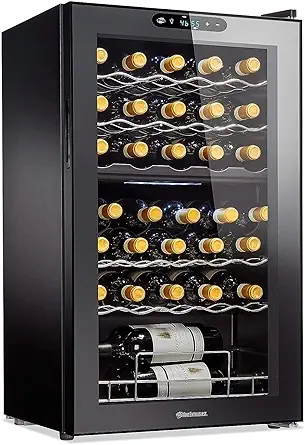
Wine Enthusiast 32-Bottle Dual Zone Wine Cooler
Storing wine at the correct temperature extends cork life, minimizes TCA migration risk, and keeps your collection in optimal condition.
Check Price on Amazon →Can You Fix a Corked Wine? The Truth About “TCA Remedies”
Every few years, a new “cure” for corked wine circulates online — from plastic wrap to activated charcoal to ultrasonic treatment. Some of these have a basis in chemistry; most are only partially effective; and none of them fully restore a tainted wine to its untainted state. Here is an honest assessment of what the science actually shows.
The Plastic Wrap Trick: Partially Effective
The most widely discussed remedy involves submerging a ball of crumpled PVDC plastic wrap (Saran Wrap / cling film) in the tainted wine and swirling it gently for several minutes. The scientific basis is real: PVDC (polyvinylidene chloride) is a polymer that absorbs TCA molecules, potentially reducing the concentration in the wine.
Studies have shown this method can reduce TCA concentration by 30–60% in mildly tainted wines. However, the practical outcome depends on the initial contamination level. For mildly tainted wine, the result after plastic treatment may be drinkable. For heavily tainted wine, even a 60% reduction may leave the wine noticeably affected. And for a nuanced, complex wine where low-level TCA was suppressing subtleties, the treatment may remove the obvious mustiness while leaving the wine still inexplicably flat.
What Absolutely Does NOT Work
- Decanting: Aeration does not remove TCA — it may concentrate it.
- Adding fruit: Fruit added to a corked wine masks rather than treats the fault.
- Chilling further: Lower temperature may slightly suppress TCA’s aromatic expression but doesn’t remove the compound.
- Waiting: TCA does not oxidize away or degrade with time in the bottle or glass.
- Charcoal fining: Activated charcoal strips indiscriminately — it will also remove desirable aromatic compounds.
The Practical Verdict
For a corked bottle of a wine you genuinely love that cannot be replaced, the plastic wrap treatment is worth attempting — particularly for mild contamination. For a seriously tainted bottle, or for a wine you’re serving to guests, the honest answer is to discard it and open another. Using a corked wine for cooking (where the aromas will be overwhelmed by other ingredients) is the most practical salvage operation for heavily tainted bottles.
Buying Smarter: How to Avoid Corked Bottles From the Start
Some cork taint risk can be managed at the point of purchase through informed buying decisions. These strategies, while not guarantees, meaningfully shift the statistical odds in your favor.
Buy From Specialist Retailers
Specialist wine retailers — as opposed to supermarkets and general stores — typically have better storage conditions and faster stock turnover. Cork degradation from improper storage (high temperature, low humidity, vibration) at the retail level can worsen pre-existing taint or accelerate oxidation through cork failure. A reputable specialist retailer maintains proper cellaring conditions.
Check for Alternatives to Natural Cork
When choosing between two otherwise comparable bottles, a screw-cap or DIAM-sealed bottle carries zero TCA risk from the closure. Reading bottle capsules and identifying closure types before purchase is a simple habit that can be built quickly. Our guide on how to read wine labels covers capsule and closure identification as part of the full label-reading skill set.
Buy Trusted Producers
Producers who invest in premium cork grades, rigorous TCA testing, and clean winery practice have demonstrably lower taint rates. Following reviews, developing relationships with knowledgeable sommeliers or wine shop staff, and using our wine subscription evaluation guide to access expertly curated selections are all pathways to wines from producers who take closure quality seriously.
Keep Your Tools Ready
A proper corkscrew matters more than most people realize. A poor-quality corkscrew that pushes the cork into the bottle, shreds it, or requires excessive force can damage a sound cork and introduce broken cork debris. Use a quality waiter’s corkscrew — see our picks for the best waiter’s corkscrews in 2026 — or an electric corkscrew for effortless, consistent extraction. Our roundup of top electric corkscrews covers the best options across price points.
Once the bottle is open, the right accessories make the most of what’s inside. Our complete guide to wine accessories every host needs covers everything from aerators and decanters to preservation tools and glassware. For opened bottle preservation — critical after cork removal — see our top-rated wine preservers guide and the comparison of Coravin vs Vacu-Vin systems.
Figure 8: Use this three-step flowchart for systematic cork taint detection — from cork sniff to glass nose to palm concentration test.
Frequently Asked Questions: Cork Taint and TCA
Conclusion: Know TCA, Trust Your Nose, Never Accept a Bad Bottle
Cork taint is one of wine’s most frustrating realities — a completely avoidable chemical accident that ruins potentially great bottles through no fault of the wine, the vintage, or the producer’s winemaking ability. But it is also one of the most manageable wine faults once you understand what you’re looking for.
The key lessons from this guide: TCA contamination is specific, identifiable, and detectable by any nose willing to learn what to smell for. The protocol is simple — smell the cork, nose the glass, use the palm concentration test if uncertain. The fault does not improve with air; if it gets worse when concentrated, it’s TCA. At a restaurant, you are entitled to a replacement without drama. At home, the plastic wrap trick offers partial relief for mild cases.
Beyond detection, the best strategy is prevention: buy quality, store wine properly using the right equipment and conditions, track your bottles using a wine journal, and develop a reference point through regular tasting experience. A dedicated wine cooler protecting your collection at proper temperature and humidity is one of the most impactful investments you can make for long-term cork integrity.
Wine is too good, and life is too short, to drink a corked bottle silently. Trust your nose. Know what TCA smells like. And never hesitate to send back a bottle that isn’t right — because the winemaker who made it would absolutely want you to.
Ready to Protect Your Collection?
Proper wine storage keeps corks moist, intact, and fault-free for years. Explore our recommended coolers, accessories, and storage solutions.
Browse Best Wine Coolers Under $500 →