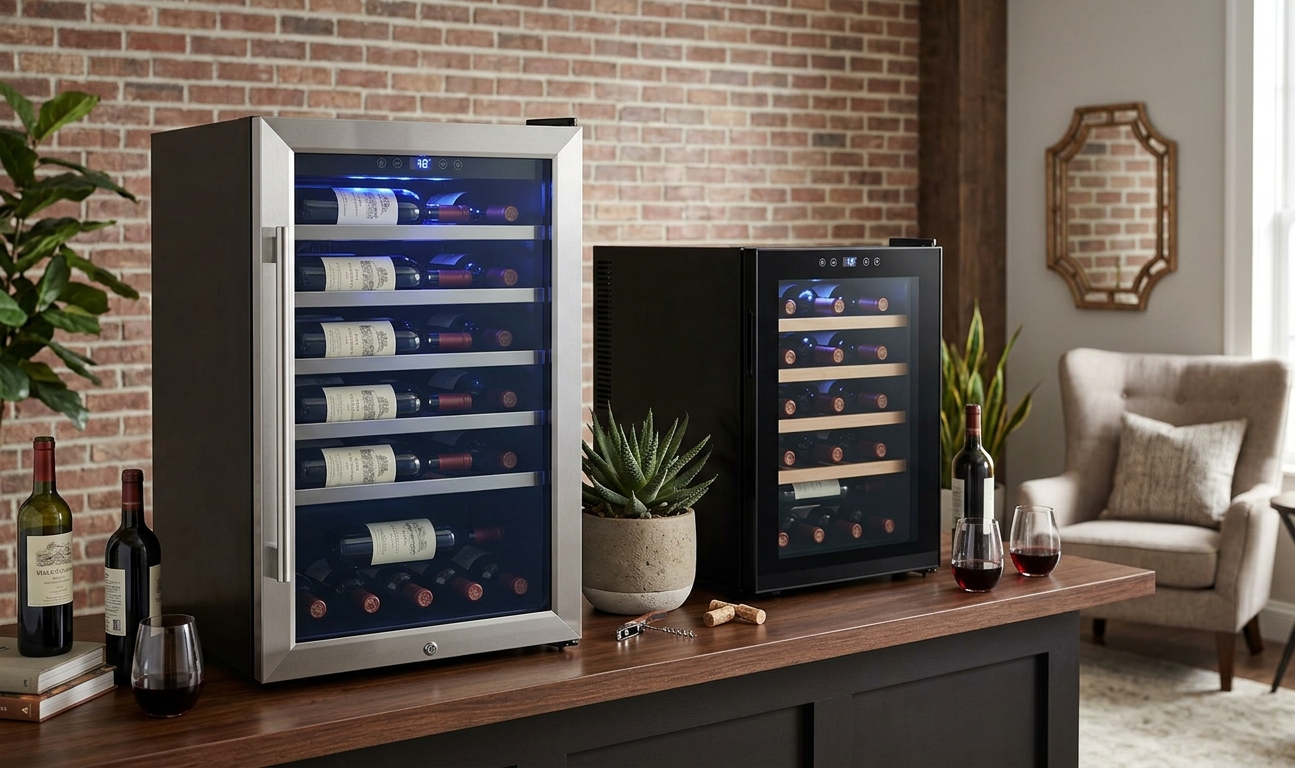
Stop Ruining Your Wine With the Wrong Storage
You spent good money on those bottles. You followed our 2026 affordable wine picks, splurged on a special Pinot Noir, or finally bought that Napa Cabernet you’ve been eyeing for months. And then you put it on the kitchen counter, next to the stove, in a 74°F apartment. Three months later, you open it and something is off — flat, cooked, lifeless.
That’s what improper storage does to wine. Temperature fluctuation, light exposure, and vibration are the silent killers of a great bottle. A dedicated wine cooler fixes all three simultaneously, and the good news is you don’t need to spend $1,000 to get a unit that will genuinely protect and serve your wine collection in style.
We’ve spent hundreds of hours researching, comparing specs, reading real customer reviews, and analyzing the wine cooler market under the $500 mark to bring you this definitive guide. Whether you’re storing a few bottles for the weekend or building a serious home collection, the right unit is in here — and it costs less than you think.
Why a Wine Cooler Is Worth Every Penny
Many casual wine drinkers assume their regular kitchen refrigerator works fine for wine storage. It doesn’t — and understanding why will make you a significantly better wine consumer. Our in-depth comparison of wine fridge vs regular fridge goes deeper on this, but here are the core issues:
Temperature Control
Kitchen fridges run at 35–38°F — too cold for wine. Ideal wine storage is 45–65°F depending on variety.
Humidity Regulation
Standard fridges are too dry (~20% RH). Wine needs 50–70% to prevent cork drying and oxidation.
Vibration Isolation
Regular compressors vibrate constantly, disturbing sediment and accelerating chemical aging reactions.
UV Protection
Kitchen lighting degrades tannins and polyphenols. Wine fridges use UV-filtered glass or opaque doors.
Horizontal Storage
Cork-sealed bottles must be stored on their sides. Wine fridges are engineered with the right shelving for this.
Odor Separation
Food odors from a regular fridge can permeate cork over time and taint wine. Dedicated units prevent this.
If you’re currently relying on creative workarounds, check out our guide to how to store wine without a wine fridge — but understand that nothing beats a purpose-built cooler for serious collectors. For deeper reading on long-term storage principles including temperature, humidity, and light, our comprehensive home wine storage guide is essential reading.
Wine stored correctly is wine that develops as intended. Poor storage doesn’t just “not help” — it actively degrades the wine faster than it would age naturally. A $150 wine cooler protecting a $50/bottle collection pays for itself quickly. Understanding why wine improves with age makes the case for proper storage even more compelling.
Buying Guide: What to Actually Look For Under $500
The under-$500 wine cooler market is crowded with products that look similar on the surface but differ enormously in real-world performance. Here are the criteria that matter — the ones that separate a unit you’ll use happily for 10 years from one you’ll regret buying after six months.
1. Cooling Technology
The most fundamental decision: compressor or thermoelectric. We dedicate an entire section to this below, but in brief — compressor units cool faster, handle higher ambient temperatures, and are better for larger capacities. Thermoelectric units are whisper-quiet and vibration-free, ideal for smaller collections in climate-controlled rooms. Our full explainer on thermoelectric vs compressor cooling walks through the physics and practical implications.
2. Capacity (Actual vs. Advertised)
Manufacturers measure bottle capacity using standard 750ml Bordeaux-style bottles. Burgundy-style, Champagne, or half-bottles may yield different actual capacity. A “29-bottle” unit will typically hold 25–26 Burgundy bottles. Always subtract 15–20% from advertised capacity for real-world use, especially if you store a variety of bottle shapes. Our broader review of top wine cooler refrigerator picks covers capacity across all price ranges.
3. Temperature Range and Zones
Single-zone units maintain one temperature throughout — ideal if you drink primarily one type. Dual-zone units maintain two independent temperature ranges — essential if you store both reds (55–65°F) and whites (45–55°F) simultaneously. Our dedicated article on single vs dual zone wine coolers explains when each is worth the cost difference, and our picks for best dual zone wine coolers cover the top performers.
4. Temperature Precision
Budget units may advertise a range but fluctuate ±5–8°F due to poor thermostat accuracy. Quality units maintain temperature within ±2°F. Digital displays with independent zone control and real-time readout are signs of a more precise thermostat system. Use a wine thermometer to verify accuracy after purchase.
5. UV-Protected Glass Door
Standard glass transmits UV light, which degrades polyphenols and tannins over months or years. Low-E or tinted UV-filtered glass is standard on quality units. Avoid any wine fridge with clear, standard glass unless it’s kept in a dark room permanently.
6. Shelving Material
Wooden shelves (typically beechwood) are preferred by purists — they’re gentle on bottle labels, create less vibration resonance, and look premium. Wire or chrome shelves are fine for practicality. Shelves should slide out smoothly and allow for bottles of different lengths. Full-extension slides are a sign of quality build.
7. Interior Lighting
LED interior lighting is warm, energy-efficient, and doesn’t emit UV. Incandescent or fluorescent lighting generates heat and may emit harmful wavelengths. Look for cool-white or warm LED systems with a soft glow that won’t disturb bottles during display.
8. Noise Level
Measured in decibels (dB). Thermoelectric units typically run at 25–35 dB — library-quiet. Quality compressor units run at 35–45 dB — about the hum of a quiet conversation. Budget compressor units can hit 50+ dB, which becomes noticeable in open-plan kitchens or dining rooms. Always check manufacturer spec sheets and owner reviews for real-world noise reports.
9. Freestanding vs. Built-In
Freestanding units vent through the rear — they need 3–4 inches of clearance behind them and cannot be placed in enclosed cabinetry. Built-in (undercounter) units vent through the front grille and can be installed flush with cabinetry. Using a freestanding unit in a cabinet space will cause overheating and compressor failure. Most under-$500 units are freestanding only.
10. Brand Reliability and Warranty
Compressor quality varies significantly. Brands using commercial-grade compressors (Embraco, Danfoss, or Secop) outperform budget compressor units dramatically in longevity. Warranty terms — typically 1–3 years — and the availability of US-based customer support matter more than most buyers realize until something goes wrong.
Compressor vs. Thermoelectric: Which Should You Choose?
This is the technology question that most directly affects the real-world performance of your wine cooler. Both cooling methods are well-represented in the under-$500 market, and the right choice depends on your specific situation.
| Factor | Compressor | Thermoelectric |
|---|---|---|
| Cooling Power | Strong — cools to target quickly | Moderate — slower to reach target |
| Ambient Temp Tolerance | Works in 50–100°F environments | Struggles above 75–80°F ambient |
| Noise Level | 35–45 dB (audible hum) | 25–35 dB (near silent) |
| Vibration | Moderate vibration when running | Virtually vibration-free |
| Energy Usage | Higher (varies by size) | Lower (less efficient at large scale) |
| Capacity Range | 12–300+ bottles | Usually under 30 bottles |
| Temperature Range | Typically 40–65°F | Typically 54–66°F |
| Best For | Serious collectors, hot climates, large collections | Apartment dwellers, quiet spaces, small collections |
| Cost (Under $500 segment) | $150–$450 | $100–$300 |
For most home buyers under the $500 mark, a compressor unit offers better overall value unless you live in a climate-controlled apartment and specifically need whisper-quiet operation. Thermoelectric units shine in bedrooms, home offices, or dining rooms where noise is a concern and ambient temperatures stay below 75°F year-round.
Single Zone vs. Dual Zone: Matching Your Collection
Do you need two temperature zones? The answer depends almost entirely on what you drink and how you drink it. This is one of the most misunderstood distinctions in the wine cooler market — many buyers pay extra for dual zone when they don’t need it, or buy single zone and regret it immediately.
When Single Zone Is Enough
If you predominantly drink one style — mostly reds, or mostly whites — a single-zone unit set to the appropriate temperature (typically 55°F for reds, 50°F for whites) covers the entire collection. A 55°F single zone is also appropriate as a compromise temperature that works acceptably for both styles if you don’t want to think about it. Most casual wine collectors fall into this category.
When Dual Zone Is Worth It
If you regularly buy both serious red wines (Cabernet, Merlot, Syrah) and aromatic whites (Sauvignon Blanc, Riesling), and you want both ready to serve at ideal temperature simultaneously, dual zone is the right call. The upper zone at 54–58°F for reds and lower zone at 41–50°F for whites is the classic configuration. Our single vs dual zone wine cooler guide helps you make this decision with a detailed checklist.
🍷 Quick Decision Guide
Mostly reds or mostly whites? → Single zone. Mixed collection you serve regularly? → Dual zone. Long-term aging cellar? → Single zone at 55°F. Entertaining with both styles at different temperatures? → Dual zone.
The 5 Best Wine Coolers Under $500 in 2026
After extensive research into performance data, customer reviews, brand track records, and feature-to-price ratios, these five wine coolers represent the definitive best options under $500 in 2026. Each has been selected for a different buyer profile — find yours below.

NewAir 29-Bottle Compressor Wine Fridge
The NewAir 29-Bottle stands as our top overall pick because it hits the exact sweet spot that most under-$500 buyers need: genuine compressor power, a wide temperature range from 40–65°F, and enough capacity for a serious everyday collection. The beechwood shelves are a premium touch rarely seen at this price point, and the low-vibration compressor is noticeably quieter than competing units in this tier.
The door seal is excellent, maintaining internal temperature within ±2°F even when ambient temperatures swing. The digital temperature display is accurate and easy to read through the UV-treated glass door. This unit handles champagne and sparkling wines at the low end of its range, reds at the middle, and whites and rosés at the upper cold end — making it remarkably versatile for a single-zone unit.
For detailed brand analysis and long-term performance data, see our comprehensive NewAir wine cooler review which covers temperature variance, noise measurements, and real user feedback over 18 months.
✓ Pros
- Wide 40–65°F temp range
- Premium beechwood shelves
- Low-vibration compressor
- UV-treated door glass
- Accurate digital display
- Excellent door seal
✗ Cons
- Single zone only
- Audible when compressor cycles
- Doesn’t accept magnum bottles
Compressor-powered, beechwood shelves, 40–65°F range. The best all-rounder under $500.
Check Price on Amazon →
Wine Enthusiast 32-Bottle Dual Zone MAX Compressor Wine Cooler
Wine Enthusiast is one of the most recognized names in home wine storage, and the 32-Bottle Dual Zone MAX earns its place at #2 by delivering genuine dual-zone convenience at a price that undercuts most competitors. The upper zone handles reds at 54–68°F and the lower zone chills whites and sparkling wines at 41–54°F — independently controlled through a clean digital interface on the door.
The compressor on this unit is notably well-insulated for the price range, meaning the temperature differential between zones holds even when the door is opened frequently during entertaining. The stainless steel exterior with black interior creates a premium aesthetic that looks at home in modern kitchens, and the reversible door hinge accommodates different installation scenarios.
Read our dedicated Wine Enthusiast cooler review for detailed temperature variance data, noise level measurements, and long-term reliability notes from actual owners across two years of use. It consistently earns high marks for value per dollar and brand support quality.
✓ Pros
- True dual-zone control
- Trusted, established brand
- Reversible door hinge
- Holds temp well during use
- Good US customer support
✗ Cons
- Lower zone slightly warmer at edges
- Wire shelves (not wood)
- Compressor audible in quiet rooms
Dual zone, compressor-powered, 32 bottles. Exceptional value for mixed red and white collections.
Check Price on Amazon →
BLACK+DECKER BD60026 60-Bottle Wine Cellar
The BLACK+DECKER 60-Bottle Wine Cellar is the capacity-to-dollar champion in the under-$500 category. Sixty standard bottles at a price well under four figures makes this the go-to recommendation for anyone building a serious home collection who needs volume over zone versatility. The full-height design with smoked glass door keeps UV light out while still allowing you to browse the collection without opening the door.
The compressor is efficient and handles the larger cabinet well, maintaining consistent temperatures throughout the cabinet. The stainless steel trim and handle give it a clean, appliance-grade look that fits seamlessly in kitchen environments. Interior LED lighting illuminates the collection without generating heat or UV.
The single-zone limitation means you’ll need to decide: set it for reds at 58–60°F (and chill whites before serving), or set it for whites at 50°F (and let reds come up to temperature on the counter before serving). Most collectors with 60+ bottles tend to collect primarily reds, making this a practical non-issue in practice. Its large interior is ideal for those who’ve outgrown smaller 12–24 bottle units and need room to grow their collection.
✓ Pros
- 60-bottle capacity — best in class
- Smoked UV-filtering glass door
- Interior LED lighting
- Excellent dollars-per-bottle value
- Trusted BLACK+DECKER warranty
✗ Cons
- Single zone only
- Larger footprint needed
- Shelves less sturdy than premium brands
60 bottles, compressor cooling, smoked glass door. Maximum capacity at minimum cost.
Check Price on Amazon →
Ivation 33-Bottle Thermoelectric Wine Refrigerator
For apartment dwellers, dining room installations, or anyone who finds compressor hum intolerable, the Ivation 33-Bottle Thermoelectric is the answer. Running at approximately 26 dB, it’s genuinely near-silent — you can stand next to it and not notice it running. The complete absence of vibration makes this particularly interesting for collectors who store wines with visible sediment, as the sediment remains undisturbed.
The dual-zone configuration allows the upper section to hold reds at 58–66°F and the lower section to chill whites at 54–58°F. Note that the temperature range is narrower than compressor units — this thermoelectric can’t go below 54°F, which is slightly warm for Champagne and sparkling wines. If you drink a lot of Champagne, this limitation matters. For still red and white wines, however, the range is perfectly adequate.
Our full Ivation wine cooler review covers the brand’s broader product line and long-term reliability data. Ivation has been a consistent performer in the thermoelectric segment for several years, with a notably lower defect rate than many budget alternatives.
✓ Pros
- Near-silent operation (~26 dB)
- Zero vibration
- Dual zone for reds and whites
- Energy efficient for its size
- Ideal for noise-sensitive spaces
✗ Cons
- Can’t go below 54°F
- Struggles in rooms above 78°F
- Narrower effective temp range
Near-silent, vibration-free, dual zone. The best choice for quiet spaces and sediment-sensitive collections.
Check Price on Amazon →
KingChii 51-Bottle Freestanding Dual Zone Wine Refrigerator
The KingChii 51-Bottle Dual Zone is the highest-capacity dual-zone unit on this list and earns its spot by offering the combination most serious home collectors actually want: room for a large mixed collection with independent temperature control for reds and whites simultaneously. Fifty-one bottles at this price point with true dual-zone capability is genuinely unusual — most dual-zone units under $500 cap out at 24–32 bottles.
The upper zone handles 21 bottles at red wine serving temperatures (54–64°F), while the lower zone accommodates 30 bottles at white wine temperatures (41–54°F). The compressor is efficient and handles the larger cabinet volume without the temperature gradient issues that plague some full-height dual-zone budget models.
KingChii has built a reputation for delivering above-spec units at aggressive price points, and this model reflects that positioning. The tempered glass door with stainless steel frame looks genuinely premium, and the internal LED lighting creates an attractive display. For collectors who entertain regularly and want both reds and whites at ideal temperatures without a second unit, this is the most practical solution under $500.
✓ Pros
- 51 bottles — largest dual zone here
- True independent zone control
- Wide 41–64°F total range
- Premium-looking glass door
- Excellent dollars-per-bottle ratio
✗ Cons
- Newer brand — less long-term data
- Heavier — harder to reposition
- Customer support is email-only
51 bottles, dual zone, compressor-powered. The best large dual-zone unit under $500.
Check Price on Amazon →Full Side-by-Side Comparison
Use this table for a quick at-a-glance comparison of all five units across the criteria that matter most to buying decisions:
| Model | Bottles | Cooling | Zones | Temp Range | Noise | Best For |
|---|---|---|---|---|---|---|
| NewAir 29-Bottle ⭐ | 29 | Compressor | Single | 40–65°F | ~40 dB | Best overall pick |
| Wine Enthusiast 32-Bottle | 32 | Compressor | Dual | 41–68°F | ~42 dB | Best value + dual zone |
| BLACK+DECKER 60-Bottle | 60 | Compressor | Single | 46–66°F | ~43 dB | Max capacity on a budget |
| Ivation 33-Bottle | 33 | Thermoelectric | Dual | 54–66°F | ~26 dB | Noise-sensitive spaces |
| KingChii 51-Bottle | 51 | Compressor | Dual | 41–64°F | ~41 dB | Large mixed collection |
Wine Serving Temperature: Getting the Most From Your Cooler
Owning a wine cooler is only half the equation — knowing what temperature to serve each wine at is what transforms a good wine into a great experience. Serving temperature dramatically affects aroma, flavor, and texture. Too cold suppresses aromas; too warm amplifies alcohol and makes wine taste flat.
| Wine Type | Ideal Storage Temp | Ideal Serving Temp | Time Out of Fridge | Notes |
|---|---|---|---|---|
| Full-Bodied Reds (Cabernet, Syrah, Malbec) | 57–65°F | 60–65°F | Serve directly | Never serve above 68°F — alcohol becomes harsh |
| Medium Reds (Merlot, Sangiovese, Grenache) | 55–62°F | 57–63°F | Serve directly | Slight chill enhances freshness |
| Light Reds (Pinot Noir, Gamay, Barbera) | 54–60°F | 55–60°F | Serve directly | Many sommeliers prefer these slightly chilled |
| Full Whites (Oaked Chardonnay, Viognier) | 52–58°F | 50–55°F | 30 min after cold storage | Too cold mutes complexity |
| Aromatic Whites (Riesling, Sauvignon Blanc, Pinot Grigio) | 45–52°F | 45–50°F | Serve directly from cool zone | Freshness and aromatics preserved by colder service |
| Rosé | 45–55°F | 46–54°F | Serve directly | Overly cold service flattens fruit |
| Champagne & Sparkling | 42–48°F | 42–48°F | Serve directly | Colder temperatures preserve bubbles |
| Dessert Wines (Sauternes, Port) | 55–60°F | 50–55°F | 30 min after cold storage | Light chill balances sweetness |
This table shows why dual-zone coolers are valuable: simultaneously storing full-bodied reds at 62°F and aromatic whites at 48°F requires two different temperature environments. For more detail on pairing the right glass to each wine type and temperature, our guide on top red wine glass picks by style and variety and the comparison of red vs white wine glasses will take your serving game further.
Understanding why serving temperature matters also requires understanding the wine itself. Our wine varietals guide is a great companion resource that explains the flavor profiles and serving characteristics of all major grapes. The tannin guide explains why temperature affects how tannic reds feel on your palate.
Placement and Installation: Where to Put Your Wine Cooler
The placement of your wine cooler affects its efficiency, lifespan, and the quality of your wine storage. These are the critical considerations:
Freestanding Unit Requirements
All five units on this list are freestanding designs that vent through the rear. This means:
- Leave at least 3–4 inches of clearance behind the unit for heat dissipation
- Leave 2 inches on each side for airflow
- Never install in a tight, enclosed cabinet space — the compressor will overheat and fail
- Avoid placement directly next to a stove, oven, dishwasher, or heat register
Ideal Room Conditions
Compressor units can handle ambient temperatures from 50–100°F. The cooler works hardest (and draws most power) when ambient temperatures are high. Placing the unit in a kitchen that hits 90°F in summer adds unnecessary load to the compressor. An interior room, dining area, or basement will extend compressor life and reduce energy use.
Thermoelectric units need climate-controlled environments — ideally staying under 75°F ambient year-round. A warm garage or non-air-conditioned utility room is incompatible with thermoelectric cooling.
Flooring and Stability
Wine coolers should be installed on a level surface. Most units have adjustable legs to compensate for uneven floors. An unlevel unit causes door seal issues, interior temperature gradients, and increased vibration. Use a level tool to verify installation — it takes two minutes and prevents problems.
Building a Dedicated Cellar Space
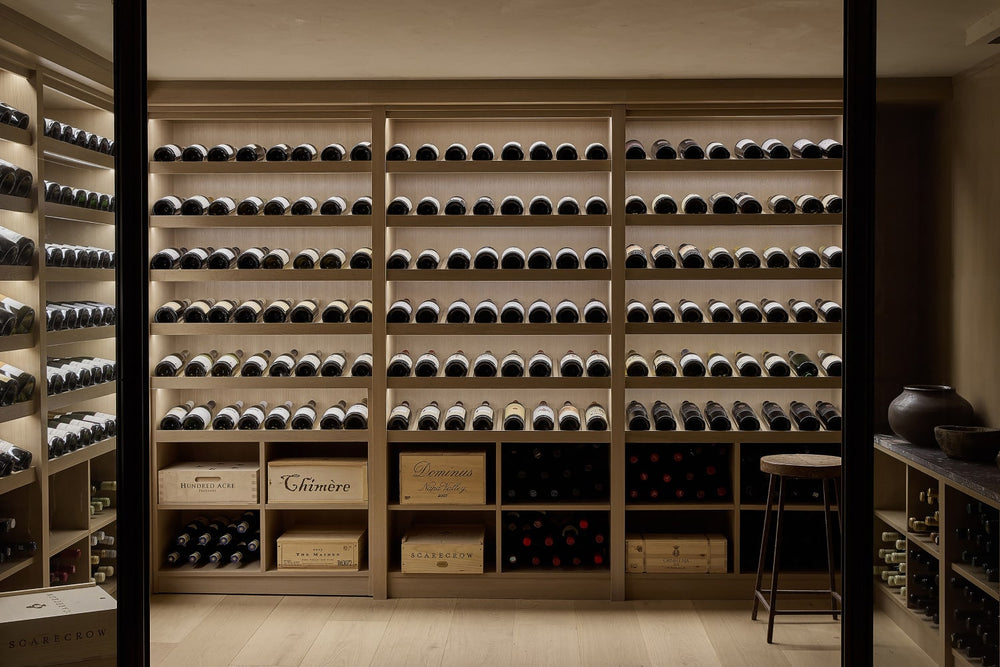
If you’re serious about long-term aging, a wine cooler is a starting point — a proper cellar or dedicated wine room with professional climate control is the ultimate destination. Our guide to wine cellar essentials covering racks, climate control and lighting is the comprehensive reference for this step up. For those building modular storage solutions that work with a cooler, our modular wine rack guide covers expandable options that complement a wine fridge perfectly.
Maintenance: Keeping Your Wine Cooler Running Perfectly
A wine cooler is an appliance, and like all appliances it benefits from regular maintenance. The units that last 10+ years are overwhelmingly owned by people who follow basic maintenance habits. Here’s what to do:
Monthly: Wipe Down Door Seal
The door gasket (rubber seal) is the most failure-prone component on budget wine coolers. Food particles, spills, and mold can compromise the seal, allowing warm air in and cool air out. Wipe the gasket monthly with a damp cloth, and inspect for cracks or gaps. A failing gasket causes the compressor to run continuously, raising your energy bill and accelerating wear.
Every 3 Months: Clean Interior Shelves
Remove shelves and wipe with a mild solution of water and white vinegar. Avoid harsh chemical cleaners — residual odors can transfer to wine through the cork. Wipe the interior walls with the same solution, paying attention to corners. Leave the door open for 30 minutes before restocking to ensure full drying.
Every 6 Months: Clean Condenser Coils (Compressor Units)
Dust accumulation on the condenser coils (typically accessible from the rear or bottom of the unit) reduces cooling efficiency by up to 25%. Use a vacuum cleaner with a brush attachment or a condenser coil brush to remove dust buildup. This single maintenance step extends compressor life more than any other action.
Annually: Inspect and Replace Carbon Filters
Many wine coolers include activated carbon filters that absorb odors. Check your unit’s manual — if it has a filter, replace it annually. This prevents odor buildup from affecting your wine through cork permeation over long storage periods.
Monitor Temperature Regularly
Even accurate units can drift over time. Keep a basic wine thermometer inside the unit and check it monthly. A 3–5°F drift from your set temperature could indicate a gasket failure, low refrigerant, or thermostat calibration issue — all addressable before they become catastrophic.
After Opening a Bottle: Smart Preservation
Your cooler protects unopened bottles perfectly — but once a bottle is open, oxidation begins immediately. Having the right tools to preserve your opened wine is as important as the cooler itself. Our comparison of Coravin vs Vacu-Vin and guide to how long wine lasts after opening will help you maximize each bottle. For screw-top wines, our best wine stoppers guide covers the most effective options.
Alternatives, Upgrades, and Complementary Products
A wine cooler doesn’t exist in isolation — it’s part of a broader wine lifestyle ecosystem. Here’s how it fits with other wine accessories and products:
If You Want to Spend More
The $500–$1,500 category opens up built-in-capable units, commercial-grade compressors, larger dual-zone configurations, and premium brands like Kalamera and Vinotemp. Our Kalamera 24 wine cooler review, Vinotemp wine cooler reviews, and Whynter wine cooler review cover premium options, as does our broader best wine fridges guide. If security matters (shared spaces, AirBnb properties), our best wine fridges with lock covers that specific requirement.
Essential Complementary Accessories
A great wine cooler deserves great support accessories. A proper corkscrew or opener makes every bottle easier — see our top electric corkscrews and top-rated wine bottle openers. Once open, a good aerator or decanter can dramatically improve the wine — our aerator vs decanter comparison, top-rated wine aerators, and top-rated wine decanters cover this comprehensively.
The right glassware matters too — see our complete guide to kinds of wine glasses and their uses and our comparison of Bordeaux vs Burgundy glass shapes to ensure the wine from your cooler is served in appropriate stemware. Our full roundup of wine accessories every host needs is the definitive checklist for building a complete at-home wine setup.
For Gift-Givers
A wine cooler makes a spectacular gift for a wine lover, but if budget is a concern, there are excellent alternatives. Our top wine accessory gifts guide, best wine gift baskets, and top insulated wine bags for transport and gifting cover gift options at every budget level.
Frequently Asked Questions
Conclusion: The Right Cooler Is Out There for Every Budget
The $500 ceiling covers an enormous amount of quality in the 2026 wine cooler market. You can get genuine compressor power, dual-zone temperature control, premium beechwood shelving, and capacity for up to 60 bottles — all without exceeding budget. The key is matching the right unit to your specific situation rather than defaulting to whichever looks nicest in the product photo.
If you’re buying your first wine cooler, the Wine Enthusiast 32-Bottle Dual Zone covers the most use cases and provides the most flexibility as your collection evolves. If you want the absolute best single-zone performance with premium build quality, the NewAir 29-Bottle Compressor is our top overall pick. For maximum capacity on a budget, the BLACK+DECKER 60-Bottle is unmatched at this price point. For a noise-sensitive space, the Ivation 33-Bottle Thermoelectric is the only reasonable choice. And for a large mixed collection with full dual-zone control, the KingChii 51-Bottle delivers outstanding value.
Whichever unit you choose, pair it with the right knowledge: use our wine and food pairing guide to make the most of every bottle you chill, our wine glossary to build your vocabulary, and our 2026 affordable wine picks to keep your cooler stocked with excellent bottles. The investment in proper storage pays dividends in every glass you pour.
Ready to Protect Your Collection?
Browse all five picks on Amazon and choose the wine cooler that fits your space, budget, and collection. Every bottle you own deserves the right temperature.
Shop #1 Pick: NewAir 29-Bottle →