🍷 Wine Education & Technique
Decanting Wine: The Complete Guide to Unlocking Every Bottle’s Full Potential
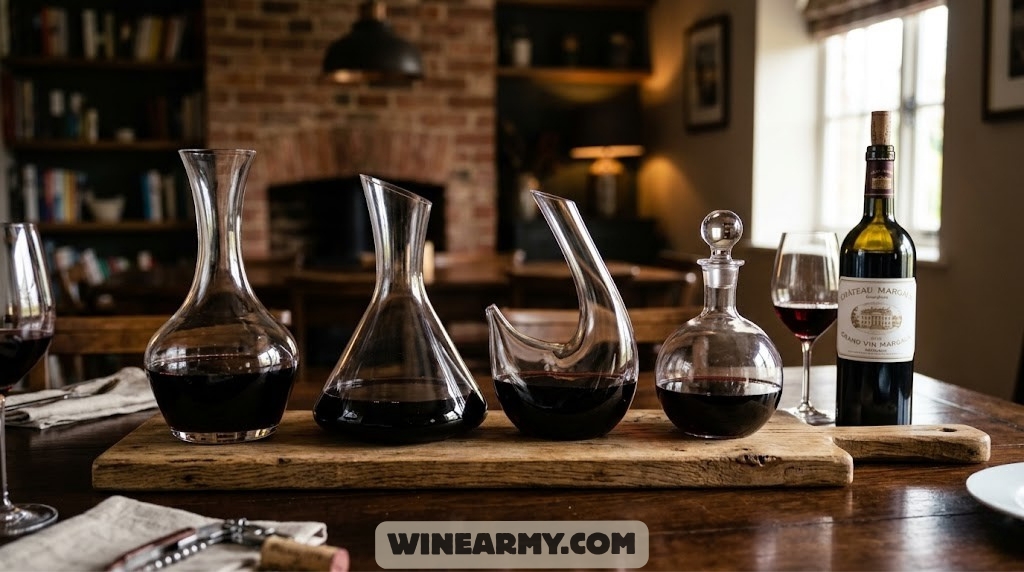
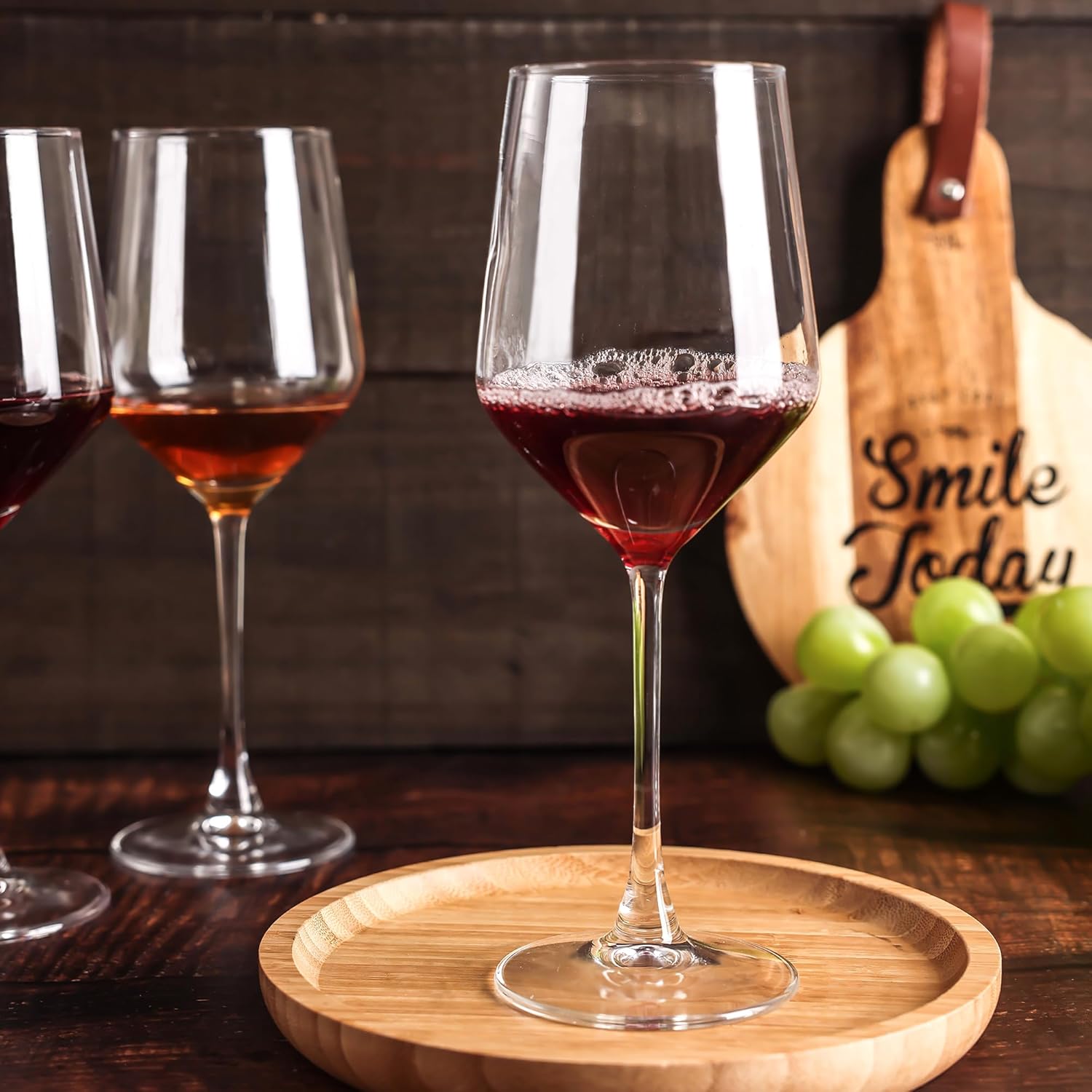
Different decanter shapes serve different wines — shape truly matters when it comes to aeration surface area.
There is a moment — familiar to any committed wine lover — when you pull a bottle from the rack, pour it eagerly, take a sip, and feel immediately that something is missing. The wine tastes closed, harsh, or oddly flat. The aroma is muffled. The tannins feel like sandpaper. You know the wine should be better than this.
The solution, almost always, is a decanter and a little patience.
Decanting is one of the oldest and most transformative rituals in wine culture. Done correctly, it can turn a good bottle into a great one, coax extraordinary complexity from a stubbornly closed young wine, and separate the brilliant, clear wine from the gritty sediment that accumulates in aged bottles. Yet it is also one of the most misunderstood practices — many wine enthusiasts either skip it entirely or apply it indiscriminately without understanding what it actually achieves.
This guide covers everything you need to know: the science behind decanting, which wines benefit and which don’t, how long to decant each style, how to choose and use a decanter properly, and how to avoid the mistakes that can ruin an otherwise perfect bottle. Whether you’re a curious beginner who just bought your first decanter or an experienced collector managing a serious wine cellar, the information here will change how you open every future bottle.
1. What Is Wine Decanting?
Decanting is the process of slowly pouring wine from its bottle into a separate vessel — the decanter — leaving behind any sediment that has settled at the bottom of the bottle. Beyond sediment separation, the act of pouring wine exposes it to oxygen, which can dramatically alter its aromatics, flavor, and texture over time.
A wine decanter is typically a wide-bottomed glass vessel with a narrow neck. The wide base maximizes the surface area of the wine exposed to air, while the narrow neck controls the pour. Decanters come in an enormous variety of shapes and sizes — from classic conical carafes to elaborate aerating swan-neck designs — but they all serve the same fundamental purpose.
The word “decant” comes from the Medieval Latin decanthare, which means “to pour from the edge of a vessel.” The practice dates back to ancient Rome, where wine was routinely transferred from amphoras into smaller jugs before serving. By the 18th century, English glassmakers had developed the cut-crystal decanters we still recognize today, and the practice became standard among aristocratic wine drinkers.
Today, decanting is widely practiced by sommeliers in fine-dining restaurants, by wine collectors opening aged bottles from their cellars, and by everyday enthusiasts who want to get the most out of a special bottle. It is not a form of pretension — it is a practical tool that, when applied correctly, genuinely improves what ends up in your glass.
To understand why decanting works, you need to understand what oxygen does to wine — which takes us to the concept of oxidation and reduction in winemaking. Wine is a living, breathing product, and its evolution in the glass (and the decanter) is driven by chemistry, not magic.
Top Pick on Amazon
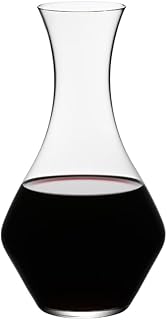
Riedel Tyrol Crystal Decanter
Hand-blown lead-free crystal with a wide aerating base. Ideal for young Cabernet, Syrah, and structured reds. Beautiful enough to serve at the table.
View on Amazon2. Why Decant Wine at All? The Science Explained
At its core, decanting harnesses the power of oxygen to transform wine. The two mechanisms at work are aeration and sediment separation, and each serves a distinct purpose.
Aeration: Letting the Wine Breathe
When wine is sealed inside a bottle, it exists in a low-oxygen environment. During aging, this allows slow, controlled development. But when that wine is poured directly from bottle to glass, it can be in a “reduced” state — meaning it’s been so starved of oxygen that its aromas are suppressed and its tannins are still tightly wound.
Pouring wine into a decanter dramatically increases its exposure to air. Oxygen reacts with the volatile aromatic compounds in wine, allowing them to develop and become more expressive. This is often described as the wine “opening up.” A Cabernet Sauvignon that smells of little more than raw plum and pencil shavings five minutes after opening may blossom into a wine full of blackcurrant, cedar, leather, and violets after 60 to 90 minutes in a decanter.
Oxygen also has a softening effect on tannins. Tannins — the grippy, astringent compounds found in red wine — are large polyphenol molecules that bind together (polymerize) when exposed to oxygen, forming longer chains that feel smoother and less abrasive on the palate. This is why a young, tannic wine like Barolo or a structured Bordeaux can taste dramatically more approachable after decanting.
There is also a third effect: the evaporation of off-aromas. Some wines, particularly those sealed under cork for several years, develop what is called “bottle stink” — a slightly sulfurous or musty aroma caused by reductive compounds like hydrogen sulfide or mercaptans. Exposure to air during decanting allows these volatile compounds to dissipate, revealing the clean fruit and mineral character beneath.
Sediment Separation: The Practical Purpose
Many aged red wines — particularly those over ten years old — develop a layer of sediment at the bottom of the bottle. This sediment is made up of polymerized tannins, pigments, and tartrate crystals that precipitate out of solution as the wine ages. While sediment is harmless, it is gritty and unpleasant to drink, and its presence in the glass can make an otherwise beautiful wine taste bitter and muddy.
Decanting allows you to pour the clear wine off the top of the sediment layer, leaving the sludge behind in the bottle. Done properly — slowly, over a light source — you can transfer nearly every drop of clear wine while keeping the sediment contained. We’ll cover this technique in detail in the step-by-step section.
“A wine poured directly from bottle to glass is a story told mid-sentence. Decanting gives it time to reach its proper beginning.”— Sommelier wisdom, repeated in cellars worldwide
What Decanting Does NOT Do
It’s equally important to understand the limits of decanting. It cannot fix a wine that is corked (affected by TCA contamination), oxidized, or past its prime. It will not transform a mediocre wine into a fine one — if the fruit quality isn’t there, no amount of air exposure will create it. And it is not a substitute for proper wine storage; a wine that has been subjected to heat damage or UV exposure cannot be saved by a decanter.
3. Which Wines Benefit Most from Decanting?
Not every wine needs decanting, and some wines can actually be harmed by excessive air exposure. Knowing which wines to decant — and which to pour straight from bottle — is a crucial piece of wine knowledge.
Wines That Absolutely Benefit from Decanting
The wines that respond most dramatically to decanting share a common profile: they are high in tannins, aromatic complexity, or reductive character. The most important categories are:
- Young, full-bodied red wines — Cabernet Sauvignon, Syrah/Shiraz, Nebbiolo (Barolo, Barbaresco), Sangiovese (Brunello di Montalcino), Malbec, Tannat, Tempranillo (Reserva and Gran Reserva Rioja). These wines are typically released while still quite tight and structured. Decanting for 1–3 hours can dramatically soften their tannins and unfurl their aromatics.
- Aged red wines with sediment — Any red wine with 10+ years of bottle age may have developed sediment that needs to be separated before serving. The decanting process here is primarily functional, not about aeration.
- Wines with reductive off-aromas — A faint sulfurous smell or “struck match” aroma is common in wines made in a reductive style (no or minimal oxygen during winemaking). Decanting for 20–30 minutes allows these aromas to blow off.
- Dense, structured Rhône wines — Châteauneuf-du-Pape, Hermitage, and Côte-Rôtie are notorious for needing air to reveal their best character.
Wines That Benefit Moderately
- Medium-bodied reds — Merlot, Grenache, Zinfandel, and many Italian reds (Chianti, Barbera) benefit from 30–60 minutes of decanting, though they’re not as demanding as the big reds.
- Full-bodied white wines — Aged white Burgundy (Meursault, Montrachet), white Bordeaux, Viognier, and aged white Rioja can all benefit from brief decanting, surprising as that may seem. We’ll cover this in depth in Section 7.
- Natural wines — Many natural and low-intervention wines are made with minimal sulfur and can have reductive or funky aromas on opening that benefit greatly from air.
Wines That Should NOT Be Decanted
- Delicate, aged red wines — A 30-year-old Pinot Noir or aged red Burgundy is fragile. Too much oxygen will destroy it in minutes. These wines should be decanted very briefly (if at all) purely for sediment separation, then poured immediately.
- Light, fruit-forward reds — Beaujolais Nouveau, young Pinot Noir, light Dolcetto — wines that lead with fresh, primary fruit aromas. Decanting may cause them to lose their freshness and vibrancy rather than improve.
- Aromatic white wines — Riesling, Sauvignon Blanc, Pinot Gris — these wines are defined by their delicate aromatics, which evaporate quickly with air exposure. Pour straight from bottle to well-chosen glass.
- Sparkling wines — Never decant Champagne, Prosecco, Cava, or any sparkling wine. You’ll lose all the bubbles. (Though some sommeliers briefly decant very old vintage Champagne purely for sediment — a specialized exception.)
- Sherry, Port, and fortified wines — These are complex and nuanced; some benefit from decanting, but only in specific contexts.
| Wine Style | Decant? | Duration | Primary Reason |
|---|---|---|---|
| Young Cabernet Sauvignon | ✅ Yes | 60–120 min | Tannin softening, aeration |
| Young Barolo / Nebbiolo | ✅ Yes | 90–180 min | Tannin softening, aeration |
| Young Syrah / Shiraz | ✅ Yes | 60–90 min | Aeration, open aromatics |
| Aged Red (10–20 yrs) | ✅ Yes | 30–60 min | Sediment separation |
| Very Old Red (20+ yrs) | ⚠️ Brief | 15–30 min max | Sediment only — fragile |
| Medium-Bodied Red | ✅ Yes | 30–60 min | Aeration |
| Light Red (Beaujolais) | ❌ No | — | Risk losing freshness |
| Full-Bodied White | ⚠️ Optional | 15–30 min | Open aromatics |
| Aromatic White | ❌ No | — | Lose delicate aromas |
| Sparkling Wine | ❌ Never | — | Lose carbonation |
| Rosé | ❌ Rarely | — | Best fresh from bottle |

Editor’s Choice
Wine Enthusiast Fusion Air Twist Decanter
The aerating spiral design speeds up oxygen contact, making it ideal for young, tannic reds. Lead-free crystal, dishwasher-safe base.
View on Amazon4. How to Decant Wine: A Step-by-Step Guide
The physical act of decanting is simple once you know the technique, but there are several steps — especially with aged wines — where a small mistake can spoil the experience. Here is the complete process from bottle to decanter.
What You’ll Need
- A clean, odor-free decanter (glass or crystal)
- A wine opener (a quality waiter’s corkscrew is ideal)
- A foil cutter
- A light source (candle, flashlight, or phone torch) for aged wines with sediment
- A clean cloth or wine napkin
Step 1: Stand the Bottle Upright (if it has sediment)
If your bottle is from a cellar or wine rack where it has been lying horizontally, stand it upright at least 24 hours before you plan to open it. Preferably 48 hours. This allows any sediment to sink to the bottom of the bottle, making it far easier to separate during the pour. If you forget to do this or discover the bottle the same day, stand it upright for at least 2–4 hours and pour very slowly.
Step 2: Remove the Foil and Open the Bottle
Use a foil cutter to remove the foil cleanly just below the lip of the bottle. Wipe the lip of the bottle with a clean cloth. Insert your corkscrew and pull the cork slowly and steadily — do not twist or jerk, as this can disturb the sediment. If using a waiter’s corkscrew, use the lever mechanism for a smooth extraction. Smell the cork — if it smells strongly of wet cardboard or must, the wine may be corked.
Step 3: Position Your Light Source
This step matters primarily for aged wines with visible sediment. Position a candle, pen-light, or phone torch beneath the neck of the bottle so the light shines up through the glass. When you pour, you’ll be able to see the wine passing through the neck — and when sediment starts to cloud the liquid near the neck, you stop pouring immediately.
Step 4: Pour Slowly and Steadily into the Decanter
Hold the bottle at the base (for control and warmth management) and pour slowly into the decanter. Aim the wine at the inner wall of the decanter rather than pouring straight down — this reduces splashing and allows the wine to flow gently over the interior surface, beginning to aerate. Pour in one continuous motion. If you stop and restart, sediment can be disturbed and mixed back into the wine. Leave about 2–3 cm of wine in the bottle when you see sediment approaching the neck.
Step 5: Allow the Wine to Rest
Once decanted, leave the wine undisturbed for the appropriate resting time (see our decanting times chart in Section 5). Keep the decanter at room temperature for reds, and slightly cooler (around 55–60°F / 13–15°C) for white wines. Resist the urge to cover the decanter — the open neck is part of the aeration process. Taste the wine every 20–30 minutes if you’re uncertain about timing. You’ll notice it evolving as it breathes.
Step 6: Serve and Enjoy
When you pour from the decanter into glasses, fill each glass only about one-third full. This is not a sommelier affectation — it leaves room in the glass for the wine’s aromas to collect and concentrate above the liquid surface, allowing you to fully appreciate the bouquet before drinking. Use the right glass for the wine: a large Bordeaux glass for Cabernet, a wide-bowled Burgundy glass for Pinot Noir. For guidance on glass shapes, see our complete guide to wine glass types and their uses.
5. Decanting Times by Wine Type: The Definitive Chart
One of the most common questions about decanting is simply: “How long?” The honest answer is that it depends on the wine — its grape variety, age, producer style, and even that specific vintage’s conditions. However, the following guidelines will serve you well in the vast majority of situations.
Barolo & Barbaresco
Italy’s most tannic reds. Young vintages may need the full four hours. Older vintages (15+ yrs) need only 45–90 min.
Brunello di Montalcino
Powerful and austere when young. Let it open fully before serving.
Cabernet Sauvignon
New World styles may need less time than structured Bordeaux.
Bordeaux (young)
Left bank (Cabernet-dominant) typically needs more time than right bank (Merlot).
Syrah / Shiraz
Northern Rhône Syrah may need longer than Australian Shiraz.
Amarone della Valpolicella
One of Italy’s most concentrated wines. Give it plenty of time.
Malbec
Argentine Malbec opens up beautifully with an hour’s air.
Aged Red (10–20 yrs)
Primarily for sediment. Don’t over-aerate fragile aged wines.
Very Old Red (20+ yrs)
Handle gently. Over-decanting destroys ancient wines quickly.
Merlot & Grenache
Softer tannins need less time, but still benefit from brief aeration.
Full-Bodied White
White Burgundy, Viognier. Keep chilled during decanting.
Natural/Low-Sulfur Wine
Often needs brief air to clear initial funky reductive aromas.
For very old or very delicate wines, some sommeliers use what is known as a “double decant” — they first decant the wine normally to separate the sediment, then pour it back into the clean bottle and serve directly from there. This minimizes aeration while still removing unwanted sediment.
How you store your wine in the first place affects how much decanting it needs. Wines stored in optimal conditions — stable temperature, proper humidity, minimal vibration — tend to develop more gracefully and may need slightly less decanting time than wines subjected to fluctuating conditions. See our guide to proper wine storage at home for the full picture.

Budget-Friendly Pick
Luigi Bormioli Incanto Crystal Decanter
Elegant Italian crystal at an accessible price point. Excellent for everyday reds — Chianti, Malbec, Barbera. Easy to clean, lead-free, stable base.
View on Amazon6. Choosing the Right Decanter: Shape, Size, and Material
Walk into any wine shop or search online and you’ll find hundreds of decanter options. The choices range from simple, inexpensive glass carafes to elaborate hand-blown crystal sculptures costing hundreds of dollars. What actually matters when choosing a decanter?
Shape: Surface Area Is Everything
The primary functional variable in decanter design is the surface area of wine exposed to air. A wide, flat-bottomed decanter (like the classic “standard” or “Bordeaux” shape) exposes a greater surface area to oxygen, which accelerates aeration. A tall, narrow decanter with a small base provides slower, more gentle aeration — better for wines that need delicate handling.
For young, tannic wines that need aggressive aeration, choose a decanter with a wide, flat base — the wider the better. The classic duck or ship’s decanter, with its extremely broad base, is ideal for wine like young Barolo or a closed Hermitage.
For aged, delicate wines, a more upright decanter with a narrower base (like a standard carafe shape) gives you controlled, gentle aeration. You don’t want to blast a 25-year-old Burgundy with oxygen — it’ll fall apart in minutes.
For everyday use across multiple wine styles, the classic U-shaped or slightly angled Bordeaux decanter is the most versatile choice. Most wine lovers who own just one decanter should choose this style. Our comprehensive breakdown of decanter shapes, capacities, and materials can help you choose the right one.
Decanter Size: How Much Wine Do You Pour?
Standard decanters hold 750ml (one bottle). Magnum decanters hold 1.5 liters, perfect for a magnum bottle or for decanting two bottles simultaneously. For a single dinner party or family gathering, a standard 750ml decanter is usually sufficient. For serious entertaining, a larger format decanter is worth considering.
Material: Glass vs. Crystal
✅ Lead-Free Crystal
- Thinner, more elegant walls
- Clearer and more brilliant in appearance
- Better acoustic ring when tapped
- Slightly more aerating surface texture
- Preferred by sommeliers worldwide
⚠️ Standard Glass
- More affordable and durable
- Thicker walls — less elegant visually
- Often dishwasher safe
- Functionally adequate for everyday use
- No practical difference in wine performance
Important note: avoid antique crystal decanters that may contain lead oxide in the glass. While short-term contact with wine is considered safe, long-term storage of wine in lead crystal is not recommended. All modern crystal decanters are manufactured to be lead-free — this is clearly labeled on reputable brands like Riedel, Zalto, and Schott Zwiesel. See how Riedel and Zalto compare across their glassware lines.
Top Decanter Styles at a Glance
| Decanter Type | Best For | Aeration Level | Price Range |
|---|---|---|---|
| Standard / Bordeaux Shape | Everyday reds, versatile use | Moderate | $25–$120 |
| Wide Duck / Magnum Base | Young tannic reds, Barolo | High | $60–$250 |
| Swan Neck / Aerating | Young Cab, Shiraz | Very High | $40–$150 |
| Upright / Narrow Carafe | Aged, delicate wines | Low-Moderate | $20–$90 |
| U-Shape / Angled | Most red wines | Moderate-High | $35–$180 |
| Magnum Decanter (1.5L) | Large format bottles, parties | Moderate | $60–$300 |
If you’re looking to explore the top-rated wine decanters across all price points, our dedicated review page covers the best options in detail.

Professional Grade
Schott Zwiesel Sensa Crystal Decanter
Machine-made Tritan crystal — incredibly durable, dishwasher safe, and still strikingly clear. A favorite of restaurant sommeliers for good reason.
View on Amazon7. Decanting White and Rosé Wine: The Surprising Case For It
The idea of decanting white wine surprises many people. It seems counterintuitive — whites are served cold, their aromas are delicate, and they seem less likely to benefit from air exposure. But for certain styles of white wine, decanting can be just as transformative as it is for reds.
Which White Wines Should You Decant?
The whites that respond best to decanting are those with body, complexity, and depth — wines that are built for aging and have developed layers of character over time. The top candidates include:
- Aged White Burgundy — Meursault, Puligny-Montrachet, Chassagne-Montrachet, and Grand Cru whites (Montrachet, Corton-Charlemagne) develop remarkable complexity with age, including notes of hazelnut, butter, cream, and mineral. A brief decant of 15–30 minutes opens up these layers beautifully.
- White Bordeaux — Pessac-Léognan and Sauternes can benefit similarly, particularly with a few years of bottle age.
- Aged White Rioja — Spain’s oxidative white Riojas, aged in American oak, are made to breathe and often improve dramatically with air.
- Viognier — The aromatic grape of Condrieu in the Northern Rhône is often exuberantly floral and can benefit from 15–20 minutes of air to reveal its full complexity.
- Orange wines — Skin-contact white wines have the structure of reds and often need significant air to open. Decant for 30–60 minutes as you would a medium-bodied red.
The Temperature Challenge
The key challenge when decanting white wine is temperature control. White wine should be served cold (around 50–58°F / 10–14°C, depending on style), but decanting in a warm room can raise the temperature too quickly. Solutions include:
- Chill the decanter in the refrigerator before use
- Place the decanter in an ice-water bath while the wine rests
- Decant for only 15–20 minutes to limit temperature rise
- Start the wine a few degrees cooler than your ideal serving temperature
What About Rosé?
Standard rosé wines — fresh, youthful, and fruit-forward — are best served straight from the chilled bottle. Their appeal lies precisely in their immediacy: bright berry aromas, crisp acidity, refreshing lightness. Air exposure only diminishes these qualities.
However, there are aged, complex rosés (particularly from Tavel in the Rhône or aged Provençal rosés from serious producers) that can handle and benefit from brief decanting. These wines are relatively rare and typically not what most people are drinking at the Sunday barbecue.
8. Decanting Old and Aged Wines: A Different Approach Entirely
Decanting an old wine — particularly one that’s been aging for 20 or more years — is one of the most exciting and nerve-wracking experiences in wine. Do it right and you’ll unlock something extraordinary. Do it wrong and you’ll reduce a priceless bottle to an oxidized shadow of its former self within minutes.
The Unique Challenge of Old Wine
As red wines age, their tannins gradually polymerize (link together into longer chains), which is why old wines feel so much softer and silkier on the palate than young ones. This same process also causes pigment and tannin to precipitate out of solution as sediment. So old wines typically have two characteristics that interact when decanting: they are fragile (easily damaged by too much oxygen) but often rich with sediment that needs to be removed.
The window of perfection for a very old wine in a decanter can be incredibly narrow — sometimes as little as 30 minutes. A wine that is sublime at 8:00 PM may be flat and muted by 9:30. This is why experienced collectors often “taste the evolution” of an old wine in the glass rather than decanting it all at once.
Double Decanting Technique for Old Wines
The double decanting method works as follows:
-
First Decant (Standard) Stand the bottle for 48+ hours. Decant slowly over a light source into a clean decanter, separating all sediment. This is purely functional — about removing the grit.
-
Rinse the Original Bottle Rinse the empty bottle thoroughly with filtered water or a small amount of the same wine, removing any residual sediment.
-
Return Wine to Bottle Gently pour the clear, decanted wine back into the cleaned bottle. The wine has had a brief encounter with air during the first decant but is now back in a low-oxygen environment.
-
Serve From the Bottle Pour directly from the bottle into glasses, and taste the wine’s evolution over the next 30–60 minutes as it develops in the glass.
Reading the Wine as It Evolves
Old wines often go through phases in the glass. The first pour might seem muted or closed. After 15 minutes, a wave of complexity can emerge — dried fruit, leather, forest floor, potpourri, old wood — that takes your breath away. And then, sometimes, it fades gently as the wine’s remaining volatile compounds escape. This lifecycle is part of what makes old wine so captivating.
Understanding wine sediment in depth — what it’s made of, why it forms, and how to handle it — is essential knowledge for anyone managing a wine collection.

Aged Wine Specialist
Waterford Lismore Prestige Decanter
The gold standard for presenting aged, precious wines. Hand-cut Waterford crystal in the iconic Lismore pattern. Makes a remarkable gift for serious collectors.
View on Amazon9. Decanter vs. Wine Aerator: Which Is Better?
In recent years, wine aerators have become popular as a fast, convenient alternative to decanting. They work by forcing the wine through a small device — either over a mesh or through a venturi mechanism — that introduces air bubbles into the wine stream as it’s poured. The result is rapid oxygenation in seconds rather than hours.
So which should you use? The answer depends entirely on what you’re trying to achieve. Our dedicated aerator vs. decanter comparison goes deep on this debate, but here is the summary:
When an Aerator Is Better
- You’ve just opened a wine on impulse and have no time to wait
- You’re serving a young but not extremely tannic wine (Merlot, Grenache, lighter Cabernet)
- You want to pour individual glasses rather than decanting the whole bottle
- Convenience and speed are the priority
When a Decanter Is Better
- The wine is very young and seriously tannic (Barolo, young Bordeaux)
- The wine has sediment that needs separation
- You want the wine to evolve gradually over a meal
- You’re presenting wine for an occasion where aesthetics matter
- The wine has reductive off-aromas that need time to dissipate
| Feature | Wine Aerator | Decanter |
|---|---|---|
| Aeration Speed | Instant (seconds) | Slow (30 min–3 hrs) |
| Aeration Quality | Good for mild reds | Superior for tannic reds |
| Sediment Removal | ❌ No | ✅ Yes |
| Serves Whole Bottle | Per glass | Yes, all at once |
| Visual Presentation | Functional | Elegant |
| Price Range | $10–$60 | $25–$300+ |
| Best For | Casual, everyday wine | Fine wine, aged wine, big reds |
| Cleaning | Simple rinse | Requires proper cleaning |
If you’re a serious wine enthusiast, having both is the ideal solution. Use the best aerator for Tuesday’s weeknight bottle, and reserve the decanter for Saturday’s special occasion. You can also explore electric aerators, which combine the speed of a conventional aerator with more controlled oxygenation.
10. Common Decanting Mistakes — And How to Avoid Them
Even experienced wine drinkers make mistakes when decanting. Here are the most common errors and the simple fixes for each.
Mistake 1: Decanting Too Long
The most frequent error. Over-aeration causes fruit aromas to dissipate, leaving a flat, exhausted wine. Fix: taste the wine every 20–30 minutes. Serve when it tastes best, not when the timer says.
Mistake 2: Not Decanting at All for Young Tannic Reds
Opening a young Barolo or a serious Napa Cab and pouring it straight into glasses is a missed opportunity. The wine will almost always be better after an hour or two in a decanter. Even if you taste it straight from the bottle, try leaving a small amount in the decanter and tasting the difference after an hour — the contrast is often startling.
Mistake 3: Skipping the Light Source for Aged Wines
Without backlighting, you cannot see when sediment is approaching the neck of the bottle. The result is sediment clouding your beautiful decanter full of wine. Always use a light source for any wine with 8+ years of age, and for any bottle that has been stored lying down for a long time.
Mistake 4: Rinsing the Decanter with Tap Water Before Use
Tap water can contain chlorine, minerals, and odors that will subtly affect the wine’s aromatics. Always rinse decanters with filtered water, or — even better — rinse with a small splash of the same wine you’re about to decant (a technique called “conditioning” the decanter).
Mistake 5: Serving From an Uncleaned or Musty Decanter
Decanters that haven’t been properly cleaned and dried can harbor residual wine stains, mildew, or musty odors. Always rinse and inspect your decanter before use, and check the interior for any discoloration or smell. We’ll cover how to clean wine decanters and remove stains in Section 11.
Mistake 6: Decanting the Wrong Wines
Decanting a fresh, vibrant Sauvignon Blanc or a delicate young Pinot Noir strips them of exactly what makes them appealing. Know which wines benefit and which don’t (see Section 3).
Mistake 7: Pouring in Starts and Stops
Every time you pause and restart the pour, you disturb the sediment layer in the bottle and risk mixing it back into the wine. Pour in one smooth, continuous motion from beginning to end. If you must pause, do so only when the bottle is completely level and then resume extremely slowly.
Mistake 8: Storing Wine in the Decanter
A decanter is not a storage vessel. Once wine is in a decanter and exposed to air, the clock is ticking. Don’t pour wine into a decanter and then “save it for tomorrow.” The wine will oxidize overnight. If you have leftover wine, use a quality wine stopper or a vacuum preserver in the bottle. For more context on how long open wine lasts, see our guide on how long wine lasts after opening.
11. Decanter Cleaning and Care: Keep It Pristine
A beautiful crystal decanter that smells of stale wine or is visibly stained on the inside will do more harm than good. Proper cleaning and storage of your decanter is an essential part of using it well.
Immediate Post-Use Rinse
The moment you’ve served the last glass, rinse the decanter immediately with warm (not hot) water. Don’t use soap — soap residue is nearly impossible to fully remove from a decanter’s narrow neck and can affect the wine’s flavor next time. Warm water alone, used promptly while the wine film is still fresh, is sufficient for routine cleaning.
Removing Stubborn Wine Stains
After several uses, wine stains (tannin and anthocyanin deposits) will build up inside the decanter, appearing as a dark reddish-brown film or crust. To remove these:
- Method 1 — Decanter Cleaning Beads: Fill the decanter with warm water and add a handful of stainless steel or lead-free cleaning beads. Swirl vigorously for 2–3 minutes. The beads act as gentle abrasives that scrub the interior surface. Rinse thoroughly. This is the most popular professional method.
- Method 2 — White Vinegar and Salt: Pour a mixture of white wine vinegar and coarse salt into the decanter. Swirl and let it sit for 10–15 minutes, then swirl again vigorously before rinsing with warm water. The acid and abrasive salt combination dissolves and loosens stains effectively.
- Method 3 — Denture Cleaning Tablets: Fill the decanter with warm water and drop in one or two denture-cleaning tablets. Let soak for 30–60 minutes. The effervescent action loosens stains without scrubbing. Rinse very thoroughly afterward.
- Method 4 — Dedicated Decanter Cleaning Tablets: Products specifically formulated for wine equipment (like Oenokem or similar) are available and very effective. Follow the package instructions.
For a full walkthrough on removing even the most stubborn deposits, see our dedicated article on wine decanter cleaning and stain removal.
Drying the Decanter
Drying a decanter is notoriously tricky due to its wide body and narrow neck. Options include:
- Invest in a decanter drying stand — a bent-wire or plastic stand that holds the decanter upside down at an angle, allowing water to drain and air to circulate
- Dry the inside by inserting a clean, lint-free microfiber cloth attached to a long-handled brush or wand
- Air dry by leaving the decanter upright with the neck exposed — this takes longer but is perfectly effective if you store the decanter for at least 24 hours before the next use
Storage
Store your clean decanter upright in a cabinet, away from cooking odors and perfumes. Don’t store it with the stopper (if it has one) inserted — this traps residual moisture and can cause mustiness. Keep a clean cloth draped loosely over the opening to prevent dust from entering while still allowing air circulation.

Essential Accessory
Stainless Steel Decanter Cleaning Beads (Set)
The most effective and reusable solution for removing wine stains from decanter interiors. Safe for crystal and glass, used by sommeliers worldwide.
View on Amazon12. Decanting in Context: The Bigger Picture of Wine Service
Decanting doesn’t exist in isolation — it’s one part of a broader practice of serving wine thoughtfully and well. Understanding how it fits into the larger context of wine knowledge will help you make better decisions at the table and in the cellar.
Temperature: The Non-Negotiable Variable
Even the most perfectly decanted wine will disappoint if served at the wrong temperature. Red wines are commonly served too warm (especially in centrally heated homes), which amplifies alcohol and flattens aromatics. Most full-bodied reds are best at 62–65°F (17–18°C), not the 72°F (22°C) of a typical living room. A brief stint in a wine cooler or refrigerator can bring a room-temperature wine down to the correct serving temperature before decanting.
If you’re serious about temperature control, a wine thermometer is genuinely useful — and far more affordable than the premium bottles you’re trying to serve correctly.
Pairing Decanted Wine with Food
The timing of decanting should be coordinated with your meal. If you’re decanting a Barolo for 2 hours, plan accordingly. Decant when your guests arrive, and serve the wine with dinner two hours later. The meal’s structure and your decanting timeline should be planned together.
Properly decanted, well-structured reds pair magnificently with rich foods. A tannic Cabernet that has been decanted for 90 minutes becomes an entirely different beast when paired with a perfectly grilled ribeye. Explore the art of wine pairing with steak and see how decanting changes the dynamic.
Wine Sediment: Friend or Foe?
Many wine drinkers panic when they see sediment in a bottle. It is not a flaw — it is a sign of age and natural wine development. Sediment is simply the physical manifestation of the aging process, composed of polymerized tannins and tartrate crystals. It tastes bitter and gritty, but the clear wine above it is perfectly fine (and often extraordinary).
It’s worth knowing that understanding wine sediment is a mark of experience. Seeing sediment in a bottle should excite you, not alarm you — it means the wine has been aging naturally and is probably ready for something special.
The Vocabulary of Decanting
Wine has its own vocabulary, and decanting discussions use terms that can be confusing for newer enthusiasts. Understanding words like “reductive,” “oxidative,” “aeration,” “polymerization,” and “off-aromas” will help you make sense of why decanting works the way it does. Our beginner’s wine glossary covers all of these terms and more.
When to Invest in More Equipment
Once you’re comfortable with decanting, you may find yourself wanting to expand your wine service toolkit. A good set of varietal-specific wine glasses makes a bigger difference than most people expect. A quality wine refrigerator transforms how you store and serve wine at home. And wine accessories like a proper host’s accessory kit make every wine occasion feel more considered and polished.
Frequently Asked Questions About Decanting Wine
No — not all red wines benefit from decanting, and some can actually be harmed by it. Light, fresh, fruit-forward reds like Beaujolais Nouveau, young Pinot Gris, and simple table wines are best poured straight from the bottle. They are designed for immediate enjoyment and lose their most appealing qualities — fresh berry aromas and vibrant acidity — with prolonged air exposure. Decanting is most beneficial for tannic, full-bodied reds (Cabernet Sauvignon, Barolo, Syrah) and aged wines with sediment. When in doubt, taste the wine first and decide whether it’s tight and closed (needs decanting) or already open and expressive (doesn’t).
For a young Cabernet Sauvignon (3–8 years old), plan on 60–90 minutes of decanting as a starting point. More structured, tannic examples — like a young Napa Valley Cabernet or a Médoc Cru Classé — may benefit from up to 2 hours. Older Cabernets (10+ years) generally need only 30–45 minutes, primarily to breathe and separate any sediment. The best approach is to taste the wine every 20–30 minutes and serve when it reaches its best expression. Factors like the specific vintage, producer style, and storage conditions also affect how much time the wine needs.
Absolutely yes. Over-decanting is a real risk, and it can ruin an otherwise excellent wine. When wine is exposed to too much oxygen for too long, its volatile aromatic compounds evaporate and its fruit character becomes muted and flat — a process called over-oxidation. Young, very tannic wines are more resilient and can handle longer decanting times without harm, but aged and delicate wines can deteriorate in as little as 30 minutes if over-exposed. The safest approach is always to taste the wine periodically during decanting and serve it at the moment it tastes best, regardless of what the clock says.
Yes — but only for specific styles of white wine. Full-bodied, complex whites like aged white Burgundy (Meursault, Puligny-Montrachet), aged white Rioja, white Bordeaux, and Viognier can benefit significantly from 15–30 minutes of decanting. The aeration opens up their layered aromatics and softens any reductive notes. The key challenge is temperature: white wine must stay cool, so use a pre-chilled decanter and keep the decanting time short. Light, aromatic whites like Sauvignon Blanc, Riesling, and Pinot Grigio should never be decanted — they’ll lose their freshness and delicate aromas almost immediately.
A wine decanter is a glass vessel that wine is slowly poured into, where it rests and gradually absorbs oxygen over 30 minutes to 3 hours. A wine aerator is a small handheld device that rapidly forces oxygen into the wine as you pour it through, achieving in seconds what a decanter does over hours. Aerators are great for casual, everyday wines where you want quick results. Decanters are superior for serious wines that need time to evolve, for aged wines with sediment that needs to be separated, and for any occasion where presentation matters. Both serve a similar function, but through very different methods and timescales.
Decanting does not significantly reduce sulfite (sulfur dioxide) levels in wine. Sulfites are used as a preservative and antioxidant in winemaking, and the concentration in a typical wine is too low and too stable to be meaningfully affected by decanting. However, some wines — especially those made with minimal added sulfur — may have reductive sulfur compounds like hydrogen sulfide or mercaptans that produce a temporary “struck match” or egg-like smell. These volatile compounds DO dissipate with decanting and air exposure. If you’re concerned about sulfite sensitivity, the quantity of sulfites in a wine is not going to change with decanting. The good news is that true sulfite allergies are quite rare.
Functionally, yes — any clean, odor-free glass vessel will work for the purpose of aerating wine. A regular glass pitcher, carafe, or even a wide glass bowl will expose wine to oxygen just as well as a crystal decanter. The practical differences are in aesthetics and sediment separation. A dedicated wine decanter’s narrow neck makes it easier to control the pour and separate sediment precisely. A pitcher works fine for a casual weeknight bottle, but for a special aged wine where sediment management matters, a proper decanter is worth using. There’s no chemical magic in an expensive crystal vessel — the wine doesn’t know the difference.
No — decanting is a tool, not a ritual that applies to every bottle. For everyday wines, light reds, most whites, rosés, and sparkling wines, decanting is unnecessary and can even be counterproductive. Reserve decanting for wines that genuinely benefit: young, tannic full-bodied reds; aged wines with potential sediment; wines from producers known for a reductive winemaking style; and natural wines with funky aromas that need air to settle. A good rule of thumb: taste the wine first. If it’s tight, harsh, or closed-smelling, decant it. If it’s already open, expressive, and pleasant, pour it straight. Let the wine tell you what it needs.
The most effective brush-free cleaning method is to use stainless steel cleaning beads with warm water. Fill the decanter halfway with warm water, add a tablespoon of cleaning beads, and swirl vigorously for 2–3 minutes. The beads roll around the interior and gently abrade any wine stains loose. Alternatively, fill the decanter with a solution of white wine vinegar (or diluted citric acid) and let it soak for 30–60 minutes before swirling and rinsing. For very stubborn deposits, a denture cleaning tablet dissolved in warm water and left to soak overnight is surprisingly effective. Always rinse thoroughly with filtered water after cleaning to remove any residue.
From a purely functional standpoint, an inexpensive glass decanter performs the same job as a $300 crystal one — it aerates wine and separates sediment. The differences are in aesthetics, tactile quality, and the experience of using the object. Premium crystal (Riedel, Zalto, Waterford) is thinner, more brilliant, and more pleasurable to handle. The walls refract light beautifully, which makes wine look more stunning at the table. For casual weeknight decanting, a $30–$50 glass decanter is perfectly adequate. If you’re serving special wines for important occasions, investing in a quality crystal decanter enhances the whole experience in a way that’s genuinely noticeable. Think of it as buying both function and atmosphere.
The Takeaway: Decant Thoughtfully, Drink Brilliantly
Decanting is not pretension — it is precision. It is the act of giving a wine the conditions it needs to express itself fully, whether that means separating sediment from a magnificent aged Burgundy or coaxing a young, closed Barolo to reveal the extraordinary wine it was always destined to become. Done correctly, with the right decanter, the right timing, and the right intention, it elevates every bottle it touches.
The most important thing is to approach it with curiosity rather than anxiety. Taste your wine. Adjust. Observe how it changes. That process of discovery — watching a wine open and evolve in real time — is one of the great quiet pleasures of wine culture.
Explore Our Top-Rated Decanters →
Most Popular
Riedel Cabernet / Merlot Wine Decanter
One of the world’s best-selling decanters for good reason. Elegant, functional, perfectly balanced for pouring. An ideal first decanter or gift for a wine enthusiast.
Shop Riedel Decanters on Amazon