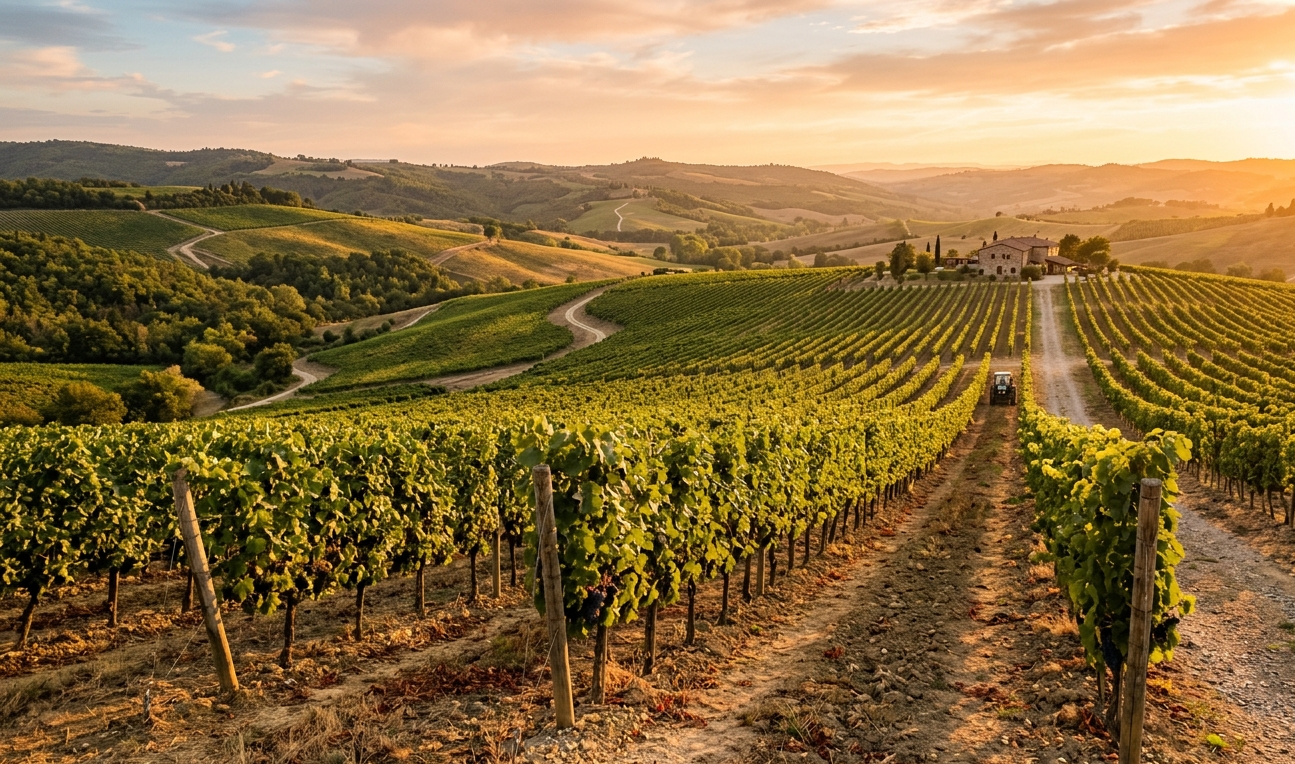
Wine Terroir Guide: How Soil, Climate & Place Shape Every Bottle You Drink
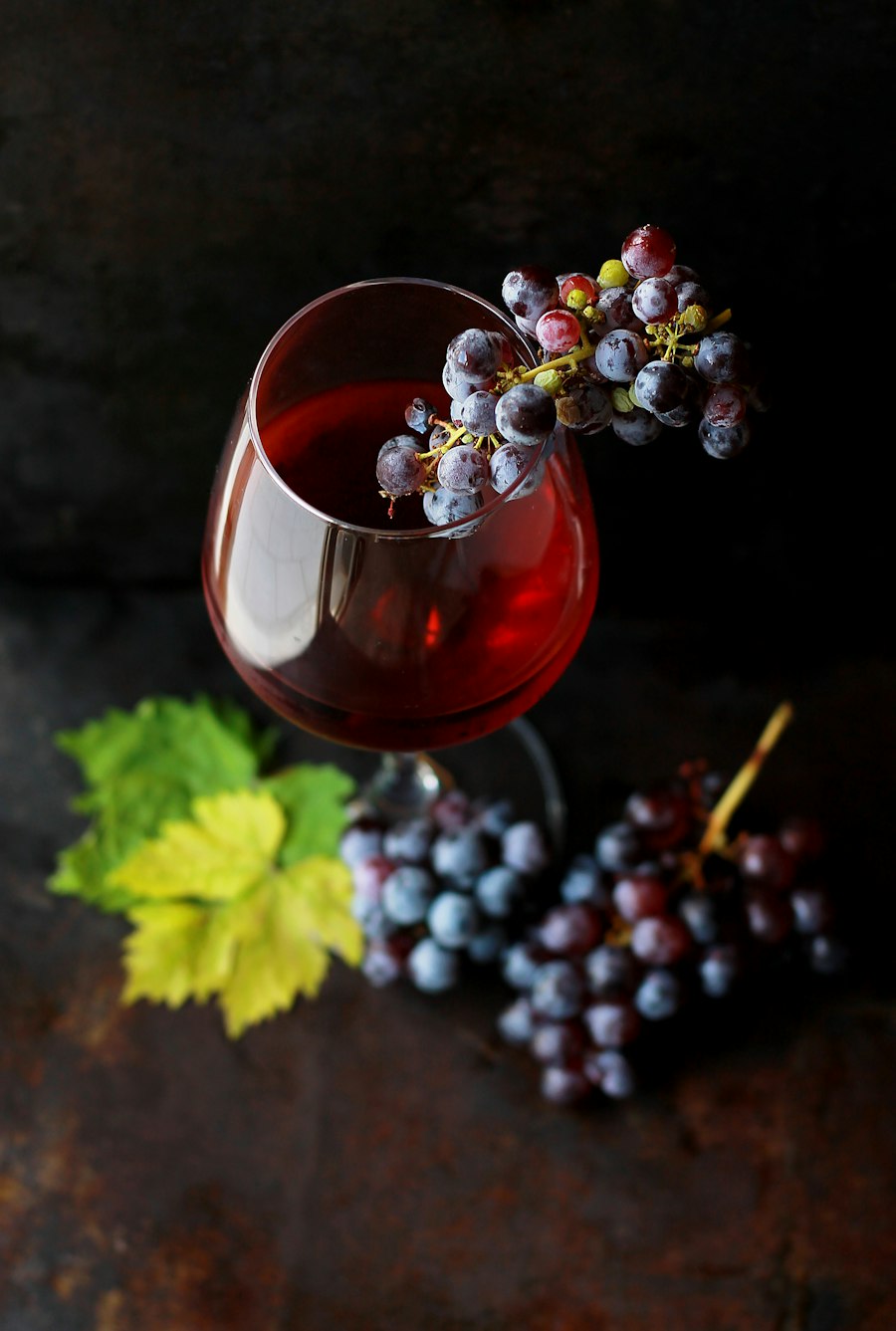
There is a reason a glass of Burgundy tastes nothing like a Napa Cabernet — even when both are made from the same grape family. There is a reason Chablis has that flinty, almost electric edge while a Puligny-Montrachet from thirty miles south tastes rich and honeyed. The answer, according to centuries of winemaking tradition and modern soil science alike, is terroir.
Terroir is one of the most debated, misunderstood, and romantically charged concepts in the entire world of wine. For some it is a mystical truth — the idea that the land speaks through the vine, through the grape, through the wine itself. For skeptics, it is an elaborate piece of marketing mythology. The truth, as with most things worth arguing about, sits somewhere in the middle and is far richer than either extreme suggests.
This comprehensive guide walks you through every dimension of terroir: what it is, how its components interact, what it looks like on the ground in the world’s most celebrated wine regions, and — most practically — how to taste it in your glass. Whether you’re a curious beginner consulting our wine glossary for beginners or a seasoned collector exploring Old World versus New World terroir debates, this is the guide you’ve been waiting for.
1. What Is Terroir? A Concept Beyond Translation
The word terroir derives from the Latin terra — earth, land, ground. In French, it carries an almost untranslatable cultural weight: a sense of place, belonging, rootedness. Winemakers who speak of terroir are describing not merely a set of physical conditions but a philosophy — the idea that a specific plot of land has its own identity, one that expresses itself uniquely and consistently in the wine it produces year after year.
In its most practical definition, terroir encompasses every environmental factor that influences how grapes grow in a specific location. This includes:
- Soil composition — the minerals, drainage capacity, and biological life beneath the vine
- Climate — annual temperature ranges, rainfall patterns, sunshine hours, humidity
- Topography — altitude, slope angle, aspect (which direction the vineyard faces), proximity to water bodies
- The human element — viticulture practices, vine age, rootstock selection, canopy management
The concept is rooted in French wine law, which codified the relationship between place and wine through the Appellation d’Origine Contrôlée (AOC) system — a framework that restricts which grapes may be grown where and defines production methods, all in service of preserving the terroir character of each region. Today, similar systems exist across Europe under the broader EU Protected Designation of Origin (PDO) umbrella.
But terroir is not a fixed, static thing. It evolves with each vintage as rainfall differs, temperatures shift, and the microbial population of the soil responds to the previous season’s conditions. Understanding terroir means accepting that the land is alive — and that every bottle is a snapshot of a specific place in a specific moment of time.

Wine Folly: The Master Guide
The most visually stunning wine education book available — featuring detailed terroir maps, grape variety profiles, and regional guides that bring the concept of place to life.
View on Amazon →2. The Four Pillars of Terroir
Think of terroir as a four-legged table. Remove any one leg and the structure collapses — or at least becomes deeply unstable. Each pillar contributes something irreplaceable to the final expression of a wine, and none exists in isolation from the others.
What makes terroir fascinating — and scientifically rich — is that these pillars do not simply add together. They multiply. A chalky soil in a warm, sunny climate will produce an entirely different wine than the same chalky soil under cool, rainy skies. Slope aspect can turn a mediocre site into a great one simply by concentrating sunlight. A winemaker’s choice to use old vines rather than young ones can deepen the terroir expression tenfold.
For a more thorough look at how these elements intersect with winemaking traditions, our guide on organic and natural wine farming practices adds important context about how human choices either amplify or obscure what the land is trying to say.
3. Soil Types & Their Impact on Wine Character
Of all the terroir pillars, soil is the one that most captures the imagination of wine enthusiasts — and with good reason. The ground beneath a vineyard is not merely a medium through which roots reach water. It is a living ecosystem: billions of microorganisms, mineral compounds, organic matter, and physical structures that together govern what the vine absorbs, how it stresses, and ultimately what flavors concentrate in the grape.
Wine grapes, counterintuitively, thrive on poor soils. When soils are too fertile and nutrient-rich, vines allocate their energy to leaf and shoot growth rather than fruit production. Sparse, well-drained soils stress the vine just enough to drive it deep — toward water, toward minerals — and it is this depth and stress that concentrates flavor and complexity in the grape cluster.
Major Soil Types and Their Wine Signatures
| Soil Type | Key Properties | Wine Character | Famous Regions | Key Grape Varieties |
|---|---|---|---|---|
| Limestone / Chalk | High pH, excellent drainage, retains moisture deep | Taut acidity, mineral precision, elegance | Burgundy, Champagne, Chablis, Rioja | Pinot Noir, Chardonnay, Tempranillo |
| Clay | High water retention, low drainage, fertile | Full body, plushness, lower acidity | Pomerol (Bordeaux), Tuscany, Walla Walla | Merlot, Sangiovese, Syrah |
| Gravel / Gravel Alluvium | Excellent drainage, heat retention, poor nutrients | Structure, cedar, cassis, firm tannins | Médoc (Bordeaux), Marlborough | Cabernet Sauvignon, Sauvignon Blanc |
| Volcanic / Basalt | High mineral content, well-drained, often dark-colored | Smoky minerality, aromatic intensity, freshness | Etna (Sicily), Santorini, Canary Islands | Nerello Mascalese, Assyrtiko, Listán Negro |
| Slate / Schist | Heat retention, sharp drainage, low nutrients | Petrol notes (aged Riesling), delicacy, precision | Mosel (Germany), Priorat (Spain), Douro | Riesling, Grenache, Touriga Nacional |
| Sand | Very low nutrients, free-draining, warm | Light, perfumed, low tannin, early-ripening | Colares (Portugal), Camargue (France) | Ramisco, various light reds |
| Loam | Balanced fertility, moderate drainage | Generous fruit, approachable, versatile | Napa Valley, Barossa Valley, McLaren Vale | Cabernet Sauvignon, Shiraz, Zinfandel |
| Alluvial / Silt | Fertile, moderate drainage, river deposits | Soft, fruit-forward, less complexity | Valley floors globally — Napa valley floor | Merlot, Chardonnay, Sauvignon Blanc |
Limestone: The King of Wine Soils
If there is one soil type that wine lovers revere above all others, it is limestone. The combination of high pH, excellent water retention at depth (while staying well-drained at the surface), and the vine’s ability to absorb calcium ions all contribute to wines of remarkable precision and longevity. Burgundy’s Côte d’Or — the “golden slope” where the world’s most expensive Pinot Noir and Chardonnay are made — sits on a complex patchwork of limestone, marl, and clay that shifts dramatically over just a few hundred meters, explaining why a Grand Cru vineyard can produce wines of entirely different character than its neighbor separated by a stone wall.
Volcanic Soils: The Rising Star
In the past two decades, volcanic terroirs have captured tremendous attention. Regions like Etna on the slopes of Sicily’s active volcano, the island of Santorini in Greece, and the Canary Islands have produced wines of piercing mineral intensity and freshness that are almost impossible to achieve on conventional soils. The high acidity, smoke-tinged minerality, and aromatic lift of wines from these regions has created a global cult following — and their naturally low-intervention farming approaches align perfectly with the modern natural wine movement.

Wine Enthusiast Modular Stackable Wine Rack
If your terroir exploration is building your collection, you need proper storage. This modular rack keeps bottles at the ideal resting angle to protect your discoveries.
View on Amazon →4. Climate: Macroclimate, Mesoclimate & Microclimate
Climate is perhaps the most dynamic and least controllable element of terroir. Unlike soil, which changes only over geological timescales, climate varies year to year — which is why vintage matters so much for terroir-driven wines. A great vineyard in a cold, rainy year may produce a lesser wine than it would in a warm, dry vintage. Understanding climate at its three scales is essential to grasping terroir.
Macroclimate: The Regional Stage
Macroclimate describes the broad climatic character of an entire wine region. There are three principal categories relevant to viticulture:
- Cool climate (e.g., Champagne, Mosel, Burgundy, Marlborough) — higher acidity, delicate fruit, lower alcohol, longer ripening seasons. Produces wines of precision and elegance.
- Warm/moderate climate (e.g., Bordeaux, Tuscany, Napa Valley) — balanced ripeness, generous fruit, structured tannins. The “goldilocks” zone for many international varieties.
- Hot climate (e.g., Barossa Valley, Priorat, Southern Rhône) — ripe, full-bodied, higher alcohol, darker fruits. Can produce spectacular wines when altitude, aspect, or variety selection compensates.
Mesoclimate: The Vineyard’s Identity
Mesoclimate is where terroir begins to get personal. A vineyard on a south-facing slope in Burgundy (north of the equator) receives significantly more sun than one facing north — potentially enough to ripen grapes in a year where the shadier parcel struggles. The proximity of a large body of water (Bordeaux’s rivers, Lake Geneva for Swiss wines, the Pacific Ocean influence in Sonoma) moderates temperatures, slows ripening, and extends the flavor development window.
Cold air drainage is another mesoclimatic factor: cold air is denser and sinks to valley floors, raising frost risk there while leaving mid-slope vineyards warmer in spring nights — which is why the finest Burgundy vineyards occupy the mid-slope rather than the flat plain or the hilltop.
Microclimate: The Vine’s Personal Weather
Microclimate is the most intimate scale — the climate experienced by individual vine rows or even single clusters. Factors like canopy density (how much shade the leaves cast), row orientation (east-west rows vs. north-south), soil color (dark volcanic soil absorbs more heat than pale limestone), and interrow cover crops all shape the microclimate. A skilled viticulturist manages the microclimate deliberately: leaf-pulling to expose grapes to more sun, cover crops to lower soil temperature, or green harvest to concentrate flavor in fewer clusters.
For collectors seeking wines that express distinct climate character, proper storage is crucial. Our guides on home wine storage temperature and humidity and wine cellar essentials will help you protect your terroir-driven bottles.
5. Topography: Altitude, Slope, Aspect & Drainage
Topography — the physical shape and elevation of the land — is the terroir factor that often separates a good vineyard from a great one. You can find two vineyards with identical soil types within a mile of each other that produce dramatically different wines simply because one sits on a south-facing 15-degree slope while the other occupies a north-facing hillside.
Altitude: The Great Equalizer of Climate Change
For every 100 meters of elevation gain, average temperatures drop by approximately 0.6°C. In warm or hot wine regions, altitude becomes the primary mechanism for preserving freshness and acidity. Argentina’s Mendoza province grows Malbec at 900–1,500 meters — elevations that would be laughably impractical in other viticultural contexts but are essential for producing wines with brightness and longevity rather than jammy, flabby fruit. Similarly, Tuscany’s vino nobile di Montepulciano benefits from the town’s commanding 600-meter elevation, and the finest Barolo vineyards in Piedmont cluster around the towns at varying altitudes that create distinct flavor profiles.
Slope and Aspect: The Solar Equation
Slope affects terroir in multiple ways simultaneously:
- Drainage: Steep slopes drain rapidly, preventing waterlogging and stressing the vine toward deep root growth
- Cold air drainage: Slopes allow cold air to flow downhill to frost pockets, protecting mid-slope vineyards
- Sun angle: On a slope, sunlight strikes the ground at a steeper angle, increasing energy input per unit area — crucial in cool climates
- Soil erosion and concentration: Centuries of erosion concentrate organic matter and minerals differently across a slope
Aspect (which compass direction the slope faces) is arguably the single most important topographic factor in cool climates. In France, Germany, and Austria, south-facing slopes command premium prices for a reason: they receive maximum sun exposure throughout the day, achieving ripeness in vintages when north-facing slopes produce thin, underripe wines. The famous Mosel Riesling vineyards — impossibly steep, south-facing slate slopes above the river — owe their world-class status almost entirely to this topographic lottery.
Proximity to Water
Rivers, lakes, and oceans serve as temperature regulators. Their thermal mass absorbs heat during the day and releases it slowly at night, moderating extremes in both directions. This is why Bordeaux — straddling the Gironde estuary and its tributaries — can ripen Cabernet Sauvignon reliably despite being at a latitude (45°N) that would otherwise be too cold. The Willamette Valley in Oregon benefits from the moderating influence of the Pacific Ocean filtering through the Coast Range mountain gaps. Germany’s Mosel River reflects light and warmth up into the steep vineyards above it, providing a crucial thermal bonus in a marginal climate.
6. The Human Element: When People Become Part of Terroir
Traditional European terroir philosophy tends to minimize the human role — the land speaks, the vigneron merely listens. But this view has been challenged, and rightly so. The decisions made by growers and winemakers are themselves a form of terroir expression. A winemaker who harvests earlier to preserve acidity is making a different terroir statement than one who harvests late for full physiological ripeness — even from the same vineyard.
Vine Age: The Depth Factor
Old vines are among the most celebrated expressions of the human-terroir relationship. Vines over 50 years old (often labeled vieilles vignes in French) have developed extensive root systems that reach deep into the subsoil and bedrock, accessing a broader mineral palette and showing remarkable buffering capacity in drought or wet years. Their reduced yields naturally concentrate flavors. Australia’s Barossa Valley contains some of the world’s oldest Shiraz vines — ungrafted pre-phylloxera bushvines over 150 years old — producing wines of extraordinary concentration and historic identity.
Viticulture: Organic, Biodynamic & Natural Approaches
The farming approach profoundly influences terroir expression. Conventional farming with synthetic fertilizers, herbicides, and pesticides tends to homogenize vineyard conditions and suppresses the soil microbial ecosystem that many believe contributes to mineral character in wine. Organic farming — avoiding synthetic inputs — and especially biodynamic farming (which adds a cosmic dimension to farming rhythms and emphasizes soil vitality) are increasingly linked to wines of heightened terroir transparency.
For a deep dive into how farming philosophy shapes wine character, our comprehensive piece on organic and natural wine farming practices covers everything from cover crops to moon calendars. Similarly, exploring biodynamic wine reveals how radical soil-first thinking amplifies terroir expression.
✅ Terroir-Amplifying Practices
- Old vine cultivation (50+ years)
- Low yields / green harvest
- Organic or biodynamic viticulture
- Indigenous (wild) yeast fermentation
- Minimal new oak aging
- Single vineyard bottlings
- Whole cluster or whole berry fermentation
- Low filtration / minimal fining
⚠️ Terroir-Masking Practices
- Heavy new oak barrel aging
- Blending across large geographic areas
- Commercial yeast inoculants
- High yield / over-cropping
- Excessive micro-oxygenation
- Reverse osmosis / alcohol adjustment
- Heavy filtration and fining
- Young vines on fertile soils

Coravin Wine Preservation System
Terroir-driven wines are meant to evolve. The Coravin lets you taste a single-vineyard bottle at multiple points in its life without committing to the whole bottle — the perfect terroir study tool.
View on Amazon →7. Old World vs. New World Terroir: Philosophy & Practice
The debate between Old World and New World wine philosophy is, at its core, a debate about terroir — specifically, about how much weight to give the land versus the grape variety versus the winemaker’s hand. This is one of the most stimulating divides in contemporary wine culture, and it is changing rapidly.
| Dimension | Old World (France, Italy, Germany, Spain) | New World (Napa, Barossa, Marlborough, Mendoza) |
|---|---|---|
| Label focus | Place name (e.g., “Chablis”, “Barolo”) | Grape variety (e.g., “Chardonnay”, “Cabernet”) |
| Terroir philosophy | Land is primary — wines express place above all | Variety + winemaker’s vision — place is supporting context |
| Regulation | Heavily regulated (appellation rules, permitted varieties, yields) | Generally more flexible (AVA system in US less prescriptive) |
| Style tendency | Restraint, elegance, food-friendliness, lower alcohol | Fruit-forward, generous, higher alcohol, approachable young |
| Oak use | Often older barrels or large casks — less oak flavor | Historically more new oak — shifting toward restraint |
| Subregion classification | Complex hierarchy (Grand Cru, Premier Cru, Village, Regional) | Emerging single-vineyard and subappellation focus |
| Trend | Adopting more variety transparency; natural wine influence | Rapidly adopting terroir philosophy; single-vineyard bottlings exploding |
What is most exciting today is the convergence. Burgundy-trained winemakers are now making single-vineyard Pinot Noir in Oregon’s Willamette Valley that competes with Vosne-Romanée on terroir expression. Napa producers are mapping their valley floor versus mountain-grown Cabernets with the same obsessive detail as a Bordeaux château comparing its different parcels. The Old World–New World binary is dissolving into something richer: a global conversation about place.
Our detailed comparison of Old World vs. New World wine terroir explores this philosophical divide in detail, with regional examples and tasting notes. And if you’re exploring the variety question, our wine varietals explained guide pairs perfectly with this discussion.
8. The World’s Greatest Terroir Regions
Some places on Earth produce wine so distinctly shaped by their environment that they are studied, debated, and venerated like geographical artworks. These are not merely good wine regions — they are places where terroir is expressed with such consistency and individuality that no amount of winemaking technique can fully replicate what the land provides.
Burgundy, France
Côte d’Or · Limestone & MarlChampagne, France
Chalky Cretaceous LimestoneMosel, Germany
Devonian Slate · River SlopesBarolo, Piedmont, Italy
Tortonian & Helvetian SoilsPriorat, Catalonia, Spain
Llicorella (Slate & Quartz)Etna, Sicily, Italy
Volcanic Basalt & AshEmerging World-Class Terroirs to Watch
Beyond the classics, several regions are establishing their terroir credentials with increasing urgency:
- Swartland, South Africa — Ancient decomposed granite and schist soils producing Chenin Blanc and Syrah of gripping complexity
- Jura, France — Blue and grey marl producing Savagnin and Poulsard with a distinctive mineral, waxy, oxidative character unlike anything else
- Willamette Valley, Oregon — Jory and Willakenzie soils producing Pinot Noir with genuine terroir signatures tied to ancient marine sediment and volcanic material
- Ningxia, China — Desert loess soils at altitude producing structured Cabernet that is beginning to earn global terroir credibility
- Santorini, Greece — Volcanic pumice and ash hosting the ancient Assyrtiko grape in basket-trained vines over a century old, producing wines of electrifying mineral salinity
For those interested in how different glass shapes can reveal terroir expression in the glass, our guide to top red wine glass picks by variety explains how stemware choice can either amplify or muffle what the land is saying.

Riedel Veritas Pinot Noir Wine Glasses
Terroir-expressive wines deserve terroir-specific glassware. Riedel’s Veritas bowl shape is designed to direct the wine toward the palate in a way that maximizes the mineral and aromatic complexity of Pinot Noir and Chardonnay.
View on Amazon →9. Minerality in Wine: The Great Terroir Debate
Ask any sommelier what Chablis tastes like, and they will say “flinty” or “chalky” or “like wet stones.” Ask a geochemist whether limestone actually imparts these flavors to wine, and the conversation becomes far more complicated.
Minerality is the wine word that excites and frustrates in equal measure. It describes a cluster of sensations — aromas of wet slate, chalk dust, graphite, oyster shell, brine, or struck flint; a textural quality of grip or electric tension on the palate; a saline persistence in the finish. Wine lovers associate these qualities directly with the soil beneath the vine, but the science is more nuanced.
What Science Actually Tells Us
The direct uptake of soil minerals into grape flavor compounds has been extensively studied — and the results are more complicated than the simple “limestone = chalky wine” narrative suggests. Grapevines do absorb mineral ions from the soil, but the concentrations in wine are generally far too low to be directly tasted. The mineral perception in wine is real, but its mechanism is indirect:
- Soil drainage affects volatile compound production. Well-drained soils create vine stress that alters the metabolic pathway of sulfur compounds, producing thiols and other volatiles that can smell stony or flinty.
- Soil pH influences yeast activity during fermentation, which in turn affects the aromatic profile of finished wine.
- Microbial terroir: Recent research from UC Davis and several European institutions points to indigenous yeast and bacterial populations — which vary by vineyard — as significant contributors to site-specific aromatic complexity.
- Reductive winemaking: Some of the flint-and-steel aromas associated with “mineral” wines may actually result from winemaking choices (low sulfur, no filtration, reductive handling) rather than soil directly.
None of this undermines the reality of minerality as a tasting experience. It simply means that terroir’s expression is more biochemically complex than a direct soil-to-glass pipeline. The land shapes the wine through many indirect mechanisms — and that is, in its own way, even more remarkable.
Understanding how to read these mineral characters in the glass connects directly to wine tasting vocabulary. Our wine tasting vocabulary guide and tannin explanation both help contextualize these sensory experiences within the broader framework of terroir.
10. Climate Change & the Future of Terroir
Terroir, we established, is not static. But the rate of change being imposed by climate change is unprecedented in viticultural history — and it is reshaping the map of the wine world with alarming speed. Understanding this is not merely academic: it affects which wines you should be buying now and which regions will produce the most compelling wines in coming decades.
What Is Already Happening
- Earlier harvest dates: In Burgundy, harvest has moved forward by 2–3 weeks since the 1970s. In Champagne, similar shifts are observed.
- Rising alcohol levels: Warmer temperatures accelerate sugar accumulation in grapes, pushing alcohol up from historical averages of 12–12.5% to 13.5–14.5%+ in many regions.
- Shifting acid profiles: Higher temperatures degrade malic acid more rapidly during ripening, producing wines with less freshness and aging potential.
- Pest and disease pressure: New fungal diseases and insects are moving into regions previously too cold to support them.
- Glacier retreat: Alpine viticulture regions are seeing both opportunities (higher altitudes becoming viable) and threats (reduced water availability).
How Winemakers Are Adapting
The wine world’s response to climate change is as diverse as its terroirs. In Champagne, producers are increasing the Pinot Meunier and Chardonnay proportion in blends to maintain freshness. In Bordeaux, experimental authorization of new heat-tolerant varieties (like Marselan, Touriga Nacional, and Arinarnoa) has been approved. In Germany’s Mosel, warming temperatures have paradoxically improved ripening consistency — a century ago, many vintages failed to achieve full ripeness; today, the region is producing consistently excellent wines.
Some producers are making more dramatic moves: planting at higher altitudes, investing in higher-latitude regions (England is now producing world-class sparkling wine as the climate has made it viable), and experimenting with varieties suited to warmer, drier conditions.
The emergence of England and other cooler-climate regions as viable wine producers is one of the most dramatic demonstrations that terroir itself is not immune to change. For those interested in how storage protects the wines you buy during this transitional period, our wine refrigerator guide and home wine storage tips are essential reading.

Govee Smart Wine Refrigerator Thermometer
Monitor your cellar temperature and humidity in real time — especially important as external temperatures become more volatile. Smart alerts keep your terroir-driven collection safe.
View on Amazon →11. Reading Terroir in the Glass: A Practical Tasting Framework
All the geology, climatology, and philosophy in the world ultimately comes down to what you experience in the glass. Terroir is not an abstraction — it is sensory. Learning to identify terroir markers in wine is one of the most rewarding skills in all of gastronomy, and it transforms a pleasant habit (drinking wine) into a genuine practice of place literacy.
The Terroir Tasting Framework
Aroma: The First Terroir Signal
Before tasting, smell deeply and deliberately. Terroir-expressive wines often have a complexity of aroma that extends well beyond simple fruit — you might detect earth (forest floor, truffle, wet clay), stone (flint, chalk, graphite), or botanical notes (sage, lavender, thyme) that are direct expressions of the vineyard’s ecological environment. Cool climate wines tend toward delicate, precise aromatics; warm climate wines lead with bold, forward fruit. The difference between a mineral-laced Chablis and a tropical-toned Napa Chardonnay is unmistakable — and it is almost entirely terroir.
Acidity: The Climate Fingerprint
Acidity is one of the clearest climate indicators in wine. Cool climates produce naturally higher acidity because lower temperatures slow sugar accumulation and preserve the grape’s tartaric and malic acids. High-acid wines (think Mosel Riesling, Champagne, Sancerre, Vinho Verde) are almost invariably from cooler climates or high altitudes. Lush, low-acid wines (Barossa Shiraz, warm-vintage Châteauneuf-du-Pape) signal warmth. The texture of acidity also carries terroir information: chalky limestone soils tend to produce a fine, precise acidity with a distinctive chalky mouthfeel, while clay soils often create a softer, rounder acid structure.
Texture, Tannin & Structure
The physical feel of wine in the mouth — texture — is closely related to soil type. Granitic soils (Beaujolais, Priorat, parts of Rhône) tend to produce wines with fine-grained tannins and a particular sandy or powdery texture. Clay soils (Pomerol, Tuscany) give softer, more velvety tannins. Volcanic soils often contribute a distinctive electric tension — a kind of mineral grip — that is unmistakably regional.
To better experience these distinctions, proper decanting can help open up terroir expression in young, structured wines. Our guide on decanting wine and comparison of aerators vs decanters are valuable companions to this tasting framework.
Setting Up Your Own Terroir Comparison
The most direct way to feel terroir is to taste it side by side. Try:
- Two Chardonnays: a Chablis Premier Cru (limestone) vs. a Meursault (richer marl and clay) — same region, same grape, different soils
- Two Rieslings: Mosel (slate) vs. Alsace (granite) — different soils, both cool climate
- Two Pinot Noirs: Willamette Valley vs. Burgundy Village — New vs. Old World of the same variety
- Two Nebbiolo: a Barolo from La Morra (sandy) vs. Serralunga d’Alba (clay-limestone) — soil variation within one denomination
12. How to Buy Terroir-Expressive Wines: A Practical Guide
Understanding terroir in the abstract is gratifying. Finding wines that demonstrate it in your glass — at prices that don’t require a second mortgage — is the practical goal. Here is a framework for building a terroir-focused buying strategy at every budget level.
Key Indicators of Terroir Transparency on the Label
- Single vineyard designation (e.g., “Vosne-Romanée Les Beaux Monts”, “Prüm Wehlener Sonnenuhr”, “Ridge Monte Bello”) — the winemaker is specifically pointing to a place
- Old vine / Vieilles Vignes notation — signals concentrated, terroir-driven fruit
- Specific appellation (narrow) — a village or specific cru appellation rather than a broad regional label
- Certified organic or biodynamic — suggests farming practices that allow terroir expression
- Minimal intervention language (“unfined”, “unfiltered”, “indigenous yeast”) — winemaker stepping back to let place speak
Learning to decode a wine label is its own skill set — our how to read wine labels guide provides a thorough breakdown of everything from appellation law to vintage declarations.
| Budget Range | Region / Style | Key Grape(s) | Terroir Signature |
|---|---|---|---|
| Under $20 | Chablis (France) | Chardonnay | Flinty limestone minerality, bright acidity |
| Under $20 | Muscadet Sèvre et Maine (Loire, France) | Melon de Bourgogne | Saline, chalky oyster-shell mineral character |
| Under $20 | Grüner Veltliner (Wachau, Austria) | Grüner Veltliner | Peppery, stony riverbank freshness |
| $20–$50 | Willamette Valley, Oregon | Pinot Noir | Jory soil red fruit, silky tannins, forest floor |
| $20–$50 | Etna Rosso (Sicily) | Nerello Mascalese | Volcanic mineral tension, savoury cherry |
| $20–$50 | Priorat (Spain) | Grenache, Carignan | Llicorella slate, deep concentration, mineral power |
| $50–$100 | Burgundy Village or Premier Cru | Pinot Noir, Chardonnay | Limestone precision, earthy complexity, long finish |
| $50–$100 | Barolo (Piedmont, Italy) | Nebbiolo | Tar and roses, chalky tannins, soil-specific structure |
| $100+ | Burgundy Premier or Grand Cru | Pinot Noir, Chardonnay | Ultimate site expression: plot-level terroir differences |
| $100+ | Ridge Monte Bello (Santa Cruz Mts.) | Cabernet Sauvignon | Limestone-infused California mountain terroir |
For budget-conscious terroir exploration, our guide to affordable wine picks for 2026 identifies outstanding value bottles that punch well above their price point in terroir expression. And if you’re building a collection, our wine subscription evaluation guide can help you source consistent, curated terroir-driven selections.
Proper storage is non-negotiable for terroir wines — they are designed to evolve and improve with age, and poor storage kills that potential. Whether you’re exploring the best wine fridges or a modular wine rack solution, protecting your investment matters as much as making it.

Wine Tasting Journal for Terroir Exploration
Track your terroir journey methodically. Record soil type, vintage, appellation, and your tasting notes to build a personal map of how place translates to palate — the ultimate wine education tool.
View on Amazon →Frequently Asked Questions About Wine Terroir
Terroir is a French concept describing the complete natural environment in which a wine grape is grown — including soil type, climate, topography, drainage, and even local microorganisms. It captures how a specific place expresses itself in the taste, aroma, and character of wine. The concept extends beyond physics and chemistry to encompass a philosophy of place, identity, and the relationship between land and the people who farm it.
Yes, measurably and perceptibly. Soil composition influences nutrient uptake, vine stress, and microbial activity; climate determines acidity, sugar levels, and flavor development timing; altitude and aspect affect temperature swings and sun exposure. Research confirms that wines from identical grape varieties grown on different soil types — even within a few kilometers of each other — have measurably different chemical compositions and consistently different flavor profiles in blind tastings.
The main components are: soil type and composition (clay, limestone, gravel, volcanic, slate), climate (temperature, rainfall, humidity, sunshine hours), topography (altitude, slope aspect, drainage, proximity to water), and the human element (viticulture practices, vine age, rootstock, canopy management). Some definitions also include local microbiome — the indigenous yeasts and bacteria specific to a vineyard — as a terroir component.
Burgundy, France is universally regarded as the world’s most celebrated terroir region, where Pinot Noir and Chardonnay express dramatic vineyard-to-vineyard differences across just a few miles. Other regions with exceptional terroir expression include Champagne (chalk), the Mosel (slate, Germany), Barolo in Piedmont (Italy), the Priorat (Spain), Etna (Sicily), Santorini (Greece), and emerging regions like the Swartland in South Africa and Willamette Valley in Oregon.
Macroclimate refers to the broad regional climate (e.g., the Mediterranean climate of Napa Valley). Mesoclimate describes the climate of a specific vineyard or hillside — affected by altitude, proximity to water, and local topography. Microclimate is hyper-local: the climate within a single vine row or even around individual clusters, influenced by canopy density, soil color, and row orientation. Skilled viticulturists manage all three scales simultaneously.
Terroir has genuine scientific grounding. Research confirms that soil type, drainage, mineral content, and climate measurably affect grape composition and wine chemistry. Studies comparing wines from the same grape variety grown on different soils within Burgundy show distinct chemical fingerprints. However, the concept also carries cultural weight as a philosophy of place and human-land relationships. Both dimensions are real — and the marketing exploitation of the concept does not negate the underlying science.
There is no single “best” soil — different varieties thrive in different soils. Pinot Noir excels on limestone-rich soils in Burgundy. Cabernet Sauvignon does well on well-drained gravel (Bordeaux) or volcanic loam (Napa). Riesling thrives on slate (Mosel). The key principle is that wine grapes generally prefer poor, well-drained soils that stress the vine and drive deep root growth, concentrating flavors. Fertile, high-water-retention soils tend to produce overcropped, dilute wines.
Higher altitude generally means cooler average temperatures (about 0.6°C drop per 100m), greater diurnal temperature variation, stronger UV exposure, and lower humidity. These conditions slow ripening, preserve natural acidity, and develop more nuanced aromatic complexity. High-altitude wines from regions like Argentina’s Mendoza, Tuscany’s hills, or Austria’s Kamptal often show exceptional freshness and aromatic lift that compensate for what might otherwise be over-ripe, warm-climate wines.
Old World terroir philosophy (France, Italy, Germany) emphasizes place over grape variety — the land speaks, the winemaker listens. Wines are labeled by place name. New World producers (Napa, Barossa, Marlborough) historically emphasized grape variety and winemaker technique, labeling by variety. Today the distinction is narrowing rapidly: many New World producers champion specific sites and subregions with the same reverence as Burgundian vignerons, while Old World producers have become more transparent about varieties.
Yes, significantly. Rising temperatures are shifting harvest dates earlier (by 2–3 weeks in Burgundy since 1970), altering acid-sugar balances, and making traditional cool-climate regions warmer. Some regions benefit (Germany’s Mosel now achieves full ripeness more consistently). Others are threatened (Champagne must adapt to maintain its characteristic freshness). Producers are responding with higher-altitude planting, alternative grape varieties, and earlier harvest timing to preserve their terroir identity.
Minerality refers to aromas and sensations in wine — wet stone, chalk, flint, graphite, saline — often associated with specific soil types. While debate exists about whether grapevines directly take up soil minerals into flavor compounds (current science suggests concentrations are too low for direct taste), research points to indirect mechanisms: soil drainage and pH affect volatile sulfur compound production, microbial populations vary by vineyard, and soil structure influences vine stress and metabolic pathways. Minerality is real; its mechanism is complex.
Not always. Mass-produced wines blended across large regions or multiple harvests dilute terroir expression. Terroir is most apparent in single-vineyard, low-intervention wines where the winemaker’s goal is transparency of place. Heavily oaked, highly extracted, or internationally styled wines can mask terroir characteristics behind a layer of technique. The clearest terroir expression comes from producers who see their role as facilitators rather than creators — those who step aside and let the land speak.
Conclusion: Terroir Is a Conversation, Not a Destination
Terroir is the most honest thing in wine. It cannot be faked, purchased, or manufactured — at least not for long. The soil is ancient; the climate is real; the vine’s relationship with its specific place on Earth is the product of decades or even centuries of co-evolution. When you drink a bottle that truly expresses its terroir, you are tasting geography. You are tasting history. You are tasting the specific conditions of a single year in a single place.
What this guide has tried to show is that terroir is not a mystical concept reserved for Burgundian wine priests, nor a marketing term to be dismissed by skeptics. It is a rich framework — scientific, cultural, gastronomic — for understanding why wines taste the way they do and why place matters so profoundly in this most place-specific of beverages.
As you explore wines going forward, carry these questions with you: What is the soil here? What is the climate? How does this place differ from its neighbors? The answers — poured directly into your glass — will reward you with a depth of understanding that transforms wine from a pleasure into a genuine practice of place literacy.
To deepen your journey, explore our guides on wine appellations, understanding wine vintages, natural wine, and food and wine pairing. And if you’re building the tools to properly serve, store, and experience these wines, our comprehensive guides to top-rated decanters, freestanding wine refrigerators, and the best wine fridges will ensure that every terroir-driven bottle reaches your glass in perfect condition.
Continue Your Terroir Education
The world of wine terroir is vast and endlessly rewarding. Explore these hand-picked guides from Wine Army to deepen your understanding.
Old World vs New World Appellation Guide Vintage Guide Biodynamic Wine Wine & Food Pairing