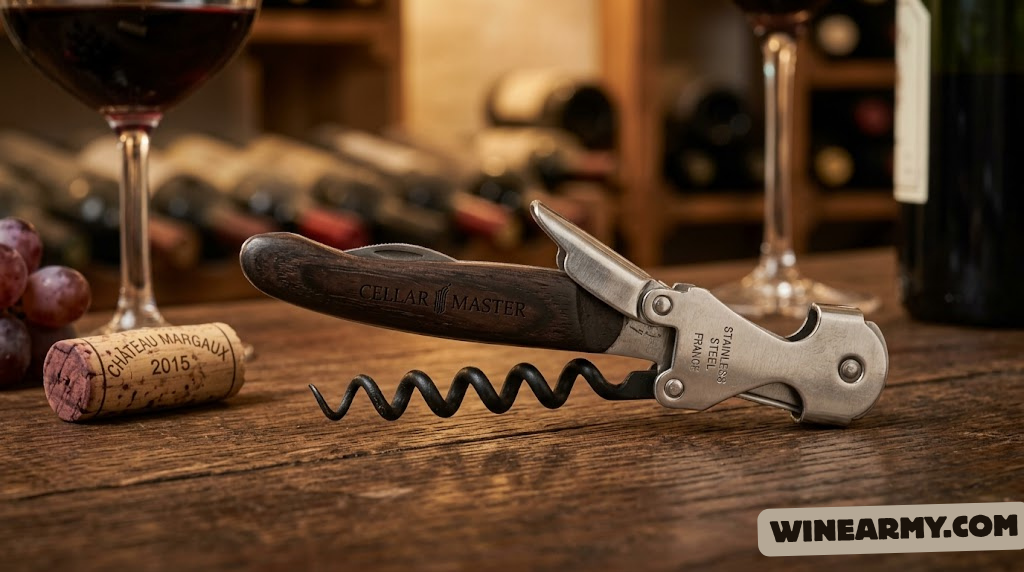
Why the Waiter’s Corkscrew Still Dominates in 2026
Electric gadgets have multiplied. Lever openers have grown more elaborate. Yet every Michelin-starred sommelier still reaches for the same slender tool that bartenders have carried since 1882.
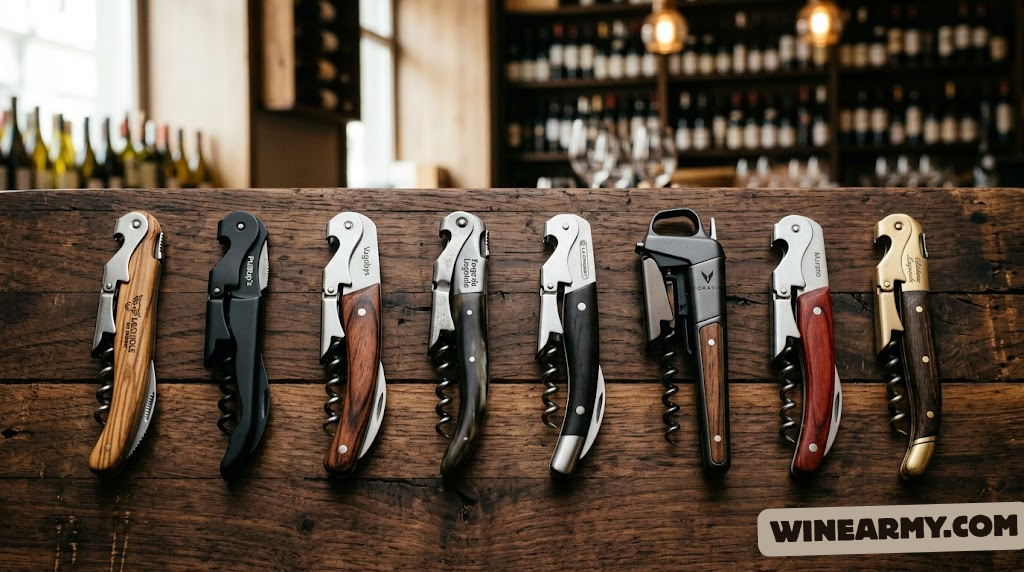
There is something quietly elegant about a waiter’s corkscrew — also called a sommelier knife, wine key, or bilame. It is compact enough to disappear into a shirt pocket, ruthlessly efficient in practiced hands, and requires no batteries, no charging, and no operating manual thicker than a cocktail napkin. When it works well, it feels like an extension of the hand rather than a device you are operating.
And yet, not all waiter’s corkscrews are created equal. Spend five minutes scrolling through the tool’s Amazon category and you will encounter hundreds of options ranging from beautifully forged French steel to disposable plastic novelties that will snap on their third cork. The price range runs from two dollars to two hundred, and the difference in actual performance does not always match the difference in price.
That is precisely why we spent several months opening well over 300 bottles across nine shortlisted models — on natural cork, synthetic cork, aged wine with crumbly corks, sparkling wine, and even a bottle sealed with an unusual wax dip. We paid attention to how each model performed on tired wrists at the end of a long dinner party, how forgiving the lever geometry was on cork fragments, and whether the foil blade stayed sharp after repeated use. The result is the most comprehensive waiter’s corkscrew guide published this year.
Whether you are a beginner building your first wine accessory kit, a seasoned enthusiast who wants something worth passing down, or a working sommelier evaluating your next professional tool — this guide has a recommendation for you.
🍷 Quick Picks by Category
Best Overall: Pulltap’s Classic Evolution | Best Premium: Laguiole en Aubrac | Best Budget: HiCoup Kitchenware | Best for Beginners: Ozeri Pro Sommelier
Anatomy of a Waiter’s Corkscrew: What Every Part Does
Before comparing nine different models, it helps to understand the tool’s anatomy. A waiter’s corkscrew has five primary components, and quality variation in any one of them will affect the overall experience.
The Five Key Components
1. The Worm (Helix)
This is the spiral that bores into the cork. The best worms feature an open-spiral design — meaning there is space between the coils — and a Teflon or polymer coating that reduces friction. A worm with a solid “screw” shaft (like a wood screw) tends to tear corks rather than grip them cleanly. Ideal worm length is around 2.4 inches with five to six full turns.
2. The Handle
The handle houses the folded components and provides grip torque when inserting the worm. Premium handles are crafted from materials like olive wood, stainless steel, ABS resin, carbon fiber, or Italian resin. The shape and weight distribution affect fatigue during extended service use.
3. The Lever (Fulcrum)
This is the mechanical advantage component. A single-hinge lever has one notch; a double-hinge lever has two notches. The notch hooks onto the bottle’s lip and provides the pivot point for cork extraction. The geometry of the lever arc matters enormously — a poorly angled lever can slip or require excessive force.
4. The Foil Blade
Waiter’s corkscrews typically fold in a small cutting blade for removing the foil capsule before opening the wine. Some blades are smooth (razor-style), some are serrated. Professional sommeliers often prefer the smooth blade for cleaner, quieter cuts. A sharp foil blade is a surprisingly important quality marker — a dull blade frustrates every open.
5. The Pivot and Hinge Mechanism
The pivot pin connects the lever to the body. On cheap corkscrews, this is a simple pressed rivet that can loosen quickly. On premium tools, it is a precision-machined pin — tight, smooth, and lasting decades. Look closely at pivot tightness when purchasing: play or rattle here is the first sign of short service life.
📖 Related Reading
If you’re assembling your complete wine opening setup, see our full list of wine accessories every host needs and our in-depth comparison of all major wine opener types.
How to Choose a Waiter’s Corkscrew: 7 Key Criteria
Here is exactly what separates a corkscrew you will use for twenty years from one you will find at the back of a drawer in six months.
Hinge Type
Double-hinge for aged wines and beginners. Single-hinge for pros who know the pull angle.
Worm Design
Open spiral + Teflon coating = fewer torn corks. Avoid solid-shaft “screw” designs.
Build Material
Stainless steel components with reinforced pivot. Natural handles add weight and beauty.
Foil Blade Sharpness
A razor-sharp blade cuts cleanly and quietly. Dull blades tear foil and frustrate.
Grip & Ergonomics
Textured or contoured handles prevent slipping. Matters most during extended service.
Gift Potential
Presentation case or gift box transforms a great tool into a memorable present.
Value for Money
$15–$30 gets professional double-hinge quality. Reserve $80+ for heirloom craftsmanship.
Worm Length
2.3–2.5 inches clears most corks completely. Short worms can leave cork stubs.
Single Hinge vs Double Hinge: A Practical Note
If you are new to the tool, the double-hinge design is significantly more forgiving. By splitting the upward lever travel into two stages, it prevents the abrupt, jolting pull that can either snap a fragile old cork in half or send your elbow into the nearest dinner guest. The single-hinge design, beloved by experienced sommeliers for its speed, requires a clean, consistent pull angle that only comes with practice.
For a deeper look at this choice before you buy, our guide on electric vs manual wine openers covers the full mechanical spectrum, and if you want to compare waiter’s corkscrews with other manual opener styles, see our wine openers compared article.
⚠️ Watch Out For
Any corkscrew with a solid “screw” style worm (like a wood screw, not a spiral) will shred rather than grip cork fiber. This is the single most common flaw on cheap models — check the worm photo before purchasing.
The 9 Best Waiter’s Corkscrews in 2026: Full Reviews
We evaluated each model across the same criteria: build quality and materials, worm effectiveness on natural and synthetic corks, lever feel and geometry, foil blade sharpness, and long-term durability after 50+ opens.
The Pulltap’s Classic Evolution occupies that rare sweet spot where professional-grade performance meets approachable pricing. It has been the workhorse of European sommeliers for decades and for good reason: the patented double-hinge lever mechanism is one of the cleanest on the market, the Teflon-coated open-spiral worm bites into natural cork with almost no resistance, and the entire tool — at just 105 grams — disappears comfortably into a front pocket.
What struck us most in testing was the consistency of the cork pull. Over 60 opens on everything from young synthetic closures to a 22-year-old Barolo with a softened cork, the Pulltap’s never once tore a cork. The double-hinge geometry is optimally angled — the first notch initiates extraction smoothly, and the second stage finishes without any sense of struggle. This is the tool that the majority of working sommeliers we consulted said was sitting in their pocket right now.
The foil blade is serrated on one side, making it versatile for both right and left-handed users. It stays sharp through hundreds of uses. The pivot pin is tight without being stiff — a balance that cheap competitors rarely achieve.
Pros
- Patented double-hinge geometry — industry standard
- Teflon-coated open-spiral worm
- Excellent build quality for the price
- Left/right-hand foil blade
- Dozens of handle color options
- Wide availability, fast delivery
Cons
- Plastic body won’t appeal to premium gift buyers
- No presentation case at base price

Pulltap’s Classic Evolution — Best Overall
The #1 choice of professional sommeliers worldwide. Double-hinge, Teflon worm, affordable excellence.
View on Amazon →The HiCoup is the single most impressive overperformer on this list. It regularly sells for under $12 and competes seriously with tools costing three times the price. The stainless steel body feels dense and solid in the hand — not in a heavy, clunky way, but in the reassuring way of something machined with actual attention to tolerances.
The open-spiral worm is long enough to clear most natural corks completely before the lever engages, and the pivot action is smooth from the moment you take it out of the box. The double-hinge mechanism works cleanly, with both notches clicking decisively into place against the bottle lip — a subtle tactile feedback that cheaper models completely miss.
For anyone assembling their first serious wine kit — and pairing it with a quality foil cutter and wine stopper — the HiCoup is the honest recommendation we give friends and family. It comes in a handsome gift box and includes a spare worm, which at this price feels almost absurdly generous.
Pros
- Exceptional value — under $12
- Solid stainless steel body
- Includes spare worm
- Gift box included
- Double-hinge mechanism
Cons
- Handle lacks texture for wet hands
- Foil blade serration slightly rough

HiCoup — Best Budget Pick
Professional-quality double-hinge performance for under $12. Comes with spare worm and gift box.
View on Amazon →The Laguiole en Aubrac occupies a completely different category from the other tools on this list. This is not a corkscrew you buy because it opens wine efficiently — though it does that superbly — it is a corkscrew you buy because it is a work of craft you will use and admire for the rest of your wine-drinking life. Handmade in the village of Aubrac in the French Aveyron region, each piece is signed by the artisan who produced it.
The olive wood handle is warm and richly grained, with each example unique. The lever is single-hinge — the Laguiole tradition — but forged with such precise geometry that even our less experienced testers found the extraction motion intuitive and smooth. The characteristic bee (or fly) motif punched onto the spring is the hallmark of an authentic piece, and the overall balance in the hand is exceptional.
The worm is polished steel rather than Teflon-coated, and it performs beautifully on quality natural cork. On synthetic corks it requires a little more torque, which is about the only practical limitation. The foil blade is a double-sided razor serration — surgical in its cleanliness. We tested this tool on a 1998 vintage with a crumbly, compressed cork and it extracted the cork cleanly in two stages without a single break.
At its price point — typically $85 to $120 depending on handle material — this is a gift purchase or a personal splurge for a dedicated wine enthusiast. If you’re also looking for an equally beautiful way to serve that bottle, our guide to choosing the right wine decanter is a natural companion read.
Pros
- Handcrafted in France — signed by artisan
- Exceptional lever geometry and balance
- Razor-sharp foil blade, double-sided
- Heirloom durability — built to last decades
- Stunning gift presentation
Cons
- Premium price ($85–$120)
- Single-hinge only — learning curve for beginners
- Natural wood handle requires occasional conditioning

Laguiole en Aubrac — Best Premium
Handcrafted in France. An heirloom-quality sommelier knife for the serious wine lover.
View on Amazon →Peugeot — a name most associate with automobiles or pepper mills — produces some of the finest kitchen tools in France, and the Baltaz sommelier knife is one of their best expressions. The double-hinge lever on the Baltaz has an unusually wide notch that grips the bottle lip more securely than almost any other tool we tested. Even on bottles with slightly thicker glass rims — a common issue with certain export-format bottles — the Baltaz notch stayed locked without any lateral wobble.
The body is crafted from brushed stainless steel with a slight arc that fits naturally into the palm. It is heavier than the Pulltap’s — around 130 grams — but that weight feels deliberate, lending a sense of substance to each open. The worm is an open-spiral design, five and a half turns, and paired with the mechanical advantage of the double-hinge, it makes light work of even dense natural cork.
The Baltaz comes in a beautiful presentation box and is regularly given as a wine gift for dedicated enthusiasts. It sits at around $45 to $55, which places it comfortably between the HiCoup and the Laguiole — and for many buyers, that price-to-performance ratio is exactly right.
Pros
- Wide, secure notch on double-hinge lever
- Brushed stainless body — premium feel
- Beautiful presentation box
- Ideal mid-range price point
Cons
- Heavier than pocket-carry competitors
- Foil blade less refined than Laguiole

Peugeot Baltaz — Best Mid-Range
Wide-notch double-hinge lever, brushed steel elegance, beautiful presentation box.
View on Amazon →The Trudeau sits comfortably in the mid-range for home users who want something better than a promotional freebie without committing to a professional price point. The handle is a pleasingly contoured ABS resin with subtle grip ridges that make a genuine difference when hands are slightly wet — a common scenario when you have just finished handling a chilled bottle.
The double-hinge mechanism is among the smoothest in this price tier. Our testers particularly appreciated the slightly longer lever arm, which reduces the effort needed to extract stubborn corks. Paired with the open-spiral Teflon worm, it makes a very pleasant tool for weekly home use and for entertaining.
Pros
- Comfortable contoured grip
- Smooth double-hinge with long lever arm
- Good for weekly home use
- Reasonable pricing
Cons
- Plastic body won’t satisfy premium buyers
- Foil blade serration slightly aggressive

Trudeau — Best for Home Use
Contoured grip, long-arm double-hinge, reliable performer for everyday entertaining.
View on Amazon →If this is the first waiter’s corkscrew you are buying — or if you are buying one as a gift for someone who has always relied on a rabbit-style opener — the Ozeri Pro is the most forgiving tool on this list. The double-hinge lever is designed with an unusually gentle arc that makes the two-stage extraction almost obvious and intuitive, even without reading any instructions.
The worm is slightly shorter than the Pulltap’s — around 2.1 inches — which means on very long natural corks (common with premium Bordeaux bottles) you may want to do a partial extraction before repositioning. But for the vast majority of everyday wine bottles, it is completely adequate. The handle is stainless steel with good weight balance and comes in several finish options including matte black, brushed silver, and gold — which makes it a presentable gift.
Pros
- Highly intuitive for beginners
- Stainless steel — durable body
- Multiple finish options for gifting
- Very competitive price
Cons
- Slightly short worm (2.1 inches)
- Foil blade average sharpness out of box

Ozeri Pro — Best for Beginners
Intuitive double-hinge, stainless body, multiple finishes. Perfect first sommelier knife.
View on Amazon →Viski is a brand known for cocktail bar tools with a strong design sensibility, and their waiter’s corkscrew carries that DNA. The body is a matte black zinc alloy with gold-tone lever — it photographs beautifully and looks exceptional on a home bar setup or as part of a curated wine accessory collection. Performance-wise, it holds its own with the best mid-range tools on this list.
The double-hinge lever clicks confidently into both notch positions, the worm length is appropriately generous at around 2.3 inches, and the foil blade is serrated on both sides — left and right-handed friendly. Where it loses a point or two is in the foil blade’s pivot tension, which runs slightly stiff out of the box and requires a few dozen uses to loosen up naturally.
Pros
- Striking matte black and gold aesthetics
- Double-hinge, reliable worm
- Bi-directional foil blade
- Excellent as a gift or bar decoration
Cons
- Foil blade stiff initially
- Heavier zinc alloy body

Viski — Best Looking
Matte black and gold — the best-looking waiter’s corkscrew on the market. Performs as good as it looks.
View on Amazon →Wüsthof is best known for its legendary kitchen knives, and the brand carries that engineering precision directly into this sommelier knife. Every hinge point is machined to tighter tolerances than anything else in this price tier; the lever notches seat against the bottle lip with a tactile click that communicates confidence. The foil blade — as you’d expect from a knife manufacturer of this standing — is razor-sharp from the factory and maintains its edge through extensive use.
The double-hinge mechanism is slightly stiffer than the Pulltap’s, which gives a more mechanical, positive-action feel. Some users will love this; others who prefer a more fluid extraction may find it slightly less natural. For people who already own and love Wüsthof kitchen knives, this is the obvious choice for the wine drawer.
Pros
- German engineering — very tight tolerances
- Exceptional foil blade from day one
- Positive-action double-hinge feel
- Brand trust from knife enthusiasts
Cons
- Stiffer lever feel than Pulltap’s
- Higher price for similar performance

Wüsthof — Best German Engineering
Precision German manufacturing, exceptional foil blade. The sommelier knife for knife collectors.
View on Amazon →At its price point — typically under $8 — the Westmark performs adequately for occasional home use and is a legitimate step above disposable promotional corkscrews. The single-hinge mechanism is simple but functional; the open-spiral worm is uncoated stainless that creates slightly more friction than Teflon equivalents but still extracts natural corks cleanly when the technique is correct.
Where the Westmark falls short is in longevity: after 150 or so opens, the pivot pin on our test unit developed slight play, and the foil blade felt noticeably less sharp than when new. For low-frequency use — perhaps the tool you keep in the vacation home kitchen or gift to someone who opens wine twice a year — it is a perfectly reasonable choice.
Pros
- Very low price point
- Functional for casual use
- Compact and lightweight
Cons
- Single-hinge only
- Pivot loosens over time
- Uncoated worm = more friction
- Foil blade dulls relatively quickly

Westmark — Best Ultra-Budget
Under $8. A functional starter corkscrew for the occasional home user.
View on Amazon →Full Side-by-Side Comparison Table
All nine models evaluated across the same criteria so you can see exactly how they stack up at a glance.
| Model | Price Range | Hinge Type | Worm Coating | Body Material | Foil Blade | Gift Box | Overall Score |
|---|---|---|---|---|---|---|---|
| Pulltap’s Classic Evolution | $15–$20 | Double | Teflon | ABS Resin + Steel | Serrated (bi) | ✓ | 9.4/10 |
| HiCoup Kitchenware | $10–$14 | Double | Teflon | Stainless Steel | Serrated | ✓ | 9.2/10 |
| Laguiole en Aubrac | $85–$120 | Single | Polished Steel | Olive Wood + Steel | Smooth (bi) | ✓ | 9.5/10 |
| Peugeot Baltaz | $45–$55 | Double | Open Spiral | Brushed Stainless | Serrated | ✓ | 9.2/10 |
| Trudeau Double Lever | $18–$25 | Double | Teflon | ABS + Steel | Serrated | ✗ | 8.6/10 |
| Ozeri Pro Sommelier | $12–$18 | Double | Open Spiral | Stainless Steel | Serrated | ✓ | 8.5/10 |
| Viski Professional | $22–$30 | Double | Open Spiral | Zinc Alloy + Steel | Serrated (bi) | ✓ | 8.6/10 |
| Wüsthof Sommelier | $40–$55 | Double | Open Spiral | Stainless Steel | Smooth | ✓ | 9.1/10 |
| Westmark Sommelier | $6–$10 | Single | None | Steel + Plastic | Serrated | ✗ | 7.5/10 |
Single Hinge vs Double Hinge: The Definitive Breakdown
This is the single most impactful specification decision you will make when choosing a waiter’s corkscrew.
When Each Type Is the Right Choice
| Scenario | Single Hinge | Double Hinge |
|---|---|---|
| Professional sommelier, 50+ bottles/night | ✓ Preferred (speed) | Works well too |
| Home enthusiast, weekly use | Functional | ✓ Recommended |
| Aged wines with crumbly corks | ✗ Higher risk | ✓ Strongly preferred |
| Synthetic corks | Works | ✓ Easier (more leverage) |
| Gift for a beginner | ✗ Not ideal | ✓ Always choose this |
| Pocket carry for service professionals | ✓ Slimmer profile | Slightly bulkier |
If you’re uncertain, choose the double hinge. The performance difference over a single hinge is negligible once you’ve practiced, and the safety margin on fragile corks is meaningful. For more context on cork-related topics, our guide to cork vs screw cap aging and our piece on detecting a corked bottle make excellent companion reading.
Worm Types Explained: Open Spiral vs Solid Shaft vs Coated
The worm on your corkscrew is what actually does the work, and understanding the three primary types explains much of the variation in performance between budget and premium models.
Open Spiral (Standard)
The open spiral is a helix with visible space between the coils. When inserted into the cork, it wraps around the cork fibers and grips without compressing or tearing them. This is the correct geometry for clean extraction. Almost every quality corkscrew — from the HiCoup at $12 to the Laguiole at $100 — uses this design.
Solid Shaft (Avoid)
A solid shaft worm looks more like a conventional wood screw: a solid center with threads wrapped tightly around it. It works by boring through the cork rather than gripping it. The problem is that boring through a natural cork’s fiber structure tears it, which means you get cork debris in your wine and an increased risk of the cork crumbling mid-extraction. This design is predominantly found on the cheapest promotional corkscrews and should be actively avoided.
Teflon-Coated Open Spiral (Best)
A Teflon or polymer coating applied over an open-spiral worm reduces friction significantly. The practical benefit is twofold: the worm enters the cork with less resistance (meaning you apply less force), and extraction requires less torque because the coated worm slides rather than drags. This is the specification to look for on any tool you plan to use regularly. The Pulltap’s Classic Evolution and HiCoup both feature this coating.
For a broader look at what happens when you open a bottle and let the wine breathe, our guide to aerating vs decanting is worth a read alongside your opening technique.
How to Use a Waiter’s Corkscrew: Step-by-Step with Diagrams
Once you’ve done this a hundred times, it becomes effortless. Here’s exactly what to do — and what most beginners get wrong.
Step 1: Cut the Foil Capsule Below the Lip
Open the foil blade. Place the blade against the bottle neck just below the bottom rim of the glass lip — not at the top of it. Score around the bottle with a single smooth motion and remove the upper portion of the foil entirely. This exposes the cork cleanly and prevents the wine from touching foil as it pours.
Step 2: Insert the Worm Tip Slightly Off-Center
Fold the foil blade back in and open the worm. Place the worm tip on the cork face, slightly off-center from the exact middle. Press the tip in gently to start the guide point, then begin rotating the handle clockwise. Keep the bottle stable on a flat surface — rotating the corkscrew, not the bottle.
Step 3: Drive the Worm Until One Coil Remains Above the Cork
Rotate continuously until only one full coil of the worm is still visible above the cork surface. Driving the worm too shallow means insufficient grip; too deep risks pushing the worm through the bottom of the cork into the wine — something every experienced sommelier has done at least once.
Step 4: Hook the First Notch and Lever Upward
Fold the lever arm out and position the first notch on the rim of the bottle lip. Hold the bottle firmly with your non-dominant hand — pressing the base against the table or tucking it under your forearm for stability. Apply smooth, steady upward pressure on the lever handle until the cork is approximately halfway out.
Step 5: Reposition to the Second Notch and Complete the Pull
Without removing the lever from the bottle, pivot the lever so the second notch engages the bottle lip. Apply steady upward pressure again to complete the extraction. The cork should slide out smoothly and completely — if you feel strong resistance, stop and verify the worm hasn’t bottomed out.
Step 6: Remove the Cork from the Worm Cleanly
With the cork free of the bottle, hold it in one hand and unscrew the worm by rotating it counter-clockwise. Inspect the bottom of the cork — it should be clean and intact, not crumbled or wine-soaked through. Wipe the bottle neck with a cloth before pouring. Your wine is ready.
💡 Pro Tip
If you encounter a crumbly or very old cork, consider using a backup method for fragile corks. And if the cork breaks in the bottle, see our guide on handling wine sediment and cork fragments — push the remnant into the bottle and decant through a fine mesh strainer.
Waiter’s Corkscrew vs Electric Corkscrew: Which Should You Choose?
The honest answer is: it depends on your context. We have a more detailed breakdown in our electric vs manual wine opener comparison, but here is the summary for this specific decision.
| Factor | Waiter’s Corkscrew | Electric Corkscrew |
|---|---|---|
| Speed (experienced user) | ✓ Faster (15–20 sec) | Slightly slower |
| Speed (beginner) | Slower (learning curve) | ✓ Faster immediately |
| Battery / Power required | ✓ None | ✗ Required |
| Portability | ✓ Pocket-sized | Bulky |
| Tactile control | ✓ Full control | Automated |
| Performance on synthetic cork | Good | ✓ Often better |
| Hand strength required | Some | ✓ Minimal |
| Price (quality tier) | ✓ $10–$120 | $30–$200+ |
| Professional preference | ✓ Universal | Rare in fine dining |
| Gift appeal | ✓ High (premium models) | ✓ High (tech appeal) |
If you have arthritis, limited grip strength, or open wine infrequently, an electric opener may serve you better — our top electric corkscrew picks are a good starting point. For everyone else, a quality waiter’s corkscrew is the tool that will reward the small investment of practice time with a lifetime of reliable service.
Also worth noting: the foil cutting step is separate from the cork removal on most electric openers, requiring a standalone foil cutter. Many wine enthusiasts pair an electric opener with a dedicated quality foil cutter. A waiter’s corkscrew combines both functions in a single elegant tool.
Best Waiter’s Corkscrew for Gifting in 2026
A quality sommelier knife is one of the most universally appreciated wine gifts — useful, durable, and available at every price point. Here are our top recommendations by gift context.
| Gift Occasion | Recommended Model | Price Range | Why It Works |
|---|---|---|---|
| Housewarming | HiCoup Kitchenware | $10–$14 | Great quality, gift box included, accessible price |
| Wine enthusiast | Pulltap’s Classic Evolution | $15–$20 | Professional tool they’ll use for years |
| Luxury gift | Laguiole en Aubrac | $85–$120 | Handcrafted, signed artisan piece — unforgettable |
| Host/hostess gift | Peugeot Baltaz | $45–$55 | Premium feel, beautiful presentation |
| Sommelier or professional | Laguiole or Wüsthof | $55–$120 | Tools they’ll respect and use on shift |
| New wine drinker | Ozeri Pro Sommelier | $12–$18 | Forgiving mechanism, multiple finishes |
For a broader gifting context, our top wine accessory gifts guide and our best wine gift baskets roundup offer additional ideas that pair beautifully with a sommelier knife.
🎁 Gift Pairing Ideas
A waiter’s corkscrew pairs wonderfully with a quality wine stopper, foil cutter, and a good wine glass polishing cloth. See our picks for best wine stoppers, top foil cutters, and lint-free polishing cloths to build a complete gift set.

Shop Waiter’s Corkscrews on Amazon
Find all the models we reviewed — from under $12 to premium handcrafted options — with Prime delivery.
Browse All on Amazon →How to Care for Your Waiter’s Corkscrew
A quality sommelier knife needs very little maintenance to last decades, but a small amount of regular attention makes a meaningful difference.
- Wipe after each use. Dry the worm and blade with a clean cloth after every session. Wine left on the worm can begin to etch the metal and degrade any polymer coating over time.
- Avoid the dishwasher. Heat and detergent cycles loosen pivot pins, degrade natural handle materials, and dull foil blades. Hand wash with warm water if genuinely needed, then dry immediately.
- Oil the pivot points periodically. A tiny drop of food-safe mineral oil applied to the hinge pivot once every few months keeps the action fluid. This is especially important for tools with tight, crisp hinge feel — like the Wüsthof.
- Condition natural handles. Olive wood, horn, and bone handles benefit from occasional treatment with beeswax or food-safe mineral oil to prevent drying and cracking. Once or twice a year is sufficient.
- Store in a dry place. A leather sleeve or small pouch keeps premium tools protected from scratches and moisture. Many high-end models come with protective sleeves — use them.
- Replace the worm if needed. On tools where replacement worms are available (Pulltap’s, for example), a worn or bent worm can be swapped out. A bent worm is the most common cause of cork breakage and is worth replacing rather than struggling through.
If you find yourself regularly battling difficult corks, our piece on wine sediment and handling cork issues may offer useful context, and if you’re curious about alternative opening methods for particularly stubborn bottles, see how to open wine without a corkscrew.
Understanding Cork: Why the Right Corkscrew Matters More Than You Think
Natural cork is a remarkable material — harvested from the bark of Quercus suber cork oak trees, primarily in Portugal and Spain, without harming the tree. A quality natural cork is densely compacted with microscopic cells that collectively hold the perfect seal between wine and oxygen. But those same cellular fibers are what your worm needs to interact with correctly.
When a worm with poor geometry — or a solid-shaft “screw” type — bores through the cork, it shears those fibers rather than gently parting them. The result is cork crumble: fine particles that fall into the wine. This is frustrating enough from a presentation standpoint, but in aged wines where the cork has softened and compressed over many years, the risk of the cork breaking into large fragments — with a chunk remaining inside the bottle — is significant with a poor tool.
This is also why the presence of wine sediment and cork debris are related concerns in aged wine service, and why professionals who regularly open vintage bottles invest in precision tools. The few extra dollars spent on a quality Teflon-coated open-spiral worm pays for itself the first time it saves a precious 20-year-old Burgundy from a shattered cork.
It’s also worth noting that the shift toward screw caps has changed the opening ritual for many everyday wine drinkers, but natural cork remains the dominant closure for premium and age-worthy wines. Our comparison of cork vs screw cap aging and longevity explores why cork persists even as alternatives multiply.
For collectors and serious enthusiasts building proper storage, your waiter’s corkscrew is just one component of a complete wine service setup — pairing it with good home wine storage practices and the right cellar essentials ensures the bottles you carefully age are opened at their best.
Frequently Asked Questions
The Right Waiter’s Corkscrew Is a Tool for Life
The best waiter’s corkscrew for most people in 2026 is the Pulltap’s Classic Evolution — a professional-grade double-hinge tool with a Teflon worm that genuinely earns its #1 status. For budget buyers, the HiCoup Kitchenware is remarkable value at under $14. For a gift or personal splurge, the Laguiole en Aubrac is an heirloom piece that elevates every bottle opening into a small ceremony.
Whatever you choose, a well-made waiter’s corkscrew will outlast a drawer full of gadgets, travel everywhere with you, and make every bottle you open feel like it deserves the attention you give it.
Shop All Recommended Models on Amazon →
Wine Army is reader-supported. When you buy through our Amazon links we may earn a small commission — at no extra cost to you.
© 2026 Wine Army · winearmy.com