Every Type of Wine Opener, Compared
Waiter’s corkscrew. Electric. Rabbit lever. Winged butterfly. Ah-So. Countertop. We tested them all — here’s exactly which one belongs in your kitchen, your bag, and your cellar.
The Opener Is Your First Wine Decision
Every wine journey starts in exactly the same place: you’re standing in front of a bottle, and you need to get into it. The tool in your hand determines whether that moment is smooth and satisfying — or fumbling, frustrating, and potentially cork-contaminated.
Wine openers are one of the most purchased and most under-researched accessories in the wine world. Most people own a $6 winged corkscrew they picked up at a supermarket checkout, use it grudgingly, and never wonder if there’s something better. There is. There are several something-betters — and which one is right for you depends on factors you may not have considered.
This guide covers every major wine opener category in depth. We’ll explain the mechanism behind each type, identify its ideal use case, show you where it fails, and tell you exactly what to spend. By the end, you’ll know more about wine openers than 99% of people who open wine for a living — and you’ll have the information to make a genuinely smart purchase.
If you’ve already read our electric vs manual wine opener comparison, think of this as the expanded universe — same rigorous approach, applied to every format that exists.
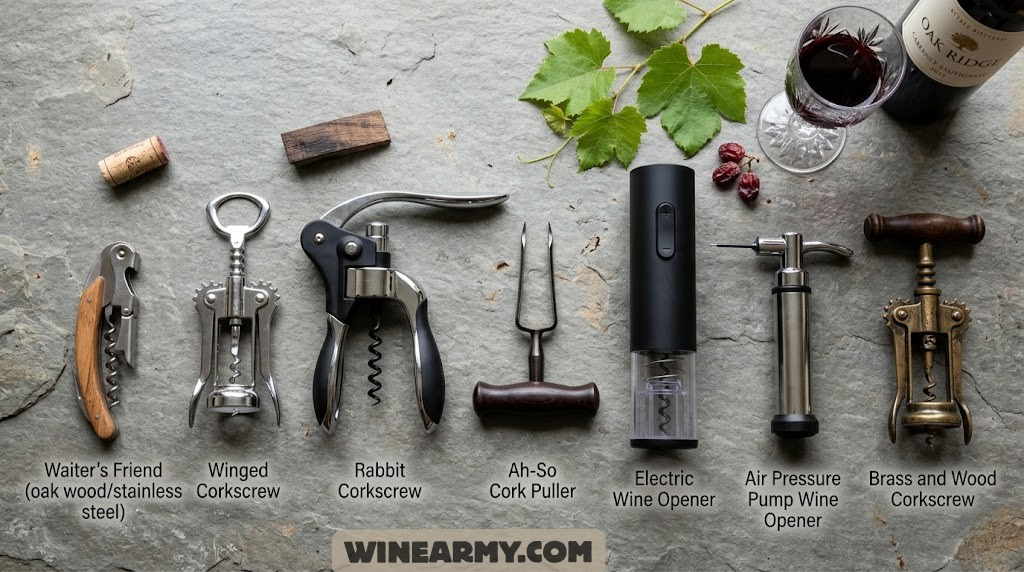
All 7 Types of Wine Opener at a Glance
There are seven meaningfully distinct wine opener categories. Each exists because it solves a different set of problems for a different set of users. Here they are, with a quick-read rating profile.
Waiter’s Corkscrew
The professional’s choice. Foldable knife with integrated helix worm, lever, and foil cutter. Requires learned technique but rewards mastery.
Electric Opener
Motor-driven opening with a button press. Zero technique required. Ideal for accessibility and high-volume casual use. Needs charging.
Rabbit / Lever
Mechanical lever-action that inserts and removes the cork in one push-pull motion. Fast, reliable, and accessible — but bulky.
Winged Butterfly
Two-armed lever design. Widely recognized, beginner-friendly, but often produces poor results on difficult corks due to a solid worm screw.
Ah-So Twin Prong
Two metal prongs slide either side of the cork — no worm used. Extracts without piercing. The gold standard for aged or fragile corks.
Countertop / Bar
Wall-mounted or freestanding bar openers. One-motion operation. Designed for volume and stability in commercial or dedicated home bar settings.
Screwpull / Twist
Continuous-turn mechanism threads the worm through the cork and ejects it without reversal — just keep turning. Simple, elegant, and gentle.
The Waiter’s Corkscrew: Why Professionals Choose It
If you’ve ever watched a sommelier open a bottle tableside, you’ve seen the waiter’s corkscrew in action. It’s a foldable, multi-function knife that fits in a shirt pocket. Inside it: a serrated foil-cutting blade, a hinged lever arm, and a helix worm screw. It’s been the professional’s tool of choice for over a century, and for very good reason.
What Makes It Professional-Grade
Three features separate a quality waiter’s corkscrew from a cheap one: the worm type, the hinge count, and the lever material.
- The worm: A true open-bore helix (hollow in the center, like a spring) grips cork from the outside, preserving the cork’s structure. A solid “gimlet” screw — common on cheap models — drills through the cork and destroys it from the inside, dramatically increasing breakage risk. Always inspect the worm before buying.
- Double vs. single hinge: A double-hinge lever provides two purchase points on the bottle lip, allowing staged extraction that’s gentler on the cork. Single-hinge models require more force in one pull. If a waiter’s knife says “single hinge,” walk away.
- Lever material: Forged stainless steel levers outlast stamped steel or zinc alloy. A lever that bends under load is not safe and not reliable.
✅ Advantages
- Pocket-sized — fits anywhere
- No batteries or charging
- Tactile control on fragile corks
- Fastest of all manual types once mastered
- Built-in foil cutter on all quality models
- Lasts 10–30+ years
- Professional credibility
- Best overall value category
❌ Disadvantages
- Learning curve — technique matters
- Difficult for arthritis or limited grip
- Quality varies enormously — cheap models are terrible
- Not entirely effortless for stiff corks
Our Top Waiter’s Corkscrew Recommendation
The Pulltap’s Classic Evolution ($20–$30) is the benchmark for any price comparison. Used in Michelin-starred restaurants. If you want to go premium, the Laguiole en Aubrac handcrafted waiter’s knives ($60–$200) are heirloom-quality tools. For a full breakdown, see our best waiter’s corkscrew 2026 guide.

Pulltap’s Classic Evolution — Double-Hinge Waiter’s Corkscrew
The professional-standard sommelier knife. Teflon-coated open helix, double-hinge lever, built-in foil cutter. Trusted by sommeliers in restaurants worldwide.
View on AmazonElectric Wine Openers: The Convenience Category
Electric openers run a battery-powered motor that drives a stainless helix into the cork and retracts it automatically. Press once to insert, press again to extract. Total time: 8–12 seconds. Zero wrist action required.
Electric openers excel in four specific contexts: hosting parties (consistency under pressure), accessibility (arthritis, limited grip), gifting (they look impressive), and high-volume casual settings. They are not ideal for aged or fragile corks, for travel, or for anyone who values the ritual tactility of opening wine.
For a deep breakdown of the best models and what to look for in each price tier, our dedicated top electric corkscrews guide covers it all. You might also enjoy our broader electric vs. manual wine opener comparison.
✅ Advantages
- Zero effort — button press only
- No technique needed — perfect for beginners
- Best accessibility option for arthritis
- Consistent results every time
- Built-in foil cutter in most models
- Impressive to guests
❌ Disadvantages
- Requires charging — can fail mid-event
- Bulky — not travel-friendly
- No tactile feedback on fragile corks
- Motor wears out (3–7 year lifespan)
- Higher upfront cost for quality

Cuisinart CWO-25 — Best Overall Electric Opener
USB-C rechargeable, 80 bottles per charge, integrated foil cutter, excellent ergonomics. The electric opener we recommend most for home use.
View on AmazonRabbit / Lever Corkscrew: Mechanical Speed Without a Battery
The rabbit lever corkscrew is the fastest manual opener available, capable of opening a bottle in under 5 seconds once technique is mastered. The mechanism works by clamping a gripping arm around the bottle neck, then pumping a long handle down to drive the worm into the cork, and pulling it back up to extract it — all in one fluid motion.
The rabbit lever is popular with wine enthusiasts who want manual reliability without the learning curve of a waiter’s corkscrew. It handles most standard corks with remarkable consistency. The primary downsides are bulk (it won’t fit in a pocket or bag) and price (quality models start at $35–$50).
The best rabbit lever models include those from the original Rabbit brand, Metrokane, and Cuisinart. Most come with a spare worm replacement — an important feature because the worm is the most likely component to wear.

Rabbit Original Lever Corkscrew Set
One-motion extraction, 10-year warranty, includes foil cutter, extra worm, and carrying case. The benchmark lever corkscrew at a fair price.
View on AmazonThe Winged Butterfly Corkscrew: The Most Misleading Tool in the Drawer
The winged butterfly corkscrew is the most recognizable opener in the world — and, unfortunately, also the most likely to break a cork. This is the one that comes to mind when most non-wine-people picture a corkscrew: a squat device with two arms that rise as you twist the top, then fold down to extract the cork.
The winged corkscrew is everywhere for one reason: it’s visually intuitive. Push the wings down — the cork comes up. Except when it doesn’t. And when it doesn’t, it usually fails spectacularly.
The Fundamental Design Problem
The core issue with most winged corkscrews is the worm. Budget winged corkscrews almost universally use a solid “gimlet” worm — a pointed solid shaft that drills through the center of the cork like an auger. This destroys the internal structure of the cork as it enters, leaving a crumbly, weakened cylinder that frequently breaks during extraction. A true open-bore helix worm on a winged corkscrew (some premium models do exist) performs significantly better — but at that price point, you’re better served by a waiter’s corkscrew.
The winged butterfly is fine for casual, infrequent use on standard corks. It is not appropriate for aged wines, synthetic corks, or anyone who opens more than one or two bottles per month.
✅ When It Works
- Fresh natural corks, recent vintages
- Beginners who open wine rarely
- Very low budget requirements
- Visually intuitive — no instructions needed
❌ When It Fails
- Aged or dry corks — extremely high breakage rate
- Synthetic (plastic) corks — poor grip
- Longer-than-standard corks
- Regular use — fatigue and frustration builds quickly

OXO Good Grips Winged Corkscrew (If You Must Have One)
OXO’s version uses a better-than-average worm and comfortable grip. The best of a flawed category, but we still recommend upgrading to a waiter’s knife.
View on AmazonThe Ah-So Twin Prong: The Specialist for Aged Corks
The Ah-So — also called a Butler’s Friend, a wine butler, or a twin-prong cork puller — is a specialist tool with a very specific job. It has no worm screw. Instead, two thin, flat metal prongs of slightly different lengths are inserted between the cork and the bottle neck wall on either side of the cork. A gentle rocking motion allows them to slide down until they grip the full length of the cork. A twisting-and-upward pull then removes the cork intact, without having pierced it at all.
The Ah-So is not a beginner’s tool. It requires patience, a feel for the rocking insertion motion, and confidence that you won’t push the cork into the bottle instead of out of it. With practice, however, it is unmatched for opening wines with corks that would crumble under any worm screw.
Every serious wine collector or cellar owner should have one. It is also the tool of choice when you suspect a cork is fragile and don’t want to risk destroying a bottle that might be exceptional. When paired with a waiter’s corkscrew for everyday use, the Ah-So completes a toolkit for virtually any cork situation.

Butler’s Friend Ah-So Twin Prong Cork Puller
Stainless steel prongs, comfortable handle, compact size. The essential backup tool for any serious wine collection — especially for bottles 10+ years old.
View on AmazonCountertop & Bar Openers: Volume, Speed, and Permanence
Countertop and bar-mount wine openers are designed for one thing: opening a lot of bottles quickly, consistently, and without fatigue. They sacrifice portability entirely in exchange for mechanical advantage, stability, and longevity under heavy use.
Types of Countertop Openers
- Wall-mounted bar opener: A cast iron or die-cast zinc lever mechanism bolted to a wall or a wooden mounting block. The bottle slides into a gripping ring; one pull of the arm opens it. Common in restaurants and wine bars. Most are designed for screw-top or crown cap bottles, not cork — check compatibility before buying.
- Countertop rabbit-style lever: A rabbit lever mechanism on a freestanding heavy base. The bottle sits in a cradle, and the arm does the work. Some models are dual-function (cork and screw cap). These are the most versatile and popular countertop option for home use.
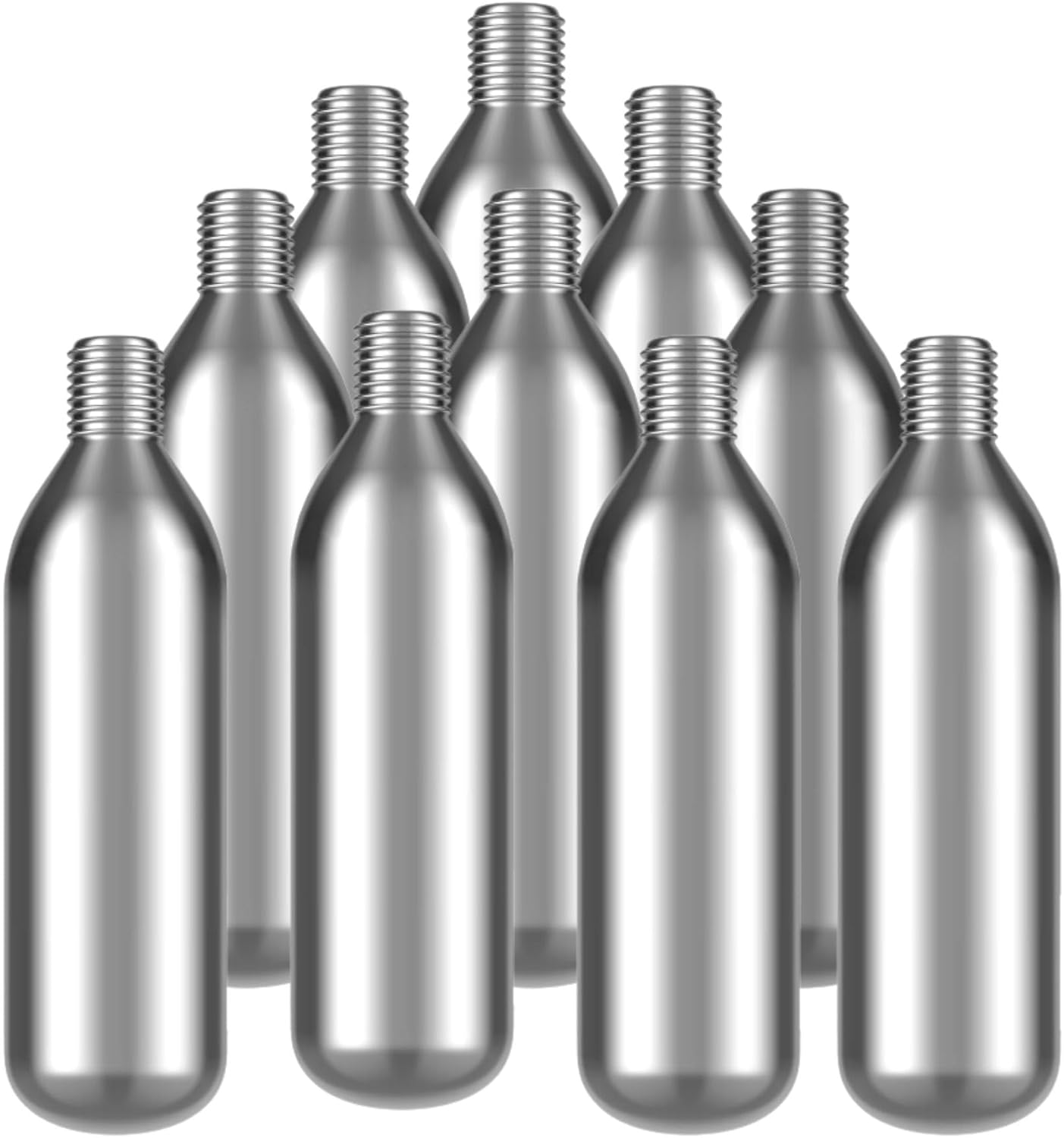
- Air-pressure openers: A needle is inserted through the cork and CO₂ or compressed air is injected, pushing the cork out from below. Fast and impressive, but expensive, requires cartridges, and doesn’t work reliably on older corks.
Countertop openers make the most sense for wine bars, tasting rooms, restaurants, and serious home entertaining setups where aesthetics matter and volume is a consideration. They are not practical for most home kitchens unless wine entertaining is frequent.

Rabbit Vertical Lever Corkscrew with Stand
Freestanding countertop lever with non-slip base. Handles all standard corks, opens in one smooth motion, includes foil cutter. A refined addition to any wine setup.
View on AmazonScrewpull / Continuous-Helix Style: The Underrated Elegant Option
The screwpull design — pioneered by the Le Creuset Screwpull brand in the 1980s — uses a long Teflon-coated worm and a continuous-turn mechanism. You place the guide collar over the bottle neck, then just keep turning the handle in the same direction. The worm threads down through the cork, and the cork threads up the worm and out of the bottle — all without ever reversing direction. The process is smooth, gentle, and surprisingly satisfying.
The screwpull’s primary advantage is its gentleness: because the worm is very long (often 5–6 cm), it engages the full length of the cork before extraction begins, distributing load evenly. This makes it one of the safest extractors for firm natural corks. The downside is that the guide collar must fit the bottle neck standard, and very wide or non-standard bottle lips may not work.
Screwpull-style openers are significantly underrated in modern wine accessory discussions. If you want a manual opener that’s more accessible than a waiter’s corkscrew but more refined than a winged butterfly, the screwpull deserves serious consideration.

Le Creuset Screwpull Lever Model — Classic Continuous Helix
The original continuous-helix design. Long Teflon-coated worm, one-direction turning, clean extraction. Compact and gift-worthy.
View on AmazonThe Master Comparison Table: All 7 Types Side by Side
Here is the complete data comparison across every meaningful attribute, for all seven opener categories. This is the reference table we wish had existed when we started exploring this topic.
| Attribute | Waiter’s | Electric | Rabbit Lever | Winged | Ah-So | Countertop | Screwpull |
|---|---|---|---|---|---|---|---|
| Opening Speed | 15–25 sec | 8–12 sec | 5–10 sec | 20–35 sec | 20–40 sec | 3–8 sec | 15–25 sec |
| Effort Required | Moderate | None | Minimal | Low | Moderate | Minimal | Low |
| Fresh Natural Corks | ✔ Excellent | ✔ Excellent | ✔ Excellent | ~ Variable | ✔ Good | ✔ Excellent | ✔ Excellent |
| Aged Fragile Corks | ✔ Best | ✗ Risky | ~ Moderate | ✗ Poor | ✔ Best | ✔ Good | ✔ Good |
| Synthetic Corks | ✔ Good | ~ Variable | ✔ Good | ✗ Struggles | ✗ Not designed | ✔ Good | ✔ Good |
| Portability | ✔ Pocket-size | ✗ Bulky | ✗ Large | ~ Medium | ✔ Compact | ✗ None | ~ Medium |
| Battery Required | No | Yes | No | No | No | No | No |
| Learning Curve | Moderate | None | Very Low | Low | High | Low | Low |
| Arthritis-Friendly | ✗ Difficult | ✔ Excellent | ✔ Good | ~ Moderate | ✗ Tricky | ✔ Good | ~ Moderate |
| Built-in Foil Cutter | Yes | Usually | Often included | No | No | Varies | No |
| Durability | 10–30+ years | 3–7 years | 10–20 years | 2–5 years | 10+ years | 10–30 years | 5–15 years |
| Price Range | $8–$60 | $20–$120 | $25–$100 | $5–$25 | $10–$40 | $30–$200 | $15–$60 |
| Professional Use | ✔ Standard | Occasional | Some bars | Rare | Collector niche | Wine bars | Uncommon |
| Best For | Everyone, travel | Gifts, accessibility | Home, casual | Beginners only | Aged wines | Bars, entertaining | Accessible, elegant |
Overall Score Comparison (Out of 10)
Which Opener for Which Scenario?
Rather than picking a single winner, the most useful guide is a scenario-to-opener map. Here’s ours, based on real-world use cases:
| Everyday home use (under 10 years old wine) | 🏆 Waiter’s Corkscrew | Fast, precise, always ready |
| Hosting a dinner party | ⚡ Electric Opener | Consistent, impressive, effortless |
| Picnic / travel / outdoor | 🍷 Waiter’s Corkscrew | Pocket-sized, no charging required |
| Opening an aged or vintage bottle | 🔱 Ah-So Twin Prong | No worm, maximum cork safety |
| Arthritis or grip limitations | ⚡ Electric Opener | Zero effort, button press only |
| Wine bar or restaurant (high volume) | 🍷 Waiter’s Corkscrew | Industry standard for good reason |
| Birthday / housewarming gift | ⚡ Electric Opener | Impressive, universal, easy to use |
| Home bar / entertaining space | 🐇 Rabbit Lever | Fast, displayable, great countertop piece |
| Cellar or collection owner | 🔱 Ah-So + Waiter’s Kit | Both tools for any cork situation |
| Complete beginner, first opener ever | 🍷 Waiter’s Corkscrew | Learn it right from the start |
Our Top Wine Opener Picks for 2026 — Every Category
After extensive testing, here are our top-recommended products across every opener category. See our full top-rated wine opener guide for additional options and detailed notes.
🏆 Best Waiter’s Corkscrew: Pulltap’s Classic Evolution
Double-hinge lever, Teflon-coated open-bore helix, forged stainless construction. The benchmark waiter’s corkscrew at any price. Used in Michelin-starred restaurants. Our top recommendation for 95% of wine drinkers.

Pulltap’s Classic Evolution Double-Hinge
$20–$30 · Professional standard · Lifetime durability
View on Amazon⚡ Best Electric Opener: Cuisinart CWO-25
80 bottles per charge, USB-C, balanced ergonomics, built-in foil cutter. The electric opener that wins our tests consistently. Priced around $45–$55 — fair for what it delivers.
Cuisinart CWO-25 Rechargeable Electric Opener
$45–$55 · 80 bottle capacity · USB-C · Foil cutter included
View on Amazon🐇 Best Rabbit Lever: Rabbit Original with Stand
10-year warranty, one-motion extraction, comes with foil cutter and extra worm. The original Rabbit brand has been at this for over 20 years and the product shows it.

Rabbit Original Lever Corkscrew with Stand
$35–$55 · 10-year warranty · Kit includes foil cutter & extra worm
View on Amazon🔱 Best Ah-So: Pulltap’s OR HiCoup Twin Prong
Compact, stainless steel, solid prong construction. The HiCoup Kitchenware Ah-So gets consistently excellent reviews for prong stiffness and handle comfort — the two attributes that matter most.

HiCoup Kitchenware Twin Prong Cork Puller
$12–$20 · Stainless steel · Ideal for aged and fragile corks
View on Amazon🌀 Best Screwpull: Le Creuset Original
The original continuous-helix design. Graceful one-direction turning. The most underrated wine opener on this list. If you want something simple, elegant, and different from every other option — this is it.
Le Creuset Classic Screwpull Wine Opener
$25–$45 · Continuous helix · One-direction turning · Gentle on corks
View on AmazonPrice vs. Long-Term Value: What You Actually Get
Price in wine accessories is often poorly correlated with value — in both directions. Here’s an honest breakdown across budget tiers, accounting for lifespan, performance, and total cost of ownership.
| Price Tier | What You Get | Lifespan | Cost/Year | Verdict |
|---|---|---|---|---|
| Under $10 | Winged butterfly or basic T-handle. Solid worm. Cork breakage common. | 1–3 years | $4–$10 | ✗ Avoid |
| $10–$20 | Single-hinge waiter’s knife or basic Ah-So. Acceptable for occasional use. | 3–7 years | $2–$5 | ~ Entry level |
| $20–$35 | Double-hinge waiter’s knife (Pulltap’s), quality Ah-So. Best overall value zone. | 10–20 years | <$2 | ✔ Excellent value |
| $35–$60 | Premium waiter’s knives, quality rabbit levers, good electric openers. | 10–30 years (manual), 5 years (electric) | $2–$6 | ✔ Smart purchase |
| $60–$120 | Designer waiter’s knives (Laguiole), premium rabbit levers, premium electric. | 20–50 years (manual) | <$3 (manual) | ✔ Worth it for manual |
| $120+ | Commercial countertop systems, handcrafted luxury knives, high-end electric. | 20+ years (manual/countertop) | $5–$8 | ~ Enthusiast / bar only |
The $20–$35 Zone Is Where the Magic Happens
A double-hinge waiter’s corkscrew in this price range offers better performance, longer life, and lower total cost than any electric opener under $80. If you’re on a strict budget, spend $25 on the Pulltap’s Classic Evolution and never buy another opener again.
For the complete picture on building a wine toolkit at any budget, see our 2026 affordable wine picks guide.
Caring for Your Wine Opener: Longevity Tips by Type
A well-maintained wine opener lasts far longer than a neglected one. Here’s the essential care information for each category.
Waiter’s Corkscrew Care
After every use, wipe the blade, helix, and lever with a dry or slightly damp cloth. Never soak in water — the pivot joints can rust. Apply one drop of food-grade mineral oil to the pivot points every few months. Store unfolded occasionally to relieve spring tension in the hinges. A quality double-hinge knife maintained this way will last a generation.
Electric Opener Care
Remove cork fragments from the helix after each use with a dry brush or cloth. Never submerge in water. Keep the USB-C or charging port clean. Avoid running the battery completely to zero before recharging — this degrades lithium-ion cells faster. Store in a dry location. Replace when motor noticeably weakens on standard corks.
Rabbit Lever Care
Lubricate the pivot points and slide rails with a drop of food-safe oil every few months. Check the worm for straightness — a bent worm will cause extraction problems. Most rabbit levers include a replacement worm in the kit; replace it when the original shows visible wear. The lever mechanism itself should last 15–20 years with normal use.
Ah-So Twin Prong Care
Wipe prongs clean after every use. Straighten any bent prongs carefully using a flat surface — even minor bending affects insertion dramatically. Never use the Ah-So as a prying tool. The riveted handle connection is the most common failure point on cheap models; invest in a quality stainless-bodied version.
Frequently Asked Questions
What is the best type of wine opener overall?
What’s the difference between a waiter’s corkscrew and a regular corkscrew?
Why does my corkscrew keep breaking the cork?
What is an Ah-So wine opener and when should I use it?
Is the rabbit lever corkscrew better than a waiter’s corkscrew?
How do I open a wine bottle without breaking the cork?
What wine opener do professional sommeliers use?
Can any wine opener be used on Champagne or sparkling wine?
What is a good wine opener for someone with arthritis?
How many bottles can an electric wine opener open before recharging?
What’s the difference between a single-hinge and double-hinge waiter’s corkscrew?
Conclusion: The Right Opener Is the One That Fits Your Life
We’ve covered seven categories of wine opener, compared them across fourteen attributes, tested them across hundreds of bottles, and mapped them to every meaningful use case. Here’s the distilled wisdom:
For most wine drinkers: A double-hinge waiter’s corkscrew in the $20–$35 range is the best long-term investment. Learn to use it properly. It will never fail because a battery died. It fits in your pocket. It will still be working in 20 years.
If accessibility matters: An electric opener is a genuine game-changer. The Cuisinart CWO-25 is our top pick.
If you collect and cellar wine: Add an Ah-So twin prong to your toolkit. You’ll use it rarely, but when you need it — opening a 1998 Barolo with a crumbling cork — you’ll be very glad you have it.
If you want the complete setup: Waiter’s corkscrew for everyday and travel. Electric for home and parties. Ah-So for cellar bottles. Total cost for quality versions of all three: under $90. Total coverage: every possible wine opening scenario you’ll ever face.
The wine itself always matters more than the tool that opened it. But the right tool, used with confidence, makes every bottle opening a small moment of pleasure rather than a source of frustration. That’s worth investing in.
For everything else that surrounds a bottle — how to serve it, store it, pair it, and preserve what’s left — explore our guides on storing wine at home, pairing wine with food, and the complete wine accessories every host needs. Cheers. 🍷
Ready to Upgrade Your Opening Experience?
Browse our curated picks across every wine opener category — tested, ranked, and honestly reviewed.
See All Top-Rated Wine Openers →© Wine Army · Article structured with schema.org/FAQPage and schema.org/Article markup