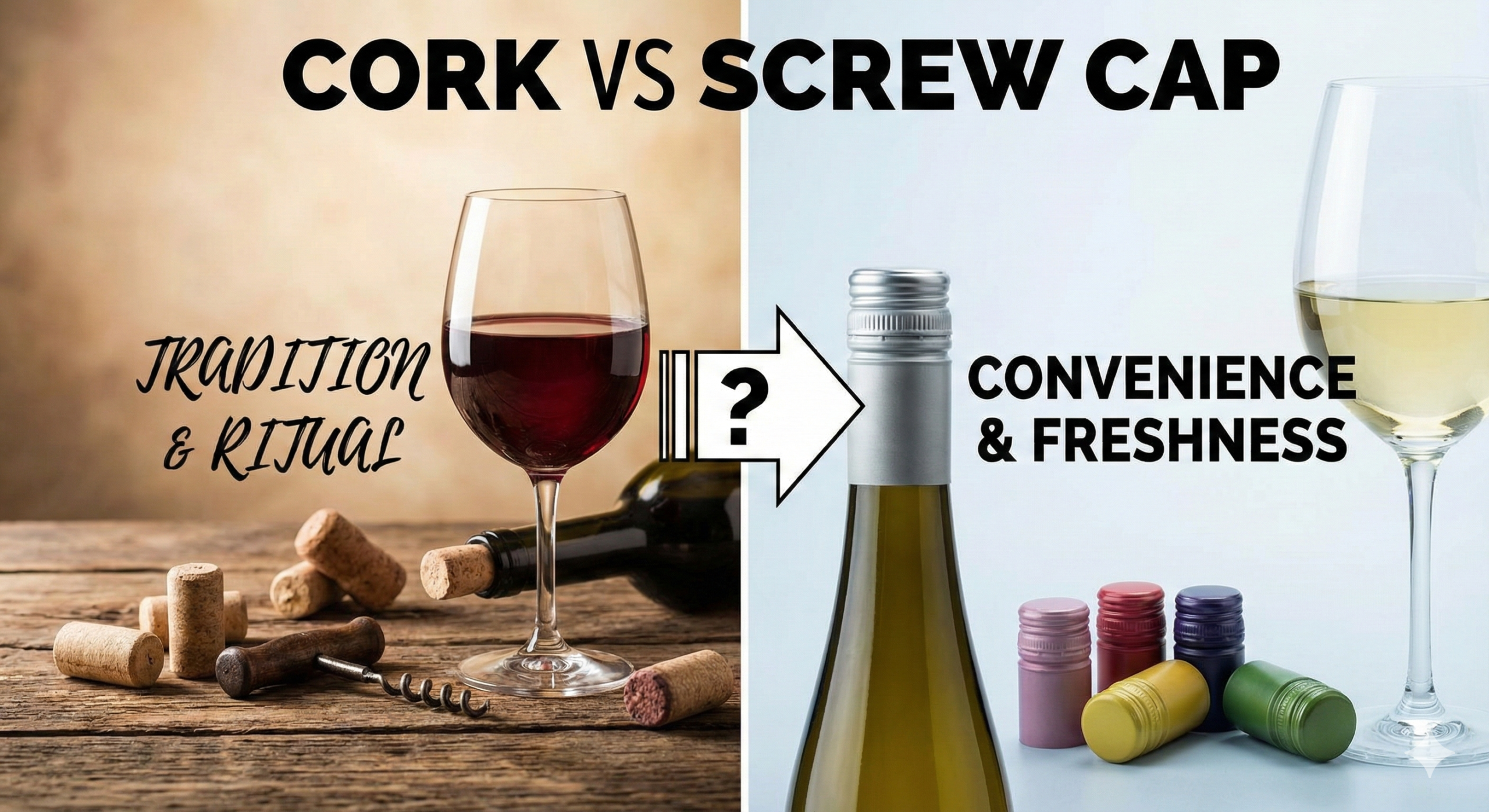
For decades, the sound of a cork popping has been synonymous with celebration, quality, and the start of a good evening. But recently, a new sound has entered the sommelier’s symphony: the sharp crack of a screw cap. The debate of cork vs screw cap is one of the most heated topics in the wine world, dividing traditionalists and modernists alike.
Is a screw cap a sign of cheap plonk, or is it actually the superior closure for keeping your wine fresh? Does cork really help wine age, or is it just a gamble with “cork taint”? In this comprehensive guide, we strip away the snobbery and look at the science, the sensory data, the regional differences, and the practical reality of both closures — covering everything from which glass you should pour into, to whether your natural wine producer cares about the topic at all.
Tradition vs. Technology: A Brief History
Natural cork has been the gold standard since the 17th century. It comes from the bark of the cork oak tree (Quercus suber), primarily harvested in Portugal and Spain. It’s natural, renewable, and has a romantic allure that plastic and metal simply cannot match.
However, the 20th century brought a problem: TCA (2,4,6-trichloroanisole). This chemical compound, often formed by fungi in the cork, causes “cork taint,” leaving wine smelling like wet cardboard or a damp basement. At its peak, nearly 5–10% of all wine bottles were spoiled by bad corks. Enter the Stelvin closure (the technical name for screw caps) in the 1960s — a solution designed to eliminate taint and ensure every bottle tastes exactly as the winemaker intended.
The screw cap was actually invented in the 1880s but didn’t make its wine industry debut until the 1970s in Australia and Switzerland. For decades it sat in wine purgatory — technically superior in many situations, yet culturally stigmatized as the closure of the cheapest grocery store bottles. That stigma has been slowly, stubbornly dismantled by science and shifting consumer attitudes, particularly in the last two decades.
The history of wine closures is also the history of wine preservation. Before airtight closures existed, wine was commonly shipped and stored in clay amphorae sealed with olive oil or beeswax. Glass bottles only became standardized in the late 1700s, and the combination of glass bottle plus cork became the backbone of the fine wine trade as we know it today. Understanding this history helps explain why changing from cork feels so psychologically significant — even when the data clearly supports alternatives.
If you’re buying bottles to lay down for historical purposes, you need to understand the environment they live in. Check out our comprehensive guide on how to store wine at home: temperature and humidity tips to ensure your corks don’t dry out and your investment stays protected.

Coravin Timeless Three+ Wine Preservation System
Love corks but hate committing to the whole bottle? The Coravin allows you to pour a glass without ever pulling the cork, keeping the rest of the bottle fresh for years.
Check Price on AmazonThe Case for Natural Cork
Why do premium wineries — especially in Bordeaux, Napa, Tuscany, and Burgundy — stick with cork? It comes down to one word: Oxygen.
Natural cork is not perfectly airtight. It allows a microscopic amount of oxygen to interact with the wine over time. This process, known as micro-oxygenation, softens harsh tannins and helps develop tertiary flavors (leather, tobacco, dried fruit, truffle, forest floor) in age-worthy red wines. For a serious Barolo, Brunello di Montalcino, or first-growth Bordeaux, this process isn’t a flaw — it’s the point.
There is also the matter of bottle variation. With cork, two bottles from the same case may age at slightly different rates depending on the porosity of their individual corks. To many collectors and wine lovers, this variation is part of the magic — opening a bottle that has developed a little faster or slower than its siblings adds an element of discovery and surprise that a hermetically sealed screw cap can never replicate.
Pros of Cork
- Proven Aging Track Record: Centuries of evidence show cork can age wines 20, 30, even 50+ years.
- Micro-oxygenation: Gradual oxygen ingress creates complex tertiary flavors in tannic reds.
- Sustainability: Cork forests (montados) support extraordinary biodiversity and are a renewable resource.
- The Romance: The ritual of using a corkscrew is part of the wine experience for millions of drinkers.
- Natural Origin: A plant-based closure appeals to those seeking natural products.
- Tactile Feedback: The feel of a well-extracted cork tells an experienced drinker something about the wine’s condition before the first pour.
Cons of Cork
- Taint (TCA): Risk of spoiling the wine, though modern cork production has reduced rates to under 1–2%.
- Variance: No two corks are identical, meaning two bottles from the same case can age differently.
- Fragility: Corks can dry out, crumble, or leak if stored improperly or for too long.
- Cost: High-quality natural corks are significantly more expensive than screw caps.
- Requires Tools: You need a corkscrew, and a good one matters — cheap corkscrews can tear cork or push it into the bottle.
Dealing with a crumbling cork is a nightmare. If you find yourself in a bind without your tools, see our tips on how to open a wine bottle without a corkscrew. And if you’re in the market for a quality opener, we’ve reviewed the top electric corkscrews for ease and performance as well as the best waiters corkscrew picks for 2026.
The Screw Cap Revolution
New World wine regions — specifically Australia and New Zealand — led the charge against cork. Today, nearly 90% of Australian wines and almost all New Zealand Sauvignon Blancs are sealed under screw cap. Why? Because they prioritize fruit preservation.
Screw caps create a near-hermetic seal. This means no oxygen gets in, and no freshness gets out. For aromatic whites (like Riesling or Sauvignon Blanc) and light reds meant to be drunk young (like Rosé or Beaujolais), screw caps are objectively superior at preserving varietal character and the bright, vibrant primary fruit that defines these wines.
The Stelvin closure itself is a marvel of engineering. It consists of an aluminum cap with a food-grade liner — typically made from PVDC (Saranex), tin, or a combination — that sits against the bottle’s lip. Different liner compositions allow for different levels of oxygen transmission, giving winemakers precise control. A Saranex liner is almost entirely impermeable; a tin-lined cap allows a tiny but measurable amount of oxygen ingress. The ability to select oxygen transmission rate at the factory is something that simply doesn’t exist with natural cork.
The Australian and New Zealand Case Study
The pivot in these countries was not arbitrary. In the 1990s, Australian winemakers began documenting significant rates of TCA contamination — some wineries reported that up to 8% of their cork-sealed bottles arrived tainted. For a country building its reputation on fresh, fruit-forward wines with international export markets, this was unacceptable. The Clare Valley Riesling producers in South Australia collectively made the switch in 2000, and the decision was vindicated when vertical tastings of screw-cap-sealed Rieslings showed consistently superior development compared to corked counterparts.
| Feature | Natural Cork | Screw Cap (Stelvin) |
|---|---|---|
| Oxygen Transfer | Variable (allows breathing) | Consistent (very low, liner-dependent) |
| Taint Risk | Low to Moderate (TCA) | Zero (No TCA) |
| Aging Potential | Excellent for long-term | Good for short/medium term; improving |
| Opening | Requires tool | Twist and pour |
| Resealing | Difficult; loses compression | Excellent — just twist back |
| Storage Position | Must lie horizontally | Any position fine |
| Reduction Risk | Low | Moderate (sulfide-related) |
| Consumer Perception | Premium / Traditional | Modern / Practical |
| Unit Cost | $0.30–$3.00+ per cork | $0.05–$0.25 per cap |

Secura Electric Wine Bottle Opener
Even if you prefer screw caps, you’ll eventually meet a cork. Make it effortless with this electric opener that removes corks in seconds with zero physical effort.
Check Price on AmazonThe Science of Aging: Can Screw Caps Age Wine?
A common myth is that wines under screw cap cannot age. This is false. While screw caps don’t “breathe” like natural cork, modern technology has introduced liners with calculated oxygen permeability rates. Winemakers can now choose a screw cap that allows a specific amount of oxygen ingress per year — measured in micrograms of O₂ per day — with scientific precision that natural cork cannot match.
However, the aging process under a screw cap is slower and different. It tends to preserve primary fruit flavors longer, whereas cork accelerates the development of savory, secondary notes. For a wine collector, this predictability is actually a huge asset — you know exactly what you are getting when you open a 10-year-old bottle.
One landmark study that changed the conversation was the 2001 Houghton Wines trial in Western Australia, which sealed identical batches of Cabernet Sauvignon under various closures and then opened them sequentially over 10 years. The screw-capped wines consistently scored higher on fruit quality and lower on oxidation in early years, but by year 8–10, the natural-corked wines had developed more complexity. The conclusion: each closure tells a different story, neither inherently better, but suited to different purposes.
The key variables governing how a screw-capped wine ages include: the amount of dissolved oxygen already in the wine at bottling (known as DO or dissolved oxygen), the sulfur dioxide levels maintained by the winemaker, the specific liner composition used in the cap, and the storage conditions of the bottle. A winemaker who carefully manages these variables can produce age-worthy wines under screw cap. Those who don’t risk reduction — a sulfide-related flaw that manifests as struck match, rubber, or rotten egg notes.
If you do open a younger red that has been sealed tight under a screw cap, it might need help opening up. This is where aeration helps. Check out our reviews of the best wine decanters by shape, capacity and material to help your wine breathe instantly, or read our head-to-head aerator vs decanter comparison if you’re unsure which solution is right for you.
All Wine Closure Types Explained: Beyond Cork and Screw Cap
The closure debate is most often framed as cork versus screw cap, but this binary misses a more complex landscape of options that winemakers choose from. Understanding all closure types helps you become a more informed buyer and drinker.
Natural Bark Cork
The traditional choice. Cut from the bark of Quercus suber trees. Premium grades are graded 1–3 visually. The gold standard for age-worthy wines.
Technical Cork (DIAM)
Ground cork granules treated with supercritical CO₂ to remove TCA precursors, then bonded together. Consistent oxygen transfer with near-zero taint risk.
Colmated Cork
Natural cork filled with cork dust and a binding agent to fill imperfections. Mid-range option used for wines meant to be consumed within 3–5 years.
Synthetic Cork
Plastic or co-extruded polymer closures. No taint, but poor oxygen management and notoriously difficult to extract. Best for wines under 2 years old.
Screw Cap (Stelvin)
Aluminum with a food-grade liner. Available in multiple liner specifications controlling oxygen transmission. Dominant in Australia, NZ, and growing globally.
Glass Stopper (Vino-Lok)
A frosted glass stopper sealed with a plastic O-ring. Zero taint, elegant presentation, completely inert. Used by some premium German and Austrian producers.
Crown Cap
The humble beer cap. Used by some natural winemakers and pétillant naturel (pét-nat) producers. Also used during Champagne production before disgorgement.
Wax Seal
A decorative wax coating over a cork — not a separate closure. Purely aesthetic. Common on Burgundy-style bottles and artisan producers. Does not improve sealing.
The DIAM Revolution: The Best of Both Worlds?
DIAM technical corks deserve special attention because they are rapidly changing the closure conversation. Made by French company Oeneo, DIAM corks use a patented process called DIAMANT that treats natural cork particles with supercritical carbon dioxide — the same technology used to decaffeinate coffee. This process removes all TCA and TBA precursors to below detectable levels, while preserving the oxygen transfer properties of natural cork.
DIAM comes in several grades — DIAM 3, DIAM 5, DIAM 10, DIAM 30, and DIAM MYTIK — each calibrated to allow a specific amount of oxygen over that number of years. A DIAM 30 is engineered for 30-year aging. Adoption has been explosive: as of 2024, wineries including some in Burgundy, the Rhône Valley, and Champagne have begun transitioning to DIAM, signaling that the choice is no longer simply “natural cork or screw cap” but a more nuanced spectrum of technical closure solutions.
Sensory and Taste Differences: Does the Closure Actually Change How Wine Tastes?
This is the question that separates the academic debate from the glass in your hand. The short answer is: yes, over time, the closure affects how a wine develops, and therefore how it tastes when you open it. But the effect is most pronounced in wines aged five or more years — for the vast majority of wines consumed within one to three years of vintage, the closure has minimal impact on your immediate tasting experience.
Fruity and Primary Aromatic Notes
Wines sealed under screw cap tend to retain more primary aromatic character — the fresh berry, citrus, floral, and tropical fruit notes that define a wine at release. This is because these volatile aromatic compounds are not being gradually oxidized or transformed by micro-oxygenation. A three-year-old Sauvignon Blanc under screw cap will typically taste brighter and more vibrant than the same wine under natural cork.
For wine varieties where these primary aromas are the main attraction — Sauvignon Blanc, Riesling, Pinot Grigio, Grüner Veltliner, Gewürztraminer, Rosé — screw caps are widely considered the superior closure by winemakers and sommeliers who prioritize freshness. When you pick up a New Zealand Sauvignon Blanc and it smells electrifyingly of passionfruit and fresh-cut grass five years after vintage, you have a screw cap to thank.
Savory and Tertiary Development
The flip side is that wines sealed under natural cork tend to develop greater complexity over time. As oxygen slowly permeates the cork, it catalyzes chemical reactions that transform simple fruit compounds into more complex tertiary notes: leather, tobacco, truffle, dried flowers, game, earth, and aged cheese-like umami. These are the flavors that make a 20-year-old Bordeaux or a 15-year-old Barolo so profoundly moving to experienced drinkers.
Screw-cap wines can develop complexity too, but it tends to be different in character — more reductive notes may emerge (as a result of the low-oxygen environment), and the fruit preservation is so good that what you get is an almost hyper-vivid version of the wine’s original profile rather than a transformed, evolved character.
Tannin Structure and Mouthfeel
Tannins in red wine polymerize over time, and micro-oxygenation from cork accelerates this process, resulting in softer, more velvety tannins in an aged red. A tight, grippy young Cabernet Sauvignon under cork will gradually relax into silk over a decade in a well-maintained cellar. The same wine under screw cap will retain its youthful structure for longer — which can be an advantage for early drinking but means it needs more time before the tannins fully integrate.
This is why many producers making age-worthy, tannic red wines continue to use cork even when they understand the risks. The micro-oxygenation effect on tannin is not easily replicated by any synthetic means, although DIAM closures come closest. If you want to understand more about tannins and why they matter to flavor and aging, our primer on what tannin in wine means and how it affects your palate is a great starting point.
Regional Adoption: How Different Wine Cultures Approach the Closure Debate
The cork vs. screw cap debate does not play out the same way in every country. Cultural identity, export market expectations, winemaking tradition, and practical economics all shape the choices made region by region. Understanding these differences helps contextualize why a French Bordeaux château and an Australian shiraz producer might make radically different decisions about the same question.
France: Tradition as Non-Negotiable
In France, natural cork remains almost universal for quality wines. The appellation system — AOC/AOP — is deeply intertwined with a philosophy of terroir-driven, traditional winemaking, and cork is considered part of that tradition. Champagne is the most striking example: the prestige of a wire-caged mushroom cork is inseparable from the cultural experience of the product. Even young, fresh Champagne meant to be consumed within a year or two gets sealed with a crown cap under the cage cork after disgorgement — but that cage cork is non-negotiable for presentation.
Some Alsatian and Loire Valley producers have experimented with screw caps for aromatic whites, but adoption remains low due to buyer resistance in export markets. The French relationship with cork is as much about identity and cultural heritage as it is about chemistry.
Italy: Slowly Shifting
Italian wine is similarly conservative regarding closure, though younger winemakers are increasingly open to alternatives. DIAM technical corks have gained significant ground among progressive producers in regions like Piedmont and Tuscany, offering the taint-free security without the cultural friction of a visible screw cap. Natural wine producers in Italy — many of whom operate outside established appellation rules anyway — sometimes use crown caps or even amphora stoppers as part of their artisanal identity. Learn more about the philosophy behind this approach in our guide to organic and natural wine farming practices.
Spain and Portugal: Cork’s Home Turf
Portugal is the world’s largest producer of natural cork, supplying roughly 70% of global demand. The economic and cultural stakes of the closure debate are therefore higher here than anywhere else. Portuguese wine culture is deeply invested in promoting cork, not only in their own wines but globally. The country funds significant research into cork quality improvement and has made remarkable strides in reducing TCA rates through better forest management, processing hygiene, and quality control.
That said, even in Portugal, a new generation of winemakers is using screw caps for light Vinho Verde and easy-drinking Rosé — wines where freshness is everything and immediate consumption is assumed.
Germany and Austria: Technical Precision Meets Tradition
Germany is one of the most interesting markets. Given the emphasis on Riesling — a grape where pristine, age-worthy aromatics are everything — both screw caps and Vino-Lok glass stoppers have gained a foothold among quality producers. The iconic Mosel Riesling producers who have moved to screw cap report that their wines retain their characteristic slate minerality and green apple freshness with superior consistency over time.
USA: Market Bifurcation
In the United States, the market is bifurcated by price point. Wines under $15 — particularly boxed wines, canned wines, and everyday bottles — have enthusiastically adopted screw caps. Above $20, natural cork still dominates due to consumer expectation. However, progressive California producers, particularly those making aromatic whites in the Central Coast and Willamette Valley Pinot Gris, are increasingly bottling under screw cap without apologizing for it.
Matching Closure to Wine Variety: A Practical Guide
One of the most actionable pieces of advice we can give you is this: when evaluating a wine, match the closure to the drinking window. Here is a variety-by-variety breakdown of which closure serves different wines best, based on the current consensus of winemakers, sommeliers, and closure scientists.
White Wines
Sauvignon Blanc: Screw cap preferred. The explosive primary aromatics of Sauvignon Blanc — passionfruit, grapefruit, freshly cut grass, jalapeño — are volatile and delicate. Screw caps preserve them over several years; cork allows them to fade prematurely. The Marlborough benchmark has been set under screw cap.
Riesling: Screw cap strongly preferred for the 3–15 year aging window. Riesling’s classic petrol note (TDN — 1,1,6-trimethyl-1,2-dihydronaphthalene) develops beautifully under screw cap. The Clare and Eden Valley Riesling trials remain the most compelling longitudinal evidence for screw cap superiority in this variety.
Chardonnay: Depends on style. Oaked, full-bodied Burgundian-style Chardonnay meant for 5–10 year aging benefits from cork. Unoaked, fresh Chablis-style Chardonnay or Southern Hemisphere everyday Chardonnay is better served by screw cap. See our in-depth comparison on Pinot Grigio vs Sauvignon Blanc for more on how acidity and closure interact.
Pinot Gris / Pinot Grigio: Screw cap for the lighter, Italian style. Cork acceptable for the richer Alsatian style if aging beyond five years is intended.
Gewürztraminer: Screw cap preferred. The lychee and rose petal aromatics are highly volatile and benefit enormously from the preservation of a screw cap.
Red Wines
Cabernet Sauvignon: Natural cork or DIAM preferred for serious, age-worthy examples. The tannin polymerization process is an argument for allowing gradual micro-oxygenation. Everyday drinking Cab under screw cap is perfectly fine. Our Merlot vs Cabernet structure and tannins guide explains why tannin chemistry matters for closure choice.
Pinot Noir: Divided opinions. Pinot’s delicacy and relatively low tannin means it doesn’t need as much micro-oxygenation as Cabernet. Many Oregon and New Zealand Pinot Noir producers use screw caps with excellent results. Burgundy remains firmly in the natural cork camp, though DIAM is creeping in. Compare Bordeaux vs Pinot Noir structural differences to understand how structure influences closure choice.
Shiraz / Syrah: Context-dependent. McLaren Vale and Barossa fruit-forward Shiraz under screw cap is outstanding. Northern Rhône Syrah (Hermitage, Côte-Rôtie) requiring 10–20 years of aging benefits from cork. See our Shiraz vs Syrah regional style comparison for more context.
Nebbiolo (Barolo/Barbaresco): Cork essential. Barolo is one of the most tannic, age-requiring wines on earth. The micro-oxygenation process is critical to the integration of its famously astringent tannins over a 10–25 year window. No producer of serious Barolo uses screw cap.
Merlot: Flexible. Everyday Merlot does perfectly well under screw cap. Pomerol-level Merlot aged for 10+ years benefits from natural cork’s influence on development.
Sparkling Wines
Sparkling wine is a special case. Champagne and traditional method sparkling wines require a two-stage closure system: a crown cap during secondary fermentation (which maintains a perfect CO₂ seal without risk of taint), followed by a cork after disgorgement for presentation and continued aging in bottle. The cage-and-cork arrangement is not merely traditional — it’s functional, providing the mechanical resistance needed to retain pressure from dissolved CO₂ over years of development.
Pét-nat (pétillant naturel) and other low-intervention sparkling wines often use crown caps throughout, particularly those meant for early consumption. Our comparison of Prosecco vs Champagne production methods explains how the production method affects closure choices and flavor development.
Glassware and Serving: Does Closure Affect How You Should Serve the Wine?
This is a nuanced but genuinely useful consideration. The type of closure a wine has been under can give you advance information about its state and needs at serving time — which in turn informs how you should pour and serve it.
Decanting Screw-Cap Wines
Because screw-capped wines — especially tight-lined ones — have had almost no oxygen exposure during aging, they can present in a “closed” or even mildly reductive state when first opened. This is especially true of Pinot Noir, Syrah, and tannic red varieties. Before dismissing such a wine as faulty, pour it into a decanter and give it 30–60 minutes of air. The reductive notes often blow off quickly, revealing the wine’s true character underneath.
For everyday whites under screw cap, decanting is rarely necessary. Simply opening the bottle and pouring into appropriate glassware is sufficient. For the best results with aromatic whites, our guide to top red wine glass picks by style and variety and our comparison of red vs white wine glass shape and how it affects aroma will help you make the best serving decision.
Breathing Time for Corked Reds
A well-aged cork-sealed red may need decanting for a different reason: sediment. Older cork-sealed wines frequently develop tartrate crystals and pigment sediment that should be separated before serving. The decanting process also gives the wine a controlled burst of oxygen to open up after years of slow, gradual micro-oxygenation in bottle.
For Bordeaux-style reds and Burgundy, the glass shape itself matters enormously. A wide-bowled Bordeaux glass is designed to allow the aromas of a tannic, dark-fruited red to evolve as you swirl, while a Burgundy glass concentrates the delicate aromatics of Pinot Noir. Visit our in-depth comparison of Bordeaux vs Burgundy glass shape to understand why the glass you choose can make a wine taste 30% better.
Serving Temperature and Closure
Screw-cap wines are often consumed more casually — at picnics, outdoor events, or directly from the fridge. This means they’re sometimes served too cold, which mutes aromas. White wines under screw cap should ideally be served at 8–12°C (46–54°F), not straight from a 4°C refrigerator. Red wines, even those under screw cap, generally benefit from being served at 15–18°C.
A quality wine thermometer is worth keeping on hand to ensure you’re serving any wine — corked or capped — at its ideal temperature. We’ve covered this in detail in our article on why a wine thermometer is your most important tool. If you frequently need to chill wines quickly, consider a wine chiller sleeve or one of the top electric wine chillers for precise temperature control.
Food Pairing and Closure: Does It Actually Matter?
When pairing wine with food, the closure type itself rarely enters the decision — but the wine style that closure is associated with very much does. Understanding the relationship between closure and wine character helps you make more informed pairing decisions.
Screw-Cap Whites with Food
The bright acidity and vivid primary aromatics preserved by screw caps make them ideal companions for fresh, acidic, or delicate dishes. A crisp Sauvignon Blanc from Marlborough under screw cap pairs beautifully with fresh goat cheese, oysters, asparagus, and citrus-dressed seafood. A well-preserved Riesling works magnificently with Thai cuisine, Vietnamese pho, sushi, and spicy dishes — the slight residual sugar and vibrant acidity cut through spice and balance richness.
See our dedicated guides on sushi and wine pairing, wine pairing with spicy food, and our seafood and wine pairing masterclass for detailed recommendations.
Cork-Sealed Reds with Food
Aged cork-sealed reds — Bordeaux, Barolo, Rioja Reserva, Napa Cabernet — are natural partners for rich, protein-heavy dishes where the tannins need something to grip. The earthier, more complex tertiary notes that develop through cork-aging (leather, tobacco, dried herbs) add depth to dishes like braised lamb, aged hard cheeses, and mushroom-based sauces. Our guide on the best wine to pair with steak covers this perfectly and should be your first stop if you’re opening a serious corked red.
For cheese pairings with aged, cork-sealed wines, our ultimate cheese and wine pairing chart is an invaluable reference. And for chocolate lovers, our chocolate and red wine pairing guide will help you make the most of that special aged bottle.
Thanksgiving is another scenario where closure matters. The diverse spread of flavors on a holiday table — from turkey to cranberry sauce, stuffing to sweet potato — calls for wines that are fresh and versatile rather than deeply complex. This is one argument for screw cap over cork at the holiday table. See our recommendations for the best wines for Thanksgiving turkey and sides for practical advice.
After Opening: How Closure Type Affects Wine Preservation
One of the most practical and least-discussed aspects of the cork vs. screw cap debate is what happens after the bottle is open. The closure you started with directly affects your options for preserving what’s left.
Resealing with a Screw Cap
Screw caps are dramatically superior for resealing. You simply twist the cap back on and refrigerate. The aluminum cap and liner provide the same barrier they did before opening, slowing oxidation significantly. A screw-capped wine stored in the fridge after opening will typically remain fresh for 3–5 days, sometimes longer for more acidic wines with higher SO₂ levels.
This is a genuine lifestyle advantage — for people who drink a glass or two with dinner and don’t want to commit to a full bottle, a screw-cap wine stored in the fridge retains its character far better than most corked alternatives. For more on this topic, our comprehensive guide on how long wine lasts after opening covers all closure types, varietals, and storage scenarios.
Resealing a Cork-Topped Wine
Replacing a cork after opening is an imperfect science. The cork expands after extraction and rarely creates the same seal it had before. Jamming it back in (reversed or same way) will hold the wine for a day or two in the fridge, but oxidation proceeds faster than with a properly sealed screw cap. For cork-sealed wines, external preservation tools become important:
The two most popular options are vacuum pump systems (like Vacu-Vin) and inert gas systems (like Private Preserve argon spray). We’ve done a head-to-head comparison of the Coravin vs Vacu-Vin approaches if you want to understand the trade-offs. For our complete rundown of preservation systems, see our top-rated wine preservers guide.
Alternatively, a quality set of wine stoppers designed specifically to create a tight seal can outperform pushing the original cork back in. Our review of the best wine stoppers covers both vacuum and non-vacuum models across all price points.

Wine Enthusiast 32-Bottle Dual Zone Wine Cooler
Whether cork or screw cap, temperature fluctuation kills wine. Protect your investment with this dual-zone fridge perfect for both reds and whites.
See Best DealCollecting and Investment Wine: Why Closure Is Critical
For wine collectors and investors — people buying wine specifically to cellar for 10, 20, or 30 years — the closure decision carries financial weight. A collection of serious wines with a 5% taint rate is not just an aesthetic disappointment; it’s a significant financial loss.
The Collector’s Preference for Cork
The global fine wine auction market — Christie’s, Sotheby’s, Acker Merrall & Condit, Hart Davis Hart — deals almost exclusively in natural-cork wines. Bordeaux first growths, DRC Burgundy, Brunello di Montalcino, and Napa Cult Cabernets all come under cork. The auction world values the trackable history of a cork-sealed bottle: the fill level, the condition of the cork, the ullage — all of these are visual and physical clues about how the wine has aged that screw caps don’t provide in the same way.
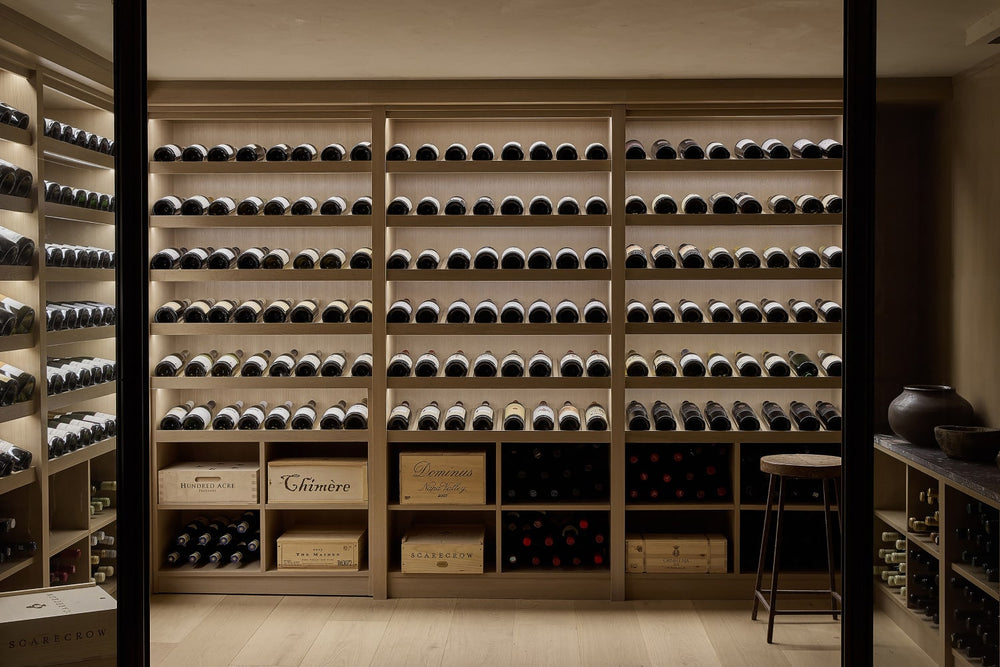
Proper storage of cork-sealed collectible wines requires maintaining specific temperature and humidity levels to keep corks moist and functional. Our guide on wine cellar essentials: racks, climate control and lighting is essential reading if you’re building a serious collection. For those without the space or budget for a dedicated cellar, our article on how to store wine without a wine fridge offers practical alternatives, and if you’re considering a dedicated unit, our do I need a wine fridge guide will help you decide.
Screw Cap and Investment Wine: An Emerging Shift
There is a small but growing secondary market for aged Australian and New Zealand wines sealed under screw cap. Penfolds Grange, Australia’s most iconic and collectable wine, has remained under cork — a deliberate choice to maintain auction market credibility. However, many high-end Australian producers bottle their second-tier or single-vineyard wines under DIAM or screw cap, and as these age gracefully, collectors and investors are taking notice.
The key question for any collectible wine is: will the closure maintain integrity over the intended aging period? For screw caps, the risk is not taint but potential metal corrosion or seal failure over very long periods (20+ years). This remains largely untested territory, as reliable longitudinal data beyond 20 years under screw cap doesn’t yet exist at scale. For cork, the risk is taint, dryness, and variance — risks that have been substantially reduced by modern cork production but not eliminated.
Natural and Organic Wine: A Different Perspective on Closures
The natural wine movement — which emphasizes minimal intervention in both vineyard and cellar — approaches the closure debate from a different philosophical angle. Natural winemakers are often skeptical of highly engineered solutions, which creates an interesting tension with screw caps (an industrial aluminum product) even when those caps might better protect the wine.
Natural Wine and Cork
Many natural wine producers use natural bark cork for philosophical consistency. If the point of the movement is to avoid synthetic additives and industrial processes in winemaking, using plastic-derived synthetic closures or aluminum screw caps feels contradictory. High-quality natural cork is, after all, a completely natural, renewable, biodegradable closure that has existed alongside fermented grape juice for centuries.
However, the natural wine community also has a high tolerance for wine faults — including cork taint, reduction, and brett — seeing these as expressions of the wine’s natural character rather than flaws to be corrected. This changes the calculus: TCA-tainted wine, which would be catastrophic in a conventional winery, may be more casually shrugged off in the natural wine world as part of the unpredictability that comes with minimal intervention.
Crown Caps in Pét-Nat
One area where natural winemakers have wholeheartedly embraced a non-cork closure is pétillant naturel. Pét-nat is bottled before fermentation is complete, meaning the CO₂ produced by the remaining yeast creates the bubbles in-bottle. A crown cap (metal bottle cap, like on a beer) is the standard closure, creating a tight seal that maintains carbonation without the need for a cage-and-cork arrangement. The result is charming, sometimes slightly cloudy, playfully effervescent wine that is the antithesis of polished Champagne — and it arrives under what amounts to a beer cap.
This has normalized non-cork closures in natural wine circles to a degree, even if the philosophical debate continues. For a deeper dive into the farming and production philosophy behind these wines, our organic and natural wines guide and our dedicated natural wine guide cover the complete picture. Our biodynamic wine guide explores the most rigorous version of natural farming philosophy.
Detecting and Handling Cork Taint: What Every Wine Drinker Should Know
Cork taint remains the single most important argument against natural cork, and every wine drinker should be able to identify it. Understanding TCA contamination — what causes it, how to detect it, and what to do when you find it — is fundamental wine literacy.
What Causes Cork Taint?
TCA (2,4,6-trichloroanisole) is produced when naturally occurring fungi metabolize chlorine compounds in cork. The chlorine can come from cleaning agents used in the winery or from the cork processing facility. The resulting compound is detectable by the human nose at extremely low concentrations — as low as 2–4 parts per trillion in some individuals — making it one of the most efficiently detected off-flavors in food and beverage.
The smell is unmistakable once you know it: damp cardboard, wet dog, a damp basement after rainfall, or musty newspaper. It doesn’t always completely dominate the wine — low-level TCA can simply suppress fruit and aromatics, making the wine seem flat and muted without obvious “off” notes. This is called the “cork stink” and is responsible for many wines being dismissed as simply “not very good” when they were actually tainted.
How to Test for Taint
Pour a small amount into your glass and smell it before tasting. If it smells musty or like wet cardboard, tilt the glass, cover it with your palm for 30 seconds to warm the wine slightly and concentrate aromas, then smell again. If the mustiness intensifies, the wine is almost certainly tainted. Tasting it won’t hurt you — TCA is not toxic — but it won’t taste good either.
It’s worth noting that a very similar compound, TBA (2,4,6-tribromoanisole), can contaminate wines without the cork being involved at all — it can come from wooden pallets, wooden structures in the winery, or even contaminated packaging materials. Learning to identify and understand these faults makes you a better wine consumer. For a complete guide to this process, see our article on how to detect if a wine is corked.
What To Do If Your Wine Is Corked
In a restaurant, you are entitled to return a corked wine. Simply inform your server or sommelier — a professional will know what corked smells like and should replace the bottle without question. At home, unfortunately there is no recourse unless you can return it to the retailer (many good wine shops will replace a demonstrably tainted bottle).
There is a folk remedy — submerging a ball of plastic cling wrap into the corked wine, which allegedly absorbs TCA — and some studies show modest effectiveness. But it won’t rescue a severely tainted bottle. The better solution is prevention: buying from reputable producers who use high-quality, modern cork or DIAM, and storing your bottles properly.
Storage Implications: Cork vs Screw Cap in Your Home
The closure type has direct practical implications for how you store wine at home. This is one area where screw caps win an unambiguous practical victory over natural cork.
Why Cork Needs Horizontal Storage
Natural cork must remain moist to maintain its seal. Cork cells are hollow and compressible when wet, creating the tight seal in the bottle neck. When a cork dries out, it can shrink, crack, or crumble, allowing air into the bottle and accelerating oxidation. To keep the cork moist, wine bottles must be stored on their sides — allowing the liquid inside to keep the cork constantly wet.
This requirement shapes everything about wine storage infrastructure: wine racks, wine fridges, cellar design, and even how you transport bottles. A wine rack that stores bottles horizontally is not just an aesthetic choice — it’s functionally necessary for cork-sealed wine. Our guide to modular wine rack and expandable storage covers the best options for home storage at every budget level.
Screw Cap Storage Flexibility
Screw-cap wines can be stored in any orientation — vertical, horizontal, or at an angle — without affecting the seal. This dramatically increases your storage options. You can stand them upright in a regular kitchen cupboard, a bookshelf, or any other convenient space. This convenience factor is one reason screw caps have become dominant for wines sold through supermarkets and off-licenses, where vertical shelf display is the norm.
Regardless of closure type, temperature stability remains the critical variable in wine storage. Fluctuating temperatures — not steady cool ones — cause the wine to expand and contract inside the bottle, stressing any closure type and accelerating deterioration. Even a screw-capped wine stored at 28°C (82°F) in a warm kitchen will deteriorate faster than the same wine properly cellared at 13°C (55°F). For a complete overview of temperature and humidity considerations, revisit our comprehensive home wine storage guide.
For those considering a dedicated wine cooling appliance, our complete wine cooler guide and comparison of thermoelectric vs compressor cooling will help you choose the right unit. If you’re on a budget, see our picks for the best wine coolers under $500.
The Ritual: Pop vs. Crack — Why the Opening Experience Matters
Wine is not purely a beverage — it’s an experience. And the moment of opening a bottle is a ritual that carries meaning far beyond the functional act of accessing the liquid inside. This is one area where natural cork has a genuine, defensible advantage that no amount of scientific data can fully displace.
The resistance of cork against the corkscrew; the gradual emergence of the cork as it’s drawn upward; the quiet pop as it releases from the bottle neck; the moment of inspection — smelling the base of the cork, examining its condition; all of these add up to a sensory and ceremonial experience that signals “something special is about to happen.” This matters at dinner parties, celebrations, and romantic occasions in a way that a clinical twist of aluminum simply cannot replicate.
The foil capsule also contributes to the ritual. The act of cutting the foil, often with a foil cutter or the small blade on a waiter’s corkscrew, is a small ceremony that builds anticipation. Our reviews of the top foil cutter picks by material and grip cover this underrated accessory.
For those who appreciate the ceremony but want the reliability of technology, electric corkscrews have become sophisticated enough to deliver a premium opening experience without the effort or skill of a waiter’s corkscrew. Our roundup of the top electric corkscrews for ease and performance is worth reading if you’re opening a lot of bottles. If you prefer the classic approach, we’ve reviewed the top-rated wine bottle openers across all styles.
Sustainability, Environment, and the Closure Industry
The environmental implications of closure choice are more complex than they first appear, and a simplistic “cork = green, aluminum = bad” narrative doesn’t hold up under scrutiny.
Cork: A Renewable, Biodiverse Resource
Cork oak forests (montados in Portugal, alcornocales in Spain) are among the most biodiverse ecosystems in Europe. The trees are never cut down — only the bark is harvested every 9–12 years, allowing the tree to continue absorbing CO₂ and supporting wildlife. A single cork oak can live for 200+ years and be harvested dozens of times. These forests support the Iberian lynx, the black stork, and numerous migratory birds — making cork production a genuine conservation story.
The cork industry has made significant investments in “greenwashing” the narrative, but the underlying facts are genuinely positive. Natural cork is biodegradable, compostable, and — through programs like RECORK — widely recyclable into flooring, insulation, and consumer goods.
Aluminum Screw Caps: The Environmental Trade-offs
Aluminum production is energy-intensive and involves bauxite mining — a process with significant environmental impact. However, aluminum is infinitely recyclable without loss of quality, and the recycling infrastructure for aluminum is mature and widely available. A screw cap made from recycled aluminum has a dramatically lower carbon footprint than one made from primary aluminum.
The real comparison depends on the full life cycle: mining, processing, transportation, use, and end-of-life. Studies comparing the total carbon footprint of cork versus aluminum screw caps typically show that high-quality natural cork has a lower lifetime carbon impact — especially when the cork forest sequestration is factored in — but the advantage narrows significantly for wines with lower recycled-content aluminum caps being properly recycled.
Synthetic closures (plastic corks) perform worst by most environmental metrics: they are petroleum-derived, rarely recycled, and end up in landfill. If sustainability is important to you, the choice between natural cork and aluminum screw cap is more nuanced — synthetic cork is typically the worst option. Explore our eco-friendly wine storage solutions guide for broader recommendations on reducing the environmental footprint of your wine hobby.
The Carbon Footprint of the Bottle Itself
It’s worth noting that the closure is not the biggest environmental variable in wine packaging — the glass bottle is. A standard 750ml wine bottle accounts for roughly 40–70% of the total carbon footprint of a wine’s packaging. Bag-in-box wines, canned wines, and Tetra-Pak formats all have dramatically lower packaging footprints than glass bottles with either closure. The closure debate, in the grand scheme of wine’s environmental impact, is relatively minor. Choosing a boxed wine over a bottled wine has far more environmental impact than choosing screw cap over cork.
Consumer Psychology: Why Perception Still Drives Purchase
Despite all the scientific evidence, consumer psychology remains one of the most powerful forces shaping the cork vs. screw cap decision. And the science of consumer psychology itself is clear: consumers consistently rate the same wine as higher quality when it’s presented under cork vs. screw cap, even in blind conditions where they cannot see the label — simply hearing the cork pop vs. the screw cap twist influences their perception.
The Sound of Quality
Research by Professor Charles Spence at Oxford University’s Crossmodal Research Laboratory has shown that the sound of a cork popping primes positive expectations in drinkers — expectations that carry over into their perception of the wine’s quality, complexity, and enjoyment. The “pop” activates pleasure-anticipation pathways in the brain before the wine has even touched the lips.
This is not irrational consumer behavior — it’s human. The experience of drinking wine is multisensory, and every element of the experience shapes the final judgment. A winemaker who dismisses this psychology entirely — saying “the wine is objectively the same quality regardless of closure, so why spend more on cork” — misunderstands the product they’re selling.
The Price Ceiling Problem
For decades, the screw cap was associated with wines priced under $10, which created a ceiling effect: consumers assumed that any wine under screw cap couldn’t be worth more than $10, regardless of the liquid inside. This ceiling has risen significantly as premium screw-cap wines from Australia and New Zealand have established themselves in the $20–$50+ category, and as younger consumers with less entrenched cork associations have entered the market.
The shift is generational. Wine drinkers under 35 — who grew up seeing screw caps on quality wines from the New World — have significantly fewer negative associations with the closure than Baby Boomers who learned wine in an era when screw caps meant only the cheapest of cheap bottles. As generational turnover in the wine market continues, screw cap stigma will continue to erode.
Reading the Label for Closure Clues
While the closure itself is usually visible on the bottle, there are sometimes label clues that hint at what’s inside. Terms like “Stelvin,” “screw cap sealed,” or a small capsule-free bottle neck indicate a screw cap. Wax seals almost always cover a cork. Some producers are beginning to indicate closure type and even OTR (oxygen transmission rate) on back labels as a quality signal for informed consumers. Our guide on how to read wine labels quickly covers everything you’ll find on a label and what it means.
The Future of Wine Closures: What’s Coming Next?
The closure industry is not static. Significant R&D investment is flowing into the space, driven by the wine industry’s ongoing search for the perfect closure — one that eliminates TCA, provides precise and controllable oxygen management, is environmentally sustainable, and ideally carries some of the ritual appeal of natural cork.
DIAM and Technical Corks: The Near Future
DIAM technical corks represent the most significant near-term shift in the industry. As adoption continues to grow among prestigious European producers, DIAM is likely to become the dominant closure for wines in the $20–$80 price range within the next decade. The DIAM 30 and DIAM MYTIK variants specifically target the long-aging collectible market — a space that natural cork has previously owned exclusively.
Vino-Lok Glass Stoppers
Vino-Lok glass stoppers have found a niche audience among premium Austrian, German, and some Italian producers. They are inert, aesthetically striking, completely reusable as a stopper after opening, and zero taint risk. Their limitation is cost (approximately $1.50–$3.00 per stopper) and the need for the bottle to be specifically manufactured with a wider neck. For wines in the $40+ category where the packaging is part of the experience, Vino-Lok is a premium alternative that could grow.
Smart Closures and Connected Bottles
Several startups are developing “smart” closures with embedded NFC chips that allow consumers to authenticate the bottle’s provenance, verify storage conditions throughout the supply chain, and access tasting notes or cellar recommendations by tapping their phone to the cap. This technology is most relevant for high-value collectible wines where counterfeiting and provenance verification are concerns. It’s currently a niche, but as NFC technology becomes cheaper and wine fraud remains a problem, smart closures may become standard for premium wines within 10–15 years.
Alternative Packaging
It’s also worth acknowledging that the entire premise of the cork vs. screw cap debate may become less relevant as alternative packaging formats grow. Bag-in-box wine with a plastic bladder and dispensing tap offers extraordinary preservation (wine stays fresh for 4–6 weeks after opening), lower cost, lower environmental footprint, and great convenience. Canned wine has seen explosive growth among younger consumers for on-the-go consumption. Neither requires a cork or screw cap. The definition of what a wine bottle is, and therefore what it needs to be sealed with, is slowly expanding. For those interested in value and everyday drinking, our affordable wine picks for 2026 include excellent examples across closure types and formats.
The Final Verdict: What Should You Buy?
Stop judging the bottle by its top. In 2026, a screw cap is no longer a sign of cheap wine; it is a sign of a winemaker who wants to guarantee that the liquid inside tastes fresh, vibrant, and free of faults. And yet, cork — natural or technical — remains the right choice for wines that require the mysterious, transformative chemistry of long-term aging.
Choose Cork If:
- You are buying expensive reds (Cabernet, Nebbiolo, Syrah) to cellar for 10+ years.
- You value the traditional ceremony of opening wine.
- You enjoy the subtle variations and evolution that natural aging brings.
- You are buying for a wine auction, as collectible investments.
- You’re serving at a formal dinner or celebration where presentation matters.
Choose Screw Cap If:
- You are buying white wines, Rosé, or fruit-forward reds.
- You plan to drink the wine within 1–5 years of purchase.
- You want a guarantee that the wine is not “corked.”
- You are taking wine on a picnic or hike (no tools required!).
- You like to open a glass at a time and preserve the rest over several days.
- You want consistency across every bottle in a case.
Consider DIAM Technical Cork If:
- You want long-term aging potential without the TCA risk.
- You are a winemaker who wants precise, engineered oxygen management.
- You need to satisfy traditional markets while having modern reliability.
Regardless of the closure, finding great value is key. Don’t miss our curated list of the best affordable wines of 2026, featuring top picks in both cork and screw cap formats. And if you’re looking to explore and discover more widely, see our guide to evaluating 2026 wine subscription services — many of which curate wines across both closure types.
Frequently Asked Questions
Yes, significantly. Because the screw cap provides a tighter reseal than jamming a cork back in, it can keep the wine fresh in the fridge for 3–5 days, sometimes longer for high-acid wines, compared to 1–2 days for a recorked bottle. For the best results with any opened wine, see our comprehensive guide on how long wine lasts after opening.
Absolutely. High-end producers in Australia (like Penfolds) and New Zealand bottle wines costing over $100 under screw cap to ensure quality consistency. DIAM technical corks are increasingly used on wines costing $50–$200+ in Europe, including some Burgundy producers.
Synthetic corks are plastic or polymer stoppers designed to look like cork. They eliminate taint but can be difficult to remove and do not offer the aging benefits of natural cork. They are generally used for wines meant to be consumed within a year or two. Of the three main closure types, synthetic corks are generally considered the worst option for both aging and sustainability.
That is “cork taint” caused by TCA (trichloroanisole). It happens when fungi in natural cork interact with chlorides in the cork or winery environment. It has nothing to do with the quality of the grapes — only the closure. Even a great wine can be tainted. You are entitled to return a tainted wine in a restaurant or to a good wine retailer. Learn more about detection in our wine corked detection guide.
It is not necessary. Cork bottles must be stored horizontally to keep the cork moist and maintain the seal. Screw cap bottles can be stored vertically or horizontally without affecting the seal — a practical advantage for everyday home storage.
Generally, yes — though it’s nuanced. Cork is biodegradable, renewable, and cork forests support significant biodiversity. Aluminum screw caps are recyclable, but their primary production has a higher carbon footprint. Synthetic plastic corks perform worst on most environmental metrics. The glass bottle itself, not the closure, is the dominant environmental factor in wine packaging.
Actually, screw caps can sometimes cause “reduction” (a sulfide-based smell like struck match, rubber, or rotten eggs) if the seal is too tight and the wine lacks sufficient oxygen. Winemakers must prepare wines differently — managing dissolved oxygen and SO₂ levels carefully — when bottling under screw cap to avoid this. If you encounter this, decanting with vigorous aeration will usually blow off the reductive notes within 30 minutes.
Australia and New Zealand are the leaders, with 90%+ adoption across all wine categories. The UK market has strong acceptance of screw caps across all price points. The US is increasingly accepting them, particularly for wines under $20. France and Italy remain the most resistant due to tradition and export market expectations.
DIAM is a technical cork made by French company Oeneo from natural cork granules treated with supercritical CO₂ to eliminate all TCA and TBA precursors. It comes in different grades (DIAM 3, 5, 10, 30) calibrated for different aging periods. It is increasingly used by premium producers as a best-of-both-worlds solution: natural cork aesthetics and aging properties with zero taint risk.
Yes, often significantly. Because screw-capped wines have had very little oxygen exposure during aging, they can be “closed” or reductive when first opened. Decanting or using an aerator for 30–60 minutes can dramatically improve these wines. Our comparison of the aerator vs decanter will help you choose the right approach.
Sediment can form in any wine — it is a natural byproduct of aging and precipitation of tartrate crystals and pigment compounds. However, because screw-capped wines typically have less oxidative aging, they tend to produce less sediment over time than equivalent cork-sealed wines. Read our wine sediment guide to understand what sediment is, whether it’s harmless, and how to handle it.
Yes — consider the recipient’s preferences and the occasion. For a formal gift, a wine under natural cork or a premium wax-sealed bottle carries more visual impact and ceremonial weight. For a practical, everyday wine gift for someone who enjoys their daily glass, a quality screw-capped wine (especially a premium Australian or New Zealand white) is perfectly appropriate. Our guide to top wine accessory gifts and our best wine gift baskets have great ideas regardless of closure preference.