There’s a bottle of wine on the table. It came from a vineyard where the grapes were harvested at 3 a.m. under a full moon, where cow dung was stuffed into horns and buried underground for six months, and where no synthetic pesticide has touched the soil in over two decades. The farmer consulted an astronomical calendar before picking, planted cover crops aligned with the solar cycle, and composted using specific herbal preparations described in an agricultural lecture series from 1924. That wine, strange as its origin story sounds, is biodynamic.
And it might be the most expressive, terroir-driven bottle you’ll ever drink.
Biodynamic wine has moved from fringe curiosity to fine-wine fixture over the past two decades. Estates like Domaine Leroy in Burgundy, Benziger Family Winery in Sonoma, and Nikolaihof in Austria have staked their reputations on it. Critics give it disproportionate scores. Sommeliers recommend it. Yet most wine drinkers remain genuinely confused about what “biodynamic” actually means — and whether it’s philosophy, pseudoscience, marketing, or something genuinely worth seeking out.
This guide answers all of that. We’ll explore the origins, science, farming practices, certification pathways, and the real-world taste implications of biodynamic wine — without the mysticism overload and without the dismissive skepticism. If you’re already curious about natural wine or organic farming practices, biodynamic is the next level deeper.
What Is Biodynamic Wine?
Biodynamic wine is produced from grapes grown under a specific agricultural philosophy — one that treats the farm as a self-sustaining, interconnected organism. Unlike conventional viticulture, which isolates problems and applies targeted chemical solutions, biodynamic farming addresses the whole: soil health, plant health, animal integration, seasonal rhythms, and even cosmic influences.
The word itself blends “bio” (life) and “dynamic” (energy) — capturing the core belief that a healthy farm is alive in every sense, full of energetic interplay between its components. In practice, this translates into a specific set of farming rules:
- No synthetic pesticides, herbicides, or fertilizers — ever, under any circumstances
- The vineyard is self-sustaining — inputs must come from within the farm ecosystem where possible
- Specific herbal and mineral preparations (numbered 500–508) are applied at precise times
- Planting, harvesting, and pruning follow an astronomical calendar based on lunar and planetary positions
- Animal integration — livestock provide manure for compost; chickens control pests; bees support pollination
- Soil is treated as a living entity — root fungi, earthworms, and microbial life are actively cultivated
Biodynamic wine begins in the vineyard — but the philosophy extends into the cellar too. Many biodynamic winemakers use minimal intervention in winemaking: native yeast fermentation, no added sugars or acidifiers, minimal sulfur dioxide, and no heavy filtration. The goal is to let the wine express its origin as cleanly as possible, which overlaps significantly with the natural wine movement.
However — and this is important — biodynamic is a farming certification, not a winemaking certification. You can make a biodynamic-certified wine using fairly conventional cellar techniques. The certification applies to the vineyard. The winemaking philosophy is a separate (though often aligned) consideration.
Rudolf Steiner & the Origins of Biodynamic Agriculture
To understand biodynamic wine, you need to meet Rudolf Steiner — Austrian philosopher, architect, and esotericist, who in June 1924 delivered eight lectures on agriculture at a farm in Koberwitz, Poland (now Kobierzyce, Czech Republic). Those lectures, posthumously compiled as the Agriculture Course, became the founding text of biodynamic farming.
Steiner was not a farmer. He was the founder of Anthroposophy — a philosophical worldview that holds that spiritual realities can be approached through disciplined inquiry, and that the human being is connected to cosmic forces in measurable ways. His agriculture lectures applied this thinking to farming: he argued that synthetic chemicals were severing the connection between soil and cosmos, that farms needed to be closed-loop systems, and that specific preparations could reinvigorate soil vitality by channeling “formative forces” from the universe.
The Central Ideas from Steiner’s 1924 Lectures
Steiner’s lectures introduced several ideas that still define biodynamic farming today:
The farm as organism: Each farm should function like a living body — with each element supporting the others. Livestock, crops, pasture, woodland, and water should all be integrated and mutually supporting. Nothing should be taken from the ecosystem without something being returned to it.
The influence of cosmic rhythms: The sun, moon, and planets exert forces on plant life — not metaphorically but in ways that can be observed empirically. The timing of planting and harvesting should align with these rhythms. This formed the basis of the biodynamic calendar.
Specific preparations for soil vitality: Steiner described nine preparations — herbal, mineral, and animal-derived — that, when used correctly, would reinvigorate soil microbial life and strengthen plant health. These preparations, numbered 500–508, are still used on every certified biodynamic farm today.
Steiner died in 1925, before he could develop these ideas further. But his students, particularly the agronomist Ehrenfried Pfeiffer, systematized and spread his teachings. Pfeiffer brought biodynamic farming to the United States in the 1930s and 1940s, where it took root among a community of idealist farmers long before “organic” became a mainstream concept.
From Philosophy to Wine: The 20th Century Journey
Biodynamic farming came to wine slowly. Vineyards are complex, long-cycle investments — changing farming philosophy is risky when your vines take decades to reach peak expression. Early biodynamic winegrowers in Europe — particularly in Austria, Alsace, and Burgundy — converted quietly, often without formal certification.
The turning point came in the 1990s and early 2000s. Nicolas Joly at Coulée de Serrant in the Loire Valley became the movement’s most vocal ambassador, writing books and hosting tastings that drew international attention. The Burgundian négociant Lalou Bize-Leroy converted her legendary Domaine Leroy, one of the most prestigious estates in France, to full biodynamic practice in 1988. When Domaine Leroy’s wines began consistently scoring in the stratosphere of critical praise, the wine world took notice.
By the 2010s, biodynamic viticulture had spread globally. California’s Benziger Family Winery became one of the first certified biodynamic estates in North America. In New Zealand, Millton Vineyard pioneered biodynamic viticulture in the Southern Hemisphere. Today, biodynamic vineyards operate on every continent where wine is produced — from the volcanic slopes of the Azores to the arid hills of South Australia.

Biodynamic vs. Organic vs. Natural Wine: What’s the Difference?
These three terms appear constantly in modern wine conversation, often interchangeably — which drives precision-minded drinkers and growers absolutely mad. They overlap in philosophy but differ substantially in practice, certification, and legal status.
| Factor | Biodynamic | Organic | Natural Wine |
|---|---|---|---|
| Legal Definition | No legal standard; governed by private certifiers (Demeter, Biodyvin) | Legally defined in EU, USA, and most markets | No legal definition anywhere (as of 2026) |
| Synthetic Pesticides | Prohibited | Prohibited | Typically avoided but unenforced |
| Copper/Sulfur Sprays | Permitted (limited) | Permitted (limited) | Often used but debated |
| Biodynamic Preparations | Required | Not required | Not required |
| Lunar Calendar | Central to practice | Not required | Sometimes used |
| Winemaking Additives | Heavily restricted under Demeter rules | Some additives allowed | Minimal to none (by philosophy) |
| Sulfur Dioxide | Limited (Demeter allows small amounts) | Allowed at higher levels than biodynamic | Often zero; a defining feature for purists |
| Audit/Inspection | Annual third-party inspection required | Annual inspection required | No formal inspection; self-declared |
| Farm Ecosystem | Must function as a closed-loop system | Not required to be closed-loop | No requirement |
Here’s the practical takeaway: all biodynamic farms are organic, but not all organic farms are biodynamic. Biodynamic is a stricter, more holistic standard that adds requirements around preparations, astronomical timing, and farm-system closure that organic certification doesn’t demand.
Natural wine, meanwhile, is more a cellar philosophy than a farming certification. A winemaker can source biodynamically grown grapes and still produce a “conventional” wine in the cellar — adding commercial yeasts, acidifying, fining heavily, and filtering. Conversely, someone can make minimal-intervention wine in the cellar from conventionally farmed grapes. The two realms are related but not identical.
For a deeper dive into where organic farming fits in this spectrum, our guide to organic and natural wine farming practices is a useful companion read.
✅ Biodynamic Wine: Pros
- Highest environmental farming standards in wine
- Strong third-party certification with audits
- Encourages long-term soil health and biodiversity
- Often produces wines with distinctive terroir expression
- Reduces chemical runoff into waterways
- Supports farm-ecosystem self-sufficiency
❌ Biodynamic Wine: Cons
- Philosophical elements (lunar calendar, preparations) lack peer-reviewed scientific consensus
- Higher farming costs often mean higher bottle prices
- Certification fees can be prohibitive for small growers
- No guarantee of cellar practices (farming only)
- Some copper use in sprays has environmental trade-offs
- Not always easy to find outside specialist retailers
The Biodynamic Lunar Calendar: Root Days, Fruit Days & When to Open a Bottle
Of all biodynamic practices, the astronomical calendar attracts the most raised eyebrows — and generates the most passionate debate. The biodynamic calendar, developed systematically by Maria Thun beginning in the 1950s and now published annually, divides each month into four types of days based on the moon’s position relative to the constellations of the zodiac.
The core idea: as the moon moves through the sky, it passes in front of different constellations, each associated with one of the four classical elements — earth, water, fire, and air. These elements, in turn, correspond to different parts of the plant.
The calendar’s application in the vineyard is fairly intuitive to most biodynamic farmers: you harvest on fruit days, prune on root days, apply foliar preparations on flower days. Where it gets more esoteric — and more controversial — is in its application to wine drinking.
Drinking Wine by the Calendar: Myth or Method?
Some sommeliers and critics — including figures at prestigious auction houses and tasting panels — openly consult the biodynamic calendar before scheduling important tastings. They report that wines tasted on fruit days show more vibrancy, aromatics, and clarity; wines on leaf days taste muted and withdrawn.
Is there rigorous scientific evidence for this? The honest answer is: not yet. A 2011 study at the Rudolf Steiner School of Agriculture showed some statistically significant correlation between calendar days and wine sensory evaluation — but the study design had limitations and hasn’t been independently replicated at the scale needed to establish consensus.
What does exist is abundant anecdotal evidence from winemakers, critics, and serious collectors who track their tastings against the calendar and report consistent patterns. Whether this reflects genuine astronomical influence, expectation bias, or a combination of both remains genuinely open. The calendar’s value, even if you’re skeptical, is that it makes people think more carefully about when they open a bottle — which is never a bad idea.
The 9 Biodynamic Preparations: From Horn Manure to Valerian Spray
The biodynamic preparations are, without question, the part of the practice that attracts the most skepticism. Numbered 500 through 508, they are specific herbal, mineral, and animal-based preparations applied to the soil and plants at precise times. They were described by Steiner in 1924 and have remained essentially unchanged since.
Here’s the thing: some of them look like witchcraft on the surface. But when you examine what they’re actually doing agronomically, there’s more logic to them than initially apparent — even if the explanatory framework Steiner offered (spiritual forces, cosmic influences) diverges from modern agricultural science.
| Prep # | Name / Base | How It’s Made | Application |
|---|---|---|---|
| 500 | Horn Manure | Cow dung stuffed into a cow horn; buried Oct–Mar, then exhumed | Stirred 1 hour, sprayed on soil in evening; stimulates root growth and microbial life |
| 501 | Horn Silica | Ground quartz packed in a cow horn; buried Mar–Oct | Stirred 1 hour, sprayed on leaves in morning; enhances light sensitivity, flavor development |
| 502 | Yarrow Flower | Yarrow blossoms stuffed in a stag’s bladder; fermented over summer | Added to compost; regulates potassium and sulfur |
| 503 | Chamomile | Chamomile flowers stuffed in a cow intestine; buried over winter | Added to compost; stabilizes nitrogen, promotes plant health |
| 504 | Stinging Nettle | Whole nettle plants buried in soil for one year | Added to compost; enriches iron and promotes general vitality |
| 505 | Oak Bark | Oak bark packed in a domestic animal skull; buried in moist area over winter | Added to compost; provides calcium, combats fungal disease |
| 506 | Dandelion | Dandelion flowers stuffed in a cow mesentery; buried over winter | Added to compost; draws silica and potassium from atmosphere |
| 507 | Valerian | Juice pressed from valerian flowers; fermented | Sprayed on compost; activates phosphorus, protects against frost |
| 508 | Horsetail (Equisetum) | Horsetail plant boiled into a liquid tea | Sprayed on plants; controls fungal disease through silica content |
The “Stirring” or Dynamization Process
Preparations 500 and 501 require a specific process called dynamization before application: a tiny amount of the preparation (typically just 25–75g for a hectare of vineyard) is stirred vigorously in a large container of rainwater for exactly one hour. The stirrer alternates direction — creating a vortex in one direction, then breaking it and forming a new vortex in the other direction. This is done by hand on traditional biodynamic farms.
Skeptics note that the quantities involved are homeopathic — so dilute that no conventional pharmacological mechanism could account for an effect. Proponents argue that the stirring process creates a highly oxygenated, energetically structured water that carries information beyond simple chemistry. This is the heart of the scientific debate around biodynamic preparations.
What is not debated: biodynamic farmers overwhelmingly report healthier soil, greater biodiversity, and more resilient vines than comparable conventional operations. Whether that’s the preparations, the integrated farming system, or both remains unclear.

Biodynamic Wine Certification: Demeter, Biodyvin & Beyond
Unlike the term “natural wine,” which has no legal protection or certification standard, “biodynamic” is controlled by private certification bodies with specific standards, annual inspections, and trademarked logos. Two organizations dominate wine certification globally.
The largest and most widely recognized biodynamic certifier globally. Founded in 1928, Demeter certifies farms in 60+ countries. Its standards cover both vineyard and winery practices, and its “Biodynamic” trademark is legally protected. Demeter’s winery standards restrict sulfite additions, prohibit concentrating musts, and limit fining agents significantly.
A French growers’ association (Syndicat International des Vignerons en Culture Bio-Dynamique) focused exclusively on winegrowers. Standards are rigorous and complementary to Demeter — some estates carry both. Biodyvin places particular emphasis on non-intervention in the cellar and requires members to be fully organic for at least three years before joining.
New Zealand’s primary organic and biodynamic certifier, administering Demeter standards locally. Covers vineyards across Marlborough, Hawke’s Bay, and Central Otago. Millton Vineyard in Gisborne was the first NZ estate certified biodynamic by BioGro.
South Africa’s leading biodynamic certifier, working with Demeter’s global standards. Growing number of Swartland and Stellenbosch producers pursuing certification as South Africa positions itself in the natural and biodynamic wine market.
What Demeter’s Winery Standards Actually Require
Many people don’t realize that Demeter certification extends beyond the vineyard into the winery. To use the Demeter logo on a wine label, estates must comply with winery standards that are more restrictive than organic wine regulations in most jurisdictions. Key requirements include:
- No addition of water to must or wine
- No concentration techniques (evaporation, reverse osmosis, spinning cone)
- No acidification or de-acidification using chemical additives
- Sulfur dioxide limits: max 70 mg/L for red wines; max 90 mg/L for whites and rosés (significantly below conventional limits of 150–200 mg/L)
- No fining with blood, isinglass, or synthetic agents; only approved natural fining agents (bentonite, egg white in limited use)
- No sterile filtration
- Commercial yeast only permitted when native fermentation fails, and must be documented
- All non-biodynamic ingredients (small additions) must be certified organic at minimum
The certification process requires annual on-site inspection by a Demeter inspector, documentation of all inputs and vineyard activities, and a three-year conversion period (during which farms are labeled “In Conversion”) before full certification is granted.
Does Biodynamic Wine Actually Taste Different? The Terroir Question
This is the question that matters most to anyone holding a glass. And the honest answer is: many people think so, blind studies are inconclusive, and the theoretical reasons why biodynamic farming could produce more distinctive wines are actually quite compelling — even setting aside the more mystical elements of the philosophy.
Why Biodynamic Farming Might Enhance Terroir Expression
Terroir — the French concept of “taste of place” — emerges when a wine’s sensory qualities reflect the specific soil, climate, and topography of its origin. Our terroir guide covers this in depth. Biodynamic farming enhances terroir expression through several mechanisms that have reasonable scientific grounding:
1. Deeper Root Systems. Biodynamic soil management — particularly the use of Preparation 500 and avoidance of synthetic fertilizers — encourages vines to develop deeper root systems. Deep roots access subsoil mineral layers that shallow-rooted vines don’t reach, drawing up a more complex mineral profile that manifests in the wine’s flavor and structure.
2. Richer Soil Microbial Life. Multiple peer-reviewed studies have confirmed that biodynamic and organic soils contain significantly higher populations of beneficial fungi, bacteria, and earthworms than conventionally managed soils. This microbial diversity affects how vines access nutrients and how the terroir expresses itself in the fruit.
3. Lower Yields, More Concentrated Fruit. Biodynamic farming’s emphasis on vine balance — not pushing yields with synthetic fertilizers — typically results in smaller crops with more concentrated flavors. This is a well-established winemaking principle independent of any philosophical framework.
4. Reduced Chemical Interference. Synthetic pesticides and herbicides can affect vine physiology in ways that reduce aromatic complexity. Removing these inputs allows the vine’s natural secondary metabolite production — the compounds responsible for aroma — to operate without interference.
What Do Biodynamic Wines Typically Taste Like?
Beyond the terroir question, biodynamic wines tend to share certain sensory characteristics — not because of any mystical property, but because of how they’re farmed and (often) made:
- Texture: Often described as silkier, more integrated tannins in reds; more linear and taut in whites
- Aromatics: Frequently more complex, with herb, earth, and mineral notes alongside fruit — reflecting diverse vineyard ecosystems
- Finish: Longer and more layered, with less simple sweetness or oakiness
- Energy: Sommeliers often describe biodynamic wines as having “energy” or “tension” — a sense of vitality and tension that conventional wines sometimes lack
- Variability: More vintage variation and bottle variation than highly engineered conventional wines — a feature, not a bug, for collectors
Critics who have conducted large-scale blind tastings — including at the Michelin-level restaurant trade — frequently note that biodynamic wines over-index in quality relative to their price tier. Whether this is a correlation (better farmers tend to adopt biodynamic) or a causation (biodynamic farming improves quality) is genuinely hard to separate.

Top Biodynamic Wine Producers Worth Knowing
Biodynamic wine spans every price point and style — from entry-level Argentinian Malbec to some of the most coveted and expensive bottles on the planet. Here are the estates that define what biodynamic can achieve.
Europe: The Original Strongholds
New World Biodynamic Producers
How to Buy Biodynamic Wine: Labels, Retailers & What to Look For
Buying biodynamic wine has become significantly easier over the past decade, but it still requires some navigation. Here’s a practical guide to finding certified bottles and interpreting what’s on the label.
Reading Biodynamic Labels
Our full guide to reading wine labels covers the broader label landscape. For biodynamic wines specifically, watch for:
- Demeter logo: The most reliable mark of certified biodynamic farming globally. Usually appears on the back label.
- Biodyvin logo: Particularly common on French bottles, especially Alsace and Loire.
- “Biodynamic” without certification: Many excellent growers practice biodynamic farming but don’t pursue certification (cost, paperwork, philosophical objections to certification culture). Look for other signals — estate information, winemaker interviews, retailer notes.
- “In Conversion”: The estate is converting to biodynamic but hasn’t completed the three-year certification period. Worth supporting — you’re buying the future of a biodynamic estate.
- Vintage variation mentions: Some biodynamic producers note that each vintage is intentionally different, embracing seasonal expression.
Where to Buy
Specialist wine retailers, particularly those focused on natural, organic, or terroir-driven wine, will have the broadest biodynamic selections. In the US, shops like Chambers Street Wines (New York), K&L Wine Merchants (California), and MacArthur Beverages (Washington DC) carry strong biodynamic selections. In the UK, Roberson Wine and Les Caves de Pyrene are reliable sources.
For budget-conscious exploration, value-tier biodynamic options worth seeking out include:
| Wine / Producer | Region | Style | Typical Price Range |
|---|---|---|---|
| Bonterra Chardonnay | Mendocino, CA | Lightly oaked white | $15–$22 |
| Benziger Sonoma County Merlot | Sonoma, CA | Medium-bodied red | $22–$30 |
| Verset / Chapoutier (various) | Northern Rhône, France | Syrah | $25–$50+ |
| Montinore Estate | Willamette Valley, OR | Pinot Noir, Pinot Gris | $20–$40 |
| Stellar Organics | Western Cape, SA | Various | $12–$25 |
| Domaine Weinbach (entry) | Alsace, France | Riesling, Gewurztraminer | $35–$60 |
For more affordable biodynamic and organic options that won’t strain your wallet, our affordable wine picks for 2026 includes several budget-friendly certified bottles.

Food Pairing with Biodynamic Wine: Letting the Terroir Lead
Biodynamic wines, given their tendency toward complexity, earthiness, and mineral tension, pair exceptionally well with food that shares those qualities — dishes with depth, umami, and regional character rather than heavy sauces or aggressively sweet flavors.
Our guides to wine and food pairing and cheese and wine pairing cover the fundamentals. Here are pairings that particularly suit biodynamic wines’ character:
| Wine Type | Style Profile | Best Food Pairings | Why It Works |
|---|---|---|---|
| Biodynamic Burgundy (Pinot Noir) | Earthy, silky, mineral | Roast duck, mushroom risotto, aged Comté, braised rabbit | Earthy notes echo umami; silky texture flatters delicate proteins |
| Biodynamic Alsatian Riesling | Dry, petrol, citrus, mineral | Alsatian choucroute, smoked trout, ginger-glazed salmon, Thai cuisine | Acidity and minerality cut through richness; floral notes complement aromatics |
| Biodynamic Loire Chenin Blanc | Honeyed, waxy, saline | Freshwater fish, veal blanquette, goat cheese, mild curries | Textural richness matches creamy sauces; saline minerality lifts seafood |
| Biodynamic Northern Rhône Syrah | Peppery, olive, dark fruit, bacon | Grilled lamb, venison, olive tapenade, aged hard cheeses | Savory spice notes echo wild herbs; firm tannins suit game proteins |
| Biodynamic Bordeaux | Earthy Cabernet, mineral, cedar | Prime rib, lamb rack, truffle preparations, aged Cheddar | Classic Bordeaux-beef affinity amplified by earthy complexity from biodynamic farming |
| Biodynamic Champagne / Sparkling | Autolytic, mineral, lively | Oysters, caviar, fried chicken, aged Gruyère, fresh herbs | Mineral intensity and natural acidity match salinity and crispness |
One general principle worth noting: biodynamic wines, with their greater complexity and mineral expression, tend to be self-sufficient. They don’t need heavy, sauce-dominated dishes to prop them up — they do best when the food has its own integrity. Simple preparations — a properly roasted chicken, a simply dressed piece of grilled fish, a board of good cheese — let a biodynamic wine speak clearly. See also our seafood and wine pairing guide for more ideas.
Storage & Serving Biodynamic Wine: Protecting What the Vineyard Created
Biodynamic wines are often more delicate and more expressive than heavily processed conventional wines — which means how you store and serve them matters more, not less. Getting the conditions right protects the investment of the grower’s careful farming.
Storage Conditions
The principles for storing biodynamic wine align with general fine wine storage — but biodynamic wines often have lower sulfite levels, making them more vulnerable to temperature fluctuations and oxidation.
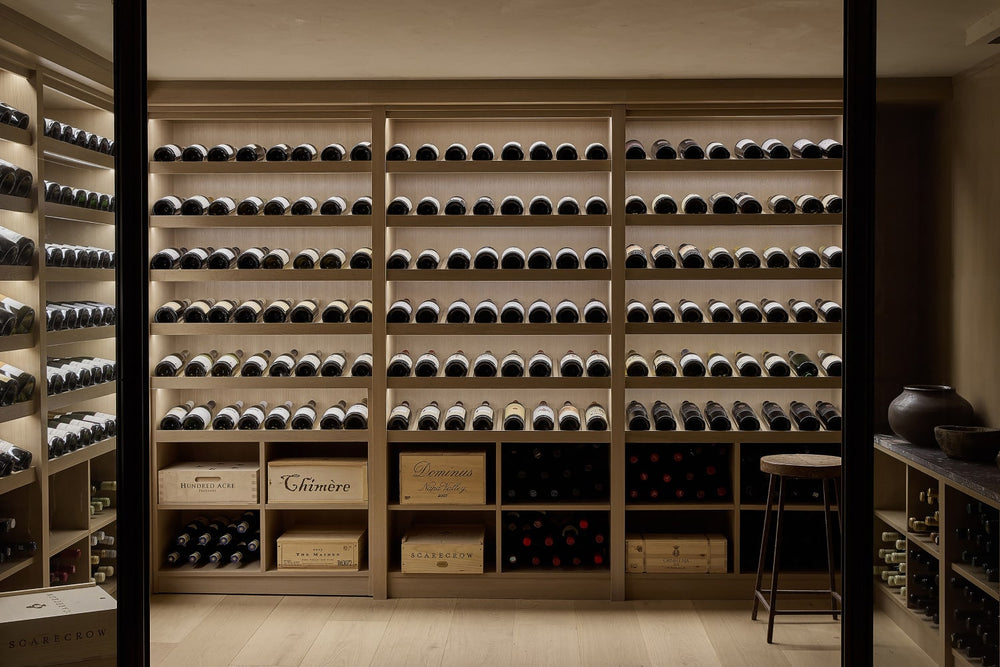
- Temperature: 52–58°F (11–14°C) — consistent is more important than exact; swings cause more damage than a slightly elevated average
- Humidity: 60–75% — prevents cork desiccation and protects label integrity
- Light: Total darkness or UV-filtered; UV light degrades wine faster than almost any other factor
- Vibration: Minimal — particularly important for biodynamic wines with more sediment, as vibration disturbs particle settlement
- Position: Horizontal for cork-sealed bottles to keep corks moist; upright acceptable for screw caps
Our comprehensive guide to storing wine at home covers the full range of options, from dedicated cellars to apartment solutions. If you’re building a collection of biodynamic wines, our wine cellar essentials guide will help you create the right environment.
For those without a dedicated cellar, a quality wine refrigerator is a worthwhile investment for protecting biodynamic bottles. Our wine cooler refrigerator guide and best wine fridges overview cover the best options at various price points.
Serving Biodynamic Wine
Serving temperature, glass choice, and decanting decisions can significantly influence how a biodynamic wine presents. Here’s a practical framework:
| Wine Type | Serving Temp | Glass Style | Decant? |
|---|---|---|---|
| Biodynamic Pinot Noir | 60–64°F (16–18°C) | Large Burgundy bowl | 30–45 min for young vintages |
| Biodynamic Cabernet/Blend | 62–66°F (17–19°C) | Bordeaux/Cabernet shape | 60–90 min; can be vigorous |
| Biodynamic White Burgundy | 52–56°F (11–13°C) | White Burgundy or all-purpose | Rarely; 15–20 min for complex bottles |
| Biodynamic Alsatian Riesling | 48–52°F (9–11°C) | Tall, narrow Riesling flute or universal | No; serve fresh |
| Biodynamic Rhône Syrah | 60–64°F (16–18°C) | Large Burgundy or Syrah-specific | 45–60 min; wines can be tight |
Many biodynamic winemakers recommend decanting even their whites in certain vintages — particularly aged bottles of Joly’s Savennières or Humbrecht’s grand crus, which can need 20–30 minutes to open. For guidance on decanting choices, our decanting guide and the aerator vs. decanter comparison are useful references.
Glass choice matters significantly for complex wines. Our guides to red wine glasses by style and wine glass types and uses can help you match the glass to the wine. For biodynamic Burgundy specifically, a large-format Burgundy bowl from Riedel or Zalto allows the aromatics to open; see our Riedel vs. Zalto comparison for specifics.

The Future of Biodynamic Wine: Climate Change, Science & Growing Adoption
Biodynamic viticulture sits at a fascinating crossroads in 2026. Climate change, which is reshaping every aspect of wine growing, is both a threat and an accelerant for biodynamic adoption. At the same time, the scientific community is beginning to take biodynamic research more seriously — generating studies that both validate and complicate the practice’s claims.
Climate Change as a Biodynamic Catalyst
For much of the 20th century, conventional viticulture managed climate variability through chemistry — adjusting acidity, sugar levels, and extraction to hit a consistent style regardless of vintage conditions. Climate change has made that approach increasingly untenable. Seasons are less predictable, disease pressure patterns are shifting, extreme weather events (frost, heat waves, drought) are more frequent, and the chemical inputs that conventional farming relies on are under increasing regulatory pressure across the EU and California.
Biodynamic farming, which was already designed to build resilient, self-sustaining ecosystems, turns out to be relatively well-adapted to this new reality. Several studies have found that biodynamic and organically farmed vineyards survive extreme weather events (particularly drought and late frost) with less damage than conventionally farmed neighbors. The richer soil life and deeper root systems characteristic of biodynamic vineyards provide greater buffering capacity against environmental stress.
This is driving a wave of conversions. In Bordeaux alone — historically one of the most convention-bound wine regions on Earth — biodynamic certification applications doubled between 2019 and 2024. Châteaux that would have been unthinkable biodynamic candidates a decade ago are now “in conversion.”
The Science Is Catching Up
Perhaps most significantly, a new generation of agricultural scientists — many of them trained in conventional chemistry-based agriculture — are bringing rigorous methodological tools to bear on biodynamic questions. Research published since 2018 has confirmed several things that biodynamic farmers have observed empirically for decades:
- Biodynamic and organic soils show measurably higher populations of mycorrhizal fungi — by factors of 2–5x versus conventional equivalents — with direct implications for vine nutrition and terroir expression
- Preparation 500 (horn manure), when studied in controlled conditions, shows statistically significant increases in soil microbial diversity compared to organic controls (without preparations)
- Vineyards farmed biodynamically for 10+ years show measurable improvements in soil carbon sequestration relative to conventional baseline
- Biodynamic wine fermentations show more diverse native yeast populations, associated with greater aromatic complexity in finished wines
- Studies of the biodynamic calendar in controlled winemaking contexts show inconclusive but non-zero correlation with sensory differences — the question remains genuinely open
What remains scientifically contested is the metaphysical framework Steiner offered to explain why the preparations work — the concepts of cosmic forces, formative energies, and spiritual ecology. Most scientists studying biodynamic farming prefer to set those explanatory frameworks aside and focus on the empirical outcomes, which are increasingly compelling regardless of the mechanism.
Biodynamic & Natural Wine: A Deepening Alliance
The growing natural wine movement has found a natural ally in biodynamic viticulture. Many of the world’s most celebrated natural winemakers — those producing minimal-intervention wines that have taken the fine dining world by storm — farm biodynamically. The alignment makes intuitive sense: both philosophies prioritize the vineyard as the source of wine’s identity, minimize the use of inputs, and value transparency about what’s in the bottle.
This convergence is producing some of the most exciting wines being made anywhere. If you’re interested in the natural wine side of this relationship, our complete natural wine guide and the orange wine guide are essential reading — orange wine and skin-contact whites are disproportionately produced by biodynamic or natural-leaning growers.
What This Means for Wine Buyers
For consumers, the implications are straightforward. The supply of certified biodynamic wine is growing. The range of styles, regions, and price points is expanding. Quality is, on balance, high. And the environmental argument for seeking out biodynamic bottles — reduced chemical inputs, healthier soils, greater biodiversity — is stronger now than it’s ever been.
The old knock that biodynamic wine was only available from boutique estates at boutique prices no longer holds. From supermarket-accessible California labels to value-driven South African producers, there are biodynamic bottles at every price point worth the exploration.
Biodynamic Wine: Frequently Asked Questions
Start Your Biodynamic Wine Journey
Whether you’re drawn by the environmental philosophy, the scientific curiosity, or simply the pursuit of more expressive, terroir-driven wine — biodynamic is worth your time and attention. Start with an accessible bottle from Benziger or Bonterra, consult the lunar calendar once just to see what you think, and let the vineyard do the talking.
Find Budget-Friendly Biodynamic Bottles →
Continue Exploring
This article contains Amazon affiliate links using the tag winearmy-20. Wine Army earns a small commission on qualifying purchases at no extra cost to you. All product recommendations reflect our independent editorial judgment. Biodynamic certifications mentioned are accurate as of May 2026.