🍊 The Ultimate Reference
Orange Wine: The Definitive Guide for 2026
From ancient Georgian qvevris to your dinner table — everything you need to understand, choose, and love skin-contact wine.
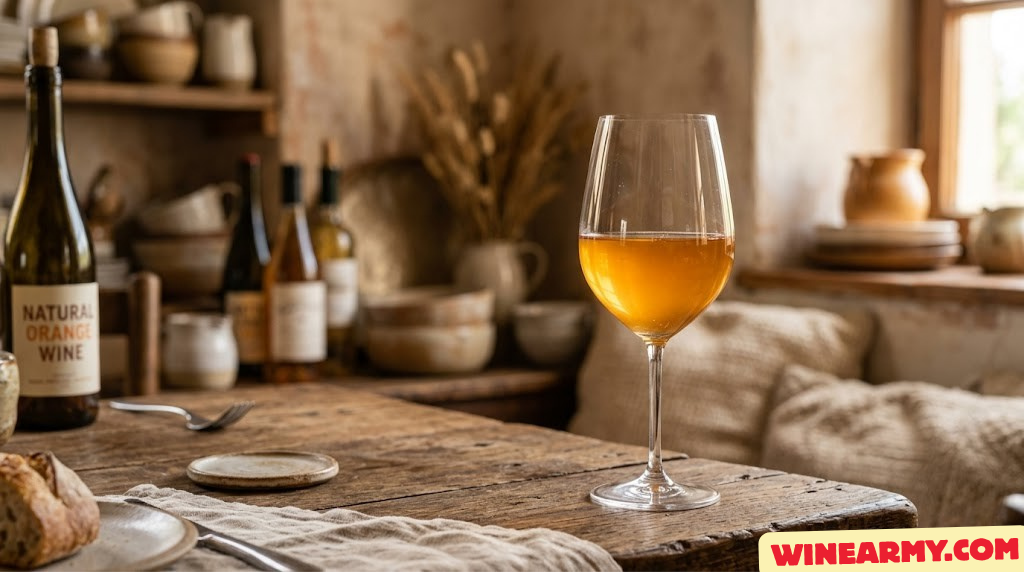
Orange wine’s signature color comes from extended skin contact — the same technique used for red wine, applied to white grapes.
1. What Is Orange Wine? (And What It Definitely Isn’t)
Let’s get the most common misconception out of the way immediately: orange wine contains no oranges. Not a drop, not a slice, not a zest. The name refers entirely to the wine’s color — a spectrum running from pale golden-amber through vivid copper to deep, almost-brown sienna — which is produced through a specific winemaking process, not through any citrus ingredient.
Orange wine is, at its simplest, white wine made like red wine. Conventional white wine production presses the grapes immediately after harvest, discards the skins and seeds, and ferments the resulting clear juice alone. Orange wine reverses this logic: the white or gray grape skins are left in contact with the juice during fermentation — for anywhere from a few days to over a year — before the wine is pressed and separated. This skin contact, also called maceration, extracts pigments (giving the color), tannins (giving structure and grip), and a complex array of phenolic compounds that transform the character of the wine entirely.
The result is neither quite a white wine nor a red wine. It occupies its own territory: richer and more textured than white, lighter and more aromatic than most reds, with a unique oxidative, dried-fruit character that wine writers have likened to everything from dried apricots and quince paste to beeswax, chamomile tea, and aged sherry. For an accessible explanation of how skin contact changes a wine’s fundamental character, see our detailed piece on what skin-contact wine is and how it works.
Orange wine is sometimes called amber wine — particularly in Georgia, where it originated — and occasionally referred to as skin-contact wine or macerated white wine in more technical circles. All of these terms describe essentially the same thing. “Orange wine” is by far the most widely used term in English-speaking markets, despite its potential for confusion with citrus beverages. The term was coined by British wine importer Simon Woolf in the early 2000s and quickly took hold because it’s vivid, memorable, and — once you’ve seen the wine — surprisingly accurate.
One useful way to think about orange wine’s place in the wine world is to map it against color and skin contact simultaneously. Red wines are made with black grapes with skin contact. Rosé is made with black grapes but very brief skin contact. White wine is made with white or gris grapes and no skin contact. Orange wine occupies the previously empty fourth quadrant: white or gris grapes with deliberate, extended skin contact. This framing is explored more deeply in our comparison of orange wine vs conventional white wine.
Why “Amber Wine” in Georgia?
In the Republic of Georgia, where skin-contact white wine has been made continuously for thousands of years, locals typically call these wines rkinis ghvino (amber wine) rather than orange wine. The Georgian wine industry has pushed for “amber wine” as a more internationally recognized designation to differentiate their ancient tradition from the broader modern skin-contact movement. Both terms describe the same basic technique, but Georgian amber wines carry significant cultural and historical weight that goes beyond mere production style — they are arguably the world’s oldest continuous winemaking tradition.
2. A History 8,000 Years in the Making
The story of orange wine is not a 21st-century invention. It is, in fact, one of the oldest continuous winemaking traditions on the planet — a technique so ancient that it predates the Roman Empire, Greek civilization, and the entire history of conventional “clear” white wine production by millennia.
The Georgian Cradle
Archaeological evidence from the Caucasus region of present-day Georgia places grape cultivation and wine fermentation there at approximately 6,000 BCE — making it the earliest known winemaking culture in the world. Crucially, the Georgian method involved fermenting crushed whole grapes — skins, seeds, and all — in large clay vessels called qvevri (also spelled kvevri), which were buried in the earth to maintain stable cool temperatures. The result was inevitably a skin-contact wine: tawny, tannic, deeply flavored, and bearing no resemblance to the pale, crisp whites that dominate modern wine lists.
This qvevri tradition was not an accident or primitive limitation — it was a refined, intentional system, passed down through generations and sustained despite centuries of Russian occupation that actively suppressed Georgian wine culture. The technique was recognized by UNESCO in 2013 as part of the Intangible Cultural Heritage of Humanity. Today, Georgian qvevri wines remain among the most distinctive and compelling examples of skin-contact winemaking anywhere in the world. If you’re curious about how natural and traditional production overlaps with orange wine culture, our natural wine guide and organic and natural wine farming guide provide excellent context.
Ancient Mediterranean Traditions
Skin contact for white wine wasn’t exclusively Georgian. Ancient Roman and Greek winemakers routinely fermented white grapes with their skins in amphoras — the ceramic vessels of the ancient Mediterranean wine trade — producing wines closer in style to modern orange wine than anything found in today’s mainstream wine market. Historical records from writers including Cato and Columella describe maceration periods, wild fermentations, and amber-colored wines that clearly match what we now call orange wine.
In Sicily, a tradition of making amber-colored wines called vino ramato (copper wine) from Pinot Grigio survived continuously. In the Friuli-Venezia Giulia region of northeastern Italy, pockets of skin-contact winemaking persisted despite the mid-20th century pivot to modern stainless-steel white wine production.
The Modern Revival: Gravner and Radikon
The current global orange wine movement traces directly to two neighboring winemakers in Friuli: Joško Gravner and Stanko Radikon. In the 1990s, both were producing internationally celebrated, technically impeccable Friulian whites — rich, oaky, barrel-fermented wines that commanded respect on the fine dining circuit. Then, dissatisfied with what he considered the superficiality of modern white wine, Gravner traveled to Georgia in the late 1990s and encountered qvevri winemaking. The experience changed his life and, ultimately, the wine world.
Gravner imported Georgian qvevri and began fermenting Ribolla Gialla with extended skin contact — six months or more — producing wines of profound depth, tannin, and complexity that bore no relationship to the easy-drinking Pinot Grigios flooding Italian wine shops. Radikon followed a parallel path, also extending skin-contact times dramatically and reducing sulfur additions to near zero. Their wines were polarizing — dismissed as faulty by some critics, lauded as revelatory by others — but they were undeniably interesting in a wine world growing increasingly homogenized.
Global Spread: 2000s to Today
From Friuli and Georgia, skin-contact winemaking spread rapidly through the natural wine movement’s networks, particularly in France (Alsace, Jura, Loire Valley, Rhône), Slovenia, Austria, Germany, Spain, Portugal, and the Canary Islands. In the New World, producers in California’s Sonoma and Santa Cruz mountains, Oregon’s Willamette Valley, South Africa, New Zealand, and Australia began exploring skin contact with indigenous and international varieties alike.
By the mid-2010s, orange wine had become a fixture of the natural wine bistro circuit, the sommelier training syllabus, and the Instagram feed of every wine-curious millennial. By 2026, it has matured from trend to established category, with dedicated sections on serious wine lists, specialist retailers, and even mainstream supermarket shelves in some markets.
3. How Orange Wine Is Made: From Harvest to Bottle
Understanding the production process is key to understanding why orange wine tastes the way it does. Every significant flavor characteristic — the tannins, the oxidative notes, the dried-fruit intensity, the grippy texture — traces directly to choices made during production. Here’s a step-by-step breakdown.
Harvest and Grape Selection
Orange wine begins in the vineyard like any other wine. White or gris (gray-skinned) grapes are harvested, typically at a slightly riper stage than those destined for conventional white wine production, since the skins need to be thick and healthy to withstand prolonged contact without falling apart or introducing unpleasant characters. Many producers favor biodynamic or organic viticulture to ensure skin health and grape expression — for more on how farming affects the finished wine, see our guide on organic and natural wine farming.
Crushing and Destemmng
After harvest, grapes may be whole-cluster pressed (retaining stems for additional tannin and structure) or destemmed before crushing. Some producers, particularly those following Georgian tradition, ferment entirely whole-cluster in clay vessels, allowing the weight of the grapes themselves to gradually crush the fruit. Others use a mechanical crusher-destemmer. The choice affects the wine’s tannin profile, structural complexity, and aromatic character.
The Maceration Period — The Defining Choice
This is where orange wine diverges fundamentally from conventional white wine production. The crushed grapes — juice, skins, seeds, and sometimes stems — are placed together in a vessel and allowed to ferment and macerate simultaneously. The duration of this skin contact is the single most important variable in orange winemaking:
| Maceration Duration | Color | Tannin Level | Style Character | Best For |
|---|---|---|---|---|
| 3–7 days | Pale golden-amber | Very low | Light, floral, approachable | Orange wine beginners |
| 2–4 weeks | Golden-orange | Low–Medium | Textured, aromatic, food-friendly | Casual drinking, cheese boards |
| 1–3 months | Deep amber | Medium–High | Tannic, complex, oxidative | Pairing with rich, umami dishes |
| 6+ months | Deep amber-brown | High | Structured, age-worthy, profound | Cellaring, serious wine occasions |
Fermentation Vessels: Qvevri, Amphora, Oak, Steel
The vessel used for fermentation and maceration also dramatically shapes the finished wine’s character. Traditional Georgian qvevri are beeswax-lined terracotta vessels that allow very slow, gentle oxygen exchange while maintaining stable temperatures. Italian producers might use large neutral oak vats or concrete eggs. Modern experimental producers sometimes use stainless steel for clean, reductive skin-contact wines that emphasize pure fruit character over oxidative complexity.
Amphora (clay vessels without beeswax) from Spain, Portugal, and Italy produce wines with a distinctive mineral, earthy quality. The porous nature of unlined clay allows more oxygen exchange than steel or glass, encouraging the development of complex oxidative notes without the imposition of oak flavor. Many of the most celebrated orange wine producers use some combination of these vessels — perhaps wild-fermenting in open wooden vats and then transferring to beeswax-lined terracotta for aging.
Wild Yeast and Minimal Intervention
The majority of serious orange wine producers use indigenous, wild yeasts naturally present on the grape skins rather than commercial yeast strains. Wild fermentation is slower, less predictable, and more likely to produce subtle faults, but it is also the primary driver of the complex, site-specific flavors that distinguish exceptional orange wine from industrially made alternatives. Many producers add little or no sulfur dioxide, relying instead on the wine’s natural tannin content to provide protection against oxidation — a strategy that works remarkably well but requires careful technique.
Aging and Maturation
After pressing, orange wines may undergo further aging in oak barrels (large, neutral casks preserve the wine’s character while adding subtle complexity), concrete tanks, amphora, or qvevri. Aging duration ranges from a few months for lighter expressions to several years for the most ambitious productions. Gravner’s wines, for instance, spend years in both qvevri and large oak before release, emerging as fully structured wines capable of additional decades of aging in the bottle. For tips on how to properly store your bottles after purchase, our guide on storing wine at home and our wine cellar essentials guide are essential reading.

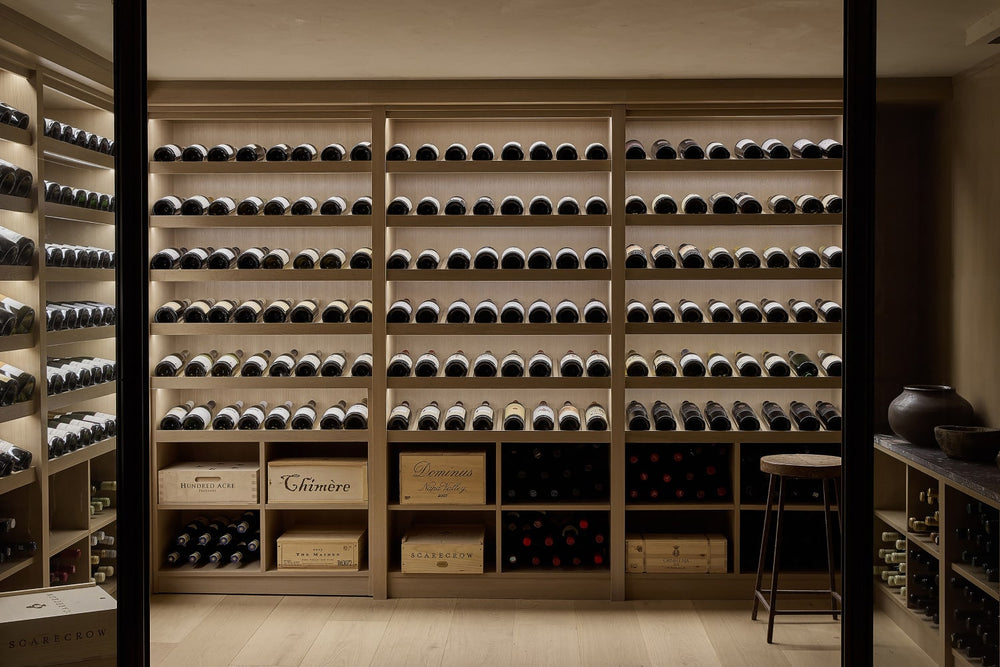
Wine Storage Rack for Your Collection
Orange wines with extended aging potential deserve proper storage. Browse wine racks perfect for long-term bottle keeping.
Shop Wine Racks on Amazon →4. What Does Orange Wine Taste Like? Aromatics, Texture & Flavor Profile
This is the question most first-time orange wine drinkers want answered, and the honest answer is: it depends enormously on the grape variety, the region, the length of maceration, and the winemaker’s philosophy. But there are consistent characteristics across the category that help orient any palate encountering orange wine for the first time.
The Aromatic Profile
Unlike conventional white wines, whose aromatics tend toward fresh fruit — lemon, lime, green apple, white peach, melon — orange wines lean decisively toward the dried and oxidative end of the aromatic spectrum. The most commonly encountered aromas include:
Lighter, shorter-maceration orange wines are more likely to lead with fresh stone fruit — apricot, peach, nectarine — supported by floral notes and moderate texture. Longer, more structured examples often develop into deeper oxidative territory: dried fruit, nuts, tea, autumn leaves, vinous tannin, and sometimes savory, umami-adjacent characters reminiscent of aged cheese or charcuterie.
Texture and Tannin
For many drinkers, the first revelation about orange wine isn’t the color or the aroma — it’s the texture. White wines are almost universally smooth, slippery, and low in tannin. Orange wines, having extracted tannins and phenolics from the grape skins, can be remarkably grippy, chewy, and substantial on the palate. This tannic structure is the key to orange wine’s remarkable compatibility with food that would overwhelm or clash with conventional white wine.
This doesn’t mean orange wines are harsh or bitter. Well-made examples integrate their tannins seamlessly, delivering a mouthfeel somewhere between a light red wine and a rich white. Understanding tannin in wine generally is worth exploring; our guide on what tannin is and what it does in wine explains the science clearly.
Acidity and Finish
Orange wines generally retain strong acidity, which is crucial for balance — without it, the tannic texture and oxidative notes could easily tip into heaviness. Many of the best examples finish with a saline, mineral quality (particularly from coastal regions or volcanic soils) that cuts through the richness and leaves the palate refreshed rather than fatigued. The finish of a well-structured orange wine can last remarkably long — 30 seconds or more in the best examples — with layers of dried fruit, spice, and earth unfolding slowly after you swallow.
Faults vs. Features
One of the most important skills in tasting orange wine is distinguishing intentional stylistic choices from genuine winemaking faults. Some characteristics that might be considered defects in conventional white wine are deliberate and celebrated features in orange wine:
| Character | Fault or Feature? | Context |
|---|---|---|
| Oxidative, nutty notes | ✅ Feature (deliberate) | Characteristic of extended maceration and minimal sulfur |
| Tannin and grip | ✅ Feature (deliberate) | Result of skin-contact phenolic extraction |
| Slight haziness / turbidity | ✅ Feature (unfined) | Many orange wines are unfined and unfiltered |
| Kombucha-like acidity | ✅ Feature (intentional) | Wild fermentation character, distinct from white wine acidity |
| Vinegar/sharp acetic acid | ❌ Fault | Poor cellar hygiene or excessive oxidation |
| Mousy, barnyard off-odors | ❌ Fault | Brettanomyces or bacterial contamination |
| Flat, dull, lifeless | ❌ Fault | Oxidized beyond recovery; wine is past its peak |
If you’re new to wine tasting vocabulary generally, our wine tasting vocabulary guide and beginner’s wine glossary will give you the language to describe what you’re experiencing.
5. Styles & the Skin-Contact Spectrum
Not all orange wines are created equal, and one of the most common misconceptions is that “orange wine” describes a single, uniform style. In reality, skin-contact white wines span a vast spectrum of color, intensity, tannin, and flavor, from barely-there blush-orange all the way to deep, mahogany-brown wines that would be at home beside a glass of Madeira. Understanding this spectrum helps you choose the right bottle for the right occasion.
Light-Touch Skin Contact (1–7 days)
At this end of the spectrum, the wine looks more like a deep golden-amber white wine than a classic orange. The color is pale golden to light copper. Tannins are barely perceptible — a slight dryness on the finish rather than an actual grip. Aromatics are fresh-ish, with stone fruit, floral notes, and mild dried-fruit characters. These wines serve as an excellent entry point for wine lovers curious about the style but nervous about jumping straight to the more structured examples. Drink them as you would a full-bodied white wine.
Medium-Body Expressions (2–6 weeks)
The sweet spot for many drinkers. Color deepens to vivid copper or amber. Tannins are present and food-friendly — enough to provide texture and versatility without being challenging. The aromatic profile has developed greater complexity: dried stone fruit, honey, beeswax, perhaps a hint of nuttiness. These wines bridge the gap between white and red wine convincingly and pair with an extraordinarily wide range of foods.
Structured, Long-Maceration Wines (3+ months)
Here is where orange wine enters truly distinctive territory. Deep amber to mahogany-brown color. Pronounced tannins — sometimes comparable to a medium-bodied red wine. Full oxidative profile: dried apricot, walnut, dried flowers, leather, incense, tea. These wines demand attention, reward patience, and pair with bold, umami-rich food. They are not for everyone, and they are almost certainly not for everyday drinking — but in the right context, they are extraordinary.
Pét-Nat and Sparkling Skin-Contact Wines
A small but growing category: sparkling wines made via pétillant naturel (ancestral method) with skin contact. These bubbly, slightly hazy, tannic sparkling wines are a delight at the table — they offer the freshness and effervescence of sparkling wine alongside the structure and flavor complexity of skin contact. They typically show less maceration time (days rather than weeks) and are best drunk young and well-chilled. Serve them in a wider glass than a traditional champagne flute — our Champagne flute vs coupe guide explores why glass shape matters for sparkling wines.
Who Orange Wine Is Perfect For
- Wine drinkers wanting more complexity and texture in white wine
- Red wine lovers who need a wine for fish or chicken
- Natural wine enthusiasts seeking terroir-driven character
- Food adventurers who love Middle Eastern, Japanese, or fermented food cultures
- Collectors looking for unique age-worthy whites
- Anyone bored with predictable Chardonnay and Pinot Grigio
Who Might Want to Approach Cautiously
- Those who strongly dislike tannic, bitter, or astringent flavors
- Drinkers who prefer clean, bright, fruit-forward whites
- Anyone expecting conventional white wine and getting surprised
- Those sensitive to oxidative or funky wine characters
- Fans of low-acid wines (orange wines are generally high-acid)
6. Key Grape Varieties for Orange Wine
Almost any white or gris grape can be made into an orange wine — the technique is varietal-agnostic. But certain varieties have a natural affinity for skin-contact winemaking, either because of their inherent aromatic intensity, the thickness of their skins, or the particular character they develop under extended maceration. Understanding which grapes appear most often will dramatically improve your ability to navigate orange wine lists and shop intelligently.
| Grape Variety | Home Region | Orange Wine Character | Maceration Style |
|---|---|---|---|
| Ribolla Gialla | Friuli, Slovenia | Chamomile, dried apple, almond, walnut; structured and profound | Long (months) |
| Rkatsiteli | Georgia (Kakheti) | Quince, dried apricot, tea, beeswax; the original; deeply tannic | Very long (6+ months) |
| Mtsvane | Georgia | Fresh herbs, dried citrus, stone fruit; lighter than Rkatsiteli | Medium–long |
| Pinot Grigio/Gris | Friuli, Alsace, NZ | Copper-pink hue; rose petal, dried peach, nougat, earthy spice | Short–medium |
| Gewürztraminer | Alsace, N. Italy | Lychee, rose, dried ginger, Turkish delight; perfumed intensity | Short–medium |
| Malvasia | Italy, Istria, Greece | Honey, dried fruit, orange marmalade; richly textured | Medium |
| Grenache Blanc | Southern France, Spain | White peach, almond, fennel seed, warm spice | Short–medium |
| Sauvignon Blanc | Loire, NZ, S. Africa | Dried herbs, golden hay, nettle, smoked stone fruit | Short |
| Chardonnay | Burgundy, worldwide | Richer, more textured; dried pear, walnut, creamy spice | Short–medium |
| Vermentino | Sardinia, Liguria | Saline mineral, dried citrus, herbal; coastal energy | Short |
For a broader understanding of how grape variety shapes every style of wine, our comprehensive wine varietals explained guide is a valuable companion resource. You might also enjoy the deeper comparison we’ve drawn between Pinot Grigio and Sauvignon Blanc acidity — two grapes that take on very different characters under skin contact.
When choosing your first orange wine, start with an Italian Pinot Grigio or Ribolla Gialla from Friuli with a medium maceration — perhaps 2–4 weeks. These give you the essential orange wine experience without the polarizing intensity of a Georgian long-maceration wine.

The Right Glassware Transforms Orange Wine
A wide-bowled Burgundy or universal glass unlocks orange wine’s layered aromatics. Shop quality wine glasses on Amazon.
Shop Wine Glasses on Amazon →7. World Regions & Key Producers
Orange wine is now made on every continent where wine grapes grow, but certain regions have longer traditions, deeper cultural roots, or more distinctive expressions than others. Here’s a guide to the most important orange wine regions and the names worth seeking out in each.
🇬🇪 Georgia (Kakheti)
The birthplace of wine. Traditional qvevri producers include Iago’s Wine, Pheasant’s Tears, Alaverdi Monastery, and Telavi Wine Cellar. Look for wines made from Rkatsiteli, Mtsvane, or Kisi for deep, tannic, complex expressions.
🇮🇹 Friuli-Venezia Giulia
Ground zero for the modern orange wine revival. Gravner and Radikon set the template. Other key names: Dario Princic, Stanislava Radikon, La Castellada, Vodopivec, and Paraschos. Ribolla Gialla reigns supreme here.
🇸🇮 Slovenia (Brda, Vipava)
Shares Friulian traditions — the border is largely cultural rather than viticultural. Movia, Kabaj, and Edi Simčič produce exceptional skin-contact wines. Rebula (the Slovenian name for Ribolla Gialla) is the key variety.
🇫🇷 France (Alsace, Jura, Loire)
Alsace’s aromatic varieties — Gewürztraminer, Pinot Gris, Riesling — take beautifully to skin contact. In the Jura, Ouillée and Savagnin under skin contact are revelatory. Loire producers like Domaine de la Pépière and La Lunotte experiment with Chenin Blanc and Muscadet.
🇦🇹 Austria (Styria, Burgenland)
Austrian Grüner Veltliner and Welschriesling under extended maceration produce structured, herbal, mineral orange wines with brilliant acidity. Producers like Gut Oggau and Sepp Muster are names to know.
🇪🇸 Spain & Canary Islands
Catalonia’s natural wine scene embraces skin-contact Grenache Blanc, Macabeo, and Xarello. The Canary Islands produce remarkable volcanic mineral orange wines from indigenous varieties like Listán Blanco and Malvasía Volcánica.
🇺🇸 United States
California leads: Sonoma, Santa Cruz Mountains, and the Sierra Foothills are hotbeds of orange wine production. Producers like Jolie-Laide, Pax Wines, Scholium Project, and Broc Cellars make compelling examples. Oregon’s Willamette Valley producers are also active in the category.
🌍 Emerging Regions
South Africa (Swartland), New Zealand (Central Otago), Australia (Clare Valley, Adelaide Hills), Argentina (Mendoza), and even Japan are producing notable skin-contact wines that add new terroir expressions to the global conversation.
Understanding how geography shapes wine flavor is explored in depth in our guides to Old World vs New World wine terroir and the concept of wine terroir more broadly. For a deeper look at how biodynamic farming principles overlap with traditional orange wine production methods, see our biodynamic wine guide.
Reading an Orange Wine Label
Orange wine labels don’t always make the skin-contact process obvious. You’re looking for terms like: skin contact, macerated white wine, amber wine, vin orange, ramato (Italian, meaning copper-colored), qvevri wine, or simply a production note about fermentation with skins. Some producers note the maceration duration explicitly. Learning to read and decode wine labels quickly is a skill that pays dividends across all wine categories.
8. Food Pairing Guide: Where Orange Wine Truly Shines
If there is a single strongest argument for orange wine’s existence — beyond its fascinating history and compelling flavors — it is this: orange wine pairs with food that almost nothing else can handle well. Its combination of white wine aromatics and red wine structure gives it a versatility that makes it almost uniquely useful at the table.
The general framework: orange wine’s tannins cut through fat and richness, its acidity handles complex, multilayered dishes, its aromatic character complements spice and umami, and its textural body stands up to bold flavors that would overwhelm conventional whites. Think of it as the perfect sommelier’s tool for the moments when white is too light and red would overpower. For foundational food and wine pairing principles, our comprehensive how to pair wine with food guide is a great starting point.
| Food Category | Specific Pairings | Why It Works | Best Orange Wine Style |
|---|---|---|---|
| Fermented & Aged Cheese | Aged gouda, comté, clothbound cheddar, taleggio, époisses | Tannins cut through fat; oxidative notes complement umami; both are products of fermentation | Medium-to-long maceration |
| Middle Eastern & North African | Hummus, falafel, lamb tagine, harissa chicken, shakshuka, chermoula | Spice-tolerant structure; dried fruit notes echo za’atar and cumin; handles both fat and acid in dishes | Medium maceration Ribolla or Rkatsiteli |
| Oily Fish | Grilled sardines, mackerel, anchovies, smoked salmon, tuna tartare | Tannins and acidity cut through fishy fat in a way white wine alone cannot; saline notes reinforce seafood | Short-medium maceration with high acidity |
| Umami-Rich Dishes | Mushroom risotto, miso-glazed eggplant, aged parmesan, seaweed salad, soy-marinated anything | Phenolic compounds interact synergistically with glutamate-rich umami; structure prevents palate fatigue | Long maceration, Georgia or Friuli |
| Charcuterie & Cured Meats | Prosciutto, jamón ibérico, nduja, lardo, mortadella | Fat-cutting tannins; dried fruit aromatics complement curing spices; the food-wine combo of dreams | Any style; longer macerations for aged charcuterie |
| Roasted Vegetables | Roasted beets, caramelized onion tart, root vegetable gratin, squash dishes | Earthy, oxidative notes echo roasted vegetable character; handles sweetness and depth equally well | Medium maceration |
| Indian & Spiced Cuisine | Butter chicken, lamb biryani, lentil dhal, cauliflower curry | Tannins handle spice heat; aromatic intensity matches complex spice profiles; good structure for long meals | Aromatic varieties — Gewürztraminer, Pinot Gris |
| Japanese-Inspired | Sushi, sashimi, ramen, yakitori, tempura | Saline, mineral orange wines from volcanic or coastal terroir are stunning with raw fish; handles dashi and soy naturally | Light maceration, high-acid, mineral style |
For more on wine and seafood specifically, our seafood and wine pairing guide explores the full spectrum. And for cheese lovers, our cheese and wine pairing chart is an invaluable visual resource for entertaining.
What Orange Wine Doesn’t Pair Well With
It’s equally important to know where the pairing doesn’t work. Orange wine’s tannins can clash with delicate, light preparations where you want nothing to overshadow the ingredient — a simple Dover sole with lemon butter, a fresh burrata with olive oil, or a delicate spring green soup. For these dishes, a light conventional white or even a subtle rosé is more appropriate. Orange wine’s oxidative character can also overwhelm delicate, floral desserts — pair your pudding with a different glass. For broader food-and-wine matching principles, see our guides on wine pairing with spicy food and sushi and wine pairing.

Decant Your Orange Wine for Best Results
Orange wines often benefit from 30–60 minutes of decanting before serving. Browse aerators and decanters on Amazon.
Shop Wine Decanters on Amazon →9. Serving & Storing Orange Wine: Temperature, Glassware, Decanting
Serving Temperature: Warmer Than White, Cooler Than Red
One of the most common mistakes with orange wine is serving it too cold. Chilling an orange wine to standard white wine temperature (around 8°C / 46°F) mutes its aromatics and makes the tannins seem harsh and angular. The ideal serving temperature is 12–16°C (54–61°F) — roughly 15–20 minutes out of the refrigerator, or about the temperature of a cool room. At this temperature, the aromatics open up fully, the tannins soften, and the wine finds its balance between freshness and depth.
Lighter, short-maceration orange wines can be served at the cooler end of this range; long-maceration, highly structured examples benefit from the warmer end. If you have a wine refrigerator, storing and serving orange wine at around 13–14°C is ideal. See our guide on top wine cooler refrigerator picks for storage solutions. For serving without a wine fridge, our guide on how to store wine without a wine fridge offers practical alternatives.
Glassware: Size and Shape Matter
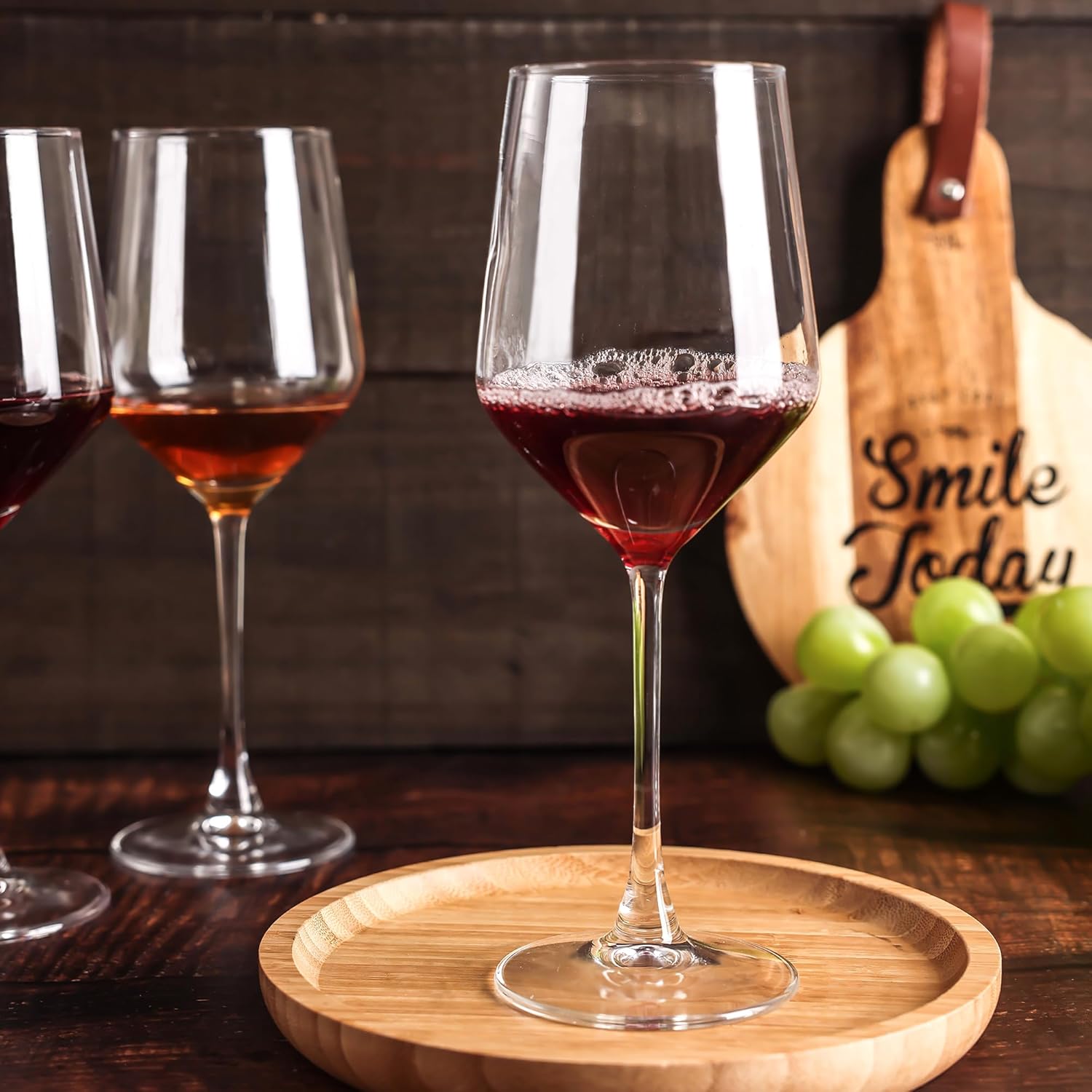
Orange wine deserves a glass that respects its complexity. A wide-bowled universal glass or a Burgundy-style glass provides the volume needed to swirl and aerate the wine properly. The wider opening allows the layered aromatics — dried fruit, spice, oxidative notes — to express fully, while the rounded bowl concentrates them toward your nose. Avoid Champagne flutes or narrow Riesling glasses, which constrict the aroma profile and make orange wine taste sharp and one-dimensional.
Our guides on red wine glass picks by wine variety, types of wine glasses and their uses, and the comparison of red vs white wine glasses will help you build a glass collection that serves every occasion well. If you’re investing in quality stemware, our Riedel vs Zalto comparison is worth reading.
To Decant or Not to Decant?
Most orange wines benefit from at least brief aeration before serving — 20–45 minutes in a decanter for medium-bodied examples, and up to 2 hours for the most structured, long-maceration wines. Aeration softens tannins, integrates any slight reduction (sulfurous off-notes that dissipate with oxygen exposure), and allows the complex aromatic layers to unfold. Young orange wines, in particular, can seem tight and austere straight from the bottle but open magnificently after 30 minutes in a decanter.
For older, more delicate orange wines with significant bottle age, you want to be more careful — decanting for too long can cause fragile older wines to lose their freshness rapidly. A shorter decant of 15–20 minutes, or simply opening the bottle 30 minutes before serving, is often sufficient. Our guide on how and when to decant wine and the comparison of aerators vs decanters provide more detail on this decision.
Storage Guidelines
Orange wine, particularly structured long-maceration examples, is surprisingly cellar-worthy. The tannins extracted from the grape skins act as natural antioxidants, protecting the wine from rapid oxidation and allowing it to evolve positively over years or even decades.
| Orange Wine Type | Drink Window | Storage Temp | Cellar Potential |
|---|---|---|---|
| Light skin-contact / entry-level | 1–3 years from harvest | 12–14°C (54–57°F) | Low; drink fresh |
| Medium-body, 2–4 weeks maceration | 2–7 years | 12–14°C (54–57°F) | Moderate; will develop |
| Long maceration (Friuli, Georgia) | 5–20 years | 12–13°C (54–55°F) | High; built for the long haul |
| Grand Cru (Gravner, Radikon) | 10–30+ years | 12°C (54°F) | Very high; rivals great Burgundy |
Store bottles horizontally (to keep the cork moist), away from light, vibration, and temperature fluctuations. If you’re building a serious collection, our wine cellar essentials guide and modular wine rack guide are essential references. Once opened, orange wine holds remarkably well — typically 3–7 days under a good stopper, much better than most whites. See our review of the Coravin vs Vacu-Vin for preservation tools, and our recommendations for the best wine stoppers.
Consistent temperature is more important than the exact temperature itself. Fluctuations between warm days and cold nights are the enemy of wine cellaring — they expand and contract the wine inside the bottle, gradually pushing it past the cork. A dedicated wine cooler eliminates this risk entirely.
10. Buying Guide: How to Choose, Shop & What to Expect to Pay
The orange wine market in 2026 spans an enormous price range — from $12 entry-level bottles at your local wine shop to $200+ collector expressions from Gravner or Radikon. Understanding the market helps you find the best value at every price point and avoid paying a premium for something that doesn’t match your preferences.
Price Tiers and What to Expect
| Price Range | What You Get | Example Styles/Regions | Best For |
|---|---|---|---|
| $12–$20 | Entry-level skin contact, approachable, commercial-scale | Northern Italy, Spanish co-op wines, California everyday | First-time tasters; casual drinking |
| $20–$40 | Serious small-producer expressions, distinctive terroir, proper technique | Slovenia, Alsace, Austria, South Africa’s Swartland | Regular drinking with interesting meals |
| $40–$80 | Top-tier regional expressions, limited production, cellar-worthy | Top Friulian, Georgian, Jura, Oregon small producers | Special dinners, gift-giving, collector interest |
| $80–$200+ | Icon producers; extreme aging potential; benchmark examples | Gravner, Radikon, top Georgian estates | Cellar investment, serious wine occasions, collectors |
What to Look for on the Shelf or Online
When shopping for orange wine, you want to look for several positive indicators. A named grape variety is a good sign — it suggests the producer is proud of the specific variety they’re working with rather than blending for anonymity. A noted maceration time or production method on the back label indicates transparency and seriousness. Organic or biodynamic certification suggests attention to raw material quality. A small production number — even if unstated — is implied by most serious orange wine producers.
Check the vintage: unlike conventional whites, many orange wines improve significantly with 2–4 years of bottle aging. Buying a recently released vintage and cellaring it for a year or two often reveals more complexity than drinking it immediately. For those on a tight budget, our guide to affordable wine picks in 2026 includes skin-contact options at accessible price points.
Top Bottles Worth Seeking Out
Without being exhaustive, here are some consistently excellent orange wines across price points that appear relatively regularly in the market:
- Pheasant’s Tears Rkatsiteli (Georgia) — Benchmark Georgian qvevri wine at a very accessible price. Deep amber, tannic, complex. Extraordinary value for what it is.
- Kabaj Amfora (Slovenia) — Serious Rebula (Ribolla Gialla) from Slovenia’s Brda region. Amphora-fermented, age-worthy, structured.
- Dario Princic Ribolla Gialla (Friuli) — A direct spiritual successor to Gravner and Radikon. Long maceration, profound complexity, exceptional aging potential.
- Donkey & Goat “The Bear” Roussanne (California) — An accessible entry point for the New World orange wine style. Fresh fruit meets skin-contact structure convincingly.
- Gut Oggau Mechthild (Austria) — Elegant, mineral Styrian skin-contact Welschriesling. Beautifully balanced; bridges the gap between traditional and modern.
- Jolie-Laide Trousseau Gris (Sonoma) — California’s most elegant orange wine expression. Pale copper, floral, perfectly pitched.
- Gravner Ribolla (Friuli) — The icon. Available with bottle age on secondary market. Extraordinary complexity; one of the world’s greatest white wines.
For wine subscription services that include natural and orange wine curation, our review of 2026 wine subscription features and value compares the best options. If you’re shopping for wine gifts, the best wine gift baskets and top wine accessory gifts guides include options perfectly suited to the orange wine enthusiast.

Record Your Orange Wine Journey
A wine journal helps you track producers, vintages, and tasting notes as you explore skin-contact wines. Browse top-rated wine journals on Amazon.
Shop Wine Journals on Amazon →11. Orange Wine vs. White, Rosé, Natural & Biodynamic Wine
Orange wine exists in a complex ecosystem of wine categories that overlap in terminology, philosophy, and production. Understanding how orange wine relates to — and differs from — adjacent categories reduces confusion and improves your ability to navigate wine lists and shop effectively.
Orange Wine vs. White Wine
The fundamental distinction is skin contact. Conventional white wine = white grapes pressed immediately, skins discarded, clear juice fermented. Orange wine = white grapes fermented with skins present for days, weeks, or months. The result: orange wine has far more tannin, richer color, greater texture, lower perceived fruitiness, higher phenolic complexity, and significantly greater food-pairing versatility. Our dedicated comparison piece on orange wine vs white wine goes deeper on this.
Orange Wine vs. Rosé Wine
Rosé wine is made by very brief maceration of red grapes — hours rather than days — giving pink color and minimal tannin. Orange wine uses white or gris grapes with extended maceration. The color similarities between deep rosé and pale orange wine can create confusion, but they are fundamentally different in grape variety, tannin structure, flavor profile, and food-pairing application. For a comprehensive comparison, our rosé vs red wine production guide explains the spectrum of maceration-based wine production.
Orange Wine vs. Natural Wine
This is the most commonly confused pairing. Natural wine is a production philosophy; orange wine is a production technique. Many orange wines are also natural wines (minimal intervention, wild yeast, no or low sulfites, biodynamic grapes) but the categories are not synonymous. A technically conventional winery could produce an orange wine using commercial yeast, sulfur additions, and conventional viticulture. Conversely, a producer fully committed to natural principles might make a beautifully transparent, conventionally vinified white wine with no skin contact. Our dedicated natural wine guide clarifies the natural wine philosophy in detail.
Orange Wine vs. Biodynamic Wine
Biodynamic wine refers to a farming approach — the Demeter-certified biodynamic method developed from Rudolf Steiner’s agricultural philosophy. Biodynamic wine can be any color: red, white, rosé, or orange. Many of the most celebrated orange wine producers do farm biodynamically (Gravner is a notable example), and there is a philosophical alignment between the holistic, non-interventionist principles of biodynamics and the traditional, low-input character of the best orange wine production. But the two terms describe different things. Our biodynamic wine guide covers this philosophy comprehensively.
| Wine Type | Grape Color | Skin Contact | Tannin | Color | Defining Feature |
|---|---|---|---|---|---|
| White | White/Gris | None | Very low | Pale straw–gold | Fresh, light, immediate fruit |
| Rosé | Red/Black | Hours (brief) | Low | Pink–salmon | Fresh, delicate, berry character |
| Orange | White/Gris | Days–months | Low–High | Amber–deep brown | Textured, complex, oxidative |
| Red | Red/Black | Days–weeks | Medium–Very High | Ruby–dark purple | Dark fruit, structure, body |
| Natural | Any | Variable | Variable | Any | Philosophy, not color or technique |
| Biodynamic | Any | Variable | Variable | Any | Farming certification and philosophy |
If you want to go deeper on individual wine style comparisons, our library includes detailed breakdowns of Bordeaux vs Pinot Noir structure, Old World vs New World wine, and the difference between blend and varietal wines.
Common Myths About Orange Wine — Debunked
Myth: “Orange wine is always faulty or ‘natural wine gone wrong.'” Not true. While poorly made examples do exist (as they do in every wine category), the best orange wines are the product of meticulous technique, exceptional raw material, and profound understanding of fermentation and aging. Faults are faults; complexity is not.
Myth: “All orange wine tastes like vinegar.” Absolutely not. Acetic acid (vinegar character) is a genuine fault that only poorly made or badly stored orange wine develops. Well-made orange wine has vibrant, balanced acidity — but acidity is not the same as vinegar. The tartness you may have experienced in a bad glass was a poorly made bottle, not an inherent property of the category.
Myth: “Orange wine is just for pretentious natural wine people.” Orange wine has been made and enjoyed across many cultures for 8,000 years. Georgian winemakers have been drinking qvevri wine with their meals for millennia without any pretension. The modern natural wine context is only the most recent chapter in a very long story.
Myth: “You have to drink orange wine from a specific type of glass.” While glassware genuinely affects the tasting experience, orange wine is flexible. A universal wine glass or any medium-to-large-bowled glass works well. You don’t need special equipment to enjoy it.

Serve Orange Wine at the Perfect Temperature
A wine thermometer ensures you’re always in the ideal 12–16°C serving zone for orange wine. Browse options on Amazon.
Shop Wine Thermometers on Amazon →12. Orange Wine, Sulfites, and Health Considerations
As orange wine has gained popularity, questions about its health profile relative to conventional wines have become increasingly common. Here’s what the evidence suggests — and what remains uncertain.
Sulfites: Lower by Nature
Most orange wines contain lower sulfite levels than conventional white wines. This is not primarily a philosophy choice, though many orange wine producers do share the natural wine movement’s preference for low or zero added sulfur. The structural reason is that the phenolic compounds extracted from grape skins during maceration act as natural antioxidants — they protect the wine from oxidation in much the same way that sulfur dioxide does, reducing the need for additions. Many orange wine producers add little or no SO₂ at any stage of production.
This is good news for the significant minority of people who experience sulfite sensitivity (typically manifesting as headaches, breathing difficulty, or skin reactions), though it’s worth noting that sulfites occur naturally in all wines and that the correlation between added sulfites and negative reactions is less clear-cut than popular mythology suggests. Our sulfite-free wine guide examines this topic in detail.
Polyphenols and Resveratrol
Orange wine’s extended skin contact means it contains significantly higher levels of polyphenols — plant-based antioxidants — than conventional white wine. These include resveratrol, quercetin, and various flavonoids associated in some research with cardiovascular health benefits. The polyphenol content of a long-maceration orange wine may approach that of a light red wine, making it a more nutritionally complex beverage than its white-wine origins might suggest. However, the alcohol content remains the dominant health consideration for moderate consumption.
Histamines and Sensitivities
The flip side of orange wine’s phenolic richness is its higher histamine content compared to conventional whites. Histamine is a biogenic amine that forms naturally during fermentation and is present in higher concentrations in skin-contact wines, red wines, and wines that undergo malolactic fermentation. People who experience histamine sensitivity — often manifesting as headaches, flushing, or nasal congestion after drinking red wine — may find they react similarly to long-maceration orange wines.
Alcohol Content
Orange wines vary in alcohol level depending on region and style. Many European examples, particularly from Georgia, Friuli, and Alsace, sit in the moderate 12–13.5% ABV range. New World examples, especially from warmer California regions, can reach 14–15%. If alcohol level matters to your health choices, check the label — our guide on understanding ABV on wine labels explains what to look for.
Frequently Asked Questions About Orange Wine
What exactly is orange wine?
Orange wine is a white wine made by fermenting white or gray grape varieties with their skins and seeds intact — the same technique used for red wine production. The extended skin contact extracts pigments, tannins, and phenolic compounds, giving the wine its characteristic amber-to-deep-orange color and a texture far richer than conventional white wine.
Is orange wine actually made from oranges?
No. Orange wine contains no oranges whatsoever. The name refers exclusively to the wine’s color, which ranges from pale golden-orange to deep amber or copper-brown, depending on how long the grape skins remain in contact with the fermenting juice.
What does orange wine taste like?
Orange wine typically tastes like a more textured, tannic version of white wine with oxidative, nutty, and dried-fruit notes layered over the grape’s natural aromatics. Expect dried apricot, quince paste, beeswax, chamomile, roasted almonds, bruised apple, and sometimes funky, fermented notes like kombucha or vinegar — though a well-made orange wine is balanced and intentional, not faulty.
How long should you cellar orange wine?
Most orange wines are best consumed within 2–5 years of release. However, structured, tannic examples from producers like Gravner or Radikon can age beautifully for 10–20 years or more, developing complex dried-fruit, leather, and resinous notes over time. Lighter skin-contact wines meant for early drinking should be consumed fresh.
What food pairs best with orange wine?
Orange wine excels alongside Middle Eastern and North African food, fermented and aged cheeses, charcuterie, roasted root vegetables, lentil dishes, mushroom risotto, lamb dishes, oily fish like mackerel and sardines, and spiced grain salads. Its tannins and texture can handle umami-rich, earthy, and even mildly spiced foods that would overwhelm conventional whites.
What is the difference between orange wine and natural wine?
Orange wine is a production style defined by skin contact during fermentation. Natural wine is a philosophy defined by minimal intervention farming and winemaking. While many orange wines are also natural wines, not all orange wines are natural, and not all natural wines are orange. A conventional winery can produce an orange wine using commercial yeast, and a natural producer can make a conventional clear white wine.
What glass should I use for orange wine?
Orange wine benefits from a larger-bowled glass that falls somewhere between a white and red wine glass — a universal glass or a Burgundy-style bowl works especially well. The wider opening allows the wine’s more complex aromatics to express fully, while the volume lets you swirl aggressively to coax out layered notes of dried fruit, spice, and oxidative elements.
Should orange wine be served chilled or at room temperature?
Orange wine is best served slightly cooler than room temperature but significantly warmer than conventional white wine. Aim for 12–16°C (54–61°F). Serving it too cold mutes its complex aromatics and makes the tannins seem harsh; serving it too warm amplifies any oxidative or volatile elements unpleasantly.
Which grape varieties are commonly used for orange wine?
The most celebrated varieties include Pinot Grigio/Gris, Gewürztraminer, Ribolla Gialla (especially in Friuli and Slovenia), Rkatsiteli and Mtsvane (Georgia), Malvasia, Grenache Blanc, Chardonnay, Sauvignon Blanc, and Vermentino. Virtually any white or gris grape can be used successfully.
Is orange wine high in sulfites?
Most orange wines contain lower sulfite levels than conventional white wines, because the tannins and phenolic compounds extracted during skin contact act as natural antioxidants, reducing the need for added sulfur dioxide. Many orange wine producers add little or no sulfites, though some add minimal amounts at bottling for stability.
Where does orange wine come from originally?
The oldest continuous tradition of skin-contact white wine production is in Georgia (the Caucasus), where the technique has been practiced for approximately 8,000 years using traditional clay vessels called qvevri buried in the earth. The modern orange wine revival was sparked in the 1990s and early 2000s by producers like Joško Gravner in Friuli-Venezia Giulia, Italy.
Can orange wine go bad or turn to vinegar?
Yes, like any wine, orange wine can oxidize or develop acetic acid (vinegar character) if stored poorly or opened for too long. However, its naturally higher tannin content provides more protection against oxidation than conventional white wine. An opened bottle stored under a good stopper in the refrigerator will typically hold for 3–7 days — notably better than most white wines.
Conclusion: Why Orange Wine Deserves a Place in Your Glass
Orange wine is not a gimmick, a trend, or a mistake. It is one of humanity’s oldest and most continuous winemaking traditions — a technique practiced by Georgian farmers 8,000 years before the word “sommelier” existed — brought back to life by a handful of visionary Friulian winemakers and carried forward by a global community of producers who believe that what grows on the grape skin is as important as what lies within.
For the wine lover willing to approach it on its own terms — not as a white wine, not as a red wine, but as its own category with its own logic, its own ideal serving conditions, and its own remarkable food-pairing range — orange wine offers experiences that no other category can match. The tannin structure that stands up to spiced lamb tagine. The aromatic complexity that echoes the fermented, earthy flavors of aged cheese. The cellar potential that rivals the finest Burgundy. The story — 8,000 years of unbroken human creativity — that no Chardonnay can claim.
Start with an accessible entry point: a Slovenian Rebula or an Italian Ribolla Gialla with a few weeks of skin contact. Pay attention to the serving temperature. Use a wide glass. Let it sit for 20 minutes after you open it. Then take that first sip with some aged comté and a piece of crusty bread. You’ll understand immediately what the fuss is about.
Explore Top Orange Wines on Amazon →Continue Your Wine Education
Orange wine is just one fascinating corner of the wine world. Expand your knowledge with these related guides from Wine Army:
- The Complete Natural Wine Guide — understand the philosophy behind the wines orange wine most often keeps company with
- Wine Varietals Explained — know every grape you’ll encounter on an orange wine list
- How to Pair Wine with Food — the foundational guide to matching wine and cuisine
- The Decanting Wine Guide — maximize every bottle you open
- Understanding Wine Vintages — know which years to seek out for your favorite regions
- Biodynamic Wine Guide — the farming philosophy most closely aligned with great orange wine
- How to Store Wine at Home — protect your investment in those age-worthy bottles
- How to Detect Corked Wine — know a fault when you encounter one