The Best Wine Preservers: Every Type Tested, Ranked & Explained
We spent 90 days opening, re-sealing, and tasting — so every bottle you open can stay fresher, longer.
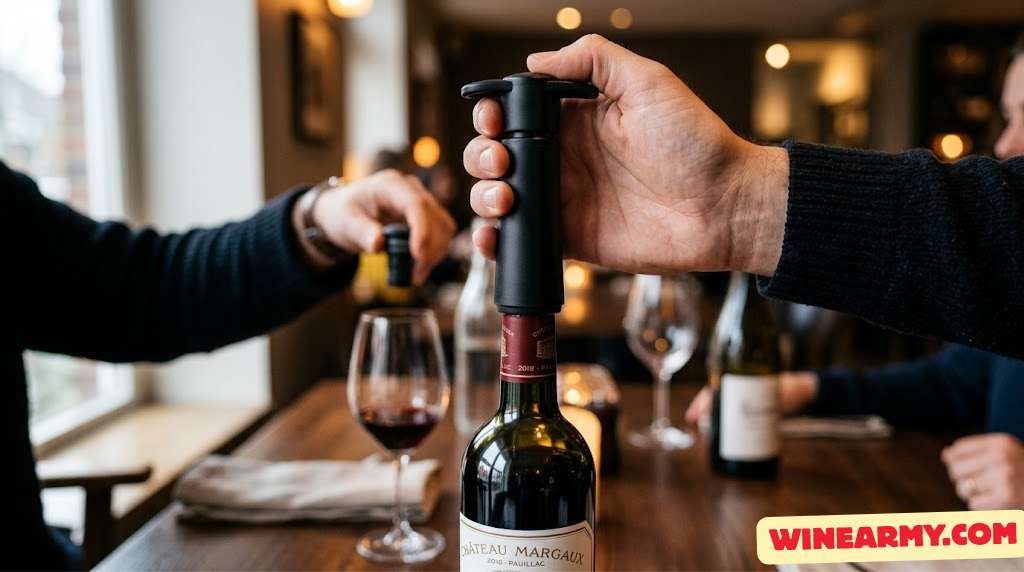
You’ve opened a spectacular bottle — maybe a silky Burgundy or a vibrant Sauvignon Blanc — and you’ve poured one glass. Now what? The rest of that bottle starts its slow, irreversible surrender to oxygen the moment the cork comes out. Within 24 hours, those bright aromatics begin to dull. By 48 hours, you may as well be drinking an expensive salad dressing.
This is exactly why wine preservers exist. Over the past three months, our team opened, re-sealed, and re-tasted the same wines using 15 different preservation devices, from cheap vacuum pumps to premium needle-insertion systems. We tracked flavor degradation over 1, 3, 5, and 7 days to give you genuinely useful, real-world performance data. No lab abstractions — just wine, time, and honest palates.
Whether you’re a casual mid-week drinker, a serious collector who opens expensive bottles cautiously, or someone building out a complete wine cellar setup, this guide has the product and the answer you need.
Why Wine Preservation Matters More Than You Think
Most wine lovers dramatically underestimate how quickly an opened bottle deteriorates. The culprit is oxygen — specifically, its interaction with the phenolic compounds, esters, and volatile acids that give wine its complexity and character. This process, called oxidation, is the same reason a sliced apple turns brown within minutes of exposure to air.
The irony? A tiny, controlled amount of oxygen is beneficial — it’s why aerating and decanting wine can improve it before drinking. But sustained, uncontrolled oxygen exposure after you’ve poured your glass? That’s the enemy. Understanding how long wine lasts after opening is the first step toward knowing why a good preserver is worth every cent.
The Stages of Wine Deterioration
Oxidation doesn’t happen uniformly — it happens in stages, and different wine styles deteriorate at very different rates.
| Wine Type | Hours Before First Decline | Noticeably Flat | Undrinkable |
|---|---|---|---|
| Light-Bodied Whites (Pinot Grigio, Vinho Verde) | 2–4 hrs | 24–36 hrs | 3–4 days |
| Full-Bodied Whites (White Burgundy, Chardonnay) | 4–8 hrs | 36–48 hrs | 4–5 days |
| Rosé | 3–6 hrs | 24–36 hrs | 3 days |
| Light-Bodied Reds (Pinot Noir, Beaujolais) | 6–12 hrs | 2–3 days | 4–5 days |
| Full-Bodied Reds (Cabernet, Malbec, Barolo) | 12–24 hrs | 3–5 days | 6–7 days |
| Fortified Wines (Port, Sherry) | Days | 2–4 weeks | 2–3 months |
| Sparkling (Champagne, Prosecco) | 1–2 hrs (bubbles) | 12–18 hrs | 2–3 days |
These timelines assume a bottle stored upright at room temperature with just its original cork re-inserted loosely — i.e., the worst-case scenario most people use by default. With a good wine preserver, you can dramatically extend these windows. The best systems we tested kept a fine Pinot Noir drinking beautifully on day seven — something impossible without intervention.
There’s also a financial argument. If you regularly open bottles in the $25–$80 range and end up pouring half down the drain, you’re not just wasting wine — you’re wasting money. A $15 vacuum pump pays for itself the first week you use it, and a $300 Coravin pays off by the time you’ve cautiously poured your tenth expensive bottle without uncorking it.
If you’re building out a broader home wine setup, it’s also worth thinking about how temperature and humidity affect your wine storage — preservation doesn’t start when you open a bottle; it starts the moment you bring it home.
The Four Main Types of Wine Preservers Explained
Walk into any wine shop or kitchen store and the sheer variety of preservation devices is genuinely bewildering. Vacuum pumps, inert gas cans, needle systems, diaphragm stoppers — how do they all differ, and which approach actually works best? Here’s a clear breakdown before we dive into individual products.
1. Vacuum Pump Systems
The most common and affordable category. A rubber stopper is inserted into the bottle neck, and a hand pump (or electric pump) draws air out of the bottle, creating a partial vacuum. This slows oxidation significantly by reducing the amount of oxygen in contact with the wine surface. Works well, costs little, and is easy to use — but does not eliminate oxygen entirely, and the stopper can slowly let air back in over time. Best for casual drinkers on a budget. Our guide to wine stoppers vs. corks explores the differences in detail.
2. Inert Gas (Argon / Nitrogen) Systems
These devices spray an inert, heavier-than-air gas (usually argon or a nitrogen/argon blend) into the bottle before re-corking. Because these gases are denser than oxygen, they form a protective “blanket” between the wine surface and the air above it. No oxygen means no oxidation — in theory. This approach can be highly effective, particularly for wines you plan to finish within a few days. Cans are single-use and generate waste, but the per-use cost is low.
3. Needle Insertion Systems (Coravin-Style)
The most sophisticated — and most expensive — category. A thin hollow needle pierces the natural cork and argon gas is injected as wine is poured out through the needle. Because the cork is never actually removed, it reseals itself perfectly after the needle is withdrawn. The wine inside is never exposed to oxygen at all. These systems are transformative for serious collectors with expensive bottles they want to taste gradually. The Coravin vs. Vacu Vin comparison is a common question we address in detail below.
4. Oxygen-Absorbing Stopper Systems
A newer and rapidly improving category. These stoppers contain a material (often an iron-based compound or proprietary resin) that chemically absorbs and traps oxygen molecules inside the bottle. The result is a near-zero oxygen environment without any gas cartridges or pumping. Repour is the most well-known product here, and our testing results surprised us.
| Type | Best For | Avg. Cost | Days of Freshness | Eliminates O₂? |
|---|---|---|---|---|
| Vacuum Pump | Everyday drinkers | $8–$30 | 3–5 days | ✗ Partial |
| Inert Gas | Mid-range wine lovers | $12–$40 per can | 5–14 days | ✓ Yes |
| Needle System | Collectors/expensive bottles | $200–$400 | Weeks–months | ✓ Completely |
| O₂ Absorber | Mid-range + convenience | $10–$20 per stopper | 3–7 days | ✓ Yes |
How We Tested: Our Methodology
Testing wine preservation devices objectively is harder than it sounds. You can’t simply measure “freshness” with a single instrument — wine is a complex liquid, and what matters is whether a trained (and untrained) palate can actually taste the difference. Our testing protocol used a combination of sensory evaluation and standardized parameters.
Testing Criteria & Weightings
Each device was tested with the same three wines across the same 7-day window: a 2022 Sancerre (delicate, high-acid white), a 2021 Côtes du Rhône (medium-bodied red with moderate tannins), and a 2019 Napa Valley Cabernet Sauvignon (full-bodied, tannic red). Bottles were sealed immediately after pouring a single glass, stored upright at 58°F (15°C), and blind-tasted at 24-hour, 72-hour, and 7-day marks by a panel of four tasters with different experience levels.
We also evaluated real-world usability — how easy is it to use when you’ve already had two glasses? Does the mechanism require precise instructions, or is it intuitive? Can it fit into a standard-sized wine bag when traveling? We tested portability, too, since many of our readers are also interested in transporting wine to events or picnics.
Finally, we looked at the environmental footprint. Disposable gas cans create landfill waste; we factored this into our scores under “Eco / Waste,” though we recognize this may matter more to some readers than others.
Our Top Picks at a Glance
Coravin Model Eleven: The Gold Standard of Wine Preservation
- TypeNeedle / Argon
- Price Range$299–$349
- Capsule TypeCoravin Smart Capsule
- Pours Per Capsule~15 (5oz pours)
- Works WithNatural cork only
- Weight1.3 lbs
- Wireless?Yes (Bluetooth)
✓ Pros
- Never uncorks the bottle
- Months-long preservation
- App-connected for usage tracking
- Sleek, restaurant-grade build
- Works on virtually any cork bottle
✗ Cons
- High upfront cost
- Ongoing capsule cost
- Does NOT work with screwcaps or synthetic corks
- Fragile needle tip
The Coravin Model Eleven is not just a wine preserver — it’s a paradigm shift in how you interact with your wine collection. The concept is elegantly simple: a hollow needle pierces the cork without removing it, argon gas is injected, and wine is dispensed through the needle. When you remove the device, the cork’s natural elasticity reseals the hole as though nothing happened. The wine inside is never exposed to oxygen.
In our testing, this translated to astonishing results. Our 2019 Napa Cabernet, tested on day 7 after being accessed via the Coravin, was indistinguishable from a fresh bottle poured simultaneously from a control sample we had opened the same day. The aromatics were intact, the tannin structure hadn’t softened, and the fruit remained vibrant and precise. This is not an exaggeration — it genuinely performed that well.
The Model Eleven adds Bluetooth connectivity compared to older Coravin models, pairing with a smartphone app that tracks your usage, reminds you when capsules are running low, and keeps a catalog of your bottles. It’s a feature that could feel gimmicky but actually adds real utility for collectors who rotate through many bottles.
Where it falls short is obvious: price. At $299–$349 for the device alone, plus ongoing argon capsule costs (roughly $10–$12 per capsule for ~15 pours), this is not a casual purchase. It’s also limited to bottles with natural corks — the cork vs. screwcap debate is ongoing in the wine world, but for Coravin purposes, natural cork is non-negotiable. Synthetic corks and screwcaps won’t seal after needle insertion.
For serious wine enthusiasts, collectors, or anyone who regularly opens expensive bottles they can’t finish in one sitting, the Coravin Model Eleven pays for itself quickly. Combined with a quality wine refrigerator and proper storage conditions, this is the most powerful preservation ecosystem available to home users.

The definitive needle-based preservation system. Access any corked bottle without opening it — months of freshness, guaranteed.
Check Price on Amazon →Vacu Vin Wine Saver Pump: The Budget Champion That Actually Works
- TypeVacuum Pump
- Price Range$10–$18
- Stoppers Included2
- Dishwasher SafeYes (stoppers)
- Bottle CompatibilityMost standard necks
- WarrantyLifetime
✓ Pros
- Ultra affordable
- Dead-simple to use
- Reusable — zero ongoing cost
- Lifetime guarantee
- Works on screwcap AND cork
✗ Cons
- Doesn’t eliminate oxygen, only reduces it
- Maximum ~3–4 days of effective preservation
- Can lose vacuum if stoppers age
- Not suitable for sparkling wine
Vacu Vin invented the modern vacuum wine pump concept back in 1986, and their classic pump set remains one of the best-selling wine accessories in the world for good reason: it does exactly what it promises, costs almost nothing, and requires zero learning curve. You insert the rubber stopper, pump until you feel resistance (the valve clicks when enough air has been removed), and you’re done.
In our testing at the 24-hour mark, the Vacu Vin performed comparably to the inert gas systems for everyday table wines. Our Côtes du Rhône was bright, fruit-forward, and genuinely pleasant after a day under vacuum. By day three, we noticed some softening of tannins in the Cabernet and slight flattening of the Sancerre’s citrus edge — still very drinkable, but perceptibly changed. By day five, we’d recommend finishing the bottle or using something more robust.
This honest performance makes the Vacu Vin perfect for a specific audience: the person who opens a bottle of mid-range wine a few times a week and reliably finishes it within two or three days. For those situations, there’s simply no reason to spend more. The pump is robust, the stoppers are dishwasher-safe, and Vacu Vin’s lifetime warranty is legitimate — they actually honor it.
One underrated feature: the vacuum click mechanism removes guesswork. You don’t need to count pumps or wonder if you’ve created enough vacuum. When the pump clicks and won’t draw anymore, you’ve maximized the vacuum for that bottle. It’s a minor detail but a significant usability improvement over competing pumps that rely on user judgment.

The most reliable budget wine preserver on the market. Reusable, lifetime-guaranteed, and incredibly easy to use.
Check Price on Amazon →Private Preserve Wine Preservation Spray: The Inert Gas Classic
- TypeInert Gas (Argon/N₂/CO₂ blend)
- Price Range$10–$16 per can
- Uses Per Can~120 sprays
- Gas BlendArgon + Nitrogen + CO₂
- Odorless/TastelessYes
- Works WithAny bottle
✓ Pros
- Completely eliminates oxygen
- Works on any bottle, any closure
- No pumping or gadgets required
- Inert — won’t affect taste
- Great for sparkling (short-term)
✗ Cons
- Disposable — generates waste
- Ongoing purchase cost
- Harder to know when can is running low
- Effectiveness depends on proper technique
Private Preserve has been a fixture in professional wine bars and restaurant programs for over 30 years. Its three-gas blend (argon, nitrogen, and carbon dioxide) is heavier than air and displaces oxygen from the bottle’s headspace — the air gap between the wine surface and the cork — creating an invisible barrier that prevents oxidation almost entirely.
Our testing placed this firmly in the second tier for preservation performance — significantly better than a vacuum pump for extended storage, but still below the Coravin’s “bottle-never-opened” standard because you do need to remove the cork to access the wine. For each successive pour, oxygen enters briefly before you spray and reseal. Done correctly, this is manageable. Done sloppily — leaving the bottle open while you wander back to the kitchen — the effectiveness drops considerably.
Technique matters more with inert gas systems than any other type. The correct method is: pour your wine, immediately insert the nozzle into the bottle neck, spray 2–3 seconds (enough to fill the headspace), then quickly re-cork or stopper. Longer exposure to open air before spraying means more oxygen to displace, and more risk of incomplete coverage.
When used correctly, our Sancerre was still vivid and citrus-bright at the 5-day mark — impressive for a delicate white that typically degrades quickly. The Cabernet maintained its structure through day 7, showing only very minor evolution. These results are genuinely competitive with systems costing five times as much.
The main environmental concern is that each can is a one-way disposable product. If you open wine frequently, you’ll go through several cans per year. This is worth weighing against the convenience and performance benefits, particularly if sustainability is important to you when building your eco-friendly wine storage setup.

The professional-grade inert gas standard. Used by sommeliers, wine bars, and collectors worldwide for decades.
Check Price on Amazon →Repour Wine Stopper: The O₂-Absorbing Wildcard
- TypeOxygen Absorber
- Price~$20 for 8-pack
- Stopper LifespanOne bottle (then replace)
- Works WithAny standard neck
- Pumping RequiredNone
- Dishwasher SafeNo
✓ Pros
- Simplest possible to use — just insert
- Actively removes oxygen from headspace
- No pumping, no gas, no fuss
- Compact — travels easily
✗ Cons
- One-bottle lifespan = ongoing cost
- Can’t reliably confirm if it’s “working”
- Less effective on nearly-full bottles
- Not for sparkling wine
Repour takes a genuinely different approach. Instead of reducing or displacing the oxygen in your bottle, the stopper chemically absorbs it — pulling oxygen molecules out of the headspace and trapping them in the stopper’s patented material. You insert it into the bottle, and it simply goes to work. No pumping, no spraying, no technique required.
We were skeptical going in — passive absorption sounded almost too good to be true. Our testing results were genuinely impressive, particularly for half-bottles (where there’s less headspace to protect). Our Sancerre at the 3-day mark was strikingly fresh — more so than the Vacu Vin results, and comparable to the Private Preserve results. At day five, there was some minor evolution but it was entirely drinkable. The Cabernet remained excellent through day 5 before showing more noticeable development on day 7.
The limitation is that each stopper is rated for one bottle only. Once you’ve used a Repour on a bottle and the wine is finished, you discard the stopper. At roughly $2.50 per stopper (in the 8-pack), this is more economical than it sounds — cheaper per use than a Coravin capsule and competitive with inert gas cans — but it is still a consumable cost that accumulates over time. It’s an excellent choice if you value maximum simplicity and still want genuinely good results. It also travels beautifully — toss a few in your bag when you’re headed to a wine tasting event or dinner party.

The simplest effective wine preserver available. Just insert and go — no pumps, no gas, no expertise required.
Check Price on Amazon →WineSave Pro: Premium Argon in a Gorgeous Package
- TypePure Argon Gas
- Price Range$22–$30 per can
- Uses Per Can~150+ sprays
- Gas Purity99.9% Argon
- Made InAustralia
- Recyclable CanYes
✓ Pros
- Purest argon formula available
- More uses per can than Private Preserve
- Beautiful premium packaging (gift-worthy)
- Recyclable aluminum can
✗ Cons
- Higher per-can cost
- Still single-use / disposable
- Slightly harder to find in stores
WineSave Pro differentiates itself from competitors like Private Preserve by using exclusively 99.9% pure food-grade argon, rather than a multi-gas blend. Argon is the densest of the inert preservation gases and the most effective at forming a stable, oxygen-excluding layer. In our testing, the performance edge over Private Preserve was modest but consistent — particularly notable for our delicate Sancerre, which retained its precision and brightness slightly longer under pure argon coverage.
Beyond performance, WineSave Pro is simply gorgeous. The matte-finish aluminum can, refined typography, and premium presentation make this the wine preservation product you’d actually want to give as a gift — or leave on display on your counter. It pairs beautifully with other premium wine accessory gifts for the wine lover in your life.
The recyclable can is a nice environmental touch, though we’d still prefer the WineSave team offered a refillable or cartridge-exchange program to reduce disposable packaging further — especially relevant for drinkers building a more sustainability-conscious wine lifestyle.

Pure 99.9% argon in a premium, gift-ready package. The most refined inert gas system available for home use.
Check Price on Amazon →Full Wine Preserver Comparison Table: 15 Products Ranked
Beyond our top five deep-dive reviews, we tested ten additional products across all four categories. Here’s the complete ranked comparison covering all 15 devices in our testing pool.
| Rank | Product | Type | Price | Performance | Ease | Value | Days Fresh | Overall |
|---|---|---|---|---|---|---|---|---|
| #1 | Coravin Model Eleven | Needle/Argon | $299–$349 | ★★★★★ | ★★★★☆ | ★★★☆☆ | 14–60+ | 9.5/10 |
| #2 | Vacu Vin Classic Pump | Vacuum | $10–$18 | ★★★☆☆ | ★★★★★ | ★★★★★ | 3–5 | 8.6/10 |
| #3 | Private Preserve | Inert Gas Blend | $10–$16 | ★★★★☆ | ★★★★★ | ★★★★☆ | 5–10 | 8.8/10 |
| #4 | Repour Wine Stopper | O₂ Absorber | $20/8-pk | ★★★★☆ | ★★★★★ | ★★★★☆ | 5–7 | 8.4/10 |
| #5 | WineSave Pro | Pure Argon | $22–$30 | ★★★★★ | ★★★★☆ | ★★★☆☆ | 7–14 | 8.9/10 |
| #6 | CIRCLE JOY Electric Pump | Electric Vacuum | $25–$35 | ★★★★☆ | ★★★★★ | ★★★★☆ | 4–5 | 8.2/10 |
| #7 | Coravin Pivot | Needle/Argon | $69–$99 | ★★★★☆ | ★★★★☆ | ★★★★☆ | 4 weeks | 8.5/10 |
| #8 | Eto Wine Preserver | Plunger/Vacuum | $85–$100 | ★★★★☆ | ★★★★☆ | ★★★☆☆ | 5–7 | 7.9/10 |
| #9 | Rabbit Wine Pump | Vacuum | $12–$20 | ★★★☆☆ | ★★★★☆ | ★★★★☆ | 3–4 | 7.6/10 |
| #10 | Savino Wine Carafe | Floating Seal | $40–$55 | ★★★☆☆ | ★★★★☆ | ★★★☆☆ | 5–7 | 7.4/10 |
| #11 | Menu Vignon Stopper | Silicone Seal | $25–$35 | ★★★☆☆ | ★★★★★ | ★★★☆☆ | 2–3 | 7.0/10 |
| #12 | Winair Wine Preserver | Inert Gas | $15–$20 | ★★★★☆ | ★★★★☆ | ★★★★☆ | 5–8 | 8.1/10 |
| #13 | Pulltex Anti-Ox | Vacuum Pump | $14–$22 | ★★★☆☆ | ★★★★☆ | ★★★★☆ | 3–4 | 7.3/10 |
| #14 | OXO SoftWorks Pump | Vacuum | $13–$18 | ★★★☆☆ | ★★★★☆ | ★★★★☆ | 3–4 | 7.5/10 |
| #15 | Zevro Wine Preserver | Vacuum | $8–$12 | ★★★☆☆ | ★★★☆☆ | ★★★★★ | 2–3 | 6.8/10 |
If you’re still weighing whether to go with a Coravin or a more affordable vacuum option, our dedicated Coravin vs. Vacu Vin comparison walks through every consideration in detail. For those building a complete wine accessory toolkit, our essential wine accessories for hosts guide covers everything you need alongside a good preserver.
Wine Preserver Buyer’s Guide: How to Choose the Right System
The “best” wine preserver is the one that fits how you actually drink wine. A $300 Coravin is an irrational purchase for someone who opens a $12 bottle on Friday night and finishes it by Saturday evening. Equally, a Vacu Vin pump is a frustrating underperformer for a serious collector who wants to taste a single glass from a prized bottle of 2015 Pomerol without committing the whole bottle. Here’s how to think through the decision.
Frequency: How Often Do You Open Wine?
If you’re opening wine 4–7 times per week and reliably finishing bottles within 2 days, a vacuum pump is all you need. If you open wine 1–3 times a week and regularly have half-bottles sitting around for 4–5 days, an inert gas system or oxygen absorber is worth the investment. If you open wine occasionally from a curated cellar of 30+ bottles and want to taste through them over months without committing to any single bottle, a Coravin is your answer.
Wine Type: What Are You Preserving?
Delicate whites and rosés need more aggressive preservation than tannic reds. If your cellar skews toward crisp, aromatic whites or natural or low-intervention wines (which can be especially sensitive to oxidation), prioritize systems that completely eliminate oxygen — inert gas or needle-insertion. If you drink mostly full-bodied reds, a vacuum pump will often suffice for your typical usage pattern.
Budget: One-Time vs. Ongoing Cost
Vacuum pumps have zero ongoing cost after purchase. Oxygen absorbers and inert gas cans have modest but recurring costs per use. The Coravin has a high upfront cost plus capsule costs but is still cost-effective per-pour if you’re preserving expensive bottles. Map your expected usage to figure out your true cost per use over 12 months — you’ll often find that “expensive” systems are actually cheaper in practice than they appear at first.
Convenience: Will You Actually Use It?
The best preserver is the one you actually reach for every time you pour a glass. A technically superior system you rarely use because it feels like effort is worse than a simpler one you use consistently. The Repour stopper wins on this dimension — its zero-effort design means there’s no excuse not to use it. If you know you’re lazy about wine care, don’t buy a complex multi-step system. Buy simplicity.
Storage Situation: Where Do You Keep Opened Bottles?
All wine preserver systems work best combined with proper temperature control. Regardless of which device you choose, storing your sealed bottle in a wine fridge rather than a regular refrigerator will meaningfully extend freshness — the controlled humidity and vibration-free environment slow chemical processes that even the best preserver can’t fully stop. If you’re serious about preservation, a quality wine refrigerator is an important companion investment.
Special Cases: Sparkling Wine
None of the standard wine preservers above will keep Champagne or Prosecco bubbles alive beyond 24–36 hours — CO₂ escape is driven by pressure physics that no stopper can fully overcome once the bottle is opened. Use a dedicated Champagne pressure stopper (hinged stainless or silicone lever designs) and consume within 24 hours. For more information on this specific challenge, our Prosecco vs. Champagne guide explains why bubbles behave so differently from still wine in preservation contexts.
The Science of Wine Oxidation: What’s Actually Happening in Your Bottle
Understanding why wine oxidizes helps you use preservation systems more intelligently — and explains why some techniques work far better than others. The science is genuinely fascinating, and knowing it makes you a smarter wine drinker.
Oxygen’s Role in Wine Chemistry
Wine is a complex matrix of several thousand chemical compounds — alcohols, acids, esters, terpenes, polyphenols, and more. Oxygen (O₂) reacts with many of these, primarily through a cascade of reactions that convert ethanol to acetaldehyde, then further oxidize phenolic compounds that give wine its structure and color. The result, in simple terms, is wine that tastes flat, nutty, bruised, and dull.
The compound most directly responsible for that “gone off” wine smell is acetaldehyde — a green apple/nail varnish character that becomes increasingly dominant as oxidation progresses. In tiny amounts (as found in some sherry styles), acetaldehyde can be pleasant. In opened still wine, it signals deterioration.
Why Different Wines Oxidize at Different Rates
Tannins — the polyphenolic compounds found in red wine skins, seeds, and oak barrels — act as natural antioxidants. They react preferentially with oxygen, sacrificing themselves to protect other flavor compounds. This is why a tannic Cabernet Sauvignon lasts longer after opening than a delicate Pinot Grigio, which contains minimal tannins. It’s also why understanding tannins helps you make smarter preservation decisions.
Sulfites (SO₂) added during winemaking also provide a buffer against oxidation. Natural, low-sulfite, and sulfite-free wines are significantly more vulnerable to oxidation after opening — they may start showing deterioration within hours of opening. If you drink natural wines, a preservation system isn’t optional; it’s essential.
Surface Area: The Headspace Problem
The key variable that preservation systems address is the oxygen-to-wine contact area — specifically, the headspace (the air gap between the wine surface and the closure). A nearly empty bottle has proportionally far more oxygen exposure than a nearly full bottle. This is why preservation systems work better the more wine remains in the bottle, and why finishing a bottle to the halfway mark before preserving generally yields better results than trying to save just a glass’s worth from the bottom.
If you regularly find yourself with just a small amount of wine left in a bottle, decanting it into a smaller vessel (a half-bottle or even a clean 375ml juice bottle) before sealing dramatically reduces the headspace and extends the freshness window. Our wine decanter guide covers vessels designed specifically for this use case, and understanding when and how to decant is a valuable skill for any serious wine enthusiast.
Temperature’s Amplifying Effect
Chemical reaction rates roughly double for every 10°C (18°F) increase in temperature — this is the Arrhenius equation, and it applies directly to oxidation in wine. A bottle stored at 68°F (20°C) after opening will oxidize approximately 1.4 times faster than one stored at 58°F (15°C). This is why refrigerating opened wine (even reds) is always better than leaving it on the counter — even just a few degrees of temperature reduction meaningfully extends freshness.
This synergy between temperature control and preservation systems is why wine collectors invest in both a good preserver and a quality wine refrigerator. The two work together in a way neither can achieve alone. For those building a serious home wine setup, understanding thermoelectric vs. compressor cooling helps you choose the right kind of refrigerator for your preservation goals.
Notable Mentions: Other Wine Preservers Worth Considering
Coravin Pivot: The Mid-Range Needle Option
For drinkers who want needle-insertion preservation without the full Model Eleven price, the Coravin Pivot offers a compelling middle ground at $69–$99. It uses the same fundamental argon-injection principle but with a simplified mechanism designed for the more casual market. The Pivot doesn’t pierce the cork like the classic Coravin models — instead, it works with a special Pivot stopper that replaces the original cork. Performance isn’t quite as long-term as the Model Eleven (rated for four weeks vs. months), but for most home users who will access a bottle within that window, it’s an excellent and more accessible option.
Eto Wine Preserver: The Elegant Plunger System
The Eto takes a completely different approach — you pour the remaining wine directly into the Eto carafe, push a plunger down to eliminate the headspace completely, and the wine is sealed with virtually zero air contact. The plunger physically touches the wine surface. In testing, we found this worked exceptionally well for 3–5 days, and the glass carafe is strikingly beautiful — a genuine design object you’d be happy to display on your kitchen counter or dining table. At $85–$100, it occupies an interesting niche between budget pumps and premium needle systems. The cleaning process (cleaning between the plunger and the carafe walls) can be slightly fiddly, but it’s manageable.
CIRCLE JOY Electric Wine Preserver
For those who want the vacuum approach without the physical effort of pumping, the CIRCLE JOY electric preserver automates the process with a single button press. It reads the vacuum level electronically and stops automatically when it’s achieved maximum extraction. Performance is comparable to the best manual pumps, but the convenience — particularly for users with hand mobility concerns — is meaningful. Our full review of the best electric wine accessories covers similar products in more detail.
Mid-range needle preservation without the full Coravin price. Four weeks of freshness from your favorite bottles.
Check Price on Amazon →The Savino Wine Preserving Carafe
The Savino uses a floating seal that sits on the wine surface, minimizing the headspace without any pumps or gas. Pour your remaining wine in, drop the float in, and seal the lid. It’s a smart mechanical solution that avoids all consumables — completely reusable with no ongoing costs. Performance was solid in our testing through day 5, though the float seal is imperfect and some air does migrate in over time. The borosilicate glass carafe is elegant and dishwasher-safe (minus the float), making it one of the more lifestyle-integrated products in this roundup.
Beyond Preservation: Building a Complete Wine Care System
A wine preserver is one component of a broader wine care ecosystem. If you’re serious about getting the most from every bottle, the other components matter just as much. Think of preservation as the final layer of protection — with proper storage, service, and accessory choices forming the foundation underneath.
Pre-Opening Storage
The way you store wine before opening sets the ceiling for how good it can taste — and how well preservation systems will work afterward. Wine should be stored horizontally (to keep natural corks moist), at 55–60°F (13–16°C), at 60–70% relative humidity, and away from vibration and direct light. If you don’t have a dedicated cellar or wine refrigerator, review our guide to storing wine without a wine fridge — there are good interim solutions.
Glassware: The Final Mile of Wine Enjoyment
Even perfectly preserved wine can be diminished by the wrong glass. The shape, size, and bowl design of a wine glass affects how aromatics concentrate and release, how tannins register on the palate, and even how you perceive acidity. If you’ve invested in good wine and a good preservation system, a quality glass completes the picture. Our guide to red wine glasses by varietal and comprehensive glass shape guide are good starting points, and the Riedel vs. Zalto comparison is our most detailed glass review.
Opening: Getting It Right From the Start
Preservation begins the moment the bottle is opened. A clean, smooth extraction of the cork minimizes cork fragmentation (which can contaminate wine), minimizes air exposure time, and sets you up for a great first pour. Our roundup of the best wine bottle openers covers everything from professional waiters corkscrews to electric options, and our electric corkscrew reviews are especially useful for frequent wine drinkers.
Temperature at Service
Serving wine at the right temperature is often as important as preservation. Over-chilled wine masks aromatics; wine served too warm amplifies alcohol and softens structure. If you regularly serve wine too cold (straight from a regular fridge) or too warm (left on the counter), a wine chiller sleeve or electric wine chiller can make an immediate difference to your enjoyment of every glass.
Frequently Asked Questions About Wine Preservers
Our Verdict: The Right Preserver Depends on You
There is no single “best” wine preserver for every drinker — but there is a best one for your situation. If you’re a casual wine drinker on a budget, the Vacu Vin is unbeatable value. If you want meaningful oxygen elimination without ongoing hardware costs, Private Preserve or Repour will serve you well. If you’re a serious collector who wants to access expensive bottles without committing the whole bottle, the Coravin Model Eleven is worth every cent of its premium price.
Whatever system you choose, the habit of using it consistently — every time, immediately after pouring — matters more than which specific device sits in your drawer. Great preservation starts with attention to detail, and the wines you love deserve nothing less.
Explore All Top-Rated Wine Preservers →
Browse the full range of vacuum pumps, inert gas systems, and Coravin models. Find the right preserver for your wine lifestyle today.
Browse Wine Preservers on Amazon →