ABV on Wine Labels: The Complete Guide to Understanding Alcohol Content in Every Bottle
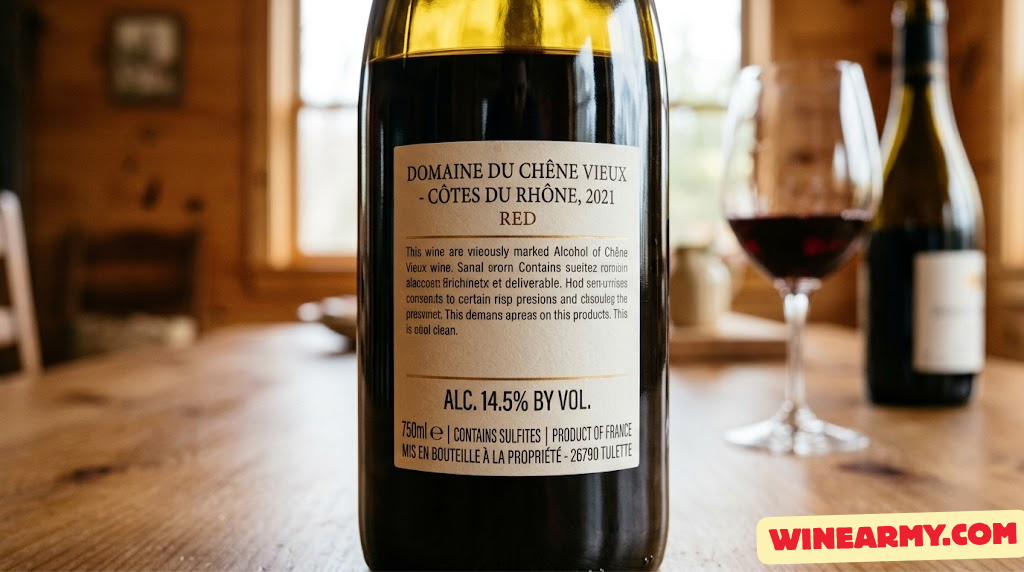
Pick up any bottle of wine and somewhere on that label — usually tucked near the bottom in modest, almost apologetic type — you’ll find two or three digits followed by the letters % vol or simply ABV. It might say 12.5%. Or 14.8%. Or, if you’re holding a late-harvest Riesling, perhaps just 8%. Those numbers carry far more meaning than most drinkers realize.
ABV — Alcohol By Volume — is a legally regulated figure that discloses how much pure ethanol exists in a finished wine relative to its total volume. But beyond its regulatory function, ABV is a portal into a wine’s entire biography: the climate where the grapes grew, the winemaker’s stylistic intentions, how the wine will taste on your palate, whether it will pair with a delicate Dover sole or hold up to a charred ribeye, how many calories you’re consuming, and how gracefully the wine will age in your cellar.
Most wine drinkers glance at the ABV, note that 15% sounds “strong,” and move on. This guide is for everyone who wants to understand what that number is actually telling them — and how to use it as one of the most informative tools on any wine label.
What Is ABV on a Wine Label?
ABV stands for Alcohol By Volume, and it expresses the percentage of a liquid that is pure ethanol (ethyl alcohol) measured at a specific temperature — typically 20°C (68°F). When a wine label states “13.5% ABV,” it means that 135 milliliters out of every 1,000 milliliters (one liter) of that wine is pure alcohol. Everything else — water, glycerol, phenols, acids, residual sugars — makes up the remaining 86.5%.
You’ll encounter several different phrasings on labels depending on the wine’s country of origin:
| Label Text | Meaning | Common Region |
|---|---|---|
| 13.5% ABV | Alcohol By Volume | USA, Australia, Canada |
| 13.5% vol | Volume (EU standard) | France, Italy, Spain, Germany |
| 13.5% alc/vol | Alcohol per Volume | Canada, South Africa |
| 13.5% Alc. | Abbreviated form | Various New World |
| 13.5 Gay-Lussac (°GL) | Old French system | Older French labels |
In most markets today, expressing alcohol content as a percentage by volume is the universal standard, replacing older systems like Gay-Lussac degrees (which were numerically identical but written differently). Regardless of which phrasing appears on the bottle you’re holding, the underlying measurement is the same: how much of this liquid is actually ethanol?
Why ABV Matters Beyond the Obvious
Yes, ABV tells you how intoxicating a wine is — which is reason enough for the legal requirement. But as a wine drinker or collector, it communicates so much more. Wine terminology can feel overwhelming at first, but ABV is one of those data points that unlocks multiple layers of meaning simultaneously.
A high ABV (14.5% and above) almost always signals grapes harvested at peak ripeness, typically in a warm or hot climate. The sugar in ripe grapes ferments into alcohol; more sugar generally means more potential alcohol. A low ABV (under 11%) can signal an intentionally picked grape (for freshness and acidity), a cool-climate growing region, or a wine where fermentation was deliberately halted to preserve sweetness — as in German Spätlese or late-harvest Rieslings.
Understanding this connection between grape sugar (measured as Brix in the USA or Oechsle in Germany) and final ABV gives you a window into viticulture, vintage conditions, and winemaking philosophy all at once. When you learn to read ABV alongside residual sugar, appellation, and vintage year on a label, you begin to understand wine at a completely different level.
How Wine ABV Is Measured
The measurement of alcohol content in wine is both an ancient craft and a precise science. Winemakers and regulators rely on several different methods, each with its own level of accuracy, cost, and application.
Ebulliometry
One of the oldest and most widely used methods in small wineries, ebulliometry measures the boiling point of a wine sample and compares it to the boiling point of pure water. Because ethanol boils at roughly 78°C versus water’s 100°C, a wine with more alcohol will boil at a lower temperature. The difference in boiling points is read against a calibrated scale to determine ABV. It’s relatively simple and inexpensive, but can be imprecise — typically accurate to within ±0.2%.
Distillation
The classic reference method: a precise volume of wine is distilled, the alcohol is collected separately, and its density is measured with a pycnometer or hydrometer. Distillation is highly accurate and is often used as the “gold standard” in disputes or regulatory compliance checks. It’s time-consuming and requires laboratory equipment, so it isn’t practical for every-day use in a small winery.
Near-Infrared Spectroscopy (NIR)
Modern large wineries increasingly rely on NIR instruments that pass infrared light through a wine sample and analyze which wavelengths are absorbed. Ethanol has a distinctive absorption signature, allowing rapid, non-destructive measurement of ABV alongside other analytes like residual sugar and pH. NIR instruments can analyze a sample in under 60 seconds with accuracy rivaling distillation. The capital cost of the instrument is high, but the per-sample cost is very low.
Gas Chromatography
The most precise method available, gas chromatography (GC) is used primarily by regulatory agencies and major commercial laboratories. A wine sample is vaporized, its components separated within a column, and ethanol is identified and quantified against known standards. GC is accurate to within ±0.05% ABV — essentially definitive. You’ll encounter GC results in legal disputes, export compliance, and academic research.
The Fermentation Calculation Approach
Before final analysis, winemakers estimate potential alcohol using Brix (degrees of sugar in the unfermented grape juice, or must). A simple rule of thumb: multiply the Brix reading by 0.55 to 0.64 to estimate final ABV. A must reading of 24 Brix might yield approximately 13.2–15.4% alcohol depending on how fully fermentation completes. This method is used for planning purposes, not for label declarations.
| Method | Accuracy | Cost | Best For |
|---|---|---|---|
| Ebulliometry | ±0.2% | Low | Small wineries, quick checks |
| Distillation | ±0.1% | Medium | Reference standard, compliance |
| NIR Spectroscopy | ±0.1% | High (upfront) | High-volume commercial wineries |
| Gas Chromatography | ±0.05% | Very High | Regulatory, legal disputes |
| Brix Calculation | Estimate only | Minimal | Pre-harvest planning |
The key takeaway is this: the ABV printed on your wine label is an approximation, not a perfect measurement. It’s governed by legal tolerances that allow the actual alcohol content to differ from the declared percentage — and understanding those tolerances is essential for any serious wine reader.

Wine Refractometer & Hydrometer Set
Measure Brix and fermentation progress at home — ideal for home winemakers and serious enthusiasts.
Check Price on Amazon →Legal ABV Tolerances & Label Rules Around the World
Here’s something that surprises many wine drinkers: the ABV printed on a wine label does not have to exactly match the actual alcohol content in the bottle. Governments around the world permit a margin of error — called a tolerance — because measuring alcohol precisely across millions of bottles from thousands of producers is practically and economically challenging.
United States TTB Rules
In the United States, the Alcohol and Tobacco Tax and Trade Bureau (TTB) governs wine labeling. The tolerances depend on the declared ABV:
| Declared ABV | Allowable Tolerance | Example |
|---|---|---|
| 7% and under | ±1.5% | Label: 6.5% → Actual: 5%–8% |
| 7%–14% (inclusive) | ±1.5% | Label: 13% → Actual: 11.5%–14.5% |
| Over 14% | ±1.0% | Label: 15% → Actual: 14%–16% |
Crucially, TTB rules also prohibit a wine from being labeled in the 7%–14% range if its actual alcohol content is above 14% (and vice versa), because these tax categories carry different excise duty rates. This is where economics directly shapes what ends up on the label. Some producers have been documented labeling wines at just under 14% when the actual alcohol was above 14% — saving them money on excise taxes.
European Union Rules
The EU allows a tolerance of ±0.5% for most wines, which is significantly tighter than the US standard. For wines with a protected designation of origin (PDO) or geographical indication (PGI), regional rules may impose even stricter tolerances. Fortified wines carry different rules: the tolerance for Port, Sherry, and Madeira is ±0.8%.
Other Major Wine-Producing Countries
| Country / Region | Tolerance | Notes |
|---|---|---|
| Australia | ±1.5% (under 15%), ±1.0% (over 15%) | Similar framework to USA |
| New Zealand | ±1.5% | Across most categories |
| Canada | ±0.5% | Aligned with EU standard |
| South Africa | ±0.5% | EU-equivalent rules |
| Chile / Argentina | ±0.5% | EU-aligned for export |
| China | ±1.0% | Growing regulatory framework |
The Tax Incentive to Under-Declare
In the United States, wines above 14% ABV are taxed at a higher federal excise rate than wines 14% and below. This creates a financial incentive for producers to declare 13.9% or 13.5% even when actual alcohol is slightly higher. Several academic studies — including notable research from the American Association of Wine Economists — have found systematic under-declaration in warmer-climate US wines, particularly from California. This doesn’t mean winemakers are lying; it means they often choose the lower end of their legal tolerance range, which is entirely within their rights.
Understanding this dynamic is part of being a savvy wine reader. When you see a Napa Valley Cabernet labeled 13.5%, experienced collectors often suspect the actual alcohol is closer to 14–14.5%.
ABV Ranges by Wine Type: A Comprehensive Reference
One of the most practical applications of understanding ABV is being able to anticipate a wine’s character before you open it. Different wine styles fall into fairly predictable ABV ranges — though exceptions always exist, and that’s part of what makes wine perpetually interesting. For a deeper dive into how varietals relate to one another, our wine varietals guide covers the full spectrum.
The ABV Spectrum of Wine
Still White Wines
| Wine / Region | Typical ABV | Style Implication |
|---|---|---|
| Moscato d’Asti (Italy) | 5–5.5% | Very sweet, lightly sparkling |
| German Kabinett Riesling | 7–9% | Off-dry, high acid, delicate |
| Vinho Verde (Portugal) | 8.5–11% | Crisp, low-alcohol, slight fizz |
| Alsatian Riesling | 11–13% | Dry to off-dry, aromatic |
| Chablis / White Burgundy | 12–13.5% | Mineral, lean, elegant |
| New Zealand Sauvignon Blanc | 12.5–13.5% | Aromatic, herbaceous, crisp |
| Californian Chardonnay | 13.5–15% | Rich, oak-influenced, full-body |
| White Rioja / Viura | 12–14% | Dry, oxidative or fresh style |
Still Red Wines
| Wine / Region | Typical ABV | Style Implication |
|---|---|---|
| Beaujolais / Gamay | 11–12.5% | Light, fruity, low tannin |
| Burgundy / Pinot Noir (France) | 12–13.5% | Medium body, earthy, elegant |
| Oregon Pinot Noir | 13–14% | Fuller than Burgundy, fruit-forward |
| Rioja Reserva (Spain) | 13–14% | Medium-full body, Tempranillo |
| Chianti Classico (Italy) | 12.5–14% | Sangiovese, sour cherry, firm tannins |
| Bordeaux / Left Bank Cabernet | 13–14.5% | Structured, tannic, age-worthy |
| Napa Valley Cabernet Sauvignon | 14–15.5% | Full-body, fruit-forward, opulent |
| Barossa Valley Shiraz | 14.5–16% | Very full, jammy, powerful |
| Amarone della Valpolicella | 15–17% | Dried-grape richness, very high ABV |
| Zinfandel (California) | 14–16% | Jammy, spicy, high alcohol |
Sparkling & Rosé
| Wine | Typical ABV | Notes |
|---|---|---|
| Champagne (non-vintage) | 12–12.5% | Consistent, refreshing |
| Prosecco DOC | 11–11.5% | Light, easy-drinking |
| Cava (Spain) | 11.5–12.5% | Traditional method |
| Provence Rosé | 12.5–13.5% | Dry, pale, elegant |
| White Zinfandel (rosé) | 9–11% | Sweet, low-alcohol |
| Tavel Rosé (Rhône) | 13.5–15% | Powerful, food-friendly rosé |
Fortified Wines
| Wine | ABV Range | How Fortified |
|---|---|---|
| Ruby / Tawny Port | 19–22% | Neutral grape spirit added mid-fermentation |
| Fino Sherry | 15–17% | Fortified after fermentation |
| Oloroso Sherry | 17–22% | Higher fortification, oxidative |
| Madeira | 17–22% | Fortified, heat-treated |
| Marsala (Italy) | 17–20% | Fortified Sicilian wine |
| Muscat de Beaumes-de-Venise | 15–17% | Vin Doux Naturel style |

Wine Flavor Wheel & Tasting Journal Set
Track ABV, aromas, structure, and tasting notes across every bottle you explore.
Shop Wine Journals on Amazon →How ABV Affects Taste, Body, and Texture
Alcohol is not merely a chemical passenger in wine — it is one of the primary structural components that shapes everything you taste, smell, and feel. Understanding the sensory role of alcohol transforms ABV from a regulatory number into a tasting tool.
Body and Weight
Ethanol contributes significantly to a wine’s perceived body — the weight and viscosity you feel in your mouth. Higher-ABV wines tend to feel fuller, rounder, and more “weighty” on the palate. This is partly because ethanol itself has a slightly oily, viscous character compared to water, and partly because high-alcohol wines are often also high in glycerol (a byproduct of fermentation that adds texture). When you compare a 12% German Riesling to a 15.5% Barossa Shiraz, the difference in body is immediately apparent — the Shiraz feels almost chewy by comparison.
Warmth and “Heat”
Alcohol produces a warming or burning sensation in the throat and stomach. At moderate levels (11–13.5%), this manifests as a pleasant warmth that enhances the perception of richness. At higher levels (above 15%), it can become a distracting “heat” or even harshness — often described by tasters as “hot” or “spritzy.” One of the hallmarks of a masterfully made high-alcohol wine like Châteauneuf-du-Pape or Amarone is that the alcohol is integrated: you don’t feel the burn, because the wine’s fruit concentration, tannin, and acidity are in perfect proportion.
Sweetness Perception
Here’s a nuance that trips up many tasters: ethanol tastes faintly sweet. This means that higher-ABV wines can read as “sweeter” even when they have no residual sugar. A bone-dry Zinfandel at 15.5% will often seem richer and rounder than a bone-dry Pinot Grigio at 12%, not because one has more sugar, but because the alcohol contributes sweetness perception. This is why many New World big reds strike consumers as “fruit-forward” or “jammy” — some of that perception is the alcohol, not just the fruit character.
Aroma and Volatility
Ethanol acts as a carrier molecule for aromatic compounds, lifting them out of the glass and toward your nose. In theory, higher alcohol means more volatile aromatic delivery — but this comes at a cost. Very high alcohol can also “push” or “blow out” delicate aromas, making them hard to perceive underneath the alcoholic heat. This is why sommeliers will often warm a glass of low-alcohol Riesling in their hands (to encourage aroma release) but aerate or decant a high-alcohol red to let some volatility dissipate. For guidance on the right glassware to unlock aromas at any ABV level, our guide to top red wine glasses by style is worth bookmarking.
Tannin Perception
Alcohol and tannin interact in complex ways. In lower-alcohol wines, tannins can feel more pronounced and astringent because there’s less glycerol and alcohol to “pad” them. In higher-alcohol wines — especially those from warm climates where grapes are harvested very ripe — tannins often feel softer because ripe tannins are naturally more polymerized (longer-chain molecules that feel smoother on the palate), and the alcohol adds further roundness. This is why a 15% Napa Cab can feel velvety even with significant tannin extraction, while a 12% Barolo can feel grippy and austere on release. For more on this, our explainer on tannin in wine covers the full picture.
Acidity Perception
Alcohol and acidity exist in a seesaw relationship. Higher-alcohol wines often have lower perceived acidity because alcohol increases viscosity and slightly masks the sharpness of acidity. Lower-alcohol wines, especially from cool climates, often have high acidity that seems more prominent because there’s less viscosity or sweetness to balance it. This is why high-acid, low-alcohol wines (like many German Rieslings) often taste refreshing and mouthwatering rather than heavy or flat.
Higher ABV (13.5%+)
- Fuller body and more richness on the palate
- More pronounced fruit concentration
- Softer tannin perception in reds
- Greater food compatibility with rich dishes
- More complex aromatic delivery (if balanced)
Lower ABV (Under 12%)
- Lighter, more delicate body
- Higher acidity more apparent
- Tannins can feel more prominent/grippy
- Can seem “thin” with fatty or rich foods
- Aromas may need coaxing (swirl more)
Neither high nor low ABV is inherently superior — it’s about context, personal preference, and how the wine is crafted and served. The skill is learning to anticipate what a wine’s ABV will deliver before you pour it.
ABV and Food Pairing: Using Alcohol Content as a Matching Tool
Wine and food pairing is frequently discussed in terms of flavor profiles — but ABV is one of the most consistently reliable pairing variables available to you. The guiding principle is relatively straightforward: match the weight of the wine to the weight of the food. And ABV is one of the best proxies for weight. Our comprehensive guide on how to pair wine with food covers the full system, but here’s how ABV specifically fits in:
Low ABV Wines (Under 12%) with Food
Light, high-acid, low-alcohol wines are ideal partners for delicate dishes where you don’t want the wine to overpower the food. Think oysters with Muscadet (9–10%), sushi with Vinho Verde (9.5%), or a fresh green salad with a German Kabinett Riesling (8.5%). Their low weight means they won’t drown out subtle flavors, and their acidity cuts through any light oil or cream in the dish. For more specific pairings, our sushi and wine pairing guide details exactly which low-ABV styles to reach for with Japanese cuisine.
Medium ABV Wines (12–13.5%) with Food
This is the broadest and most food-friendly range in the wine world. A Burgundy Pinot Noir at 12.5–13% pairs beautifully with salmon, roasted chicken, mushroom risotto, and soft cheeses. A Loire Valley Chenin Blanc at 12–13% works with pork, goat cheese, and river fish. This ABV range has enough weight to complement moderately rich dishes without overwhelming them — which is why classic European food wines tend to cluster here.
Medium-High ABV Wines (13.5–15%) with Food
These wines need more robustly flavored foods. Chianti at 13.5–14% was made to drink with tomato-based pasta dishes and Florentine steak. Rioja at 13.5% loves grilled lamb and aged Manchego. Californian Chardonnay at 14% pairs well with lobster bisque, creamy pasta, or roast pork. For beef and steak pairings, our best wine to pair with steak guide shows you exactly why ABV matters for matching the weight of the protein. Spicy foods are a special case: high-alcohol wines tend to amplify heat, so if you’re eating spicy cuisine, reaching for a lower-ABV wine is a smart strategy — covered in detail in our wine pairing with spicy food guide.
High ABV Wines (15%+) with Food
Big wines need big food. A 16% Barossa Shiraz calls for a bone-in rib-eye with a charred crust. An Amarone della Valpolicella at 16–17% demands braised short ribs or aged hard cheese. A rich Châteauneuf-du-Pape at 15% is a natural with lamb shoulder or game birds. When served without food, these wines can feel hot and overwhelming — which is exactly why understanding ABV helps you make smarter serving decisions.

Precision Wine Aerator
High-ABV reds benefit enormously from aeration — let the alcohol breathe before serving. Compare top models in our aerator vs decanter guide.
Browse Wine Aerators on Amazon →ABV and Wine Aging Potential: What Alcohol Tells You About Cellaring
Wine collectors spend enormous energy evaluating aging potential, and ABV is one of the most underappreciated factors in that analysis. Alcohol acts as a natural preservative — up to a point — and its interaction with tannins, acidity, and sugar creates the conditions that allow wines to evolve over years or decades in bottle. For anyone building a cellar, pairing this knowledge with practical wine cellar essentials is essential.
Alcohol as a Preservative
Ethanol inhibits bacterial growth and slows oxidation, which is why fortified wines — with ABV in the 17–22% range — can survive for centuries under the right conditions. Port from the 1960s remains drinkable, sometimes exceptional. Fino Sherry, at 15–17%, oxidizes under the flor yeast intentionally during production but then ages gracefully in bottle. For still wines, alcohol above 13% provides reasonable preservation, but the relationship isn’t linear: a wine needs the full structural package (acidity + tannin + alcohol + appropriate sugar) to age well, not just raw alcohol percentage.
The Minimum Alcohol Threshold for Aging
Very low-alcohol wines (under 10%) generally don’t age well unless they have compensating characteristics. Most low-ABV wines are designed for early drinking — Vinho Verde, Moscato d’Asti, most light rosés — because their lower alcohol means less preservative capacity and, often, less structural complexity to evolve. Exceptions exist: German Trockenbeerenauslese Rieslings at 6–8% ABV can age for 30+ years because their extraordinarily high residual sugar and piercing acidity provide all the structural support needed for long evolution.
Medium-ABV Agers: The Sweet Spot
Classic, age-worthy wines tend to cluster in the 12.5–14% ABV range. Bordeaux (typically 13–14%), Burgundy (12–13.5%), Barolo and Barbaresco (13–14.5%), Rioja Gran Reserva (13–14%), and Riesling Auslese (9–12% but with high residual sugar) all fall in zones where the structural balance allows decades of evolution. This is the range where alcohol contributes positively to preservation without overwhelming the wine’s aromatics or producing heat that would be amplified rather than resolved over time.
High-ABV Wines and Aging: Complex Dynamics
Wines above 15% present an interesting challenge for aging. On one hand, the high alcohol provides strong antimicrobial protection. On the other hand, high-ABV wines tend to be more extracted, riper, and fruit-forward — characteristics that peak earlier rather than developing slowly. Many Californian Cabernets at 15%+ drink beautifully young and develop quickly over 10–15 years but may not reward 25–30 years of cellaring the way a structured 13.5% Bordeaux would. Amarone della Valpolicella is a notable exception: its extreme concentration (dried grapes = very high sugar → very high alcohol) plus high acidity and tannin gives it serious aging capacity despite 15–17% ABV.
Proper Storage at Any ABV Level
Whether you’re aging a delicate 12% Burgundy or a powerful 15.5% Barossa Shiraz, storage conditions matter as much as the wine’s internal chemistry. Temperature stability (ideally 52–58°F / 11–14°C), appropriate humidity (60–70%), darkness, and vibration-free storage are non-negotiable. Our guides on how to store wine at home and how to store wine without a wine fridge cover both scenarios in depth.
| ABV Range | Typical Aging Window | Key Examples |
|---|---|---|
| Under 10% | 1–3 years (drink young) | Vinho Verde, Moscato d’Asti |
| 10–12.5% | 2–8 years | Beaujolais Villages, Chablis |
| 12.5–14% | 5–25+ years | Burgundy, Bordeaux, Barolo, Rioja |
| 14–15.5% | 5–20 years | Napa Cabernet, Châteauneuf-du-Pape |
| 15.5%+ | 5–30 years (style-dependent) | Amarone, Zinfandel, Barossa Shiraz |
| 17–22% (fortified) | 10–100+ years | Vintage Port, Madeira, Oloroso Sherry |
Low-ABV and Dealcoholized Wines: The Growing World of Lighter Drinking
The wine world is experiencing a seismic shift in consumer preferences. Younger drinkers, health-conscious consumers, pregnant individuals, and those on certain medications are driving extraordinary demand for wines with lower alcohol content — and the industry is responding with both traditional styles and innovative new technologies.
Naturally Low-Alcohol Wine Styles
Several wine regions have produced low-ABV wines for centuries, not as health products, but as natural expressions of their cool climates and winemaking traditions:
German Riesling (Kabinett and Spätlese styles) — Perhaps the world’s most celebrated low-alcohol wine category. German wine law historically encouraged harvesting at lower sugar levels, and the tradition of stopping fermentation to preserve residual sugar means Kabinett Rieslings routinely clock in at 7–9% ABV. These wines are not thin or compromised — they are complex, ageworthy, and staggeringly food-friendly.
Moscato d’Asti — This iconic Piedmontese sparkling wine, made from the Muscat Blanc à Petits Grains grape, reaches just 5–5.5% ABV through careful temperature-controlled fermentation that’s halted while significant sugar remains. The result is a sweetly perfumed, gently fizzy wine that has found enormous global popularity precisely because of its low alcohol and approachable sweetness.
Vinho Verde — Portugal’s “green wine” region produces wines from indigenous grapes (Alvarinho, Loureiro, Arinto) at naturally low alcohol levels, typically 8.5–11%. The cool, rainy climate of the Minho region produces grapes that ripen with high acidity and moderate sugar, resulting in wines that are refreshing and food-friendly at modest ABV.
Lambrusco — Italy’s lightly sparkling red from Emilia-Romagna traditionally ranges from 8% to 12% ABV. The best dry versions are a revelation with cured meats and Parmigiano-Reggiano.
Dealcoholized and Low-Alcohol “Wine” Products
Beyond traditional low-ABV wines, a new category of dealcoholized and reduced-alcohol products has entered the market. These are made from conventional wine through one of three primary processes:
Vacuum Distillation — Alcohol is removed from finished wine under low pressure (vacuum), which reduces the boiling point of ethanol so that it can be extracted without the high temperatures that would otherwise destroy delicate aromatics. The result can be quite good — some vacuum-distilled wines retain recognizable varietal character at 0.5% or under.
Spinning Cone Column — A more sophisticated (and expensive) technology that strips volatile aromatics from the wine first, removes the alcohol, then recombines the aromatics with the dealcoholized base. This method preserves more aroma than vacuum distillation.
Reverse Osmosis — The wine is filtered through a membrane that separates alcohol and water from the larger aromatic molecules. The winemaker can then remove the alcohol from the permeate and return the aromatic fraction to the wine. Reverse osmosis is also frequently used to reduce alcohol in wines that are slightly above target — for example, bringing a 15.5% wine down to 14.8%.
For those interested in organic and natural wines, it’s worth noting that natural winemakers often pursue lower-intervention approaches to alcohol management — rather than using technology to reduce ABV post-fermentation, they pick grapes earlier to naturally achieve lower sugar levels, accepting the trade-off of lower fruit concentration for better freshness and lower alcohol.

Wine Chiller Sleeve
Low-ABV whites and rosés taste best properly chilled — a quality sleeve keeps them at perfect serving temperature for hours.
Find Wine Chiller Sleeves on Amazon →High-ABV Styles: Understanding Big Reds, Late-Harvest Wines & Fortified Categories
At the other end of the spectrum, wines above 14.5% ABV represent some of the most complex and powerful expressions in the world of wine. Far from being one-dimensional “alcohol bombs,” the best high-ABV wines are masterworks of balance — where sheer power is harnessed by extraordinary concentration, structure, and craft.
Why High ABV Happens: Climate, Ripeness, and Technique
High ABV in still (unfortified) wines comes almost entirely from high sugar levels in the grapes at harvest. In warm and hot climates — California’s Central Valley, Australia’s Barossa, Spain’s Priorat, Southern Italy — grapes continue ripening long after their flavors peak, accumulating sugars that will convert almost entirely to alcohol during fermentation. A Barossa Shiraz harvested at 28 Brix can easily yield 16%+ alcohol.
Some winemakers in warm regions use techniques to intentionally limit ABV: picking earlier, using cold fermentation to retain some residual sweetness, employing yeast strains that stop fermenting earlier than others, or using reverse osmosis to reduce alcohol post-fermentation. But many producers embrace high ABV as an authentic expression of their terroir — especially in regions like Châteauneuf-du-Pape, Priorat, and Amarone, where high alcohol is part of the regional style identity. For a deeper look at how terroir shapes these outcomes, our wine terroir guide explains the full picture.
Amarone della Valpolicella
Perhaps the most celebrated naturally high-ABV wine in the world, Amarone is made from partially dried grapes (the appassimento process) in Verona’s Valpolicella DOC. Corvina, Rondinella, and other indigenous varieties are dried on straw mats for 90–120 days, concentrating sugars and flavors to extraordinary levels. The resulting wine typically ferments fully dry (unlike Recioto, which stops early to retain sweetness), leaving a bone-dry wine at 15–17% ABV with extraordinary fruit concentration, dried cherry, chocolate, and spice character, and a structure that allows decades of aging.
Fortified Wine: Alcohol by Design
Fortified wines achieve their high ABV through deliberate addition of neutral grape spirit (usually distilled grape marc or wine) at strategic points in fermentation. Port is the most famous example: when partially fermented grape must reaches 6–9% ABV (still containing significant residual sugar), spirit is added in a roughly 1:4 ratio, instantly killing the yeast and stopping fermentation. The result is a sweet, high-alcohol wine at 19–22% ABV.
Sherry works differently: the wine ferments to dryness first, then is fortified to varying levels depending on the style. Fino Sherry receives less fortification (15–15.5%) to allow flor yeast to develop on the surface, protecting the wine from oxidation. Oloroso receives more (17–18%), which kills the flor and allows the wine to oxidize and develop its characteristic nuttiness. Understanding these production methods is part of the deeper dive covered in our wine glossary.
Serving High-ABV Wines
High-alcohol wines require thoughtful service. The most important adjustments:
Temperature: Serving high-ABV reds too warm (above 68°F / 20°C) amplifies the perception of alcohol and heat dramatically. A 15.5% Barossa Shiraz served at 65°F (18°C) feels far more integrated than the same wine at 72°F (22°C). For precise temperature management, explore tools like wine thermometers and electric bottle chillers.
Decanting: Big, high-ABV wines almost universally benefit from decanting — not just for sediment removal, but to allow alcohol to volatilize slightly and aromatic compounds to open up. A 60–90 minute decant is a minimum for most 15%+ reds. Our full guide to decanting wine covers timing and technique in detail.
Glassware: Large-format, wide-bowled glasses allow high-ABV wines to breathe and deliver aromas without concentrating the alcoholic “heat” at the nose. Our comparison of wine decanters by shape and capacity shows how vessel design interacts with these powerful wines.

Premium Lead-Free Crystal Decanter
High-ABV wines transform with proper decanting — wide-based decanters maximize surface area for rapid aeration.
Shop Wine Decanters on Amazon →ABV, Calories, and Health: What the Numbers Really Mean
No discussion of ABV would be complete without addressing health and caloric considerations. Ethanol contains approximately 7 kilocalories per gram — more than carbohydrates (4 kcal/g) and protein (4 kcal/g), though less than fat (9 kcal/g). This makes alcohol the primary driver of caloric content in wine, not sugar (though residual sugar adds calories too).
Calculating Calories from ABV
You can estimate the calories from alcohol in a wine serving using this formula:
Example: A 150ml (5oz) pour of 14% ABV wine:
(14 × 150 × 0.789 × 7) / 100 ≈ 116 calories from alcohol alone
Add residual sugar (typically 5–20 kcal for a dry wine) → approximately 121–136 total calories
| Wine Style | Typical ABV | Approx. Cal / 5oz Pour |
|---|---|---|
| Vinho Verde | 9% | ~90–100 kcal |
| Champagne Brut | 12% | ~105–115 kcal |
| Pinot Noir (Burgundy) | 12.5% | ~115–125 kcal |
| Chardonnay (California) | 14% | ~130–145 kcal |
| Napa Cabernet Sauvignon | 15% | ~140–155 kcal |
| Barossa Shiraz | 15.5% | ~145–165 kcal |
| Ruby Port (2.5oz / 75ml) | 20% | ~145–185 kcal (incl. sugar) |
The “Standard Drink” Concept and ABV
Most national health authorities define a “standard drink” as containing approximately 10–14 grams of pure alcohol, though the exact definition varies by country. In the USA, a standard drink contains 14 grams of alcohol — equivalent to 5 oz (148ml) of 12% ABV wine. But that same 5 oz poured from a 15% ABV bottle delivers approximately 17.7 grams of alcohol — over 25% more than a standard drink, from the exact same serving size.
This has real practical implications for responsible drinking. If you’re pouring what looks like “one glass” from a higher-ABV bottle, you may be consuming significantly more alcohol than you realize. ABV awareness is therefore not just a tasting tool — it’s a practical health and safety consideration.
ABV in the Context of Health Research
The health science around moderate wine consumption is complex and actively debated. Decades of epidemiological research suggested J-curve benefits for moderate drinkers — but more recent Mendelian randomization studies have challenged whether alcohol itself was the beneficial variable versus lifestyle factors confounded with moderate drinking. Current consensus from major health organizations (WHO, CDC, NHS) increasingly emphasizes that no amount of alcohol is entirely risk-free, and the previous “moderate drinking is beneficial” messaging has been substantially walked back.
What ABV can help you do in this context is make more conscious, informed choices. Someone who understands ABV can deliberately select lower-alcohol wines to reduce their ethanol intake while still enjoying the ritual, pleasure, and social dimensions of wine — without necessarily giving it up entirely.
Reading the Full Wine Label: ABV in Context
ABV doesn’t exist in isolation on a wine label — it’s one data point in an interconnected system of information. Reading a label well means understanding how all these elements relate to one another. Our comprehensive how to read wine labels guide covers the full picture, but here’s how ABV specifically interacts with the other key label elements:
Producer Name + ABV
Knowing a producer’s philosophy helps you interpret ABV in context. A producer known for minimal intervention and early picking (think many Burgundian Domaines or Loire Valley estates) will typically cluster around 12–13% even in warm vintages. A New World producer known for fully ripe, extracted styles will routinely show 14.5–15.5%. When you see a Burgundy domaine at 14.5% or a Napa producer at 12.5%, something unusual has happened — either an exceptional (or difficult) vintage, a winemaking change, or a deliberate stylistic shift.
Vintage Year + ABV
The vintage year is one of the most important ABV-correlated data points on any label. Warm, sunny vintages produce higher-sugar grapes = higher ABV wines. Cool, challenging vintages produce lower-sugar grapes = lower ABV wines. A Bordeaux from the warm 2015 vintage will typically run 13.5–14.5% ABV; the same estate’s wine from the cooler 2013 vintage might be 12.5–13%. Understanding wine vintages alongside ABV gives you predictive power over a wine’s likely character before you taste it.
Appellation + ABV
Appellations are geographic designations that often come with their own typical ABV ranges based on regional climate. Mosel Riesling: 7–11%. Burgundy: 12–13.5%. Napa Valley: 13.5–15.5%. Barossa Valley: 14–16%. When you see a Mosel Riesling at 14% or a Napa Cabernet at 12%, that’s a significant deviation from appellation norms that deserves investigation. It may signal a blending choice, a difficult vintage, or a winemaking experiment. Our wine appellation guide maps out how geography determines these typical ranges.
Classification / Quality Level + ABV
In many European wine regions, quality levels correlate with ripeness levels, which correlate with potential ABV. German wine law is the most explicit: Kabinett wines (the basic quality level) must reach a minimum must weight, Spätlese (late harvest) requires higher ripeness, and so on through Auslese, Beerenauslese, and Trockenbeerenauslese. Each step up the German quality ladder typically means higher residual sugar and/or higher alcohol. Italian DOCG wines similarly must meet minimum alcohol thresholds — Barolo must be at least 13% ABV, Brunello di Montalcino at least 12.5%, Amarone della Valpolicella at least 14%.
Back Label Clues
Many producers, especially New World estates, include tasting notes and food pairing suggestions on back labels. Reading these alongside ABV reveals the producer’s stylistic intent. A back label saying “rich, opulent, full-bodied, with generous dark fruit and a long finish” on a 13.5% wine is unusual — expect either a high-extract, low-alcohol approach or some residual sweetness. A back label saying “elegant, restrained, mineral-driven” on a 15% wine suggests the producer has worked hard to integrate the alcohol. Compare these marketing claims to what the ABV and vintage tell you independently.

Wine Label Education Book Set
Deepen your label-reading skills with guided reference books for both Old and New World wines.
Browse Wine Books on Amazon →Common ABV Myths Debunked
Wine culture is full of received wisdom that turns out to be wrong — or at least incomplete. ABV is one of the most myth-laden topics in all of wine education. Let’s address the most persistent misconceptions head-on.
Myth #1: “Higher ABV Always Means Better Quality”
Perhaps the most damaging myth in modern wine culture. The rise of 100-point scoring systems that historically rewarded rich, concentrated wines inadvertently created an association between high alcohol and high quality. But quality in wine is about balance, complexity, typicity, and expression of place — not raw power. Some of the world’s most celebrated wines (Vosne-Romanée Pinot Noir, Mosel Riesling Auslese, Champagne) regularly come in under 13% ABV. High alcohol in an unbalanced wine is a flaw, not a feature.
Myth #2: “The ABV on the Label Is Exactly Accurate”
As we covered extensively in Section 3, legal tolerances mean the actual alcohol content can differ from the stated figure by up to 1.5% in the USA and 0.5% in the EU. Additionally, research has documented systematic under-declaration, particularly in warmer-climate wine-producing regions. The printed figure is a regulated approximation, not a precise measurement.
Myth #3: “Low-ABV Wines Are For Beginners or Not Serious”
This is pure snobbery with no factual basis. German Trockenbeerenauslese Rieslings at 6% ABV can cost hundreds of dollars per half-bottle and are among the most complex wines on earth. Champagne at 12% includes some of the most age-worthy and intellectually demanding wines ever produced. ABV is a stylistic characteristic, not a quality indicator.
Myth #4: “High-ABV Wine Will Always Give You a Worse Hangover”
ABV is one factor in hangover severity, but research suggests congeners (fermentation byproducts including acetaldehyde, methanol, and various fusel alcohols) are often more significant contributors to hangover symptoms than pure ethanol per se. Dark spirits tend to have more congeners than wine, and red wines typically have more than white wines. Among wines, the relationship between ABV and hangover severity is real but moderated by factors including hydration, food consumption, individual metabolism, and whether the wine contains sulfites or histamines that some individuals react to. Our article on whether aerating wine reduces hangovers explores this in detail.
Myth #5: “Natural Wine Is Always Low in ABV”
While many natural winemakers deliberately pick earlier to avoid high alcohol and preserve freshness, the natural wine movement doesn’t have an ABV doctrine. Some natural wines — especially from warmer regions — are quite high in alcohol. The “natural” designation refers to farming and winemaking practices (low intervention, minimal additions), not to alcohol level. You’ll find natural wines ranging from 10% to 16%+ depending on origin and producer.
Myth #6: “Expensive Wines Are Always High ABV”
The world’s most expensive bottles include plenty of modest-ABV wines. Domaine de la Romanée-Conti’s wines regularly sell for thousands of dollars and typically clock in at 12.5–13.5%. The great Sauternes (8–13%), top Mosel Rieslings (7–12%), and premier Champagnes (12–12.5%) can command extraordinary prices at very modest alcohol levels. Price reflects supply, demand, brand, aging potential, and critical scores — not ABV.
Myth #7: “Sparkling Wines Are Always Low ABV”
While Prosecco (11–11.5%) and Moscato d’Asti (5–5.5%) are indeed low in alcohol, not all sparkling wines are. Blanc de Noirs Champagne often reaches 13%. Crémant d’Alsace from ripe years can hit 13.5%. Australian sparkling Shiraz (yes, this is a real and wonderful category) frequently comes in at 13.5–14.5%. The distinction of Prosecco vs Champagne production methods is instructive here — the tank method used for Prosecco tends to preserve freshness at lower ABV, while the traditional Champagne method can accommodate a wider range.
Frequently Asked Questions About ABV on Wine Labels
-
What does ABV mean on a wine label?ABV stands for Alcohol By Volume. It is a standardized measure of how much pure ethanol is contained in a given volume of wine, expressed as a percentage. A wine labeled 13.5% ABV contains 135ml of pure alcohol per 1,000ml of wine. The figure is a legally regulated declaration that must appear on wine labels in most countries.
-
Is the ABV on wine labels always accurate?No — it’s a legally permitted approximation. In the United States, wines under 14% ABV may be labeled within a ±1.5% tolerance, meaning a wine labeled 13% could legally contain 11.5% to 14.5% alcohol. Wines above 14% have a tighter ±1.0% tolerance. The EU allows ±0.5% for most wines. Research also shows some producers, particularly in warm climates, systematically declare alcohol at the lower end of this tolerance range, partly for tax reasons.
-
What is a typical ABV range for wine?Most still wines fall between 5.5% and 17% ABV. Light, off-dry styles like Moscato d’Asti start at around 5.5%; German Kabinett Rieslings typically run 7–9%; most European table wines cluster between 11.5–14%; California and Australian big reds often reach 14.5–16%; and fortified wines like Port and Sherry range from 15–22%. Sparkling wines like Champagne and Prosecco usually fall between 11% and 12.5%.
-
Does higher ABV wine always taste stronger or “hotter”?Not necessarily. Well-made high-ABV wines achieve a state of integration where the alcohol isn’t perceptible as “heat” — it blends seamlessly with fruit concentration, tannin, acidity, and glycerol. An unbalanced wine at 14% can taste hotter than a masterfully crafted wine at 16% ABV. Serving temperature also plays a major role: serving a high-ABV wine even a few degrees too warm dramatically amplifies the perception of alcohol burn.
-
Why do some wine producers understate ABV on the label?There are two main reasons. First, in the United States, wines above 14% ABV are taxed at a higher federal excise rate than wines at or below 14%, creating a financial incentive to label just under that threshold when actual alcohol is borderline. Second, many producers operate within their legal tolerance range, preferring to declare the lower-end figure. Consumer perception also plays a role: wines labeled at 13.5% are often perceived as more elegant or food-friendly than the same wine labeled at 14.8%.
-
How does ABV affect calories in wine?Alcohol contains approximately 7 kilocalories per gram, making it the primary driver of caloric content in wine. A 5oz (150ml) pour of 12% ABV wine delivers approximately 100–110 calories from alcohol alone, while the same pour of 15% ABV wine delivers around 135–145 calories. Residual sugar adds additional calories. To minimize caloric intake, choose lower-ABV wines and be mindful of pour size, as restaurant glasses often hold 7–8oz rather than the standard 5oz.
-
What wine has the lowest ABV?Among recognized wine styles, Moscato d’Asti DOCG from Piedmont, Italy, reaches just 5–5.5% ABV. Some German Mosel Riesling wines (particularly Kabinett and Spätlese styles with high residual sugar) come in at 6.5–9% ABV. Vinho Verde from Portugal typically ranges from 8.5–11%. Among dealcoholized products marketed as wine, some contain less than 0.5% ABV, though these are technically classified separately from conventional wine under most regulatory frameworks.
-
Does ABV affect how long wine lasts after opening?Yes, somewhat. Higher-alcohol wines have slightly better resistance to bacterial spoilage after opening, but oxidation remains the primary deterioration mechanism regardless of ABV. A 15% red wine and a 12.5% red wine will both deteriorate within 3–5 days of opening if not properly sealed — though the 15% wine may hold on for a day longer in some cases. Fortified wines (17–22% ABV) survive significantly longer after opening — often 2–4 weeks — due to their higher alcohol content. For best preservation of any wine, use a quality wine stopper or preservation system. Our guides on how long wine lasts after opening and best wine stoppers cover this in detail.
-
Can I calculate the units of alcohol in a wine from its ABV?Yes. The formula used in the UK (and widely adopted elsewhere) is: (ABV% × Volume in ml) ÷ 1,000 = Units of alcohol. For a standard 750ml bottle of 13.5% ABV wine: (13.5 × 750) ÷ 1,000 = 10.125 units. The UK government recommends no more than 14 units per week for adults. For a 5oz (148ml) glass of 12% ABV wine: (12 × 148) ÷ 1,000 = 1.78 units.
-
How does ABV relate to whether a wine is dry or sweet?The relationship between ABV and sweetness is indirect and often misunderstood. Low ABV in a fully fermented wine generally means the grapes were picked at lower sugar levels (cool-climate wines). But low ABV can also mean fermentation was halted deliberately, preserving residual sugar — which is why a 7% German Riesling can taste noticeably sweet while an 8.5% Vinho Verde is bone dry. High ABV almost always indicates fully fermented dry wine, since most of the grape sugar has converted to alcohol. Ethanol itself also contributes a faint sweetness perception, so high-ABV dry wines can seem richer and riper than their sugar content alone would suggest. Check our dry wine guide and residual sugar guide for a fuller explanation of these interactions.
-
What is the ABV of fortified wine compared to regular wine?Regular still wine ranges from approximately 5.5% to 17% ABV, with most table wines falling between 11.5% and 15%. Fortified wines — Port, Sherry, Madeira, Marsala, and similar styles — are deliberately boosted with neutral grape spirit during or after fermentation, raising their ABV to 15–22%. This higher alcohol acts as both a preservative and a stylistic element, allowing these wines to age for decades or even centuries and making them suitable for smaller serving sizes (typically 2–3oz versus the 5oz standard for table wine).
-
Does the method of winemaking affect ABV?Significantly, yes. Beyond the grape’s natural sugar level, several winemaking decisions influence final ABV: choice of yeast strain (some strains are more alcohol-tolerant and ferment more completely than others), fermentation temperature (cooler fermentation can slow or stop yeast activity), chapitalization (adding sugar to the must in cool climates to boost potential alcohol, legal in some regions, prohibited in others), water addition (legal in some US and Australian contexts to reduce alcohol), and reverse osmosis or vacuum distillation post-fermentation to physically remove alcohol. The ABV on your label is the result of all these decisions — grapes, climate, and craft combined.
Conclusion: ABV Is a Window Into Every Bottle
That little percentage printed on your wine label — easy to overlook, often ignored — is one of the most information-rich data points in all of wine. ABV tells you where a grape likely grew (the warmer the climate, the higher the sugar, the higher the alcohol), how ripe it was at harvest, what the winemaker was aiming for stylistically, how the wine will feel on your palate, which foods it will pair with most naturally, how many calories you’re consuming, and how long the bottle might age in your cellar.
More than that, understanding ABV transforms you from a passive consumer of wine into an active, informed reader of it. You’ll be better equipped to anticipate a wine before you open it, to evaluate whether the label claim makes sense given the vintage and region, to make responsible choices about consumption, and to select wines that will actually work with the food you’re serving and the occasion you’re celebrating.
The tolerances, the myths, the stylistic implications, the caloric arithmetic — all of it serves a single purpose: helping you get more out of every glass. Whether you’re reaching for a 7% German Kabinett to pair with spicy Thai food, or a 15.5% Barossa Shiraz to stand up to a bone-in rib-eye, or a Port at 20% to finish a dinner with blue cheese — that number on the label is guiding you toward the right choice, if you know how to read it.
Explore more essential wine knowledge through our wine glossary, our deep dive into wine varietals, or our practical guide to reading wine labels in full. The more you understand about what’s on the bottle, the more you’ll enjoy what’s inside it.
Explore the Full Wine Glossary →
Complete Wine Lover’s Accessory Set
From openers to aerators, stoppers to thermometers — everything a serious wine drinker needs in one gift-ready package.
Shop Wine Accessories on Amazon →