Wine Sediment: What It Is, Is It Safe & How to Handle It Like a Pro
Everything you need to know about the dark crystals, murky particles, and gritty residue lurking at the bottom of your favorite bottle — and why it’s usually a very good sign.
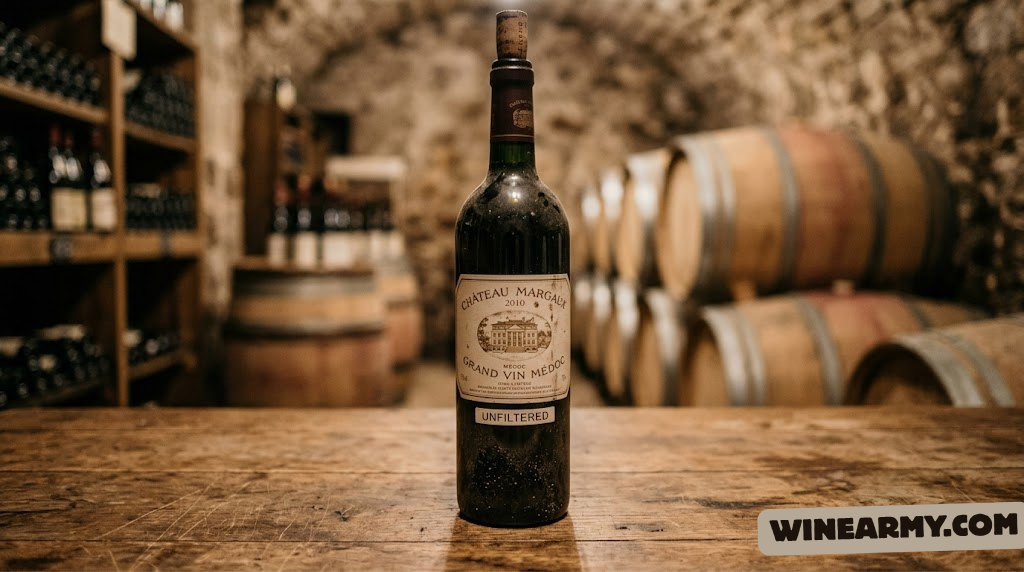
What Is Wine Sediment? The Basics Explained
Wine sediment is any solid material that settles out of wine over time, collecting as a visible deposit at the bottom of the bottle. It is entirely natural, entirely harmless, and — for serious wine lovers — often considered a positive indicator of minimal processing and genuine cellaring potential.
Unlike the suspended particles in a glass of cloudy water, wine sediment is the result of complex chemical and biological processes that occur inside the bottle over months or years. It is wine doing what wine does: slowly changing, evolving, and maturing.
Many first-time wine drinkers mistake sediment for spoilage, contamination, or a sign that the bottle is flawed. In reality, the presence of sediment is one of the most reliable signals that you’re dealing with a wine that was made with care, from a vintage that has had time to develop properly, and that was stored with some intention. The absence of sediment in a ten-year-old red wine is the more alarming discovery — it may mean the wine was so heavily filtered and fined that its character has been stripped away.
Understanding sediment begins with understanding what wine is made of at a molecular level. Wine is an extraordinarily complex liquid containing thousands of chemical compounds: phenolic polymers, tartaric acid, malic acid, proteins, yeasts, tannins, pigments (anthocyanins), and a kaleidoscope of aromatic compounds. Many of these substances are stable only in certain conditions. As temperature shifts, as time passes, as oxygen slowly permeates through the cork, these compounds react with one another, form larger molecules, and eventually drop out of solution.
The result? Sediment. Sometimes dark and flaky. Sometimes tiny and sand-like. Sometimes long, crystalline shards that gleam in the light. Each form tells a slightly different story about the wine’s chemistry and journey.
“Finding sediment in a great aged Bordeaux is like finding patina on an antique clock — it tells you something real has happened over real time.”
If you’re new to the vocabulary of wine, it helps to consult a wine glossary for beginners — terms like tannins, phenolics, tartrates, and fining agents all matter when we talk about sediment, and understanding them will make everything in this guide click into place.
Wine sediment is a natural, harmless byproduct of wine aging. Its presence signals authenticity and minimal processing — not spoilage.

Premium Crystal Wine Decanter
Separate sediment beautifully with a hand-blown lead-free crystal decanter. Essential for aged reds.
View on AmazonThe Different Types of Wine Sediment (And What They Mean)
Not all sediment is created equal. Wine produces several distinct types of deposits, and each one is formed by different chemical mechanisms. Knowing which type you’re looking at helps you understand the wine’s age, structure, and how it was made.
1. Dark Flaky or Grainy Sediment (Phenolic Polymers)
The most commonly encountered type in aged red wines, this dark, sometimes brownish-black sediment consists primarily of polymerized tannins and pigments. Over time, the tannins in red wine — extracted from grape skins, seeds, and oak barrels — bind together into larger and larger molecular chains. Simultaneously, the anthocyanin pigments (responsible for red wine’s color) also polymerize and eventually bond with the tannins.
When these complexes grow large enough, they can no longer remain dissolved in the wine. Gravity does the rest: they sink slowly to the bottom of the bottle. This process typically begins after five to ten years in bottle for tannic reds, though it can happen sooner in more structured wines like Barolo or aged Cabernet Sauvignon. Interestingly, as these pigment-tannin complexes leave the wine, the liquid itself actually lightens in color — which is why old red wines trend toward brick-red or garnet rather than the deep purple of a young vintage.
If you want to understand what tannins are in wine and why they contribute so much to aging potential, that’s a rabbit hole worth going down before uncorking an old bottle.
2. Tartrate Crystals (“Wine Diamonds”)
These shimmering, glass-like crystals are technically called potassium bitartrate (in red wines) or calcium tartrate (more common in whites). They form when tartaric acid — one of wine’s main natural acids — combines with potassium or calcium ions and precipitates into solid crystals when the wine is exposed to cold temperatures.
In red wines, tartrate crystals are often stained deep purple or red from absorbed pigments. In white wines, they appear as glassy chips that look almost like broken glass — which understandably alarms some wine drinkers. They are, however, completely tasteless, odorless, and harmless. Some winemakers perform “cold stabilization” to force tartrate precipitation before bottling, preventing crystals from forming later, but many natural winemakers skip this step intentionally.
3. Cork Fragments
Not technically true sediment from within the wine, cork particles occasionally end up in the glass when the cork is damaged during opening, when a corkscrew goes through at a bad angle, or when a very old, degraded cork crumbles on removal. These are easy to identify: light brown, buoyant, slightly spongy. They’re not going to hurt you, but they can affect texture. A wine strainer or fine mesh catches these easily.
4. Yeast Lees
In wines that undergo extended aging on the lees (the spent yeast cells left over from fermentation), a creamy, fine sediment can form in bottle. This is common in high-quality Champagne and other traditional-method sparkling wines aged extended periods on the lees, as well as some unfiltered whites. The texture is more powdery or silky than the flaky deposits of aged reds. Lees contact actually adds richness and creaminess to wine — so some bottles are intentionally not filtered to preserve that character.
5. Protein Haze and Sediment
Some white wines, particularly those made without fining agents, can develop a protein haze or fine precipitate if they experience temperature fluctuations. This is more common in natural wines and those made without bentonite fining. The haze is usually harmless, though it can occasionally indicate a slight instability in the wine.
| Sediment Type | Appearance | Common In | Cause | Safe? |
|---|---|---|---|---|
| Phenolic polymers | Dark, flaky, grainy | Aged red wines | Tannin/pigment polymerization | ✅ Yes |
| Potassium bitartrate crystals | Purple/red crystals | Aged reds, cold-stored wines | Cold temperature + tartaric acid | ✅ Yes |
| Calcium tartrate crystals | Clear, glass-like chips | White & sparkling wines | Cold temperature + tartaric acid | ✅ Yes |
| Cork fragments | Light brown, buoyant | Any corked wine | Cork damage during opening | ✅ Yes |
| Yeast lees | Fine, creamy powder | Natural & sparkling wines | Residual fermentation yeast | ✅ Yes |
| Protein haze | Cloudy, milky | Unfiltered whites | Unstable wine proteins | ✅ Mostly |
Illustration: The four main types of wine sediment, their appearance, and what causes each.
Is Wine Sediment Safe to Drink? (The Definitive Answer)
Let’s answer the most common question first, clearly and without hedging: Yes, wine sediment is completely safe to consume. All naturally occurring wine sediments — phenolic polymers, tartrate crystals, yeast lees, or cork fragments — are non-toxic, contain no pathogens, and are made entirely of substances that are also present (dissolved) in the wine you’re already drinking.
There is no documented case of wine sediment causing illness. The concern over sediment is purely aesthetic: some people find the gritty or gravelly texture unpleasant on the palate, especially in larger particles. Others dislike the appearance in a poured glass. Neither of these concerns has anything to do with safety.
That said, there is a small but important distinction to make: if you notice sediment accompanied by an off-putting smell — vinegar-like acidity, a mouse cage or barnyard odor, or excessive sulfur — that could indicate a wine fault unrelated to the sediment itself. In that case, the problem isn’t the sediment; the problem is likely a flawed wine. You can learn more about identifying wine faults by reading our article on detecting corked wine.
✅ Reasons Sediment is Fine
- Made of natural grape compounds
- No toxins or pathogens present
- Present in fine wines worldwide for centuries
- No documented health concerns
- Indicates minimal processing
- Sommelier-approved quality marker
⚠️ Why You Might Remove It
- Gritty or sandy texture in the mouth
- Bitter taste if tannin-heavy particles dissolve
- Unpleasant appearance in the glass
- Can make wine taste “rough” if stirred up
- Less enjoyable for non-wine-geeks
The Taste Impact: Does Sediment Affect Flavor?
Here’s where things get interesting. If you accidentally pour sediment into your glass and it remains as settled particles at the bottom, you may not notice it at all during drinking — many people swallow fine sediment without realizing. But if the sediment dissolves or is stirred up into the wine, it can have measurable effects on flavor and texture.
Phenolic sediment can add a bitter, astringent quality if re-dissolved. Tartrate crystals are essentially flavorless. Yeast lees, when stirred in (as is done intentionally in some winemaking through a process called “bâtonnage”), can add creaminess and a bready, yeasty note. Whether any of this constitutes “bad” is subjective — but most wine professionals prefer to decant sediment away for optimum enjoyment of aged bottles.
Tartrate crystals are chemically identical to cream of tartar, a common baking ingredient. You’ve probably consumed far more of it in your kitchen than you ever will in a glass of wine.
What Causes Sediment in Wine? The Chemistry Behind It
Wine sediment doesn’t appear randomly. It is the predictable, chemical result of specific reactions that occur inside the bottle over time. Understanding these reactions demystifies sediment completely and helps you predict when and why it will appear.
Tannin and Pigment Polymerization
This is the primary driver of dark sediment in red wines. Tannins — large, polyphenolic molecules extracted from grape skins, seeds, and stems during fermentation, as well as from oak barrels during aging — are reactive. Over time, they link together into increasingly large polymer chains. These polymers also react with anthocyanins (the red-blue pigments that give red wine its color), forming colored tannin-anthocyanin complexes.
As these complexes grow larger, they exceed the threshold at which they can remain in solution. The technical term is that they “exceed the solubility limit.” At that point, they precipitate out and settle due to gravity. This process is responsible for the dark, brownish-black, sometimes flaky sediment you see in aged Cabernet Sauvignon, Barolo, Hermitage, and similar wines.
Tartrate Precipitation
Tartaric acid is wine’s most abundant natural acid. At warm temperatures, tartrate ions stay dissolved. But when wine is chilled — especially below 45°F (7°C) — tartrate combines with potassium or calcium ions and crystallizes out of solution. This is why wine stored in a cold cellar or refrigerated frequently shows tartrate crystals.
The crystals are much more likely to form if the wine has not been cold-stabilized — a process where commercial wineries intentionally chill wine before bottling to force tartrate precipitation. Natural and traditional winemakers often skip this step, trusting that consumers understand what crystals mean.
The Role of Oxygen and Time
A tiny amount of oxygen permeates through a natural cork over time (this is one reason cork-closed wines age differently than screw caps — you can explore that topic in our cork vs. screw cap aging guide). This micro-oxygenation is actually desirable — it drives the tannin polymerization that creates sediment and softens the wine. Without it, red wines would never develop the complex, tertiary aromatics that make old bottles so compelling.
Residual Proteins and Yeasts
In white wines and sparkling wines aged on the lees, protein compounds from the grape and dead yeast cell walls can coagulate over time. Some fining agents (like egg whites, isinglass, or bentonite) are specifically designed to bind and remove these proteins before bottling. In unfined wines, these proteins may eventually fall out as sediment.
How the two main forms of wine sediment develop inside the bottle over time.

Rabbit Electric Wine Aerator & Pourer
Pour cleanly and aerate simultaneously — great for wines with light sediment that you’ve already decanted.
View on AmazonWhich Wines Develop Sediment? A Comprehensive Guide by Variety
Not every bottle will develop sediment, and predicting which wines will helps you plan your service accordingly. Several factors determine sediment likelihood: grape variety, winemaking style, age, filtration level, and storage conditions.
Red Wines Most Likely to Have Sediment
Tannic red wines aged for five or more years are the most reliable producers of sediment. Here’s a breakdown by variety and region:
| Wine / Variety | Sediment Likelihood | Onset (Approx.) | Notes |
|---|---|---|---|
| Barolo / Barbaresco (Nebbiolo) | 🔴🔴🔴 Very High | 5–8 years | Extremely tannic; heavy dark sediment common |
| Vintage Port | 🔴🔴🔴 Very High | 3–5 years | One of the heaviest sediment producers; always decant |
| Cabernet Sauvignon (top producers) | 🔴🔴 High | 7–12 years | Napa, Bordeaux, Coonawarra especially |
| Bordeaux Blends (aged) | 🔴🔴 High | 8–15 years | Classic classed growths virtually always sediment |
| Syrah / Shiraz (serious) | 🔴🔴 High | 6–10 years | Northern Rhône most prone |
| Brunello di Montalcino | 🔴🔴 High | 5–10 years | Long-aging wines produce significant deposit |
| Rioja Reserva / Gran Reserva | 🟡 Medium | 8–12 years | American oak aging somewhat reduces sediment |
| Pinot Noir (aged) | 🟡 Medium | 8–15 years | Lower tannin = less sediment; finer particles |
| Zinfandel (aged) | 🟡 Medium | 6–10 years | Higher alcohol can slow, but not prevent, sediment |
| Beaujolais (non-cru) | 🟢 Low | Rarely | Light wines, minimal tannin, drink young |
White and Sparkling Wines
White wines are far less prone to sediment because they contain minimal tannins (made without extended skin contact). However, tartrate crystals are very common in whites, particularly those stored cold. Richer whites like aged white Burgundy, white Rhône wines, and aged Riesling may also develop fine protein precipitate over time.
Vintage Champagne and traditional-method sparkling wines aged on the lees for many years may show yeast lees sediment, particularly in bottles that were not riddled and disgorged before release — some prestige cuvées are released en tirage (still on lees) for the most serious collectors.
Vintage Port: The Sediment Champion
If one wine type is synonymous with sediment, it is Vintage Port. These fortified wines are bottled after just two years in barrel — far earlier than their tannin level would suggest — and are intended to spend decades in the bottle developing. The result is prodigious sediment that forms relatively quickly. A 20-year-old Vintage Port will have a substantial crust of sediment clinging to the bottom and side of the bottle, and decanting is considered non-negotiable.
Interestingly, the formation of this crust was historically so expected that an entire category of wine service tools exists for it — including the Port wine cradle, which holds the bottle at angle during service to prevent sediment disturbance, and the Port wine tong and candle combination for decanting with a light source.
How to Handle Wine With Sediment: Step-by-Step
Dealing with a bottle that has sediment requires some advance planning — not much, but enough. The core strategy is simple: let the sediment settle, then carefully separate it from the wine. Here’s how to do it properly.
Step 1: Stand the Bottle Upright (24–48 Hours Before)
Wine bottles are typically stored on their sides in a cellar or wine rack. Sediment settles along the lower side of the bottle in this position. When you know you’re going to open a bottle with sediment, stand it upright at least 24 hours in advance — ideally 48 hours for older, heavily sedimented bottles. This allows all the sediment to slowly migrate to the bottom.
Always stand bottles with sediment upright at least 24 hours before opening to let the deposit collect at the bottom.
Step 2: Open Carefully — No Shaking
Treat the bottle as if it contains a sleeping animal. Do not shake it, tilt it dramatically, or carry it jauntily by the neck. Remove any foil with a foil cutter first, then use a gentle, controlled corkscrew to remove the cork. A waiter’s corkscrew or Ah-So (two-pronged cork puller) is ideal for older wines with soft or brittle corks.
Step 3: Use a Light Source to See the Sediment
Before you pour a single drop, hold the bottle up to a candle flame, a flashlight, or even your phone’s torch. You will be able to see where the sediment is sitting and how much there is. This visual check also tells you how carefully you need to pour. Light shows up clearly through the shoulder of most wine bottles, which is where you’ll stop pouring once sediment reaches that point.
Backlight the bottle with a candle or flashlight to see exactly where the sediment sits and when to stop pouring.
Step 4: Pour Slowly Over the Light
Pour the wine into a decanter or directly into glasses in one slow, steady motion — never set the bottle back down and pick it up again, as this disturbs the settled sediment. Keep the bottle slightly angled and pour with the shoulder facing the light source. Watch for sediment approaching the shoulder. Stop pouring as soon as you see dark particles moving toward the neck.
You will typically lose about half a glass to a full glass of wine this way — which is perfectly normal and expected with aged bottles. Decanting wine properly for sediment is an art worth learning if you plan to collect aged bottles.
Step 5: Strain If Needed
If the sediment is fine or you pour too quickly and some escapes, don’t panic. A fine wine strainer or cheesecloth draped over the mouth of your decanter will catch fine particles. Some people use a coffee filter, though this can strip aromatic compounds from older wines — a mesh wine strainer is preferable. Compare different decanter shapes and styles to find one that makes decanting sediment easier for you.

Wine Bottle Cradle / Decanting Basket
Keep your bottle at the perfect angle while decanting — prevents disturbing sediment during service. A must for Vintage Port and aged Bordeaux.
View on AmazonDecanting Wine to Remove Sediment: The Complete Process
Decanting for sediment removal is one of the most traditional and practical aspects of fine wine service. It differs from decanting young wines for aeration — the goal here isn’t oxygen exposure, it’s physical separation of solids from liquid.
The complete guide to decanting wine covers all the scenarios, but let’s focus specifically on the sediment removal technique here.
What You Need
- A clean wine decanter (clear glass is ideal)
- A light source: candle, LED tea light, or flashlight
- A steady hand and patience
- Optional: a fine mesh wine strainer
When choosing a decanter for sediment removal rather than aeration, you actually want a narrower base rather than a wide-bottomed aerating decanter. A narrow base makes it easier to see sediment approaching the neck. You can explore top-rated wine decanters to find shapes suited to different purposes.
The Traditional Candle Method
This is the technique used in fine dining restaurants for a reason: it works flawlessly and is elegant to execute. Place a lit candle on a stable surface. Hold the wine bottle in one hand (angled at about 45°) with the neck positioned about 6 inches above the candle flame. Hold the decanter in your other hand or rest it on the table.
Pour the wine slowly and continuously — never stop and restart — while keeping the shoulder of the bottle over the flame. The light will illuminate the wine through the glass, making any sediment visible as a dark shadow moving toward the neck. The moment you see sediment approaching, stop pouring. This technique typically salvages 90–95% of the wine from bottles with moderate sediment.
The candle decanting method — tilt the bottle over a light source, pour continuously, stop when sediment reaches the shoulder.
Decanting Time for Sediment vs. Aeration
When decanting for sediment removal, you do not need to leave the wine in the decanter for an extended aeration period — in fact, for very old, fragile wines (30+ years), excessive aeration can cause the wine to fade quickly. Pour, serve, and enjoy soon after decanting. Young tannic wines benefit from extended aeration, but that’s a different use of the decanter entirely. The aerator vs. decanter debate covers the aeration side of things in depth.
If you don’t have a candle, your phone’s flashlight works just as well. Place it face-up on the table and hold the bottle horizontally over it — the light passes through the base and neck with equal clarity.

Wine Decanting Funnel with Sediment Strainer
Stainless steel mesh catches fine sediment during decanting — no more gritty particles in your glass. Fits most decanters.
View on AmazonWine Crystals vs. Wine Sediment: Understanding the Difference
Tartrate crystals — often called “wine diamonds” in marketing-friendly language — deserve their own section because they are so frequently misidentified and misunderstood. They look alarming, feel like glass in the mouth, and confuse even experienced wine drinkers. But they are among the most benign substances you’ll ever find in a wine bottle.
What Are Wine Diamonds?
Wine diamonds (potassium bitartrate in red wines, calcium tartrate in whites) are chemically inert crystals that form when tartaric acid in the wine combines with potassium or calcium ions and the temperature drops. They are chemically related to cream of tartar — the very same substance used in baking to stabilize egg whites and prevent crystallization in sugar work.
Red Wine Crystals vs. White Wine Crystals
| Feature | Red Wine Crystals | White Wine Crystals |
|---|---|---|
| Chemical name | Potassium bitartrate | Calcium tartrate |
| Appearance | Deep purple/ruby crystals or dark sandy grains | Clear, glass-like chips or shards |
| Size | Usually fine, granular | Can be larger and more angular |
| Location | Bottom of bottle, occasionally sides | Bottom, underside of cork in older bottles |
| Trigger | Cold storage or temperature fluctuation | Cold storage |
| Taste | Tasteless | Tasteless |
| Safe? | ✅ Completely | ✅ Completely |
The Cold Stabilization Debate
Many commercial wineries perform cold stabilization — chilling wine to near-freezing temperatures before bottling to force tartrate precipitation, then filtering out the crystals before they ever reach the bottle. This ensures the consumer never sees crystals, which winemakers fear will be confused with glass or spoilage.
But cold stabilization has costs: it strips some aromatic compounds from the wine, reduces certain textural qualities, and requires energy-intensive refrigeration equipment. Many natural winemakers and some traditional producers — particularly in Burgundy and Germany — intentionally skip cold stabilization, trusting their customers to know what crystals are.
The presence of tartrate crystals in a bottle of white wine is therefore sometimes used as a quality signal: it suggests the wine was minimally processed and the winemaker cared more about preserving quality than preventing consumer confusion.
“If you see crystals in your Riesling, you’re probably drinking something real. Congratulations.”
Winemaking, Filtration, and Fining: Why Some Wines Have No Sediment
Understanding what prevents sediment helps explain why most commercial wines never develop it, and why natural and artisanal wines do. This section delves into the winery side of the sediment question.
Filtration
Modern wineries can filter wine through progressively finer membranes until virtually all suspended particles — including yeast, bacteria, proteins, and even larger tannin complexes — are removed. Sterile filtration (through a 0.45-micron or 0.2-micron membrane) produces a brilliantly clear wine that is essentially microbiologically stable and free of anything that could later drop out as sediment.
The downside is that filtration can strip body, mouthfeel, and complexity from fine wines. Many critics argue that filtered Bordeaux, Burgundy, and Barolo lose a dimension of texture that unfiltered versions retain. This is why many top estates explicitly label bottles as “unfiltered” — it’s a quality statement, not an oversight.
Fining Agents
Fining involves adding a substance to wine that attracts and binds unwanted particles, causing them to clump and settle out of solution before the wine is filtered or racked. Common fining agents include:
- Bentonite clay — removes proteins from white wines (most common)
- Egg whites (albumin) — removes harsh tannins from reds; traditional in Bordeaux
- Isinglass — fish bladder-derived; removes yeast and fine particles
- Gelatin — protein-based; removes tannins and phenolics
- Casein (milk protein) — removes browning compounds from whites
These agents are technically processing aids — they’re not present in the finished wine in meaningful amounts after being filtered out. But for vegan wine drinkers, the use of animal-derived fining agents is a significant concern. If this matters to you, look for wines labeled as “unfined and unfiltered” or check resources on organic and natural wine farming practices.
Racking and Gravity Settling
The traditional method of clarifying wine is simple gravity: wine is transferred (racked) from one vessel to another, leaving sediment behind, multiple times over the course of aging. This is still the method used in fine estates — it clarifies without stripping. The resulting wine may still develop sediment in bottle as aging continues, but it starts with fewer suspended particles.
Unfiltered vs. Filtered Wines: A Comparison
Unfiltered Wines
- Often more complex and textured
- Greater aging potential
- Considered superior by many critics
- Will develop sediment over time
- May require decanting
- Prized by collectors
Filtered Wines
- Crystal clear, no sediment
- Shelf-stable for retail
- Consistent and predictable
- May sacrifice texture and complexity
- Generally shorter aging potential
- Better for everyday commercial wines

Waiter’s Corkscrew — Professional Grade
Open aged wine bottles with the precision they deserve. A quality waiter’s corkscrew prevents cork breakage that turns sediment into a crisis.
View on AmazonStoring Wines Prone to Sediment: Best Practices for Cellaring
How you store a wine significantly affects how sediment develops and settles. Proper storage keeps sediment consolidated, makes decanting easier, and helps the wine age gracefully rather than evolving erratically.
Temperature Stability Is Critical
Temperature fluctuations are the enemy of wines with sediment for two reasons. First, expansion and contraction of the wine with temperature changes can stir up settled sediment, requiring additional settling time before serving. Second, repeated cold exposure accelerates tartrate crystallization — not harmful, but worth knowing if you’re frequently chilling and warming the same bottle.
The ideal cellar temperature is 55°F (13°C), and — crucially — it should remain stable. A variation of 3–5°F over the course of a year is acceptable; swings of 20°F or more will stress the wine and complicate sediment management. Understanding how to store wine at home is foundational for anyone aging bottles with sediment potential.
Horizontal vs. Vertical Storage for Sediment
The conventional wisdom is to store bottles horizontally — which keeps the cork moist and prevents oxidation through a dry cork. This is correct for most wines. However, for bottles with substantial existing sediment that you plan to open soon, standing them upright for 24–72 hours before service (as mentioned above) consolidates the sediment.
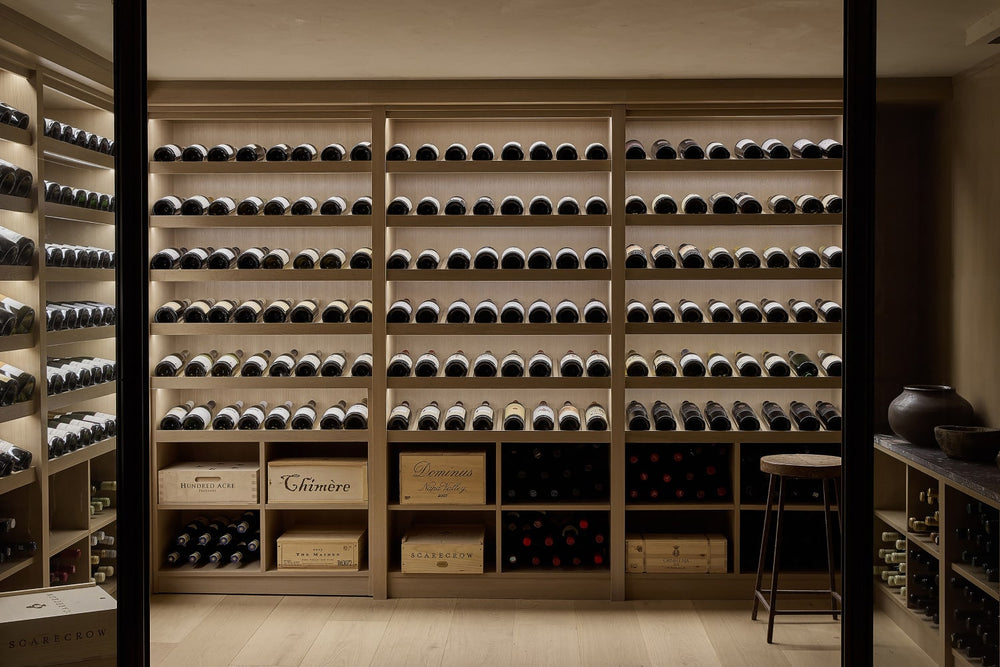
For very long-term aging (10+ years), some collectors prefer to store bottles at a slight angle — about 15–20 degrees from horizontal, with the neck slightly elevated. This encourages sediment to collect at the base rather than along the length of the bottle, making decanting marginally easier. Most modular wine racks store bottles horizontal; specialized racks with adjustable angles exist for serious collectors.
Humidity and Darkness
Humidity at 60–70% keeps corks healthy, preventing them from drying out and allowing excessive oxidation that could create sediment-like precipitates from volatile acidity. Darkness is important not for sediment specifically, but because UV light degrades wine compounds, including some of the phenolics whose careful polymerization creates quality sediment. You can dive deeper into wine cellar essentials for a full picture of storage conditions.
Vibration
Vibration is uniquely problematic for wines with sediment. It re-suspends settled particles constantly, meaning they never fully consolidate. Store your wine away from washing machines, HVAC units, frequently slammed doors, and other vibration sources. This is a particular challenge in urban apartments — if vibration is unavoidable, consider a freestanding wine refrigerator with vibration dampening, which you can find among our top wine cooler refrigerator picks.
| Storage Factor | Ideal Condition | Effect on Sediment |
|---|---|---|
| Temperature | 55°F (13°C), stable | Steady settling; less disruption |
| Humidity | 60–70% | Keeps cork healthy; no direct sediment effect |
| Light | Darkness or UV-filtered | Protects phenolics; healthy aging |
| Vibration | None | Prevents re-suspension of settled deposit |
| Bottle position | Horizontal (aging) / Upright (pre-service) | Horizontal = cork safe; upright = sediment consolidation |
| Cold exposure | Consistent; avoid freezing | Cold accelerates tartrate crystallization |
Professional Wine Service: How Restaurants Handle Sediment
In a professional restaurant setting, wine with sediment is handled with choreographed precision. Understanding what good service looks like helps you appreciate the craft — and replicate it at home.
The Wine Cradle (Panier)
Top restaurants with serious wine programs keep a wine cradle (also called a panier or decanting basket) behind the bar. This is a wicker or metal holder that keeps the bottle at a consistent 15–20-degree angle throughout service — from when it’s brought from the cellar, to when it’s opened, to the moment it’s poured. The angle means sediment never shifts back toward the neck.
The Tableside Decant
In formal service, a sommelier will decant aged wine tableside using a candle placed on a small silver candlestick. The decanting is performed slowly, with the sommelier watching over the candlelight through the bottle’s shoulder. This is as much theater as it is technique — but the theater serves a genuine purpose: it demonstrates care and allows diners to see exactly what’s happening. When sediment appears, the sommelier stops immediately, often with less than a half-glass of wine remaining in the bottle.
The Double Decant
For extremely old wines or wines with very fine sediment, some sommeliers use a “double decant” — the wine is poured into a clean decanter, the original bottle is rinsed, and the wine is poured back. This sometimes provides better sediment removal for wines where the particles are very fine and close to the neck from the start.
Serving Vintage Port
Vintage Port is handled most ceremoniously of all. A traditional Port service involves a Port wine cradle, the classic “Port tongs” (heated and applied to the neck to snap it off cleanly on very old bottles), and a silver Port strainer. The sediment in old Vintage Port can be thick enough to hold the shape of the bottle if poured out — a theatrical demonstration of just how much deposit these wines develop.
Top restaurants pre-decant old wines 2–4 hours in advance in some cases — but only for the richest, most tannic bottles. Delicate old wines are decanted and served immediately, as aeration can quickly diminish their fading aromatics.

Burgundy Large Bowl Wine Glasses (Set of 6)
Serve your beautifully decanted aged wine in the right glass. Large-bowl Burgundy glasses maximize the aromatic expression of older reds.
View on AmazonSediment, Natural Wines, and the “Cloudy Wine” Question
The natural wine movement has made sediment and cloudiness mainstream in a way that would have seemed radical to traditional fine wine consumers a generation ago. Today, a hazy, slightly murky wine isn’t automatically rejected — for a significant segment of wine drinkers, it’s a badge of authenticity.
What Makes Natural Wine Different
Natural wines — made with minimal or no additions (no sulfur dioxide, no fining agents, no added yeasts, no acidification or chaptalization) — are by definition more likely to contain sediment and cloudiness. Without the protective and clarifying interventions of conventional winemaking, these wines retain more of their original protein, yeast, and phenolic content. They are “living wines” in the most literal sense: they continue to evolve in ways that express themselves as haze and sediment.
The natural wine guide provides a thorough overview of what natural wine means and how it differs from conventional and organic production. If the biodynamic wine approach interests you, that’s another category where sediment is common and embraced.
Pét-Nat and the Sediment Feature
Pétillant naturel (pét-nat) is a category of sparkling wine made by the ancestral method — the wine is bottled before primary fermentation is complete, and the CO₂ produced by ongoing fermentation in the bottle creates the bubbles. Because the wine is not riddled, disgorged, or filtered after this secondary fermentation, pét-nat almost always contains significant lees sediment. It is typically released cloudy and meant to be served that way (or gently inverted to mix the lees in, depending on the producer’s preference).
Pét-nat consumers are often told to “swirl” or “roll” the bottle before opening to evenly distribute the lees. This is the opposite of every instruction in this guide regarding traditional wines with phenolic sediment — context is everything.
Orange Wine and Sediment
Orange wines — white wines made with extended skin contact — often develop sediment similar to red wines, because they extract many of the same phenolic compounds from grape skins. An orange wine with significant sediment is, if anything, a sign that real skin contact occurred. The skin contact wine explanation covers how this process works in detail.
When Cloudiness Is a Problem
Despite the natural wine world’s embrace of haze, there are cases where cloudiness signals a genuine fault rather than authenticity. Bacterial spoilage — particularly lactic acid bacteria contamination outside of controlled malolactic fermentation — can create a haze accompanied by off-flavors (vinegar, volatile acidity, mouse cage, or sauerkraut notes). In these cases, the cloudiness is a symptom, not a feature.
The distinction: intentional lees haze in pét-nat or natural wine has a fresh, slightly yeasty aroma and clean flavors. Bacterial spoilage has identifiable off-aromas even before you taste. If you’re ever unsure whether a hazy wine is intentional or flawed, smell it carefully before dismissing it or before finishing the glass.
Natural Wine Sediment — Features
- Sign of minimal processing
- Living, evolving wine character
- Vegan-friendly (no animal fining)
- Often associated with higher quality farming
- Embraced by natural wine culture
Potential Concerns
- Harder to distinguish from genuine faults
- Not all consumers are comfortable with haze
- Storage challenges without sulfur protection
- Variable quality — requires trusted producers

Wine Preserver Vacuum Pump
After decanting and enjoying most of a bottle, a vacuum preserver protects the remaining wine. Works equally well with natural and conventional wines.
View on AmazonFrequently Asked Questions About Wine Sediment
No, wine sediment is completely safe to drink. All forms of natural wine sediment — including phenolic polymers, tartrate crystals, yeast lees, and cork fragments — are non-toxic and contain no pathogens. They are made of the same natural compounds present (dissolved) in the wine itself. The only reason to remove sediment is taste preference and texture: some people find the gritty or sandy mouthfeel of sediment unpleasant. It has nothing to do with food safety.
Dark, flaky or grainy sediment in red wine is caused by the polymerization of tannins and pigment molecules (anthocyanins) over time. As these compounds bond together into larger molecular chains, they eventually exceed their solubility threshold and drop out of the wine as a dark precipitate. This is a completely natural sign of bottle aging and typically begins appearing in tannic reds after 5–10 years. It is far more common in wines like Barolo, aged Cabernet Sauvignon, Vintage Port, and Bordeaux blends.
Those are tartrate crystals — specifically calcium tartrate — commonly called “wine diamonds.” They form when tartaric acid in the wine combines with calcium ions and the wine is exposed to cold temperatures. They are chemically identical to cream of tartar (a common baking ingredient), completely tasteless, and 100% harmless. Their presence typically indicates the wine was not cold-stabilized before bottling — a sign of minimal processing that many quality-conscious winemakers consider a positive attribute.
No. Sediment on its own is not a sign of spoilage — it is actually the opposite. It is a sign of natural aging and minimal processing. A wine has “gone bad” when it has genuine faults: vinegar-like volatile acidity, a wet cardboard or moldy smell (cork taint/TCA), a mouse cage odor (Brettanomyces contamination), or excessive sulfur. Sediment accompanied by these smells could indicate an old, spoiled bottle — but the sediment itself is not the problem. Healthy sediment is accompanied by complex, evolved, tertiary aromas: dried fruit, leather, tobacco, earth, and spice.
If you don’t have a decanter, you can still manage sediment effectively. First, stand the bottle upright for 24–48 hours to let sediment settle. Then pour very carefully and slowly into glasses, keeping the shoulder of the bottle visible over a light source (a phone flashlight works perfectly). Stop as soon as you see dark particles approaching the neck. For fine sediment, a small kitchen strainer, a coffee filter, or even several layers of cheesecloth placed over the mouth of a clean pitcher will catch particles. The pitcher then serves as your makeshift decanter.
Not necessarily. Whether an old wine has sediment depends on several factors: the grape variety (tannic varieties produce more), the winemaking style (filtered and fined wines produce less), storage conditions (temperature fluctuations affect tartrate crystal formation), and the original composition of the wine. A heavily filtered commercial wine aged 20 years may show very little sediment. An unfiltered, traditionally made Barolo from the same vintage may have a substantial deposit. Generally, wines with more tannin, more aging potential, and less winery intervention will produce more sediment.
At minimum, 24 hours — 48 hours is better for heavily sedimented bottles, and 72 hours is not excessive for wines with 20+ years of age. The older and more sedimented the bottle, the more time you should allow. Fine sediment can take longer to fully settle than coarser particles. If you’ve forgotten to stand a bottle upright and only have a few hours, do it anyway — even partial settling makes decanting easier.
“Unfiltered” on a label means the wine was not passed through a filtration membrane before bottling. This preserves more tannins, proteins, yeast, and other compounds in the wine — all of which can eventually precipitate as sediment over time. Unfiltered wines often have more texture and complexity, and their capacity for sediment formation is considered by many wine professionals and critics to be a sign of quality and longevity rather than a defect. Many top estates in Burgundy, Piedmont, and Napa bottle without filtration by design.
Yes, completely. Tartrate crystals on the underside of the cork are common in wines that have been stored cold for extended periods. They form for the same reason they form in the bottle: tartaric acid crystallizes when the wine at the cork end is cooled by cellar temperatures. The crystals are chemically inert and tasteless. Simply wipe the face of the cork clean after extraction, check that the cork is otherwise in good condition (not crumbling or soaked through with wine, which could indicate seepage), and proceed normally.
Natural wines are made with minimal intervention — no added sulfur (or very low levels), no fining agents, no filtration, and only native yeasts. As a result, they retain more proteins, yeasts, and phenolic compounds than conventional wines. This means they are far more likely to develop sediment and cloudiness, and they may do so much earlier in their life — even within a year or two of bottling. For natural wines, particularly pét-nat and unfiltered styles, some cloudiness and sediment is expected and considered a feature of the wine’s character and artisanal production.
Yes, to some degree — any time you pour wine into a decanter, it’s exposed to oxygen, which provides some aeration. For young, tannic wines, this is beneficial. For older wines that you’re decanting specifically to remove sediment, you should be careful not to over-aerate — very old wines can be fragile and may fade within 30–60 minutes of decanting. As a rule, decant old wines for sediment removal and serve immediately. Save extended aeration (1–3 hours) for young, tannic wines that need it. If you want to understand more about the aeration debate, check out our comparison of aerators vs. decanters.
You need surprisingly few things: a quality decanter (clear glass, so you can see the wine), a light source (candle, LED tea light, or phone flashlight), and a steady hand. Optionally: a fine mesh wine strainer or funnel with built-in strainer for capturing fine sediment, a wine cradle or decanting basket to transport the bottle without disturbing sediment, and a proper corkscrew that won’t damage old corks. For everyday sediment management, those five items cover virtually every scenario you’ll encounter.
The Final Pour: Wine Sediment Is Your Friend
Wine sediment is one of those aspects of wine culture that separates the nervous first-timer from the confident enthusiast. Once you understand what it is — a natural, harmless, often beautiful byproduct of real wine aging — it stops being alarming and starts being informative.
The dark flakes in your aged Barolo tell you the wine has developed over years, its tannins have polymerized into more complex forms, and what you’re drinking has genuine depth. The crystals in your chilled white Burgundy tell you the winemaker didn’t strip the wine with industrial cold stabilization. The lees haze in your pét-nat tells you fermentation happened in the bottle, the way it did for centuries before modern filtration existed.
Stand the bottle upright. Open it gently. Hold it over a light. Pour slowly. Stop at the shoulder. Enjoy what remains. That’s the whole art of it.
For more wine education, explore our wine glossary for beginners, our complete decanting guide, and our picks for top-rated wine decanters to equip yourself for every bottle that comes your way.
Read the Full Decanting Guide →
Complete Wine Lover’s Accessory Set
Decanter, aerator, preserver, and foil cutter in one gift-ready set — everything you need to handle any bottle, with or without sediment.
View on Amazon