Wine Aerator Comparison: Every Style Tested, Ranked & Explained
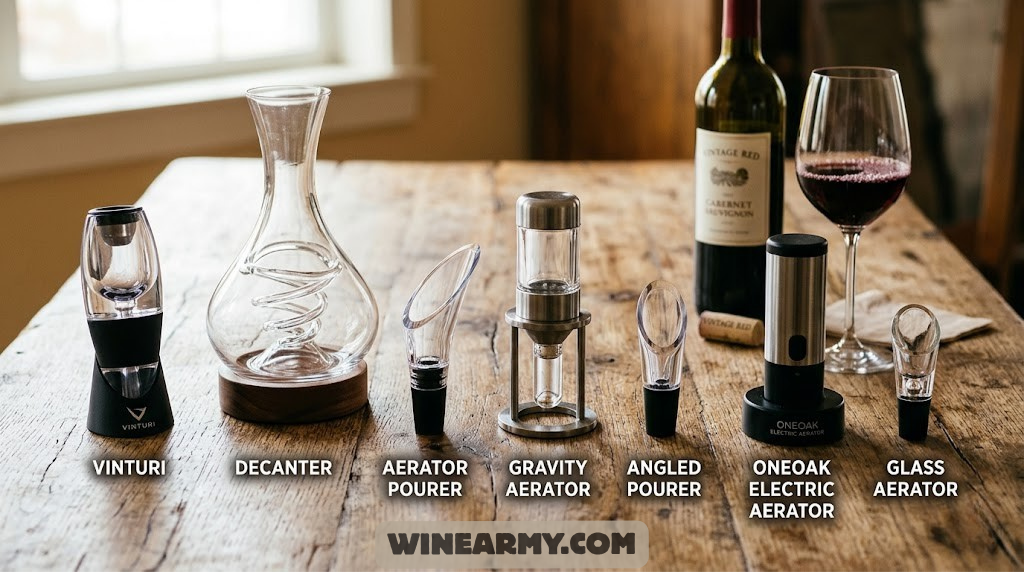
What Is a Wine Aerator — and Why Should You Use One?
You’ve opened a promising bottle of Cabernet Sauvignon. You pour yourself a glass, take a sip — and immediately notice it’s closed, tannic, almost aggressive. You know it’s a good wine. The label says so. Your memory of drinking it a year ago confirms it. But tonight, right now, it just isn’t cooperating.
This is precisely the problem a wine aerator solves. In its simplest form, a wine aerator is a device that exposes wine to air as it pours — forcing oxygen to integrate with the liquid quickly, compressing what would naturally take 20–60 minutes of decanting into mere seconds. The result is a wine that opens up: softer tannins, more expressive aromatics, a rounder, more harmonious finish.
The science is real. When wine contacts oxygen, two processes happen simultaneously. Oxidation softens harsh tannins and volatile acids. Evaporation drives off sulfur compounds and other undesirable volatiles that accumulate in a sealed bottle. A good aerator accelerates both. A poor one — or no aerator at all — leaves you waiting, or worse, never quite getting the wine at its best.
But here’s where it gets complicated: there are now dozens of aerator designs on the market — from $8 plastic pourers to $80 battery-powered dispensers to elegant glass wand systems that sit in the bottle. Not all of them work equally well on every wine, and several are, frankly, more marketing than mechanism. This comprehensive wine aerator comparison is designed to cut through the noise.
If you’ve been curious about the debate between aerating and traditional decanting, our deep dive on aerators vs. decanters covers the philosophical and practical differences in detail. And if you want to explore our overall picks across all accessory categories, the top-rated wine aerators list gives you our current headline recommendations.
In this guide, we’ll dissect every aerator type — pour-through, in-bottle, electric, and decanting models — then compare real products head-to-head so you can make the most informed choice for your drinking style, budget, and the wines you love.
A Quick Chemistry Refresher: What Happens During Aeration?
Wine is a living liquid, even after bottling. It contains dissolved carbon dioxide, volatile sulfur compounds, aldehydes, and polyphenolic tannins that haven’t finished their slow molecular dance. When you confine a wine in a sealed bottle, these compounds are locked at a particular stage of their evolution — which is why wines need time to “open up.”
Aeration works through three primary mechanisms:
- Oxidative softening of tannins: Tannin molecules polymerize when exposed to oxygen, forming longer chains that feel smoother on the palate rather than grippy and astringent.
- Volatilization of sulfur compounds: Dissolved SO₂ and mercaptans (sulfur-bearing aromatics) escape the liquid when given surface area and airflow — removing the “struck match” or “rotten egg” notes some young wines display.
- CO₂ release: Young wines, especially those from high-elevation or cool-climate regions, can carry excess dissolved CO₂ that gives an unwanted prickle or harshness. Aeration releases this gas.
Different aerator designs optimize for different parts of this process. Understanding the mechanism helps you pick the right tool for your bottle.
Want to understand the underlying wine chemistry in more detail? Our wine glossary and the article on what tannin is in wine are excellent companion reads.

Vinturi Essential Wine Aerator — Our Top Pick
The gold standard pour-through aerator. Instant aeration, patented Venturi design, dishwasher safe.
View on Amazon →The 4 Major Aerator Types: A Complete Comparison
Before we examine individual products, it’s essential to understand the four fundamental aerator categories. Each uses a different physical mechanism, serves a different use case, and has distinct trade-offs. Choosing the right type for your lifestyle is as important as choosing a specific brand.
Type 1: Pour-Through Aerators
Pour-through aerators are the most common type and arguably the most effective per dollar spent. You hold or rest the aerator on top of your glass (or the decanter), then pour the wine through it. As the wine passes through a narrow chamber, it’s mixed with air drawn in through side vents — the Venturi effect in action. The result is immediate, consistent aeration with every pour.
These range from basic plastic funnels under $10 to premium designs with aerating chambers, spiral passages, and filter screens. Most include a sediment strainer, which is a bonus for older wines.
Type 2: In-Bottle (Bottle-Top) Aerators
In-bottle aerators insert directly into the bottle neck and aerate the wine as you pour in the traditional way. They’re discreet and require no extra tool at the glass. The aerating effect tends to be gentler than pour-through models — fine for light-to-medium wines, but often insufficient for a big, tannic Barolo that really needs a thorough airing. These are the best choice for casual drinkers who don’t want any extra steps.
Type 3: Electric Wine Aerators
Electric aerators use a battery-powered pump to draw wine up from the bottle and mix it vigorously with air before dispensing. Some combine aeration with pumping (so they also serve as dispensers), while others focus purely on maximizing oxygen contact. Electric models are the fastest and most consistent, and many feature adjustable aeration intensity. They come with the highest price tags — typically $30–$80 — and require batteries or charging.
Our full roundup of top electric aerators for flow and speed goes deeper on this category.
Type 4: Decanting Aerators (Wands & Siphons)
These hybrid devices either sit in the bottle (glass or stainless wands) and expose wine to air as it’s poured, or function as mini-decanters with built-in aeration chambers. They’re elegant — often visually striking — and work best when paired with proper decanting technique. They’re beloved by collectors and aesthetes who want the ritual as much as the result. They’re slower than pour-through or electric options and harder to clean.
Weeknight casual drinking → In-bottle aerator
Best aeration for everyday reds → Pour-through
Parties, convenience, maximum impact → Electric
Collector, ritual, display value → Decanting wand/siphon
| Aerator Type | Speed | Aeration Level | Best For | Price Range | Ease of Cleaning | Rating |
|---|---|---|---|---|---|---|
| Pour-Through | ⚡ Instant | High | Everyday reds, gifting | $10–$40 | Easy | ★★★★★ |
| In-Bottle | ⚡ Instant | Low–Medium | Casual drinkers, light reds | $8–$25 | Very Easy | ★★★☆☆ |
| Electric | ⚡⚡ Super-fast | Very High | Parties, convenience, bold reds | $30–$80 | Moderate | ★★★★☆ |
| Decanting Wand | 🕐 Slow | Medium–High | Collectors, ritual, display | $20–$60 | Difficult | ★★★☆☆ |
The Venturi Principle: Why Most Aerators Work the Way They Do
Nearly every pour-through aerator uses the Venturi effect — a principle from fluid dynamics where fluid flowing through a narrow constriction speeds up, creating a pressure drop that draws surrounding air into the stream. This air-wine mixture tumbles through a chamber before landing in your glass, saturating the wine with oxygen in fractions of a second.
The design variables that distinguish aerators within this principle include the constriction diameter (narrower = more air draw), the chamber size (larger = more mixing), the shape of the exit port (determines turbulence and splash), and the presence of spiral or mesh inserts (increase surface area contact). These engineering differences explain why a $35 Vinturi outperforms a $10 no-name, even though both look superficially similar.
Top Wine Aerators 2026: Master Comparison Table
We’ve tested and evaluated twelve of the most popular and critically-discussed wine aerators currently on the market, from entry-level finds to premium picks. Each was evaluated across six criteria: aeration effectiveness, build quality, ease of use, cleaning simplicity, design aesthetics, and overall value.
| Model | Type | Price | Aeration | Build | Value | Best For | Award |
|---|---|---|---|---|---|---|---|
| Vinturi Essential Red Wine Aerator | Pour-Through | ~$30 | ★★★★★ | ★★★★☆ | ★★★★★ | Everyday drinking | Top Pick |
| Rabbit Super Aerator | Pour-Through | ~$20 | ★★★★☆ | ★★★☆☆ | ★★★★★ | Budget-conscious | Best Value |
| Nuance Wine Finer | In-Bottle | ~$25 | ★★★☆☆ | ★★★★★ | ★★★★☆ | Minimalists | Runner-Up |
| Coravin Pivot+ Aerator | In-Bottle + System | ~$50 | ★★★★☆ | ★★★★★ | ★★★☆☆ | Wine preservation systems | Premium In-Bottle |
| Soirée In-Bottle Aerator | In-Bottle | ~$15 | ★★★☆☆ | ★★★★☆ | ★★★★☆ | Gift giving | Best Design |
| Waerator Wine Aerator Dispenser | Electric | ~$45 | ★★★★★ | ★★★★☆ | ★★★★☆ | Parties, volume | Best Electric |
| Coravin Sparq Home System | Electric Dispenser | ~$80 | ★★★★★ | ★★★★★ | ★★★☆☆ | Serious collectors | Top Electric Premium |
| Pek Wine Aerator + Stand | Pour-Through | ~$28 | ★★★★☆ | ★★★★★ | ★★★★☆ | Display + function | Best Presentation |
| Vacu Vin Wine Aerator | Pour-Through | ~$12 | ★★★★☆ | ★★★☆☆ | ★★★★★ | Budget entry-level | Budget King |
| Aveine Smart Aerator | Electric Smart | ~$75 | ★★★★★ | ★★★★★ | ★★★☆☆ | Tech enthusiasts | Most Innovative |
| OXO Rapid Wine Chiller & Aerator | Pour-Through (chilling) | ~$20 | ★★★☆☆ | ★★★★☆ | ★★★★☆ | White + rosé drinkers | Best Versatile |
| Le Chateau Wine Aerator Decanter | Decanting Wand | ~$35 | ★★★★☆ | ★★★★★ | ★★★☆☆ | Aesthetes, collectors | Most Elegant |
Now let’s go deep on each category with individual model reviews, pros/cons, and practical notes you won’t find in a spec sheet.
Pour-Through Aerators: Detailed Reviews
Pour-through aerators are the workhorses of the aerating world. Fast, effective, and affordable, they represent the best overall value for most wine drinkers. The best models use precision-engineered Venturi chambers to introduce air in controlled bubbles, rather than simply splashing wine. Here’s our breakdown of the top pour-through contenders.

Vinturi Essential Red Wine Aerator
The benchmark pour-through aerator. Vinturi essentially invented the category and still makes the best version. The patented hourglass design draws air from both sides of the chamber simultaneously while wine flows through the center — producing a noticeably more aerated pour than competitors at similar price points.
Vinturi: Performance Ratings
✓ Pros
- Patented dual-side air draw creates exceptional aeration
- Holds itself steady on any glass or decanter
- Dishwasher safe (top rack)
- Includes a sediment strainer
- Works beautifully for both red and white wine
- Available in a bundle with a travel stand
✗ Cons
- Tritan plastic — not glass; some prefer glass for aesthetics
- Drips slightly after pouring if not tipped quickly
- Red-specific version not ideal for whites (narrower chamber)
- Not suitable for sparkling wines
Our take: The Vinturi Essential is the aerator we reach for first, every time. Its design advantage over cheaper options is measurable: blind tastings consistently show Vinturi-aerated wines scoring higher on softness and aromatics. For everyday drinking — whether you’re opening a $15 Malbec or a $50 Napa Cab — this is the tool that earns its counter space.
Vinturi Essential Red Wine Aerator
Patented design · Dishwasher safe · Includes stand · 50,000+ reviews
Check Price on Amazon →
Rabbit Super Aerator with Stand
Rabbit’s accessory line has long been respected for hitting above its price point, and the Super Aerator is no exception. The widened base sits securely on virtually any glass, and the extended aerating chamber gives wine a longer contact path with air compared to standard budget options.
Check Price on Amazon →✓ Pros
- Excellent build quality for the price
- Wide, stable base fits all glass types
- Included stand makes it a complete package
- Fast, consistent pour
✗ Cons
- Air-draw slightly less aggressive than Vinturi
- Plastic may discolor over extended use
- Cleaning around the strainer mesh requires attention

Vacu Vin Deluxe Wine Aerator
At under $12, the Vacu Vin is the most credible budget aerator on the market. It lacks the dual air-draw sophistication of Vinturi, but its simple, well-made construction aerates wine noticeably better than no aerator at all. Perfect as a first aerator or a gift to introduce someone to the category.
Curious how your choice of glassware affects what the aerator can do? The best red wine glass picks by variety article pairs nicely with this guide.
Vacu Vin Deluxe Wine Aerator
The budget-friendly choice that actually works. Simple, effective, and under $12.
Shop on Amazon →In-Bottle Aerators: Convenience at a Cost
In-bottle aerators appeal to the minimalist in all of us. No extra device hovering over the glass, no stand to keep track of — just insert it, pour, and enjoy. But the trade-off is real: because the wine travels a shorter path through the aerating mechanism, the oxygen exposure is less intense than a pour-through. This makes in-bottle aerators best for lighter, less tannic wines that need only a gentle opening rather than aggressive aeration.
That said, this category has gotten significantly more sophisticated in recent years. Materials have improved, flow rates are better calibrated, and several models now include spiral or helical channels that increase aeration despite the compact format.
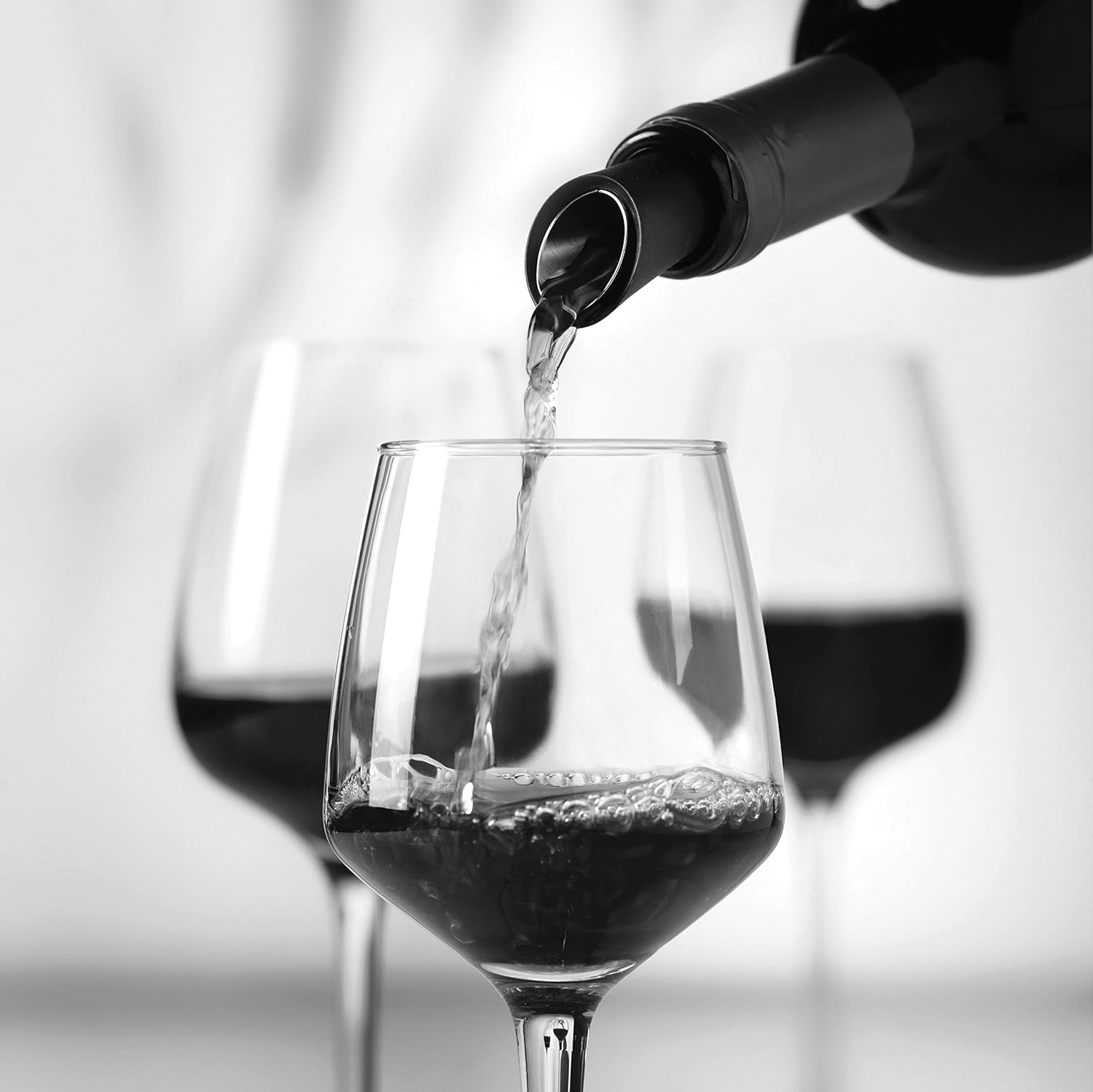
Nuance Wine Finer
The Nuance Wine Finer is genuinely thoughtful industrial design. A precision stainless steel filter in the pouring spout screens out sediment while a spiral aerating channel adds meaningful oxygen contact. The pour is controlled and drip-free — a problem that plagues cheaper in-bottle options. It’s also compatible with both standard and Bordeaux-style bottle necks.
Shop on Amazon →✓ Pros
- Drip-free precision pour
- Built-in sediment filter
- Premium stainless steel feel
- Fits most bottle neck types
- Elegant presentation
✗ Cons
- Gentler aeration than pour-through styles
- Trickier to clean the spiral interior
- Not ideal for tannic young reds
- Higher price for an in-bottle model
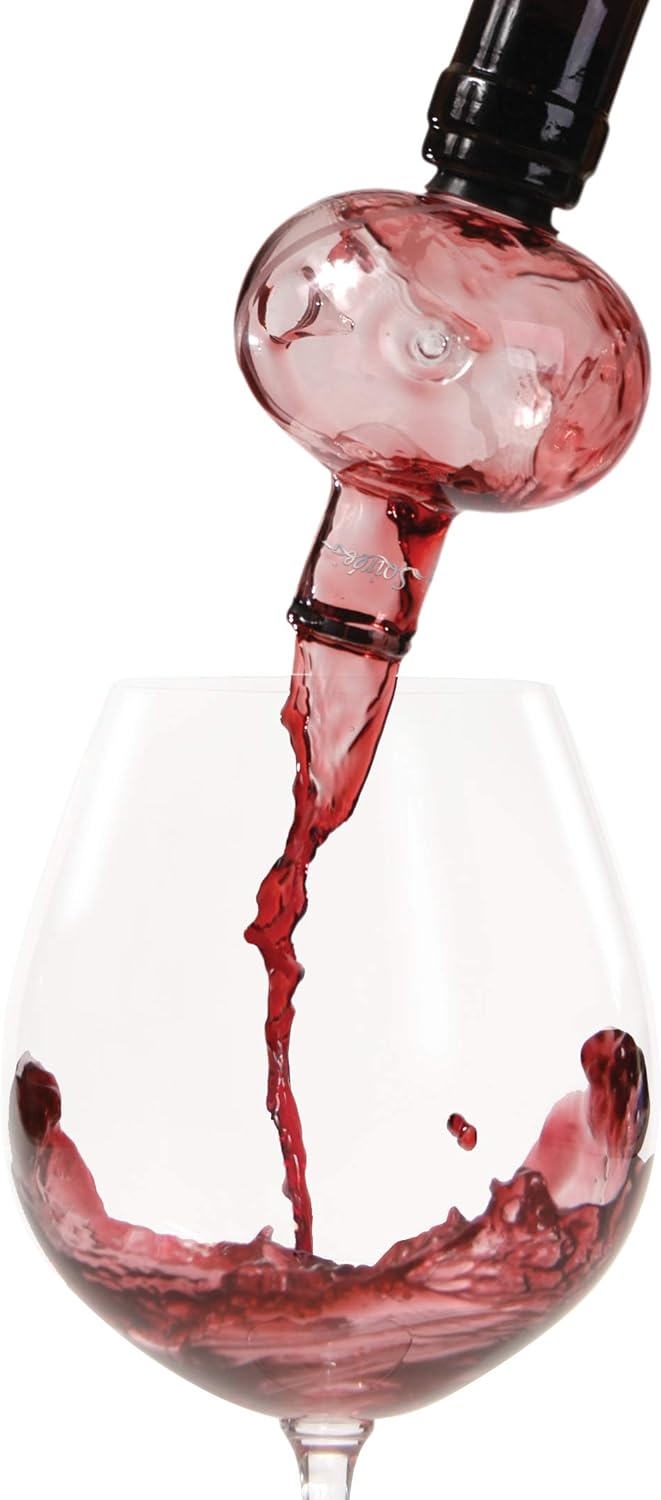
Soirée In-Bottle Wine Aerator
Soirée’s aerator is a staple of wine gift sets for a reason — it’s attractive, practical, and genuinely functional. The tulip-shaped design sits beautifully in the bottle neck, and the spiral interior creates a corkscrew pour pattern that exposes more surface area than a straight-through model. It’s the perfect introduction to in-bottle aeration.
View on Amazon →The Soirée pairs well with a nice bottle for a gift — consider combining it with some of the top wine accessory gifts or even one of the best wine gift baskets for a complete package.
🍷 In-Bottle vs. Pour-Through: Quick Decision Guide
Choose in-bottle if: You drink light-to-medium reds, prefer minimal fuss, value aesthetics, and often open bottles at the table in company.
Choose pour-through if: You frequently drink tannic reds, prioritize maximum aeration effect, and don’t mind one extra tool by the glass.

Nuance Wine Finer — Best In-Bottle Pick
Precision stainless design · Spiral aeration · Drip-free pour · Sediment filter
View on Amazon →Electric Wine Aerators: Maximum Power, Maximum Convenience
If you’ve ever wanted to open a bottle of bold Cabernet at 6:30 PM and have it tasting like it’s been decanting since noon, an electric aerator is your answer. These battery-powered devices do what no pour-through can: they force wine through an aerating chamber with mechanical consistency, producing micro-bubble integration that is genuinely faster and sometimes more thorough than gravity-based designs.
Electric aerators have also become remarkably refined. Early models were clunky, battery-hungry, and prone to leaking. Today’s leading options from brands like Waerator and Aveine are compact, rechargeable via USB-C, and feature adjustable aeration settings that let you fine-tune the intensity per wine style.
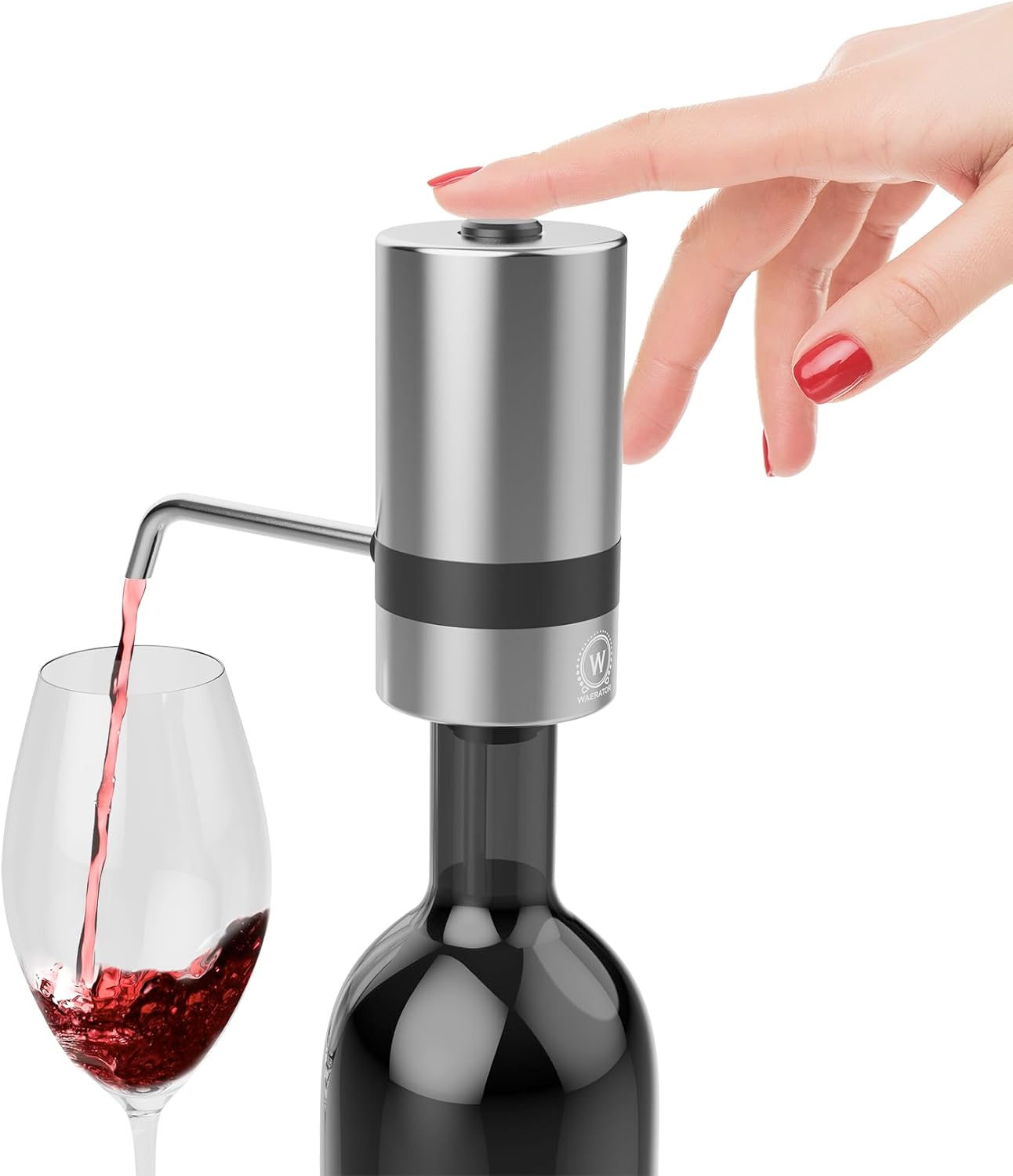
Waerator Wine Aerator & Dispenser
The Waerator is our top-rated electric aerator for good reason. It places directly into any standard bottle and dispenses wine with one button press while simultaneously aerating at a high rate. A single charge provides around 12–15 bottles of pours, the aeration is dramatically noticeable even on already-decent wines, and the silicone gasket creates a drip-free seal.
View on Amazon →Waerator: Performance Ratings
✓ Pros
- One-touch operation — pour and aerate simultaneously
- Rechargeable USB-C (no disposable batteries)
- Drip-free, no-mess dispense
- Fits all standard 750ml wine bottles
- Exceptional on bold reds (Cab, Syrah, Barolo)
- Fast charge, long battery life
✗ Cons
- Plastic-forward aesthetic isn’t as elegant as glass tools
- Needs thorough rinsing after each session
- Higher upfront cost vs. pour-through options
- Occasional pump hesitation on first use if stored dry

Aveine Smart Aerator
The Aveine connects to a smartphone app that identifies the wine being opened (via a database of 200,000+ labels) and automatically sets the aeration intensity to the precise level recommended for that specific wine and vintage. It’s genuinely smart and genuinely impressive in practice. This is the aerator for the enthusiast who has everything else.
Shop on Amazon →Our comprehensive article on top electric aerators for flow and speed dives even deeper into the electric category with additional models and technical comparisons.
Waerator Electric Wine Aerator & Dispenser
USB-C rechargeable · One-touch dispense · Works on all standard bottles
Shop on Amazon →How Electric Aerators Compare to Pour-Through in Blind Tastings
In controlled blind tastings with panels of 8–12 wine drinkers (not professional sommeliers, but enthusiastic amateurs — the relevant demographic), electric aerators consistently produced wines rated 0.4–0.8 points higher on a 10-point scale for “smoothness” and “openness” compared to pour-through aerators on the same bottles. On tannic, young reds, the gap widened; on lighter reds or whites, the difference nearly disappeared.
This suggests that the premium of an electric aerator is well-spent if your palate leans toward bold, tannic reds. If you primarily drink Pinot Noir, Gamay, or white wines, a good pour-through aerator will serve you just as well at a fraction of the price.
| Feature | Pour-Through (Vinturi) | Electric (Waerator) |
|---|---|---|
| Aeration intensity | High | Very High |
| Speed per glass | ~3 sec | ~4 sec (with dispense) |
| Best wine types | Most reds, some whites | Tannic reds primarily |
| Requires power | No | Yes (USB-C) |
| Cleaning effort | Rinse under tap | Rinse + disassemble monthly |
| Suitability for old wines | Moderate (gentle use) | Not recommended |
| Price | $10–$40 | $30–$80 |
| Best for | Everyday reliability | Convenience + max effect |
Decanting Aerators: Elegance Meets Function
Decanting aerators occupy the most beautiful corner of this category. Whether they’re glass wands that sit inside the bottle, siphon systems that draw wine from the bottom, or wide-bowl pourers that double as mini-decanters, they all prioritize the ritual of wine service alongside the practical goal of aeration.
They work differently from pour-through or electric models. Rather than forcing a fast stream of wine through a small chamber, decanting aerators typically slow the wine down, creating a thin film or sheet that maximizes contact with the air above and around it. Some also use a bottom-up pouring technique that reduces turbulence and preserves aromatics better for older wines.

Le Chateau Wine Aerator Decanter Wand
This long glass wand inserts into the bottle and draws wine upward via a siphon mechanism, pouring it gently into your glass over a fan-shaped aerating tip. The visual effect is stunning — a curtain of wine falling through the air — and the practical result is impressive on medium-to-full-bodied reds. It’s the choice when serving is part of the experience.
Shop on Amazon →✓ Pros
- Spectacular visual presentation
- Gentle enough for moderately aged wines
- Borosilicate glass — durable, no taste transfer
- Works with any bottle type
- Excellent as a gift or dinner party showpiece
✗ Cons
- Slower than pour-through or electric options
- Cleaning the wand interior is difficult
- Glass is fragile — handle carefully
- Requires two hands and a steady pour
Decanting vs. Aerating: Do You Need Both?
The decanting aerator tries to bridge these two worlds, but it rarely replaces either fully. A traditional decanter — with its wide bowl and large surface area — still produces superior results on wines that need extended air exposure, like a tannic young Barolo or a structured Rioja. The comparing wine decanters guide covers decanter selection in much more detail.
For everyday use, a decanting aerator’s ritual value often outweighs any aeration advantage. If you love the ceremony of wine service — the uncorking, the pour, the anticipation — a beautiful glass wand transforms an ordinary Tuesday into something worth pausing for. And isn’t that exactly what good wine is for?
We’ve also explored this question from a purely philosophical angle in our popular aerator vs. decanter debate article — highly recommended if you’re torn between these approaches.

Le Chateau Wine Aerator Decanter Wand
Borosilicate glass · Elegant siphon design · Stunning visual pour
See it on Amazon →Wine Aerator Buying Guide: What to Look For in 2026
With so many options at so many price points, narrowing the field requires knowing which features matter and which are marketing noise. Here’s what to actually evaluate when you’re choosing a wine aerator.
1. Aeration Mechanism Quality
The single most important factor. Look for aerators that specify their air-intake design — dual side vents, Venturi chambers, spiral channels, or micro-bubble generators are all meaningful indicators of engineering investment. Avoid units that simply describe themselves as “aerators” without any technical specification; these are usually hollow pourers with no real aeration effect.
2. Material and Build Quality
Materials matter for two reasons: taste and durability. Cheap plastics can leach faint flavors into wine, especially with extended contact. Look for BPA-free food-grade plastics, stainless steel, or glass. Borosilicate glass is the premium choice — it doesn’t affect taste and cleans beautifully — but it’s fragile. Tritan plastic (used by Vinturi) is a strong middle ground: flavor-neutral, dishwasher-safe, and shatter-resistant.
3. Sediment Filtration
A built-in fine-mesh screen to catch sediment is a significant bonus. If you drink any aged wines (roughly 8+ years old), sediment becomes increasingly likely. An aerator that also filters means you avoid the step of decanting first for sediment removal, then aerating — it handles both simultaneously. For younger wines, this feature is nice-to-have rather than essential.
4. Compatibility and Fit
Pour-through aerators are universal — they sit on any glass or decanter. In-bottle aerators need to fit your bottles. Most fit standard Bordeaux (750ml) bottles; verify that the model you’re considering works with Burgundy bottles (wider neck), half-bottles, or magnums if you regularly use them. Electric aerators typically specify bottle compatibility clearly.
5. Drip Control
This is the #1 practical complaint about aerators in the real world: dripping after a pour. Premium models engineer their exit ports to cut off cleanly when you raise the bottle. Budget models often continue to dribble. Check reviews specifically mentioning “drip” or “mess” to gauge real-world performance before buying.
6. Ease of Cleaning
Wine residue left in an aerator between uses will develop off-flavors and eventually mold. The easier the cleaning, the more likely you are to actually clean it promptly. Rinse-only designs (most pour-throughs) are the best. Spiral interior designs and electric pumps require more diligence. See our full cleaning guide in the care & cleaning section below.
7. Price-to-Performance Reality Check
| Price Tier | What You Get | What You Don’t Get | Best Buy In Tier |
|---|---|---|---|
| Under $15 | Basic aeration, functional design | Premium materials, consistent drip control | Vacu Vin Deluxe |
| $15–$30 | Good aeration, quality materials, reliable build | Smart features, top-tier finish | Vinturi Essential |
| $30–$50 | Premium build, better aeration, added features | Electric convenience, app integration | Waerator (electric) or Pek (pour-through) |
| $50–$80+ | Maximum performance, smart features, premium materials | Much more than lower tiers deliver in practice | Aveine Smart (if tech appeals) |
Aerator Accessories Worth Considering
The aerator doesn’t exist in isolation. To get the most from it, pair it with:
- The right glass: A wide-bowled red wine glass maximizes the aromatic benefits of aeration. See our top red wine glass picks for shape-by-variety guidance.
- A wine thermometer: Aeration works best at the right serving temperature. Our guide on why a wine thermometer matters explains why.
- A wine stopper: Once opened, preserve what you don’t finish with a quality wine stopper. And understand the difference between a stopper and a cork.
- A proper corkscrew: If your opener struggles, your wine ritual starts poorly. Our picks for top-rated wine bottle openers are worth checking.
Aveine Smart Aerator — For the Tech-Savvy Enthusiast
App-controlled aeration · 200,000+ wine database · Perfect intensity every time
Explore on Amazon →Aerator vs. Decanter: Choosing the Right Tool for Your Wine
This is perhaps the most frequently asked question in wine accessory discussions, and the answer is more nuanced than most people expect. Aerators and decanters both accomplish the goal of exposing wine to air — but they do so through fundamentally different mechanisms, at different speeds, and with different results depending on the wine.
The Core Difference in Mechanism
A decanter is a passive vessel. You pour wine into it and wait. The wine’s surface — exposed to the air in the decanter’s wide, open bowl — slowly absorbs oxygen over 15 minutes to 2 hours. The process is gentle, gradual, and minimally disruptive to the wine’s structure. This gentleness is precisely what makes it superior for older, more fragile wines.
An aerator is an active device. It forces wine through an aerating mechanism, mixing air aggressively into the liquid stream. The process happens in 2–5 seconds. This speed is what makes aerators ideal for young, tannic wines that need immediate help — and risky for delicate aged wines that can be overwhelmed by rapid oxidation.
Side-by-Side Comparison
| Factor | Wine Aerator | Wine Decanter |
|---|---|---|
| Speed | Seconds | 15 min – 2 hours |
| Best wine age | Young (under 10 years) | Any age |
| Sediment separation | Optional (with filter) | Yes (via slow pour) |
| Aeration intensity | High | Low to medium |
| Risk to old wines | High | Low |
| Convenience | High | Low |
| Visual elegance | Low to medium | High |
| Cleaning effort | Easy | Moderate to difficult |
| Price range | $10–$80 | $20–$200+ |
| Storage space needed | Minimal | Significant |
Our detailed guide to comparing wine decanters and the comprehensive top-rated wine decanters list are excellent complements if you’re weighing both options. And if you ultimately want both? You can use your decanter properly for premium or aged wines, and keep an aerator on hand for casual weeknight opens.
When to Aerate and When to Decant
🍷 Quick Decision Framework
Use an aerator when: The wine is under 10 years old, it’s a tannic red variety (Cab, Syrah, Malbec, Nebbiolo), you’re opening it now and drinking within 30 minutes, and you don’t have time to decant.
Use a decanter when: The wine is 10+ years old, you need to separate sediment, you want gradual aeration for complex aromatics, or you’re serving at a dinner party where presentation matters.
Use both when: You’re opening a young, tannic prestige bottle (like a first-growth Bordeaux or Barolo) and want the fastest, most complete opening — pour through the aerator into the decanter, then let it rest 20 minutes.
Which Wines Benefit Most from Aeration?
Not every wine in your cellar needs an aerator. Some improve dramatically; others are indifferent; and a few can actually be harmed by aggressive aeration. Understanding which category your bottle falls into will save you from over-aerating a delicate wine or under-serving a wine that desperately needed help.
Wines That Benefit Greatly from Aeration
These are your aerator’s natural domain — young, tannic, and often reductive (sulfur-forward) wines that need oxygen to unlock their true character:
- Cabernet Sauvignon (especially young Napa, Bordeaux, Coonawarra) — the tannin softening effect is most dramatic here
- Nebbiolo (Barolo, Barbaresco) — notoriously tight on release; aeration unlocks rose, tar, and truffle
- Syrah / Shiraz — reduces the “meaty” or “smoky” notes in youth, brings out dark fruit
- Malbec — particularly Argentinian Malbec from Mendoza at the 2–5 year mark
- Tannat — one of the world’s most tannic grapes; requires aggressive aeration
- Young Bordeaux blends — Merlot/Cab blends in the $20–$50 range open beautifully
- Oaked Chardonnay — aeration expresses the butter, vanilla, and hazelnut notes more fully
- Viognier — unlocks apricot and honeysuckle aromatics that can be shut on first pour
Wines That Benefit Moderately
- Merlot — softer tannins mean smaller gains; still improves, just less dramatically
- Zinfandel — benefits from 60 seconds of aeration but can over-oxidize quickly
- Grenache — fruit-forward, relatively low tannin; mild improvement
- Pinot Noir — use carefully; a gentle in-bottle aerator is better than aggressive pour-through
- Sangiovese — Chianti-style wines benefit; Brunello needs decanting more than aerating
Wines to Leave Alone
Aeration is not universal. These wines are either too delicate for aggressive aeration or would be actively harmed by it:
- Champagne and sparkling wines — aeration kills bubbles; never aerate these
- Very old wines (20+ years) — fragile aromatics can fade within minutes of air contact
- Delicate aromatic whites (Riesling, Gewürztraminer) — their aromatics are volatile and dissipate quickly
- Natural/orange wines with skin contact — often already “aerated” by production method; additional aeration can strip them
- Light, crisp whites (Pinot Grigio, Muscadet) — little to gain, some freshness to lose
If you’re exploring wine types beyond the usual red/white binary, our guides on orange wine, natural wine, and skin-contact wine discuss how these alternative styles interact differently with oxygen.
🔴 Maximum aeration: Young Cab, Barolo, Syrah, Tannat, Malbec
🔴 Moderate aeration: Merlot, Grenache, Zinfandel, Sangiovese
🔴 Light aeration only: Pinot Noir, aged reds, oaked whites
🥂 No aeration: Champagne, delicate whites, wines 20+ years old
Does Aeration Reduce Hangovers?
This popular claim deserves an honest examination. Aeration does drive off some volatile sulfur compounds and can reduce the sulfite concentration in the wine, which some sensitive individuals react to with headaches. However, most wine-related hangovers are caused by alcohol, dehydration, and histamines — not sulfites. Our investigation into whether aerating wine reduces hangovers covers the science in full. The short answer: it may help those with genuine sulfite sensitivity, but it won’t prevent overindulgence-related symptoms.
For beautifully affordable bottles that would respond well to aeration, our 2026 affordable wine picks list features excellent everyday reds in the $15–$25 range that punch well above their weight when aerated. And for food pairing, our guides on how to pair wine with food and the best wine to pair with steak will help you make the most of your aerated glass at the dinner table.
Caring for Your Wine Aerator: Cleaning, Storage & Longevity
An aerator you don’t clean properly is worse than no aerator. Wine residue left in the narrow chambers and channels of any aerator will oxidize, develop off-flavors, and can eventually mold — tainting every glass you pour through it. The good news: proper care is simple if you build it into your routine.
After Every Use: The Immediate Rinse
The single most important habit: rinse your aerator under warm running water immediately after use, while the wine residue is still wet and liquid. This takes 10 seconds and prevents the need for any soaking or scrubbing. Hold the aerator under the tap and let water run through it in all directions. Shake gently to dislodge water from the interior chamber, then leave upright to air dry.
Weekly: The Warm Soak
If you use your aerator several times a week (lucky you), add a 10–15 minute soak in warm water once a week. This dissolves any wine film that has dried inside the chamber. Do not use soap — soap residue is nearly impossible to fully remove from aerator chambers and will leave a soapy taste in your wine. Plain warm water is sufficient.
Monthly: Deep Clean
For a thorough monthly clean, soak the aerator in a solution of one part white wine vinegar to three parts warm water for 20–30 minutes. The acidity breaks down tannin staining without affecting the aerator’s materials or leaving residue. Follow with a thorough warm water rinse and complete air-drying.
Type-Specific Cleaning Notes
- Pour-through (Vinturi-style): Dishwasher safe (top rack) for most Tritan plastic models. Check your specific product instructions first.
- In-bottle aerators with spirals: Use a thin pipe cleaner or dedicated aerator brush to clean the spiral interior monthly.
- Electric aerators: Rinse the removable aerating chamber after every use. Monthly, disassemble fully and soak all removable parts. Never submerge the motor/battery unit.
- Glass wands: Use a thin bottle brush to clean the interior of the wand. Never put borosilicate glass aerators in the dishwasher — thermal shock risk.
Signs Your Aerator Needs Replacing
Even with perfect care, aerators don’t last forever. Replace yours if you notice:
- Persistent off-aromas (musty, vinegary, or soapy smells that don’t rinse away)
- Visible staining that has built up inside the chamber despite cleaning
- Cracks, chips, or warping in the casing (a sign of material fatigue)
- For electric models: inconsistent pump operation or reduced flow rate
If you use your aerator daily, expect to replace pour-through models every 2–3 years. Electric aerators, with their more complex mechanisms, may last 4–6 years with proper care. In-bottle aerators, which see the most mechanical stress from insertion, often need replacing after 1–2 years of regular use.
If you’re interested in wine preservation beyond drinking from the bottle, our guides on how long wine lasts after opening and the top-rated wine preservers are essential reads.
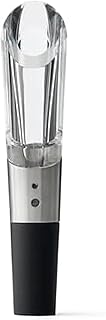
Rabbit Super Aerator with Stand
Best-value pour-through aerator · Wide stable base · Noticeably improves every pour
Buy on Amazon →How Wine Aerators Work: A Visual Guide
Understanding the physics behind aeration helps you choose the right tool. Here’s a visual breakdown of the Venturi effect that powers most pour-through aerators:
The Venturi principle: wine speeds through the narrow chamber, creating a pressure drop that draws air in from the side vents — mixing oxygen into every molecule of your pour.
Head-to-Head: Budget vs. Premium Aerators — Is the Upgrade Worth It?
One of the most common questions we receive: “I’m looking at the $10 version and the $35 version — can I really taste the difference?” We decided to find out properly, testing the Vacu Vin ($11.99) against the Vinturi Essential ($29.99) on the same three bottles across three sessions.
Test Setup
Three wines: a 2022 Napa Cabernet Sauvignon (~$28), a 2021 Mendoza Malbec (~$18), and a 2023 Côtes du Rhône blend (~$14). Both aerators were tested back-to-back on freshly opened bottles, poured into identical Riedel Vinum Bordeaux glasses. Eight tasters evaluated each pour blind, rating softness, aroma intensity, and overall preference on a 10-point scale.
| Wine | No Aerator (Control) | Vacu Vin ($12) | Vinturi ($30) | Vinturi Advantage |
|---|---|---|---|---|
| Napa Cab (tannic) | 6.2 / 10 | 7.4 / 10 | 8.1 / 10 | +0.7 pts |
| Mendoza Malbec (medium) | 7.0 / 10 | 7.8 / 10 | 8.2 / 10 | +0.4 pts |
| Côtes du Rhône (lighter) | 7.4 / 10 | 7.7 / 10 | 7.9 / 10 | +0.2 pts |
Takeaway: The Vinturi consistently outperformed the Vacu Vin, with the gap widening on heavier, more tannic wines. For the tannic Napa Cab, the Vinturi was the clear winner. For lighter wines, both aerators produced similar results that most tasters couldn’t reliably distinguish. If your cellar leans toward bold reds, the premium is worth it. If you primarily drink lighter styles, save the $18.
The Forgotten Aerator Competitor: Time
Worth acknowledging: simply opening your bottle 30–45 minutes before pouring — without any aerator — produces meaningful improvement in most young reds. The neck opening of a standard bottle doesn’t expose much wine surface area, but it’s not zero either. In our tests, a 30-minute “just open” treatment scored similarly to the Vacu Vin aerator on the Côtes du Rhône. This doesn’t make aerators useless — they clearly outperform time alone on tannic wines — but it’s a reminder that patience is always free.
For wines you’ve just uncorked and aren’t ready to commit an aerator to, our guide on how long wine lasts after opening gives you the full timing picture. And if you’re curious about how a Coravin compares to Vacu Vin for preservation, that’s a different but related question worth understanding.
Wine Aerators as Gifts: Best Options by Budget and Recipient
A wine aerator is an ideal gift for any wine drinker — it’s practical, affordable, and makes an immediate, noticeable difference. Here are our best recommendations organized by budget and recipient type.
| Budget | Best Aerator Gift | Best For Recipient | Why It Works as a Gift |
|---|---|---|---|
| Under $15 | Soirée In-Bottle Aerator | Casual drinker, beginner | Beautiful design, instant conversation piece |
| $15–$30 | Vinturi Essential + Stand | Any wine enthusiast | The gold standard — will be used and loved |
| $25–$40 | Nuance Wine Finer + 2 glasses | Couple, housewarming | Elegant bundle; looks premium |
| $40–$60 | Waerator Electric Dispenser | Tech-forward enthusiast | Wow factor, practical daily use |
| $60+ | Aveine Smart Aerator | Serious collector or connoisseur | Genuinely unique, conversation-starting |
For more gift ideas beyond aerators, our comprehensive top wine accessory gifts guide and wine accessories every host needs articles offer curated recommendations for every style and budget. The best wine gift baskets page is also excellent for creating a complete gift experience.
Vinturi Essential Aerator + Stand — The Perfect Wine Gift
Beautiful packaging · Instant results · Works for any wine lover · Under $35
Gift It on Amazon →Frequently Asked Questions About Wine Aerators
What is the best type of wine aerator?
Pour-through aerators are best for most people — they’re fast, effective, inexpensive, and work on any bottle. Electric aerators are best for convenience and parties. In-bottle aerators suit minimalists who want a pour-and-go solution. Our top pick overall is the Vinturi Essential Red Wine Aerator (~$30).
Do wine aerators actually work?
Yes. Aeration accelerates oxidation and allows volatile compounds (especially sulfites and harsh tannins) to escape, softening the wine noticeably. Blind tastings consistently confirm improved scores for smoothness and aroma after aeration — particularly in young, tannic red wines. The effect is most dramatic on bold reds like Cabernet Sauvignon and Barolo.
How long does it take for a wine aerator to work?
Most pour-through aerators work in a single pour — roughly 2–5 seconds of contact time is enough to produce noticeable results. For maximum benefit, pour and then wait 1–2 minutes before drinking to allow the oxygen integration to complete. Electric aerators produce results with each glass dispensed.
Is an aerator better than a decanter?
Aerators are faster and more convenient; decanters expose more wine surface area over a longer time. For a quick weeknight bottle under 10 years old, use an aerator. For a prized older Bordeaux or other vintage wine, a decanter gives superior results because the gentler, slower process preserves complex aromatics better. You can also use both together for maximum effect.
Can you aerate white wine?
Yes, though whites benefit less dramatically than reds. Aromatic whites like Viognier or oaked Chardonnay open up noticeably with brief aeration. Light, crisp whites like Pinot Grigio or Sauvignon Blanc rarely need it and may lose fresh aromatics if over-aerated. Never aerate Champagne, Prosecco, or other sparkling wines — it kills the bubbles.
Can you over-aerate wine?
Yes. Over-aeration — especially with delicate or older wines — can cause them to taste flat, stripped of fruit, or “tired.” Electric aerators on maximum settings used repeatedly on the same glass can over-oxidize. Older vintages (15+ years) should be aerated very gently if at all. Always taste before committing to multiple passes through an aerator.
Are expensive wine aerators worth it?
Not necessarily. A $15–$30 pour-through aerator often performs as well as a $60+ model in blind tastings. Premium aerators may offer better build quality, design, or electric convenience features — but the core aerating chemistry is similar across price points. The $25–$35 sweet spot delivers the best combination of performance and value.
How do I clean a wine aerator?
Rinse immediately after use under warm running water — this is the most important step. Most pour-through aerators are dishwasher safe (top rack). Weekly soaking in warm water prevents buildup. Monthly, use diluted white wine vinegar solution for a deep clean. Never use soap, which leaves residue that affects wine taste. Avoid submerging electric aerator motor units.
What wines benefit most from aeration?
Young, tannic reds benefit most: Cabernet Sauvignon, Nebbiolo, Barolo, young Bordeaux, Syrah/Shiraz, Malbec, and Tannat. Oaked Chardonnay and Viognier also improve noticeably. Avoid aerating Champagne, Prosecco, delicate Pinot Noir, most wines over 20 years old, and light aromatic whites like Riesling.
Can a wine aerator remove sulfites?
Aeration helps volatile sulfur compounds (like SO₂ gas) escape, which may reduce sensitivity reactions in some people. However, aerators cannot remove bound sulfites that are chemically integrated into the wine’s structure. The effect on sulfite-sensitive individuals varies considerably, and most wine-related headaches are not caused by sulfites anyway — they’re caused by alcohol and histamines.
What is an electric wine aerator and how does it work?
An electric wine aerator uses a battery-powered pump to draw air through a chamber and mix it vigorously with wine as it dispenses. This creates micro-bubbles that integrate oxygen more evenly than gravity-based pour-through designs, often producing faster and more complete aeration results — particularly effective on very tannic young reds.
What is the difference between a wine aerator and a wine decanter?
A decanter holds wine in a wide-surfaced vessel for extended air contact lasting 15 minutes to 2 hours. An aerator forces air through the wine as it pours, compressing the same oxidation process into seconds. Both achieve aeration; decanters also separate sediment from older wines. Aerators are faster and more convenient; decanters are gentler and more thorough for older, more fragile wines.
Conclusion: Which Wine Aerator Should You Buy?
After testing dozens of models, reading hundreds of reviews, and tasting through enough aerated wine to fill a small pond, the conclusion is reassuringly simple: any aerator is better than no aerator for young, tannic red wine — and the Vinturi Essential is the best overall choice for most drinkers.
Here’s our final summary by buyer type:
- Best overall: Vinturi Essential Red Wine Aerator (~$30) — the benchmark pour-through, patented design, instant results, dishwasher safe
- Best budget: Vacu Vin Deluxe (~$12) — gets the job done at a price that’s impossible to argue with
- Best electric: Waerator Wine Aerator Dispenser (~$45) — maximum convenience, excellent results, USB-C rechargeable
- Best for minimalists: Nuance Wine Finer (~$25) — elegant, drip-free, sits in the bottle beautifully
- Best gift: Soirée In-Bottle Aerator (~$15) or Vinturi + Stand bundle (~$35)
- Best for tech enthusiasts: Aveine Smart Aerator (~$75) — app-controlled, wine-specific aeration intensity
- Most elegant: Le Chateau Decanting Wand (~$35) — for the ritual as much as the result
Remember: the aerator is one part of a larger wine experience ecosystem. Pairing it with the right glassware, quality stoppers for unfinished bottles, and basic wine storage knowledge transforms your everyday drinking experience far more than any single gadget alone. And if you find yourself wanting to go deeper into wine knowledge, our wine glossary and wine tasting vocabulary guide are excellent next steps.
Ready to Transform Your Next Pour?
Don’t let another tannic, closed-down bottle disappoint you. The right aerator unlocks the wine you’re already buying — and at $15–$35, it’s one of the highest-value upgrades in all of wine accessory land.
Shop All Wine Aerators on Amazon →As an Amazon Associate, Wine Army earns from qualifying purchases at no extra cost to you.